


Search results
Search for "eosin Y" in Full Text gives 53 result(s) in Beilstein Journal of Organic Chemistry.
Heterogeneous photocatalysis in flow chemical reactors
- Christopher G. Thomson,
- Ai-Lan Lee and
- Filipe Vilela
Beilstein J. Org. Chem. 2020, 16, 1495–1549, doi:10.3762/bjoc.16.125
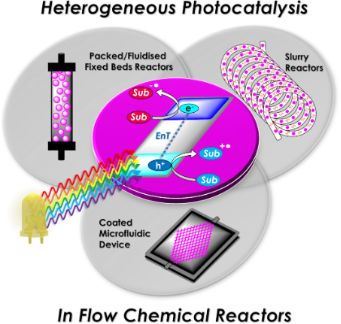

Graphical Abstract

Figure 1: A) Bar chart of the publications per year for the topics “Photocatalysis” (49,662 instances) and “P...

Figure 2: A) Professor Giacomo Ciamician and Dr. Paolo Silber on their roof laboratory at the University of B...

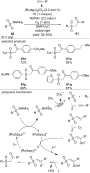
Scheme 1: PRC trifluoromethylation of N-methylpyrrole (1) using hazardous gaseous CF3I safely in a flow react...

Figure 3: A) Unit cells of the three most common crystal structures of TiO2: rutile, brookite, and anatase. R...

Figure 4: Illustration of the key semiconductor photocatalysis events: 1) A photon with a frequency exceeding...

Figure 5: Photocatalytic splitting of water by oxygen vacancies on a TiO2(110) surface. Reprinted with permis...

Figure 6: Proposed adsorption modes of A) benzene, B) chlorobenzene, C) toluene, D) phenol, E) anisole, and F...

Figure 7: Structures of the sulfonate-containing organic dyes RB5 (3) and MX-5B (4) and the adsorption isothe...

Figure 8: Idealised triclinic unit cell of a g-C3N4 type polymer, displaying possible hopping transport scena...

Figure 9: Idealised structure of a perfect g-C3N4 sheet. The central unit highlighted in red represents one t...

Figure 10: Timeline of the key processes of charge transport following the photoexcitation of g-C3N4, leading ...

Scheme 2: Photocatalytic bifunctionalisation of heteroarenes using mpg-C3N4, with the selected examples 5 and ...

Figure 11: A) Structure of four linear conjugated polymer photocatalysts for hydrogen evolution, displaying th...

Figure 12: Graphical representation of the common methods used to immobilise molecular photocatalysts (PC) ont...

Figure 13: Wireless light emitter-supported TiO2 (TiO2@WLE) HPCat spheres powered by resonant inductive coupli...

Figure 14: Graphical representation of zinc–perylene diimide (Zn-PDI) supramolecular assembly photocatalysis v...

Scheme 3: Upconversion of NIR photons to the UV frequency by NaYF4:Yb,Tm nanocrystals sequentially coated wit...

Figure 15: Types of reactors employed in heterogeneous photocatalysis in flow. A) Fixed bed reactors and the s...

Figure 16: Electrochemical potential of common semiconductor, transition metal, and organic dye-based photocat...

Scheme 4: Possible mechanisms of an immobilised molecular photoredox catalyst by oxidative or reductive quenc...
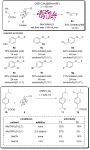
Scheme 5: Scheme of the CMB-C3N4 photocatalytic decarboxylative fluorination of aryloxyacetic acids, with the...

Scheme 6: Scheme of the g-C3N4 photocatalytic desilylative coupling reaction in flow and proposed mechanism [208].

Scheme 7: Proposed mechanism of the radical cyclisation of unsaturated alkyl 2-bromo-1,3-dicarbonyl compounds...

Scheme 8: N-alkylation of benzylamine and schematic of the TiO2-coated microfluidic device [213].

Scheme 9: Proposed mechanism of the Pt@TiO2 photocatalytic deaminitive cyclisation of ʟ-lysine (23) to ʟ-pipe...

Scheme 10: A) Proposed mechanism for the photocatalytic oxidation of phenylboronic acid (24). B) Photos and SE...

Scheme 11: Proposed mechanism for the DA-CMP3 photocatalytic aza-Henry reaction performed in a continuous flow...

Scheme 12: Proposed mechanism for the formation of the cyclic product 32 by TiO2-NC HPCats in a slurry flow re...

Scheme 13: Reaction scheme for the photocatalytic synthesis of homo and hetero disulfides in flow and scope of...

Scheme 14: Reaction scheme for the MoOx/TiO2 HPCat oxidation of cyclohexane (34) to benzene. The graph shows t...

Scheme 15: Proposed mechanism of the TiO2 HPC heteroarene C–H functionalisation via aryl radicals generated fr...

Scheme 16: Scheme of the oxidative coupling of benzylamines with the HOTT-HATN HPCat and selected examples of ...
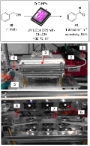
Scheme 17: Photocatalysis oxidation of benzyl alcohol (40) to benzaldehyde (41) in a microflow reactor coated ...

Figure 17: Mechanisms of Dexter and Forster energy transfer.
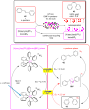
Scheme 18: Continuous flow process for the isomerisation of alkenes with an ionic liquid-immobilised photocata...

Scheme 19: Singlet oxygen synthetic step in the total synthesis of canataxpropellane [265].

Scheme 20: Scheme and proposed mechanism of the singlet oxygen photosensitisation by CMP_X HPCats, with the st...

Scheme 21: Structures of CMP HPCat materials applied by Vilela and co-workers for the singlet oxygen photosens...
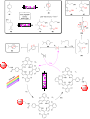
Scheme 22: Polyvinylchloride resin-supported TDCPP photosensitisers applied for singlet oxygen photosensitisat...

Scheme 23: Structure of the ionically immobilised TPP photosensitiser on amberlyst-15 ion exchange resins (TPP...

Scheme 24: Photosensitised singlet oxygen oxidation of citronellol (46) in scCO2, with automatic phase separat...

Scheme 25: Schematic of PS-Est-BDP-Cl2 being applied for singlet oxygen photosensitisation in flow. A) Pseudo-...

Scheme 26: Reaction scheme of the singlet oxygen oxidation of furoic acid (54) using a 3D-printed microfluidic...

Figure 18: A) Photocatalytic bactericidal mechanism by ROS oxidative cleavage of membrane lipids (R = H, amino...

Figure 19: A) Suggested mechanisms for the aqueous pollutant degradation by TiO2 in a slurry flow reactor [284-287]. B)...

Figure 20: Schematic of the flow system used for the degradation of aqueous oxytetracycline (56) solutions [215]. M...
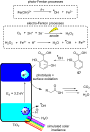
Scheme 27: Degradation of a salicylic acid (57) solution by a coupled solar photoelectro-Fenton (SPEF) process...

Figure 21: A) Schematic flow diagram using the TiO2-coated NETmix microfluidic device for an efficient mass tr...
Photocatalyzed syntheses of phenanthrenes and their aza-analogues. A review
- Alessandra Del Tito,
- Havall Othman Abdulla,
- Davide Ravelli,
- Stefano Protti and
- Maurizio Fagnoni
Beilstein J. Org. Chem. 2020, 16, 1476–1488, doi:10.3762/bjoc.16.123
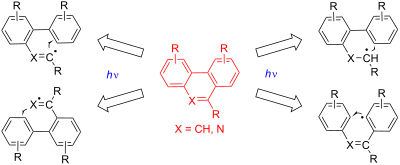
- method was applied to the two-step synthesis of the alkaloid trisphaeridine (15.3) on a gram-scale quantity (Scheme 15) [78]. O-2,4-Dinitrophenyloximes were competent substrates for the photocatalyzed generation of iminyl radicals. In this case, the reaction was photoorganocatalyzed by eosin Y and took
- desired products 18.3a–d in good yields [91]. Notably, a metal-free version of this strategy, based on the use of the 1-chloroanthraquinone photoorganocatalyst, was likewise reported [92]. A dual-catalytic system, comprising of eosin Y sodium salt (1 mol %) as photoredox catalyst and the thermal catalyst

Graphical Abstract

Figure 1: Bioactive phenanthridine and phenanthridinium derivatives.

Scheme 1: Synthesis of phenanthrenes by a photo-Pschorr reaction.

Scheme 2: Synthesis of phenanthrenes by a benzannulation reaction.

Scheme 3: Photocatalytic cyclization of α-bromochalcones for the synthesis of phenanthrenes.

Figure 2: Carbon-centered and nitrogen-centered radicals used for the synthesis of phenanthridines.

Scheme 4: General scheme describing the synthesis of phenanthridines from isocyanides via imidoyl radicals.

Scheme 5: Synthesis of substituted phenanthridines involving the intermediacy of electrophilic radicals.

Scheme 6: Photocatalyzed synthesis of 6-β-ketoalkyl phenanthridines.

Scheme 7: Synthesis of 6-substituted phenanthridines through the addition of trifluoromethyl (path a), phenyl...

Scheme 8: Synthesis of 6-(trifluoromethyl)-7,8-dihydrobenzo[k]phenanthridine.

Scheme 9: Phenanthridine syntheses by using photogenerated radicals formed through a C–H bond homolytic cleav...

Scheme 10: Trifluoroacetimidoyl chlorides as starting substrates for the synthesis of 6-(trifluoromethyl)phena...

Scheme 11: Synthesis of phenanthridines via aryl–aryl-bond formation.

Scheme 12: Oxidative conversion of N-biarylglycine esters to phenanthridine-6-carboxylates.

Scheme 13: Photocatalytic synthesis of benzo[f]quinolines from 2-heteroaryl-substituted anilines and heteroary...

Scheme 14: Synthesis of noravicine (14.2a) and nornitidine (14.2b) alkaloids.

Scheme 15: Gram-scale synthesis of the alkaloid trisphaeridine (15.3).

Scheme 16: Synthesis of phenanthridines starting from vinyl azides.

Scheme 17: Synthesis of pyrido[4,3,2-gh]phenanthridines 17.5a–d through the radical trifluoromethylthiolation ...

Scheme 18: The direct oxidative C–H amidation involving amidyl radicals for the synthesis of phenanthridones.
Oxime radicals: generation, properties and application in organic synthesis
- Igor B. Krylov,
- Stanislav A. Paveliev,
- Alexander S. Budnikov and
- Alexander O. Terent’ev
Beilstein J. Org. Chem. 2020, 16, 1234–1276, doi:10.3762/bjoc.16.107
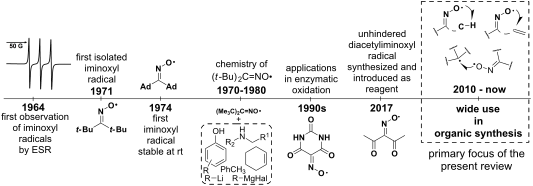

Graphical Abstract

Figure 1: Imine-N-oxyl radicals (IV) discussed in the present review and other classes of N-oxyl radicals (I–...
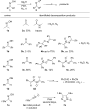
Figure 2: The products of decomposition of iminoxyl radicals generated from oximes by oxidation with Ag2O.

Scheme 1: Generation of oxime radicals and study of the kinetics of their decay by photolysis of the solution...

Scheme 2: Synthesis of di-tert-butyliminoxyl radical and its decomposition products.

Scheme 3: The proposed reaction pathway of the decomposition of di-tert-butyliminoxyl radical (experimentally...

Scheme 4: Monomolecular decomposition of the tert-butyl(triethylmethyl)oxime radical.

Scheme 5: The synthesis and stability of the most stable dialkyl oxime radicals – di-tert-butyliminoxyl and d...

Scheme 6: The formation of iminoxyl radicals from β-diketones under the action of NO2.

Scheme 7: Synthesis of the diacetyliminoxyl radical.

Scheme 8: Examples of long-living oxime radicals with electron-withdrawing groups and the conditions for thei...

Figure 3: The electronic structure iminoxyl radicals and their geometry compared to the corresponding oximes.

Figure 4: Bond dissociation enthalpies (kcal/mol) of oximes and N,N-disubstituted hydroxylamines calculated o...

Scheme 9: Examples demonstrating the low reactivity of the di-tert-butyliminoxyl radical towards the substrat...

Scheme 10: The reactions of di-tert-butyliminoxyl radical with unsaturated hydrocarbons involving hydrogen ato...

Scheme 11: Possible mechanisms of reaction of di-tert-butyliminoxyl radical with alkenes.

Scheme 12: Products of the reaction between di-tert-butyliminoxyl radical and phenol derivatives.

Scheme 13: The reaction of di-tert-butyliminoxyl radical with amines.

Scheme 14: Reaction of di-tert-butyliminoxyl radicals with organolithium reagents.

Scheme 15: Cross-dehydrogenative C–O coupling of 1,3-dicarbonyl compounds with oximes under the action of mang...

Scheme 16: Cross-dehydrogenative C–O coupling of 1,3-dicarbonyl compounds with oximes under the action of Cu(BF...

Scheme 17: Oxidative C–O coupling of benzylmalononitrile (47) with 3-(hydroxyimino)pentane-2,4-dione (19).

Scheme 18: The proposed mechanism of the oxidative coupling of benzylmalononitrile (47) with diacetyl oxime (19...

Scheme 19: Oxidative C–O coupling of pyrazolones with oximes under the action of Fe(ClO4)3.

Scheme 20: The reaction of diacetyliminoxyl radical with pyrazolones.

Scheme 21: Oxidative C–O coupling of oximes with acetonitrile, ketones, and esters.

Scheme 22: Intramolecular cyclizations of oxime radicals to form substituted isoxazolines or cyclic nitrones.

Scheme 23: TEMPO-mediated oxidative cyclization of oximes with C–H bond cleavage.

Scheme 24: Proposed reaction mechanism of oxidative cyclization of oximes with C–H bond cleavage.

Scheme 25: Selectfluor/Bu4NI-mediated C–H oxidative cyclization of oximes.

Scheme 26: Oxidative cyclization of N-benzyl amidoximes to 1,2,4-oxadiazoles.

Scheme 27: The formation of quinazolinone 73a from 5-phenyl-4,5-dihydro-1,2,4-oxadiazole 74 under air.

Scheme 28: DDQ-mediated oxidative cyclization of thiohydroximic acids.

Scheme 29: Plausible mechanism of the oxidative cyclization of thiohydroximic acids.

Scheme 30: Silver-mediated oxidative cyclization of α-halogenated ketoximes and 1,3-dicarbonyl compounds.

Scheme 31: Possible pathway of one-pot oxidative cyclization of α-halogenated ketoximes and 1,3-dicarbonyl com...

Scheme 32: T(p-F)PPT-catalyzed oxidative cyclization of oximes with the formation of 1,2,4-oxadiazolines.

Scheme 33: Intramolecular cyclization of iminoxyl radicals involving multiple C=C and N=N bonds.

Scheme 34: Oxidative cyclization of β,γ- and γ,δ-unsaturated oximes employing the DEAD or TEMPO/DEAD system wi...

Scheme 35: Cobalt-catalyzed aerobic oxidative cyclization of β,γ-unsaturated oximes.

Scheme 36: Manganese-catalyzed aerobic oxidative cyclization of β,γ-unsaturated oximes.

Scheme 37: Visible light photocatalytic oxidative cyclization of β,γ-unsaturated oximes.

Scheme 38: TBAI/TBHP-mediated radical cascade cyclization of the β,γ-unsaturated oximes.

Scheme 39: TBAI/TBHP-mediated radical cascade cyclization of vinyl isocyanides with β,γ-unsaturated oximes.

Scheme 40: tert-Butylnitrite-mediated oxidative cyclization of unsaturated oximes with the introduction of an ...

Scheme 41: Transformation of unsaturated oxime to oxyiminomethylisoxazoline via the confirmed dimeric nitroso ...

Scheme 42: tert-Butylnitrite-mediated oxidative cyclization of unsaturated oximes with the introduction of a n...

Scheme 43: Synthesis of cyano-substituted oxazolines from unsaturated oximes using the TBN/[RuCl2(p-cymene)]2 ...

Scheme 44: Synthesis of trifluoromethylthiolated isoxazolines from unsaturated oximes.

Scheme 45: Copper-сatalyzed oxidative cyclization of β,γ-unsaturated oximes with the introduction of an azido ...

Scheme 46: TBHP-mediated oxidative cascade cyclization of β,γ-unsaturated oximes and unsaturated N-arylamides.

Scheme 47: Copper-сatalyzed oxidative cyclization of unsaturated oximes with the introduction of an amino grou...

Scheme 48: TEMPO-mediated oxidative cyclization of unsaturated oximes followed by elimination.

Scheme 49: Oxidative cyclization of β,γ-unsaturated oximes with the introduction of a trifluoromethyl group.

Scheme 50: Oxidative cyclization of unsaturated oximes with the introduction of a nitrile group.

Scheme 51: Oxidative cyclization of β,γ-unsaturated oximes to isoxazolines with the introduction of a nitrile ...

Scheme 52: Oxidative cyclization of β,γ-unsaturated oximes to isoxazolines with the introduction of a sulfonyl...

Scheme 53: Oxidative cyclization of β,γ- and γ,δ-unsaturated oximes to isoxazolines with the introduction of a...

Scheme 54: Oxidative cyclization of β,γ-unsaturated oximes to isoxazolines with the introduction of a thiocyan...

Scheme 55: PhI(OAc)2-mediated oxidative cyclization of oximes with C–S and C–Se bond formation.

Scheme 56: PhI(OAc)2-mediated oxidative cyclization of unsaturated oximes accompanied by alkoxylation.

Scheme 57: PhI(OAc)2-mediated cyclization of unsaturated oximes to methylisoxazolines.

Scheme 58: Oxidative cyclization-alkynylation of unsaturated oximes.

Scheme 59: TEMPO-mediated oxidative cyclization of C-glycoside ketoximes to C-glycosylmethylisoxazoles.

Scheme 60: Silver-сatalyzed oxidative cyclization of β,γ-unsaturated oximes with formation of fluoroalkyl isox...

Scheme 61: Oxidative cyclization of β,γ-unsaturated oximes with the formation of haloalkyl isoxazolines.

Scheme 62: Cyclization of β,γ-unsaturated oximes into haloalkyl isoxazolines under the action of the halogenat...

Scheme 63: Synthesis of haloalkyl isoxazoles and cyclic nitrones via oxidative cyclization and 1,2-halogen shi...

Scheme 64: Electrochemical oxidative cyclization of diaryl oximes.

Scheme 65: Copper-сatalyzed cyclization and dioxygenation oximes containing a triple C≡C bond.

Scheme 66: Photoredox-catalyzed sulfonylation of β,γ-unsaturated oximes by sulfonyl hydrazides.

Scheme 67: Oxidative cyclization of β,γ-unsaturated oximes with introduction of sulfonate group.

Scheme 68: Ultrasound-promoted oxidative cyclization of β,γ-unsaturated oximes.
Photocatalysis with organic dyes: facile access to reactive intermediates for synthesis
- Stephanie G. E. Amos,
- Marion Garreau,
- Luca Buzzetti and
- Jerome Waser
Beilstein J. Org. Chem. 2020, 16, 1163–1187, doi:10.3762/bjoc.16.103
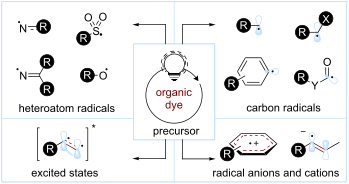
- reported a visible light-promoted photochemical reductive decarboxylation/alkylation of carboxylic acid analogs (Scheme 4) [45]. In this protocol, the carboxylic acids are converted into the corresponding RAE 4.1 by a condensation with N-hydroxyphthalimide. The organic dye eosin Y (OD13, E(PC/PC−) ≈ −1.1 V
- combination of eosin Y (OD13) with a sacrificial electron donor can trigger the reductive debromination of several α-carbonyl halides [53]. Riboflavin (OD11) [54] and thiaporphyrin [55] have been applied as well as organic photocatalysts for similar reductive dehalogenations. Hydrogen atom transfer
- successfully employed for the generation of C(sp3) radicals via HAT [58]. Interestingly, Wu and co-workers demonstrated that eosin Y (OD13) can also act as a direct HAT catalyst under visible-light irradiation [59]. Organic photoredox catalysis can also drive indirect HAT processes. In these reactions, the

Graphical Abstract
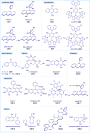
Figure 1: Selected examples of organic dyes. Mes-Acr+: 9-mesityl-10-methylacridinium, DCA: 9,10-dicyanoanthra...

Scheme 1: Activation modes in photocatalysis.

Scheme 2: Main strategies for the formation of C(sp3) radicals used in organophotocatalysis.

Scheme 3: Illustrative example for the photocatalytic oxidative generation of radicals from carboxylic acids:...

Scheme 4: Illustrative example for the photocatalytic reductive generation of C(sp3) radicals from redoxactiv...

Figure 2: Common substrates for the photocatalytic oxidative generation of C(sp3) radicals.
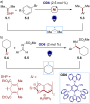
Scheme 5: Illustrative example for the photocatalytic oxidative generation of radicals from dihydropyridines ...

Scheme 6: Illustrative example for the photocatalytic oxidative generation of C(sp3) radicals from trifluorob...

Scheme 7: Illustrative example for the photocatalytic reductive generation of C(sp3) radicals from benzylic h...

Scheme 8: Illustrative example for the photocatalytic generation of C(sp3) radicals via direct HAT: the cross...

Scheme 9: Illustrative example for the photocatalytic generation of C(sp3) radicals via indirect HAT: the deu...

Scheme 10: Selected precursors for the generation of aryl radicals using organophotocatalysis.

Scheme 11: Illustrative example for the photocatalytic reductive generation of aryl radicals from aryl diazoni...

Scheme 12: Illustrative examples for the photocatalytic reductive generation of aryl radicals from haloarenes:...

Scheme 13: Illustrative example for the photocatalytic reductive generation of aryl radicals from aryl halides...

Scheme 14: Illustrative example for the photocatalytic reductive generation of aryl radicals from arylsulfonyl...

Scheme 15: Illustrative example for the reductive photocatalytic generation of aryl radicals from triaryl sulf...

Scheme 16: Main strategies towards acyl radicals used in organophotocatalysis.

Scheme 17: Illustrative example for the decarboxylative photocatalytic generation of acyl radicals from α-keto...

Scheme 18: Illustrative example for the oxidative photocatalytic generation of acyl radicals from acyl silanes...

Scheme 19: Illustrative example for the oxidative photocatalytic generation of carbamoyl radicals from 4-carba...

Scheme 20: Illustrative example of the photocatalytic HAT approach for the generation of acyl radicals from al...

Scheme 21: General reactivity of a) radical cations; b) radical anions; c) the main strategies towards aryl an...

Scheme 22: Illustrative example for the oxidative photocatalytic generation of alkene radical cations from alk...

Scheme 23: Illustrative example for the reductive photocatalytic generation of an alkene radical anion from al...

Figure 3: Structure of C–X radical anions and their neutral derivatives.

Scheme 24: Illustrative example for the photocatalytic reduction of imines and the generation of an α-amino C(...

Scheme 25: Illustrative example for the oxidative photocatalytic generation of aryl radical cations from arene...

Scheme 26: NCR classifications and generation.

Scheme 27: Illustrative example for the photocatalytic reductive generation of iminyl radicals from O-aryl oxi...

Scheme 28: Illustrative example for the photocatalytic oxidative generation of iminyl radicals from α-N-oxy ac...

Scheme 29: Illustrative example for the photocatalytic oxidative generation of iminyl radicals via an N–H bond...

Scheme 30: Illustrative example for the photocatalytic oxidative generation of amidyl radicals from Weinreb am...

Scheme 31: Illustrative example for the photocatalytic reductive generation of amidyl radicals from hydroxylam...

Scheme 32: Illustrative example for the photocatalytic reductive generation of amidyl radicals from N-aminopyr...

Scheme 33: Illustrative example for the photocatalytic oxidative generation of amidyl radicals from α-amido-ox...

Scheme 34: Illustrative example for the photocatalytic oxidative generation of aminium radicals: the N-aryltet...

Scheme 35: Illustrative example for the photocatalytic oxidative generation of nitrogen-centered radical catio...

Scheme 36: Illustrative example for the photocatalytic oxidative generation of nitrogen-centered radical catio...

Scheme 37: Illustrative example for the photocatalytic oxidative generation of hydrazonyl radical from hydrazo...

Scheme 38: Generation of O-radicals.

Scheme 39: Illustrative examples for the photocatalytic generation of O-radicals from N-alkoxypyridinium salts...

Scheme 40: Illustrative examples for the photocatalytic generation of O-radicals from alkyl hydroperoxides: th...

Scheme 41: Illustrative example for the oxidative photocatalytic generation of thiyl radicals from thiols: the...

Scheme 42: Main strategies and reagents for the generation of sulfonyl radicals used in organophotocatalysis.

Scheme 43: Illustrative example for the reductive photocatalytic generation of sulfonyl radicals from arylsulf...

Scheme 44: Illustrative example of a Cl atom abstraction strategy for the photocatalytic generation of sulfamo...

Scheme 45: Illustrative example for the oxidative photocatalytic generation of sulfonyl radicals from sulfinic...

Scheme 46: Illustrative example for the photocatalytic generation of electronically excited triplet states: th...

Scheme 47: Illustrative example for the photocatalytic generation of electronically excited triplet states: th...
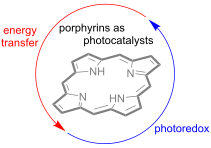
Recent applications of porphyrins as photocatalysts in organic synthesis: batch and continuous flow approaches
- Rodrigo Costa e Silva,
- Luely Oliveira da Silva,
- Aloisio de Andrade Bartolomeu,
- Timothy John Brocksom and
- Kleber Thiago de Oliveira
Beilstein J. Org. Chem. 2020, 16, 917–955, doi:10.3762/bjoc.16.83
- (bpy)3)]2+, [Ir(ppy)3], eosin Y, and 4CzTPN [12] (Figure 3). However, some porphyrin and metalloporphyrin derivatives possess adequate potentials to be applied as photoredox catalysts in C–C and C-heteroatom bond formations [10][22]. Furthermore, supramolecular porphyrin-containing molecules, such as

Graphical Abstract

Figure 1: Chemical structures of the porphyrinoids and their absorption spectra: in bold are highlighted the ...

Figure 2: Photophysical and photochemical processes (Por = porphyrin). Adapted from [12,18].

Figure 3: Main dual photocatalysts and their oxidative/reductive excited state potentials, including porphyri...

Scheme 1: Photoredox alkylation of aldehydes with diazo acetates using porphyrins and a Ru complex. aUsing a ...

Scheme 2: Proposed mechanism for the alkylation of aldehydes with diazo acetates in the presence of TPP.
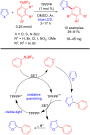
Scheme 3: Arylation of heteroarenes with aryldiazonium salts using TPFPP as photocatalyst, and corresponding ...

Scheme 4: A) Scope with different aryldiazonium salts and enol acetates. B) Photocatalytic cycles and compari...

Scheme 5: Photoarylation of isopropenyl acetate A) Comparison between batch and continuous-flow approaches an...

Scheme 6: Dehalogenation induced by red light using thiaporphyrin (STPP).

Scheme 7: Applications of NiTPP as both photoreductant and photooxidant.

Scheme 8: Proposed mechanism for obtaining tetrahydroquinolines by reductive quenching.

Scheme 9: Selenylation and thiolation of anilines.

Scheme 10: NiTPP as photoredox catalyst in oxidative and reductive quenching, in comparison with other photoca...

Scheme 11: C–O bond cleavage of 1-phenylethanol using a cobalt porphyrin (CoTMPP) under visible light.

Scheme 12: Hydration of terminal alkynes by RhIII(TSPP) under visible light irradiation.

Scheme 13: Regioselective photocatalytic hydro-defluorination of perfluoroarenes by RhIII(TSPP).

Scheme 14: Formation of 2-methyl-2,3-dihydrobenzofuran by intramolecular hydro-functionalization of allylpheno...
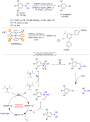
Scheme 15: Photocatalytic oxidative hydroxylation of arylboronic acids using UNLPF-12 as heterogeneous photoca...

Scheme 16: Photocatalytic oxidative hydroxylation of arylboronic acids using MOF-525 as heterogeneous photocat...

Scheme 17: Preparation of the heterogeneous photocatalyst CNH.

Scheme 18: Photoinduced sulfonation of alkenes with sulfinic acid using CNH as photocatalyst.

Scheme 19: Sulfonic acid scope of the sulfonation reactions.

Scheme 20: Regioselective sulfonation reaction of arimistane.

Scheme 21: Synthesis of quinazolin-4-(3H)-ones.

Scheme 22: Selective photooxidation of aromatic benzyl alcohols to benzaldehydes using Pt/PCN-224(Zn).

Scheme 23: Photooxidation of benzaldehydes to benzoic acids using Pt or Pd porphyrins.

Scheme 24: Photocatalytic reduction of various nitroaromatics using a Ni-MOF.

Scheme 25: Photoinduced cycloadditions of CO2 with epoxides by MOF1.

Figure 4: Electronic configurations of the species of oxygen. Adapted from [66].

Scheme 26: TPP-photocatalyzed generation of 1O2 and its application in organic synthesis. Adapted from [67-69].

Scheme 27: Pericyclic reactions involving singlet oxygen and their mechanisms. Adapted from [67].

Scheme 28: First scaled up ascaridole preparation from α-terpinene.

Scheme 29: Antimalarial drug synthesis using an endoperoxidation approach.

Scheme 30: Photooxygenation of colchicine.

Scheme 31: Synthesis of (−)-pinocarvone from abundant (+)-α-pinene.

Scheme 32: Seeberger’s semi-synthesis of artemisinin.

Scheme 33: Synthesis of artemisinin using TPP and supercritical CO2.

Scheme 34: Synthesis of artemisinin using chlorophyll a.

Scheme 35: Quercitol stereoisomer preparation.

Scheme 36: Photocatalyzed preparation of naphthoquinones.

Scheme 37: Continuous endoperoxidation of conjugated dienes and subsequent rearrangements leading to oxidized ...

Scheme 38: The Opatz group total synthesis of (–)-oxycodone.

Scheme 39: Biomimetic syntheses of rhodonoids A, B, E, and F.

Scheme 40: α-Photooxygenation of chiral aldehydes.

Scheme 41: Asymmetric photooxidation of indanone β-keto esters by singlet oxygen using PTC as a chiral inducer...

Scheme 42: Asymmetric photooxidation of both β-keto esters and β-keto amides by singlet oxygen using PTC-2 as ...

Scheme 43: Bifunctional photo-organocatalyst used for the asymmetric oxidation of β-keto esters and β-keto ami...

Scheme 44: Mechanism of singlet oxygen oxidation of sulfides to sulfoxides.

Scheme 45: Controlled oxidation of sulfides to sulfoxides using protonated porphyrins as photocatalysts. aIsol...

Scheme 46: Photochemical oxidation of sulfides to sulfoxides using PdTPFPP as photocatalyst.

Scheme 47: Controlled oxidation of sulfides to sulfoxides using SnPor@PAF as a photosensitizer.

Scheme 48: Syntheses of 2D-PdPor-COF and 3D-Pd-COF.

Scheme 49: Photocatalytic oxidation of A) thioanisole to methyl phenyl sulfoxide and B) various aryl sulfides,...

Scheme 50: General mechanism for oxidation of amines to imines.

Scheme 51: Oxidation of secondary amines to imines.

Scheme 52: Oxidation of secondary amines using Pd-TPFPP as photocatalyst.

Scheme 53: Oxidative amine coupling using UNLPF-12 as heterogeneous photocatalyst.

Scheme 54: Synthesis of Por-COF-1 and Por-COF-2.

Scheme 55: Photocatalytic oxidation of amines to imines by Por-COF-2.

Scheme 56: Photocyanation of primary amines.

Scheme 57: Synthesis of ᴅ,ʟ-tert-leucine hydrochloride.

Scheme 58: Photocyanation of catharanthine and 16-O-acetylvindoline using TPP.

Scheme 59: Photochemical α-functionalization of N-aryltetrahydroisoquinolines using Pd-TPFPP as photocatalyst.

Scheme 60: Ugi-type reaction with 1,2,3,4-tetrahydroisoquinoline using molecular oxygen and TPP.

Scheme 61: Ugi-type reaction with dibenzylamines using molecular oxygen and TPP.

Scheme 62: Mannich-type reaction of tertiary amines using PdTPFPP as photocatalyst.

Scheme 63: Oxidative Mannich reaction using UNLPF-12 as heterogeneous photocatalyst.

Scheme 64: Transformation of amines to α-cyanoepoxides and the proposed mechanism.
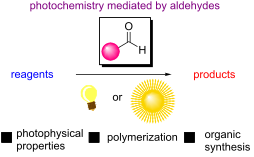
Aldehydes as powerful initiators for photochemical transformations
- Maria A. Theodoropoulou,
- Nikolaos F. Nikitas and
- Christoforos G. Kokotos
Beilstein J. Org. Chem. 2020, 16, 833–857, doi:10.3762/bjoc.16.76
- upon optimization, 4-anisaldehyde (52) proved to be a better photocatalyst under UV-A irradiation than the initially used eosin Y. Compound 182, the all-trans-isomer, was the major product. The optimized conditions are presented in Scheme 43a. Conducting several control experiments and noticing that

Graphical Abstract

Scheme 1: Norrish type I and II dissociations.

Scheme 2: Proposed radical pair formation after the photolysis of benzaldehyde (8).

Scheme 3: Aldehydes in the Paterno–Büchi reaction.

Scheme 4: 2,3-Diazabicyclo[2.2.1]hept-2-ene (DBH).

Scheme 5: Dissociation pathways of benzaldehyde.

Scheme 6: Reactions that lead to polarized products detectable by CIDNP.

Scheme 7: MMA (26), DEABP (27), and Michler’s ketone (28).

Scheme 8: Radical intermediates of DEABP.

Scheme 9: Photoinitiated polymerization of monomeric MMA (26) using the quinoxalines 32 and benzaldehyde (8).

Scheme 10: Acetone (4) and formaldehyde (35) as photografting initiators.

Scheme 11: Photografting by employing acetaldehyde (36) as the photoinitiator.

Scheme 12: Proposed photolysis mechanism for aliphatic ketones 44 and formaldehyde (35).

Scheme 13: Initiator 50, reductant 51, and benzaldehyde derivatives 52–54 for the polymerization of the methac...

Scheme 14: Proposed mechanism of the photomediated atom transfer radical polymerization employing the benzalde...

Scheme 15: cis/trans isomerization employing triplet states of photosensitizers.

Scheme 16: Salicylaldehyde (68) forms an internal hydrogen bond.

Scheme 17: Olefin isomerization via energy transfer from a carbonyl compound.

Scheme 18: Mechanistic pathways for the Paterno–Büchi reaction.

Scheme 19: Isomeric oxetanes formed after photochemical addition of aryl aldehydes to 2-butenes.

Scheme 20: Rotation of the C3–C4 bond of the biradical intermediate may lead to all four conformations.

Scheme 21: Photolysis products of benzaldehyde (8) in different solvents. a) In benzene or ethanol. b) In hex-...

Scheme 22: N-tert-Butylbenzamide formation proceeds via a benzoyl radical.

Scheme 23: Photochemical pinacol coupling.

Scheme 24: Photochemical ATRA catalyzed by 4-anisaldehyde (52).

Scheme 25: Proposed triplet sensitization mechanism of the ATRA reaction in the presence of 4-anisaldehyde (52...
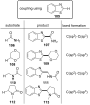
Scheme 26: Benzaldehyde-mediated photoredox CDC reaction: compatible amides and ethers.

Scheme 27: Photoredox cross-dehydrogenative coupling (CDC) conditions and proposed reaction mechanism.

Scheme 28: Optimized conditions for the photoredox merger reaction.

Scheme 29: Proposed mechanism for the C(sp3)–H alkylation/arylation of ethers.

Scheme 30: Substrate scope for the photochemical alkylation of ethers.

Scheme 31: C(sp3)–H Functionalization of N-containing molecules.

Scheme 32: Substrate scope for the photochemical alkylation of N-containing molecules.

Scheme 33: Additional products yielded by the photochemical alkylation reaction of N-containing molecules.

Scheme 34: C(sp3)–H functionalization of thioethers.

Scheme 35: Proposed mechanism for the C(sp3)–H alkylation/arylation of N-containing molecules and thioethers.

Scheme 36: Hydroacylation using 4-cyanobenzaldehyde (53) as the photoinitiator.

Scheme 37: Selectivity for the formation of the α,α-disubstituted aldehydes.
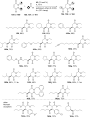
Scheme 38: Substrate scope for the photochemical addition of aldehydes to Michael acceptors.

Scheme 39: Proposed mechanism for the hydroacylation of Michael acceptors using 4-cyanobenzaldehyde (53) as th...

Scheme 40: Catalytic arylation of aromatic aldehydes by aryl bromides in which the reaction product acts as th...

Scheme 41: Proposed mechanism for the catalytic arylation of benzaldehydes by aryl bromides in which the react...

Scheme 42: Functionalization of the chiral cyclobutanes 180.

Scheme 43: Optimized reaction conditions and proposed mechanism for the sulfonylcyanation of cyclobutenes.
Photocatalytic deaminative benzylation and alkylation of tetrahydroisoquinolines with N-alkylpyrydinium salts
- David Schönbauer,
- Carlo Sambiagio,
- Timothy Noël and
- Michael Schnürch
Beilstein J. Org. Chem. 2020, 16, 809–817, doi:10.3762/bjoc.16.74
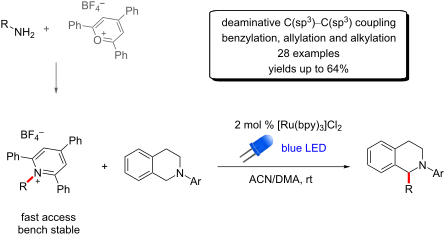
- borylations [41][42], heteroarylations [43], and thioesterifications [44]. Additionally, several methods using photoredox chemistry were also published. For instance, the alkylation of isoquinolines under iridium catalysis and alkynylation with eosin Y as the catalyst [45][46]. In this contribution, we
- obtained with [Ru(bpy)3]Cl2, albeit the reaction was still low-yielding (29%, Table 1, entry 1) and was accompanied with substantial decomposition of the starting material. Eosin Y, fluorescein, and [Ir(dtbbpy)(ppy)2]PF6 gave lower yields in comparison (Table 1, entries 2, 3 and 4). Applying strictly inert
- ). Eosin Y was inefficient under these conditions (Table 1, entry 20). Since [Ru(bpy)3]Cl2 is significantly cheaper than the iridium catalyst, the former was used in further reactions. Regarding the addition of different bases, the yield remained unchanged, when lutidine was added. Potassium carbonate and

Graphical Abstract

Scheme 1: Examples of photocatalytic C–C bond formation by nucleophilic trapping of a reactive THIQ intermedi...

Figure 1: Kinetic profile for the benzylation of 1 to 3.
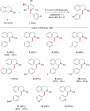
Scheme 2: Benzylation of N-phenyl-THIQ.

Scheme 3: Benzylation of substituted N-arylTHIQs.

Scheme 4: Removal of the PMP protecting group.

Scheme 5: Alkylation of N-phenyl-THIQ derivatives. Conditions: a2 mol % [Ir(dtbbpy)(ppy)2]PF6, DMA, 60 h; b2 ...

Scheme 6: Proposed mechanism.
Photophysics and photochemistry of NIR absorbers derived from cyanines: key to new technologies based on chemistry 4.0
- Bernd Strehmel,
- Christian Schmitz,
- Ceren Kütahya,
- Yulian Pang,
- Anke Drewitz and
- Heinz Mustroph
Beilstein J. Org. Chem. 2020, 16, 415–444, doi:10.3762/bjoc.16.40
- shown to realize photoinitiated controlled/living radical polymerization of various monomers in metal free conditions. In the visible region, several dyes (fluorescein, eosin Y, erythrosin B) worked well to mediate ATRP in the presence of amines [72]. The reversibility of the electron transfer steps
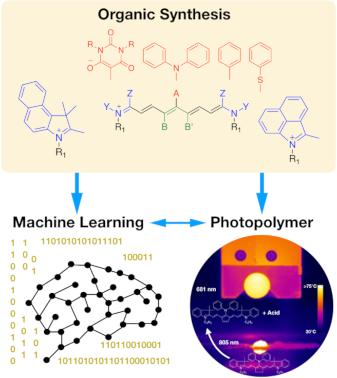
Graphical Abstract

Scheme 1: Structural patterns of several symmetric cyanines relating to trimethines (I), pentamethines (II), ...

Scheme 2: 1-Substituted 2,3,3-trimethylindolium-, 2,3,3-benzo[e]indolium-, and 2,3,3-benzo[c,d]indolium salts...

Scheme 3: Substitution of the chlorine substituent at the meso-position by a stronger nucleophilic moiety B [68].

Scheme 4: Structure of alternative chain builders for synthesis of heptamethines.

Figure 1: Simplified process chart of photophysical processes occurring in NIR absorbers.

Scheme 5: Chemical structure of the electron acceptors that were from iodonium cations 88 and triazines 89.

Figure 2: Photoinduced electron transfer under different scenarios in which each example exhibits an intrinsi...

Scheme 6: Photoexcited absorber 33 results in reaction with an iodonium cation in the respective cation radic...

Scheme 7: Reaction scheme of absorbers comprising in the molecules center a five ring bridged moiety. This le...

Scheme 8: Structure of donor compounds used in a three component system.

Figure 3: Cationic photopolymerization of an epoxide (Epikote 828) initiated by excitation of the absorber 36...

Scheme 9: Different modes of photoinitiated ATRP using UV, visible and NIR light.

Scheme 10: The structure of Sens used in photo-ATRP.

Figure 4: Comparison of the GPC traces of precursor PMMA with a) chain extended PMMA and b) PMMA-b-PS. Condit...

Figure 5: Spectral changes of the solution of 48 in the presence of [Cu(L)]Br2 (L: tris(2-pyridylmethyl)amine...

Scheme 11: Photoinduced CuAAC reactions in which photochemical reactions result in formation of the Cu(I) cata...

Scheme 12: Model reaction between benzyl azide and phenyacetylene using the absorber 48 as NIR sensitizer at 7...

Figure 6: Block copolymerization of the precursors PS-N3 and Alkyne-PCL results in the block copolymer PS-b-P...

Figure 7: UV–vis–NIR absorption changes of the solution of 48 in the presence of PMDETA, phenylacetylene and ...

Scheme 13: Workflow to design and process new materials in a setup based on an intelligent DoE to develop tech...

Scheme 14: Illustration of the iDoE setting up experiments suggested and analyzed by the A.I. After defining t...

Scheme 15: Classification of the factors for the formation of polymer networks by NIR-photocuring depending on...
Naphthalene diimides with improved solubility for visible light photoredox catalysis
- Barbara Reiß and
- Hans-Achim Wagenknecht
Beilstein J. Org. Chem. 2019, 15, 2043–2051, doi:10.3762/bjoc.15.201
- sustainability further, organic compounds, mainly eosin Y [25], rhodamine 6G [26], 9-mesityl-10-methylacridinium perchlorate [27], 1,2,3,5-tetrakis(carbazol-9-yl)-4,6-dicyanobenzenes [28] and N-phenylphenothiazines [29] were applied as important alternative photoredox catalysts [30][31]. These studies
- cNDI 2 [48][49]. Hence, the photoredox properties of the new cNDI 2–6 are comparable to those of eosin Y and rhodamine 6G as other organic photoredox catalysts. Photoredox catalysis with NDI 1 and cNDI 6 The α-alkylation of 1-octanal (12) by diethyl 2-bromomalonate (13) yielding product 14 (Scheme 2
- and cNDI 2 (in CH2Cl2) in comparison to other organic photoredox catalyst X, in particular eosin Y (EY), rhodamine 6G (Rh6G) and 9-mesityl-10-methylacridinium perchlorate (MesAcr) 1,2,3,5-tetrakis(carbazol-9-yl)-4,6-dicyanobenzenes (4CzIPN) and N-phenylphenothiazine (Ptz). Photoredox catalytic

Graphical Abstract
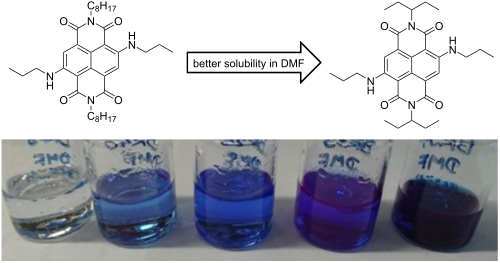
Scheme 1: Synthesis of reference NDI 1 and cNDIs 2–6; bottom: image of saturated solutions of cNDIs 2–6 in DM...

Figure 1: Optical properties of NDI 1 and cNDIs 2 and 6: UV–vis absorbance in CH2Cl2 and in DMF (normal lines...

Scheme 2: Photocatalytic α-alkylation of octanal (12): 500 mM 12, 250 mM 13, 50 mM (20 mol %) organocatalyst ...

Figure 2: Normalized absorbance of cNDI 6 in comparison to normalized emission of the 468 nm, 520 nm, 597 nm,...

Figure 3: Kinetic analysis of yields of product 14 in the presence (solid lines) and in the absence (dashed l...
Complexation of a guanidinium-modified calixarene with diverse dyes and investigation of the corresponding photophysical response
- Yu-Ying Wang,
- Yong Kong,
- Zhe Zheng,
- Wen-Chao Geng,
- Zi-Yi Zhao,
- Hongwei Sun and
- Dong-Sheng Guo
Beilstein J. Org. Chem. 2019, 15, 1394–1406, doi:10.3762/bjoc.15.139
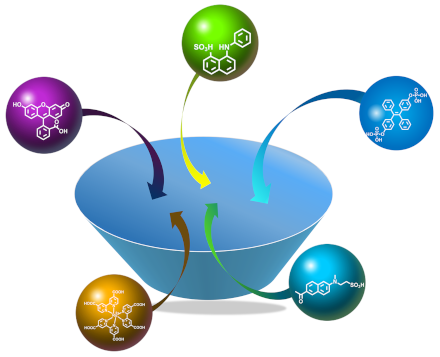
- luminescent dyes. Fluorescein, eosin Y, rose bengal, tetraphenylporphine sulfonate and sulfonated aluminum phthalocyanine were employed as classical aggregation-induced quenching dyes. 2-(p-Toluidinyl)naphthalene-6-sulfonic acid and 1-anilinonaphthalene-8-sulfonic acid were selected as representatives of
- materials and constructing dye-sensitized solar cells. Results and Discussion GC5A was prepared according to our previous procedure and represents a robust water-soluble macrocyclic receptor [26]. According to the positively charged feature of GC5A, a series of negatively charged dyes, including Fl, eosin Y

Graphical Abstract
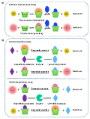
Scheme 1: (a) Schematic illustration of IDA. The addition of an analyte competitor leads to switch-on or swit...
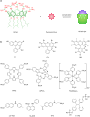
Scheme 2: (a) The chemical structure of GC5A and schematic illustration of the binding between the luminescen...
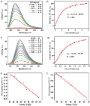
Figure 1: Direct fluorescence titrations (λex = 350 nm) of 2,6-TNS (1.0 μM) (a) and 1,8-ANS (1.0 μM) (c) with...

Figure 2: (a) Direct fluorescence titration (λex = 327 nm) of P-TPE (1.0 μM) with GC5A in HEPES buffer (10 mM...

Figure 3: (a) Direct fluorescence titration (λex = 371 nm) of TPS (1.0 μM) with GC5A in HEPES buffer (10 mM, ...

Figure 4: (a) Direct fluorescence titration (λex = 465 nm) of Ru(dcbpy)3 (1.0 μM) with GC5A. (b) Direct absor...
Organometallic vs organic photoredox catalysts for photocuring reactions in the visible region
- Aude-Héloise Bonardi,
- Frédéric Dumur,
- Guillaume Noirbent,
- Jacques Lalevée and
- Didier Gigmes
Beilstein J. Org. Chem. 2018, 14, 3025–3046, doi:10.3762/bjoc.14.282
- allow access to unique chemistries such as photocatalysis at different wavelength or photoconductivity for example [76]. Moreover, they can be characterized by lower costs. For examples, methylene blue or eosin-Y are examples of widespread photoredox catalytic dyes [18]. There is a wide range of

Graphical Abstract

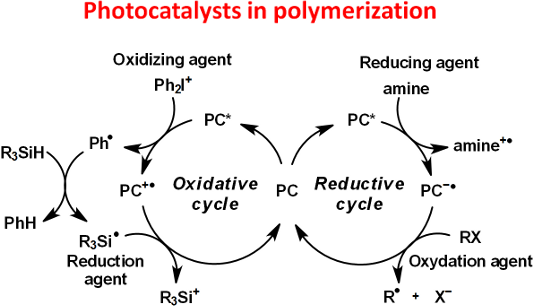
Figure 1: Typical oxidative and reductive cycle for a photoredox catalyst (PC).

Figure 2: Transitions involved in absorbing species containing π, σ and n electrons.

Figure 3: Ligand to metal charge transfer (illustrated here for a d6 metal complex).

Figure 4: Metal to ligand charge transfer (illustrated here for a d5 metal complex).

Scheme 1: Structures of additives involved in the photoredox catalytic cycles.

Figure 5: Catalytic cycles involved with iodonium salt and (A) (TMS)3SiH, (B) NVK and (C) EDB.

Scheme 2: Structures of photoredox metal-based catalysts.

Scheme 3: Photocatalytical cycle for the Ru complex.

Scheme 4: Structures of photoredox organocatalysts.

Scheme 5: Diversity of the chemical structures of photoredox organocatalysts.

Scheme 6: Structures of benchmarked monomers.
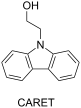
Scheme 7: Structure of the CARET additive.

Scheme 8: Photoredox catalysis mechanism of a visible light-mediated living radical polymerization. (Abbrevia...
Synthesis of aryl sulfides via radical–radical cross coupling of electron-rich arenes using visible light photoredox catalysis
- Amrita Das,
- Mitasree Maity,
- Simon Malcherek,
- Burkhard König and
- Julia Rehbein
Beilstein J. Org. Chem. 2018, 14, 2520–2528, doi:10.3762/bjoc.14.228
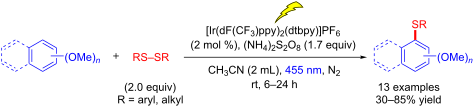
- SCE. Other photocatalysts like Ru(bpy)3Cl2, Ru(bpz)3PF6, DDQ, acridinium dyes, Eosin Y, Eosin Y disodium salt and 4-CzIPN were evaluated, but under our reaction conditions either low substrate conversion or the degradation of the photocatalyst was observed (see Supporting Information File 1, Table S1

Graphical Abstract

Figure 1: Selected examples of sulfenylated heterocycles used in pharmaceuticals and material chemistry.

Scheme 1: Synthetic routes to organosulfur compounds.

Scheme 2: Aryl sulfide synthesis.

Scheme 3: Substrate scope for arylthiol syntheses. The reaction was performed with 1a–g (0.1 mmol) and 2a–d (...

Figure 2: Crystal structures of compounds 3a, 3d, 3e and 3i.

Scheme 4: Radical trapping experiments.

Figure 3: (a) Changes in the fluorescence spectra (in this case intensity, λEx = 455 nm) of [Ir(dF(CF3)ppy)2(...

Scheme 5: Proposed mechanism for visible light mediated direct C–H sulfenylation.

Figure 4: Black line: UV–vis spectrum of the degassed [Ir] + 1,3,5-TMB mixture (solution A) in ACN. Blue and ...
Applications of organocatalysed visible-light photoredox reactions for medicinal chemistry
- Michael K. Bogdos,
- Emmanuel Pinard and
- John A. Murphy
Beilstein J. Org. Chem. 2018, 14, 2035–2064, doi:10.3762/bjoc.14.179
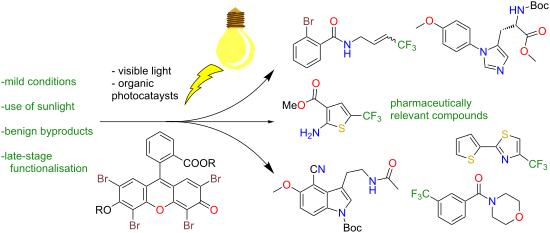
- half reaction (2) the redox potential is referred to by the notation Ered (Eosin Y/Eosin Y•−). The symbol “*” serves to denote when a species is in an excited electronic state, which then leads the general format adopted in this review to describe redox potentials of photocatalysts to become E*x (Ox
- structural characteristic of peptides is the disulfide bridge formed by cysteines. This functional group is much more prevalent in peptide medicinal chemistry. Noël et al. have published a protocol for the aerobic oxidation of thiols to disulfides, using Eosin Y photocatalysis and TMEDA (Scheme 3) [43]. The
- protocol for coupling simple five-membered heterocycles to substituted benzenes, using Eosin Y as the photocatalyst, starting from arenediazonium salts (Scheme 6) [47]. The scope of the reaction is limited to N-Boc-pyrroles, furans and a couple of simple substituted thiophenes with respect to the

Graphical Abstract

Figure 1: Depiction of the energy levels of a typical organic molecule and the photophysical processes it can...

Figure 2: General catalytic cycle of a photocatalyst in a photoredox organocatalysed reaction. [cat] – photoc...

Figure 3: Structures and names of the most common photocatalysts encountered in the reviewed literature.

Figure 4: General example of a reductive quenching catalytic cycle. [cat] – photocatalyst, [cat]* – photocata...

Figure 5: General example of an oxidative quenching catalytic cycle. [cat] – photocatalyst, [cat]* – photocat...

Scheme 1: Oxidative coupling of aldehydes and amines to amides using acridinium salt photocatalysis.

Figure 6: Biologically active molecules containing a benzamide linkage.

Scheme 2: The photocatalytic reduction of amino acids to produce the corresponding free or protected amines.

Scheme 3: The organocatalysed photoredox base-mediated oxidation of thiols to disulfides.

Scheme 4: C-Terminal modification of peptides and proteins using organophotoredox catalysis.

Scheme 5: The reduction and aryl coupling of aryl halides using a doubly excited photocatalyst (PDI).

Figure 7: Mechanism for the coupling of aryl halides using PDI, which is excited sequentially by two photons.

Scheme 6: The arylation of five-membered heteroarenes using arenediazonium salts under organophotoredox condi...

Scheme 7: The C–H (hetero)arylation of five-membered heterocycles under Eosin Y photocatalysis.

Scheme 8: The C–H sulfurisation of imidazoheterocycles using Eosin B-catalyzed photochemical methods.

Scheme 9: The introduction of the thiocyanate group using Eosin Y photocatalysis.

Scheme 10: Sulfonamidation of pyrroles using oxygen as the terminal oxidant.

Scheme 11: DDQ-catalysed C–H amination of arenes and heteroarenes.

Scheme 12: Photoredox-promoted radical Michael addition reactions of allylic or benzylic carbons.

Figure 8: Proposed mechanistic rationale for the observed chemoselectivities.

Scheme 13: The photocatalytic manipulation of C–H bonds adjacent to amine groups.

Scheme 14: The perylene-catalysed organophotoredox tandem difluoromethylation–acetamidation of styrene-type al...

Figure 9: Examples of biologically active molecules containing highly functionalised five membered heterocycl...

Scheme 15: The [3 + 2]-cycloaddition leading to the formation of pyrroles, through the reaction of 2H-azirines...

Figure 10: Proposed intermediate that determines the regioselectivity of the reaction.

Figure 11: Comparison of possible pathways of reaction and various intermediates involved.

Scheme 16: The acridinium salt-catalysed formation of oxazoles from aldehydes and 2H-azirines.

Scheme 17: The synthesis of oxazolines and thiazolines from amides and thioamides using organocatalysed photor...

Figure 12: Biologically active molecules on the market containing 1,3,4-oxadiazole moieties.

Scheme 18: The synthesis of 1,3,4-oxadiazoles from aldehyde semicarbazones using Eosin Y organophotocatalysis.

Scheme 19: The dimerization of primary thioamides to 1,2,4-thiadiazoles catalysed by the presence of Eosin Y a...

Scheme 20: The radical cycloaddition of o-methylthioarenediazonium salts and substituted alkynes towards the f...

Scheme 21: The dehydrogenative cascade reaction for the synthesis of 5,6-benzofused heterocyclic systems.

Figure 13: Trifluoromethylated version of compounds which have known biological activities.

Scheme 22: Eosin Y-catalysed photoredox formation of 3-substituted benzimidazoles.

Scheme 23: Oxidation of dihydropyrimidines by atmospheric oxygen using photoredox catalysis.

Scheme 24: Photoredox-organocatalysed transformation of 2-substituted phenolic imines to benzoxazoles.

Scheme 25: Visible light-driven oxidative annulation of arylamidines.

Scheme 26: Methylene blue-photocatalysed direct C–H trifluoromethylation of heterocycles.

Scheme 27: Photoredox hydrotrifluoromethylation of terminal alkenes and alkynes.

Scheme 28: Trifluoromethylation and perfluoroalkylation of aromatics and heteroaromatics.

Scheme 29: The cooperative asymmetric and photoredox catalysis towards the functionalisation of α-amino sp3 C–...

Scheme 30: Organophotoredox-catalysed direct C–H amidation of aromatics.

Scheme 31: Direct C–H alkylation of heterocycles using BF3K salts. CFL – compact fluorescent lamp.

Figure 14: The modification of camptothecin, demonstrating the use of the Molander protocol in LSF.

Scheme 32: Direct C–H amination of aromatics using acridinium salts.

Scheme 33: Photoredox-catalysed nucleophilic aromatic substitution of nucleophiles onto methoxybenzene derivat...

Scheme 34: The direct C–H cyanation of aromatics with a focus on its use for LSF.
Synthesis of new p-tert-butylcalix[4]arene-based polyammonium triazolyl amphiphiles and their binding with nucleoside phosphates
- Vladimir A. Burilov,
- Guzaliya A. Fatikhova,
- Mariya N. Dokuchaeva,
- Ramil I. Nugmanov,
- Diana A. Mironova,
- Pavel V. Dorovatovskii,
- Victor N. Khrustalev,
- Svetlana E. Solovieva and
- Igor S. Antipin
Beilstein J. Org. Chem. 2018, 14, 1980–1993, doi:10.3762/bjoc.14.173
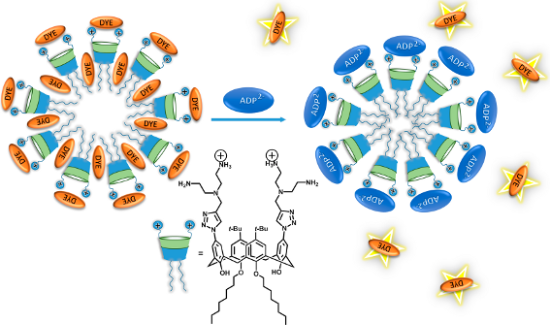
- pyrene and eosin Y as dye probes. The CAC values of tetraalkyl-substituted macrocycles 12a,b (5 µM for both) are significantly lower than those for dialkyl-substituted macrocycles 10a,b (790 and 160 µM, respectively). Premicellar aggregates of macrocycles 10a,b and 12a,b with the dye eosin Y were used
- was elaborated for the naked-eye detection of ADP with a detection limit of 0.5 mM. Keywords: ADP; amphiphile; ATP; calix[4]arene; CuAAC; eosin Y probe; molecular recognition; polydiacetylene; self-assembly; triazole; Introduction During the last two decades many researcher groups have paid much
- performed by the dye micellization method using pyrene and eosin Y (EY) as fluorescent and spectrophotometric probes, respectively (Table 1). The nonpolar pyrene can be incorporated into hydrophobic domains of the aggregates due to hydrophobic interactions. Pyrene insertion is measured by analyzing the

Graphical Abstract

Scheme 1: The general structure of triazolylcalix[4]arene derivatives.

Scheme 2: Synthesis of di- (4a,b) and tetraazido (8a,b) calix[4]arene derivatives. Conditions: Ia: AlkBr, K2CO...

Figure 1: Molecular structure of 8a (50% ellipsoids). The dashed line indicates the alternative position of t...

Scheme 3: Synthesis of polyammonium macrocycles 10a,b and 12a,b.

Figure 2: 2D NOESY H1-H1 NMR spectra of 10b in DMSO-d6.

Figure 3: The optical response (OR) of the calixarene/EY systems toward adenosine phosphates. Concentration (...

Figure 4: Supramolecular binding motif of diphosphate (a) and triphosphate (b) groups of nucleotides with the...

Figure 5: UV spectra of EY (1), 10b–EY (2), and 10b–EY in the presence of 0.005 (3), 0.05 (4), 0.5 (5) and 2 ...

Scheme 4: Structure of AEPDA and the corresponding AEPCDA–10b polydiacetylene vesicle.

Figure 6: UV spectra of the AEPCDA polydiacetylene vesicles in the presence of different amounts of 10b; conc...

Figure 7: Photographs of a portion of a 96-well plate containing AEPCDA–10b polydiacetylene vesicles in the a...
One-pot preparation of 4-aryl-3-bromocoumarins from 4-aryl-2-propynoic acids with diaryliodonium salts, TBAB, and Na2S2O8
- Teppei Sasaki,
- Katsuhiko Moriyama and
- Hideo Togo
Beilstein J. Org. Chem. 2018, 14, 345–353, doi:10.3762/bjoc.14.22
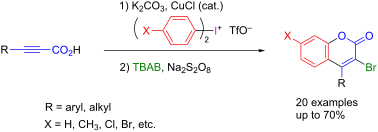
- [27], with R-CH=O/(n-Bu)4NBr (TBAB, cat.)/K2S2O8 at 90 °C [28], with ArSO2H/Eosin Y(cat.)/tert-butyl hydrogen peroxide (TBHP) at rt [29], and with ArSO2NHNH2/n-Bu4NI(cat.)/TBHP at 80 °C [30]. In addition, the formation of coumarins via the bromine-radical-mediated reaction of aryl 2-alkynoates with

Graphical Abstract

Scheme 1: One-pot preparation of 4-aryl-3-bromocoumarins 3 from 3-aryl-2-propynoic acids 1 with diphenyliodon...

Scheme 2: One-pot preparation of 3-bromo-4-phenylcoumarins 3a from 3-phenyl-2-propynoic acid (1a) with daryli...

Scheme 3: Derivatization of 3-bromo-4-phenylcoumarin.
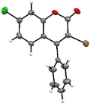
Figure 1: ORTEP of 3-bromo-7-chloro-4-phenylcoumarin (3Da).

Scheme 4: Possible reaction pathway.
Photocatalytic formation of carbon–sulfur bonds
- Alexander Wimmer and
- Burkhard König
Beilstein J. Org. Chem. 2018, 14, 54–83, doi:10.3762/bjoc.14.4
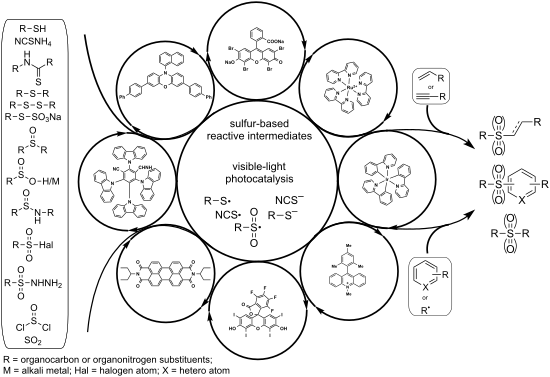
- authors propose that the photo-excited state of the organic dye Eosin Y is reductively quenched by the aryl thiol to form the Eosin Y radical anion and the respective aryl thiyl radical cation. Neutral Eosin Y is regenerated through oxidation of the radical anion by dioxygen. The resulting superoxide
- steps. Applying the organic dye Eosin Y as photocatalyst avoids this problem. The single-electron oxidation of aryl thiols by the excited state of Eosin Y is thermodynamically feasible and forms a thiyl radical cation, which subsequently can be deprotonated by pyridine to the respective thiyl radical
- finally oxidized by an in situ generated superoxide radical anion to form the respective sulfoxide. In contrast, Fraile, Aleman and co-workers use the organic photocatalyst Eosin Y and propose a different mechanism for their method (Scheme 15b). Based on several quenching experiments, they suggest that

Graphical Abstract

Scheme 1: General overview over the sulfur-based substrates and reactive intermediates that are discussed in ...
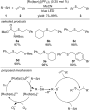
Scheme 2: Photoredox-catalyzed radical thiol–ene reaction, applying [Ru(bpz)3](PF6)2 as photocatalyst.

Scheme 3: Photoredox-catalyzed thiol–ene reaction of aliphatic thiols with alkenes enabled by aniline derivat...
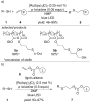
Scheme 4: Photoredox-catalyzed radical thiol–ene reaction for the postfunctionalization of polymers (a) and n...

Scheme 5: Photoredox-catalyzed thiol–ene reaction enabled by bromotrichloromethane as redox additive.
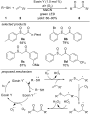
Scheme 6: Photoredox-catalyzed preparation of β-ketosulfoxides with Eosin Y as organic dye as photoredox cata...
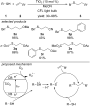
Scheme 7: Greaney’s photocatalytic radical thiol–ene reaction, applying TiO2 nanoparticles as photocatalyst.

Scheme 8: Fadeyi’s photocatalytic radical thiol–ene reaction, applying Bi2O3 as photocatalyst.

Scheme 9: Ananikov’s photocatalytic radical thiol-yne reaction, applying Eosin Y as photocatalyst.
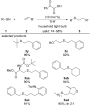
Scheme 10: Organocatalytic visible-light photoinitiated thiol–ene coupling, applying phenylglyoxylic acid as o...

Scheme 11: Xia’s photoredox-catalyzed synthesis of 2,3-disubstituted benzothiophenes, applying 9-mesityl-10-me...
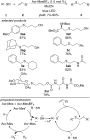
Scheme 12: Wang’s metal-free photoredox-catalyzed radical thiol–ene reaction, applying 9-mesityl-10-methylacri...

Scheme 13: Visible-light benzophenone-catalyzed metal- and oxidant-free radical thiol–ene reaction.
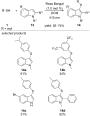
Scheme 14: Visible-light catalyzed C-3 sulfenylation of indole derivatives using Rose Bengal as organic dye.
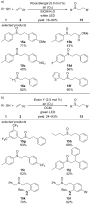
Scheme 15: Photocatalyzed radical thiol–ene reaction and subsequent aerobic sulfide-oxidation with Rose Bengal...
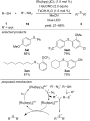
Scheme 16: Photoredox-catalyzed synthesis of diaryl sulfides.

Scheme 17: Photocatalytic cross-coupling of aryl thiols with aryl diazonium salts, using Eosin Y as photoredox...
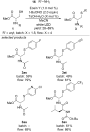
Scheme 18: Photocatalyzed cross-coupling of aryl diazonium salts with cysteines in batch and in a microphotore...
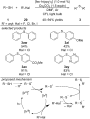
Scheme 19: Fu’s [Ir]-catalyzed photoredox arylation of aryl thiols with aryl halides.

Scheme 20: Fu’s photoredox-catalyzed difluoromethylation of aryl thiols.
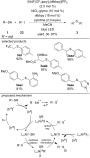
Scheme 21: C–S cross-coupling of thiols with aryl iodides via [Ir]-photoredox and [Ni]-dual-catalysis.
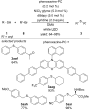
Scheme 22: C–S cross-coupling of thiols with aryl bromides, applying 3,7-bis-(biphenyl-4-yl)-10-(1-naphthyl)ph...
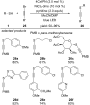
Scheme 23: Collin’s photochemical dual-catalytic cross-coupling of thiols with bromoalkynes.
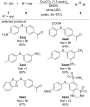
Scheme 24: Visible-light-promoted C–S cross-coupling via intermolecular electron donor–acceptor complex format...
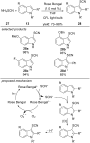
Scheme 25: Li’s visible-light photoredox-catalyzed thiocyanation of indole derivatives with Rose Bengal as pho...
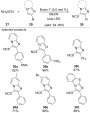
Scheme 26: Hajra’s visible-light photoredox-catalyzed thiocyanation of imidazoheterocycles with Eosin Y as pho...

Scheme 27: Wang’s photoredox-catalyzed thiocyanation reaction of indoles, applying heterogeneous TiO2/MoS2 nan...
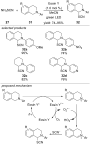
Scheme 28: Yadav’s photoredox-catalyzed α-C(sp3)–H thiocyanation reaction for tertiary amines, applying Eosin ...

Scheme 29: Yadav’s photoredox-catalyzed synthesis of 5-aryl-2-imino-1,3-oxathiolanes.

Scheme 30: Yadav’s photoredox-catalyzed synthesis of 1,3-oxathiolane-2-thiones.
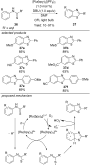
Scheme 31: Li’s photoredox catalysis for the preparation of 2-substituted benzothiazoles, applying [Ru(bpy)3](...
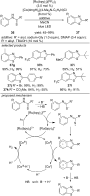
Scheme 32: Lei’s external oxidant-free synthesis of 2-substituted benzothiazoles by merging photoredox and tra...

Scheme 33: Metal-free photocatalyzed synthesis of 2-aminobenzothiazoles, applying Eosin Y as photocatalyst.

Scheme 34: Metal-free photocatalyzed synthesis of 1,3,4-thiadiazoles, using Eosin Y as photocatalyst.
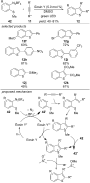
Scheme 35: Visible-light photoredox-catalyzed preparation of benzothiophenes with Eosin Y.

Scheme 36: Visible-light-induced KOH/DMSO superbase-promoted preparation of benzothiophenes.
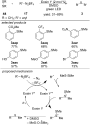
Scheme 37: Jacobi von Wangelin’s photocatalytic approach for the synthesis of aryl sulfides, applying Eosin Y ...

Scheme 38: Visible-light photosensitized α-C(sp3)–H thiolation of aliphatic ethers.

Scheme 39: Visible-light photocatalyzed cross-coupling of alkyl and aryl thiosulfates with aryl diazonium salt...
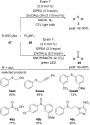
Scheme 40: Visible-light photocatalyzed, controllable sulfenylation and sulfoxidation with organic thiosulfate...

Scheme 41: Rastogi’s photoredox-catalyzed methylsulfoxidation of aryl diazonium salts, using [Ru(bpy)3]Cl2 as ...
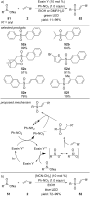
Scheme 42: a) Visible-light metal-free Eosin Y-catalyzed procedure for the preparation of vinyl sulfones from ...
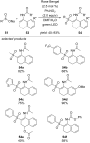
Scheme 43: Visible-light photocatalyzed cross-coupling of sodium sulfinates with secondary enamides.

Scheme 44: Wang’s photocatalyzed oxidative cyclization of phenyl propiolates with sulfinic acids, applying Eos...

Scheme 45: Lei’s sacrificial oxidant-free synthesis of allyl sulfones by merging photoredox and transition met...
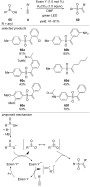
Scheme 46: Photocatalyzed Markovnikov-selective radical/radical cross-coupling of aryl sulfinic acids and term...

Scheme 47: Visible-light Eosin Y induced cross-coupling of aryl sulfinic acids and styrene derivatives, afford...
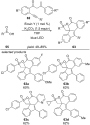
Scheme 48: Photoredox-catalyzed bicyclization of 1,7-enynes with sulfinic acids, applying Eosin Y as photocata...

Scheme 49: Visible-light-accelerated C–H-sulfinylation of arenes and heteroarenes.
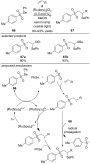
Scheme 50: Visible-light photoredox-catalyzed β-selenosulfonylation of electron-rich olefins, applying [Ru(bpy)...

Scheme 51: Photocatalyzed preparation of β-chlorosulfones from the respective olefins and p-toluenesulfonyl ch...
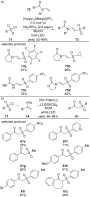
Scheme 52: a) Photocatalyzed preparation of β-amidovinyl sulfones from sulfonyl chlorides. b) Preparation of β...

Scheme 53: Visible-light photocatalyzed sulfonylation of aliphatic tertiary amines, applying [Ru(bpy)3](PF6)2 ...
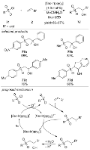
Scheme 54: Reiser’s visible-light photoredox-catalyzed preparation of β-hydroxysulfones from sulfonyl chloride...
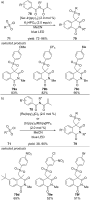
Scheme 55: a) Sun’s visible-light-catalyzed approach for the preparation of isoquinolinonediones, applying [fac...
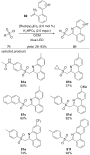
Scheme 56: Visible-light photocatalyzed sulfonylation/cyclization of vinyl azides, applying [Ru(bpy)3]Cl2 as p...

Scheme 57: Visible-light photocatalyzed procedure for the formation of β-ketosulfones from aryl sulfonyl chlor...

Scheme 58: Zheng’s method for the sulfenylation of indole derivatives, applying sulfonyl chlorides via visible...
Scheme 59: Cai’s visible-light induced synthesis of β-ketosulfones from sulfonyl hydrazines and alkynes.

Scheme 60: Photoredox-catalyzed approach for the preparation of vinyl sulfones from sulfonyl hydrazines and ci...
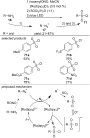
Scheme 61: Jacobi von Wangelin’s visible-light photocatalyzed chlorosulfonylation of anilines.
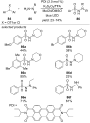
Scheme 62: Three-component photoredox-catalyzed synthesis of N-amino sulfonamides, applying PDI as organic dye....

Scheme 63: Visible-light induced preparation of complex sulfones from oximes, silyl enol ethers and SO2.
CF3SO2X (X = Na, Cl) as reagents for trifluoromethylation, trifluoromethylsulfenyl-, -sulfinyl- and -sulfonylation and chlorination. Part 2: Use of CF3SO2Cl
- Hélène Chachignon,
- Hélène Guyon and
- Dominique Cahard
Beilstein J. Org. Chem. 2017, 13, 2800–2818, doi:10.3762/bjoc.13.273
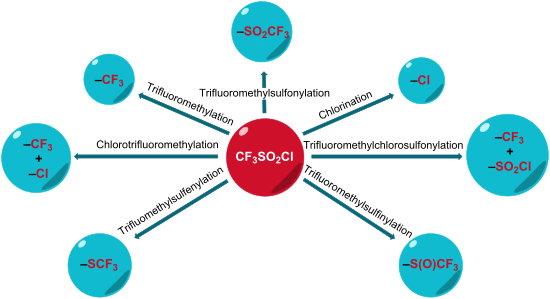
- the presence of Eosin Y under visible light irradiation (Scheme 2) [9]. Acetophenone derivatives with various substitution patterns as well as aliphatic or heteroaromatic ketones were equally well tolerated. This methodology offered the advantage of minimising the chlorination side reaction
- (dtbbpy)]PF6 or Eosin Y favoured the introduction of the CF3 group and a chlorine atom, with SO2 extrusion. This phenomenon can be explained by the presumed ability of copper to coordinate SO2Cl− (intermediate 25), preventing it from decomposing into SO2 and Cl− and consequently allowing it to be
- -nitroalkenes with trifluoromethanesulfonyl chloride [39]. They found out that in the presence of the photocatalyst Eosin Y, under visible-light irradiation, such substrates could be selectively converted into (E)-1-trifluoromethylalkenes in moderate to good yields (Scheme 30). A plausible mechanism for this

Graphical Abstract
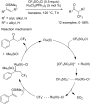
Scheme 1: Trifluoromethylation of silyl enol ethers.

Scheme 2: Continuous flow trifluoromethylation of ketones under photoredox catalysis.
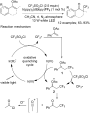
Scheme 3: Trifluoromethylation of enol acetates.

Scheme 4: Photoredox-catalysed tandem trifluoromethylation/cyclisation of N-arylacrylamides: a route to trifl...

Scheme 5: Tandem trifluoromethylation/cyclisation of N-arylacrylamides using BiOBr nanosheets catalysis.

Scheme 6: Photoredox-catalysed trifluoromethylation/desulfonylation/cyclisation of N-tosyl acrylamides (bpy: ...

Scheme 7: Photoredox-catalysed trifluoromethylation/aryl migration/desulfonylation of N-aryl-N-tosylacrylamid...

Scheme 8: Proposed mechanism for the trifluoromethylation/aryl migration/desulfonylation (/cyclisation) of N-...

Scheme 9: Photoredox-catalysed trifluoromethylation/cyclisation of N-methacryloyl-N-methylbenzamide derivativ...

Scheme 10: Photoredox-catalysed trifluoromethylation/cyclisation of N-methylacryloyl-N-methylbenzamide derivat...

Scheme 11: Photoredox-catalysed trifluoromethylation/dearomatising spirocyclisation of a N-benzylacrylamide de...

Scheme 12: Photoredox-catalysed trifluoromethylation/cyclisation of an unactivated alkene.

Scheme 13: Asymmetric radical aminotrifluoromethylation of N-alkenylurea derivatives using a dual CuBr/chiral ...

Scheme 14: Aminotrifluoromethylation of an N-alkenylurea derivative using a dual CuBr/phosphoric acid catalyti...

Scheme 15: 1,2-Formyl- and 1,2-cyanotrifluoromethylation of alkenes under photoredox catalysis.

Scheme 16: First simultaneous introduction of the CF3 moiety and a Cl atom onto alkenes.

Scheme 17: Chlorotrifluoromethylaltion of terminal, 1,1- and 1,2-substituted alkenes.

Scheme 18: Chorotrifluoromethylation of electron-deficient alkenes (DCE = dichloroethane).
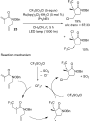
Scheme 19: Cascade trifluoromethylation/cyclisation/chlorination of N-allyl-N-(benzyloxy)methacrylamide.

Scheme 20: Cascade trifluoromethylation/cyclisation (/chlorination) of diethyl 2-allyl-2-(3-methylbut-2-en-1-y...

Scheme 21: Trifluoromethylchlorosulfonylation of allylbenzene derivatives and aliphatic alkenes.

Scheme 22: Access to β-hydroxysulfones from CF3-containing sulfonyl chlorides through a photocatalytic sequenc...
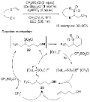
Scheme 23: Cascade trifluoromethylchlorosulfonylation/cyclisation reaction of alkenols: a route to trifluorome...

Scheme 24: First direct C–H trifluoromethylation of arenes and proposed mechanism.

Scheme 25: Direct C–H trifluoromethylation of five- and six-membered (hetero)arenes under photoredox catalysis....

Scheme 26: Alternative pathway for the C–H trifluoromethylation of (hetero)arenes under photoredox catalysis.

Scheme 27: Direct C–H trifluoromethylation of five- and six-membered ring (hetero)arenes using heterogeneous c...

Scheme 28: Trifluoromethylation of terminal olefins.

Scheme 29: Trifluoromethylation of enamides.

Scheme 30: (E)-Selective trifluoromethylation of β-nitroalkenes under photoredox catalysis.

Scheme 31: Photoredox-catalysed trifluoromethylation/cyclisation of an o-azidoarylalkynes.

Scheme 32: Regio- and stereoselective chlorotrifluoromethylation of alkynes.

Scheme 33: PMe3-mediated trifluoromethylsulfenylation by in situ generation of CF3SCl.

Scheme 34: (EtO)2P(O)H-mediated trifluoromethylsulfenylation of (hetero)arenes and thiols.

Scheme 35: PPh3/NaI-mediated trifluoromethylsulfenylation of indole derivatives.

Scheme 36: PPh3/n-Bu4NI mediated trifluoromethylsulfenylation of thiophenol derivatives.

Scheme 37: PPh3/Et3N mediated trifluoromethylsulfinylation of benzylamine.

Scheme 38: PCy3-mediated trifluoromethylsulfinylation of azaarenes, amines and phenols.

Scheme 39: Mono- and dichlorination of carbon acids.

Scheme 40: Monochlorination of (N-aryl-N-hydroxy)acylacetamides.

Scheme 41: Examples of the synthesis of heterocycles fused with β-lactams through a chlorination/cyclisation p...

Scheme 42: Enantioselective chlorination of β-ketoesters and oxindoles.

Scheme 43: Enantioselective chlorination of 3-acyloxazolidin-2-one derivatives (NMM = N-methylmorpholine).
Mechanochemical borylation of aryldiazonium salts; merging light and ball milling
- José G. Hernández
Beilstein J. Org. Chem. 2017, 13, 1463–1469, doi:10.3762/bjoc.13.144
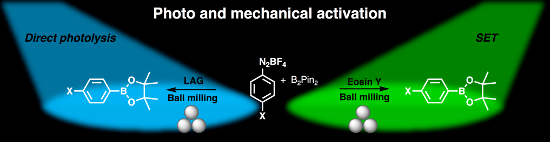
- Jose G. Hernandez Institute of Organic Chemistry, RWTH Aachen University, Landoltweg 1, D-52074 Aachen, Germany 10.3762/bjoc.13.144 Abstract Merging of photo- and mechanochemical activation permitted studying the role of eosin Y in the borylation of aryldiazonium salts in a ball mill
- –solvent charge-transfer complex formation. Keywords: aryldiazonium salts; borylation; eosin Y; mechanochemistry; photocatalysis; Introduction The use of mechanical force to process materials or to induce chemical transformations is perhaps as old as the history of mankind itself [1]. Similarly, from
- the original study, irradiation for 18 h of a MeCN solution of aryldiazonium salts, bis(pinacolato)diboron (B2pin2, 2) and eosin Y with a 25 W visible light lamp led to the corresponding arylboronates in moderate to good yields [18]. Results and Discussion To commence, a PMMA milling jar was designed

Graphical Abstract

Figure 1: (a) Cartoon representing the merging of light and mechanical energy. (b) 25 mL transparent PMMA mil...

Scheme 1: Borylation of 1a in the presence of 1,1-diphenylethene (4).

Scheme 2: Light-mediated LAG borylation of 1a. aDetermined by 1H NMR spectroscopy using internal standard. bA...
Novel β-cyclodextrin–eosin conjugates
- Gábor Benkovics,
- Damien Afonso,
- András Darcsi,
- Szabolcs Béni,
- Sabrina Conoci,
- Éva Fenyvesi,
- Lajos Szente,
- Milo Malanga and
- Salvatore Sortino
Beilstein J. Org. Chem. 2017, 13, 543–551, doi:10.3762/bjoc.13.52
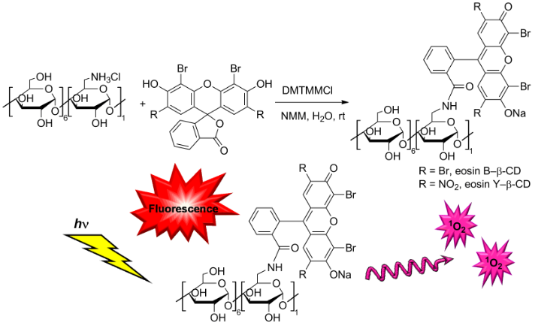
- /bjoc.13.52 Abstract Eosin B (EoB) and eosin Y (EoY), two xanthene dye derivatives with photosensitizing ability were prepared in high purity through an improved synthetic route. The dyes were grafted to a 6-monoamino-β-cyclodextrin scaffold under mild reaction conditions through a stable amide linkage
- from the literature [27][28], to the best of our knowledge Eo–CD conjugates have not been prepared up to date. Results and Discussion Synthesis of eosin Y (EoY, 2) and eosin B (EoB, 4) The purity of the commercially available dyes eosin Y and eosin B, purchased from different providers (two different
- dyes were freshly synthesized starting from fluorescein (Flu, 1). Although the described synthetic procedures for the preparation of eosin dyes commonly use Br2, herein the less hazardous N-bromosuccinimide (NBS) was used as the source of bromine. Thus, eosin Y (2) was prepared in a single step from 1

Graphical Abstract

Figure 1: Reaction scheme for the synthesis of eosin Y (2) and eosin B (4).

Figure 2: Reaction scheme for the synthesis of eosin-appended β-CDs, 2–β-CD and 4–β-CD (NMM: N-methylmorpholi...

Figure 3: TLC analysis of the composition of the crude coupling reaction mixtures.

Figure 4: 1H NMR spectrum of 2–β-CD with partial assignment (DMSO-d6, 600 MHz, 298 K).

Figure 5: Size distributions of 1 mM aqueous solutions of conjugates 4–β-CD (a) and 2–β-CD (b) at 25.0 °C (pH...
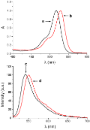
Figure 6: Normalized absorption spectra of aqueous solutions of (a) eosin Y (2) and (b) conjugate 2–β-CD and ...
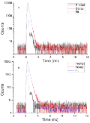
Figure 7: Time-resolved fluorescence observed for aqueous solutions of (a) eosin Y (2) and (b) the 2–β-CD con...

Figure 8: 1O2 luminescence detected upon 528 nm light excitation of D2O solutions of (a) eosin Y (2) and (b) 2...
Contribution of microreactor technology and flow chemistry to the development of green and sustainable synthesis
- Flavio Fanelli,
- Giovanna Parisi,
- Leonardo Degennaro and
- Renzo Luisi
Beilstein J. Org. Chem. 2017, 13, 520–542, doi:10.3762/bjoc.13.51
- of thiols [66]. Noël and co-workers set up a microflow system equipped with a mass flow controller (MFC) able to introduce pure oxygen as the oxidant to oxidize a solution of thiol containing 1% of Eosin Y. The flow stream was exposed to white LED light in order to activate the reaction, and a

Graphical Abstract

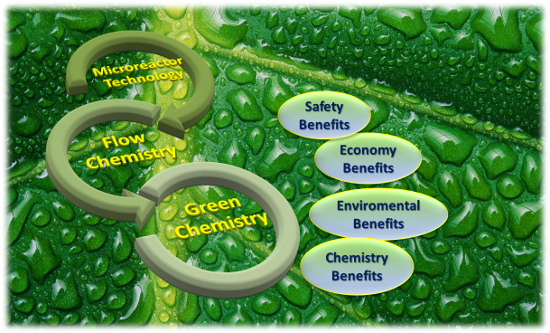
Figure 1: Microreactor technologies and flow chemistry for a sustainable chemistry.

Scheme 1: A flow microreactor system for the generation and trapping of highly unstable carbamoyllithium spec...

Scheme 2: Flow synthesis of functionalized α-ketoamides.

Scheme 3: Reactions of benzyllithiums.

Scheme 4: Trapping of benzyllithiums bearing carbonyl groups enabled by a flow microreactor. (Adapted with pe...

Scheme 5: External trapping of chloromethyllithium in a flow microreactor system.

Scheme 6: Scope for the direct tert-butoxycarbonylation using a flow microreactor system.

Scheme 7: Control of anionic Fries rearrangement reactions by using submillisecond residence time. (Adapted w...

Figure 2: Chip microreactor (CMR) fabricated with six layers of polyimide films. (Reproduced with permission ...

Scheme 8: Flow microreactor system for lithiation, borylation, Suzuki–Miyaura coupling and selected examples ...

Scheme 9: Experimental setup for the flow synthesis of 2-fluorobi(hetero)aryls by directed lithiation, zincat...

Scheme 10: Experimental setup for the coupling of fluoro-substituted pyridines. (Adapted with permission from [53]...

Scheme 11: Continuous flow process setup for the preparation of 11 (Reproduced with permission from [54], copyrigh...
Scheme 12: Continuous-flow photocatalytic oxidation of thiols to disulfides.

Scheme 13: Trifluoromethylation by continuous-flow photoredox catalysis.

Scheme 14: Flow photochemical synthesis of 6(5H)-phenanthridiones from 2-chlorobenzamides.

Scheme 15: Synthesis of biaryls 14a–g under photochemical flow conditions.

Scheme 16: Flow oxidation of hydrazones to diazo compounds.

Scheme 17: Synthetic use of flow-generated diazo compounds.

Scheme 18: Ley’s flow approach for the generation of diazo compounds.
Scheme 19: Iterative strategy for the sequential coupling of diazo compounds.

Scheme 20: Integrated synthesis of Bakuchiol precursor via flow-generated diazo compounds.

Scheme 21: Kappe’s continuous-flow reduction of olefines with diimide.

Scheme 22: Multi-injection setup for the reduction of artemisinic acid.

Scheme 23: Flow reactor system for multistep synthesis of (S)-rolipram. Pumps are labelled a, b, c, d and e; L...

Figure 3: Reconfigurable modules and flowcharts for API synthesis. (Reproduced with permission from [85], copyrig...

Figure 4: Reconfigurable system for continuous production and formulation of APIs. (Reproduced with permissio...
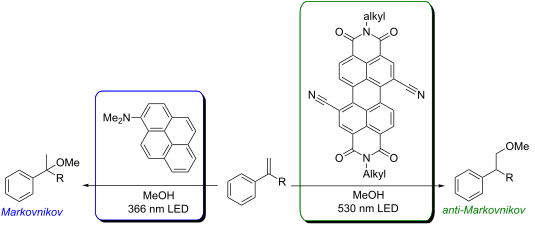
Photocatalytic nucleophilic addition of alcohols to styrenes in Markovnikov and anti-Markovnikov orientation
- Martin Weiser,
- Sergej Hermann,
- Alexander Penner and
- Hans-Achim Wagenknecht
Beilstein J. Org. Chem. 2015, 11, 568–575, doi:10.3762/bjoc.11.62
- [8]. The way towards a really complete organo-type photoredox catalysis has mainly been established for eosin Y as an important alternative for [Ru(bpy)3]2+ [9]. Photocatalytic nucleophilic additions of amines and alcohols to olefins, especially styrenes, became an increasingly important task due to

Graphical Abstract

Scheme 1: Photooxidation of the substrate and reductive quenching of the photocatalyst (left) vs photoreducti...

Scheme 2: Mechanism of the Markovnikov-type photocatalytic addition of methanol to 1,1-diphenylethylene (1) a...

Scheme 3: Intramolecular photocatalytic addition with substrate 3; reaction conditions: 3 (2 mM), Py (2 mM), ...

Scheme 4: Proposed mechanism of the anti-Markovnikov-type photocatalytic addition of methanol to 1,1-diphenyl...

Figure 1: Conversion of substrate 1 and formation of product 5 observed during photocatalysis with PDI in the...

Figure 2: Conversion of substrate 1 (black dashed) and formation of product 5 (red solid) observed during pho...

Figure 3: Spectra of PDI before (dotted black) and after excitation (red), then every 2 min until ground stat...

Scheme 5: Intramolecular additions of substrates 8 and 10 to demonstrate the effect of different electron den...
Eosin Y-catalyzed visible-light-mediated aerobic oxidative cyclization of N,N-dimethylanilines with maleimides
- Zhongwei Liang,
- Song Xu,
- Wenyan Tian and
- Ronghua Zhang
Beilstein J. Org. Chem. 2015, 11, 425–430, doi:10.3762/bjoc.11.48
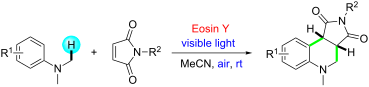
- Engineering, Jiaxing University, Jiahang Road 118, Zhejiang 314001, China 10.3762/bjoc.11.48 Abstract A novel and simple strategy for the efficient synthesis of the corresponding tetrahydroquinolines from N,N-dimethylanilines and maleimides using visible light in an air atmosphere in the presence of Eosin Y
- as a photocatalyst has been developed. The metal-free protocol involves aerobic oxidative cyclization via sp3 C–H bond functionalization process to afford good yields in a one-pot procedure under mild conditions. Keywords: aerobic oxidative cyclization; C–H functionalization; Eosin Y; photoredox
- and not sustainable. Similar to the redox properties of these organometallic complexes, some metal-free organic dyes such as Eosin Y, Rose Bengal, Fluorescein, and Methylene Blue, have shown superiority of their applications as photocatalysts, which are easy to handle, environmentally friendly

Graphical Abstract

Scheme 1: Visible-light-induced sp3 C–H bond functionalization of tertiary amines.
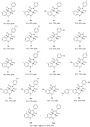
Scheme 2: Substrate scope for aerobic oxidative cyclization of N,N-dimethylanilines with maleimides.

Scheme 3: A proposed reaction mechanism.
Visible-light photoredox catalyzed synthesis of pyrroloisoquinolines via organocatalytic oxidation/[3 + 2] cycloaddition/oxidative aromatization reaction cascade with Rose Bengal
- Carlos Vila,
- Jonathan Lau and
- Magnus Rueping
Beilstein J. Org. Chem. 2014, 10, 1233–1238, doi:10.3762/bjoc.10.122
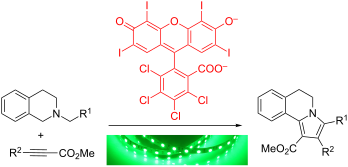
- Rhodamine B or Eosin Y were less efficient compared to Rose Bengal (Table 1, entries 2 and 3, respectively). Several solvents were tested without an improvement in the yield of the product (Table 1, entries 4–9). Finally, after tuning the relative amounts of the reagents, the product 3aa was isolated in 76

Graphical Abstract

Figure 1: Representative examples of lamellarin alkaloids.

Scheme 1: Photocatalytic metal free construction of pyrrolo[2,1-a]isoquinolines.

Scheme 2: Evaluation of the substrate scope.

Scheme 3: Evaluation of the substrate scope with activated alkynes.
Organic synthesis using photoredox catalysis
- Axel G. Griesbeck
Beilstein J. Org. Chem. 2014, 10, 1097–1098, doi:10.3762/bjoc.10.107
- other Ru or Ir complexes) with strong MLCT transitions, organic dyes such as xanthene, porphyrine or phthalocyanine dyes (e.g., eosin Y), and colloidal semiconductor particles (e.g., TiO2) [1][2][3][4][5][6][7][8][9]. In addition, combinations of light-absorbing materials have been studied such as dye
On the mechanism of photocatalytic reactions with eosin Y
- Michal Majek,
- Fabiana Filace and
- Axel Jacobi von Wangelin
Beilstein J. Org. Chem. 2014, 10, 981–989, doi:10.3762/bjoc.10.97
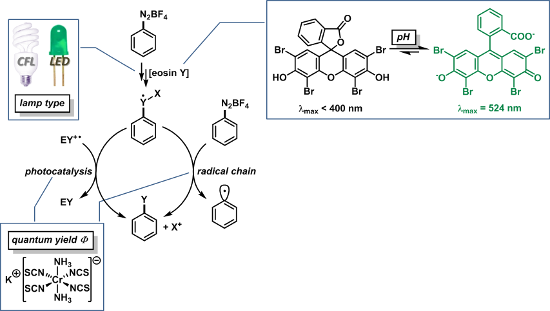
- spectroscopic, synthetic, and apparative study has allowed a more detailed mechanistic rationalization of several recently reported eosin Y-catalyzed aromatic substitutions at arenediazonium salts. The operation of rapid acid–base equilibria, direct photolysis pathways, and radical chain reactions has been
- -carbonyl, and aryl moieties [9][10]. Among them, eosin Y, the 2’,4’,5’,7’-tetrabromo derivative of fluorescein, has been most widely employed. The redox potential of the EY+/EY* pair of 1.1 V (vs. SCE) is experimentally not available as both of the compounds are short-lived intermediates. However, the
- redox potential can be obtained indirectly via analysis of the thermodynamic cycle involving the energy of the triplet state eosin Y* (T1) (derived from fluorescence measurements) and the energy of the radical cation eosin Y+• (derived from cyclovoltammetric experiments, for more details see Supporting

Graphical Abstract

Scheme 1: Oxidative quenching of eosin Y with arenediazonium salts and reactions of the resultant aryl radica...

Scheme 2: Proposed general reaction mechanism of eosin Y-catalyzed substitutions with arene diazonium salts.

Figure 1: UV–vis spectra of the photoborylation reaction mixture (RM).

Figure 2: Fluorescence spectra of the photoborylation reaction mixture (RM). Ex. = excitation wavelength.

Scheme 3: Acid–base behaviour of eosin Y.

Figure 3: UV–vis spectrum of p-bromobenzenediazonium tetrafluoroborate (pBrPhN2) and bispinacolato diboron (B2...

Scheme 4: Eosin Y-catalyzed and dye-free photolytic borylation.

Scheme 5: Eosin Y-catalyzed and dye-free reactions with ethyl propiolate.

Figure 4: UV–vis spectra of ortho-biphenyldiazonium tetrafluoroborate (biPhN2) in acetonitrile.
Scheme 6: Quantum yield determinations of selected visible-light-driven aromatic substitutions.



