Search results
Search for "fluorine" in Full Text gives 446 result(s) in Beilstein Journal of Organic Chemistry. Showing first 200.
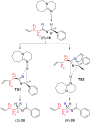
Recent advances in allylation of chiral secondary alkylcopper species
Beilstein J. Org. Chem. 2025, 21, 639–658, doi:10.3762/bjoc.21.51
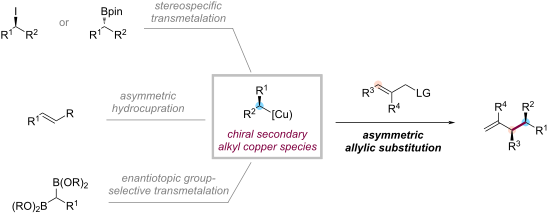
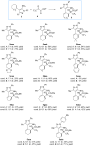
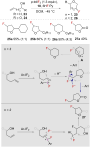
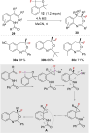
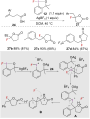
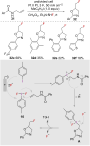
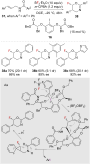
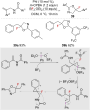
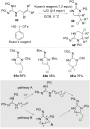
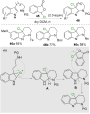
- -fold. These observations supported the hypothesis that the crown ether effectively disrupts the interaction between the alkali metal cation and fluorine atom, thereby decreasing the rate of β-F elimination. This asymmetric copper-catalyzed protocol represents one of the rare examples that allows to




Vinylogous functionalization of 4-alkylidene-5-aminopyrazoles with methyl trifluoropyruvates
Beilstein J. Org. Chem. 2025, 21, 533–540, doi:10.3762/bjoc.21.41
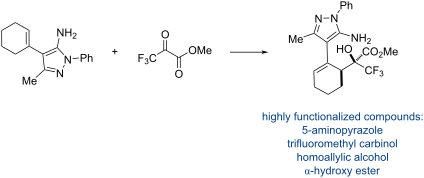
- ] as electrophiles. It is noteworthy that the development of such vinylogous functionalizations of this nitrogen heterocycle with a fluorine-containing electrophile may be of interest to pharmaceutical and medicinal chemists. Results and Discussion 4-(Alkenyl)-5-aminopyrazoles 3 were selected as



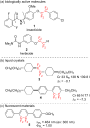
Deep-blue emitting 9,10-bis(perfluorobenzyl)anthracene
Beilstein J. Org. Chem. 2025, 21, 515–525, doi:10.3762/bjoc.21.39
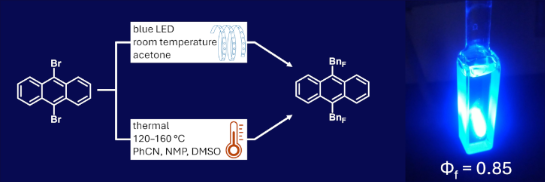
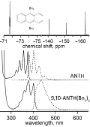
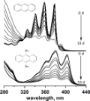
- observed for 9,10-ANTH(X)2 derivatives bearing fluorine-containing electron-withdrawing groups. For example, the Φf values increased from 0.28 for ANTH to 0.54 (X = F) to 0.68 (X = CF3) which is similar to that of X = C6F5 [32]. To our knowledge, 9,10-ANTH(BnF)2 has the second highest Φf value reported for





Synthesis of N-acetyl diazocine derivatives via cross-coupling reaction
Beilstein J. Org. Chem. 2025, 21, 490–499, doi:10.3762/bjoc.21.36
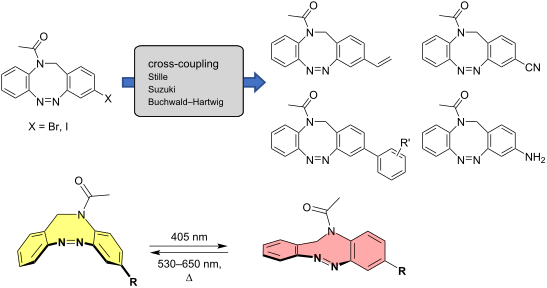
- 1. If electron-withdrawing substituents are added in ortho-position of the additional phenyl ring (12 and 13) the half-life is not affected significantly as well. An increase of about 10% of the half-lives has been observed for the weak +M substituents bromine (10) and fluorine (11) or methyl groups
- the switching behavior while weak +M substituents like bromine and fluorine as well as electron-poor heteroaromatic systems lead to increased thermal half-lives. An amino-substituted derivative 21 was obtained via Buchwald–Hartwig coupling with Boc-carbamate and subsequent deprotection. Amino


Identification and removal of a cryptic impurity in pomalidomide-PEG based PROTAC
Beilstein J. Org. Chem. 2025, 21, 407–411, doi:10.3762/bjoc.21.28
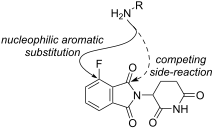
- instability, where the cleavage of the phthalimide and glutarimide rings comprises the major metabolic pathways [9][10]. Computational analysis confirms that C1, C3, C2’, and C4’ are the most electrophilic sites of thalidomide (Figure 4). As expected, introducing a fluorine atom to C4 activates it toward SNAr




Visible-light-promoted radical cyclisation of unactivated alkenes in benzimidazoles: synthesis of difluoromethyl- and aryldifluoromethyl-substituted polycyclic imidazoles
Beilstein J. Org. Chem. 2025, 21, 234–241, doi:10.3762/bjoc.21.15
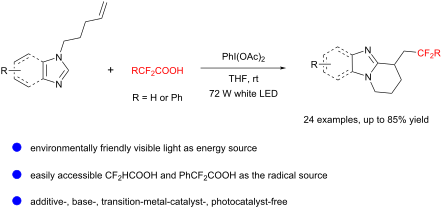
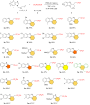
- good tolerance for both electron-withdrawing groups such as fluorine (–F), bromine (–Br), and chlorine (–Cl), as well as electron-donating substituents like methoxy (–OMe) and methyl (–Me), yielding the corresponding 6-membered tricyclic imidazoles in moderate to good yields (3b–h). Benzene rings
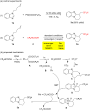
- aryldifluoromethylation/cyclization reaction (for details about optimization conditions, please see Supporting Information File 1). We were delighted to find that when 2-fluorophenylacetic acid was employed as the fluorine source, a wide range of benzimidazole substrates were also compatible with this reaction. For
- tricyclic and bicyclic imidazoles under additive-, base-, and metal catalyst-free conditions utilizing difluoroacetic acid and α,α-difluorobenzeneacetic acid as the readily available fluorine sources. The significant advantages of this approach, including its environmental friendliness and cost


Quantifying the ability of the CF2H group as a hydrogen bond donor
Beilstein J. Org. Chem. 2025, 21, 189–199, doi:10.3762/bjoc.21.11
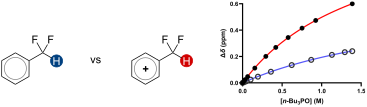
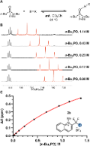
- (CF2H); fluorine; hydrogen bond donors; hydrogen bond strength; Introduction Hydrogen bonding interactions are ubiquitous non-covalent forces in chemistry and biology [1][2][3][4]. In canonical hydrogen bond (HB) donor–acceptor pairs, the donor typically comprises an electronegative heteroatom, such as
- Research Fellow supported by the ACS Division of Fluorine Chemistry. M.E.P. acknowledges support from the Office of Undergraduate Research and Innovation at the University of Rhode Island and the CAREERS Cyberteam Program funded by the National Science Foundation (Award No. 2018873). J.M.G. acknowledges




Nickel-catalyzed cross-coupling of 2-fluorobenzofurans with arylboronic acids via aromatic C–F bond activation
Beilstein J. Org. Chem. 2025, 21, 146–154, doi:10.3762/bjoc.21.8
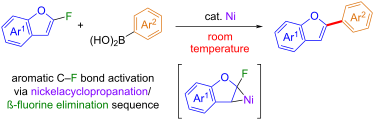
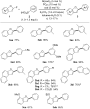
- successfully synthesize a range of 2-arylbenzofurans with various substituents. The reaction, which proceeded under mild conditions, involved β-fluorine elimination from nickelacyclopropanes formed by the interaction of 2-fluorobenzofurans with zero-valent nickel species. This protocol facilitates orthogonal
- coupling reactions of aromatic C–F and C–Br bonds with arylboronic acids. Keywords: arylboronic acid; benzofuran; C–F bond activation; cross-coupling; nickel; Introduction The metal-catalyzed activation of aromatic carbon–fluorine (C–F) bonds is widely recognized as a challenging task in synthetic
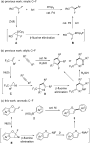
- developed efficient metal-mediated methods for activating (i) vinylic [8][9][10][11][12][13] and (ii) allylic C–F bonds [14][15][16][17][18] using β-fluorine elimination under mild conditions. In these studies, (i) we discovered zirconium-mediated β-fluorine elimination from zirconacyclopropanes A, which



Efficient synthesis of fluorinated triphenylenes with enhanced arene–perfluoroarene interactions in columnar mesophases
Beilstein J. Org. Chem. 2024, 20, 3263–3273, doi:10.3762/bjoc.20.270
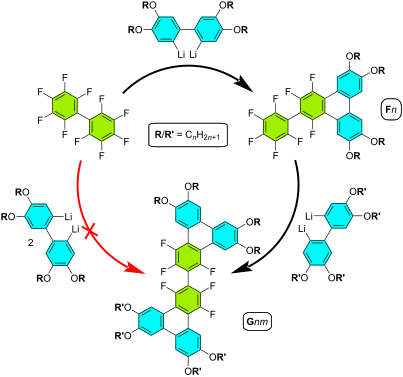
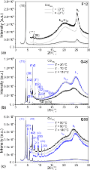
- fluorescence emission spectroscopies reveal green photoluminescence with fluorescence quantum yields of up to 33% for the Fn derivatives. The J-aggregation for the inner fluorine-substituted dimers Gnm is energetically and stereoelectronically more favorable and G66 exhibits thin-film fluorescence with a large
- fluorine atoms, inserted in the aromatic rings, which considerably modifies the dipole moment of the corresponding fluorinated aromatic rings with respect to their hydrogenated homologs, thus influencing their behavior, binding affinities, and optoelectronic properties. These interactions already represent
- an effective tool for the design of liquid crystalline materials [3][4][5][6][7][8]. Rod-like liquid crystalline molecules with fluorine-substituted arenes are ubiquitous in the displays industry [12]. They are also gaining importance in the design of π-conjugated polycyclic aromatic discotic liquid




Direct trifluoroethylation of carbonyl sulfoxonium ylides using hypervalent iodine compounds
Beilstein J. Org. Chem. 2024, 20, 3182–3190, doi:10.3762/bjoc.20.263
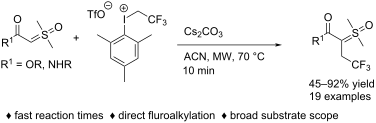
- reactants. Finally, DFT calculations provided insights about the mechanism of this transformation, which strongly suggest that an SN2 reaction is operative. Keywords: alkylation; DFT calculations; fluorine chemistry; hypervalent iodine; sulfoxonium ylide; sulphur ylides; Introduction Introducing fluorine
- of compounds, increase their metabolic stability, and boost their lipophilicity [5][6][7]. Consequently, developing new synthetic techniques that incorporate fluorine and fluorinated groups represents a significant area of research in synthetic organic chemistry [8][9]. Among the various fluorine
- mesh) as a stationary phase (eluent n-hex/AcOEt 5:95%). Representative examples of fluorine containing, biologically active compounds. Possible mechanisms for the reaction of 1a and 2a leading to 3a (via B), proceeding via either halogen-bonded adducts and reductive elimination (path 1) or directly via


Synthesis of extended fluorinated tripeptides based on the tetrahydropyridazine scaffold
Beilstein J. Org. Chem. 2024, 20, 3174–3181, doi:10.3762/bjoc.20.262
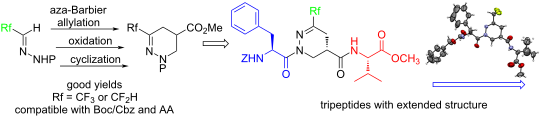
- is known about its β-analog (Figure 3), although β-amino acids have been shown to strongly modulate the structural, metabolic, and biological characteristics of peptides [13]. Finally, it is well known that fluorine is a very useful tool in medicinal chemistry as the incorporation of fluorinated
- 19F,1H NOE experiments of compound 8f did not show any specific correlation between fluorine atoms and the protons of the amino acids (see Supporting Information File 1). Finally, the low chemical shifts of the amide and carbamate protons (6.4 ppm for NH of valine and 5.5 ppm for the NH of


Hypervalent iodine-mediated intramolecular alkene halocyclisation
Beilstein J. Org. Chem. 2024, 20, 3113–3133, doi:10.3762/bjoc.20.258
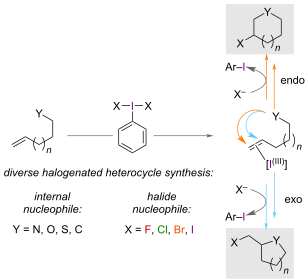
- this review aims to fill. The synthetic uses of HVI reagents [14][15][16], their involvement in heterocycle synthesis [17][18][19], and alkene functionalisation [20][21], have each been well-reviewed elsewhere. Review Hypervalent iodine-mediated fluorocyclisation Fluorine can substantially improve the
- activity of biologically relevant molecules [22], and compounds containing fluorine have seen huge success in medicine and agrochemicals, with over 30% of small molecule drugs [23][24] and 16% of pesticides [25] now containing fluorine atoms. A range of synthetically important fluorinated hetero- and
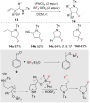
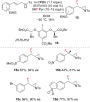
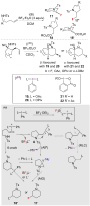
- of fluorine and additive, respectively. Racemic β-fluorinated piperidines 6 were synthesised in excellent yields, under mild conditions. A small amount of amino carboxylation side-product was determined to have been additionally produced from the reaction. A range of other alkenes were cyclised in

















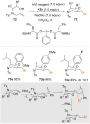
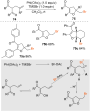


Synthesis of the 1,5-disubstituted tetrazole-methanesulfonylindole hybrid system via high-order multicomponent reaction
Beilstein J. Org. Chem. 2024, 20, 3077–3084, doi:10.3762/bjoc.20.256
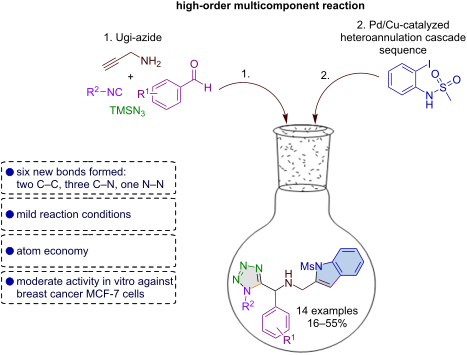
- efficiency and creating six new bonds (two C–C, three C–N, and one N–N). Additionally, the products were evaluated against breast cancer MCF-7 cells, finding moderate activity in the compounds substituted with fluorine and chlorine. Keywords: 1,5-disubstituted tetrazoles; high-order multicomponent reaction

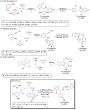
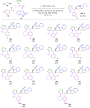


gem-Difluorovinyl and trifluorovinyl Michael acceptors in the synthesis of α,β-unsaturated fluorinated and nonfluorinated amides
Beilstein J. Org. Chem. 2024, 20, 2946–2953, doi:10.3762/bjoc.20.247
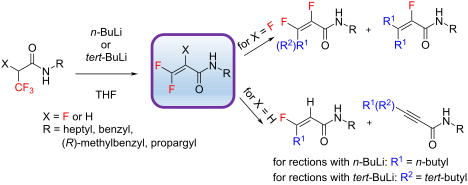
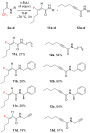
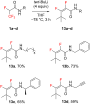
- Poznań, Poland 10.3762/bjoc.20.247 Abstract The incorporation of fluorine atoms within the structure of organic compounds is known to exert a significant impact on their electronic properties, thereby modulating their reactivity in diverse chemical transformations. In the context of our investigation
- advancements have broadened the scope of Michael donors and acceptors to encompass fluorine-containing compounds, enhancing the reaction's utility in synthesizing fluorinated derivatives [7][8]. Shibata and colleagues pioneered the use of fluorinated Michael donors, notably achieving enantioselective addition
- of 1-fluorobis(phenylsulfonyl)methane (FBSM) to α,β-unsaturated ketones with cinchona alkaloids [9]. Fluorinated Michael acceptors usually contain one fluorine atom or a trifluoromethyl group in the structure [10][11][12]. There are also known examples of gem-difluoroalkenes being used as Michael




4,6-Diaryl-5,5-difluoro-1,3-dioxanes as chiral dopants for liquid crystal compositions
Beilstein J. Org. Chem. 2024, 20, 2940–2945, doi:10.3762/bjoc.20.246
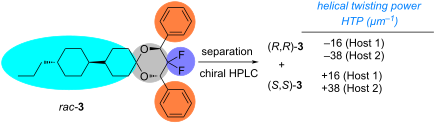
- dopants for liquid-crystal compositions. Keywords: chiral dopant; chirality; cholesteric phase; diols; fluorine; helical twisting power; liquid crystal; Introduction Liquid crystals for use in liquid crystal displays (LCDs) have become one of the most prominent application areas of fluoroorganic
- potential chiral dopants. Our long-term goal would be to provide a structure–property relationship of this class of molecules by i) modification of the aryl and ii) and/or acetal moieties (Scheme 1) and to elucidate the possible role of fluorine on their physical properties, with comparison to their non


Recent advances in transition-metal-free arylation reactions involving hypervalent iodine salts
Beilstein J. Org. Chem. 2024, 20, 2891–2920, doi:10.3762/bjoc.20.243

- presence of fluorine and a newly installed electron-deficient aryl group on α-carbon which increases electrophilicity of the α-carbon center [55]. The proposed reaction mechanism (Scheme 2) begins with the formation of one of two potential iodine intermediates, labeled as I or II. These intermediates arise
- salt, subsequently leading to decarboxylative C–C coupling. Notably, this method achieves the incorporation of two fluorine atoms in the benzyl position without resorting to hazardous fluorination reagents, transition-metal catalysts, or organometallic compounds. The utility of this reaction is
- . Notably, the efficiency of the cross-coupling reaction was observed to increase with the transfer of electron-poor aryl groups from the hypervalent iodine salt. Thus, electron-withdrawing substituents such as trifluoromethyl, m-chloro, and fluorine on the aryl group promoted efficient coupling. Moreover




C–H Trifluoromethylthiolation of aldehyde hydrazones
Beilstein J. Org. Chem. 2024, 20, 2883–2890, doi:10.3762/bjoc.20.242
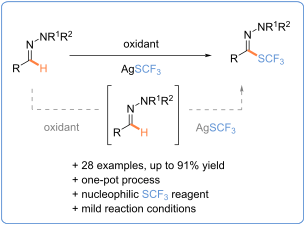
- ][12] from industrial applications [13][14][15] to our daily lives thanks to the specific features [16] of the fluorine atom or the fluorinated groups. Aiming at pushing beyond the frontiers of knowledge in this very active research field, emergent fluorinated groups [17][18][19][20] such as the SCF3


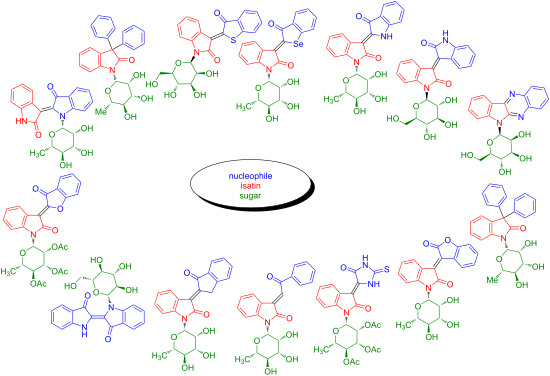
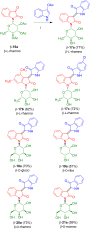
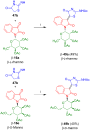
N-Glycosides of indigo, indirubin, and isoindigo: blue, red, and yellow sugars and their cancerostatic activity
Beilstein J. Org. Chem. 2024, 20, 2840–2869, doi:10.3762/bjoc.20.240
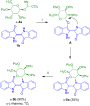
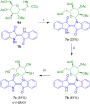
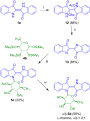
- from p-fluoroaniline which can be explained by the π-donating effect of fluorine which facilitates the cyclization via the ortho-position in case of m-, but not of p-fluoroaniline. It is worth to be noted that the formation of 23d proceeded with excellent regioselectivity via carbon C-6 rather than C-2










Mechanochemical difluoromethylations of ketones
Beilstein J. Org. Chem. 2024, 20, 2799–2805, doi:10.3762/bjoc.20.235
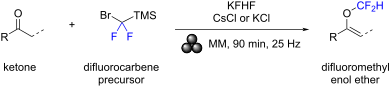
- through the formation of novel reactive intermediates [15][16][17][18]. Fluorine-containing functional groups are essential structural motifs in the development of new bioactive compounds and functional materials. Compared to their non-fluorinated analogs, the presence of fluorine atoms in molecular


Access to optically active tetrafluoroethylenated amines based on [1,3]-proton shift reaction
Beilstein J. Org. Chem. 2024, 20, 2776–2783, doi:10.3762/bjoc.20.233
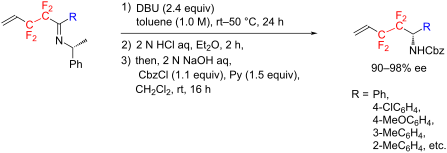
- amides in moderate three-step yields. Keywords: amine; chirality transfer; [1,3]-proton shift reaction; tetrafluoroethylene fragment; Introduction A fluorine atom has quite peculiar chemical and physical properties compared to others, and hence changes in molecular properties resulting from the
- introduction of fluorine atom(s) into organic molecules are also significantly unique, and often extremely noticeable even when the number of the atom introduced is small [1][2][3]. By skillfully utilizing such characteristics, fluorine-containing organic molecules have established themselves as indispensable
- compounds in various frontlines, such as medicinal, agrochemical, and material fields [4][5][6][7]. In particular, tetrafluoroethylenated compounds possessing two fluorine atoms on each of two adjacent carbons, have been attracting an enormous attention these days. This stems from the fact that substances



Synthesis of spiroindolenines through a one-pot multistep process mediated by visible light
Beilstein J. Org. Chem. 2024, 20, 2722–2731, doi:10.3762/bjoc.20.230
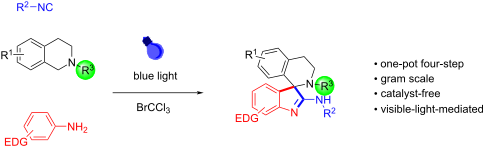
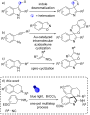
- without further purification. Graphene oxide (GO) was purchased from Graphenea. All products were characterized by 1H,13C, 19F (when fluorine is present) NMR, IR and HRMS. General procedure for the one-pot synthesis of spiro[indole-isoquinoline] 3a: A solution of N-phenyltetrahydroisoquinoline (1 equiv



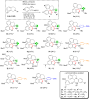


Synthesis of benzo[f]quinazoline-1,3(2H,4H)-diones
Beilstein J. Org. Chem. 2024, 20, 2708–2719, doi:10.3762/bjoc.20.228
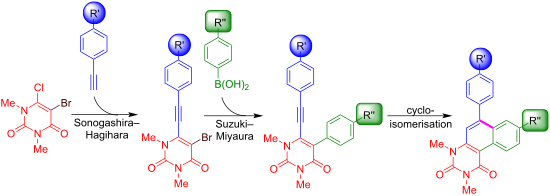
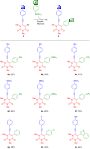
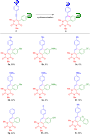
- isolated in moderate to excellent yields (Scheme 3). The best yield was obtained for 5a with 99%. Several functional groups, such as methyl, N,N-dimethylamino, and trifluoromethyl, are tolerated by the developed procedure. However, a fluorine group was converted to a hydroxy functional group (5h), most




Synthesis of fluoroalkenes and fluoroenynes via cross-coupling reactions using novel multihalogenated vinyl ethers
Beilstein J. Org. Chem. 2024, 20, 2691–2703, doi:10.3762/bjoc.20.226

- synthetic methods for fluoroalkenes have attracted considerably and become increasingly necessary in pharmaceutical and industrial fields. Fluoroalkenes have been constructed in a variety of methods [4][5][6][7][8][9][10][11][12][13][14], and one of the methods is to make use of fluorine-containing building
- blocks. When using them as nucleophilic reagents [15][16][17][18][19][20], the reaction between anion species, such as fluorine-containing Horner–Wadsworth–Emmons reagents, and carbonyl compounds led to E-selective olefination (Scheme 1A) [15]. On the other hand, some reactions with electrophilic
- fluorine-containing building blocks have been developed [21][22][23][24][25]. Jubault and Poisson et al. reported SN2’ reactions of hydride or alcohols to electrophilic fluorine-containing alkenes gave the corresponding fluoroalkenes (Scheme 1B) [21]. In recent years, many fluorine-containing coupling


Synthesis and cytotoxicity studies of novel N-arylbenzo[h]quinazolin-2-amines
Beilstein J. Org. Chem. 2024, 20, 2592–2598, doi:10.3762/bjoc.20.218
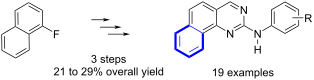
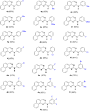
- compounds with two substituents or with three fluorine atoms. All these compounds have been obtained in fair yields (51–70%) and they have spectral and analytical data in agreement with the indicated structures, as given in the experimental section and Supporting Information File 1. Cytotoxicity studies


Anion-dependent ion-pairing assemblies of triazatriangulenium cation that interferes with stacking structures
Beilstein J. Org. Chem. 2024, 20, 2567–2576, doi:10.3762/bjoc.20.215
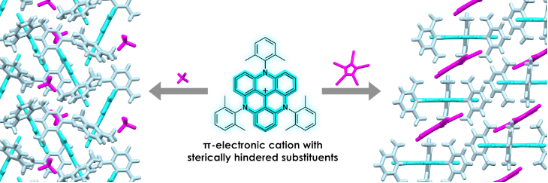
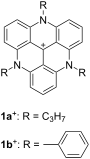
- PF6− anions located above the TATA+ plane (Figure 3b,c and Figure 5b,c). Three of the fluorine atoms of BF4− and PF6− were pointed toward the TATA+ plane. The offset angles for Cl−, BF4−, and PF6− to the TATA+ central carbon were 87.7°, 78.1°, and 84.3°, respectively. The distances between fluorine
- ) packing structures and (ii) enlarged views for the columnar structures. In (i), cation and anion are represented in cyan and magenta colors, respectively. In (ii), brown, pink, yellow, blue, yellow green, orange, and green (spherical) refer to carbon, hydrogen, boron, nitrogen, fluorine, phosphorus, and
- +-Cl−, (b) 2+-BF4−, and (c) 2+-PF6−. Atom color code: yellow, green, orange, and green (spherical) refer to boron, fluorine, phosphorus, and chlorine, respectively. (i) Single-crystal X-ray structures and (ii) interaction energies for the pairs (a) 2+-Cl−, (b) 2+-BF4−, and (c) 2+-PF6−. In (i), the