Search results
Search for "intermediate" in Full Text gives 2228 result(s) in Beilstein Journal of Organic Chemistry. Showing first 200.
Computational prediction of C–H hydricities and their use in predicting the regioselectivity of electron-rich C–H functionalisation reactions
Beilstein J. Org. Chem. 2026, 22, 603–610, doi:10.3762/bjoc.22.46
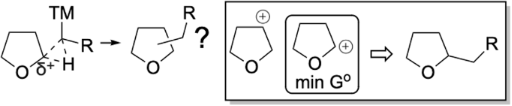
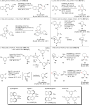
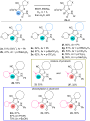
- is less sterically hindered (%Vbur = 62.3%). For comparison, the site with the lowest BDE has an intermediate value for %Vbur of 65.4%. Compounds 5 and 6 Allen and Lambert [42] reported the tropylium ion-mediated α-cyanation of amines, including compounds 5 and 6. In the case of compound 5, the


![[Graphic 6]](/bjoc/content/inline/1860-5397-22-46-i8.svg?max-width=637&scale=1.18182)


Molecular tweezer–peptide conjugates disrupt the protein–protein interaction between survivin and histone H3 essential in mitosis
Beilstein J. Org. Chem. 2026, 22, 557–567, doi:10.3762/bjoc.22.41
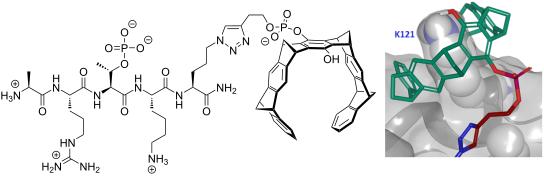
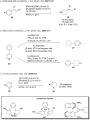
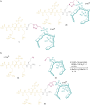
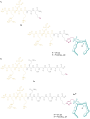
- unsymmetrical intermediate hydroxy-butynylphosphate tweezer and any azido histone peptide will lead to the desired truncated tweezer conjugate. This concept proved feasible and was performed with H3 peptides of different lengths to produce new peptide tweezer conjugates designed to target near and far lysines




Experimental and DFT studies on the regioselective methanolysis of 5-azido-9-oxabicyclo[6.1.0]nonan-4-yl 4-nitrobenzoate isomers
Beilstein J. Org. Chem. 2026, 22, 547–556, doi:10.3762/bjoc.22.40
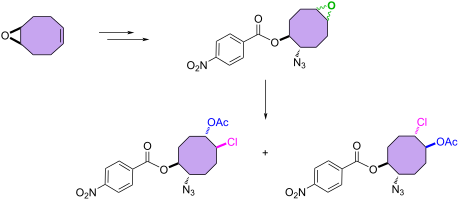
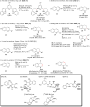
- intermediate 12 with the anti-face of the benzoate to give compound 14. Similarly, the chloride anion attacks by SN2-type the epoxide ring of intermediate 15 to give the sole product 16. The structure of acetate 11 was investigated using 1D (1H and 13C) and 2D (COSY, NOESY, NOE-diff, and HMQC) NMR
- each elementary reaction step along these routes were computed. The acid-mediated ring-opening reaction in the isomeric epoxides 9, initiated by protonation, can follow two possible pathways – either along the intermediate 12 or along the intermediate 15. There is a possibility of two products being
- formed in both pathways. Free energy computations indicate that the intermediate 12 is thermodynamically more stable by 4.9 kcal mol−1 compared to intermediate 15. The nucleophilic attack by chloride ion bifurcates into two paths, namely C1- (route a) and C2-attacks (route b) for intermediates 12 and 15


Get a better glimpse on sequential photoreactions of trisnorbornadienes with 19F NMR spectroscopy
Beilstein J. Org. Chem. 2026, 22, 527–534, doi:10.3762/bjoc.22.38
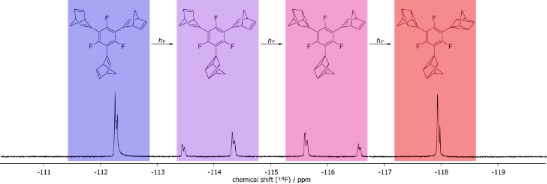
- trisquadricyclane. Even though the reaction can be monitored by photometry or by in situ 1H NMR spectroscopy, unambiguous assignment of the distinct intermediate mono- and bisquadricyclanes was not possible because of signal overlap. In contrast, this shortcoming is circumvented with in situ 19F NMR-spectroscopic


Modern synthetic pathways towards eribulin and its subunits
Beilstein J. Org. Chem. 2026, 22, 495–526, doi:10.3762/bjoc.22.37
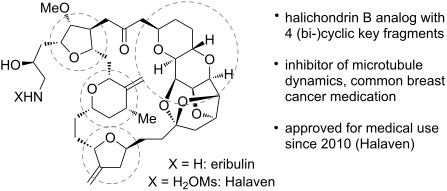
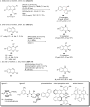
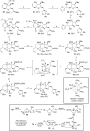
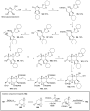
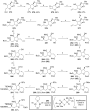
- proved to be suitable for the cyclization towards 35 and the eventual macrocyclization was achieved via coupling of the alkyl bromide unit with the thioester. Mechanistically, this reaction is enabled by the formation of an intermediate alkylzinc halide, which is produced by single electron transfer
- described in Scheme 6 below (R1 and R2 in equatorial position). From 43, the methylene unit in 44 was formed by Pd(0)-mediated generation of a π-allyl–palladium intermediate, followed by reductive termination (Tsuji-reduction), alongside the substrate-controlled alignment of the adjacent methyl substituent
- . Protection of the free alcohol unit enabled the transformation towards 55, which involved the reduction of lactone to lactole, protection of the alcohol as acetate, BF3·Et2O-mediated C-allylation of the aldehyde (via oxocarbenium intermediate) and cyclization (oxy-Michael reaction). Hydroboration–oxidation







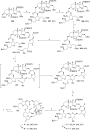

Synthesis and uranyl(VI) extraction performance of a calix[4]pyrrole–tetrahydroxamic acid receptor
Beilstein J. Org. Chem. 2026, 22, 486–494, doi:10.3762/bjoc.22.36
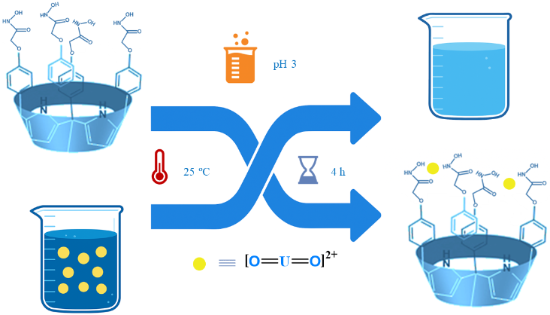
- both for the generation of free hydroxylamine and for the subsequent synthesis of PCP HA. The resulting tetrapotassium hydroxamate intermediate was then acidified with a 10% HCl solution, inducing precipitation of the tetrahydroxamic acid form. PCP HA was isolated as a grey solid in high yield (95


Synthesis of a HDAC inhibitor–nanogold probe for cryo-EM visualization in class I HDAC co-repressor complexes
Beilstein J. Org. Chem. 2026, 22, 480–485, doi:10.3762/bjoc.22.35
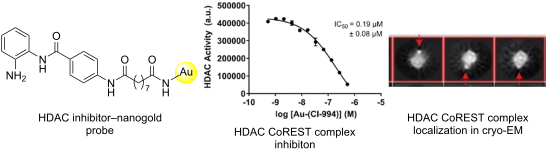
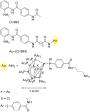
- dibenzylated by-product. Compound 5 was then coupled to the CI-994 intermediate 3 via HATU-mediated amide bond formation to produce 6 in good yield. Removal of the benzyl protecting group was performed by catalytic hydrogenation and acid 7 was obtained in near quantitative yield. Intermediate 7 was converted



Recent advances in the stereoselective synthesis of distal biaxially chiral molecules
Beilstein J. Org. Chem. 2026, 22, 461–479, doi:10.3762/bjoc.22.34
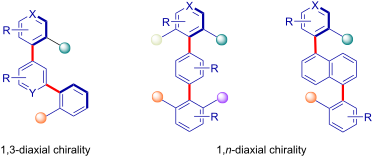
- synthesis of 1,4-divinyl compounds 24 containing a 2,3-diol motif via a vinylogous quinone methide (VQM) intermediate (Scheme 5) [46]. The transformation exhibited excellent stereoselectivity, and preliminary studies showed that the products could be elaborated into novel axially chiral scaffolds with
- ) intermediate, which undergoes intramolecular nucleophilic cyclization (Scheme 15) [54]. This work represents the first synthesis of a compound integrating both helical and axial stereogenic elements, and achieves high diastereoselectivity and enantioselectivity through a cinchona alkaloid-derived squaramide
- organocatalytic approach. The mechanistic study revealed that the reaction proceeds through a stepwise double cyclization process: The first cyclization generates an intermediate bearing a stereogenic axis, while the second cyclization involves dynamic kinetic resolution of the spiral reaction intermediate under


Structural reassignment of compound 968, an allosteric glutaminase inhibitor
Beilstein J. Org. Chem. 2026, 22, 455–460, doi:10.3762/bjoc.22.33
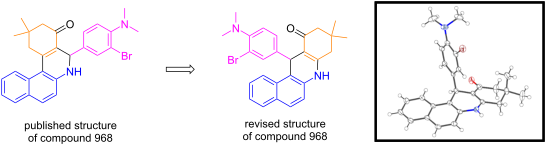
- oxidatively deaminated to the TCA cycle intermediate α-ketoglutarate for energy production and additional biosynthetic pathways. There are two glutaminase isozymes in humans: KGA is encoded by the GLS1 gene and is expressed mainly in the kidney and brain and LGA encoded by the GLS2 gene is expressed mainly in


A facile and practical method for the synthesis of trans-(±)-taxifolin and its derivatives via Darzens reaction
Beilstein J. Org. Chem. 2026, 22, 443–450, doi:10.3762/bjoc.22.31
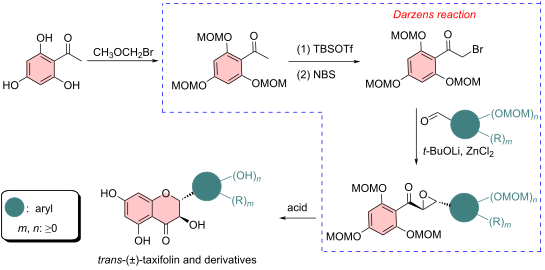
- give protected acetophenone 1 in an excellent yield of 78%. Next, the reaction conditions for the following α-bromination of acetophenone 1 to intermediate 2 were screened (Table S1, Supporting Information File 1). The treatment of compound 1 with CuBr2 in EtOAc at either room temperature or 60 °C


Synthesis and stereochemical analysis of dynamic planar chiral oxa[7]orthocyclophene
Beilstein J. Org. Chem. 2026, 22, 436–442, doi:10.3762/bjoc.22.30

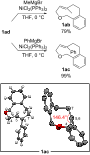
- -substituted oxacyclophenes 1ab (X = O, Y = Me), 1ac (X = O, Y = Ph), and 1ad (X = O, Y = I), in which 1ad was used as the key intermediate for the synthesis of 1ab and 1ac via Kumada–Tamao coupling with Grignard reagents (Figure 2). Results and Discussion Retrosynthesis and synthesis of the C6-iodo
- and revealed their dynamic planar chirality. By using the C6-iodo-substituted oxacyclophene as a common intermediate, C6-methyl- and C6-phenyl-substituted oxacyclophenes were synthesized efficiently. The enantiomers of the iodo- and methyl-substituted oxacyclophenes are isolable yet interconvertible




Dialkylaminoalkylation of β-ketosulfones via ring-opening of 3-sulfonylpyrrolidines
Beilstein J. Org. Chem. 2026, 22, 383–389, doi:10.3762/bjoc.22.26
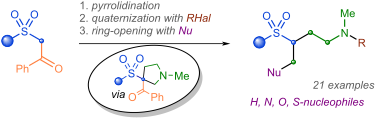
- modifications and the use of the obtained compounds as building blocks. We also examined other nucleophiles suitable for the described domino-sequence. Thus, application of ethanol as solvent resulted in a mixture of the desired product 4b with the corresponding intermediate C (NMR ratio 88:12), however, longer




Electrosynthetic access to unsymmetrical oxaza[8]helicenes with high chiral stability and strong circularly polarized luminescence (CPL)
Beilstein J. Org. Chem. 2026, 22, 372–382, doi:10.3762/bjoc.22.25
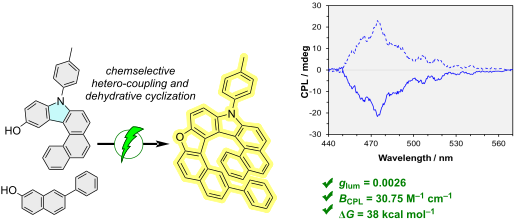
- = 0.735 V vs Fc/Fc+ in CH2Cl2) is oxidized more readily than the 2-naphthol partners (Eox of 4a = 1.081 V and Eox of 4b = 1.286 V vs Fc/Fc+ in CH2Cl2). The radical cation [3]·+ then undergoes rapid deprotonation to form a neutral radical intermediate (Int-I) with high spin density at the reactive site
- the pKa of [3]·+ radical cation and spin density of neutral radical intermediate Int-I (optimized at the UB3LYP/6-31G+(d,p) level of theory with IEPCM model as solvation of DCM. Grimme’s dispersion with the original D3 damping function was applied as empirical dispersion correction to the optimized




Recent advances in the cleavage of non-activated amides
Beilstein J. Org. Chem. 2026, 22, 352–369, doi:10.3762/bjoc.22.23
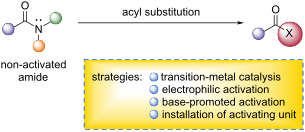
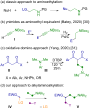
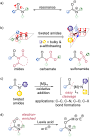
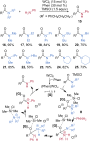
- geometry to the amide unit (Scheme 1a) [17][18][19]. As a result, nucleophilic attack at the carbonyl is disfavored, and even when a tetrahedral intermediate forms, collapse with expulsion of an amide anion is thermodynamically challenging. Consequently, harsh conditions such as high temperatures or
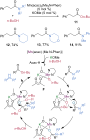
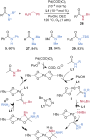
- intermediate E, the carboxylic acid is formed, regenerating the acidic and basic surface sites of the Nb2O5 catalyst. In 2020, Mashima et al. reported an intriguing accelerating effect of potassium alkoxides on the manganese-catalyzed esterification of tertiary amides (Scheme 4) [48]. They found that potassium
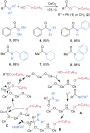
- % yield. Mechanistically, WCl6 coordinates with Phen to generate the active tungsten species [G]. In cooperation with TMSCl as a Lewis acid, the catalyst activates the amide toward nucleophilic attack by forming an electron-deficient intermediate H that readily undergoes substitution. Palladium complexes










Ring contraction and ring expansion reactions in terpenoid biosynthesis and their application to total synthesis
Beilstein J. Org. Chem. 2026, 22, 289–343, doi:10.3762/bjoc.22.21
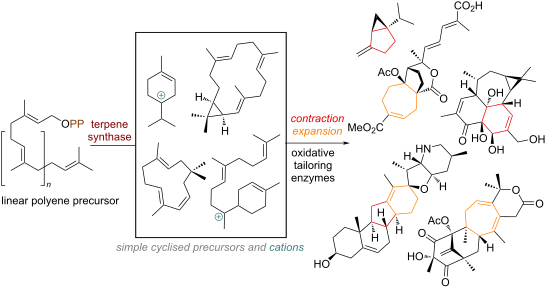
- rise to the isomeric terpin-4-yl cation 6b. By way of cyclopropane formation, a different, so called, thujyl cation 6c is conceivable. Elimination then furnishes the ring-contracted 5/3-ring systems from the original cyclohexyl intermediate to give sabinene (7) and α-thujene (8). Another example of a 6
- vetispiradiene synthase (HVS) gives the eudesmane cation 10a, which is a common intermediate in the biosynthesis of bicyclic sesquiterpenes, e.g., aristocholenes. In this particular enzymatic reaction, the 1,2-alkyl shift of a Wagner–Meerwein rearrangement is responsible for building up the spirocyclic carbon
- found in pseudolaric acid B (14) biosynthesis [64][65]. In this case, the linear precursor 12 is first cyclised to give intermediate 14a akin to the α-terpinyl cation (see Scheme 3). From here, quantum chemical calculations indicate that the subsequent 1,2-alkyl shift and olefin cyclisation occur in a






Spirobarbiturates with a pyrrolizidine moiety: synthesis, structure and biological evaluation
Beilstein J. Org. Chem. 2026, 22, 274–288, doi:10.3762/bjoc.22.20
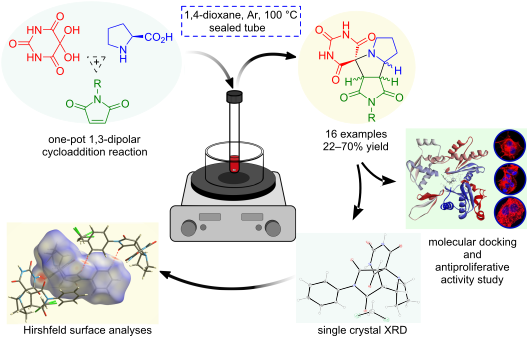
- and α-amino acids, which includes a stage of decarboxylation of the intermediate lactone. It is worth noting that generating azomethine ylides via decarboxylation of α-amino acid derivatives is a common practice in synthetic chemistry [44][45][46]. It was shown in our recent works that spirocyclopropa
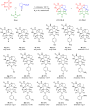
- unable to isolate individual products either by chromatography or by recrystallization. The proposed reaction mechanism is shown in Scheme 5, where it can be seen that the intermediate azomethine ylide, acting as a 1,3-dipole, undergoes a [3 + 2] cycloaddition with N-substituted maleimides 3a–p. The
- formation of azomethine ylide from alloxan (1) and ʟ-proline (2) was previously studied using DFT calculations [43]. Based on the calculated data, it was assumed that the 1,3-dipole is formed as a result of a multistage sequence: initial generation of a zwitterionic imine intermediate from 1 and 2, followed




Arene activation via π-bond localization: concepts and opportunities
Beilstein J. Org. Chem. 2026, 22, 257–273, doi:10.3762/bjoc.22.19
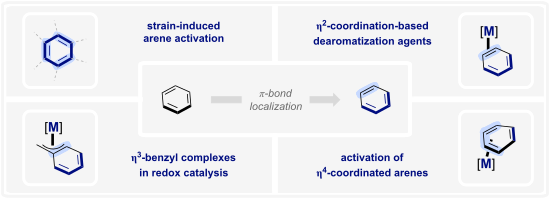
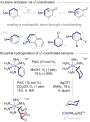
- -coordination of pyrrole transforms the aromatic framework into an azomethine ylide intermediate. This reactive species can engage in a [3 + 2] cycloaddition with activated olefins such as maleic anhydride to form 7-azabicycloheptene complex 8 rather than an electrophilic addition product. An analogous scenario
- during subsequent electrophilic addition. Although the trifluorotoluene complex exists as a mixture of its two coordination diastereomers, the pronounced electronic asymmetry of the molybdenum fragment channels protonation to a single η2-arenium intermediate. This enables nucleophilic addition of a
- step, thereby steering the reaction along the para-functionalization pathway. A distinct and less frequently encountered pathway enables ortho-functionalization of arenes via intermediate η3-benzyl complex formation. Yamamoto and co-workers first showcased this in 2008 (Figure 10B), demonstrating the




A mild and atom-efficient four-component cascade strategy for the construction of biologically relevant 4-hydroxyquinolin-2(1H)-one derivatives
Beilstein J. Org. Chem. 2026, 22, 244–256, doi:10.3762/bjoc.22.18
- (Scheme 3) involved the optimization of a two-step procedure reported previously for their preparation from corresponding anilines and malonic ester [40][41][42][43]. The intermediate N1,N3-bis(4-halogenophenyl)malonamides 1a–c were synthesized from 4-halogen-substituted anilines and diethyl malonate in
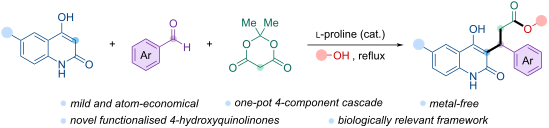
- yields (Scheme 5). The proposed mechanism of the four-component reaction is illustrated in Scheme 6. ʟ-Proline, via its amino group, nucleophilically attacks the carbonyl of the aromatic aldehyde, forming an iminium zwitterion intermediate A. Concurrently, ʟ-proline promotes the generation of the
- undergoes Michael addition to arylidene intermediate C. The thus formed adduct D is protonated by ʟ-proline and undergoes tautomerization. During the initial experiments to synthesizing methyl and ethyl esters via this four-component reaction, we observed the parallel formation of an undesired cyclic


Synthesis of diaryl phosphates using phytic acid as a phosphorus source
Beilstein J. Org. Chem. 2026, 22, 213–223, doi:10.3762/bjoc.22.15
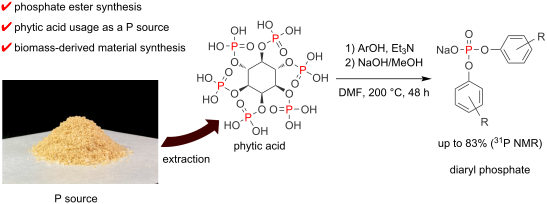
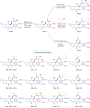
- -free synthetic methods have been reported for the synthesis of phosphorus compounds (Figure 2A) [35][36][37][38][39][40][41]. Cummins’s group demonstrated that phosphoric acid and condensed phosphoric acid can be reduced using trichlorosilane. The resulting intermediate, the bis(trichlorosilyl
- phosphoric acid and condensed phosphoric acid into a versatile PO2+ phosphorylation agent, (pyridine)2PO2[OTf]. The intermediate reacts with a variety of nucleophiles, providing a redox-neutral method for the flexible synthesis of P(V) compounds (Figure 2C) [44]. Furthermore, Naganawa’s group recently
- period for the formation of the phosphate monoester from phosphoric acid; however, an induction period associated with diester formation is observed between the formation of the monoester and the formation of intermediate DPpyP. This difference suggests that the monoester and the diester are formed via




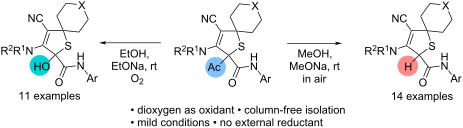
Base-promoted deacylation of 2-acetyl-2,5-dihydrothiophenes and their oxygen-mediated hydroxylation
Beilstein J. Org. Chem. 2026, 22, 192–204, doi:10.3762/bjoc.22.13
- migration in the formed tetrahedral intermediate to afford formate ester; c) hydrolysis of the latter to form phenols [28]. The development of methods for the construction of heterocycles and their modification is an important area of organic synthesis [29]. Although the Dakin oxidation has become a
- elemental sulfur S6. Probably, the reaction is accompanied by the desulfurization of the oxidized intermediate, which causes the yellow color of the reaction solutions. The proposed mechanism for the developed transformations is depicted in Scheme 6. The reaction of dihydrothiophene 1a with sodium ethoxide
- led to the intermediate A. Elimination of ethyl/methyl acetate from intermediate A afforded anion B. The latter reacted in ethanolic solution with molecular oxygen [52] with the formation of peroxide anion C. The protonation of anion C with proton sources (residual water or/and solvent or 3a can serve




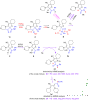
Improved synthesis and physicochemical characterization of the selective serotonin 2A receptor agonist 25CN-NBOH
Beilstein J. Org. Chem. 2026, 22, 175–184, doi:10.3762/bjoc.22.11
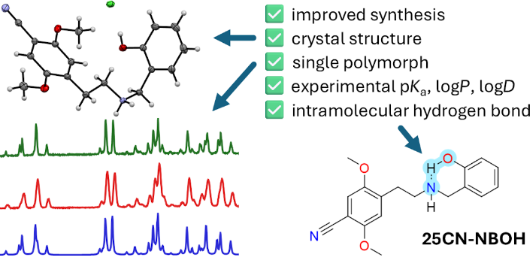
- The synthesis of 1 starts from commercially available 2,5-dimethoxyphenethylamine (2C-H), which can be transformed into the intermediate 2C-CN, (Figure 1). We have previously reported high yielding 4-step procedure for this process, whereas the yield in the final step in the synthesis of 1 was a
- modest 65% [12]. In the present work, we found that simply adding 4 Å molecular sieves powder during the formation of the intermediate imine gave a much cleaner reaction and increased the yield of 1·HCl from 2C-CN·HCl to 74%. We suggest that the addition of the molecular sieves facilitates the formation
- of the required imine intermediate that upon reduction yields the desired product. The free base 1 was purified on normal-phase flash column chromatography, and 1·HCl was subsequently precipitated, providing a white crystalline solid (vide infra). Characterization of 25CN-NBOH·HCl (1·HCl) in the


A new synthesis of Tyrian purple (6,6’-dibromoindigo) and its corresponding sulfonate salts
Beilstein J. Org. Chem. 2026, 22, 167–174, doi:10.3762/bjoc.22.10
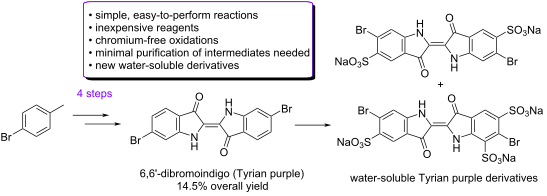
- purple, several syntheses of 1 have been reported in the literature [5]. As shown in Scheme 1A, a common route to 1 uses 4-bromo-2-nitrotoluene (3) as a key intermediate [5]. We were interested in a safe and cost-efficient synthesis of the major component of Tyrian purple that is amenable to generating
- similar analogues, using 3 as a key intermediate. Furthermore, we were interested in producing a water-soluble derivative of 1, much like indigo carmine was developed as a water-soluble derivative of indigo. Several syntheses of 3 have been reported, but the most common method involves the selective
- nitration of p-toluidine (2), followed by a Sandmeyer bromination [5][6][7][8][9]. While such chemistry is effective in smoothly generating 3 in good yield, this process requires the production of and use of a potentially explosive aryldiazonium intermediate [10]. Oxidation of the methyl group in 3 yields 4


Circumventing Mukaiyama oxidation: selective S–O bond formation via sulfenamide–alcohol coupling
Beilstein J. Org. Chem. 2026, 22, 158–166, doi:10.3762/bjoc.22.9
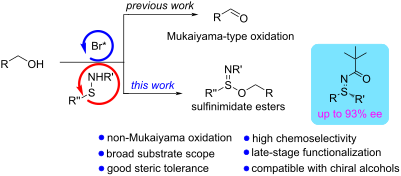
- -bromosuccinimide to generate a highly electrophilic sulfilimidoyl bromide intermediate R–S(Br)=N–C(O)R’, along with succinimide. The resulting S(IV)–Br species is then attacked by the alcohol 2, and nucleophilic substitution at sulfur followed by proton transfer furnishes the sulfinimidate ester 3 and HBr. The


Highly electrophilic, gem- and spiro-activated trichloromethylnitrocyclopropanes: synthesis and structure
Beilstein J. Org. Chem. 2026, 22, 123–130, doi:10.3762/bjoc.22.5
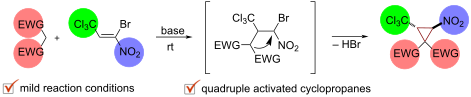
- to the bromonitroalkene afford the intermediate anion II, followed by tautomerization and formation of anion IV, which undergoes intramolecular nucleophilic substitution of the bromide along the C-alkylation pathway [37][38][39] (Scheme 6). The trans-configuration of the methine protons of the
- by BH+ from the side opposite to the –CH(EWG)2. Thus, only diastereomer III is formed. Deprotonation of this intermediate leads to carbanion IV. For further attack by the carbanion center to the carbon atom bonded to bromine, the –C(EWG)2 moiety must hold an anti-periplanar position relative to the


Total synthesis of natural products based on hydrogenation of aromatic rings
Beilstein J. Org. Chem. 2026, 22, 88–122, doi:10.3762/bjoc.22.4
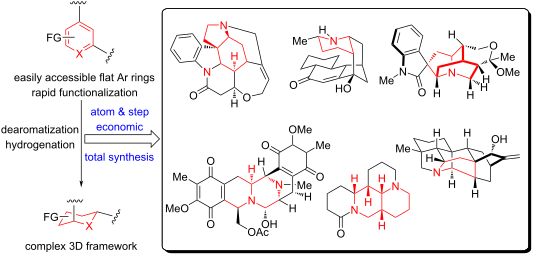
- process relies on the rapid interconversion of the enantiomers in the racemic substrate, which in turn relies on the acid-promoted isomerization between the aromatic indole and the nonaromatic exocyclic enamine intermediate. Very recently, Chen and co-workers reported that using a Mn catalyst with
- ]. Starting from compounds 77 and 78, Baldwin and co-workers converted them into pyridine derivative 79 in high yield over three steps including a Wittig reaction and tosylation. Subsequent reduction with sodium borohydride furnished the dimer 80 bearing partially reduced pyridine rings. From 80, intermediate
- , followed by hydrazinolysis to generate alcohol 120. Starting from the common intermediate 120, the total syntheses of renieramycin and lemonomycinone were accomplished through 11 and 13 steps, respectively. Total synthesis to the alkaloids GB13 by Sarpong, 2009 In 2009, Sarpong and co-workers reported a