Search results
Search for "intermolecular" in Full Text gives 808 result(s) in Beilstein Journal of Organic Chemistry. Showing first 200.
Effect of a photoswitchable rotaxane on membrane permeabilization across lipid compositions
Beilstein J. Org. Chem. 2025, 21, 2498–2512, doi:10.3762/bjoc.21.192
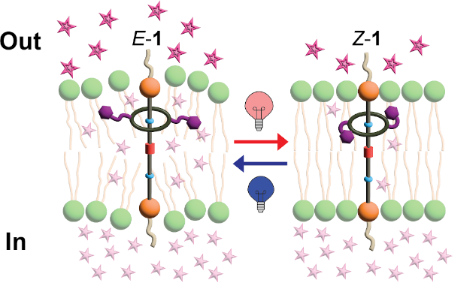
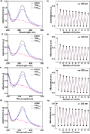
- structure, and saturation, can result in different membrane mechanics, hydration, thickness, intermolecular spacing, and non-covalent interactions with the rotaxane. For example, EYPC bilayer thickness increases linearly with cholesterol concentration and can induce the formation of nanodomains [16]. Such


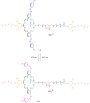


Assembly strategy for thieno[3,2-b]thiophenes via a disulfide intermediate derived from 3-nitrothiophene-2,5-dicarboxylate
Beilstein J. Org. Chem. 2025, 21, 2489–2497, doi:10.3762/bjoc.21.191
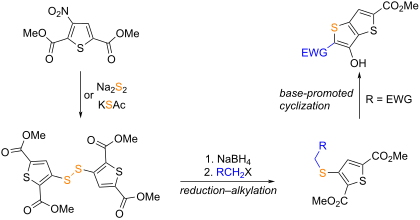
- ) derivatives are a valuable class of fused heteroaromatic compounds characterized by rigid planar π-conjugated backbones that provide narrow band gaps, high charge carrier mobility, and intermolecular π–π stacking interactions, making them particularly attractive for the design of organic materials. Indeed


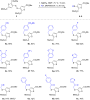

Rotaxanes with integrated photoswitches: design principles, functional behavior, and emerging applications
Beilstein J. Org. Chem. 2025, 21, 2345–2366, doi:10.3762/bjoc.21.179

- for precise control over their structural, dynamic, and functional properties. By harnessing light as a non-invasive stimulus with high spatial and temporal resolution, these photoswitches allow for the modulation of the rotaxanes’ intra- and intermolecular interactions, optoelectronic properties, and
- intermolecular interactions is a powerful strategy for designing sophisticated molecular systems that operate across multiple length scales, from nanoscale dynamics to macroscopic functions [1][2][3]. Light is particularly attractive compared to other stimuli due to its non-invasive nature, high spatial and


Comparative analysis of complanadine A total syntheses
Beilstein J. Org. Chem. 2025, 21, 2334–2344, doi:10.3762/bjoc.21.178
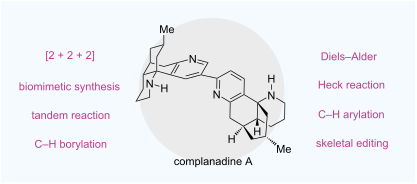
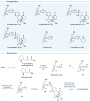
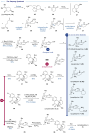
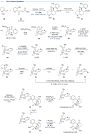
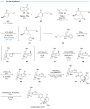
- produce 11, which could be further converted to 12 and 13 for an intermolecular Mannich-type dimerization to form the C2–C3’ linkage [13]. Further oxidation state adjustment would give complanadines A, B, D, and E. Since their isolation, the complanadines, especially complanadine A, have attracted a



Enantioselective radical chemistry: a bright future ahead
Beilstein J. Org. Chem. 2025, 21, 2283–2296, doi:10.3762/bjoc.21.174
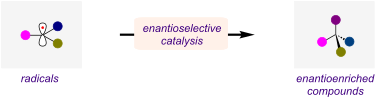
- lactone 26. The Zhang group has extended the chiral metalloradical catalysis to cyclopropanation by the intermolecular reaction between styrenes and ketodiazoacetates [59]. Cyclopropanes were obtained in good yields with high relative and absolute stereocontrol. Properties, such as relatively high earth
- -trig cyclization and HAT furnished the enantioenriched products with up to 97:3 er. In addition to intramolecular radical reactions, intermolecular radical transformations have also been achieved using photoenzymatic catalysis, such as the addition of fluoroalkyl radicals to alkene substrates [36] and


Pathway economy in cyclization of 1,n-enynes
Beilstein J. Org. Chem. 2025, 21, 2260–2282, doi:10.3762/bjoc.21.173
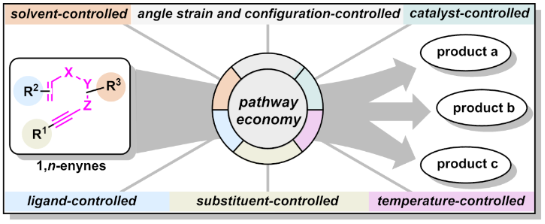
- dual roles as solvent and nucleophile, the gold-catalyzed intermolecular Markovnikov addition of methanol to the gold-activated alkyne proceeded to afford dienol intermediate 4. The intermediate 4 subsequently underwent a regioselective 6-endo-trig cyclization, generating the naphthalene core 7 (Scheme


The application of desymmetric enantioselective reduction of cyclic 1,3-dicarbonyl compounds in the total synthesis of terpenoid and alkaloid natural products
Beilstein J. Org. Chem. 2025, 21, 2085–2102, doi:10.3762/bjoc.21.164
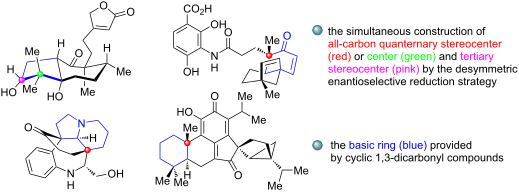
- -catalyzed intermolecular Diels–Alder reaction of 106 with methacrolein 107 afforded the common intermediate 108 in high yield. Sequential Grignard reagent addition and acid-promoted ethoxy elimination provided the separable planar diene 109 (dr = 1:1), which underwent a Mn-catalyzed HAT hydrogenation to
- transformations of 121 generated bromodiene 122. Next, the metal–halogen exchange/intermolecular addition of 122 with aldehyde (+)-123 and in situ PtCl2-promoted hydrolysis and hydration gave tricyclic product 124. The BnMe3NOH-mediated intramolecular Michael/aldol cascade reaction of 124 constructed the C/D







Solar thermal fuels: azobenzene as a cyclic photon–heat transduction platform
Beilstein J. Org. Chem. 2025, 21, 2036–2047, doi:10.3762/bjoc.21.159
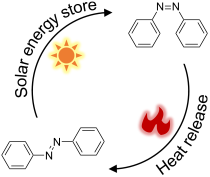
- investigated their solar thermal energy storage performance [46]. Key parameters governing the performance of azobenzene–RGO hybrid solar thermal fuels include hydrogen-bonding interactions, intermolecular distances between adjacent azobenzene groups, and electronic coupling effects. Conjugated azobenzene
- azobenzene polymer solar thermal fuels: (a) Photoisomerization and thermally induced reverse isomerization of diacetylene monomers. The inset depicts the crystal structure of diacetylene monomer (n = 6, X = N–H) with dashed lines indicating intermolecular hydrogen bonds. Figure 4a was used with permission of




Aryl iodane-induced cascade arylation–1,2-silyl shift–heterocyclization of propargylsilanes under copper catalysis
Beilstein J. Org. Chem. 2025, 21, 1984–1994, doi:10.3762/bjoc.21.154
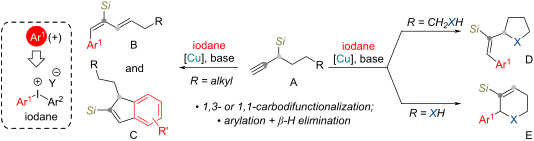
- rearrangements via the 1,2-silyl shift, enabled by the β-cation-stabilizing properties of silyl groups [19][20]. This phenomenon has been successfully employed in 1,3-difunctionalization events in both intermolecular [21] and intramolecular fashion [22] (Scheme 1B). Thus far such propargylsilane rearrangements


Enantioselective desymmetrization strategy of prochiral 1,3-diols in natural product synthesis
Beilstein J. Org. Chem. 2025, 21, 1932–1963, doi:10.3762/bjoc.21.151
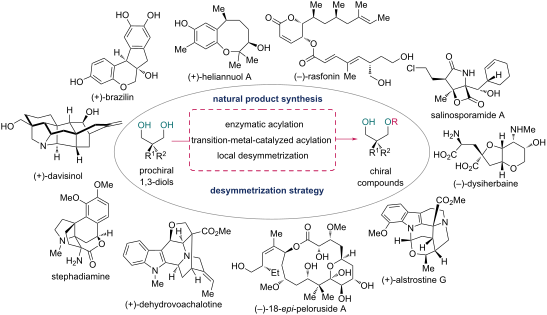
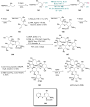
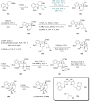
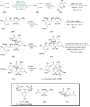
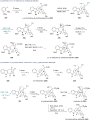
- with 99% ee. The TBS protection was crucial to prevent the potential racemization by intramolecular transesterification. Ester 79 was then prepared from 78 in eight steps. To complete the dimerization, fragments 80 and 81 were independently prepared from 79. An intermolecular Suzuki–Miyaura coupling
- the cyclohexanone ring into 120, and the resulting hydroxy group was protected to give ketone 121. The γ-lactam moiety of compound 122 was then constructed in subsequent 12 steps. SmI2-mediated intermolecular Reformatsky-type reaction with aldehyde 123 yielded compound 124. Finally, salinosporamide A










Rhodium-catalysed connective synthesis of diverse reactive probes bearing S(VI) electrophilic warheads
Beilstein J. Org. Chem. 2025, 21, 1924–1931, doi:10.3762/bjoc.21.150
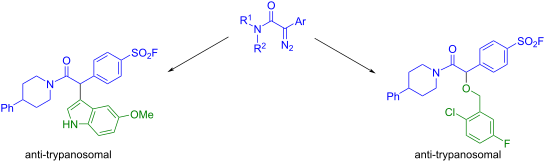
- estimation of the yield of each product (Figure 2, panel B). It was found that many reactions involving alcohol- (e.g., C1–5, C8, C11 and C14) and indole- (e.g., C3, C12 and C15) containing co-substrates yielded intermolecular products, whilst those involving nitrile-containing co-substrates (C9 and 10) and
- the allylic ether C16 did not. It is remarkable that S(VI) electrophiles are tolerated. Eighteen substrate/co-substrate combinations gave, with at least one of the catalysts, an intermolecular product in >10% estimated yield (typically corresponding to >1 mg product). For all but one of these
- reactions, a product with molecular weight consistent with O–H insertion into water was also observed. For these 18 substrate/co-substrate combinations, the reaction with the highest estimated yield was selected for mass-directed purification (Table 2). In total, 23 intermolecular reaction products were


Preparation of spirocyclic oxindoles by cyclisation of an oxime to a nitrone and dipolar cycloaddition
Beilstein J. Org. Chem. 2025, 21, 1890–1896, doi:10.3762/bjoc.21.146
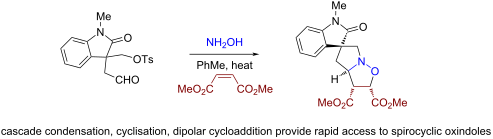
- an important class of compounds with significant biological activities. Spirocyclic derivatives are present in a variety of natural products. We describe here the formation of spirooxindoles using an intermolecular nitrone cycloaddition reaction. The nitrone dipole was prepared in situ by cyclisation
- possibility to access the core of this ring system with the nitrone intermediate shown in Scheme 1A. As a model study, we describe here efforts towards an intermolecular variant with the oxindole shown in Scheme 1B; in this case a leaving group X will be displaced by the oxime to give an intermediate nitrone


Photoswitches beyond azobenzene: a beginner’s guide
Beilstein J. Org. Chem. 2025, 21, 1808–1853, doi:10.3762/bjoc.21.143
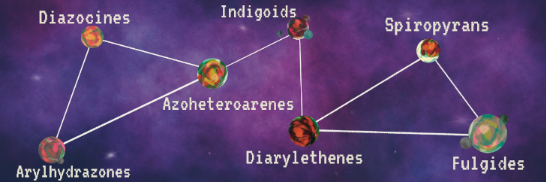
- tautomerism is an intermolecular process that depends not only on the choice of aryl rings and substituents but also on concentration, solvent polarity, and the presence of proton sources [5][15]. In conclusion, the choice of aryl rings, substituents, and substitution position are all crucial to determine the
- concentration of the photoswitch in solution: when MeOH or water are present, the lifetimes drop significantly, and particularly at pH 4, as consequence of more favourable intermolecular proton transfer. Calculations show that water molecules bridging between two Z-isomers favour the formation of hydrazone and




Research progress on calixarene/pillararene-based controlled drug release systems
Beilstein J. Org. Chem. 2025, 21, 1757–1785, doi:10.3762/bjoc.21.139
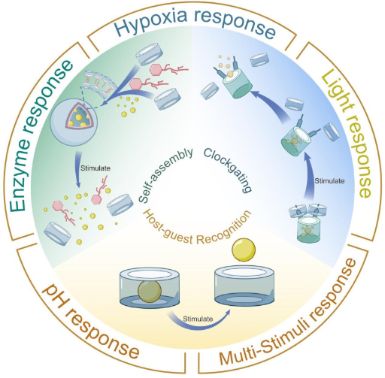
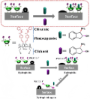
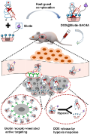
- ) [103]. CA4-Man3-NPs achieve efficient targeted drug delivery through a unique self-assembly mechanism. This system leverages the unique polymeric characteristics of CA4, which reduces the critical aggregation concentration and enhance intermolecular orderliness to form structurally stable nanocarriers






Unique halogen–π association detected in single crystals of C–N atropisomeric N-(2-halophenyl)quinolin-2-one derivatives and the thione analogue
Beilstein J. Org. Chem. 2025, 21, 1748–1756, doi:10.3762/bjoc.21.138
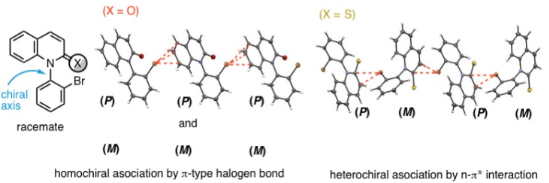
- N-(2-bromo- or 2-chlorophenyl)quinolin-2-ones, homochiral layered polymers, which consist of (P)- or (M)-atropisomers, were formed through intermolecular halogen–π association. The halogen–π association in the racemates is due to a halogen bond (C–X···π) between a σ-hole on the halogen atom and a π
- C–N atropisomers and their structural properties for over 25 years [16][17]. As a part of the C–N atropisomeric chemistry, we succeeded in the asymmetric synthesis of mebroqualone (I) and the thione analogue II [18][19]. In the course of this study, it was found that intermolecular association in
- through a σ-type intermolecular halogen bonding (C–Br···O) between the ortho-bromine atom and the carbonyl oxygen. The formation of similar heterochiral polymers through a σ-type intermolecular halogen bond (C–Br···S) was also found in crystals of the thio-analogue rac-II. On the other hand, in the


Thermodynamics and polarity-driven properties of fluorinated cyclopropanes
Beilstein J. Org. Chem. 2025, 21, 1742–1747, doi:10.3762/bjoc.21.137
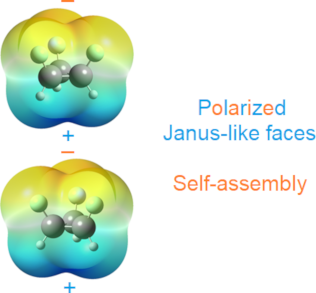
- providing the greatest stability due to strong anomeric-like interactions that enhance electron delocalization. Notably, the all-cis-1,2,3-trifluorocyclopropane (1.2.3-c.c.) was identified as the most polar compound, with its Janus-like electrostatic potential enabling unique intermolecular interactions


Approaches to stereoselective 1,1'-glycosylation
Beilstein J. Org. Chem. 2025, 21, 1700–1718, doi:10.3762/bjoc.21.133
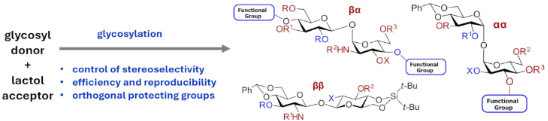
- selectivity in glycosylations with various types of nucleophiles [67][68]. This remarkable stereoselectivity has been attributed to intermolecular hydrogen bonding, which forms a transient tether between the glycosyl donor and acceptor, thereby guiding the reaction towards a preferred stereochemical outcome


Synthesis of optically active folded cyclic dimers and trimers
Beilstein J. Org. Chem. 2025, 21, 1603–1612, doi:10.3762/bjoc.21.124
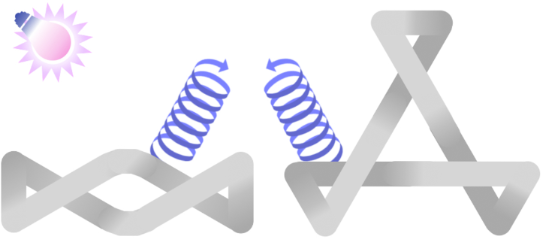
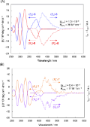
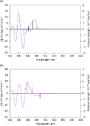
- same absolute configuration. The |glum| value of 7 was 0.4 × 10⁻³ (Figure S18A, Supporting Information File 1), which was lower than that of 6. In the case of the film states of 6 and 7, low PL brightness and intermolecular random orientation of fluorophores resulted in noisy CPL signals. The CD



3-Aryl-2H-azirines as annulation reagents in the Ni(II)-catalyzed synthesis of 1H-benzo[4,5]thieno[3,2-b]pyrroles
Beilstein J. Org. Chem. 2025, 21, 1595–1602, doi:10.3762/bjoc.21.123
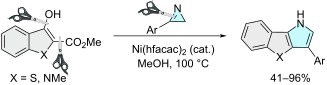
- reactions of intermolecular annulation of a variety of non-aromatic five- [4][5][6] and six-membered carbo- and heterocycles [7][8][9] with azirines, which occur under transition metal catalysis or photocatalysis. Annulation of the pyrrole ring to an aromatic system is limited to reactions of functionalized
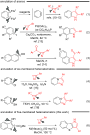
- formation of the C–C bond between the rings of the reacting molecules occurs in the coordination metal sphere as an intra-, rather than intermolecular, process. The formation of compound 17, the product of oxidative dimerization of indole-based enol 15, in the second reaction also points to different



Highly distinguishable isomeric states of a tripodal arylazopyrazole derivative on graphite through electron/hole-induced switching at ambient conditions
Beilstein J. Org. Chem. 2025, 21, 1496–1507, doi:10.3762/bjoc.21.112
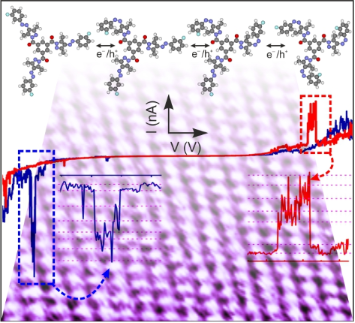
- (≈120°), the angle between the vectors. The intermolecular distance obtained from STM corresponds to the lateral length of the EEE isomer (F to F distance is 22.06 Å). Thus, we conclude that the adlayer is formed by the energetically most favorable EEE isomer. This is also consistent with the NMR data
- is not a surprise [10][36]. Therefore, it is summarized that the typical intermolecular interactions are of van der Waals type and interactions dominantly driven by steric packing. We note that the STM experiments reveal only a hexagonal type of arrangement of molecules, as shown in Figure 3



Advances in nitrogen-containing helicenes: synthesis, chiroptical properties, and optoelectronic applications
Beilstein J. Org. Chem. 2025, 21, 1422–1453, doi:10.3762/bjoc.21.106
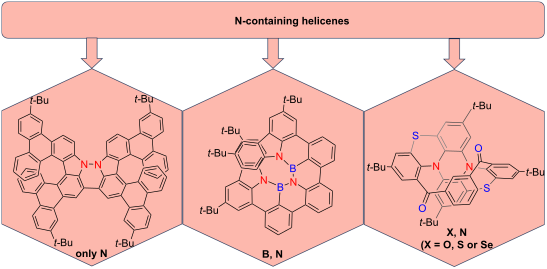
- versatile scaffolds for chiral optoelectronic applications. The incorporation of nitrogen enables precise modulation of electronic structures, redox characteristics, and intermolecular interactions, thereby enhancing performance in circularly polarized luminescence (CPL), thermally activated delayed
- structures, enhance solubility, and expand functional diversity [6]. Substituting carbon atoms with electron-deficient nitrogen atoms introduces new opportunities to fine-tune redox potentials, charge-transport behavior, and intermolecular interactions [7]. These modifications have proven especially valuable
- , attributed to intermolecular hydrogen bonding with solvent molecules. With increasing helical length, both the λabs and λem exhibit progressive bathochromic shifts, while the ФF values systematically decline, without clear saturation within the investigated range. Chiroptical measurements of the N-butylated

Tautomerism and switching in 7-hydroxy-8-(azophenyl)quinoline and similar compounds
Beilstein J. Org. Chem. 2025, 21, 1404–1421, doi:10.3762/bjoc.21.105
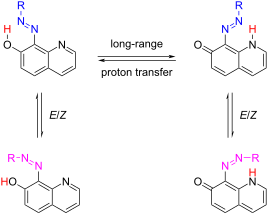
- reasons are different. While in acetonitrile this is the effect of the increased polarity of the solvent, leading to stabilization of the more polar keto tautomers, in the non-polar chloroform it is caused by its proton-donative nature (formation of a stabilizing intermolecular hydrogen bonding with the C




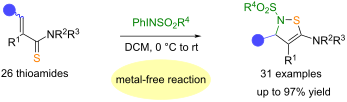
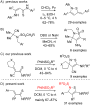
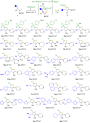
Reactions of acryl thioamides with iminoiodinanes as a one-step synthesis of N-sulfonyl-2,3-dihydro-1,2-thiazoles
Beilstein J. Org. Chem. 2025, 21, 1397–1403, doi:10.3762/bjoc.21.104
- involved in the formation of a weak intermolecular hydrogen bond of the C‒H···N≡C type with distances H(3)···N(3) 2.53(3) Å, C(3)···N(3) 3.436(4) Å and angle C(3)H(3)N(3) 157(2)° (symmetry transformation [1−x, 1−y, 1−z]). Conclusion Thus, we found that thioamides of acrylic acid easily interact with



Oxetanes: formation, reactivity and total syntheses of natural products
Beilstein J. Org. Chem. 2025, 21, 1324–1373, doi:10.3762/bjoc.21.101
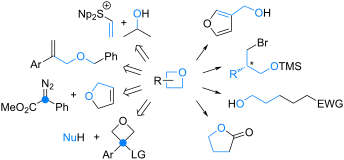
- greatly exploited in the past [34] and new protocols are still being developed and reported. These reactions can be divided into intramolecular and intermolecular processes and they usually rely on oxygen- or nitrogen-based nucleophiles, but ring openings involving hydrides and soft carbon nucleophiles
- –2021, Kuduk and co-workers published three different tandem, one-pot methodologies towards complex polycyclic heterocycles [100][101][102]. All of them are two-step reactions consisting of an intermolecular coupling followed by an intramolecular, base-induced oxetane opening (Scheme 48). The first one








Recent advances in amidyl radical-mediated photocatalytic direct intermolecular hydrogen atom transfer
Beilstein J. Org. Chem. 2025, 21, 1306–1323, doi:10.3762/bjoc.21.100
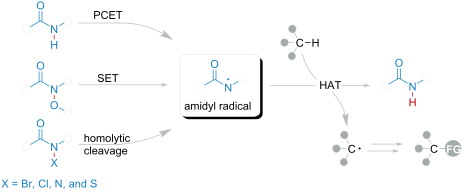
- of amidyl radicals as HAT reagents, with a particular emphasis on their role in the intermolecular HAT process. We highlight key developments, mechanistic insights, and emerging strategies that harness the unique reactivity of amidyl radicals in the selective functionalization of a variety of
- activation energy modulation during transition state formation. Specifically, donor/acceptor electronic configurations in the substrate could either stabilize or destabilize the transient hybrid state, thereby thermodynamically governing the energy barrier for intermolecular HAT progression. When the partial
- insight in the development of novel methods for amidyl radical-mediated photocatalytic direct intermolecular hydrogen atom transfer. Although, amidyl radicals employed in many reactions as HAT reagents via heating conditions have been summarized in several studies [52][53][54][55][56][57][58]. To advance