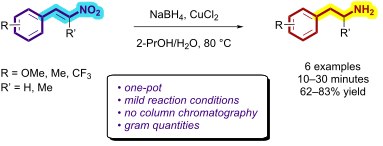
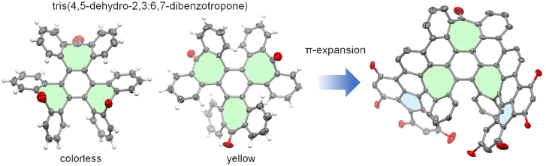
Search for "lithium" in Full Text gives 440 result(s) in Beilstein Journal of Organic Chemistry. Showing first 200.
Beilstein J. Org. Chem. 2024, 20, 2171–2207, doi:10.3762/bjoc.20.187
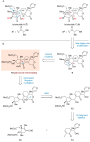
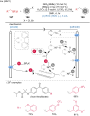
Graphical Abstract
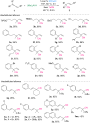
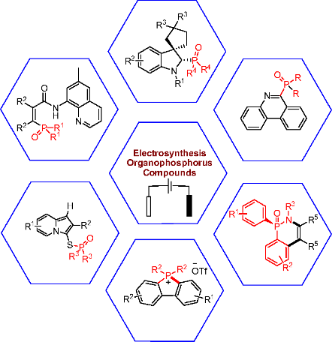
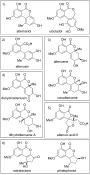
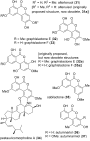
Figure 1: Examples of compounds covered in this review categorized in six sub-classes (see text).
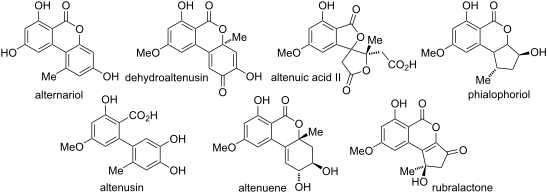
Figure 2: Examples of compounds not covered in this review.
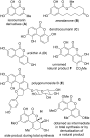
Figure 3: Wrongly assigned and thus obsolete structures (details will be discussed in the respective chapters...
Figure 4: Alternariol with the correct IUPAC numbering and an occasionally used numbering based on the biphen...
Figure 5: Alternariol O-methyl ethers.
Figure 6: Alternariol O-glycosides.
Figure 7: Alternariol O-acetates and O-sulfates.
Figure 8: 2-Hydroxy- and 4-hydroxy-substituted alternariol and its O-methyl ethers.
Figure 9: Chloro- and amino-substituted alternariol and its O-methyl ethers.
Figure 10: Presumed alternariol derivatives with non-canonical substitution pattern.
Figure 11: Alternariol derivatives with the 1-methyl group hydroxylated.
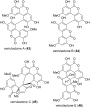
Figure 12: Verrulactones: pseudo-dimeric derivatives of altertenuol and related compounds.
Figure 13: Biaryls formed by reductive lactone opening and/or by decarboxylation.
Figure 14: Altenuene and its diastereomers.
Figure 15: 9-O-Demethylated altenuene diastereomers.
Figure 16: Acetylated and methylated altenuene diastereomers.
Figure 17: Altenuene diastereomers modified with lactic acid, pyruvic acid, or acetone.
Figure 18: Neoaltenuene and related compounds.
Figure 19: Dehydroaltenusin and its derivatives.
Scheme 1: Equilibrium of dehydroaltenusin in polar solvents [278].
Figure 20: Further quinoid derivatives.
Figure 21: Dehydroaltenuenes.
Figure 22: Complex aggregates containing dehydroaltenuene substructures and related compounds.
Figure 23: Dihydroaltenuenes.
Figure 24: Altenuic acids and related compounds.
Figure 25: Cyclopentane- and cyclopentene-fused derivatives.
Figure 26: Cyclopentenone-fused derivatives.
Figure 27: Spiro-fused derivatives and a related ring-opened derivative.
Figure 28: Lactones-fused and lactone-substituted derivatives.
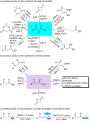
Scheme 2: Biosynthesis of alternariol [324].
Scheme 3: Biosynthesis of alternariol and its immediate successors with the genes involved in the respective ...
Scheme 4: Presumed formation of altenuene and its diastereomers and of botrallin.
Scheme 5: Presumed formation of altenuic acids and related compounds.
Scheme 6: A selection of plausible biosynthetic paths to cyclopenta-fused metabolites. (No stereochemistry is...
Scheme 7: Biomimetic synthesis of alternariol (1) by Harris and Hay [66].
Scheme 8: Total synthesis of alternariol (1) by Subba Rao et al. using a Diels–Alder approach [34].
Scheme 9: Total synthesis of alternariol (1) using a Suzuki strategy by Koch and Podlech [62], improved by Kim et...
Scheme 10: Total synthesis of alternariol (1) using an intramolecular biaryl coupling by Abe et al. [63].
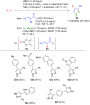
Scheme 11: Total synthesis of altenuene (54) and isoaltenuene (55) by Podlech et al. [249].
Scheme 12: Total synthesis of neoaltenuene (69) by Podlech et al. [35].
Scheme 13: Total synthesis of TMC-264 (79) by Tatsuta et al. [185].
Scheme 14: Total synthesis of cephalosol (99) by Koert et al. [304].
Beilstein J. Org. Chem. 2024, 20, 2024–2077, doi:10.3762/bjoc.20.178
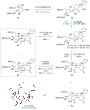
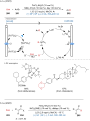
Graphical Abstract
Scheme 1: Consecutive three-component synthesis of pyrazoles 1 via in situ-formed 1,3-diketones 2 [44].
Scheme 2: Consecutive three-component synthesis of 4-ethoxycarbonylpyrazoles 5 via SmCl3-catalyzed acylation ...
Scheme 3: Consecutive four-component synthesis of 1-(thiazol-2-yl)pyrazole-3-carboxylates 8 [51].
Scheme 4: Three-component synthesis of thiazolylpyrazoles 17 via in situ formation of acetoacetylcoumarins 18 ...
Scheme 5: Consecutive pseudo-four-component and four-component synthesis of pyrazoles 21 from sodium acetylac...
Scheme 6: Consecutive three-component synthesis of 1-substituted pyrazoles 24 from boronic acids, di(Boc)diim...
Scheme 7: Consecutive three-component synthesis of N-arylpyrazoles 25 via in situ formation of aryl-di(Boc)hy...
Scheme 8: Consecutive three-component synthesis of 1,3,4-substituted pyrazoles 27 and 28 from methylhydrazine...
Scheme 9: Consecutive three-component synthesis of 4-allylpyrazoles 32 via oxidative allylation of 1,3-dicarb...
Scheme 10: Pseudo-five-component synthesis of tris(pyrazolyl)methanes 35 [61].
Scheme 11: Pseudo-three-component synthesis of 5-(indol-3-yl)pyrazoles 39 from 1,3,5-triketones 38 [64].
Scheme 12: Three-component synthesis of thiazolylpyrazoles 43 [65].
Scheme 13: Three-component synthesis of triazolo[3,4-b]-1,3,4-thiadiazin-3-yl substituted 5-aminopyrazoles 47 [67]....
Scheme 14: Consecutive three-component synthesis of 5-aminopyrazoles 49 via formation of β-oxothioamides 50 [68].
Scheme 15: Synthesis of 3,4-biarylpyrazoles 52 from aryl halides, α-bromocinnamaldehyde, and tosylhydrazine vi...
Scheme 16: Consecutive three-component synthesis of 3,4-substituted pyrazoles 57 from iodochromones 55 by Suzu...
Scheme 17: Pseudo-four-component synthesis of pyrazolyl-2-pyrazolines 59 by ring opening/ring closing cyclocon...
Scheme 18: Consecutive three-component synthesis of pyrazoles 61 [77].
Scheme 19: Three-component synthesis of pyrazoles 62 from malononitrile, aldehydes, and hydrazines [78-90].
Scheme 20: Four-component synthesis of pyrano[2,3-c]pyrazoles 63 [91].
Scheme 21: Three-component synthesis of persubstituted pyrazoles 65 from aldehydes, β-ketoesters, and hydrazin...
Scheme 22: Three-component synthesis of pyrazol-4-carbodithioates 67 [100].
Scheme 23: Regioselective three-component synthesis of persubstituted pyrazoles 68 catalyzed by ionic liquid [...
Scheme 24: Consecutive three-component synthesis of 4-halopyrazoles 69 and anellated pyrazoles 70 [102].
Scheme 25: Three-component synthesis of 2,2,2-trifluoroethyl pyrazole-5-carboxylates 72 [103].
Scheme 26: Synthesis of pyrazoles 75 in a one-pot process via carbonylative Heck coupling and subsequent cycli...
Scheme 27: Copper-catalyzed three-component synthesis of 1,3-substituted pyrazoles 76 [105].
Scheme 28: Pseudo-three-component synthesis of bis(pyrazolyl)methanes 78 by ring opening-ring closing cyclocon...
Scheme 29: Three-component synthesis of 1,4,5-substituted pyrazoles 80 [107].
Scheme 30: Consecutive three-component synthesis of 3,5-bis(fluoroalkyl)pyrazoles 83 [111].
Scheme 31: Consecutive three-component synthesis of difluoromethanesulfonyl-functionalized pyrazole 88 [114].
Scheme 32: Consecutive three-component synthesis of perfluoroalkyl-substituted fluoropyrazoles 91 [115].
Scheme 33: Regioselective consecutive three-component synthesis of 1,3,5-substituted pyrazoles 93 [116].
Scheme 34: Three-component synthesis of pyrazoles 96 mediated by trimethyl phosphite [117].
Scheme 35: One-pot synthesis of pyrazoles 99 via Liebeskind–Srogl cross-coupling/cyclocondensation [118].
Scheme 36: Synthesis of 1,3,5-substituted pyrazoles 101 via domino condensation/Suzuki–Miyaura cross-coupling ...
Scheme 37: Consecutive three-component synthesis of 1,3,5-trisubstituted pyrazoles 102 and 103 by Sonogashira ...
Scheme 38: Polymer analogous consecutive three-component synthesis of pyrazole-based polymers 107 [132].
Scheme 39: Synthesis of 1,3,5-substituted pyrazoles 108 by sequentially Pd-catalyzed Kumada–Sonogashira cycloc...
Scheme 40: Consecutive four-step one-pot synthesis of 1,3,4,5-substituted pyrazoles 110 [137].
Scheme 41: Four-component synthesis of pyrazoles 113, 115, and 117 via Sonogashira coupling and subsequent Suz...
Scheme 42: Consecutive four- or five-component synthesis for the preparation of 4-pyrazoly-1,2,3-triazoles 119...
Scheme 43: Four-component synthesis of pyrazoles 121 via alkynone formation by carbonylative Pd-catalyzed coup...
Scheme 44: Preparation of 3-azulenyl pyrazoles 124 by glyoxylation, decarbonylative Sonogashira coupling, and ...
Scheme 45: Four-component synthesis of a 3-indoloylpyrazole 128 [147].
Scheme 46: Two-step synthesis of 5-acylpyrazoles 132 via glyoxylation-Stephen–Castro sequence and subsequent c...
Scheme 47: Copper on iron mediated consecutive three-component synthesis of 3,5-substituted pyrazoles 136 [150].
Scheme 48: Consecutive three-component synthesis of 3-substituted pyrazoles 141 by Sonogashira coupling and su...
Scheme 49: Consecutive three-component synthesis of pyrazoles 143 initiated by Cu(I)-catalyzed carboxylation o...
Scheme 50: Consecutive three-component synthesis of benzamide-substituted pyrazoles 146 starting from N-phthal...
Scheme 51: Consecutive three-component synthesis of 1,3,5-substituted pyrazoles 148 [156].
Scheme 52: Three-component synthesis of 4-ninhydrin-substituted pyrazoles 151 [158].
Scheme 53: Consecutive four-component synthesis of 4-(oxoindol)-1-phenylpyrazole-3-carboxylates 155 [159].
Scheme 54: Three-component synthesis of pyrazoles 160 [160].
Scheme 55: Consecutive three-component synthesis of pyrazoles 165 [162].
Scheme 56: Consecutive three-component synthesis of 3,5-disubstituted and 3-substituted pyrazoles 168 and 169 ...
Scheme 57: Three-component synthesis of 3,4,5-substituted pyrazoles 171 via 1,3-dipolar cycloaddition of vinyl...
Scheme 58: Three-component synthesis of pyrazoles 173 and 174 from aldehydes, tosylhydrazine, and vinylidene c...
Scheme 59: Three-component synthesis of pyrazoles 175 from glyoxyl hydrates, tosylhydrazine, and electron-defi...
Scheme 60: Pseudo-four-component synthesis of pyrazoles 177 from glyoxyl hydrates, tosylhydrazine, and aldehyd...
Scheme 61: Consecutive three-component synthesis of pyrazoles 179 via Knoevenagel-cycloaddition sequence [179].
Scheme 62: Three-component synthesis of 5-dimethylphosphonate substituted pyrazoles 182 from aldehydes, the Be...
Scheme 63: Consecutive three-component synthesis of 5-(dimethyl phosphonate)-substituted pyrazoles 185 from al...
Scheme 64: Three-component synthesis of 5-(dimethyl phosphonate)-substituted pyrazoles 187 from aldehydes, the...
Scheme 65: Three-component synthesis of 5-diethylphosphonate/5-phenylsulfonyl substituted pyrazoles 189 from a...
Scheme 66: Pseudo-three-component synthesis of 3-(dimethyl phosphonate)-substituted pyrazoles 190 [185].
Scheme 67: Three-component synthesis of 3-trifluoromethylpyrazoles 193 [186].
Scheme 68: Consecutive three-component synthesis of 5-stannyl-substituted 4-fluoropyrazole 197 [191,192].
Scheme 69: Pseudo-three-component synthesis of 3,5-diacyl-4-arylpyrazoles 199 [195].
Scheme 70: Three-component synthesis of pyrazoles 204 via nitrilimines [196].
Scheme 71: Three-component synthesis of 1,3,5-substituted pyrazoles 206 via formation of nitrilimines and sali...
Scheme 72: Pseudo four-component synthesis of pyrazoles 209 from acetylene dicarboxylates 147, hydrazonyl chlo...
Scheme 73: Consecutive three-component synthesis of pyrazoles 213 via syndnones 214 [200].
Scheme 74: Consecutive three-component synthesis of pyrazoles 216 via in situ-formed diazomethinimines 217 [201].
Scheme 75: Consecutive three-component synthesis of 3-methylthiopyrazoles 219 from aldehydes, hydrazine, and 1...
Scheme 76: Three-component synthesis of 1,3,5-substituted pyrazoles 220 from aldehydes, hydrazines, and termin...
Scheme 77: Three-component synthesis of 1,3,4,5-substituted pyrazoles 222 from aldehydes, hydrazines, and DMAD ...
Scheme 78: Pseudo three-component synthesis of pyrazoles 224 from sulfonyl hydrazone and benzyl acrylate under...
Scheme 79: Titanium-catalyzed consecutive four-component synthesis of pyrazoles 225 via enamino imines 226 [211]. a...
Scheme 80: Titanium-catalyzed three-component synthesis of pyrazoles 227 via enhydrazino imine complex interme...
Scheme 81: Pseudo-three-component synthesis of pyrazoles 229 via Glaser coupling of terminal alkynes and photo...
Scheme 82: Copper(II)acetate-mediated three-component synthesis of pyrazoles 232 [216].
Scheme 83: Copper-catalyzed three-component synthesis of 1,3,4-substituted pyrazole 234 from oxime acetates, a...
Scheme 84: Three-component synthesis of 3-trifluoroethylpyrazoles 239 [218].
Scheme 85: Pseudo-three-component synthesis of 1,4-bisulfonyl-substituted pyrazoles 242 [219].
Scheme 86: Three-component synthesis of 4-hydroxypyrazole 246 [221].
Beilstein J. Org. Chem. 2024, 20, 1988–2004, doi:10.3762/bjoc.20.175
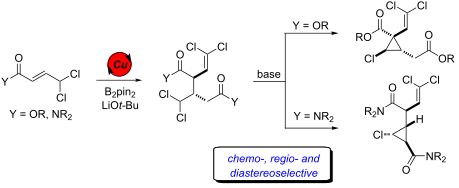
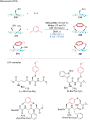
Graphical Abstract
Scheme 1: Synthesis of triazolopyridinium salts [34-36].
Scheme 2: Synthesis of pyrazoles [37].
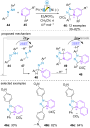
Scheme 3: Synthesis of indazoles from ketone-derived hydrazones [38].
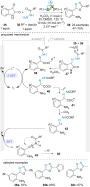
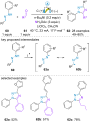
Scheme 4: Intramolecular C(sp2)–H functionalization of aldehyde-derived N-(2-pyridinyl)hydrazones for the syn...
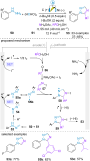
Scheme 5: Synthesis of pyrazolo[4,3-c]quinoline derivatives [40].
Scheme 6: Synthesis of 1,3,4-oxadiazoles and Δ3-1,3,4-oxadiazolines [41].
Scheme 7: Synthesis of 1,3,4-oxadiazoles [43].
Scheme 8: Synthesis of 2-(1,3,4-oxadiazol-2-yl)anilines [44].
Scheme 9: Synthesis of fused s-triazolo perchlorates [45].
Scheme 10: Synthesis of 1-aryl and 1,5-disubstitued 1,2,4-triazoles [49].
Scheme 11: Synthesis of 1,3,5-trisubstituted 1,2,4-triazoles [50].
Scheme 12: Alternative synthesis of 1,3,5-trisubstituted 1,2,4-triazoles [51].
Scheme 13: Synthesis of 5-amino 1,2,4-triazoles [55].
Scheme 14: Synthesis of 1-arylpyrazolines [58].
Scheme 15: Synthesis of 3‑aminopyrazoles [60].
Scheme 16: Synthesis of [1,2,4]triazolo[4,3-a]quinolines [61].·
Scheme 17: Synthesis of 1,2,3-thiadiazoles [64].
Scheme 18: Synthesis of 5-thioxo-1,2,4-triazolium inner salts [65].
Scheme 19: Synthesis of 1-aminotetrazoles [66].
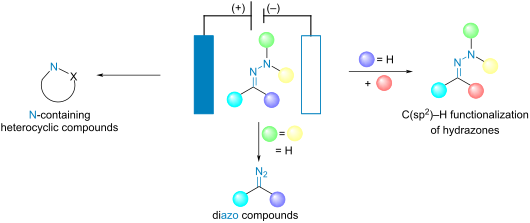
Scheme 20: C(sp2)–H functionalization of aldehyde-derived hydrazones: general mechanisms.
Scheme 21: C(sp2)–H functionalization of benzaldehyde diphenyl hydrazone [68,69].
Scheme 22: Phosphorylation of aldehyde-derived hydrazones [70].
Scheme 23: Azolation of aldehyde-derived hydrazones [72].
Scheme 24: Thiocyanation of benzaldehyde-derived hydrazone 122 [73].
Scheme 25: Sulfonylation of aromatic aldehyde-derived hydrazones [74].
Scheme 26: Trifluoromethylation of aromatic aldehyde-derived hydrazones [76].
Scheme 27: Electrooxidation of benzophenone hydrazones [77].
Scheme 28: Electrooxidative coupling of benzophenone hydrazones and alkenes [77].
Scheme 29: Electrosynthesis of α-diazoketones [78].
Scheme 30: Electrosynthesis of stable diazo compounds [80].
Scheme 31: Photoelectrochemical synthesis of alkenes through in situ generation of diazo compounds [81].
Scheme 32: Synthesis of nitriles [82].
Scheme 33: Electrochemical oxidation of ketone-derived NH-allylhydrazone [83].
Beilstein J. Org. Chem. 2024, 20, 1955–1966, doi:10.3762/bjoc.20.171
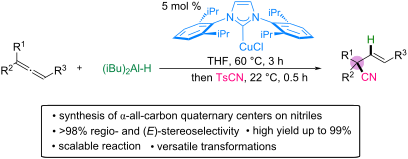
Graphical Abstract
Scheme 1: 1,2-Difluoroethylene synthesis from HFO-1123.
Scheme 2: 1,2-Difluoroethylene synthesis from CFC-112 and HCFC-132.
Scheme 3: 1,2-Difluoroethylene synthesis from HFC-143.
Scheme 4: 1,2-Difluoroethylene synthesis from HCFC-142 via HCFC-142a.
Scheme 5: 1,2-Difluoroethylene synthesis from CFO-1112.
Scheme 6: 1,2-Difluoroethylene synthesis from 1,2-dichloroethylene.
Scheme 7: 1,2-Difluoroethylene synthesis from perfluoropropyl vinyl ether.
Scheme 8: Deuteration reaction of 1,2-difluoroethylene.
Scheme 9: Halogen addition to 1,2-difluoroethylene.
Scheme 10: Hypohalite addition to 1,2-difluoroethylene.
Scheme 11: N-Bromobis(trifluoromethyl)amine addition to 1,2-difluoroethylene.
Scheme 12: N-Chloroimidobis(sulfonyl fluoride) addition to 1,2-difluoroethylene.
Scheme 13: Trichlorosilane addition to 1,2-difluoroethylene.
Scheme 14: SF5Br addition to 1,2-difluoroethylene.
Scheme 15: PCl3/O2 addition to 1,2-difluoroethylene.
Scheme 16: Reaction of tetramethyldiarsine with 1,2-difluoroethylene.
Scheme 17: Reaction of trichlorofluoromethane with 1,2-difluoroethylene.
Scheme 18: Addition of perfluoroalkyl iodides to 1,2-difluoroethylene.
Scheme 19: Cyclopropanation of 1,2-difluoroethylene.
Scheme 20: Diels–Alder reaction of 1,2-difluoroethylene and hexachlorocyclopentadiene.
Scheme 21: Cycloaddition reaction of 1,2-difluoroethylene and fluorinated ketones.
Scheme 22: Cycloaddition reaction of 1,2-difluoroethylene and perfluorinated aldehydes.
Scheme 23: Photochemical cycloaddition of 1,2-difluoroethylene and hexafluorodiacetyl.
Scheme 24: Reaction of 1,2-difluoroethylene with difluorosilylene.
Scheme 25: Reaction of 1,2-difluoroethylene with aryl iodides.
Beilstein J. Org. Chem. 2024, 20, 1900–1905, doi:10.3762/bjoc.20.165
Graphical Abstract
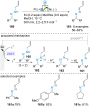
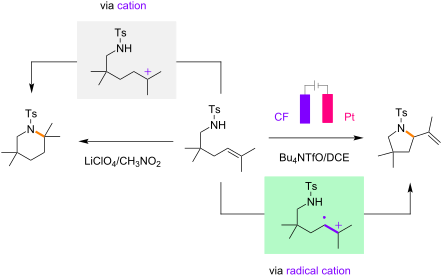
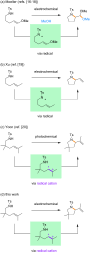
Scheme 1: Radical and ionic intramolecular cyclizations.
Scheme 2: Electrochemical and photochemical aza-Wacker cyclizations.
Scheme 3: Scope of electrochemical aza-Wacker cyclization. Reaction conditions: the alkene (0.20 mmol), Bu4NO...
Scheme 4: Mechanistic studies of aza-Wacker cyclization. A: Electrochemical (Bu4NOTf in CH3CN/1,2-DCE), B: no...
Figure 1: Cyclic voltammograms for aryl sulfonamides.
Beilstein J. Org. Chem. 2024, 20, 1831–1838, doi:10.3762/bjoc.20.161
Graphical Abstract
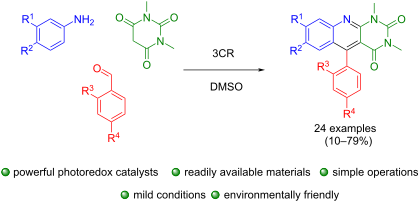
Figure 1: (A) The general structures of isoalloxazine (flavin, Fl), alloxazine (All), 5-deazaisoalloxazine (5...
Scheme 1: Three-component condensation of anilines, aldehydes and N,N-dimethylbarbituric acid. aReaction was ...
Figure 2: UV–vis absorption spectra of 5-arydeazaalloxazines 2f, 2j and 2n in DMF (l = 1 cm, c = 2.50 × 10⁻⁵ ...
Scheme 2: Control experiments related to bulky substituted aldehydes.
Beilstein J. Org. Chem. 2024, 20, 1713–1745, doi:10.3762/bjoc.20.152
Graphical Abstract
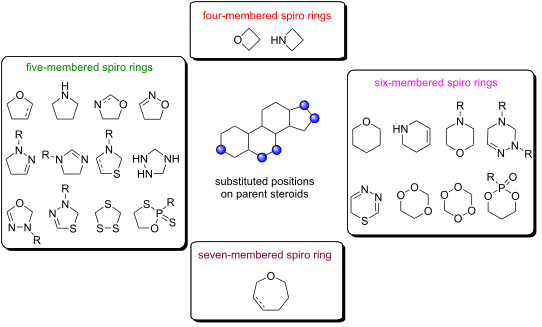
Figure 1: Steroidal spiro heterocycles with remarkable pharmacological activity.
Scheme 1: Synthesis of the spirooxetanone 2. a) t-BuOK, THF, rt, 16%.
Scheme 2: Synthesis of the 17-spirooxetane derivative 7. a) HC≡C(CH2)2CH2OTBDPS, n-BuLi, THF, BF3·Et2O, −78 °...
Scheme 3: Pd-catalyzed carbonylation of steroidal alkynols to produce α-methylene-β-lactones at C-3 and C-17 ...
Scheme 4: Catalyst-free protocol to obtain functionalized spiro-lactones by an intramolecular C–H insertion. ...
Scheme 5: One-pot procedure from dienamides to spiro-β-lactams. a) 1. Ac2O, DMAP, Et3N, CH2Cl2, 2. malononitr...
Scheme 6: Spiro-γ-lactone 20 afforded from 7α-alkanamidoestrone derivative 17. a) HC≡CCH2OTHP, n-BuLi, THF, –...
Scheme 7: Synthesis of the 17-spiro-γ-lactone 23, a key intermediate to obtain spironolactone. a) Ethyl propi...
Scheme 8: Synthetic pathway to obtain 17-spirodihydrofuran-3(2H)-ones from 17-oxosteroids. a) 1-Methoxypropa-...
Scheme 9: One-pot procedure to obtain 17-spiro-2H-furan-3-one compounds. a) NaH, diethyl oxalate, benzene, rt...
Scheme 10: Synthesis of 17-spiro-2H-furan-3-one derivatives. a) RCH=NOH, N-chlorosuccinimide/CHCl3, 99%; b) H2...
Scheme 11: Intramolecular condensation of a γ-acetoxy-β-ketoester to synthesize spirofuranone 37. a) (CH3CN)2P...
Scheme 12: Synthesis of spiro 2,5-dihydrofuran derivatives. a) Allyl bromide, DMF, NaH, 0 °C to rt, 93%; b) G-...
Scheme 13: First reported synthesis of C-16 dispiropyrrolidine derivatives. a) Sarcosine, isatin, MeOH, reflux...
Scheme 14: Cycloadducts 47 with antiproliferative activity against human cancer cell lines. a) 1,4-Dioxane–MeO...
Scheme 15: Spiropyrrolidine compounds generated from (E)-16-arylidene steroids and different ylides. a) Acenap...
Scheme 16: 3-Spiropyrrolidines 52a–c obtained from ketones 50a–c. a) p-Toluenesulfonyl hydrazide, MeOH, rt; b)...
Scheme 17: 16-Spiropyrazolines from 16-methylene-13α-estrone derivatives. a) AgOAc, toluene, rt, 78–81%.
Scheme 18: 6-Spiroimidazolines 57 synthesized by a one-pot multicomponent reaction. a) R3-NC, T3P®, DMSO, 70 °...
Scheme 19: Synthesis of spiro-1,3-oxazolines 60, tested as progesterone receptor antagonist agents. a) CF3COCF3...
Scheme 20: Synthesis of spiro-1,3-oxazolidin-2-ones 63 and 66a,b. a) RNH2, EtOH, 70 °C, 70–90%; b) (CCl3O)2CO,...
Scheme 21: Formation of spiro 1,3-oxazolidin-2-one and spiro 2-substituted amino-4,5-dihydro-1,3-oxazoles from ...
Scheme 22: Synthesis of diastereomeric spiroisoxazolines 74 and 75. a) Ar-C(Cl)=N-OH, DIPEA, toluene, rt, 74 (...
Scheme 23: Spiro 1,3-thiazolidine derivatives 77–79 obtained from 2α-bromo-5α-cholestan-3-one 76. a) 2-aminoet...
Scheme 24: Method for the preparation of derivative 83. a) Benzaldehyde, MeOH, reflux, 77%; b) thioglycolic ac...
Scheme 25: Synthesis of spiro 1,3-thiazolidin-4-one derivatives from steroidal ketones. a) Aniline, EtOH, refl...
Scheme 26: Synthesis of spiro N-aryl-1,3-thiazolidin-4-one derivatives 91 and 92. a) Sulfanilamide, DMF, reflu...
Scheme 27: 1,2,4-Trithiolane dimers 94a–e selectively obtained from carbonyl derivatives. a) LR, CH2Cl2, reflu...
Scheme 28: Spiro 1,2,4-triazolidin-3-ones synthesized from semicarbazones. a) H2O2, CHCl3, 0 °C, 82–85%.
Scheme 29: Steroidal spiro-1,3,4-oxadiazoline 99 obtained in two steps from cholest-5-en-3-one (97). a) NH2NHC...
Scheme 30: Synthesis of spiro-1,3,4-thiadiazoline 101 by cyclization and diacetylation of thiosemicarbazone 100...
Scheme 31: Mono- and bis(1,3,4-thiadiazolines) obtained from estrane and androstane derivatives. a) H2NCSNHNH2...
Scheme 32: Different reaction conditions to synthesize spiro-1,3,2-oxathiaphospholanes 108 and 109.
Scheme 33: Spiro-δ-lactones derived from ADT and epi-ADT as inhibitors of 17β-HSDs. a) CH≡C(CH2)2OTHP, n-BuLi,...
Scheme 34: Spiro-δ-lactams 123a,b obtained in a five-step reaction sequence. a) (R)-(+)-tert-butylsulfinamide,...
Scheme 35: Steroid-coumarin conjugates as fluorescent DHT analogues to study 17-oxidoreductases for androgen m...
Scheme 36: 17-Spiro estradiolmorpholinones 130 bearing two types of molecular diversity. a) ʟ- or ᴅ-amino acid...
Scheme 37: Steroidal spiromorpholinones as inhibitors of enzyme 17β-HSD3. a) Methyl ester of ʟ- or ᴅ-leucine, ...
Scheme 38: Steroidal spiro-morpholin-3-ones achieved by N-alkylation or N-acylation of amino diols 141, follow...
Scheme 39: Straightforward method to synthesize a spiromorpholinone derivative from estrone. a) BnBr, K2CO3, CH...
Scheme 40: Pyrazolo[4,3-e][1,2,4]-triazine derivatives 152–154. a) 4-Aminoantipyrine, EtOH/DMF, reflux, 82%; b...
Scheme 41: One-pot procedure to synthesize spiro-1,3,4-thiadiazine derivatives. a) NH2NHCSCONHR, H2SO4, dioxan...
Scheme 42: 1,2,4-Trioxanes with antimalarial activity. a) 1. O2, methylene blue, CH3CN, 500 W tungsten halogen...
Scheme 43: Tetraoxanes 167 and 168 synthesized from ketones 163, 165 and 166. a) NaOH, iPrOH/H2O, 80 °C, 93%; ...
Scheme 44: 1,2,4,5-Tetraoxanes bearing a steroidal moiety and a cycloalkane. a) 30% H2O2/CH2Cl2/CH3CN, HCl, rt...
Scheme 45: Spiro-1,3,2-dioxaphosphorinanes obtained from estrone derivatives. a) KBH4, MeOH, THF or CH2Cl2; b)...
Scheme 46: Synthesis of steroidal spiro-ε-lactone 183. a) 1. Jones reagent, acetone, 0 °C to rt, 2. ClCOCOCl, ...
Scheme 47: Synthesis of spiro-2,3,4,7-tetrahydrooxepines 185 and 187 derived from mestranol and lynestrenol (38...
Beilstein J. Org. Chem. 2024, 20, 1527–1547, doi:10.3762/bjoc.20.137
Graphical Abstract
Figure 1: A) Benzylic fluorides in bioactive compounds, with B) the relative BDEs of different benzylic C–H b...
Figure 2: Base-mediated benzylic fluorination with Selectfluor.
Figure 3: Sonochemical base-mediated benzylic fluorination with Selectfluor.
Figure 4: Mono- and difluorination of nitrogen-containing heteroaromatic benzylic substrates.
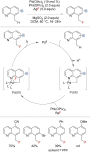
Figure 5: Palladium-catalysed benzylic C–H fluorination with N-fluoro-2,4,6-trimethylpyridinium tetrafluorobo...
Figure 6: Palladium-catalysed, PIP-directed benzylic C(sp3)–H fluorination of α-amino acids and proposed mech...
Figure 7: Palladium-catalysed monodentate-directed benzylic C(sp3)–H fluorination of α-amino acids.
Figure 8: Palladium-catalysed bidentate-directed benzylic C(sp3)–H fluorination.
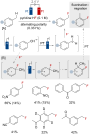
Figure 9: Palladium-catalysed benzylic fluorination using a transient directing group approach. Ratio refers ...
Figure 10: Outline for benzylic C(sp3)–H fluorination via radical intermediates.
Figure 11: Iron(II)-catalysed radical benzylic C(sp3)–H fluorination using Selectfluor.
Figure 12: Silver and amino acid-mediated benzylic fluorination.
Figure 13: Copper-catalysed radical benzylic C(sp3)–H fluorination using NFSI.
Figure 14: Copper-catalysed C(sp3)–H fluorination of benzylic substrates with electrochemical catalyst regener...
Figure 15: Iron-catalysed intramolecular fluorine-atom-transfer from N–F amides.
Figure 16: Vanadium-catalysed benzylic fluorination with Selectfluor.
Figure 17: NDHPI-catalysed radical benzylic C(sp3)–H fluorination with Selectfluor.
Figure 18: Potassium persulfate-mediated radical benzylic C(sp3)–H fluorination with Selectfluor.
Figure 19: Benzylic fluorination using triethylborane as a radical chain initiator.
Figure 20: Heterobenzylic C(sp3)–H radical fluorination with Selectfluor.
Figure 21: Benzylic fluorination of phenylacetic acids via a charge-transfer complex. NMR yields in parenthese...
Figure 22: Oxidative radical photochemical benzylic C(sp3)–H strategies.
Figure 23: 9-Fluorenone-catalysed photochemical radical benzylic fluorination with Selectfluor.
Figure 24: Xanthone-photocatalysed radical benzylic fluorination with Selectfluor II.
Figure 25: 1,2,4,5-Tetracyanobenzene-photocatalysed radical benzylic fluorination with Selectfluor.
Figure 26: Xanthone-catalysed benzylic fluorination in continuous flow.
Figure 27: Photochemical phenylalanine fluorination in peptides.
Figure 28: Decatungstate-photocatalyzed versus AIBN-initiated selective benzylic fluorination.
Figure 29: Benzylic fluorination using organic dye Acr+-Mes and Selectfluor.
Figure 30: Palladium-catalysed benzylic C(sp3)–H fluorination with nucleophilic fluoride.
Figure 31: Manganese-catalysed benzylic C(sp3)–H fluorination with AgF and Et3N·3HF and proposed mechanism. 19...
Figure 32: Iridium-catalysed photocatalytic benzylic C(sp3)–H fluorination with nucleophilic fluoride and N-ac...
Figure 33: Iridium-catalysed photocatalytic benzylic C(sp3)–H fluorination with TBPB HAT reagent.
Figure 34: Silver-catalysed, amide-promoted benzylic fluorination via a radical-polar crossover pathway.
Figure 35: General mechanism for oxidative electrochemical benzylic C(sp3)–H fluorination.
Figure 36: Electrochemical benzylic C(sp3)–H fluorination with HF·amine reagents.
Figure 37: Electrochemical benzylic C(sp3)–H fluorination with 1-ethyl-3-methylimidazolium trifluoromethanesul...
Figure 38: Electrochemical benzylic C(sp3)–H fluorination of phenylacetic acid esters with HF·amine reagents.
Figure 39: Electrochemical benzylic C(sp3)–H fluorination of triphenylmethane with PEG and CsF.
Figure 40: Electrochemical benzylic C(sp3)–H fluorination with caesium fluoride and fluorinated alcohol HFIP.
Figure 41: Electrochemical secondary and tertiary benzylic C(sp3)–H fluorination. GF = graphite felt. DCE = 1,...
Figure 42: Electrochemical primary benzylic C(sp3)–H fluorination of electron-poor toluene derivatives. Ring f...
Figure 43: Electrochemical primary benzylic C(sp3)–H fluorination utilizing pulsed current electrolysis.
Beilstein J. Org. Chem. 2024, 20, 1405–1411, doi:10.3762/bjoc.20.122
Graphical Abstract
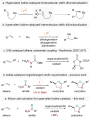
Scheme 1: Hypervalent iodine-catalyzed olefin difunctionalizations background.
Figure 1: Time studies of the amide and alkene coupling. a) Iodoarene time studies: styrene (1), para-substit...
Figure 2: Amide substrate scope studies. a) Standard conditions: styrene (0.25 mmol), iodotoluene (20 mol %),...
Figure 3: Alkene substrate scope studies. a) Standard conditions: alkene (0.25 mmol), iodotoluene (20 mol %),...
Figure 4: Proposed catalytic cycle for the hypervalent iodine-catalyzed amide and alkene coupling.
Beilstein J. Org. Chem. 2024, 20, 859–890, doi:10.3762/bjoc.20.78
Graphical Abstract
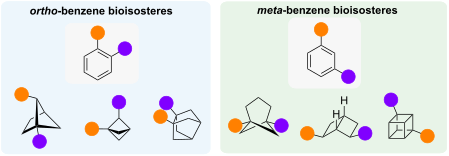
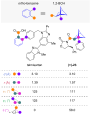
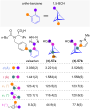
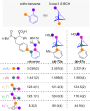
Figure 1: Scaffolds commonly reported as bioisosteric replacements of para-substituted benzene and examples p...
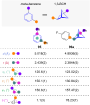
Figure 2: 1,2-BCPs as isosteres for ortho-and meta-substituted benzenes: comparison of reported exit vector p...
Scheme 1: 1,2-Disubstituted bicyclo[1.1.1]pentanes as isosteres of ortho-substituted benzenes. A: Baran, Coll...
Scheme 2: Synthesis of 1,2-BCPs from BCP 15 by bridge C–H bromination as reported by MacMillan and co-workers ...
Figure 3: Comparative physicochemical data of telmisartan, lomitapide and their BCP isosteres [26,33]. Shake flask d...
Figure 4: 1,2-Disubstituted bicyclo[2.1.1]hexanes as isosteres of ortho-benzenes: Exit vector parameters of t...
Scheme 3: Synthesis of 1,2-disubstituted bicyclo[2.1.1]hexanes via alkene insertion into bicyclo[1.1.0]butane...
Scheme 4: Synthesis of 1,2-disubstituted bicyclo[2.1.1]hexanes via intramolecular crossed [2 + 2] cycloadditi...
Figure 5: Comparison of physicochemical data of fluxapyroxad and boscalid and their 1,2-BCH bioisosteres [36]. Sh...
Figure 6: Antifungal activity of fluxapyroxad, its 1,5-BCH bioisostere (±)-55, boscalid and its bioisostere 1...
Figure 7: 1,5-Disubstituted bicyclo[2.1.1]hexanes as isosteres of ortho-substituted benzenes. Comparison of e...
Scheme 5: Synthesis of 1,5-disubstituted bicyclo[2.1.1]hexanes as isosteres of ortho-benzenes via intramolecu...
Figure 8: Comparison of physicochemical data of fluxapyroxad and boscalid and their 1,5-BCH bioisosteres [45]. Sh...
Figure 9: Antifungal activity of fluxapyroxad, its 1,5-BCH bioisostere (±)-64, boscalid and its bioisostere 1...
Figure 10: 1,5-Disubstituted 3-oxabicylco[2.1.1]hexanes as isosteres for ortho-benzenes: Comparison of exit ve...
Scheme 6: Synthesis of 1,5-disubstituted 3-oxabicyclo[2.1.1]hexanes as isosteres for ortho-benzenes via intra...
Figure 11: Comparison of physicochemical data of fluxapyroxad and boscalid and their 3-oxa-1,5-BCH bioisostere...
Figure 12: Antifungal activity of fluxapyroxad and boscalid and their 3-oxa-1,5-BCH bioisosteres (±)-75 and (±...
Figure 13: 1,2-Disubstituted bicyclo[3.1.1]heptanes as isosteres of ortho-benzenes. Schematic representation o...
Scheme 7: Synthesis of 1,2-disubstituted bicyclo[3.1.1]heptanes as isosteres for ortho-benzenes via alkene in...
Figure 14: 1,2-Disubstituted stellanes as ortho-benzene isosteres: Comparison of selected exit vector paramete...
Scheme 8: Synthesis of 1,2-disubstituted stellanes as isosteres for ortho-benzenes reported by Ryabukhin, Vol...
Figure 15: 1,2-Disubstituted cubanes as ortho-benzene isosteres: Comparison of substituent distances and angle...
Scheme 9: Synthesis of 1,2-disubsituted cubanes as isosteres for ortho-benzenes. A: Synthesis of 1,2-cubane d...
Figure 16: 1,3-Disubstituted bicyclo[2.1.1]hexanes as isosteres of meta-benzenes: comparative exit vector para...
Scheme 10: Synthesis of 1,3-disubstituted bicyclo[2.1.1]hexanes as isosteres for meta-benzenes reported by Wal...
Figure 17: 1,4-Disubstituted bicyclo[2.1.1]hexanes as isosteres of meta-benzenes: comparative exit vector para...
Scheme 11: Synthesis of 1,4-disubstituted bicyclo[2.1.1}hexanes as isosteres for ortho-benzenes via intramolec...
Figure 18: 1,4-Disubstituted-2-oxabicyclo[2.1.1]hexanes as meta-benzene isosteres: comparison of selected exit...
Scheme 12: Synthesis of 1,4-disubstituted 2-oxabicyclo[2.1.1]hexanes as isosteres for meta-benzenes. A: Mykhai...
Figure 19: Comparative physicochemical data for 2- and 3-oxa-1,4-BCHs and para-substituted benzene equivalents...
Figure 20: 1,5-Disubstituted bicyclo[3.1.1]heptanes as isosteres of meta-benzenes: comparison of exit vector p...
Scheme 13: Synthesis of [3.1.1]propellane as a precursor for 1,5-disubsituted bicyclo[3.1.1]heptanes. A: aGass...
Scheme 14: Synthesis of iodine-substituted 1,5-disubstituted bicyclo[3.1.1]heptanes as isosteres for meta-benz...
Scheme 15: Synthesis of nitrogen-, chalcogen- and tin-substituted 1,5-disubstituted bicyclo[3.1.1]heptanes as ...
Figure 21: Comparative physicochemical data of URB597 and 1,5-BCHep isostere 146 [27]. Kinetic aqueous solubility ...
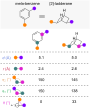
Figure 22: [2]-Ladderanes as isosteres of meta-benzenes: comparison of reported exit vector parameters [63].
Scheme 16: Synthesis of cis-2,6-disubstituted bicyclo[2.2.0]hexanes as isosteres for meta-benzenes. A: Brown a...
Figure 23: Comparative physicochemical data of meta-benzene 158 and [2]-ladderane isostere 159 [63]. Partition coe...
Figure 24: 1,3-Disubstituted cubanes as isosteres of meta-benzenes: comparison of selected exit vector paramet...
Scheme 17: Synthesis of 1,3-disubsituted cubanes as isosteres for meta-benzenes. A: MacMillan and co-workers’ ...
Figure 25: Comparative physicochemical data of lumacaftor and its 1,3-cubane bioisostere 183 [51]. Distribution co...
Figure 26: 1,3-Disubstituted cuneanes as isosteres of meta-benzenes: comparison of selected exit vector parame...
Scheme 18: Synthesis of 1,3-cuneanes as isosteres of meta-benzene. A: Synthesis of 1,3-cuneanes reported by La...
Figure 27: Comparative physicochemical data of sonidegib and its 1,3-cuneane isostere 190 [71]. aSolubility was to...
Figure 28: Exemplary polysubstituted scaffolds related to disubstituted scaffolds suggested as isosteres of or...
Beilstein J. Org. Chem. 2024, 20, 701–713, doi:10.3762/bjoc.20.64
Graphical Abstract
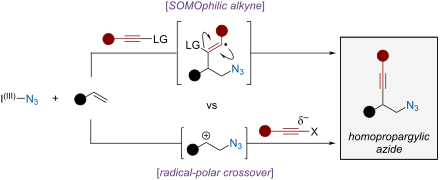
Scheme 1: Overview of homopropargylic azides importance and strategies for azido-alkynylation.
Scheme 2: Screening of nucleophilic alkynes and investigation of the photocatalyst solubility. n.o = not obse...
Scheme 3: Selected scope entries of the azido-alkynylation. The data were already published in ref. [45].
Scheme 4: Unsuccessful examples. The conditions used are the same as in Scheme 3. The yields reported were determined...
Scheme 5: Proposed mechanism.
Beilstein J. Org. Chem. 2024, 20, 653–660, doi:10.3762/bjoc.20.58
Graphical Abstract
Scheme 1: Reaction mechanisms of thermal and photoinduced [2 + 2] cycloaddition on C60 [19,22,23].
Figure 1: HOMO levels of unsaturated substrates and LUMO levels of fullerenes computed at the B3LYP/6-31G(d) ...
Scheme 2: Thermal [2 + 2] reaction of Li+@C60 TFSI− with substrates 1–4. a100 equiv for the reaction screenin...
Figure 2: HPLC profiles of themal [2 + 2]reaction of Li+@C60 with substrate 1 (a) and 2 (b) in o-dichlorobenz...
Figure 3: HPLC profiles of 5a (a) and 5b (b) before and after photoirradiation at room temperature.
Figure 4: 1H-1H 2D-NOESY NMR spectrum (600 MHz, CD2Cl2) of 5a (a) and NOE correlations between two protons. T...
Figure 5: Cyclic voltammograms of 5a, 5b, and Li+@C60 TFSI− with the potentials relative to the ferrocene/fer...
Beilstein J. Org. Chem. 2024, 20, 460–469, doi:10.3762/bjoc.20.41
Graphical Abstract
Scheme 1: Monofluorination of 1,3-diphenylpropane-1,3-dione with Selectfluor.
Scheme 2: Synthesis of 2,2-difluoro-1,3-diphenylpropane-1,3-dione (3a).
Figure 1: Molecular structure of 2,2-difluoro-1,3-diphenylpropane-1,3-dione (3a).
Figure 2: Crystal packing structure of 3f as determined by SXRC.
Figure 3: Molecular structure and crystal packing of 5e as determined by SXRC.
Scheme 3: Proposed mechanism of the quinuclidine-mediated difluorination of 1,3-dicarbonyl substrates.
Scheme 4: Proposed mechanisms of carbonate and chloride ion-mediated difluorination of 1,3-dicarbonyl substra...
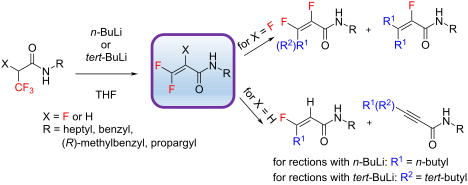
Beilstein J. Org. Chem. 2024, 20, 452–459, doi:10.3762/bjoc.20.40
Graphical Abstract
Scheme 1: Synthesis of 2,3-dibromo-1,1,1,4,4,4-hexafluorobutane (2).
Scheme 2: Synthesis of (E)-butene 3a.
Scheme 3: Isomerization reaction of (E)-butene 3a to (Z)-butene 3b.
Scheme 4: Synthesis of 2-chloro-3-iodo-1,1,1,4,4,4-hexafluorobutane (5).
Scheme 5: Dehydrohalogenation reaction of 2-chloro-3-iodo-1,1,1,4,4,4-hexafluorobutane (5).
Scheme 6: The reaction of silane 8 with I2/KF.
Scheme 7: The reaction of 3a with iPrMgCl and 4-fluorobenzaldehyde (9).
Scheme 8: The reaction of olefin 3a with iPrMgCl.
Scheme 9: The reaction of (E)-butene 3a with BuLi.
Scheme 10: The reaction of allene 11 with bromine.
Scheme 11: The reaction of allene 11 with ICl.
Scheme 12: Synthesis of 2,3-dibromo-2-chloro-1,1,1,4,4,4-hexafluorobutane (16).
Scheme 13: Synthesis of (Z, E)-2-bromo-3-chloro-1,1,1,4,4,4-hexafluorobut-2-enes (17a,b).
Scheme 14: The reaction of olefins 17a,b with BuLi.
Beilstein J. Org. Chem. 2024, 20, 346–378, doi:10.3762/bjoc.20.35
Graphical Abstract
Scheme 1: Comparison between Barton and NHPI ester radical precursors.
Scheme 2: Overview of the mechanisms and activation modes involved in radical generation from RAEs.
Scheme 3: Common mechanisms in photocatalysis.
Scheme 4: A) Giese-type radical addition of NHPI esters mediated by a reductive quenching photocatalytic cycl...
Scheme 5: A) Minisci-type radical addition of NHPI esters. B) Reaction mechanism involving an “off-cycle” red...
Scheme 6: Activation of NHPI esters through hydrogen-bonding in an oxidative quenching photocatalytic cycle.
Scheme 7: SET activation of RAE facilitated by a Lewis acid catalyst.
Scheme 8: PCET activation of NHPI esters in the context of a radical-redox annulation.
Scheme 9: Activation enabled by a strong excited-state reductant catalyst and its application in the dearomat...
Scheme 10: Proposed formation of an intramolecular charge-transfer complex in the synthesis of (spiro)anellate...
Scheme 11: Formation of a charge-transfer complex between enamides and NHPI esters enabled by a chiral phospha...
Scheme 12: Activation of NHPI ester through the formation of photoactive EDA-complexes.
Scheme 13: A) EDA complex-mediated radical hydroalkylation reactions of NHPI esters. B) Proposed mechanism for...
Scheme 14: Proposed radical chain mechanism initiated by EDA-complex formation.
Scheme 15: A) Photoinduced decarboxylative borylation. B) Proposed radical chain mechanism.
Scheme 16: A) Activation of NHPI esters mediated by PPh3/NaI. B) Proposed catalytic cycle involving EDA-comple...
Scheme 17: A) Radical generation facilitated by EDA complex formation between PTH1 catalyst and NHPI esters. B...
Scheme 18: Proposed catalytic cycle for the difunctionalization of styrenes.
Scheme 19: Formation of a charge-transfer complex between NHPI esters and Cs2CO3 enables decarboxylative amina...
Scheme 20: 3-Acetoxyquinuclidine as catalytic donor in the activation of TCNHPI esters.
Scheme 21: A) Photoinduced Cu-catalyzed decarboxylative amination. B) Proposed catalytic cycle. C) Radical clo...
Scheme 22: A) Photoinduced Pd-catalyzed aminoalkylation of 1,4-dienes. B) Proposed catalytic cycle.
Scheme 23: A) TM-catalyzed decarboxylative coupling of NHPI esters and organometallic reagents. B) Representat...
Scheme 24: Synthetic applications of the TM-catalyzed decarboxylative coupling of NHPI esters and organometall...
Scheme 25: A) Ni-catalyzed cross-electrophile coupling of NHPI esters. B) Representative catalytic cycle.
Scheme 26: A) Synthetic applications of decarboxylative cross-electrophile couplings. B) Decarboxylative aryla...
Scheme 27: A) Activation of tetrachlorophthalimide redox-active esters enabled by a low-valency Bi complex. B)...
Scheme 28: Activation of NHPI esters mediated by Zn0 applied in a Z-selective alkenylation reaction.
Scheme 29: A) Activation of NHPI esters enabled by a pyridine-boryl radical species applied to the decarboxyla...
Scheme 30: A) Decarboxylative coupling of RAE and aldehydes enabled by NHC-catalyzed radical relay. B) Propose...
Scheme 31: A) Decarboxylative C(sp3)–heteroatom coupling reaction of NHPI esters under NHC catalysis B) The NH...
Scheme 32: A) Electrochemical Giese-type radical addition of NHPI esters. B) Reaction mechanism.
Scheme 33: Electrochemical Minisci-type radical addition of NHPI-esters.
Scheme 34: Ni-electrocatalytic cross-electrophile coupling of NHPI esters with aryl iodides.
Scheme 35: A) Decarboxylative arylation of NHPI esters under Ag-Ni electrocatalysis B) Formation of AgNP on th...
Scheme 36: Synthetic applications of decarboxylative couplings of NHPI esters under Ni-electrocatalysis.
Scheme 37: Examples of natural product syntheses in which RAEs were used in key C–C bond forming reactions.
Beilstein J. Org. Chem. 2023, 19, 1947–1956, doi:10.3762/bjoc.19.145
Graphical Abstract
Figure 1: Various types of stable singlet carbenes and their acronyms.
Figure 2: Various types of NHC·CS2 zwitterions and their coordination modes.
Scheme 1: Synthesis of CAAC·CS2 zwitterion 2 from its free carbene parent 1.
Scheme 2: Synthesis of CAAC·CS2 zwitterions 4a–c with KN(SiMe3)2.
Scheme 3: Synthesis of 1,2,3-triazolium iodides 5a–f.
Scheme 4: Synthesis of MIC·CS2 zwitterions 6a and 6b with KN(SiMe3)2.
Scheme 5: Synthesis of MIC·CS2 zwitterions 6c–f with NaOt-Bu.
Figure 3: ORTEP representations of zwitterions 4a (CAAC-Mes-Cy·CS2, top) and 4c (CAAC-Die-MePh·CS2, bottom) w...
Figure 4: ORTEP representations of zwitterions 6b (MIC-Dip-Ph-Me·CS2, top) and 6e (MIC-Mes-Bu-Me·CS2, bottom)...
Beilstein J. Org. Chem. 2023, 19, 1895–1911, doi:10.3762/bjoc.19.141
Graphical Abstract
Figure 1: The correlation between stability and Clar's rule in acenes.
Scheme 1: General synthetic strategies to access the biphenylene core 1.
Figure 2: [N]Phenylenes 7–12 with different topologies.
Scheme 2: Synthesis of POAs 15a and 15b via reactions of BBD 13 and bis(cyanomethyl) compounds 14a and 14b.
Scheme 3: Synthesis of benzo[b]biphenylene (18).
Scheme 4: Synthesis of benzobiphenylene 18 and POA 21.
Scheme 5: Synthesis of symmetric POAs 25a and 25b.
Scheme 6: Synthesis of POA 29 via palladium-catalyzed annulation/aromatization reaction.
Scheme 7: Synthesis of bisphenylene-containing structures 34a–c.
Scheme 8: Synthesis of curved PAH 38 via Pd-catalyzed annulation and Ir-catalyzed cycloaddition reactions.
Scheme 9: Synthesis of [3]naphthylenes.
Scheme 10: Sequential Pd-catalyzed annulation reactions.
Scheme 11: Synthesis of biphenylene-containing unsymmetrical azaacenes 54a–c.
Scheme 12: Synthesis of biphenylene containing symmetrical azaacenes 58a,b.
Scheme 13: Synthesis of azaacene analogues 62–64.
Scheme 14: Synthesis of POA-type structure 69.
Scheme 15: Synthesis of boron-doped POA 73.
Scheme 16: Synthesis of “v”- and “z”-shaped B-POAs 77 and 78.
Scheme 17: Synthesis of boron-doped extended POA 84.
Scheme 18: Ag(111) surface-catalyzed synthesis of POA 87.
Scheme 19: Au(100) and Au(111) surface-catalyzed synthesis of POA 91.
Scheme 20: Au(111) on-surface synthesis of POA 87.
Beilstein J. Org. Chem. 2023, 19, 1785–1803, doi:10.3762/bjoc.19.131
Graphical Abstract
Scheme 1: Photocatalytic decarboxylative transformations mediated by the NaI/PPh3 catalyst system.
Scheme 2: Proposed catalytic cycle of NaI/PPh3 photoredox catalysis.
Scheme 3: Decarboxylative alkenylation of redox-active esters by NaI/PPh3 catalysis.
Scheme 4: Decarboxylative alkenylation mediated by NaI/PPh3 catalysis.
Scheme 5: NaI-mediated photoinduced α-alkenylation of Katritzky salts 7.
Scheme 6: n-Bu4NI-mediated photoinduced decarboxylative olefination.
Scheme 7: Proposed mechanism of the n-Bu4NI-mediated photoinduced decarboxylative olefination.
Scheme 8: Photodecarboxylative alkylation of redox-active esters with diazirines.
Scheme 9: Photoinduced iodine-anion-catalyzed decarboxylative/deaminative C–H alkylation of enamides.
Scheme 10: Photocatalytic C–H alkylation of coumarins mediated by NaI/PPh3 catalysis.
Scheme 11: Photoredox alkylation of aldimines by NaI/PPh3 catalysis.
Scheme 12: Photoredox C–H alkylation employing ammonium iodide.
Scheme 13: NaI/PPh3/CuBr cooperative catalysis for photocatalytic C(sp3)–O/N cross-coupling reactions.
Scheme 14: Proposed mechanism of NaI/PPh3/CuBr cooperative catalysis for photocatalytic C(sp3)–O/N cross-coupl...
Scheme 15: Photocatalytic decarboxylative [3 + 2]/[4 + 2] annulation between enynals and γ,σ-unsaturated N-(ac...
Scheme 16: Proposed mechanism for the decarboxylative [3 + 2]/[4 + 2] annulation.
Scheme 17: Decarboxylative cascade annulation of alkenes/1,6-enynes with N-hydroxyphthalimide esters.
Scheme 18: Decarboxylative radical cascade cyclization of N-arylacrylamides.
Scheme 19: NaI/PPh3-driven photocatalytic decarboxylative radical cascade alkylarylation.
Scheme 20: Proposed mechanism of the NaI/PPh3-driven photocatalytic decarboxylative radical cascade cyclizatio...
Scheme 21: Visible-light-promoted decarboxylative cyclization of vinylcycloalkanes.
Scheme 22: NaI/PPh3-mediated photochemical reduction and amination of nitroarenes.
Scheme 23: PPh3-catalyzed alkylative iododecarboxylation with LiI.
Scheme 24: Visible-light-triggered iodination facilitated by N-heterocyclic carbenes.
Scheme 25: Visible-light-induced photolysis of phosphonium iodide salts for monofluoromethylation.
Beilstein J. Org. Chem. 2023, 19, 1664–1676, doi:10.3762/bjoc.19.122
Graphical Abstract
Scheme 1: Synthesis of D–A–D chromophore TPECNz.
Figure 1: a) The optimized structure and HOMO/LUMO distributions calculated by B3LYP/6-31G(d,p) method. b) Th...
Figure 2: UV–vis absorption and PL spectra in a) toluene solution (≈1 × 10⁻⁵ M) and b) thin film spin-coated ...
Figure 3: a) Normalized UV–vis absorption/PL spectra in different solvents. b) Lippert–Mataga plot of Stokes ...
Figure 4: a) PL spectra in THF/water mixtures (5 μM) with different water fractions (fw). b) Plot of relative...
Figure 5: a) DSC and TGA thermograms measured at a heating rate of 10 °C min−1 under N2 flow. b) Cyclic volta...
Figure 6: a) Schematic structure of the hole-only and electron-only MIS devices. b) Electric-field dependence ...
Figure 7: a) Schematic energy diagram of OLED and organic materials used in the device. b) EL spectra at vari...
Beilstein J. Org. Chem. 2023, 19, 1443–1451, doi:10.3762/bjoc.19.103
Graphical Abstract
Scheme 1: Air-promoted radical chain reaction of dialkylzinc reagents with α,β-unsaturated carbonyl compounds....
Scheme 2: Enolate formation by zinc radical transfer (SH2 on dialkylzinc reagents).
Scheme 3: Preparation of α-(aminomethyl)acrylate 10.
Scheme 4: Reaction of α-(aminomethyl)acrylate 10 with Et2Zn in the presence of air.
Scheme 5: Chemical correlation to determine the configuration of the major diastereomer of (RS)-14b.
Scheme 6: Air-promoted tandem 1,4-addition–aldol condensation reactions of Et2Zn with α-(aminomethyl)acrylate...
Scheme 7: Diagnostic experiments for a radical mechanism and for enolate formation.
Scheme 8: Diagnostic experiments with N-benzyl enoate 10.
Scheme 9: Reactivity manifolds for the air-promoted tandem 1,4-addition–electrophilic substitution reaction b...
Beilstein J. Org. Chem. 2023, 19, 1408–1442, doi:10.3762/bjoc.19.102
Graphical Abstract
Scheme 1: In situ generation of imidazolylidene carbene.
Scheme 2: Hg(II) complex of NHC.
Scheme 3: Isolable and bottlable carbene reported by Arduengo [3].
Scheme 4: First air-stable carbene synthesized by Arduengo in 1992 [5].
Figure 1: General structure of an NHC.
Figure 2: Stabilization of an NHC by donation of the lone pair electrons into the vacant p-orbital (LUMO) at ...
Figure 3: Abnormal NHC reported by Bertrand [8,9].
Figure 4: Cu(d) orbital to σ*C-N(NHC) interactions in NHC–CuX complexes computed at the B3LYP/def2-SVP level ...
Figure 5: Molecular orbital contributions to the NHC–metal bond.
Scheme 5: Synthesis of NHC–Cu(I) complexes by deprotonation of NHC precursors with a base.
Scheme 6: Synthesis of [NHC–CuX] complexes.
Scheme 7: Synthesis of [(ICy)CuX] and [(It-Bu)CuX] complexes.
Scheme 8: Synthesis of iodido-bridged copper–NHC complexes by deprotonation of benzimidazolium salts reported...
Scheme 9: Synthesis of copper complexes by deprotonation of triazolium salts.
Scheme 10: Synthesis of thiazolylidene–Cu(I) complex by deprotonation with KOt-Bu.
Scheme 11: Preparation of NHC–Cu(I) complexes.
Scheme 12: Synthesis of methylmalonic acid-derived anionic [(26a,b)CuCl]Li(THF)2 and zwitterionic (28) heterol...
Scheme 13: Synthesis of diaminocarbene and diamidocarbene (DAC)–Cu(I) complexes.
Scheme 14: Synthesis of the cationic (NHC)2Cu(I) complex 39 from benzimidazolium salts 38 with tetrakis(aceton...
Scheme 15: Synthesis of NHC and ADC (acyclic diamino carbenes) Cu(I) hexamethyldisilazide complexes reported b...
Scheme 16: Synthesis of NHC–copper(I) complexes using an acetylacetonate-functionalized imidazolium zwitterion...
Scheme 17: Synthesis of NHC–Cu(I) complexes through deprotonation of azolium salts with Cu2O.
Scheme 18: Synthesis of NHC–CuBr complex through deprotonation with Cu2O reported by Kolychev [31].
Scheme 19: Synthesis of chiral NHC–CuBr complexes from phenoxyimine-imidazolium salts reported by Douthwaite a...
Scheme 20: Preparation of linear neutral NHC–CuCl complexes through the use of Cu2O. For abbreviations, please...
Scheme 21: Synthesis of abnormal-NHC–copper(I) complexes by Bertrand, Cazin and co-workers [35].
Scheme 22: Microwave-assisted synthesis of thiazolylidene/benzothiazolylidene–CuBr complexes by Bansal and co-...
Scheme 23: Synthesis of NHC–CuX complexes through transmetallation.
Scheme 24: Preparation of six- or seven-membered NHC–Cu(I) complexes through transmetalation from Ag(I) comple...
Scheme 25: Synthesis of 1,2,3-triazolylidene–CuCl complexes through transmetallation of Ag(I) complexes genera...
Scheme 26: Synthesis of NHC–copper complexes having both Cu(I) and Cu(II) units through transmetalation report...
Scheme 27: Synthesis of new [(IPr(CH2)3Si(OiPr)3)CuX] complexes and anchoring on MCM-41.
Scheme 28: Synthesis of bis(trimethylsilyl)phosphide–Cu(I)–NHC complexes through ligand displacement.
Scheme 29: Synthesis of silyl- and stannyl [(NHC)Cu−ER3] complexes.
Scheme 30: Synthesis of amido-, phenolato-, thiophenolato–Cu(NHC) complexes.
Scheme 31: Synthesis of first isolable NHC–Cu–difluoromethyl complexes reported by Sanford et al. [44].
Scheme 32: Synthesis of NHC–Cu(I)–bifluoride complexes reported by Riant, Leyssens and co-workers [45].
Scheme 33: Conjugate addition of Et2Zn to enones catalyzed by an NHC–Cu(I) complex reported by Woodward in 200...
Scheme 34: Hydrosilylation of a carbonyl group.
Scheme 35: NHC–Cu(I)-catalyzed hydrosilylation of ketones reported by Nolan et al. [48,49].
Scheme 36: Application of chiral NHC–CuCl complex 104 for the enantioselective hydrosilylation of ketones.
Scheme 37: Hydrosilylation reactions catalyzed by NHC–Cu(Ot-Bu) complexes.
Scheme 38: NHC–CuCl catalyzed carbonylative silylation of alkyl halides.
Scheme 39: Nucleophilic conjugate addition to an activated C=C bond.
Figure 6: Molecular electrostatic potential maps (MESP) of two NHC–CuX complexes computed at the B3LYP/def2-S...
Scheme 40: Conjugate addition of Grignard reagents to 3-alkyl-substituted cyclohexenones catalyzed by a chiral...
Scheme 41: NHC–copper complex-catalyzed conjugate addition of Grignard reagent to 3-substituted hexenone repor...
Scheme 42: Conjugate addition or organoaluminum reagents to β-substituted cyclic enones.
Scheme 43: Conjugate addition of boronates to acyclic α,β-unsaturated carboxylic esters, ketones, and thioeste...
Scheme 44: NHC–Cu(I)-catalyzed hydroboration of an allene reported by Hoveyda [63].
Scheme 45: Conjugate addition of Et2Zn to cyclohexenone catalyzed by NHC–Cu(I) complex derived from benzimidaz...
Scheme 46: Asymmetric conjugate addition of diethylzinc to 3-nonen-2-one catalyzed by NHC–Cu complexes derived...
Scheme 47: General scheme of a [3 + 2] cycloaddition reaction.
Scheme 48: [3 + 2] Cycloaddition of azides with alkynes catalyzed by NHC–Cu(I) complexes reported by Diez-Gonz...
Scheme 49: Application of NHC–CuCl/N-donor combination to catalyze the [3 + 2] cycloaddition of benzyl azide w...
Scheme 50: [3 + 2] Cycloaddition of azides with acetylenes catalyzed by bis(NHC)–Cu complex 131 and mixed NHC–...
Figure 7: NHC–CuCl complex 133 as catalyst for the [3 + 2] cycloaddition of alkynes with azides at room tempe...
Scheme 51: [3 + 2] Cycloaddition of a bulky azide with an alkynylpyridine using [(NHC)Cu(μ-I)2Cu(NHC)] copper ...
Scheme 52: [3 + 2] Cycloaddition of benzyl azide with phenylacetylene under homogeneous and heterogeneous cata...
Scheme 53: [3 + 2] Cycloaddition of benzyl azide with acetylenes catalyzed by bisthiazolylidene dicopper(I) co...
Figure 8: Copper (I)–NHC linear coordination polymer 137 and its conversion into tetranuclear (138) and dinuc...
Scheme 54: An A3 reaction.
Scheme 55: Synthesis of SiO2-immobilized NHC–Cu(I) catalyst 141 and its application in the A3-coupling reactio...
Scheme 56: Preparation of dual-purpose Ru@SiO2–[(NHC)CuCl] catalyst system 142 developed by Bordet, Leitner an...
Scheme 57: Application of the catalyst system Ru@SiO2–[Cu(NHC)] 142 to the one-pot tandem A3 reaction and hydr...
Scheme 58: A3 reaction of phenylacetylene with secondary amines and aldehydes catalyzed by benzothiazolylidene...
Figure 9: Kohn–Sham HOMOs of phenylacetylene and NHC–Cu(I)–phenylacetylene complex computed at the B3LYP/def2...
Figure 10: Energies of the FMOs of phenylacetylene, iminium ion, and NHC–Cu(I)–phenylacetylene complex compute...
Scheme 59: NHC–Cu(I) catalyzed diboration of ketones 147 by reacting with bis(pinacolato)diboron (148) reporte...
Scheme 60: Protoboration of terminal allenes catalyzed by NHC–Cu(I) complexes reported by Hoveyda and co-worke...
Scheme 61: NHC–CuCl-catalyzed borylation of α-alkoxyallenes to give 2-boryl-1,3-butadienes.
Scheme 62: Regioselective hydroborylation of propargylic alcohols and ethers catalyzed by NHC–CuCl complexes 1...
Scheme 63: NHC–CuOt-Bu-catalyzed semihydrogenation and hydroborylation of alkynes.
Scheme 64: Enantioselective NHC–Cu(I)-catalyzed hydroborations of 1,1-disubstituted aryl olefins reported by H...
Scheme 65: Enantioselective NHC–Cu(I)-catalyzed hydroboration of exocyclic 1,1-disubstituted alkenes reported ...
Scheme 66: Markovnikov-selective NHC–CuOH-catalyzed hydroboration of alkenes and alkynes reported by Jones et ...
Scheme 67: Dehydrogenative borylation and silylation of styrenes catalyzed by NHC–CuOt-Bu complexes developed ...
Scheme 68: N–H/C(sp2)–H carboxylation catalyzed by NHC–CuOH complexes.
Scheme 69: C–H Carboxylation of benzoxazole and benzothiazole derivatives with CO2 using a 1,2,3-triazol-5-yli...
Scheme 70: Use of Cu(I) complex derived from diethylene glycol-functionalized imidazo[1,5,a] pyridin-3-ylidene...
Scheme 71: Allylation and alkenylation of polyfluoroarenes and heteroarenes catalyzed by NHC–Cu(I) complexes r...
Scheme 72: Enantioselective C(sp2)–H allylation of (benz)oxazoles and benzothiazoles with γ,γ-disubstituted pr...
Scheme 73: C(sp2)–H arylation of arenes catalyzed by dual NHC–Cu/NHC–Pd catalytic system.
Scheme 74: C(sp2)–H Amidation of (hetero)arenes with N-chlorocarbamates/N-chloro-N-sodiocarbamates catalyzed b...
Scheme 75: NHC–CuI catalyzed thiolation of benzothiazoles and benzoxazoles.
Beilstein J. Org. Chem. 2023, 19, 1299–1369, doi:10.3762/bjoc.19.96
Graphical Abstract
Figure 1: Chemical structure of some natural ether lipids (ELs).
Figure 2: Synthesis of lyso-PAF and PAF from 1-O-alkylglycerol [64].
Figure 3: Synthesis of lyso-PAF from 1,3-benzylideneglycerol 3.1 [69].
Figure 4: A) Synthesis of the two enantiomers of octadecylglycerol (4.6 and 4.10) from ᴅ-mannitol (4.1); B) s...
Figure 5: Four-step synthesis of PAF 5.6 from (S)-glycidol [73].
Figure 6: Synthesis of 1-O-alkylglycerol A) from solketal, B) from ᴅ- or ʟ-tartaric acid and the intermediate ...
Figure 7: Synthesis of EL building blocks starting from substituted glycidol 7.1a–c [82].
Figure 8: Synthesis of PAF 8.5 by using phosphoramidite 8.2 [86].
Figure 9: Synthesis of oleyl-PAF 9.7 from ʟ-serine [88].
Figure 10: Synthesis of racemic analogues of lyso-PAF 10.8 and PAF 10.9 featuring a phenyl group between the g...
Figure 11: Synthesis of racemic deoxy-lyso-PAF 11.7 and deoxy-PAF 11.8 [91].
Figure 12: Synthesis of racemic thio-PAF 12.8 [93].
Figure 13: Racemic synthesis of 13.6 to illustrate the modification of the glycerol backbone by adding a methy...
Figure 14: Racemic synthesis of 14.5 as an illustration of the introduction of methyl substituents on the glyc...
Figure 15: Synthesis of functionalized sn-2-acyl chains of PC-EL; A) Steglich esterification or acylation reac...
Figure 16: Synthesis of racemic mc-PAF (16.3), a carbamate analogue of PAF [102].
Figure 17: A) Synthesis of (R)-17.2 and (S)-17.6 starting from (S)-solketal (17.1); B) synthesis of N3-PAF (17...
Figure 18: Modification of the phosphocholine polar head to produce PAF analogues [81].
Figure 19: Racemic PAF analogues 19.3 and 19.5 characterized by the absence of the phosphate group [107].
Figure 20: Synthesis of PIP3-PAF (20.7) [108].
Figure 21: Large-scale synthesis of C18-edelfosine (21.8) [116].
Figure 22: Synthesis of C16-edelfosine (22.10) starting from isopropylidene-ʟ-glyceric acid methyl ester (22.1...
Figure 23: Phosphocholine moiety installation by the use of chlorophosphite 23.2 as key reagent [119].
Figure 24: Synthesis of rac-1-alkyl-2-O-methylglycerol (AMG) [120].
Figure 25: Synthesis of stereocontrolled 1-alkyl-2-O-methyl glycerol 25.9 (AMG) from dimethyl ᴅ-tartrate [81].
Figure 26: A) Racemic synthesis of thioether 26.4 [129,130], B) structure of sulfone analogue 26.5 [129].
Figure 27: Stereocontrolled synthesis of C18-edelfosine thioether analogue 27.8 [118].
Figure 28: Synthesis of thioether 28.4 that include a thiophosphate function [134].
Figure 29: Synthesis of ammonium thioether 29.4 and 29.6 [135].
Figure 30: Synthesis of the N-methylamino analogue of edelfosine 30.6 (BN52211) [138].
Figure 31: Synthesis of 1-desoxy analogues of edelfosine; A) with a saturated alkyl chain; B) synthesis of the...
Figure 32: Stereocontrolled synthesis of edelfosine analogue (S)-32.8 featuring a C18:1 lipid chain [142].
Figure 33: Synthesis of edelfosine analogues with modulation of the lipid chain; A) illustration with the synt...
Figure 34: Synthesis of phospholipid featuring a carbamate function to link the lipid chain to the glycerol un...
Figure 35: Synthesis of sesquiterpene conjugates of phospho glycero ether lipids [148].
Figure 36: Racemic synthesis of methyl-substituted glycerol analogues 36.7 and 36.10: A) synthesis of diether ...
Figure 37: Racemic synthesis of ilmofosine (37.6) [155,156].
Figure 38: A) Stereoselective synthesis of 38.5 via a stereoselective hydroboration reaction; B) synthesis of ...
Figure 39: Racemic synthesis of SRI62-834 (39.6) featuring a spiro-tetrahydrofurane heterocycle in position 2 ...
Figure 40: Racemic synthesis of edelfosine analogue 40.5 featuring an imidazole moiety in sn-2 position [160].
Figure 41: Racemic synthesis of fluorine-functionalized EL: A) Synthesis of 41.6 and B) synthesis of 41.8 [161-163].
Figure 42: A) Synthesis of the β-keto-ester 42.6 that also features a decyl linker between the phosphate and t...
Figure 43: Synthesis of phosphonate-based ether lipids; A) edelfosine phosphonate analogue 43.7 and B) thioeth...
Figure 44: Enantioselective synthesis of phosphonates 44.3 and 44.4 [171].
Figure 45: Racemic synthesis of phosphinate-based ether lipid 45.10 [172].
Figure 46: Racemic synthesis of edelfosine arsonium analogue 46.5 [173].
Figure 47: Synthesis of edelfosine dimethylammonium analogue 47.2 [118].
Figure 48: Synthesis of rac-C18-edelfosine methylammonium analogue 48.4 [176].
Figure 49: A) Synthesis of edelfosine N-methylpyrrolidinium analogue 49.2 or N-methylmorpholinium analogue 49.3...
Figure 50: A) Synthesis of edelfosine’s analogue 50.4 with a PE polar group; B) illustration of a pyridinium d...
Figure 51: A) Synthesis of 51.4 featuring a thiazolium cationic moiety; B) synthesis of thiazolium-based EL 51...
Figure 52: Synthesis of cationic ether lipids 52.3, 52.4 and 52.6 [135,183].
Figure 53: Synthesis of cationic carbamate ether lipid 53.5 [184].
Figure 54: Synthesis of cationic sulfonamide 54.5 [185].
Figure 55: Chemical structure of ONO-6240 (55.1) and SRI-63-119 (55.2).
Figure 56: Synthesis of non-ionic ether lipids 56.2–56.9 [188].
Figure 57: Synthesis of ether lipid conjugated to foscarnet 57.6 [189].
Figure 58: A) Synthesis of ether lipid conjugated to arabinofuranosylcytosine; B) synthesis of AZT conjugated ...
Figure 59: Synthesis of quercetin conjugate to edelfosine [191].
Figure 60: Synthesis of 60.8 (Glc-PAF) [194].
Figure 61: A) Synthesis of amino ether lipid 61.7 functionalized with a rhamnose unit and its amide analogue 6...
Figure 62: A) Synthesis of glucose ether lipid 62.4; B) structure of ether lipid 62.5 possessing a maltose uni...
Figure 63: A) Synthesis of glucuronic methyl ester 63.8; B) structure of cellobiose 63.9 and maltose 63.10 ana...
Figure 64: A) Synthesis of maltosyl glycerolipid 64.7; B) structure of lactose analogue 64.8 prepared followin...
Figure 65: A) Asymmetric synthesis of the aglycone moiety starting from allyl 4-methoxyphenyl ether; B) glycos...
Figure 66: A) Synthesis of ohmline possessing a lactose moiety. B) Structure of other glyco glycero lipids pre...
Figure 67: A) Synthesis of lactose-glycerol ether lipid 67.5; B) analogues possessing a maltose (67.6) or meli...
Figure 68: Synthesis of digalactosyl EL 68.6, A) by using trityl, benzyl and acetyl protecting groups, B) by u...
Figure 69: A) Synthesis of α-ohmline; B) structure of disaccharide ether lipids prepared by using similar meth...
Figure 70: Synthesis of lactose ether lipid 70.3 and its analogue 70.6 featuring a carbamate function as linke...
Figure 71: Synthesis of rhamnopyranoside diether 71.4 [196].
Figure 72: Synthesis of 1-O-hexadecyl-2-O-methyl-3-S-(α-ᴅ-1'-thioglucopyranosyl)-sn-glycerol (72.5) [225].
Figure 73: A) Preparation of lipid intermediate 73.4; B) synthesis of 2-desoxy-C-glycoside 73.10 [226].
Figure 74: Synthesis of galactose-pyridinium salt 74.3 [228].
Figure 75: Synthesis of myo-inositol derivative Ino-C2-PAF (75.10) [230].
Figure 76: A) Synthesis of myo-inositol phosphate building block 76.7; B) synthesis of myo-inositolphosphate d...
Figure 77: A) Synthesis of phosphatidyl-3-desoxy-inositol 77.4; B) synthesis of phosphono-3-desoxyinositol 77.9...
Figure 78: A) Structure of diether phosphatidyl-myo-inositol-3,4-diphosphate 78.1; B) synthesis of phosphatidy...
Figure 79: A) Synthesis of diether-phosphatidyl derivative 79.4 featuring a hydroxymethyl group in place of a ...
Figure 80: Synthesis of Glc-amine-PAF [78].
Figure 81: Synthesis of glucosamine ether lipid 81.4 and its analogues functionalized in position 3 of the ami...
Figure 82: Synthesis of fully deprotected aminoglucoside ether lipid 82.5 [246].
Figure 83: Synthesis of C-aminoglycoside 83.12 using Ramberg–Bäcklund rearrangement as a key step [250].
Figure 84: A) List of the most important glyco lipids and amino glyco lipids included in the study of Arthur a...
Figure 85: Synthesis of mannosamine ether lipid 85.6 [254].
Figure 86: A) Synthesis of glucosamine ether lipids with a non-natural ʟ-glucosamine moiety; B) synthesis of e...
Figure 87: A) Structure of the most efficient anticancer agents 87.1–87.4 featuring a diamino glyco ether lipi...
Figure 88: A) Synthesis of diamino glyco ether lipid 87.4; B) synthesis of bis-glycosylated ether lipid 88.10 [256]....
Figure 89: Synthesis of triamino ether lipid 89.4 [260].
Figure 90: Synthesis of chlorambucil conjugate 90.7 [261].
Figure 91: Three main methods for the preparation of glycerol ether lipid 91.3; A) from solketal and via a tri...
Figure 92: Four different methods for the installation of the phosphocholine polar head group; A) method using...
Figure 93: Illustration of two methods for the installation of saccharides or aminosaccharides; A) O-glycosyla...
Beilstein J. Org. Chem. 2023, 19, 1225–1233, doi:10.3762/bjoc.19.90
Graphical Abstract
Scheme 1: Overview of the RLT mechanism in nature and in literature. I: The radical rebound mechanism in cyto...
Scheme 2: Areas of recent work on RLT development and application in catalysis. I: Reported RLT pathways ofte...
Scheme 3: The incorporation of RLT catalysis in ATRA photocatalysis. I: The reported method is compatible wit...
Scheme 4: Pioneering and recent work on decarboxylative functionalization involving a posited RLT pathway. I:...
Scheme 5: Our lab reported decarboxylative azidation of aliphatic and benzylic acids. I: The reaction proceed...
Beilstein J. Org. Chem. 2023, 19, 1198–1215, doi:10.3762/bjoc.19.88
Graphical Abstract
Figure 1: Diagram comparing the two reaction pathways for sacrificial electron donors (SD) in photocatalyzed ...
Figure 2: Diagram showing water-splitting systems developed by Girault, Scanlon, and co-workers that employ i...
Figure 3: Diagram illustrating the transfer of electrons in a photocatalytic particulate suspensions Z-scheme...
Figure 4: A. Structures of the molecules represented in part B. The numbers in brackets correspond to the com...
Figure 5: A. Structures of the molecules represented in part B. The numbers in brackets correspond to the com...
Beilstein J. Org. Chem. 2023, 19, 1055–1145, doi:10.3762/bjoc.19.81
Graphical Abstract
Figure 1: Oxidative and reductive activations of organic compounds harvesting photoredox catalysis.
Figure 2: General catalytic cycles of radical ion conPET (left) and radical ion e-PRC (right).
Figure 3: “Beginner’s guide”: comparison between advantages, capacities, and prospectives of conPET and PEC.
Figure 4: A) conPET reductive dehalogenation of aryl halides with PDI. B) Reductive C–H arylation with pyrrol...
Figure 5: A) Chromoselective mono- and disubstitution or polybrominated pyrimidines with pyrroles. B) Sequent...
Figure 6: A) Synthesis of pyrrolo[1,2-a]quinolines. B) Synthesis of ullazines.
Figure 7: A) Reductive phosphorylation of aryl halides via conPET. B) Selected examples from the substrate sc...
Figure 8: A) Reductive dehalogenation of aryl halides via conPET and selected examples from the substrate sco...
Figure 9: A) Reductive C–H arylation of aryl halides via conPET (top) and selected examples from the substrat...
Figure 10: A) Reductive hydrodehalogenation of aryl halides with Mes-Acr-BF4. B) Selected examples from the su...
Figure 11: A) Reductive hydrodechlorination of aryl chlorides with 4-DPAIPN. B) Proposed formation of CO2•−. C...
Figure 12: A) Reductive conPET borylation with 3CzEPAIPN (top) and selected examples from the substrate scope ...
Figure 13: Scale-up of conPET phosphorylation with 3CzEPAIPN.
Figure 14: A) Borylation of 1d. B) Characteristics and structure of PC1 with green and red parts showing the l...
Figure 15: A) Reductive C–H arylation scope with polysulfide conPET (top) and selected examples from the subst...
Figure 16: Scale-up of A) C–H arylation and B) dehaloborylation with polysulfide photocatalysis in continuous-...
Figure 17: A) Formation of [Ir1]0 and [Ir2]0 upon PET between [Ir1]+ and Et3N. B) Mechanism of multi-photon ta...
Figure 18: A) Reductive hydrodehalogenation of aryl halides via multi-photon tandem photocatalysis. B) Selecte...
Figure 19: A) Carbonylative amidation of aryl halides in continuous flow. B) Selected examples from the substr...
Figure 20: A) General scheme for reductive (RQ) and oxidative quenching (OQ) protocols using [FeIII(btz)3](PF6)...
Figure 21: A) Carbonylative amidation of alkyl iodides with [IrIII(ppy)2(dtbbpy)]PF6. B) Selected examples fro...
Figure 22: A) Carboxylative C–N bond cleavage in cyclic amines. B) Selected examples from the substrate scope....
Figure 23: A) Formal reduction of alkenes to alkanes via transfer hydrogenation. B) Selected examples from the...
Figure 24: A) Birch-type reduction of benzenes with PMP-BPI. B) Selected examples from the substrate scope (sc...
Figure 25: Proposed mechanism of the OH− mediated conPET Birch-type reduction of benzene via generation of sol...
Figure 26: Reductive detosylation of N-tosylated amides with Mes-Acr-BF4. B) Selected examples from the substr...
Figure 27: A) Reductive detosylation of N-tosyl amides by dual PRC. B) Selected examples from the substrate sc...
Figure 28: A) Mechanism of the dual PRC based on PET between [Cu(dap)2]+ and DCA. B) Mechanism of the dual PRC...
Figure 29: A) N–O bond cleavage in Weinreb amides with anthracene. B) N–O bond cleavage in Weinreb amides rely...
Figure 30: A) Pentafluorosulfanylation and fluoride elimination. B) Mechanism of the pentafluorosulfanylation ...
Figure 31: A) α-Alkoxypentafluorosulfanylation (top) and selected examples from the substrate scope (bottom). ...
Figure 32: A) Oxidative amination of arenes with azoles catalyzed by N-Ph PTZ. B) Selected examples from the s...
Figure 33: A) C(sp3)–H bond activation by HAT via chloride oxidation by *N-Ph PTZ•+. B) Proposed mechanism for...
Figure 34: A) Recycling e-PRC C–H azolation of electron-rich arenes with pyrazoles using Mes-Acr+ as a photoca...
Figure 35: A) Radical ion e-PRC direct oxidation of unactivated arenes using TAC+ as an electro-activated phot...
Figure 36: A) Radical ion e-PRC direct oxidation of unactivated arenes using TPA as an electro-activated photo...
Figure 37: Proposed mechanism (top) and mode of preassembly (bottom).
Figure 38: A) Possible preassemblies of reactive (left) vs unreactive (right) arenes. B) Calculated spin densi...
Figure 39: A) Recycling e-PRC C(sp2 )–H acetoxylation of arenes using DDQ as a photocatalyst. B) Proposed cata...
Figure 40: Gram scale hydroxylation of benzene in a recirculated flow setup.
Figure 41: A) Radical ion e-PRC vicinal diamination of alkylarenes using TAC+ as an electro-activated photocat...
Figure 42: A) Sequential oxygenation of multiple adjacent C–H bonds under radical ion e-PRC using TAC+ as an e...
Figure 43: A) Enantioselective recycling e-PRC cyanation of benzylic C–H bonds using ADQS as photocatalyst. B)...
Figure 44: Proposed tandem mechanism by Xu and co-workers.
Figure 45: A) Enantioselective recycling e-PRC decarboxylative cyanation using Cu(acac)2, Ce(OTf)3 and a box l...
Figure 46: A) Enantioselective recycling e-PRC benzylic cyanation using Cu(MeCN)4BF4, box ligand and anthraqui...
Figure 47: A) Radical ion e-PRC acetoxyhydroxylation of aryl olefins using TAC+ as an electro-activated photoc...
Figure 48: Selected examples from the substrate scope.
Figure 49: Photoelectrochemical acetoxyhydroxylation in a recirculated flow setup.
Figure 50: A) Radical ion e-PRC aminooxygenation of aryl olefins using TAC+ as an electro-activated photocatal...
Figure 51: A) Recycling e-PRC C–H alkylation of heteroarenes with organic trifluoroborates using Mes-Acr+ as p...
Figure 52: A) Recycling e-PRC decarboxylative C–H alkylation of heteroarenes using CeCl3·7H2O as catalyst. B) ...
Figure 53: A) Recycling e-PRC decarboxylative C–H alkylation of heteroarenes using Fe(NH4)2(SO4)2·6H2O as cata...
Figure 54: A) Recycling e-PRC C–H alkylation of heteroarenes with alkyl oxalates and 4CzIPN as photocatalyst. ...
Figure 55: A) Recycling e-PRC decarboxylative C–H carbamoylation of heteroarenes using 4CzIPN as photocatalyst...
Figure 56: A) Photoelectrochemical HAT-mediated hydrocarbon activation via the chlorine radical. B) Proposed m...
Figure 57: A) Selected examples from the substrate scope. B) Gram and decagram scale semi-continuous flow PEC ...
Figure 58: A) Photoelectrochemical HAT-mediated dehydrogenative coupling of benzothiazoles with aliphatic C–H ...
Figure 59: A) Photoelectrochemical HAT activation of ethers using electro-activated TAC+ as photocatalyst. B) ...
Figure 60: Selected examples from the substrate scope.
Figure 61: A) Photoelectrochemical HAT-mediated synthesis of alkylated benzimidazo-fused isoquinolinones using...
Figure 62: A) Decoupled photoelectrochemical cerium-catalyzed oxydichlorination of alkynes using CeCl3 as cata...
Figure 63: Proposed decoupled photoelectrochemical mechanism.
Figure 64: A) Decoupled photoelectrochemical ring-opening bromination of tertiary cycloalkanols using MgBr2 as...
Figure 65: A) Recycling e-PRC ring-opening functionalization of cycloalkanols using CeCl3 as catalyst. B) Prop...
Figure 66: Selected examples from the substrate scope of the PEC ring-opening functionalization.
Figure 67: A) Radical ion e-PRC reduction of chloro- and bromoarenes using DCA as catalyst and various accepto...
Figure 68: A) Screening of different phthalimide derivatives as catalyst for the e-PRC reduction of aryl halid...
Figure 69: Screening of different organic catalysts for the e-PRC reduction of trialkylanilium salts.
Figure 70: A) e-PRC reduction of phosphonated phenols and anilinium salts. B) Selected examples from the subst...
Figure 71: A) ConPET and e-PRC reduction of 4-bromobenzonitrile using a naphthalene diimide (NDI) precatalyst ...
Figure 72: A) Radical ion e-PRC reduction of phosphinated aliphatic alcohols with n-BuO-NpMI as catalyst. B) C...
Figure 73: Selected examples from the substrate scope.
Figure 74: A) Recycling e-PRC reductive dimerization of benzylic chlorides using a [Cu2] catalyst. B) Proposed...
Figure 75: A) Decoupled photoelectrochemical C–H alkylation of heteroarenes through deamination of Katritzky s...
Figure 76: Proposed mechanism by Chen and co-workers.