


Search results
Search for "macrocycles" in Full Text gives 210 result(s) in Beilstein Journal of Organic Chemistry. Showing first 200.
Hydrogen-bonded macrocycle-mediated dimerization for orthogonal supramolecular polymerization
Beilstein J. Org. Chem. 2025, 21, 179–188, doi:10.3762/bjoc.21.10
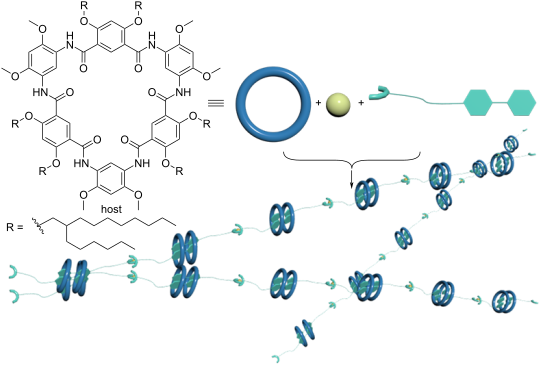
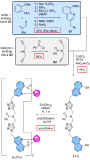
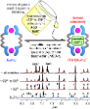
- covalently linked polymers. So far, the design of such monomers has relied heavily on three-dimensional macrocycles, and the use of two-dimensional shape-persistent macrocycles for this purpose remains rather rare. Here, we demonstrate a dimerization motif based on a hydrogen-bonded macrocycle that can be
- polymerization concentration of 17 μM. These polymers were highly concentration-dependent. Establishing this new dimerization motif with shape-persistent H-bonded macrocycles widens the scope of noncovalent building blocks for supramolecular polymers and augurs well for the future development of functional
- materials. Keywords: hydrogen-bonded macrocycle; orthogonal self-assembly; shape-persistent; supramolecular polymer; Introduction Host–guest interactions, particularly those involving macrocycles as hosts [1], have found a myriad of applications in supramolecular chemistry [2][3][4] owing to their ability



Advances in the use of metal-free tetrapyrrolic macrocycles as catalysts
Beilstein J. Org. Chem. 2024, 20, 3085–3112, doi:10.3762/bjoc.20.257
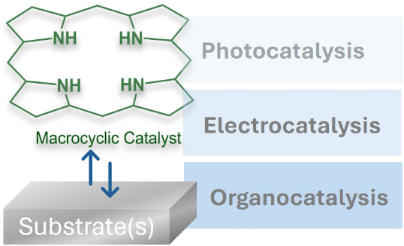
- Mandeep K. Chahal School of Chemistry and Forensic Science, University of Kent, Canterbury, CT2 7NH, UK 10.3762/bjoc.20.257 Abstract This review provides an overview of recent progress made in the field of catalysis using metal-free tetrapyrrolic macrocycles, focusing on calix[4]pyrroles
- applied in various fields, including organometallic catalysis, dye-sensitized solar cells, sensing, artificial olfactory systems, photodynamic therapy (PDT), anticancer drugs, biochemical probes, and electrochemical devices. Relevant examples of these two pyrrolic macrocycles as metal-free organocatalysts
- two macrocycles as metal-free catalysts. Keywords: calix[4]pyrroles; electrocatalysis; free-base porphyrins; organocatalysis; photocatalysis; tetrapyrrolic macrocycles; Introduction Tetrapyrrolic macrocycles are a class of cyclic compounds that contain four pyrrolic units in their ring. Examples of


Tailored charge-neutral self-assembled L2Zn2 container for taming oxalate
Beilstein J. Org. Chem. 2024, 20, 3007–3015, doi:10.3762/bjoc.20.250
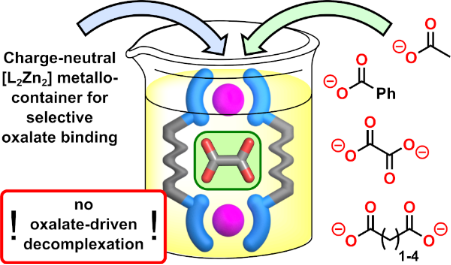
- -driven self-assemblies like cages or containers while numerous classic organic receptors for oxalate exist. This discrepancy is astonishing because metallocontainers or metallocages have advantages over classic macrocycles or organocages like a higher modularity and good preorganization paired with a
- calcium oxalate [6][7][8]. Unsurprisingly, the detection of oxalate was studied with numerous classic organic receptors involving acyclic hosts [9][10][11][12][13][14][15][16][17][18][19][20][21], macrocycles [22][23][24][25][26][27][28][29][30][31][32][33], and cages [34][35][36][37][38][39][40][41][42




C–C Coupling in sterically demanding porphyrin environments
Beilstein J. Org. Chem. 2024, 20, 2784–2798, doi:10.3762/bjoc.20.234
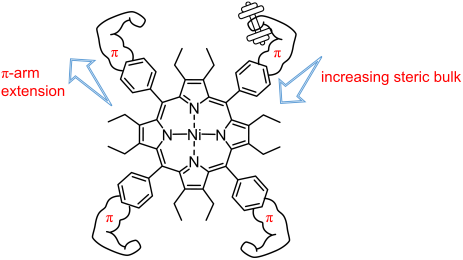
- substrates in their void. Keywords: C–C coupling; conformational analysis; nonplanar porphyrin; Pd-catalysis; porphyrin; Introduction Porphyrins are tetrapyrrolic macrocycles that perform essential processes in nature, such as oxygen transport in hemoglobin and photosynthesis [1]. Porphyrins are often
- described as planar 18π aromatic macrocycles; however, molecular structure analysis frequently reveals nonplanar ring distortion [2][3]. In fact, porphyrins with nonplanar ring distortions are vital for many natural processes to occur, e.g., nonplanarity can alter oxygen affinity of the metal iron core [4
- ] and almost planar [19] dodecasubstituted porphyrins have been reported. Despite the increasing interest in the chemical and physical properties of nonplanar porphyrins only limited synthetic methods are available for the functionalization of these macrocycles [6]. An attractive approach to accomplish


HFIP as a versatile solvent in resorcin[n]arene synthesis
Beilstein J. Org. Chem. 2024, 20, 2469–2475, doi:10.3762/bjoc.20.211
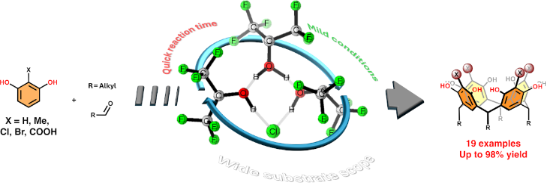
- ]; and 3) access to larger macrocycles with n > 4 is not a trivial task usually leading to reaction yields <10% [21][38][42][60]. Herein, we report 1,1,1,3,3,3-hexafluoroisopropanol (HFIP) as an efficient solvent to speed up reaction times and also capable of tolerating electron-deficient and halogenated
- translated to the formation of other macrocycles as long as they share a similar reaction mechanism. (a) Control experiment testing deiodination of 2-iodoresorcinol. (b) Molecular crystal structure of chlorinated resorcin[4]arenes 1h and 1i, and carboxylic acid-containing 1s at 100 K. Thermal ellipsoids are


Novel truxene-based dipyrromethanes (DPMs): synthesis, spectroscopic characterization and photophysical properties
Beilstein J. Org. Chem. 2024, 20, 2163–2170, doi:10.3762/bjoc.20.186
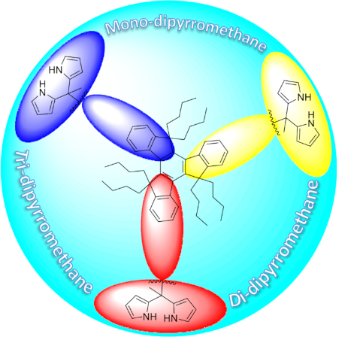
- the importance of DPMs in mind due to their utmost significance as a building block in the construction of porphyrinogens, related polypyrrolic macrocycles, and pigments [39][40][41]. As shown in Figure 1, these DPMs and many more have fruitfully been used by several research groups in sensing/binding


Radical reactivity of antiaromatic Ni(II) norcorroles with azo radical initiators
Beilstein J. Org. Chem. 2024, 20, 1967–1972, doi:10.3762/bjoc.20.172
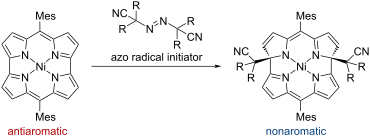
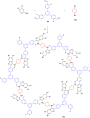
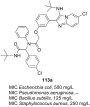
- species has remained unexplored. Here, we disclose the radical functionalization of Ni(II) norcorroles with simple and frequently used azo radical initiators to furnish nonconjugated macrocycles with bowl-shaped structures [27]. The photophysical and electronic properties of the obtained products are also
- subsequent demetallation. Conclusion In conclusion, we have investigated the addition reaction of electrophilic alkyl radicals derived from azo radical initiators to antiaromatic Ni(II) norcorroles. The reaction smoothly proceeded to afford bowl-shaped nonconjugated macrocycles 2a in excellent yield, which


The Groebke–Blackburn–Bienaymé reaction in its maturity: innovation and improvements since its 21st birthday (2019–2023)
Beilstein J. Org. Chem. 2024, 20, 1839–1879, doi:10.3762/bjoc.20.162






Discovery of antimicrobial peptides clostrisin and cellulosin from Clostridium: insights into their structures, co-localized biosynthetic gene clusters, and antibiotic activity
Beilstein J. Org. Chem. 2024, 20, 1800–1816, doi:10.3762/bjoc.20.159

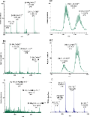
- ). Furthermore, analysis of the MS2 experiment post-iodoacetamide reaction indicated the absence of free cysteines between C30 and C39, supported by alkylated y35 and y24 ions, implying macrocyclization, and proposed the presence of three macrocycles between G41 and the C-terminus (Figure S3 in Supporting




Chemo-enzymatic total synthesis: current approaches toward the integration of chemical and enzymatic transformations
Beilstein J. Org. Chem. 2024, 20, 1693–1712, doi:10.3762/bjoc.20.151
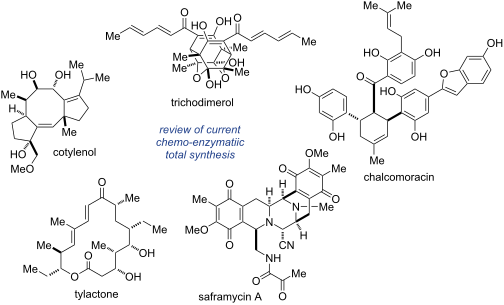
- aldehyde at the C6 sidechain. Furthermore, the fusion protein, JuvD-RhFRED, enabled regio- and diastereoselective epoxidation of the C12 double bond of macrocycles 80–82, culminating in the total synthesis of M-4365 A1 (83), M-4365 A3 (juvenimicin A4, 84), and M-4365 A2 (juvenimicin A3, 85), respectively




Introduction of peripheral nitrogen atoms to cyclo-meta-phenylenes
Beilstein J. Org. Chem. 2024, 20, 1207–1212, doi:10.3762/bjoc.20.103
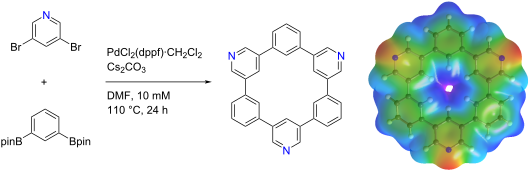
- biased charges on the peripheral nitrogen atoms. Keywords: cross coupling; macrocycles; nitrogen doping; UV–vis spectroscopy; X-ray charge density analysis; Introduction Graphitic carbonaceous sheets of graphene continue to attract considerable attention, which lead us to explore structural defects
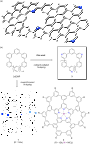
- 3a and 3b resembled those of the hydrocarbon congeners, forming one-dimensional columns of stacked macrocycles (Figure 3b). The electronic effects of the nitrogen dopants in 3a were examined with X-ray charge density analyses [10][16]. For the crystal structures shown in Figure 3, we used a standard
- configurations preferred over T-shaped stackings [22]. In our study, we observed that pyridine–pyridine stacks were preferred in the crystal stacking (Figure 3), which might be attributed to the biased ESPs on the macrocycles. Finally, we found that nitrogen locations altered chemical characteristics of nitrogen



Chemoenzymatic synthesis of macrocyclic peptides and polyketides via thioesterase-catalyzed macrocyclization
Beilstein J. Org. Chem. 2024, 20, 721–733, doi:10.3762/bjoc.20.66
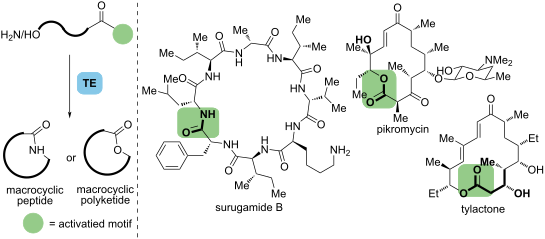
- polyketides; thioesterase; Introduction Nonribosomal peptides, polyketides, and their hybrids exhibit significant diversity and a broad spectrum of bioactivities [1][2][3]. Particularly, macrocycles from these three categories of natural products are vital resources for developing pharmaceuticals and drug
- possible and provides a potential to construct the analogs library of these bioactive macrocycles for further biological investigations. This review presents representative examples of chemoenzymatic approaches for macrocyclic peptides, polyketides, and their hybrids employing TE domains, and particular
- aforementioned NPRS macrocycles, the synthesis of macrocylic polyketides and PKS/NRPS hybrids is more challenging due to the absence of a streamlined preparation strategy such as solid-phase peptide synthesis (SPPS). In enzymology studies, it was common to hydrolyze the cyclic natural products in order to obtain


Switchable molecular tweezers: design and applications
Beilstein J. Org. Chem. 2024, 20, 504–539, doi:10.3762/bjoc.20.45




Active-metal template clipping synthesis of novel [2]rotaxanes
Beilstein J. Org. Chem. 2023, 19, 1776–1784, doi:10.3762/bjoc.19.130
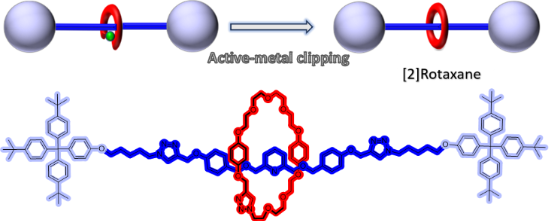
- beautiful structures and intriguing properties. We present herein a new synthetic strategy to access [2]rotaxanes, namely active-metal template clipping. We discuss the design of the target [2]rotaxanes, synthesis and characterization of the axle, macrocycle precursors and macrocycles as well as preparation
- CuAAC click chemistry [38][39][40]. The choice of CuAAC as key step to accomplish the synthesis of the [2]rotaxanes was motivated by its high efficiency [41]. In addition, this reaction proved its versatility for rotaxanes synthesis [15], including chiral [2]rotaxanes [42]. The macrocycles M1 and M2
- -functonalized stopper 3 after substitution of bromine with azide. The dialkyne-decorated pyridine 5 was prepared starting from 2,6-bis(bromomethyl)pyridine that was reacted with compound 4, under phase transfer catalysis (Scheme 1). Finally, the axle 6, as well as the reference macrocycles M1 and M2 [44], were


Tying a knot between crown ethers and porphyrins
Beilstein J. Org. Chem. 2023, 19, 1630–1650, doi:10.3762/bjoc.19.120
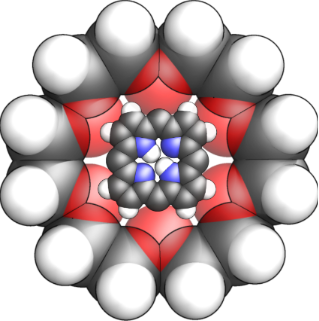
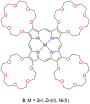
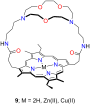
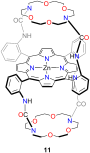
- materials science [10]. These two classes of molecules seem particularly remarkable among the endless family of macrocyclic compounds due to their unique features and easy accessibility. The popularity of porphyrins and crown ethers has been so extensive that the whole range of these macrocycles is even
- macrocycles is shown. As several topics were reviewed earlier, we did not intend to present an exhaustive overview but instead focused on presenting selected examples of molecules of fundamental importance in this research area. The more interested readers are referred to excellent review articles focused on
- specific classes of macrocycles, such as crowned porphyrins [22], calixpyrroles [26][27][28][29], Schiff porphyrinoids [30], expanded porphyrinoids [31][32], or carbaporphyrinoids [33][34], and a selection of articles dedicated to crown ether chemistry [17][20][35][36][37]. Historical Perspective Various







Unravelling a trichloroacetic acid-catalyzed cascade access to benzo[f]chromeno[2,3-h]quinoxalinoporphyrins
Beilstein J. Org. Chem. 2023, 19, 1216–1224, doi:10.3762/bjoc.19.89
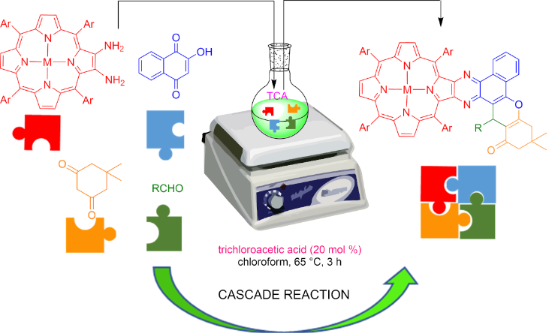
- ; multicomponent synthesis; one-pot reaction; trichloroacetic acid; Introduction π-Conjugated porphyrin macrocycles are known for their applications in numerous areas ranging from oxygen transport, photosynthesis, catalysis and medicine [1][2][3]. In the past several years, diverse organic scaffolds have been
- incorporated at the porphyrin periphery and different metal ions in the porphyrin core to modulate ground-state and excited-state characteristics of easily accessible meso-tetraarylporphyrins. Some of these π-extended tetrapyrrolic macrocycles have emerged as potential candidates in photodynamic therapy and


Cyclodextrins as building blocks for new materials
Beilstein J. Org. Chem. 2023, 19, 889–891, doi:10.3762/bjoc.19.66
- publications carried out on cyclodextrins (CDs) and their market growth are clear evidence of the undying interest in these macrocycles discovered in 1891 [1]. It seems that these supramolecules still have not revealed all their secrets and are still stimulating curiosity in fundamental and applied research
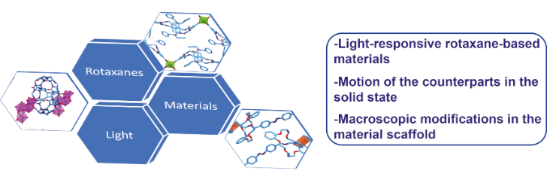
Light-responsive rotaxane-based materials: inducing motion in the solid state
Beilstein J. Org. Chem. 2023, 19, 873–880, doi:10.3762/bjoc.19.64
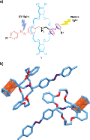
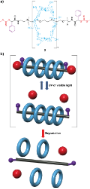
- supramolecular gels (Figure 2a) [52]. Upon irradiation using a UV-light-emitting diode (LED) and a visible LED as sources, the reversible cleavage of the trithiocarbonate stoppers was accomplished, thus allowing the dethreading [53] of the wheels to take place by the shuttling of the macrocycles along the thread
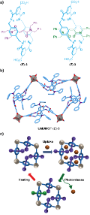
- cyclobutanes (Figure 4b). Interestingly, the changes in the crystalline array as a consequence of this photodimerization within the cucurbituril macrocycles also induced a macroscopic deformation of the metal-organic material, promoting a photomechanical bending of the crystals. This photomechanical

pH-Responsive fluorescent supramolecular nanoparticles based on tetraphenylethylene-labelled chitosan and a six-fold carboxylated tribenzotriquinacene
Beilstein J. Org. Chem. 2023, 19, 635–645, doi:10.3762/bjoc.19.45
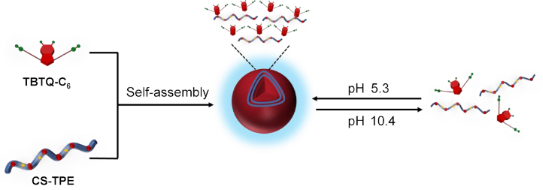
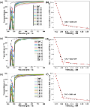
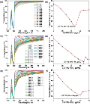
- supramolecular systems derived from water-soluble macrocycles, including cyclodextrins (CDs), calix[n]arenes (CXs), cucurbiturils (CBs), and pillararenes have been widely studied [2][6][7][8]. Similar to those macrocyclic acceptors, tribenzotriquinacene (TBTQ) derivatives, a class of versatile host molecules



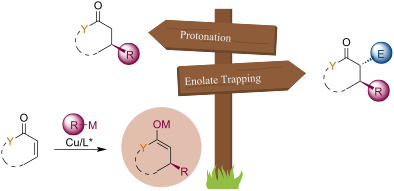
Enolates ambushed – asymmetric tandem conjugate addition and subsequent enolate trapping with conventional and less traditional electrophiles
Beilstein J. Org. Chem. 2023, 19, 593–634, doi:10.3762/bjoc.19.44


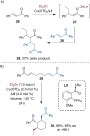


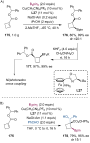


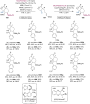


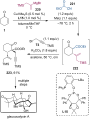
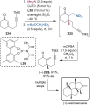
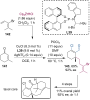
Combretastatins D series and analogues: from isolation, synthetic challenges and biological activities
Beilstein J. Org. Chem. 2023, 19, 399–427, doi:10.3762/bjoc.19.31
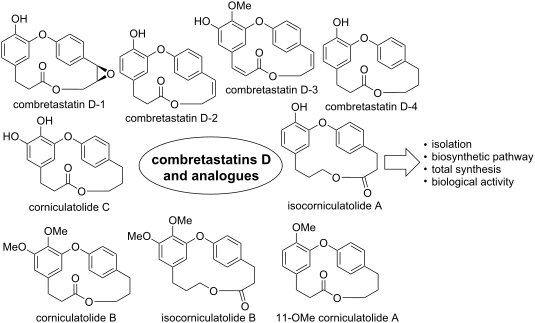
- Jorge de Lima Neto Paulo Henrique Menezes Universidade Federal de Pernambuco, Departamento de Química Fundamental, Recife-PE, 50740-560, Brazil 10.3762/bjoc.19.31 Abstract The combretastatin D series and its analogues, corniculatolides and isocorniculatolides belong to a class of macrocycles
- ; macrocycles; Introduction Conceptually, cyclic molecules containing more than 12 covalently connected atoms are called macrocycles and this class comprises several structurally distinct compounds [1]. Due to their structural characteristics and their different biological activities, the isolation of new
- macrocycles and their synthesis finds several examples described in the literature and has already been the subject of review articles [2][3][4]. More recently, cyclic diaryl ether heptanoids (DAEH) [5], another class of macrocycles has been attracting attention not only because of their structural and




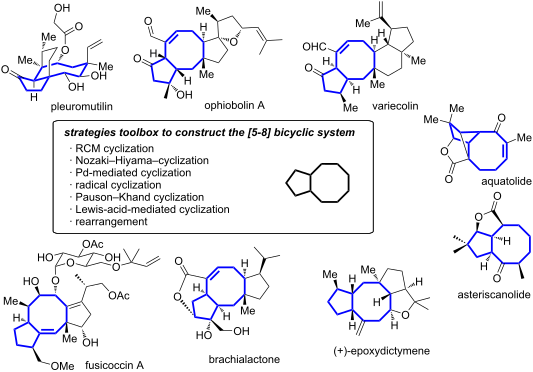
Strategies to access the [5-8] bicyclic core encountered in the sesquiterpene, diterpene and sesterterpene series
Beilstein J. Org. Chem. 2023, 19, 245–281, doi:10.3762/bjoc.19.23


Supramolecular approaches to mediate chemical reactivity
Beilstein J. Org. Chem. 2022, 18, 1463–1465, doi:10.3762/bjoc.18.152
- supramolecular catalysts were based on covalent hosts, typically cyclodextrin macrocycles [1], which had an interior hydrophobic cavity decorated with catalytically useful functional groups. Recently, increased emphasis has been placed on catalysis that takes use of noncovalent hosts, including self-assembled
- of novel supramolecular catalysts. In their contribution Wang and co-workers [17] reported an interesting example of chalcogen bonding catalysis approach for the synthesis of calix[4]pyrrole macrocycles. The Se···O=C chalcogen bonding interactions between a selenide-based catalyst and the carbonyl
- tetraaminobisthiourea chiral macrocycles as catalysts in decarboxylative Mannich reactions. Low macrocycle loading was used to catalyze the decarboxylative addition of malonic acid half thioesters to isatin-derived ketimines with excellent yields and good enantioselectivity. It was reported that effective activation
Synthesis of meso-pyrrole-substituted corroles by condensation of 1,9-diformyldipyrromethanes with pyrrole
Beilstein J. Org. Chem. 2022, 18, 1403–1409, doi:10.3762/bjoc.18.145
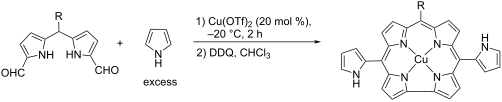
- amount of pyrrole is presented for the first time. This procedure is a simple and efficient way for the preparation of corroles with a polymerizable substituent on meso-positions. Keywords: corrole; dipyrromethane; macrocycles; metal triflates; pyrrole; Introduction Corroles, a member of contracted


Synthesis of odorants in flow and their applications in perfumery
Beilstein J. Org. Chem. 2022, 18, 754–768, doi:10.3762/bjoc.18.76
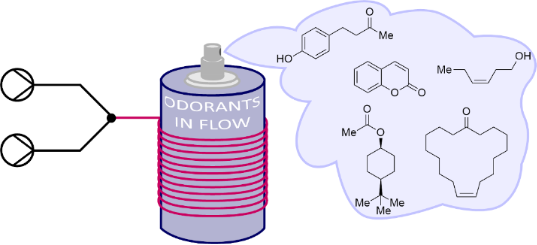
- can be highly beneficial. Therefore, Skowerski and co-workers constructed a tube-in-tube reactor for the ring-closing metathesis of dienes 62 and 63 to macrocycles 65 or 66, respectively, mediated by ruthenium catalyst 64 (Scheme 15) [53]. The substrate and the catalyst are mixed in a Q-piece and
- temperature of 70 °C and a residence time of 30 min, macrocycles 65 and 66 are obtained in excellent yields with a preference for the E-isomers as determined by GC/MS analysis. Although, macrocycles 65 and 66 are, to the best of our knowledge, not used as musks in perfumery, this work demonstrates the value
- cyclohexanone in flow. Synthesis of macrocyclic olefine 60 by ring-closing metathesis of diene 58 in a continuously stirred tank reactor (CSTR). Synthesis of macrocycles 65 and 66 by ring-closing metathesis of dienes 62 or 63, respectively, in a tube-in-tube reactor removing the formed ethylene. Z-Selective





