


Search results
Search for "rotaxanes" in Full Text gives 54 result(s) in Beilstein Journal of Organic Chemistry.
Molecular recognition using tetralactam macrocycles with parallel aromatic sidewalls
Beilstein J. Org. Chem. 2019, 15, 1086–1095, doi:10.3762/bjoc.15.105
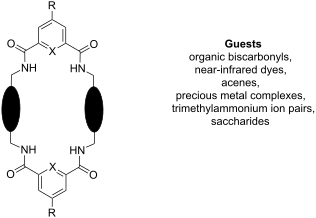
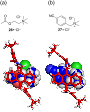
- ] macrocycle and a larger amount of the corresponding [2]catenane. Subsequent work found that conducting the reaction in the presence of a dumbbell-shaped template was a general way to make a wide range of [2]rotaxanes [28]. Listed in Scheme 2 are the yields of [2]rotaxane produced using various biscarbonyl
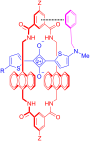
- acene guests Rotaxane template 18 in Scheme 2 is a squaraine dye whose central core has two oxygen atoms that can form hydrogen bonds with the tetralactam NH residues. Squaraine rotaxanes were first prepared by the Smith group in 2005 using the Leigh-type clipping method [44]. As a general trend the
- conformations is an outward directed NH residue. Solution-state NMR data suggests that the surrounding tetralactam in these [2]rotaxanes undergoes rapid exchange between these different conformations, a dynamic process that has been called macrcocyle breathing, and that there is also simultaneous co


Mechanochemistry of supramolecules
Beilstein J. Org. Chem. 2019, 15, 881–900, doi:10.3762/bjoc.15.86
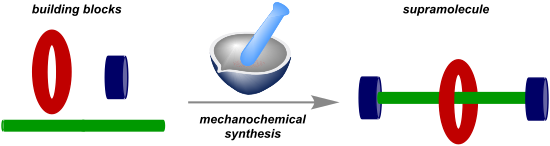
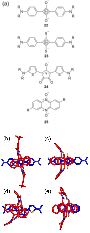
- acetic acid (for liquid-assisted grinding, LAG) led to the regioselective C–H activation (Figure 5) [58]. In 2008, the mechanochemical synthesis of both [2]- and [4]rotaxanes was reported by Chiu and co-workers. The reactions led to high yields of the products 12 and 13 under solvent-free conditions at a
- synthesis of pillar[5]arene-containing [2]rotaxanes (Figure 8). Mixing a 2:1 ratio of pillar[5]arene (wheel) with dodecanedioyl dichloride (axle) in CHCl3 resulted in the formation of pseudorotaxane 16 which was further treated with different amines (stopper) in a stainless-steel jar with 4 steel balls
- –acceptor [2]rotaxanes such as 19 through liquid-assisted mechanochemical milling (Figure 9). The donor–acceptor interaction between the electron-deficient naphthalene diimide moiety and the electron-rich naphthalene moieties embedded in the macrocyclic polyethers played the vital role for the construction


Tetrathiafulvalene – a redox-switchable building block to control motion in mechanically interlocked molecules
Beilstein J. Org. Chem. 2018, 14, 2163–2185, doi:10.3762/bjoc.14.190
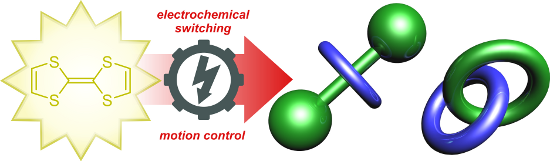
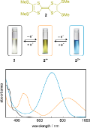
- MIMs and their applications. A brief historical overview and a selection of important examples from the past until now are given. Furthermore, we will highlight our latest research on TTF-based rotaxanes. Keywords: artificial molecular machines; mechanically interlocked molecules; molecular switches
- [9] "for the design and synthesis of molecular machines" is an outstanding appreciation of the public and scientific community. Mechanically interlocked molecules (MIMs) such as rotaxanes [10] or catenanes [11] are ideally suited for the construction of AMMs. In comparison to covalently linked
- to rotaxanes is that the axle does not have bulky stopper groups that prevent the deslipping of the wheel. Thus, a pseudorotaxane forms by non-covalent interactions between host and guest without a mechanical bond. Pseudorotaxanes are important precursors of MIMs from which the construction of











Calix[6]arene-based atropoisomeric pseudo[2]rotaxanes
Beilstein J. Org. Chem. 2018, 14, 2112–2124, doi:10.3762/bjoc.14.186
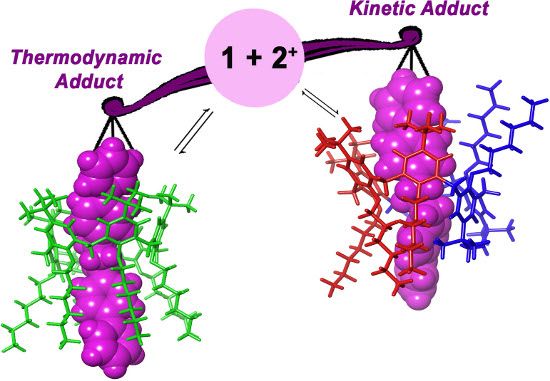
- axle. In all the examined cases, the 1,2,3-alternate and cone atropoisomers are, respectively, the kinetic and the thermodynamic ones. Keywords: atropoisomers; calixarene; conformation; pseudorotaxane; social isomerism; Introduction Mechanomolecules [1][2][3][4], such as rotaxanes and catenanes show
- interesting properties as nanodevices for catalysis [5][6][7][8], recognition, and sensing [9][10][11][12][13]. Beyond these ascertained potentialities, interpenetrated architectures show fascinating structures that still stimulate the imagination of scientists. An amazing aspect of rotaxanes and catenanes is
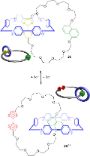
- stereoisomeric directional pseudo[2]rotaxanes, rotaxanes, and catenanes. Also in this case [38], we were able to obtain a stereoselective threading of the cone calix[6]arene-wheel with alkylbenzylammonium axles (Figure 4b), in which the endo-alkyl pseudo[2]rotaxane stereoisomer was the favoured one [38]. The


![[Graphic 2]](/bjoc/content/inline/1860-5397-14-186-i3.svg?max-width=637&scale=1.18182) 1cone and 2+
1cone and 2+


A switchable [2]rotaxane with two active alkenyl groups
Beilstein J. Org. Chem. 2018, 14, 2074–2081, doi:10.3762/bjoc.14.181
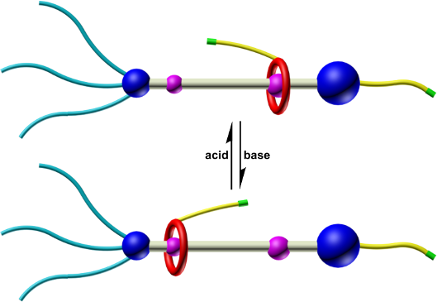
- , which act as important precursors for constructing stimuli-responsive supramolecular materials [21][22]. Rotaxanes [23][24][25][26][27][28][29][30][31], as one of the most important MIMs, have been deeply investigated because of their excellent properties and convenient synthesis. By introducing various
- functional groups, such kind of MIMs has been used to construct stimuli-responsive materials, which diversified and improved the functions of traditional polymers. Up to now, the repertoire of available functional rotaxanes as building blocks for the fabrication of stimuli-responsive polymers remains limited
- because of the fact that the induction of active and functional groups make the preparation of rotaxanes more difficult and complicated. Therefore, it is urgent to enrich both the family of stimuli-responsive units and the methods for constructing this kind of smart materials. In this paper, we report the


A pyridinium/anilinium [2]catenane that operates as an acid–base driven optical switch
Beilstein J. Org. Chem. 2018, 14, 1908–1916, doi:10.3762/bjoc.14.165
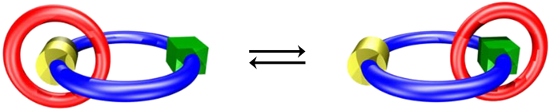
- derivatize, [2]rotaxanes are deemed easier to fine-tune from a structural perspective than [2]catenanes. Although we were able to create an optically sensitive [2]catenane molecular shuttle with the bis(pyridinium)ethane and benzylanilinium recognition motifs, we could not achieve the true ON/OFF, bistable
- molecular switching previously observed for analogous [2]rotaxanes. Experimental General comments 4-Bromobenzyl bromide, 4-bromoaniline, 4-pyridylboronic acid, 1,3-dichlorobenzene, p-tolylmagnesium bromide, n-butyllithium and N-bromosuccinimide were purchased from Aldrich and used as received. Benzoyl


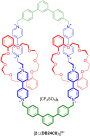

![[Graphic 3]](/bjoc/content/inline/1860-5397-14-165-i4.svg?max-width=637&scale=0.827274) DB24C8]6+ containing benzylanilinium and bis(pyridinium)ethane...
DB24C8]6+ containing benzylanilinium and bis(pyridinium)ethane...

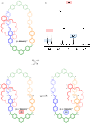

Synthesis of diamido-bridged bis-pillar[5]arenes and tris-pillar[5]arenes for construction of unique [1]rotaxanes and bis-[1]rotaxanes
Beilstein J. Org. Chem. 2018, 14, 1660–1667, doi:10.3762/bjoc.14.142

- afforded diamido-bridged bis-pillar[5]arenes. 1H NMR and 2D NOESY spectra clearly indicated that [1]rotaxanes were formed by insertion of longer diaminoalkylene unit into the cavity of one pillar[5]arene with another pillar[5]arene acting as a stopper. The similar catalysed amidation reaction of pillar[5
- ]arene di(oxybutoxy)benzoic acid with monoamido-functionalized pillar[5]arenes resulted in the diamido-bridged tris-pillar[5]arenes, which successfully form the unique bis-[1]rotaxanes bearing longer than diaminopropylene diamido bridges. Keywords: bis-[1]rotaxane; mechanically interlocked molecule
- axle to prevent dissociation of the subcomponents. In recent years, many effects have been devoted to the construction and functionalization of pseudo[1]rotaxanes and [1]rotaxanes [11][12][13][14][15][16][17][18][19][20]. For this purpose, the well-known macrocycles such as crown ether [21][22][23


Superstructures with cyclodextrins: Chemistry and applications IV
Beilstein J. Org. Chem. 2017, 13, 2157–2159, doi:10.3762/bjoc.13.215
- , belong to this category and have been known since the pioneering work of Friedrich Cramer in 1951 [4][5]. Superstructures can also be held together by repulsive forces, so-called mechanical bonds [6], as exemplified in catenanes, rotaxanes, and knots [7]. Because of their restricted mobility, rotaxanes
- insulin and lysozyme were also conjugated to the guest adamantane. The complexation of these conjugates by pegylated β-CD gives rise to superstructures which provide slow release and maintain full biological activity [21]. Significant progress was also achieved in the field of CD rotaxanes. A [3]-rotaxane
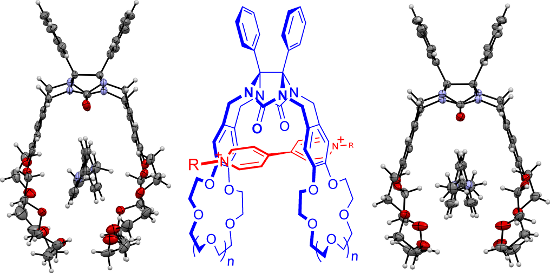
Complexation of molecular clips containing fragments of diphenylglycoluril and benzocrown ethers with paraquat and its derivatives
Beilstein J. Org. Chem. 2017, 13, 2056–2067, doi:10.3762/bjoc.13.203
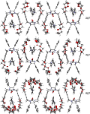
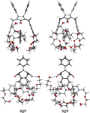
- these studies led to the preparation of rotaxanes and catenanes, and to the elaboration of the principles of molecular machines, for which J. Fraser Stoddart [4][5][6], Jean-Pierre Sauvage [7][8] and Bernard L. Feringa [9][10] received the Nobel Prize in chemistry in 2016. In addition to Stoddart, the




Interactions between shape-persistent macromolecules as probed by AFM
Beilstein J. Org. Chem. 2017, 13, 938–951, doi:10.3762/bjoc.13.95
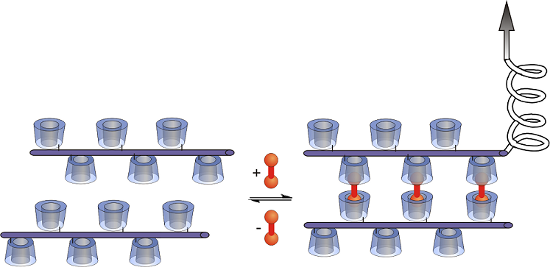
- ; shape persistent polymers; Introduction Shape-persistence is an important key feature in self-organisation strategies of supramolecular building blocks resulting in high structural perfection of the obtained molecular assemblies [1], such as shape persistent macrocycles, cage compounds or rotaxanes [2




Creating molecular macrocycles for anion recognition
Beilstein J. Org. Chem. 2016, 12, 611–627, doi:10.3762/bjoc.12.60
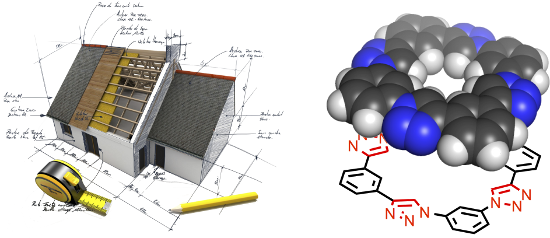
- can be programmed to move and change shape (rotaxanes and catenanes) had hooked my attention. Quite apart from his gift for creating new molecules that are also functional, the number of people who shared co-authorship with him intrigued me. Joining Professor Stoddart’s laboratory in 2002 as a
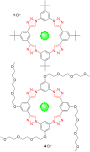
- cyanostar macrocycles is still being explored. The large binding pockets and the C5 symmetry provide a basis for a lot of new chemistry. This includes use of phosphodiesters as templates for the synthesis of [3]rotaxanes [7] (Figure 13). The other aspect of these macrocycles arising from their π surface is




Art, auto-mechanics, and supramolecular chemistry. A merging of hobbies and career
Beilstein J. Org. Chem. 2016, 12, 362–376, doi:10.3762/bjoc.12.40
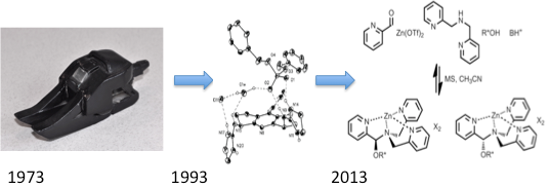
- . Keywords: art; assembly; complexity; function; mechanical; supramolecular; Review Introduction The field of supramolecular chemistry abounds with beautiful and aesthetically pleasing molecules. From Stoddart’s rotaxanes [1][2], Sauvage’s knots [3][4], Rebek’s capsules [5], Fujita’s 3-D MOFs [6][7], to




Supramolecular structures based on regioisomers of cinnamyl-α-cyclodextrins – new media for capillary separation techniques
Beilstein J. Org. Chem. 2016, 12, 97–109, doi:10.3762/bjoc.12.11
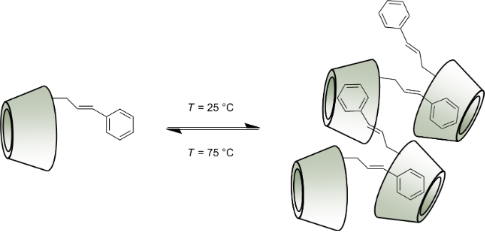
- will result in changed sieving effects, different selector–analyte interactions and in modulated separation selectivity. CDs have been used as the host component for the construction of various interesting supramolecular structures such as pseudorotaxanes, rotaxanes, supramolecular dimers, oligomers


Supramolecular polymer assembly in aqueous solution arising from cyclodextrin host–guest complexation
Beilstein J. Org. Chem. 2016, 12, 50–72, doi:10.3762/bjoc.12.7
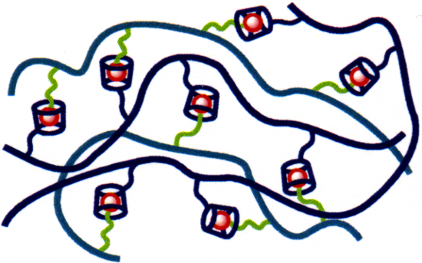
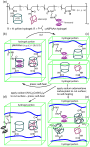
- blocks in supramolecular structures and functional materials. These are exemplified by catenanes [20][21], rotaxanes [21][22][23][24][25], polyrotaxanes [24][25][26][27][28][29], polymers and polymer networks [12][22][26][30][31][32][33][34]. The focus of this review is on recent developments in the


Synthesis and photophysical characteristics of polyfluorene polyrotaxanes
Beilstein J. Org. Chem. 2015, 11, 2677–2688, doi:10.3762/bjoc.11.288
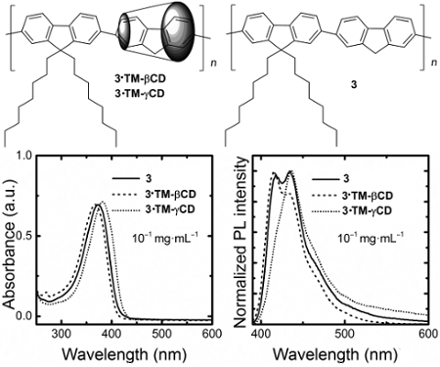
- size of the γCD, which might favor both unthreading of the cores, or even accommodation of more than one core unit within the macrocycles cavities. Poor suppression of interchain interactions by γCD had already been observed in the case of diphenylenevinylene rotaxanes, and it is therefore not


Smart molecules for imaging, sensing and health (SMITH)
Beilstein J. Org. Chem. 2015, 11, 2540–2548, doi:10.3762/bjoc.11.274
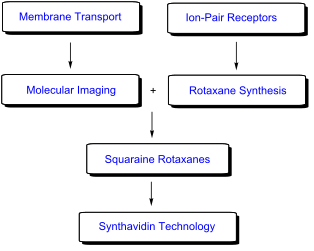
- imaging, ion-pair receptors, rotaxane synthesis, squaraine rotaxanes, and synthtavidin technology. The article concludes with a short perspective of likely future directions in biomedical supramolecular chemistry. Keywords: fluorescence; ion-pair receptors; membrane transport; molecular imaging; rotaxane
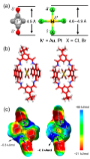
- was vital for efficient rotaxane formation. The interlocked molecule retained its salt binding ability and association of the ions modulated the rotaxane structural dynamics [33][34]. Squaraine rotaxanes The interests in molecular imaging and rotaxane structures merged in 2005 with the discovery and
- development of squaraine rotaxanes as a novel family of deep-red fluorescent dyes with extremely high brightness and stability [35][36]. A key finding was the importance of the interlocked rotaxane structure for protecting the encapsulated squaraine from chemical attack by water. Squaraine rotaxanes can be


Supramolecular chemistry: from aromatic foldamers to solution-phase supramolecular organic frameworks
Beilstein J. Org. Chem. 2015, 11, 2057–2071, doi:10.3762/bjoc.11.222
- molecule to give rise to foldamer-derived dynamic rotaxanes [54]. Aromatic hydrazide foldamers: Aromatic hydrazides have a high propensity towards co-planarity [55][56]. Nowick introduced this unit into peptide backbones to increase the stability of artificial β-sheets [55]. Junli hoped to extend the


![[Graphic 1]](/bjoc/content/inline/1860-5397-11-222-i19.png?max-width=637&scale=1.18182) 16 and dynamic [2]catenane formed by compounds 17–19.
16 and dynamic [2]catenane formed by compounds 17–19.


Selected synthetic strategies to cyclophanes
Beilstein J. Org. Chem. 2015, 11, 1274–1331, doi:10.3762/bjoc.11.142
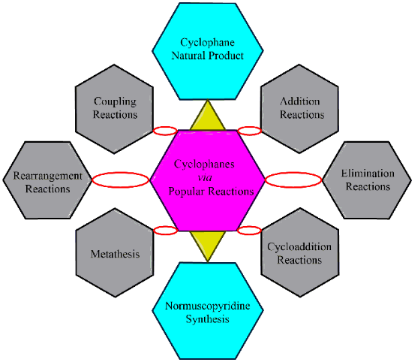
- demonstrate the extensive use of RCM in the synthesis of different metallophanes involving ferrocenophane (e.g., 206) [160] and other metallophanes [161][162][163][164]. The synthesis of mechanically interlocked molecules such as catenanes and rotaxanes which are used to assemble molecular machines, sensors






Advances in the synthesis of functionalised pyrrolotetrathiafulvalenes
Beilstein J. Org. Chem. 2015, 11, 1112–1122, doi:10.3762/bjoc.11.125
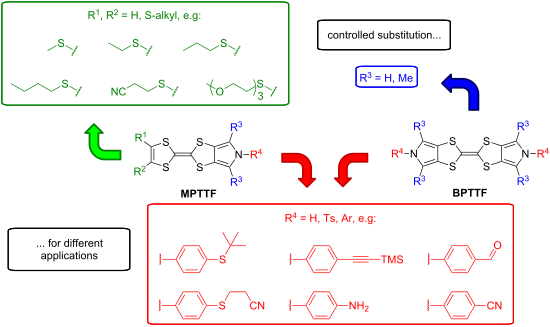
- complex alkylating agents can be successfully used in place of methyl iodide. For example, functionalised ethylene glycol oligomers have been used in the preparation of rotaxanes and pseudorotaxanes [28][41][42][45]. Although CsOH·H2O is most commonly used, other bases are also known to remove the
- building blocks in our work on rotaxanes and psuedorotaxanes [45][50]. When the preparation of the same product using each of the two bases is compared, it can be seen that the use of DBU rather than CsOH·H2O usually results in at least a modest increase in yield. We have prepared 4i several times with
- thioether-functionalised MPTTFs to be prepared, including the addition of large ethylene glycol-based substituents utilised in the preparation of rotaxanes and pseudorotaxanes. N-Arylation of MPTTFs is an area of increasing interest and can be achieved using a copper-mediated reaction. We have applied this


Mechanical stability of bivalent transition metal complexes analyzed by single-molecule force spectroscopy
Beilstein J. Org. Chem. 2015, 11, 817–827, doi:10.3762/bjoc.11.91
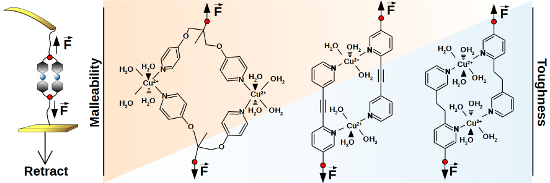
- the β2-adrenergic receptor [24] and rhodopsin [25]. On the field of supramolecular model systems DFS revealed the mechanical stability of coordination bonds [26][27][28], host–guest systems [29][30][31][32], and rotaxanes [33]. In 2008 Guzman et al. analyzed hydrogen bonds of 4H, 6H and 8H chains in




First principle investigation of the linker length effects on the thermodynamics of divalent pseudorotaxanes
Beilstein J. Org. Chem. 2015, 11, 687–692, doi:10.3762/bjoc.11.78
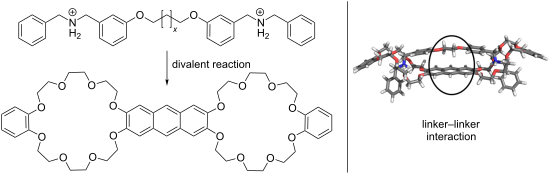
- multivalency [1] and is mainly observed in biochemical systems [2][3][4][5][6][7][8][9]. But the concept of multivalency can be transferred to supramolecular assemblies with suitable building blocks [10][11][12] including (pseudo)rotaxanes [13][14][15] as well. One common building block for pseudorotaxanes is


Superstructures with cyclodextrins: Chemistry and applications II
Beilstein J. Org. Chem. 2015, 11, 271–272, doi:10.3762/bjoc.11.30
- soluble in water and able to solubilize hydrophobic active ingredients, they are broadly used in biomedical applications [4]. CDs are also well known to complex suitable monomeric and polymeric guest molecules, leading to supramolecular structures and topological compounds, such as rotaxanes and
Synthesis of an organic-soluble π-conjugated [3]rotaxane via rotation of glucopyranose units in permethylated β-cyclodextrin
Beilstein J. Org. Chem. 2014, 10, 2800–2808, doi:10.3762/bjoc.10.297

- cyclodextrin by alteration of the relative orientation of the D-glucopyranoside rings via a flipping (tumbling) mechanism as shown in Figure 2 [19][20][21][22]. From the results of our study on the synthesis of organic-soluble π-conjugated rotaxanes, we report herein the synthesis of insulated oligo(para
- [3]rotaxanes 21 and 22 were also formed quantitatively in an aqueous 50% methanol solution via double self-inclusion through flipping of 17 and 20, respectively (Scheme 5). The formation of these inclusion complexes were also confirmed by 1H NMR spectroscopy in different solvents (Figure 4 and Figure
- 5, Supporting Information File 1, Figure S2). These linked [3]rotaxanes can be key monomers for synthesizing organic soluble IMWs bearing polythiophene or poly(para-phenylene) as backbone units. We next fixed the pseudo rotaxane structure by complexation instead of cross-coupling reaction (Scheme 6


The effect of permodified cyclodextrins encapsulation on the photophysical properties of a polyfluorene with randomly distributed electron-donor and rotaxane electron-acceptor units
Beilstein J. Org. Chem. 2014, 10, 2145–2156, doi:10.3762/bjoc.10.222
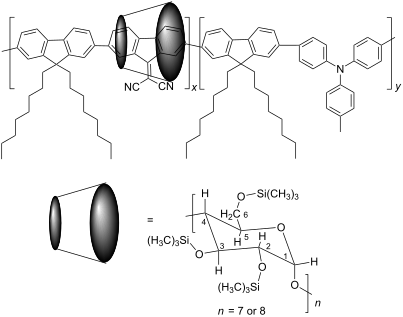
- used to synthesize copolymers with smaller electrochemical and optical band gaps, so that materials with improved electronic and optical properties can be obtained [17]. The construction of mechanically interlocked molecules such as rotaxanes and polyrotaxanes with native cyclodextrins (CDs) as


Substitution effect and effect of axle’s flexibility at (pseudo-)rotaxanes
Beilstein J. Org. Chem. 2014, 10, 1299–1307, doi:10.3762/bjoc.10.131
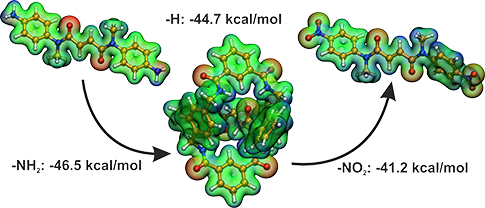
- substitution with different functional groups and of molecular flexibility by changing within the axle from a single C–C bond to a double C=C bond. Therefore, we present static quantum chemical calculations at the dispersion-corrected density functional level (DFT-D3) for several Leigh-type rotaxanes. The
- . The hydrogen bond geometry between the isophtalic unit and the carbonyl oxygen atoms of the axle exhibited distances in the range of 2.1 to 2.4 Å for six contact points, which shows that not solely but to a large amount the circumstances in the investigated rotaxanes are governed by hydrogen bonding
- binding is weakened by approximately 10 kcal/mol, and hydrogen bonds are slightly shortened (by up to 0.2 Å). Keywords: dispersion interaction; hydrogen bond; supramolecular chemistry; template; theoretical chemistry; Introduction Rotaxanes are prototypes for molecular machines and molecular switches [1





