


Search results
Search for "cascades" in Full Text gives 61 result(s) in Beilstein Journal of Organic Chemistry.
Synthesis of skeletally diverse alkaloid-like molecules: exploitation of metathesis substrates assembled from triplets of building blocks
Beilstein J. Org. Chem. 2013, 9, 775–785, doi:10.3762/bjoc.9.88
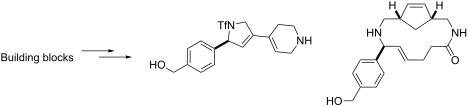
- cascades yielded a diverse range of molecular scaffolds. The diversity of the products was increased through variation of all three of the building blocks used: the initiating, the propagating, and the terminating building block. The overall approach was facilitated by fluorous tagging of the initiating


Intramolecular carbolithiation cascades as a route to a highly strained carbocyclic framework: competition between 5-exo-trig ring closure and proton transfer
Beilstein J. Org. Chem. 2013, 9, 537–543, doi:10.3762/bjoc.9.59
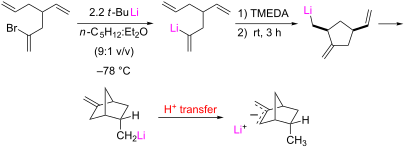
- ’-tetramethylethylenediamine (TMEDA) to solutions of 3 in n-C5H12/Et2O (9:1 v/v) and subsequent warming of the reaction mixtures for various times at several different temperatures initiated the cascades. The results of these experiments are summarized in Scheme 4 and Table 1. Crude product mixtures were analyzed by capillary


Enantioselective total synthesis of (R)-(−)-complanine
Beilstein J. Org. Chem. 2012, 8, 1695–1699, doi:10.3762/bjoc.8.192
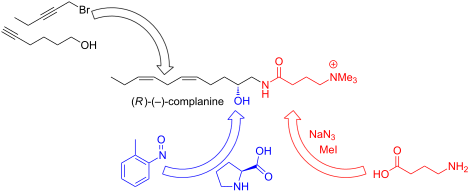
- from Eurythoe complanata in 2008, by Nakamura and Uemura [1]. Complanine induces inflammation by activating PKC (protein kinase C) in the presence of Ca2+ and TPA (12-O-tetradecanoylphorbol 13-acetate). PKC plays an important role in inflammation, namely through control of signal transduction cascades
- , and the biological activity of complanine may be understood in terms of controlling these cascades. From a structural perspective, complanine contains a novel trimethylammonium cationic group and can be characterized as possessing a homoconjugated all-Z-diene moiety and an amino alcohol N-acylated


Automated synthesis of sialylated oligosaccharides
Beilstein J. Org. Chem. 2012, 8, 1601–1609, doi:10.3762/bjoc.8.183
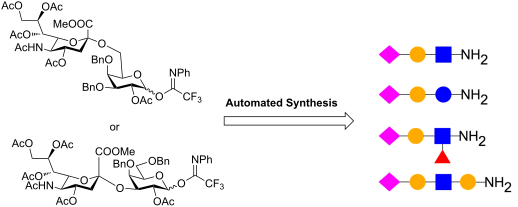
- ; sialosides; Introduction Sialic acid (Sia) belongs to a family of nonulosonic acids, i.e., monosaccharides equipped with a carboxylic moiety and a nine-carbon backbone, which play a unique role in glycobiology. Sia-containing glycans mediate pathogen invasion [1] and are involved in signalling cascades


Multistep organic synthesis of modular photosystems
Beilstein J. Org. Chem. 2012, 8, 897–904, doi:10.3762/bjoc.8.102
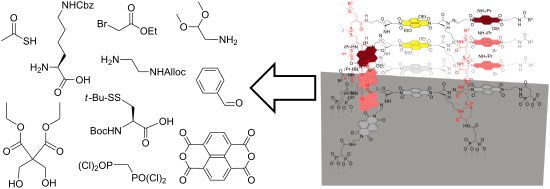
- experts only. As an example, we here focus in on the recent synthesis of multicomponent photosystems with antiparallel charge-transfer cascades in co-axial hole- and electron-transporting channels. The synthetic steps are described one-by-one, starting with commercial starting materials and moving on to
- fill them with functional π-stacks of free choice. Keywords: asparagusic acid; charge-transfer cascades; chromophores; disulfide exchange; hydrazone exchange; molecular switches; naphthalenediimides; π-stacks; surface-initiated polymerization; Introduction The architecture of photosystem 1 is rather


Volatile organic compounds produced by the phytopathogenic bacterium Xanthomonas campestris pv. vesicatoria 85-10
Beilstein J. Org. Chem. 2012, 8, 579–596, doi:10.3762/bjoc.8.65
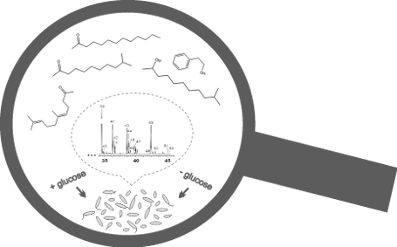
- ecological information is required. Most obviously it needs to be addressed as to whether X. c. pv. vesicatoria 85-10 emits volatiles while growing in the phyllosphere and whether the emission occurs continuously. Continuous volatile perception by the plant may be a prerequisite to induce signal cascades in




Stereoselective, nitro-Mannich/lactamisation cascades for the direct synthesis of heavily decorated 5-nitropiperidin-2-ones and related heterocycles
Beilstein J. Org. Chem. 2012, 8, 567–578, doi:10.3762/bjoc.8.64
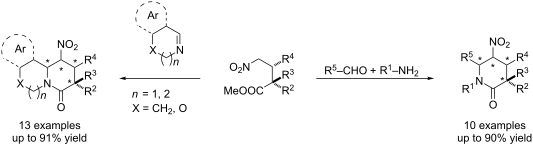
- diastereoisomers in good yields (82% and 75%) when nitro-Mannich/lactamisation cascades were carried out with formaldehyde (3a) and butylamine (4c) or hept-5-yn-1-amine (4d), respectively. To extend the cascade methodology to the potential construction of architecturally complex piperidine-ring-containing


Coupled chemo(enzymatic) reactions in continuous flow
Beilstein J. Org. Chem. 2011, 7, 1449–1467, doi:10.3762/bjoc.7.169
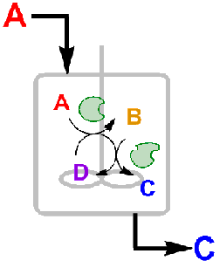
- . Three different approaches to such reaction systems are presented herein and discussed in view of their advantages and disadvantages as well as trends for their future development. Keywords: biocatalysis; chemo-enzymatic reaction sequences; continuous flow; coupled reactions; reaction cascades
- become reality: In the last few decades the concept of reaction cascades has become increasingly popular and has been proven to be a viable synthetic route to many classes of organic compounds [13][14][15]. Biotransformations consisting of coupled sequential and/or parallel reactions catalyzed by one or
- cascades catalyzed by a single enzyme belong instead to the first-generation processes. When following the logic of the chosen classification of enzymatic processes, the final or fourth-generation biotransformations would be defined as coupled chemo(enzymatic) reactions in continuous-flow systems based on


Recent advances in the gold-catalyzed additions to C–C multiple bonds
Beilstein J. Org. Chem. 2011, 7, 897–936, doi:10.3762/bjoc.7.103
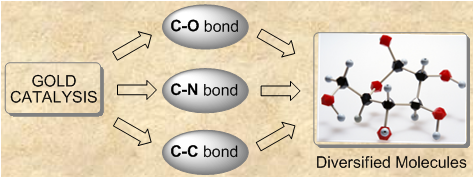
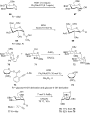
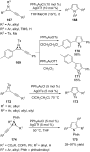
- cycloisomerization to produce pyrrolo/pyrido[2,1-b]benzo[d][1,3]oxazin-1-ones 330 [161], pyrrolo/pyrido[2,1-a][1,3]benzoxazinones 332 [162], benzo[e]indolo[1,2-a]-pyrrolo[2,1-c][1,4]diazepine-3,9-diones 335 [163], and fused quinoxalinones 337 [164]. These cascades are proposed to occur from an initial enol lactone
- ]. From the discovery and development of metal–carbenoids in cycloadditions with alkenes, as well as the internal redox reactions on alkynes, a further extensive investigation was focused on the new redox/cycloaddition cascades on alkynes to obtain azacyclic compounds 363 [171]. The central cores of the








Synthetic applications of gold-catalyzed ring expansions
Beilstein J. Org. Chem. 2011, 7, 767–780, doi:10.3762/bjoc.7.87
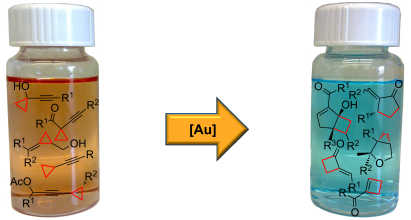
- -catalyzed synthesis of ventricos-7(13)-ene. 1,2- vs 1,3-Carboxylate migration. Gold-catalyzed cycloisomerization of vinyl alkynyl cyclopropanes. Proposed mechanism for the cycloisomerization of vinyl alkynyl cyclopropanes. Gold-catalyzed 1,2-acyloxy rearrangement/cyclopropanation/cycloisomerization cascades


Radical cascades using enantioenriched 7-azabenzonorbornenes and their applications in synthesis
Beilstein J. Org. Chem. 2008, 4, No. 38, doi:10.3762/bjoc.4.38
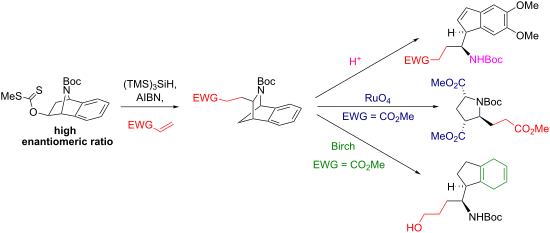
- species can lead to an overall 1,2-aryl (neophyl) migration [20]. We have previously communicated our initial findings in the application of tandem radical cascades toward the 2-aza-5,6-benzonorbornenyl system [21]. We now present our wider investigations of this system and its synthetic utility. Results





