


Search results
Search for "diphosphate" in Full Text gives 91 result(s) in Beilstein Journal of Organic Chemistry.
Computational characterization of enzyme-bound thiamin diphosphate reveals a surprisingly stable tricyclic state: implications for catalysis
Beilstein J. Org. Chem. 2019, 15, 145–159, doi:10.3762/bjoc.15.15
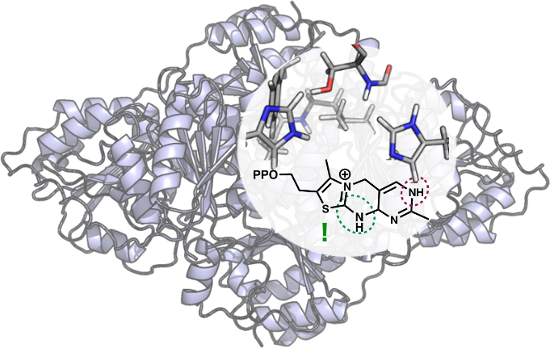
- Abstract Thiamin diphosphate (ThDP)-dependent enzymes constitute a large class of enzymes that catalyze a diverse range of reactions. Many are involved in stereospecific carbon–carbon bond formation and, consequently, have found increasing interest and utility as chiral catalysts in various biocatalytic
- . Keywords: binding site; DFT; enzyme mechanism; quantum chemical calculations; ThDP-dependent; Introduction Enzymes that depend on thiamin diphosphate (ThDP, Scheme 1) can be found in a wide range of metabolic pathways. Although they are known to catalyze the formation of C–N, C–O and C–S bonds, ThDP
- has been observed on at least two ThDP-dependent enzymes. Dihydrothiachromine diphosphate (TC) was observed in the X-ray structure of phosphoketolase from Bifidobacterium breve [46], and its hydroxyethyl derivative was identified in the structure of acetolactate synthase from Klebsiella pneumoniae




Synthesis of new p-tert-butylcalix[4]arene-based polyammonium triazolyl amphiphiles and their binding with nucleoside phosphates
Beilstein J. Org. Chem. 2018, 14, 1980–1993, doi:10.3762/bjoc.14.173
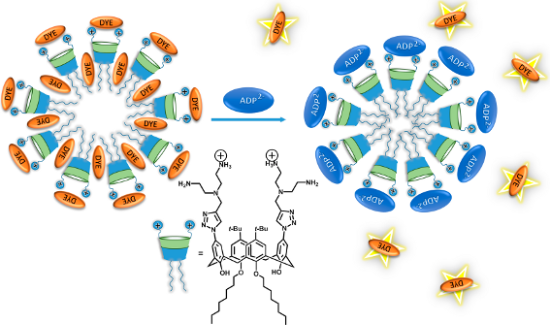
- for nucleotides sensing through a dye replacement procedure. It is unusual that disubstituted macrocycles 10a,b bind more effectively a less charged adenosine 5'-diphosphate (ADP) than adenosine 5'-triphosphate (ATP). A simple colorimetric method based on polydiacetylene vesicles decorated with 10b
- are very important as a universal energy source and as intracellular mediators in many biological processes [6]. In the cellular metabolism, adenosine 5'-triphosphate (ATP) is hydrolyzed to adenosine 5'-monophosphate (AMP) or adenosine 5'-diphosphate (ADP) by enzymes [7]. Thus, the receptors for
- this reason the triphosphate fragment is rotated by ≈60° around the calixarene axis relative to the diphosphate position (Figure 4b and d). This leads to a weakening of the host–guest binding and to a decrease of ATP complex energy by 1.4 kcal/mol compared to ADP. So the ADP/ATP optical responses for


Mechanochemistry of nucleosides, nucleotides and related materials
Beilstein J. Org. Chem. 2018, 14, 955–970, doi:10.3762/bjoc.14.81
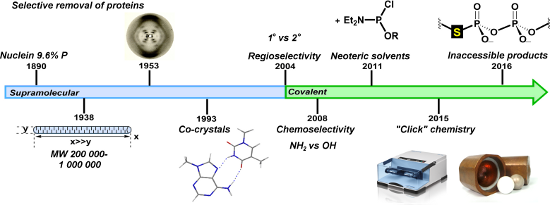
- ) and adenosine diphosphate ribose (ADPR) was also described. Subsequently, this methodology was applied to the preparation of a library of six ADPR carbonate derivatives in 23–68% yields (e.g., Scheme 14) and tested as sirtuin inhibitors [54]. The efficiency of phosphate coupling under mechanochemical


On the design principles of peptide–drug conjugates for targeted drug delivery to the malignant tumor site
Beilstein J. Org. Chem. 2018, 14, 930–954, doi:10.3762/bjoc.14.80
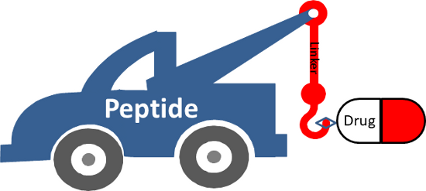
- kinases. Gemcitabine diphosphate (dFdCDP) and gemcitabine triphosphate (dFdCTP) are the active metabolites which inhibit processes required for DNA synthesis [91]. The incorporation of dFdCTP into DNA during polymerization, which causes DNA polymerases unable to proceed, is the major mechanism by which


Volatiles from three genome sequenced fungi from the genus Aspergillus
Beilstein J. Org. Chem. 2018, 14, 900–910, doi:10.3762/bjoc.14.77
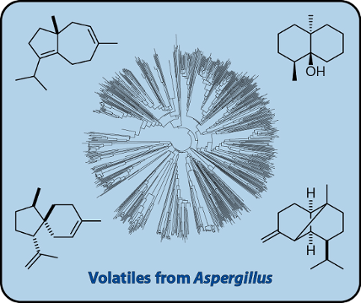
- geranylgeranyl diphosphate (GGPP) to copalyl diphosphate (CPP) by a class II TS, followed by a second cyclisation event by a class I TS [32]. These reactions are likely catalysed by the only corresponding two-domain enzyme encoded in the A. fischeri genome (accession number XP_001264196, locus tag NFIA_009790
- ). A phylogenetic analysis of 878 fungal terpene synthase homologs (Figure S1 in Supporting Information File 1) demonstrates that this enzyme is closely related to the bifunctional ent-copalyl diphosphate synthase/ent-kaurene synthase from Fusarium fujikuroi [33]. The N-terminal domain shows the DXDD
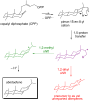
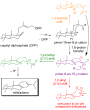
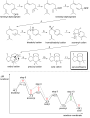
- -sesquiphellandrene (8), ar-curcumene (9), β-bisabolene (10), (E)-γ-bisabolene (11), trans-α-bergamotene (12), δ-cuprenene (13), and cuparene (14). All these sesquiterpenes arise through a 1,6-cyclisation of farnesyl diphosphate (FPP, via nerolidyl diphosphate, NPP) to the bisabolyl cation (A, Scheme 2). A mixture of




Synthetic and semi-synthetic approaches to unprotected N-glycan oxazolines
Beilstein J. Org. Chem. 2018, 14, 416–429, doi:10.3762/bjoc.14.30
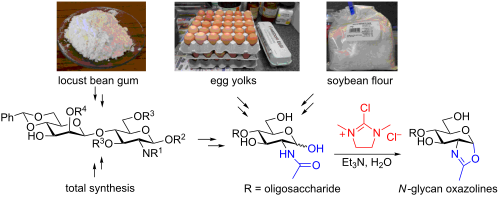
- protecting groups revealed the 6-hydroxy groups of the terminal mannose residues, which were then phosphorylated. Removal of the anomeric PMP protection was followed by global deprotection by Birch reduction to give the completely deprotected tetrasaccharide diphosphate. Finally treatment with DMC in water




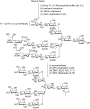
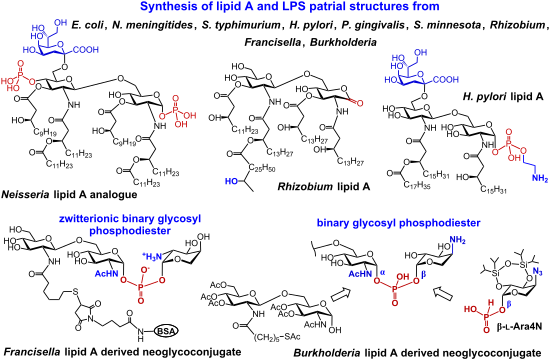
Aminosugar-based immunomodulator lipid A: synthetic approaches
Beilstein J. Org. Chem. 2018, 14, 25–53, doi:10.3762/bjoc.14.3
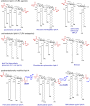
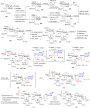
- hydroxyl group was regio- and stereoselectively phosphorylated using tetrabenzyl diphosphate in the presence of lithium bis(trimethylsilyl)amide [76] to provide glycosyl phosphotriester as exclusively α-anomer. Global deprotection was accomplished by catalytic hydrogenolysis over Pd-black to give




Synthetic mRNA capping
Beilstein J. Org. Chem. 2017, 13, 2819–2832, doi:10.3762/bjoc.13.274
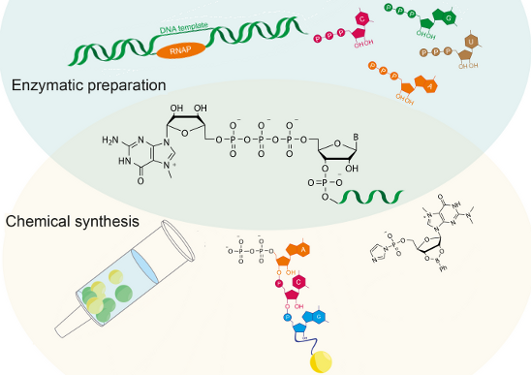
- of cap0 comprises three consecutive reactions targeted to nascent 5′-triphosphorylated pre-mRNAs (Figure 1). First, a 5′-triphosphatase (TPase) hydrolyzes the γ-phosphate of pre-mRNA. Next, the β-phosphate of the resulting 5′-diphosphate end is coupled to GMP to form 5′–5′-linked Gppp-RNA. The
- can be transferred onto the diphosphate end of an RNA transcript to form a ribavirin-pppN structure. RNA transcripts blocked with ribavirin showed little translational efficiency, which might explain the antiviral activity of ribavirin [44]. Enzymatic formation of cap analogues from GTP analogues was
- transferred onto a 5′-diphosphate RNA (Figure 2). Moreover, RNAs capped with those nucleotide analogues were translated even in the absence of the N7-methyl group when alternative modifications enabled binding to eIF4E [45]. Co-transcriptional capping In co-transcriptional capping, cap analogues are added



Herpetopanone, a diterpene from Herpetosiphon aurantiacus discovered by isotope labeling
Beilstein J. Org. Chem. 2017, 13, 2458–2465, doi:10.3762/bjoc.13.242
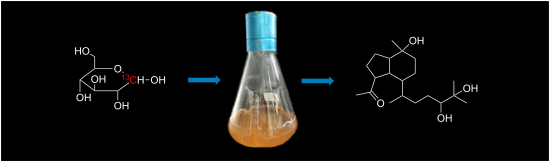
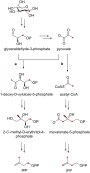
- terpenoids in their natural bacterial hosts, which is based on the feeding of isotopically labeled glucose. The linear oligoprenyl units, which constitute the carbon backbones of terpenoids, arise from the condensation of activated isoprene units, namely isopentenyl diphosphate (IPP) and dimethylallyl
- diphosphate (DMAPP). The latter two precursors are synthesized by either the mevalonate (MEV) or methylerythritol phosphate (MEP) pathway [7]. Both the MEV and MEP pathway branch from glycolysis. Depending on the respective route, the metabolism of singly labeled glucose gives rise to a characteristic carbon
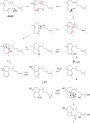
- includes α-cadinol, originates from germacrene D [7][23]. In the case of 1, an analogous pathway can be postulated, which is depicted in Figure 4. The biosynthesis would hence start with geranylgeranyl pyrophosphate (GGPP). Upon ionization, the double bond nearest the diphosphate can adopt a Z


18-Hydroxydolabella-3,7-diene synthase – a diterpene synthase from Chitinophaga pinensis
Beilstein J. Org. Chem. 2017, 13, 1770–1780, doi:10.3762/bjoc.13.171
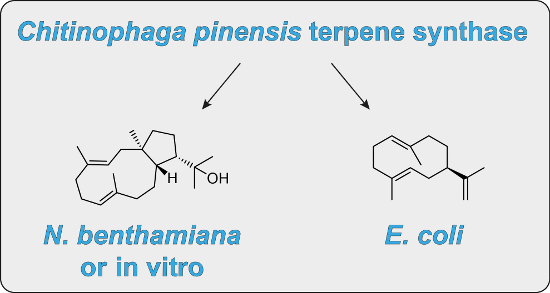
- ) and the NSE triad NDXXSXX(R,K)(E,D), modified to a DTE triad in plants, for binding of the Mg2+ cofactor that forms a trinuclear (Mg2+)3 cluster to which the diphosphate portion of the substrate binds. Upon substrate binding the active site closes, resulting in hydrogen bonds between the substrate’s
- diphosphate and the pyrophosphate sensor, a highly conserved arginine located 43 amino acids upstream of the NSE triad, and the RY dimer, a highly conserved motif at the C-terminus. The substrate is ionised by extrusion of diphosphate, yielding a highly reactive allyl cation that can react in a cyclisation
- (−)-bornyl diphosphate synthases from the plants Salvia officinalis and Tanacetum vulgare forming a more polar product by the unusual termination via reattack of diphosphate [1], the trichodiene synthase from the fungus Trichothecium roseum [2], and pentalenene synthase from Streptomyces exfoliatus [3




Strategies toward protecting group-free glycosylation through selective activation of the anomeric center
Beilstein J. Org. Chem. 2017, 13, 1239–1279, doi:10.3762/bjoc.13.123

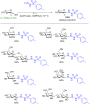
- be coupled to form a diphosphate (plus some dimerized UMP–UMP) that is fully isolatable. Adding to the power of this method is the ability for the in situ formed diphosphate to react enzymatically with for example the known GlcNAc analog shown in Scheme 29 using either an inverting (shown) or




G-Protein coupled receptors: answers from simulations
Beilstein J. Org. Chem. 2017, 13, 1071–1078, doi:10.3762/bjoc.13.106
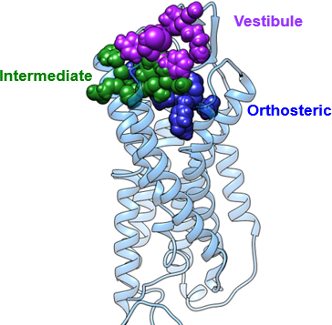
- the G-protein. On activation, bound guanosine diphosphate (GDP) in the G-protein is replaced by the triphosphate (GTP) and the α-subunit separates from β/γ. The separated G-protein subunits migrate to effectors in the nearby membrane, where GTP is hydrolyzed to GDP and the signaling cascade initiated


Opportunities and challenges for the sustainable production of structurally complex diterpenoids in recombinant microbial systems
Beilstein J. Org. Chem. 2017, 13, 845–854, doi:10.3762/bjoc.13.85
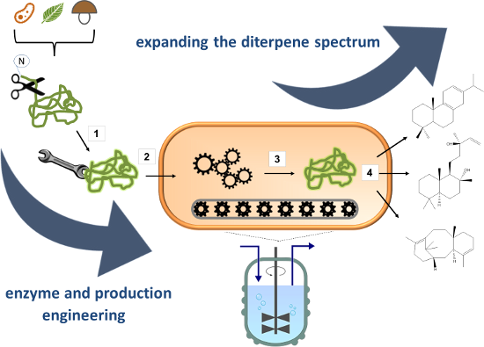
- , fragrances, fuels and fuel additives. Central building blocks of all terpenes are the isoprenoid compounds isopentenyl diphosphate and dimethylallyl diphosphate. Bacteria like Escherichia coli harbor a native metabolic pathway for these isoprenoids that is quite amenable for genetic engineering. Together
- describing the metabolic engineering of a bacterial host. Precursor formation All terpenes derive from the ubiquitous central metabolites isopentenyl diphosphate (IPP) and dimethylallyl diphosphate (DMAPP) [24] (see Scheme 1). Interestingly, only two metabolic pathways (MEP and MEV) have been identified for
- prevent accumulation of the desired lead structures [33]. Isoprenyl diphosphate formation Downstream of precursor formation condensation of IPP and DMAPP to longer-chain polyprenyls precedes subsequent metabolization to linear or mono- and polycyclic products, respectively, by the terpene synthases [24


Posttranslational isoprenylation of tryptophan in bacteria
Beilstein J. Org. Chem. 2017, 13, 338–346, doi:10.3762/bjoc.13.37
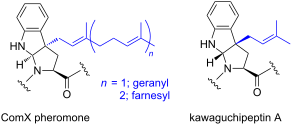
- . ComQ lacks homology to cysteine isoprenyltransferases, tryptophan dimethylallyltransferases for cyanobactins [2][37][38] or prenyltransferases for indole alkaloids [39][40][41][42]. However, ComQ shares some homology with farnesyl diphosphate (FPP) synthases and geranylgeranyl diphosphate (GGPP
- ) synthases, which catalyze the condensation of isopentenyl diphosphate (IPP) with geranyl diphosphate (GPP) or FPP to form C5-extended isoprenyl diphosphates FPP or GGPP (Figure 4B) [43][44]. In the both typical diphosphate synthases, two aspartate-rich motifs containing “DDxxD” residues, in which x refers
- -rich motif and the pseudo aspartate-rich motif in ComQ from seven Bacillus strains. Essential amino acid residues for function are shown in bold and colored blue. EcGGPPS is a geranylgeranyl diphosphate synthase derived from Escherichia coli ISC56. It’s essential amino acid residues for function are




Electron-transfer-initiated benzoin- and Stetter-like reactions in packed-bed reactors for process intensification
Beilstein J. Org. Chem. 2016, 12, 2719–2730, doi:10.3762/bjoc.12.268
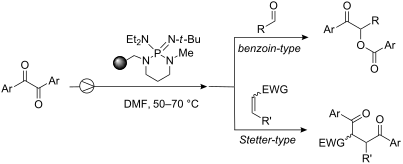
- asymmetric version of acyloin-type reactions was also investigated in our laboratory operating packed-bed bioreactors functionalized with a suitable thiamine diphosphate (ThDP)-dependent enzyme supported on mesoporous silica [17]. Overall, the so far reported umpolung flow processes [12][13][14][15][16][17


A detailed view on 1,8-cineol biosynthesis by Streptomyces clavuligerus
Beilstein J. Org. Chem. 2016, 12, 2317–2324, doi:10.3762/bjoc.12.225
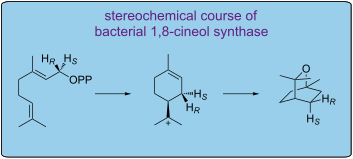
- -cineol synthase from Streptomyces clavuligerus was investigated using stereospecifically deuterated substrates. In contrast to the well investigated plant enzyme from Salvia officinalis, the reaction proceeds via (S)-linalyl diphosphate and the (S)-terpinyl cation, while the final cyclisation reaction is
- in both cases a syn addition, as could be shown by incubation of (2-13C)geranyl diphosphate in deuterium oxide. Keywords: biosynthesis; enzyme mechanisms; isotopic labelling; stereochemistry; terpenes; Introduction Among all classes of natural products the climax of structural diversity and
- and achiral precursors such as geranyl diphosphate (GPP, monoterpenes), farnesyl diphosphate (FPP, sesquiterpenes) and geranylgeranyl diphosphate (GGPP, diterpenes). Terpene cyclases (type I) contain a trinuclear (Mg2+)3 cluster in their active site that is stabilised by binding to several highly


Mechanistic investigations on six bacterial terpene cyclases
Beilstein J. Org. Chem. 2016, 12, 1839–1850, doi:10.3762/bjoc.12.173
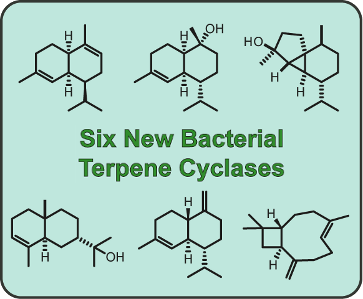
- Patrick Rabe Thomas Schmitz Jeroen S. Dickschat Kekulé-Institute of Organic Chemistry and Biochemistry, University of Bonn, Gerhard-Domagk-Straße 1, 53121 Bonn, Germany 10.3762/bjoc.12.173 Abstract The products obtained by incubation of farnesyl diphosphate (FPP) with six purified bacterial
- bacterial [28][35] and fungal [36][37] terpene cyclases. Results and Discussion Incubation of a recombinant terpene cyclase from Streptomyces viridochromogenes DSM 40736 (NCBI accession number WP_039931950) with farnesyl diphosphate (FPP) yielded a single product that was identified as α-amorphene (1
- , Figure 1) by GC–MS analysis (Figure S1, Supporting Information File 1) [32], while the enzyme incubations with geranyl diphosphate (GPP) and geranylgeranyl diphosphate (GGPP) gave no products. Although 1 was isolated from vetiver oil (Vetiveria zizanioides, Gramineae) nearly five decades ago [38], the


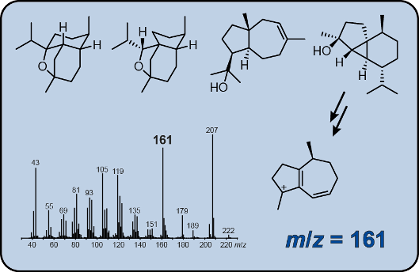
The EIMS fragmentation mechanisms of the sesquiterpenes corvol ethers A and B, epi-cubebol and isodauc-8-en-11-ol
Beilstein J. Org. Chem. 2016, 12, 1380–1394, doi:10.3762/bjoc.12.132
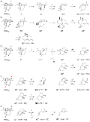
- Patrick Rabe Jeroen S. Dickschat Kekulé-Institute of Organic Chemistry and Biochemistry, University of Bonn, Gerhard-Domagk-Straße 1, 53121 Bonn, Germany 10.3762/bjoc.12.132 Abstract Farnesyl diphosphate (FPP) and all fifteen positional isomers of (13C1)FPP were enzymatically converted by the
- incorporation rates and usually delivers a mixture of various isotopomers. We have recently synthesised all fifteen isotopomers of (13C1)farnesyl diphosphate (FPP) that can be enzymatically converted with a sesquiterpene cyclase into the corresponding labelled sesquiterpene products [16]. These enzyme products
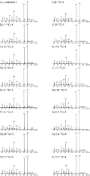
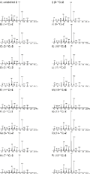
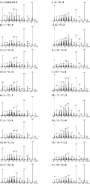
- isotopomers of farnesyl diphosphate. Incubation experiments were carried out using 1 mL of the enzyme fraction and 1 mL of a solution of the isotopomer of (13C1)FPP (0.2 mg/mL in H2O) for 3 h at 28 °C. The reaction mixtures were extracted with n-hexane (300 μL) and analyzed by GC–MS and GC–QTOF MS. Mass



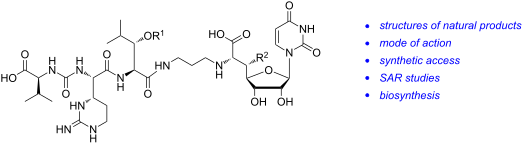
Muraymycin nucleoside-peptide antibiotics: uridine-derived natural products as lead structures for the development of novel antibacterial agents
Beilstein J. Org. Chem. 2016, 12, 769–795, doi:10.3762/bjoc.12.77
- , transformation to a disaccharide and transport to the extracellular side of the membrane (Figure 4, steps B, C); finally, polymerisation to long oligosaccharide chains and cross-linking occur (Figure 4, steps D, F). In the cytosol, uridine diphosphate-N-acetylglucosamine (UDP-GlcNAc), that is formed from
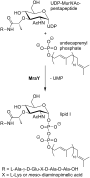
- -isoprenoid lipid carrier that is located in the cellular membrane. With concomitant release of uridine monophosphate (UMP), this furnishes a diphosphate linkage between the two substrates. The reaction is reversible and MraY accelerates the adjustment of the equilibrium state. Whereas this reaction was known
- -catalysed displacement of the uracil with a phosphate moiety to afford 5-amino-5-deoxyribose-1-phosphate (116). The LipM-mediated reaction of ribosyl phosphate 116 with a nucleoside triphosphate (NTP) then yields nucleoside diphosphate (NDP)-aminoribose 117. Finally, aminoribosylation of 101 with glycosyl

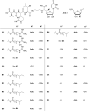
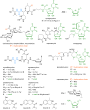




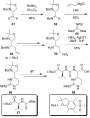




Dynamic behavior of rearranging carbocations – implications for terpene biosynthesis
Beilstein J. Org. Chem. 2016, 12, 377–390, doi:10.3762/bjoc.12.41
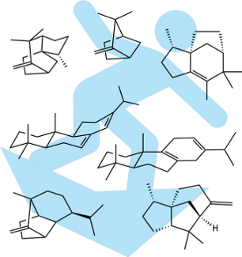
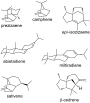
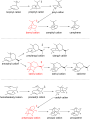
- rings that are transformed in only one or two enzyme-promoted reactions. These reactions involve generation of a carbocation by protonation or loss of a diphosphate group followed by cyclization, alkyl shift, hydride shift and/or proton transfer reactions to generate new, more complex, carbocations
- . Ultimately these carbocations are either trapped by a nucleophile (e.g., water, diphosphate) or deprotonated to form alkenes. The details of terpene-forming carbocation cyclization/rearrangement processes have been of interest for decades [1][2][3][4][5][6]. Although much has been learned, new observations
- the absence of specifically oriented noncovalent interactions with groups in terpene synthase active sites. Molecular dynamics calculations using the full bornyl diphosphate synthase enzyme were also carried out (here using a combination of DFT and molecular mechanics) [21][22]. These simulations



Mycothiol synthesis by an anomerization reaction through endocyclic cleavage
Beilstein J. Org. Chem. 2016, 12, 328–333, doi:10.3762/bjoc.12.35
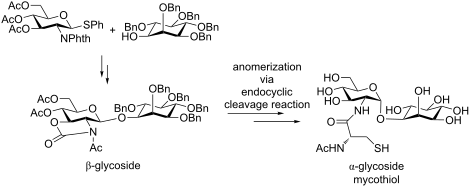
- Gram-negative bacteria. MSH undergoes metal-catalyzed autoxidation more rapidly than glutathione [16]. The biosynthetic pathway of MSH has been well investigated; MSH is synthesized from 1-inositol phosphate and uridine diphosphate N-acetylglucosamine (UDP-GlcNAc) in five steps [15]. It is used by


Synthesis of cyclic N1-pentylinosine phosphate, a new structurally reduced cADPR analogue with calcium-mobilizing activity on PC12 cells
Beilstein J. Org. Chem. 2015, 11, 2689–2695, doi:10.3762/bjoc.11.289
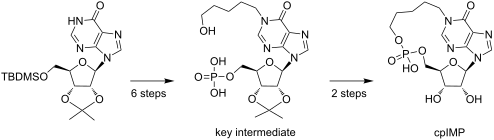
- neuronal cells in comparison with the pyrophosphate bridge present in the cyclic N1-pentylinosine diphosphate analogue (cpIDP) previously synthesized in our laboratories. The preliminary biological tests indicated that cpIMP and cpIDP induce a rapid increase of intracellular Ca2+ concentration in PC12
- analogues of the cADPR in which the adenine base was replaced by a hypoxanthine ring [24]. This kind of modification produced the cyclic inosine diphosphate ribose (cIDPR) 2 which proved to be stable in hydrolytic physiological conditions and showed significant Ca2+ mobilizing activity, thus fostering the


Synthesis of Xenia diterpenoids and related metabolites isolated from marine organisms
Beilstein J. Org. Chem. 2015, 11, 2521–2539, doi:10.3762/bjoc.11.273
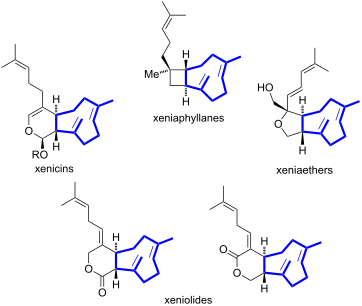
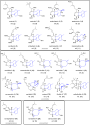
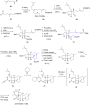
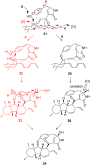
- ]. Initial loss of a diphosphate anion from GGPP generates an allylic cation in 29 which is intramolecularly trapped by nucleophilic attack of the C3,C10-double bond, forming the secondary cation 30. Attack of the newly generated C1,C2-double bond with simultaneous loss of a proton then affords the bicyclo







Recent highlights in biosynthesis research using stable isotopes
Beilstein J. Org. Chem. 2015, 11, 2493–2508, doi:10.3762/bjoc.11.271
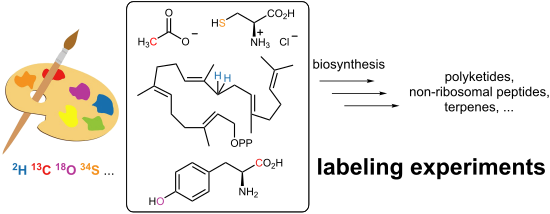
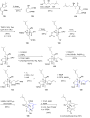
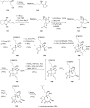
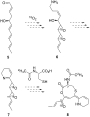
- skeletons (Figure 6). The fascination of terpene biosynthesis arises from the complexity and variety of carbon scaffolds, terpene cyclases are able to build up using few linear oligoprenyl diphosphate precursors. This promotes investigations using isotopically labeled compounds both on acetate- and
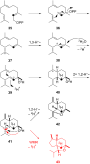
- -labeled isotopomers of farnesyl diphosphate (FPP) [60]. These precursors were used to unambiguously assign both 13C NMR and (via HSQC) 1H NMR data of (1(10)E,4E)-germacradien-6-ol (34) from Streptomyces pratensis. The NMR spectra of this compound are complicated because of a mixture of conformers (Figure
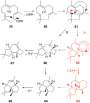
- (42) and B (43) provides an interesting example (Scheme 7) [61]. The proposed mechanism starts with isomerization of farnesyl diphoshate (FPP, 35) to nerolidyl diphosphate (36) followed by 1,10-ring closure to the helminthogermacradienyl cation (37). A 1,3-hydride shift to the allylic cation 38 and











Two strategies for the synthesis of the biologically important ATP analogue ApppI, at a multi-milligram scale
Beilstein J. Org. Chem. 2015, 11, 2189–2193, doi:10.3762/bjoc.11.237
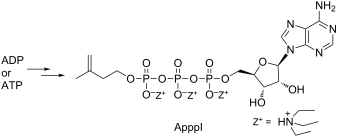
- isopentenyl diphosphate (IPP) [4]. ApppI has interesting properties and their clarification might explain many of the biological functions of N-BPs. Unfortunately, these studies are hampered by the very limited availability of ApppI. There are only few methods described in the literature which can be used in
- any NMR characterization data, only HPLC and MS data were presented, and these are rather unsatisfactory methods with which to prove the purity of a product. They also stated that there was 5–10% ADP (adenosine diphosphate) as an impurity in some preparations and that it is possible that there may





