


Search results
Search for "energy" in Full Text gives 1405 result(s) in Beilstein Journal of Organic Chemistry. Showing first 200.
The intramolecular stabilizing effects of O-benzoyl substituents as a driving force of the acid-promoted pyranoside-into-furanoside rearrangement
Beilstein J. Org. Chem. 2025, 21, 2456–2464, doi:10.3762/bjoc.21.187
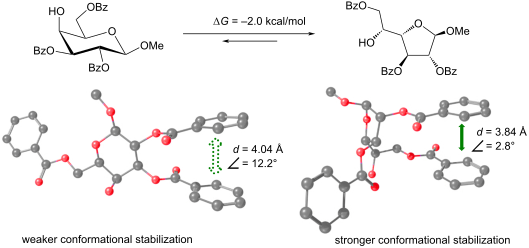
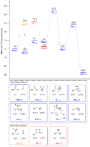
- , we turned to computational studies to elucidate the driving force of this pyranoside-into-furanoside isomerisation. The DFT B3LYP-D3 approach was employed for this task with additional validation of its results at DLPNO-CCSD(T) level for the lowest energy conformers. The results demonstrate that the
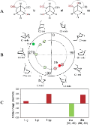
- ° correspondingly, after which the starting structures were fully optimized. Quite expectedly for galactose, the gt conformer was found to have the lowest energy. Supporting Information File 1, Table S1 contains the energies obtained for the three conformers and Figure 4C provides graphical representation of the
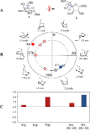
- +60° there were produced some conformers with the energy of the furanoside substantially lower than that of the pyranoside form. The energies are provided in Supporting Information File 1, Table S2 and the graphical representation is given in Figure 4C, bars 2-a and 2-b, and Figure 4B. The Altona




Transformation of the cyclohexane ring to the cyclopentane fragment of biologically active compounds
Beilstein J. Org. Chem. 2025, 21, 2416–2446, doi:10.3762/bjoc.21.185
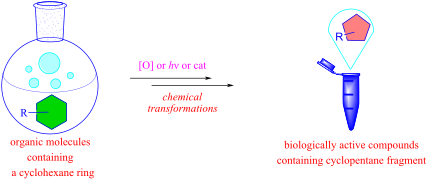
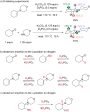
- simple building blocks [72]. The main feature of light-induced transformations is the involvement of electronically excited states that occur during photon absorption, leading to the formation of reactive intermediates causing significant changes in chemical compound reactivity. As a result, light energy


The high potential of methyl laurate as a recyclable competitor to conventional toxic solvents in [3 + 2] cycloaddition reactions
Beilstein J. Org. Chem. 2025, 21, 2389–2415, doi:10.3762/bjoc.21.184
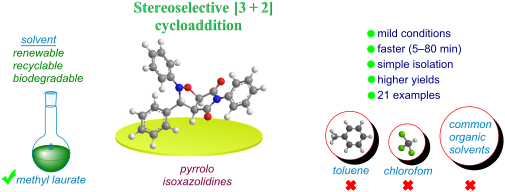
- but not limited to methyl laurate, has found application in a variety of direct and indirect food additive applications [94]. The Hansen solubility parameter is a numerical expression that quantifies a molecule's cohesive energy density from non-polar, polar, and hydrogen-bonding interactions. It is a
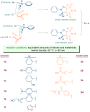
- . As well-known the Hildebrand solubility parameter (HSP, δT) has been defined as a measure of the cohesive energy density of a material, thus facilitating prediction of the solubility of a solute in a solvent [96]. Methyl laurate has been found to have HSPs that are in close proximity to those that
- approximately ≈ 6.57 MPa1/2. The radius of interaction (Ro) for a typical small organic molecule, such as the nitrone, is estimated to be approximately 7.5 MPa1/2 which value is usually determined for solute molecules [97][99]. The relationship between Ra and Ro is denoted by the term relative energy difference






Conformational effects on iodide binding: a comparative study of flexible and rigid carbazole macrocyclic analogs
Beilstein J. Org. Chem. 2025, 21, 2369–2375, doi:10.3762/bjoc.21.181
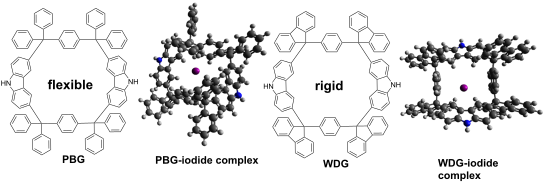
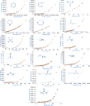
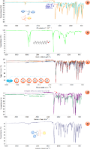
- peaks appeared, indicating that photoelectron transfer occurred between iodine ions and the macrocycles [27][28], and fluorescence quenching was due to the photoinduced electron transfer (PET) effect between iodine ions and acceptors, resulting in non-radiative dissipation of excited state energy rather
- synergistic binding mechanism driven by cavity complementarity, and the energy of the PBG–iodide complex is lower than that of the WDG–iodide complex, it indicates that PBG forms a thermodynamically more stable complex with iodide ions compared to WDG. This stability difference arises from the distinct
- conformational behaviors of the two macrocycles. PBG's flexible benzene ring allows for induced-fit binding, where the macrocycle dynamically adjusts its cavity to optimize interactions with iodide, minimizing energy through conformational adaptability. WDG's rigid fluorene backbone relies on a preorganized



Rotaxanes with integrated photoswitches: design principles, functional behavior, and emerging applications
Beilstein J. Org. Chem. 2025, 21, 2345–2366, doi:10.3762/bjoc.21.179

- increasingly require rethinking and developing new structural designs that incorporate more efficient and advanced photoswitches to fully realize their potential. Keywords: macrocycle; photoisomerization; photoswitches; rotaxanes; shuttling; Introduction Harnessing light energy to control intra- and
- , spirobenzopyran, stilbene and stiff-stilbene (Figure 2). Systems whose photoinduced behavior primarily depends on photoredox or energy-transfer mechanisms fall outside the scope of this review. Review Rotaxanes featuring photoswitches on the axle Rotaxanes that incorporate photoswitchable units into the axle are
- . Although no shuttling or energy transfer process was observed, both rotaxanes presented good photoisomerization behavior. Remarkably, the use of cucurbit[6]uril macrocycles enhanced the photoisomerization. Later, Liu and co-workers designed a symmetric [3]rotaxane where the pH-responsive shuttling motion


Recent advances in Norrish–Yang cyclization and dicarbonyl photoredox reactions for natural product synthesis
Beilstein J. Org. Chem. 2025, 21, 2315–2333, doi:10.3762/bjoc.21.177
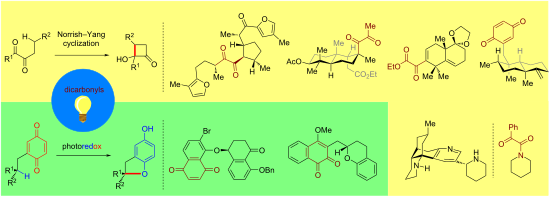
- key late-stage step in this total synthesis, the Norrish–Yang photocyclization exhibits high chemoselectivity and efficiency. It regulates selectivity through C–H bond dissociation energy and restricted bond rotation, constructing a 6/6/4 fused ring system with three contiguous quaternary carbons
- : reactive substrates exhibited λmax < 460 nm (yellow-orange), whereas unreactive ones showed λmax > 460 nm (dark red-purple). This suggests insufficient excitation energy for Norrish type-II hydrogen abstraction in the latter. Such chromophore-dependent reactivity provides critical insights for designing
- cyclization of the saturated C5–C6; c) calculated Gibbs free energy difference (ΔΔG‡) for 1,5-HAT processes of 22 and 30. Total synthesis of avarane-type meroterpenoids. Total synthesis of gracilisoid A. Divergent total synthesis of gracilisoids B–I. Mechanism of the late-stage biomimetic photooxidation




Insoluble methylene-bridged glycoluril dimers as sequestrants for dyes
Beilstein J. Org. Chem. 2025, 21, 2302–2314, doi:10.3762/bjoc.21.176
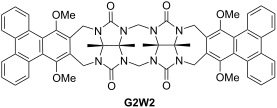
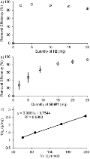
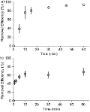
- ], and non-conventional adsorbents [14]. Although activated carbon is widely used, its ability to capture polar compounds is limited and the regeneration process is complex and energy-intensive [15]. In work that stimulated supramolecular chemists to enter the game, Dichtel and co-workers demonstrated



Enantioselective radical chemistry: a bright future ahead
Beilstein J. Org. Chem. 2025, 21, 2283–2296, doi:10.3762/bjoc.21.174
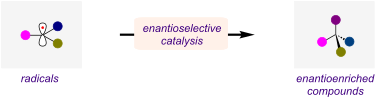
- preparation of chiral β-aminoalcohols [63]. Chiral copper(I) complexes convert imidate radicals, formed transiently through energy-transfer catalysis, to oxazolines. The transformation includes a regioselective and enantioselective HAT process. Upon blue LED irradiation, oxime imidates (derived from alcohols


Thiadiazino-indole, thiadiazino-carbazole and benzothiadiazino-carbazole dioxides: synthesis, physicochemical and early ADME characterization of representatives of new tri-, tetra- and pentacyclic ring systems and their intermediates
Beilstein J. Org. Chem. 2025, 21, 2220–2233, doi:10.3762/bjoc.21.169
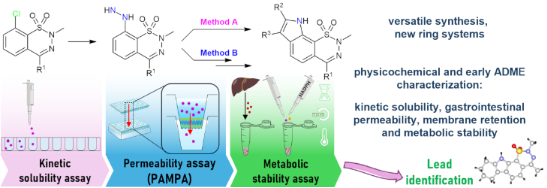
- calibration was performed using leucine enkephalin as the reference compound (m/z 556.2771), introduced at 15 µL/min. Data acquisition was performed in MSE mode with alternating low collision energy (6 eV) and ramped high-energy collision dissociation (20–40 eV). The mass range was set from 50 to 1200 Da


A m-quaterphenyl probe for absolute configurational assignments of primary and secondary amines
Beilstein J. Org. Chem. 2025, 21, 2211–2219, doi:10.3762/bjoc.21.168
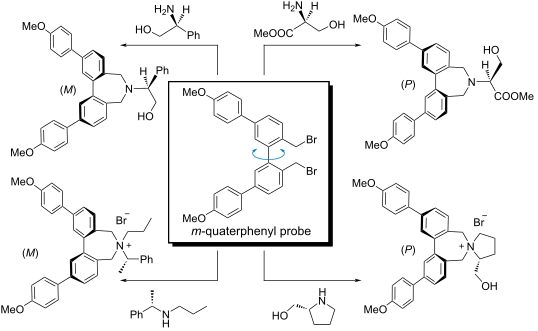
- of all local minima employing DFT at the B3LYP/6-31G* level of theory [47]. Four low-energy conformers of (S)-3a were identified within 10.0 kJ/mol (Figure 3). Among them, conformers A and D exhibited an M twist between the long axes of the biphenyl chromophores, whereas conformers B and C displayed
- )-3a–g and (R)-3h using MMFF. All local minimum conformers were then optimized with DFT using the B3LYP/6-31G* model [47]. The lower energy conformers with relative energies ranging from 0.0 to 10.0 kJ/mol were selected. By the Bolzmann distribution based on the energy difference of the conformers at


Synthesis of triazolo- and tetrazolo-fused 1,4-benzodiazepines via one-pot Ugi–azide and Cu-free click reactions
Beilstein J. Org. Chem. 2025, 21, 2202–2210, doi:10.3762/bjoc.21.167
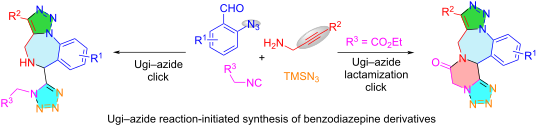
- agents, and high-energy propellants [10][11][12][13][14][15][16][17][18]. Tetrazole is also found in several bioactive compounds [19][20][21][22][23][24], such as tasosartan, alfentanil, and cefmenoxime for the treatment of hypertension, anesthesia, and bacterial infections [4]. Among the reported


C2 to C6 biobased carbonyl platforms for fine chemistry
Beilstein J. Org. Chem. 2025, 21, 2103–2172, doi:10.3762/bjoc.21.165
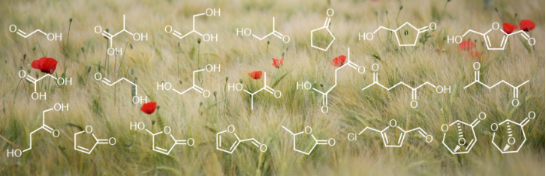
- –Crafts alkylation products were then converted into an intermediate tryptaldehyde that underwent intramolecular olefination to form the targeted product [34]. Glycolic acid (GA) The growing impact of fossil fuel consumption has heightened the need for advancing renewable energy technologies. One
- promising strategy for sustainable energy development involves the electrochemical oxidation of biomass-derived feedstocks. Recent work by Shen et al. demonstrates that glycolic acid (GA), also referred to as hydroxyacetic acid, can be synthesized from glycerol (GLY) using a copper single-atom
- valuable chemical used in the feed and food industry, is produced by petrochemical processes. Its synthesis from biobased lactic acid (LA) offers an access from renewable resources. However, this conversion is difficult due to the high activation energy required for the hydrogenation reaction removing the


Solar thermal fuels: azobenzene as a cyclic photon–heat transduction platform
Beilstein J. Org. Chem. 2025, 21, 2036–2047, doi:10.3762/bjoc.21.159
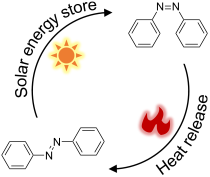
- Center on Advanced Chemical Engineering and Energy Materials, China University of Petroleum (East China), 266580, Qingdao, China School of Public Security and Emergency Management, Anhui University of Science and Technology, 231131, Hefei, China 10.3762/bjoc.21.159 Abstract Azobenzene-based solar
- thermal fuels have undergone significant advancements over the past four decades, emerging as a promising technology for light-to-thermal energy conversion. While these materials exhibit considerable development potential, critical challenges remain that hinder their practical implementation. In this
- analysis, we aim to clarify the current state of azobenzene-based solar thermal fuels, while mapping strategic pathways for future technological advancements in this rapidly evolving research field. Keywords: azobenzene; energy; photoresponsive; solar thermal fuels; Introduction Solar energy occupies a




Understanding the origin of stereoselectivity in the photochemical denitrogenation of 2,3-diazabicyclo[2.2.1]heptene and its derivatives with non-adiabatic molecular dynamics
Beilstein J. Org. Chem. 2025, 21, 2007–2020, doi:10.3762/bjoc.21.156
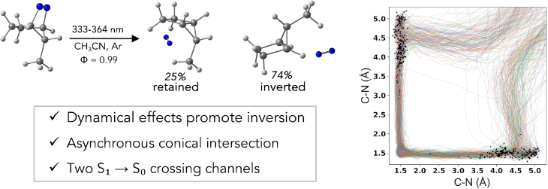
- is fully inverted relative to the reactant geometry. In the second cluster, the inversion is only partial, with one of the carbon atoms in the methylene bridge inverted relative to the reactant. We identified each cluster's corresponding minimum energy conical intersection (MECI), indicating at least
- ; stereoselectivity; Introduction Photochemical reactions utilize light as a sustainable energy source and are considered to be ‘green’ reactions [1][2]. Organic chromophores absorb light, accessing higher-lying excited state(s) that exhibit distinct reactivities, leading to bond breaking and formation, irreversibly
- producing energy-dense compounds [2][3]. One promising strategy to access strained compounds involves gas-evolution (e.g., CO or N2) because of the associated entropic driving force; this approach has had wide utility in photomedicine and organic synthesis. For example, photochemical decarboxylation has


Asymmetric total synthesis of tricyclic prostaglandin D2 metabolite methyl ester via oxidative radical cyclization
Beilstein J. Org. Chem. 2025, 21, 1964–1972, doi:10.3762/bjoc.21.152
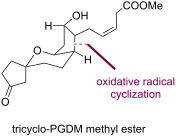
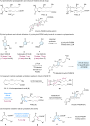
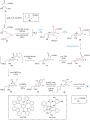
- -deficient [28], thereby lowering the energy barrier for electrophilic radical addition. Increasing the reaction temperature to 70 °C proved detrimental, yielding only trace amounts of product 14 (Table 1, entry 5). Finally, replacing Mn(OAc)3·2H2O/Cu(OAc)2·H2O with other oxidants, such as ceric ammonium



Synthesis of N-doped chiral macrocycles by regioselective palladium-catalyzed arylation
Beilstein J. Org. Chem. 2025, 21, 1917–1923, doi:10.3762/bjoc.21.149
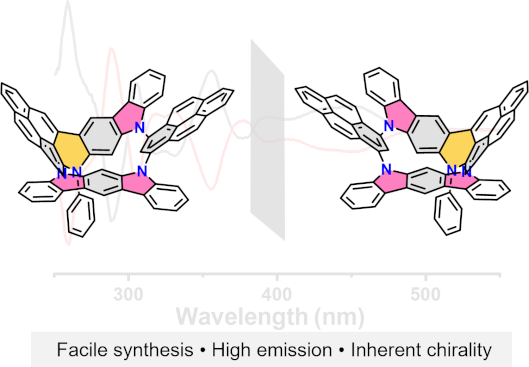
- Road, Hong Kong, China Materials Innovation Institute for Life Sciences and Energy (MILES), HKU-SIRI, Shenzhen, China 10.3762/bjoc.21.149 Abstract A series of nitrogen (N)-doped macrocycles was successfully synthesized through palladium-catalyzed arylation. X-ray crystallographic characterization
- , theoretical calculations were performed to evaluate the energy barriers of isomerization. As shown in Figure S3 (Supporting Information File 1), the configuration observed in the crystal structure has the lower energy by 24.0 kcal mol−1 than that of the isomeric structure with two pyrene units at the same
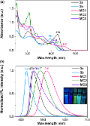
- side. The energy barrier was calculated to be 66.7 kcal mol−1, indicating MC3 is highly conformationally stable. The optical properties of the synthesized macrocycles were investigated in dichloromethane (Figure 3). The precursors 3a,b show intense absorptions with maxima at 425 nm and 395 nm




Systematic pore lipophilization to enhance the efficiency of an amine-based MOF catalyst in the solvent-free Knoevenagel reaction
Beilstein J. Org. Chem. 2025, 21, 1854–1863, doi:10.3762/bjoc.21.144
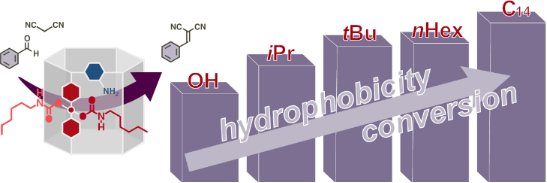
- by increasing the binding affinity for the lipophilic reactants and by decreasing the energy required to desolvate acid/base amino acid catalysts [34][35]. Lipophilicity has also been found to be beneficial in condensation reactions as the removed water molecules are repelled by the hydrophobic


Photoswitches beyond azobenzene: a beginner’s guide
Beilstein J. Org. Chem. 2025, 21, 1808–1853, doi:10.3762/bjoc.21.143
- ) single bond N–N. The hydrazone pathway in protic solvents could be ruled out in cases when the energy of the s-cis-hydrazone was superior to the energy of the other two transition states. For further substituent effects on azoheteroarenes, we refer the readers to the following reports by Venkataramani
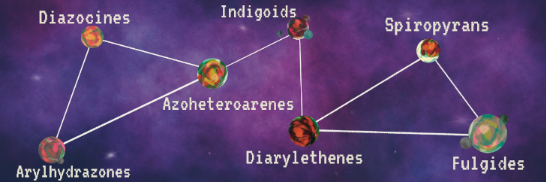
- heat storage (>300 J/g) makes these compounds suitable for molecular solar thermal energy storage (MOST) [47]. Diazocines Diazocines are bridged azobenzenes (Figure 9). The added strain renders the E-isomer metastable, favouring the more stable Z-isomer. In the planar E-azobenzene, the nπ* transition
- , giving better PSSs) and improved the half-lives without interfering too much with the absorption of the E-indigo (Figure 14). Diarylated indigos like 60g showed the presence of the Z-isomer in the dark, possibly due to the stabilisation energy given by the π–π interaction between the aryl rings (Figure




Fe-catalyzed efficient synthesis of 2,4- and 4-substituted quinolines via C(sp2)–C(sp2) bond scission of styrenes
Beilstein J. Org. Chem. 2025, 21, 1799–1807, doi:10.3762/bjoc.21.142
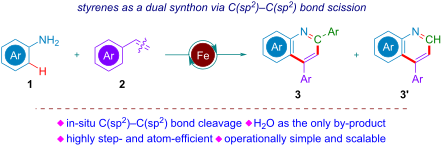
- light of climate change and the ongoing energy crisis, there is an urgent need to reform energy and chemical production by prioritizing environmentally sustainable methods that are both practical and broadly implementable. Styrenes are industrially important bulk chemicals [39], with an estimated global




Thermodynamics and polarity-driven properties of fluorinated cyclopropanes
Beilstein J. Org. Chem. 2025, 21, 1742–1747, doi:10.3762/bjoc.21.137
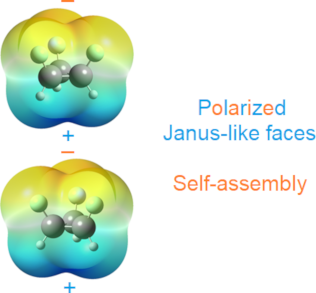
- stabilizing due to the presence of two anomeric-like interactions, nF → σ*CF [16]. According to a natural bond orbital (NBO) analysis, this electron delocalization accounts for a stabilization energy of 14.3 kcal mol−1 per interaction in compound 1.1. Similar stabilization values are observed in other
- will be analyzed by decomposing the electronic energy (Erel) into Lewis (EL) and non-Lewis (ENL) components. Notably, Erel closely correlates with the relative standard Gibbs free energies (G0). The EL term represents classical steric and electrostatic contributions, while the ENL term accounts for
- unoccupied orbitals (antibonding and Rydberg), offering insights into the contributions of non-Lewis electron delocalization and its interplay with Lewis-type bonding in the total electronic energy. All calculations were performed using the Gaussian 16 software suite [26]. Quantum theory of atoms in


Continuous-flow-enabled intensification in nitration processes: a review of technological developments and practical applications over the past decade
Beilstein J. Org. Chem. 2025, 21, 1678–1699, doi:10.3762/bjoc.21.132
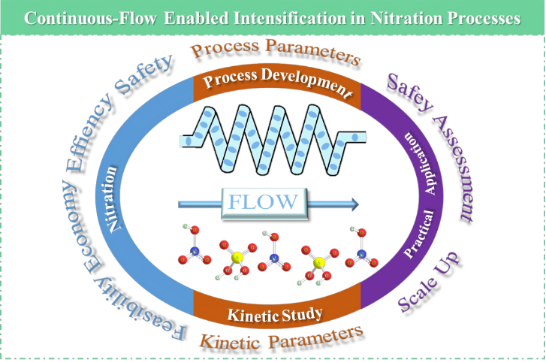
- Industrial & Energy Engineering Group Huanghe Construction Co., Ltd., 7 Yandong Xinlu, Lixia District, Jinan 250000, P. R. China China Construction Industrial & Energy Engineering Group Co., Ltd., Nanjing 210023, P. R. China 10.3762/bjoc.21.132 Abstract Flow chemistry technology has demonstrated significant
- /selectivity through optimized parameters (microwave energy, temperature, feed composition) [11]. Recent years have witnessed growing adoption of the continuous-flow technology in nitration processes across laboratory and industrial scales, driven by the reaction's classification as a highly hazardous chemical
- to achieve precise control of residence time, which is a key advantage of flow-chemistry technology. Conventional mixed-acid nitration systems utilize aqueous streams to rapidly deactivate nitration activity, necessitating simultaneous heat extraction to mitigate the substantial exothermic energy



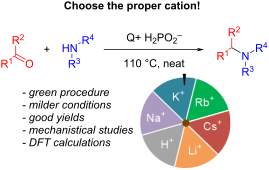
Influence of the cation in hypophosphite-mediated catalyst-free reductive amination
Beilstein J. Org. Chem. 2025, 21, 1661–1670, doi:10.3762/bjoc.21.130
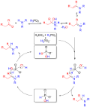
- confirmed by D-experiments. The whole sequence of transformations was finished by the reduction of the charged iminium cation with the hypophosphite anion forming N,N,N-dimethylbenzylammonium phosphite in exergonic manner with a total Gibbs free energy gain of −26.8 kcal/mol (Step_5). Noteworthy, the target


Photocatalysis and photochemistry in organic synthesis
Beilstein J. Org. Chem. 2025, 21, 1645–1647, doi:10.3762/bjoc.21.128
- in the presence of electron donors and acceptors. Furthermore, [Ru(bpy)3]Cl2 can engage in Förster and Dexter energy transfer processes, enabling the transfer of excited-state energy to molecules that do not themselves absorb visible light. This versatility is arguably the reason for the tremendous
- impact of [Ru(bpy)3]Cl2 on several research areas, including solar energy conversion [5], optosensing [6], photodynamic therapy [7][8] and bioimaging [9]. Scattered examples of [Ru(bpy)3]Cl2 being used as a photocatalyst for visible-light-driven organic synthesis appeared in the scientific literature as
- Review article discussing photocatalysts capable of harnessing low-energy red light to trigger chemical reactions [19]. In addition to photoredox catalysis, several mechanistic platforms that leverage light – such as the use of electron donor–acceptor complexes [20], proton-coupled electron transfer [21

On the aromaticity and photophysics of 1-arylbenzo[a]imidazo[5,1,2-cd]indolizines as bicolor fluorescent molecules for barium tagging in the study of double-beta decay of 136Xe
Beilstein J. Org. Chem. 2025, 21, 1627–1638, doi:10.3762/bjoc.21.126
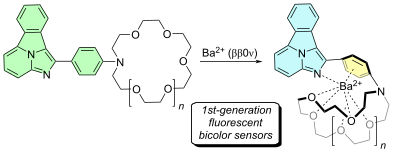
- annihilation, according to which the two emitted electrons would take more energy than in the ββ2ν process. In both processes, the initial nuclide must advance two steps beyond the periodic table. Among the possible candidates for double-beta decay, 136Xe is a suitable isotope. In the ββ2ν radioactive decay
- of this tetracyclic system [11]. Since ground state aromaticity can be assessed by energetic [12], geometric [13] and magnetic [14][15] criteria, among others [16][17][18], we analyzed first the resonance energy of 1 with respect to the aromatic resonance energies of the ortho-phenyl and the bicyclic
- a stabilization energy of ca. 17 kcal/mol. In the alternative hyperhomodesmotic reaction B, defined as 5 + 6 → 7 + 1, the formal ten-electron Hückel aromaticity of the imidazo[1,2-a]pyridine moiety (in blue) was preserved while the phenyl component was decomposed. The computed stabilization energy


Transition-state aromaticity and its relationship with reactivity in pericyclic reactions
Beilstein J. Org. Chem. 2025, 21, 1613–1626, doi:10.3762/bjoc.21.125
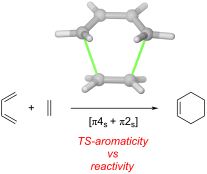
- aromatic character in their transition states, this increased aromaticity does not necessarily correlate with lower activation barriers. State-of-the-art computational methods on reactivity, such as the combined activation strain model (ASM)–energy decomposition analysis (EDA) method, reveal that factors
- conclusion by Evans in 1939 [18] indicating that “...the lowering of the activation energy arises from the increased mobility which the π electrons of such reactions possess in the TS.” Indeed, it was found, both experimentally and computationally, that the concerted pathway (i.e., involving an aromatic TS
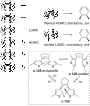
- consequence, the corresponding HOMO(diene)–LUMO(dienophile) energy gap becomes smaller, which, according to the frontier molecular orbital (FMO) theory, constitutes the origin of the observed acceleration (following the so-called LUMO-lowering concept in catalysis) [36][37][38][39]. This widely accepted





