


Search results
Search for "formylation" in Full Text gives 67 result(s) in Beilstein Journal of Organic Chemistry.
Isocyanide-based multicomponent reactions towards cyclic constrained peptidomimetics
- Gijs Koopmanschap,
- Eelco Ruijter and
- Romano V.A. Orru
Beilstein J. Org. Chem. 2014, 10, 544–598, doi:10.3762/bjoc.10.50

- library of acyclic products (Scheme 11), in which the isocyanide input 30 was derived from the corresponding amine via an N-formylation/dehydration sequence [52]. An additional palladium-catalyzed cyclization gave the pyrrolidine mimics 32 in excellent yields and modest to good selectivities (de 8–78

Graphical Abstract

Scheme 1: The proposed mechanism of the Passerini reaction.

Scheme 2: The PADAM-strategy to α-hydroxy-β-amino amide derivatives 7. An additional oxidation provides α-ket...

Scheme 3: The general accepted Ugi-mechanism.

Scheme 4: Three commonly applied Ugi/cyclization approaches. a) UDC-process, b) UAC-sequence, c) UDAC-combina...

Scheme 5: Ugi reaction that involves the condensation of Armstrong’s convertible isocyanide.

Scheme 6: Mechanism of the U-4C-3CR towards bicyclic β-lactams.

Scheme 7: The Ugi 4C-3CR towards oxabicyclo β-lactams.

Scheme 8: Ugi MCR between an enantiopure monoterpene based β-amino acid, aldehyde and isocyanide resulting in...

Scheme 9: General MCR for β-lactams in water.

Scheme 10: a) Ugi reaction for β-lactam-linked peptidomimetics. b) Varying the β-amino acid resulted in β-lact...

Scheme 11: Ugi-4CR followed by a Pd-catalyzed Sn2 cyclization.

Scheme 12: Ugi-3CR of dipeptide mimics from 2-substituted pyrrolines.

Scheme 13: Joullié–Ugi reaction towards 2,5-disubstituted pyrrolidines.

Scheme 14: Further elaboration of the Ugi-scaffold towards bicyclic systems.

Scheme 15: Dihydroxyproline derivatives from an Ugi reaction.

Scheme 16: Diastereoselective Ugi reaction described by Banfi and co-workers.

Scheme 17: Similar Ugi reaction as in Scheme 16 but with different acids and two chiral isocyanides.

Scheme 18: Highly diastereoselective synthesis of pyrrolidine-dipeptoids via a MAO-N/MCR-procedure.

Scheme 19: MAO-N/MCR-approach towards the hepatitis C drug telaprevir.

Scheme 20: Enantioselective MAO-U-3CR procedure starting from chiral pyrroline 64.

Scheme 21: Synthesis of γ-lactams via an UDC-sequence.

Scheme 22: Utilizing bifunctional groups to provide bicyclic γ-lactam-ketopiperazines.

Scheme 23: The Ugi reaction provided both γ- as δ-lactams depending on which inputs were used.

Scheme 24: The sequential Ugi/RCM with olefinic substrates provided bicyclic lactams.

Scheme 25: a) The structural and dipole similarities of the triazole unit with the amide bond. b) The copper-c...

Scheme 26: The Ugi/Click sequence provided triazole based peptidomimetics.

Scheme 27: The Ugi/Click reaction as described by Nanajdenko.

Scheme 28: The Ugi/Click-approach by Pramitha and Bahulayan.

Scheme 29: The Ugi/Click-combination by Niu et al.

Scheme 30: Triazole linked peptidomimetics obtained from two separate MCRs and a sequential Click reaction.

Scheme 31: Copper-free synthesis of triazoles via two MCRs in one-pot.

Scheme 32: The sequential Ugi/Paal–Knorr reaction to afford pyrazoles.

Scheme 33: An intramolecular Paal–Knorr condensation provided under basic conditions pyrazolones.

Scheme 34: Similar cyclization performed under acidic conditions provided pyrazolones without the trifluoroace...

Scheme 35: The Ugi-4CR towards 2,4-disubstituted thiazoles.

Scheme 36: Solid phase approach towards thiazoles.

Scheme 37: Reaction mechanism of formation of thiazole peptidomimetics containing an additional β-lactam moiet...

Scheme 38: The synthesis of the trisubstituted thiazoles could be either performed via an Ugi reaction with pr...

Scheme 39: Performing the Ugi reaction with DMB-protected isocyanide gave access to either oxazoles or thiazol...

Scheme 40: Ugi/cyclization-approach towards 2,5-disubstituted thiazoles. The Ugi reaction was performed with d...

Scheme 41: Further derivatization of the thiazole scaffold.

Scheme 42: Three-step procedure towards the natural product bacillamide C.

Scheme 43: Ugi-4CR to oxazoles reported by Zhu and co-workers.

Scheme 44: Ugi-based synthesis of oxazole-containing peptidomimetics.

Scheme 45: TMNS3 based Ugi reaction for peptidomimics containing a tetrazole.

Scheme 46: Catalytic cycle of the enantioselective Passerini reaction towards tetrazole-based peptidomimetics.

Scheme 47: Tetrazole-based peptidomimetics via an Ugi reaction and a subsequent sigmatropic rearrangement.

Scheme 48: Resin-bound Ugi-approach towards tetrazole-based peptidomimetics.

Scheme 49: Ugi/cyclization approach towards γ/δ/ε-lactam tetrazoles.

Scheme 50: Ugi-3CR to pipecolic acid-based peptidomimetics.

Scheme 51: Staudinger–Aza-Wittig/Ugi-approach towards pipecolic acid peptidomimetics.

Figure 1: The three structural isomers of diketopiperazines. The 2,5-DKP isomer is most common.

Scheme 52: UDC-approach to obtain 2,5-DKPs, either using Armstrong’s isocyanide or via ethylglyoxalate.

Scheme 53: a) Ugi reaction in water gave either 2,5-DKP structures or spiro compounds. b) The Ugi reaction in ...

Scheme 54: Solid-phase approach towards diketopiperazines.

Scheme 55: UDAC-approach towards DKPs.

Scheme 56: The intermediate amide is activated as leaving group by acid and microwave assisted organic synthes...

Scheme 57: UDC-procedure towards active oxytocin inhibitors.

Scheme 58: An improved stereoselective MCR-approach towards the oxytocin inhibitor.

Scheme 59: The less common Ugi reaction towards DKPs, involving a Sn2-substitution.

Figure 2: Spatial similarities between a natural β-turn conformation and a DKP based β-turn mimetic [158].

Scheme 60: Ugi-based syntheses of bicyclic DKPs. The amine component is derived from a coupling between (R)-N-...

Scheme 61: Ugi-based synthesis of β-turn and γ-turn mimetics.

Figure 3: Isocyanide substituted 3,4-dihydropyridin-2-ones, dihydropyridines and the Freidinger lactams. Bio-...

Scheme 62: The mechanism of the 4-CR towards 3,4-dihydropyridine-2-ones 212.

Scheme 63: a) Multiple MCR-approach to provide DHP-peptidomimetic in two-steps. b) A one-pot 6-CR providing th...

Scheme 64: The MCR–alkylation–MCR procedure to obtain either tetrapeptoids or depsipeptides.

Scheme 65: U-3CR/cyclization employing semicarbazone as imine component gave triazine based peptidomimetics.

Scheme 66: 4CR towards triazinane-diones.

Scheme 67: The MCR–alkylation–IMCR-sequence described by our group towards triazinane dione-based peptidomimet...

Scheme 68: Ugi-4CR approaches followed by a cyclization to thiomorpholin-ones (a) and pyrrolidines (b).

Scheme 69: UDC-approach for benzodiazepinones.

Scheme 70: Ugi/Mitsunobu sequence to BDPs.

Scheme 71: A UDAC-approach to BDPs with convertible isocyanides. The corresponding amide is cleaved by microwa...

Scheme 72: microwave assisted post condensation Ugi reaction.

Scheme 73: Benzodiazepinones synthesized via the post-condensation Ugi/ Staudinger–Aza-Wittig cyclization.

Scheme 74: Two Ugi/cyclization approaches utilizing chiral carboxylic acids. Reaction (a) provided the product...

Scheme 75: The mechanism of the Gewald-3CR includes three base-catalysed steps involving first a Knoevnagel–Co...

Scheme 76: Two structural 1,4-thienodiazepine-2,5-dione isomers by U-4CR/cyclization.

Scheme 77: Tetrazole-based diazepinones by UDC-procedure.

Scheme 78: Tetrazole-based BDPs via a sequential Ugi/hydrolysis/coupling.

Scheme 79: MCR synthesis of three different tricyclic BPDs.

Scheme 80: Two similar approaches both involving an Ugi reaction and a Mitsunobu cyclization.

Scheme 81: Mitsunobu–Ugi-approach towards dihydro-1,4-benzoxazepines.

Scheme 82: Ugi reaction towards hetero-aryl fused 5-oxo-1,4-oxazepines.

Scheme 83: a) Ugi/RCM-approach towards nine-membered peptidomimetics b) Sequential peptide-coupling, deprotect...

Scheme 84: Ugi-based synthesis towards cyclic RGD-pentapeptides.

Scheme 85: Ugi/MCR-approach towards 12–15 membered macrocycles.

Scheme 86: Stereoselective Ugi/RCM approach towards 16-membered macrocycles.

Scheme 87: Passerini/RCM-sequence to 22-membered macrocycles.

Scheme 88: UDAC-approach towards 12–18-membered depsipeptides.

Figure 4: Enopeptin A with its more active derivative ADEP-4.

Scheme 89: a) The Joullié–Ugi-approach towards ADEP-4 derivatives b) Ugi-approach for the α,α-dimethylated der...

Scheme 90: Ugi–Click-strategy for 15-membered macrocyclic glyco-peptidomimetics.

Scheme 91: Ugi/Click combinations provided macrocycles containing both a triazole and an oxazole moiety.

Scheme 92: a) A solution-phase procedure towards macrocycles. b) Alternative solid-phase synthesis as was repo...

Scheme 93: Ugi/cyclization towards cyclophane based macrocycles.

Scheme 94: PADAM-strategy towards eurystatin A.

Scheme 95: PADAM-approach for cyclotheanamide.

Scheme 96: A triple MCR-approach affording RGD-pentapeptoids.

Scheme 97: Ugi-MiBs-approach towards peptoid macrocycles.

Scheme 98: Passerini-based MiB approaches towards macrocycles 345 and 346.

Scheme 99: Macrocyclic peptide formation by the use of amphoteric aziridine-based aldehydes.
Synthesis of the B-seco limonoid core scaffold
- Hanna Bruss,
- Hannah Schuster,
- Rémi Martinez,
- Markus Kaiser,
- Andrey P. Antonchick and
- Herbert Waldmann
Beilstein J. Org. Chem. 2014, 10, 194–208, doi:10.3762/bjoc.10.15
- Buchwald’s procedure for the catalytic asymmetric vinylation of enones [51]. However, the desired vinylated product could not be obtained under the described conditions. An alternative α-formylation/Wittig olefination sequence gave only low yields. O’Brien et al. [41] described the failure of a direct

Graphical Abstract

Figure 1: Structures of the 4,4,8-trimethyl-17-furanylsteroid core structure I and the representative B-seco ...

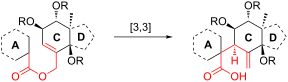
Scheme 1: Retrosynthetic analysis of the B-seco limonoid framework employing a [3,3]-sigmatropic rearrangemen...

Scheme 2: Retrosynthetic analysis of the B-seco limonoid scaffold employing a Claisen rearrangement as key st...

Scheme 3: Synthesis of alcohols 19, 20 and 22. Reagents and conditions: a) CSA, 2,3-butanedione, trimethyl or...

Scheme 4: Retrosynthetic analysis of the B-seco limonoid scaffold employing an Ireland–Claisen rearrangement ...

Scheme 5: Synthesis and Ireland–Claisen rearrangement of the allyl esters 27, 28, 29 and 30. Reagents and con...

Figure 2: Conformation of rearrangement precursor 30 and possible transition state involved in the Ireland–Cl...

Scheme 6: Synthesis of model C rings 40, 41 and 42. Reagents and conditions: a) TBDPSCl, DMAP, NEt3, CH2Cl2, ...

Scheme 7: β-Substituted allyl esters tested in the Ireland–Claisen and the Carroll rearrangement.

Scheme 8: Synthesis and Ireland–Claisen rearrangement of bicyclic allyl ester precursor 66. Reagents and cond...
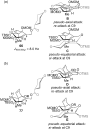
Figure 3: Conformations of rearrangement precursors 66 and 77 and possible transition states involved in the ...

Scheme 9: Synthesis and Ireland–Claisen rearrangement of allyl ester 70. Reagents and conditions: a) DIPEA, M...

Scheme 10: Synthesis and Ireland–Claisen rearrangement of allyl ester 72. Reagents and conditions: a) TIPSOTf,...

Scheme 11: Synthesis of the C14-epi and C14/C9-epi B-seco limonoid scaffolds 78 and 79. Reagents and condition...

Scheme 12: Synthesis of fully functionalized A ring 87. Reagents and conditions: a) HO(CH2)2OH, THF, Pd/C, H2,...

Scheme 13: and Attempted Ireland–Claisen rearrangement of allyl ester 88. R1 = MOM, R2 = CO2H.

Scheme 14: Synthesis and attempted Ireland–Claisen rearrangement of allyl ester 93. Reagents and conditions: a...

Scheme 15: Allyl esters tested in the Ireland–Claisen rearrangement.
One-pot synthesis of cyanohydrin derivatives from alkyl bromides via incorporation of two one-carbon components by consecutive radical/ionic reactions
- Shuhei Sumino,
- Akira Fusano,
- Hiroyuki Okai,
- Takahide Fukuyama and
- Ilhyong Ryu
Beilstein J. Org. Chem. 2014, 10, 150–154, doi:10.3762/bjoc.10.12
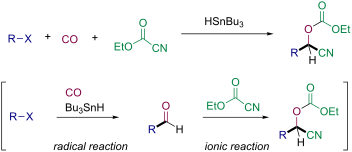
- Shuhei Sumino Akira Fusano Hiroyuki Okai Takahide Fukuyama Ilhyong Ryu Department of Chemistry, Graduate School of Science, Osaka Prefecture University, Sakai, Osaka 599-8531, Japan 10.3762/bjoc.10.12 Abstract The consecutive radical/ionic reaction consisting of radical formylation of alkyl
- work in collaboration with Dennis Curran has revealed that, with the use of NHC-borane [18], hydroxymethylation of aromatic iodides can be attained [19]. All these reactions consist of the combination of radical formylation with CO and ionic hydride reduction by hydride reagents (Scheme 1, reaction 1
- formylation. Thus, we thought that the two step radical/ionic reactions can be extended to the consecutive C–C bond forming reactions. Cyanohydrins are important subunits frequently found in biologically active compounds and are also versatile building blocks for further synthetic transformations [20][21

Graphical Abstract

Scheme 1: Sequential radical formylation and derivatization.

Scheme 2: Examination of cyanide source.
Garner’s aldehyde as a versatile intermediate in the synthesis of enantiopure natural products
- Mikko Passiniemi and
- Ari M.P. Koskinen
Beilstein J. Org. Chem. 2013, 9, 2641–2659, doi:10.3762/bjoc.9.300
- asymmetric formylation reaction from Funk’s achiral alkene (Scheme 5) [34]. The formylation reaction provided (R)-1 and (S)-1 in acceptable yields (71% and 70%, respectively) and excellent enantioselectivities (94% ee and 97% ee, respectively). However, this synthesis suffers from many drawbacks. Firstly
- , the synthesis of the Funk’s alkene commences from DL-serine and is a multistep sequence requiring Pb(OAc)4. DL-Serine costs 524 €/kg (Aldrich, June 2013 price) compared to L-serine’s 818 €/kg (Aldrich, June 2013). Secondly, both the formylation catalyst and bis(diazaphospholane) ligand are expensive
- and have to be used in large amounts. Thirdly, the formylation reaction was performed only in a 5 mmol scale and was not optimized for large scale synthesis. Asymmetric induction with Garner’s aldehyde Nucleophilic addition to Garner’s aldehyde gives an easy access to 2-amino-1,3-dihydroxypropyl

Graphical Abstract

Figure 1: Structures of limonene, carvone and thalidomide.

Figure 2: Structure of Garner’s aldehyde.

Scheme 1: (a) i) Boc2O, 1.0 N NaOH (pH >10), dioxane, +5 °C → rt; ii) MeI, K2CO3, DMF, 0 °C → rt (86% over tw...

Scheme 2: (a) AcCl, MeOH, 0 °C → reflux (99%); (b) i) (Boc)2O, Et3N, THF, 0 °C → rt → 50 °C (89%); ii) Me2C(O...

Scheme 3: (a) LiAlH4, THF, rt (93–96%); (b) (COCl)2, DMSO, iPr2NEt, CH2Cl2, −78 °C → −55 °C (99%).

Scheme 4: The Koskinen procedure for the preparation of Garner’s aldehyde. (a) i) AcCl, MeOH, 0 °C → 50 °C (9...

Scheme 5: Burke’s synthesis of Garner’s aldehyde. BDP - bis(diazaphospholane).

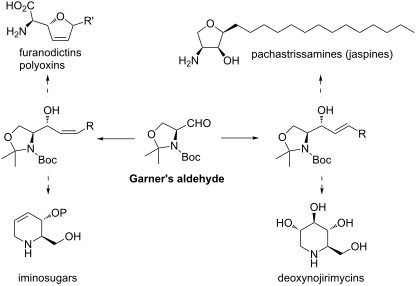
Figure 3: Structures of some iminosugars (7, 9), peptide antibiotics (8) and sphingosine (10) and pachastriss...

Scheme 6: Use of Garner’s aldehyde 1 in multistep synthesis.

Scheme 7: Explanation of the anti- and syn-selectivity in the nucleophilic addition reaction.

Scheme 8: Herold’s method: (a) Lithium 1-pentadecyne, HMPT, THF, −78 °C (71%); (b) Lithium 1-pentadecyne, ZnBr...

Scheme 9: (a) Ethyl lithiumpropiolate, HMPT, THF, −78 °C; (b) (S)- or (R)-MTPA, DCC, DMAP, THF, rt (18, 81%) ...

Scheme 10: Coleman’s selectivity studies and their transition state model for the co-ordinated delivery of the...

Scheme 11: (a) PhMgBr, THF, −78 °C → 0 °C [62] or (a) PhMgBr, Et2O, 0 °C [63].

Scheme 12: (a) cat. RhCl3·3H2O, cat. 26, NaOMe, Ph-B(OH)2, aq DME, 80 °C (24, 71%); (b) cat. RhCl3·3H2O, cat. ...

Scheme 13: Lithiated dithiane (3 equiv), CuI (0.3 equiv), BF3·Et2O (6 equiv), THF, −50 °C, 12 h (70%).

Scheme 14: Addition reaction reported by Lam et al. (a) 1-Hexyne, n-BuLi, THF, −15 °C or −40 °C.

Scheme 15: (a) n-BuLi, HMPT, toluene, −78 °C → rt (85%); (b) n-BuLi, ZnCl2, toluene/Et2O, −78 °C → rt (65%).

Scheme 16: (a) n-BuLi, 34, THF, −40 °C [69]; (b) n-BuLi, 35, THF, −78 °C → rt (80%) [70]; (c) n-BuLi, 35, HMPT, THF, −...

Scheme 17: (a) cat. Rh(acac)(CO)2, 42, THF, 40 °C (74%).
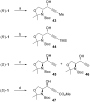
Scheme 18: (a) 1-PropynylMgBr, CuI, THF, Me2S, −78 °C (95%); (b) Ethynyltrimethylsilane, EtMgBr, CuI, THF, Me2...

Scheme 19: (a) cat. 50, toluene, 0 °C (52%); (b) cat. 51, toluene, 0 °C (51%); (c) cat. 52, toluene, 0 °C (50%...

Scheme 20: (a) (iPr)3SiH, cat. Ni(COD)2, dimesityleneimidazolium·HCl, t-BuOK, THF, rt.

Scheme 21: (a) Cp2Zr(H)Cl, cat. AgAsF6, CH2Cl2, rt; (b) Cp2Zr(H)Cl, 1-pentadecyne, cat. ZnBr2 in THF for anti-...

Scheme 22: (a) i) 31, n-BuLi, THF, −78 °C; ii) (S)-1, THF, −78 °C; (b) Red-Al, THF, 0 °C.

Scheme 23: (a) 61, n-BuLi, DMPU, toluene, −78 °C, then (S)-1, toluene, −95 °C (57%); (b) 61, n-BuLi, ZnCl2, to...

Scheme 24: Olefin A as an intermediate in natural product synthesis.

Scheme 25: (a) Ph3(Me)PBr, KH, benzene (66%, rac-64) or (b) AlMe3, Zn, CH2I2, THF (76%) [101]; (c) Ph3(Me)PBr, n-Bu...

Scheme 26: (a) Benzene, rt (82%) [108]; (b) K2CO3, MeOH (85%) [89]; (c) iPrOH, [Ir(COD)Cl]2, PPh3, THF, rt (81%) [114].

Scheme 27: Mechanism of the Still–Gennari modification of the HWE reaction leading to both olefin isomers.
An overview of the synthetic routes to the best selling drugs containing 6-membered heterocycles
- Marcus Baumann and
- Ian R. Baxendale
Beilstein J. Org. Chem. 2013, 9, 2265–2319, doi:10.3762/bjoc.9.265
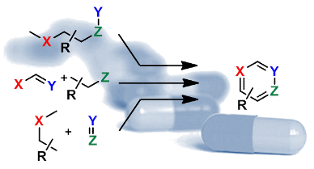

Graphical Abstract

Scheme 1: Scaled industrial processes for the synthesis of simple pyridines.

Scheme 2: Synthesis of nicotinic acid from 2-methyl-5-ethylpyridine (1.11).

Scheme 3: Synthesis of 3-picoline and nicotinic acid.

Scheme 4: Synthesis of 3-picoline from 2-methylglutarodinitrile 1.19.

Scheme 5: Picoline-based synthesis of clarinex (no yields reported).

Scheme 6: Mode of action of proton-pump inhibitors and structures of the API’s.

Scheme 7: Hantzsch-like route towards the pyridine rings in common proton pump inhibitors.

Figure 1: Structures of rosiglitazone (1.40) and pioglitazone (1.41).

Scheme 8: Synthesis of rosiglitazone.

Scheme 9: Syntheses of 2-pyridones.

Scheme 10: Synthesis and mechanism of 2-pyrone from malic acid.

Scheme 11: Polymer-assisted synthesis of rosiglitazone.

Scheme 12: Synthesis of pioglitazone.

Scheme 13: Meerwein arylation reaction towards pioglitazone.

Scheme 14: Route towards pioglitazone utilising tyrosine.

Scheme 15: Route towards pioglitazone via Darzens ester formation.

Scheme 16: Syntheses of the thiazolidinedione moiety.

Scheme 17: Synthesis of etoricoxib utilising Negishi and Stille cross-coupling reactions.

Scheme 18: Synthesis of etoricoxib via vinamidinium condensation.

Figure 2: Structures of nalidixic acid, levofloxacin and moxifloxacin.

Scheme 19: Synthesis of moxifloxacin.

Scheme 20: Synthesis of (S,S)-2,8-diazabicyclo[4.3.0]nonane 1.105.

Scheme 21: Synthesis of levofloxacin.

Scheme 22: Alternative approach to the levofloxacin core 1.125.

Figure 3: Structures of nifedipine, amlodipine and clevidipine.

Scheme 23: Mg3N2-mediated synthesis of nifedipine.

Scheme 24: Synthesis of rac-amlodipine as besylate salt.

Scheme 25: Aza Diels–Alder approach towards amlodipine.

Scheme 26: Routes towards clevidipine.

Figure 4: Examples of piperidine containing drugs.

Figure 5: Discovery of tiagabine based on early leads.

Scheme 27: Synthetic sequences to tiagabine.

Figure 6: Structures of solifenacin (2.57) and muscarine (2.58).

Scheme 28: Enantioselective synthesis of solifenacin.

Figure 7: Structures of DPP-4 inhibitors of the gliptin-type.

Scheme 29: Formation of inactive diketopiperazines from cis-rotameric precursors.

Figure 8: Co-crystal structure of carmegliptin bound in the human DPP-4 active site (PDB 3kwf).

Scheme 30: Improved route to carmegliptin.

Figure 9: Structures of lamivudine and zidovudine.

Scheme 31: Typical routes accessing uracil, thymine and cytosine.

Scheme 32: Coupling between pyrimidones and riboses via the Vorbrüggen nucleosidation.

Scheme 33: Synthesis of lamivudine.

Scheme 34: Synthesis of raltegravir.

Scheme 35: Mechanistic studies on the formation of 3.22.

Figure 10: Structures of selected pyrimidine containing drugs.

Scheme 36: General preparation of pyrimidines and dihydropyrimidones.

Scheme 37: Synthesis of imatinib.

Scheme 38: Flow synthesis of imatinib.

Scheme 39: Syntheses of erlotinib.

Scheme 40: Synthesis of erlotinib proceeding via Dimroth rearrangement.

Scheme 41: Synthesis of lapatinib.

Scheme 42: Synthesis of rosuvastatin.

Scheme 43: Alternative preparation of the key aldehyde towards rosuvastatin.

Figure 11: Structure comparison between nicotinic acetylcholine receptor agonists.

Scheme 44: Syntheses of varenicline and its key building block 4.5.

Scheme 45: Synthetic access to eszopiclone and brimonidine via quinoxaline intermediates.

Figure 12: Bortezomib bound in an active site of the yeast 20S proteasome ([114], pdb 2F16).

Scheme 46: Asymmetric synthesis of bortezomib.

Figure 13: Structures of some prominent piperazine containing drugs.

Figure 14: Structural comparison between the core of aplaviroc (4.35) and a type-1 β-turn (4.36).

Scheme 47: Examplary synthesis of an aplaviroc analogue via the Ugi-MCR.

Scheme 48: Syntheses of azelastine (5.1).

Figure 15: Structures of captopril, enalapril and cilazapril.

Scheme 49: Synthesis of cilazapril.

Figure 16: Structures of lamotrigine, ceftriaxone and azapropazone.

Scheme 50: Synthesis of lamotrigine.

Scheme 51: Alternative synthesis of lamotrigine (no yields reported).

Figure 17: Structural comparison between imiquimod and the related adenosine nucleoside.

Scheme 52: Conventional synthesis of imiquimod (no yields reported).

Scheme 53: Synthesis of imiquimod.

Scheme 54: Synthesis of imiquimod via tetrazole formation (not all yields reported).

Figure 18: Structures of various anti HIV-medications.

Scheme 55: Synthesis of abacavir.

Figure 19: Structures of diazepam compared to modern replacements.

Scheme 56: Synthesis of ocinaplon.

Scheme 57: Access to zaleplon and indiplon.

Scheme 58: Different routes towards the required N-methylpyrazole 6.65 of sildenafil.

Scheme 59: Polymer-supported reagents in the synthesis of key aminopyrazole 6.72.

Scheme 60: Early synthetic route to sildenafil.

Scheme 61: Convergent preparations of sildenafil.

Figure 20: Comparison of the structures of sildenafil, tadalafil and vardenafil.

Scheme 62: Short route to imidazotriazinones.

Scheme 63: Alternative route towards vardenafils core imidazotriazinone (6.95).

Scheme 64: Bayer’s approach to the vardenafil core.

Scheme 65: Large scale synthesis of vardenafil.

Scheme 66: Mode of action of temozolomide (6.105) as methylating agent.

Scheme 67: Different routes to temozolomide.

Scheme 68: Safer route towards temozolomide.

Figure 21: Some unreported heterocyclic scaffolds in top market drugs.
The chemistry of isoindole natural products
- Klaus Speck and
- Thomas Magauer
Beilstein J. Org. Chem. 2013, 9, 2048–2078, doi:10.3762/bjoc.9.243
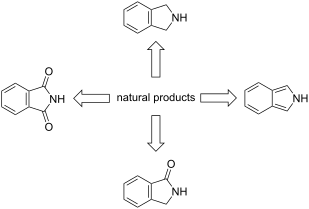
- for a more labile methoxymethyl ether at the benzophenone stage. The following prenylation and formylation proceeded smoothly under the same conditions to give 191b (Scheme 24). Cleavage of the MOM ethers afforded pestalone (192), which could be converted into 193 in a single step by treatment of 192

Graphical Abstract

Figure 1: a) Structural features and b) selected examples of non-natural congeners.

Scheme 1: Synthesis of isoindole 18.

Scheme 2: Staining amines with 1,4-diketone 19 (R = H).

Figure 2: Representative members of the indolocarbazole alkaloid family.

Figure 3: Staurosporine (26) bound to the adenosine-binding pocket [19] (from pdb1stc).
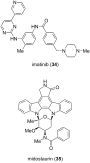
Figure 4: Structure of imatinib (34) and midostaurin (35).

Scheme 3: Biosynthesis of staurosporine (26).

Scheme 4: Wood’s synthesis of K-252a via the common intermediate 48.
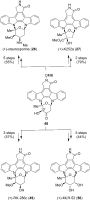
Scheme 5: Synthesis of 26, 27, 49 and 50 diverging from the common intermediate 48.

Figure 5: Selected members of the cytochalasan alkaloid family.

Scheme 6: Biosynthesis of chaetoglobosin A (57) [56].

Scheme 7: Synthesis of cytochalasin D (70) by Thomas [63].

Scheme 8: Synthesis of L-696,474 (78).

Scheme 9: Synthesis of aldehyde 85 (R = TBDPS).

Scheme 10: Synthesis of (+)-aspergillin PZ (79) by Tanis.
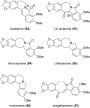
Figure 6: Representative Berberis alkaloids.

Scheme 11: Proposed biosynthetic pathway to chilenine (93).

Scheme 12: Synthesis of magallanesine (97) by Danishefsky [84].

Scheme 13: Kurihara’s synthesis of magallanesine (85).

Scheme 14: Proposed biosynthesis of 113, 117 and 125.

Scheme 15: DNA lesion caused by aristolochic acid I (117) [102].

Scheme 16: Snieckus’ synthesis of piperolactam C (131).
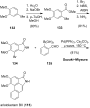
Scheme 17: Synthesis of aristolactam BII (104).

Figure 7: Representative cularine alkaloids.

Scheme 18: Proposed biosynthesis of 136.

Scheme 19: The syntheses of 136 and 137 reported by Castedo and Suau.

Scheme 20: Synthesis of 136 by Couture.

Figure 8: Representative isoindolinone meroterpenoids.

Scheme 21: Postulated biosynthetic pathway for the formation of 156 (adopted from George) [143].

Scheme 22: Synthesis of stachyflin (156) by Katoh [144].

Figure 9: Selected examples of spirodihydrobenzofuranlactams.

Scheme 23: Synthesis of stachybotrylactam I (157).

Scheme 24: Synthesis of pestalachloride A (193) by Schmalz.

Scheme 25: Proposed mechanism for the BF3-catalyzed metal-free carbonyl–olefin metathesis [149].

Scheme 26: Preparation of the isoindoline core of muironolide A (204).
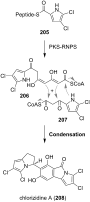
Scheme 27: Proposed biosynthesis of 208.

Scheme 28: Model for the biosynthesis of 215 and 217.

Scheme 29: Synthesis of lactonamycin (215) and lactonamycin Z (217).

Figure 10: Hetisine alkaloids 225–228.

Scheme 30: Biosynthetic proposal for the formation of the hetisine core [167].

Scheme 31: Synthesis of nominine (225).
Glycosylation efficiencies on different solid supports using a hydrogenolysis-labile linker
- Mayeul Collot,
- Steffen Eller,
- Markus Weishaupt and
- Peter H. Seeberger
Beilstein J. Org. Chem. 2013, 9, 97–105, doi:10.3762/bjoc.9.13
- /ethyl acetate (3:2), N-methylation and N-formylation were observed (Supporting Information File 1). Considering prior evidence that methanol can generate formaldehyde in the presence of Pd(0) by an oxidative addition mechanism [43][44] and the observation that apolar solvents cause N-formylation during

Graphical Abstract

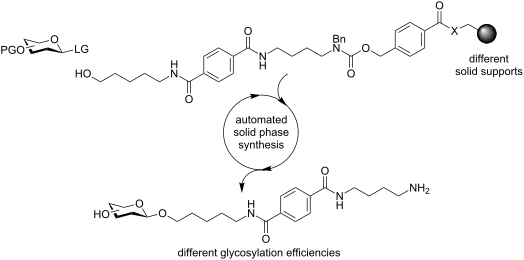
Scheme 1: Solid-phase synthesis of biopolymers. X represents a reactive site such as an amino group for pepti...
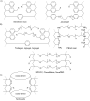
Figure 1: Different resins used for solid-phase synthesis. (A) Hydrophobic PS resins. (B) Water-compatible re...

Scheme 2: Design of linker 1. Cleavage by hydrogenolysis from a solid support reveals a conjugation site for ...

Scheme 3: Synthesis of linker 1. Reactions and conditions: (a) NEt3, DCM, rt, 84%; (b) DHP, pyridinium p-tolu...

Scheme 4: Coupling of linker 1 to different resins. Reactions and conditions: (a) 1. 1 and 16 or 17, Cs2CO3, ...

Scheme 5: Model glycosylation by using an automated oligosaccharide synthesizer. Reactions and conditions: (a...

Figure 2: Representative HPLC chromatograms of glycosylation experiments on PS-based and water-compatible res...

Scheme 6: Glycosylation of 34 to linker 23 and subsequent Staudinger reduction of the azide. Reactions and co...
Dipyrazolo[1,5-a:4',3'-c]pyridines – a new heterocyclic system accessed via multicomponent reaction
- Wolfgang Holzer,
- Gytė Vilkauskaitė,
- Eglė Arbačiauskienė and
- Algirdas Šačkus
Beilstein J. Org. Chem. 2012, 8, 2223–2229, doi:10.3762/bjoc.8.251
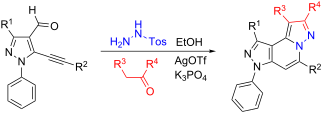
- formylation (with concomitant transformation of the oxygen into a chlorine substituent), followed by Sonogashira cross-coupling reaction of the obtained 5-chloropyrazole-4-carbaldehydes with appropriate alkynes, has been described by us in a former publication [21]. Compounds 1 containing an alkyne function

Graphical Abstract

Scheme 1: Intermediate reactions of pyrazole-4-carbaldehyde 1a.

Figure 1: 1H NMR (in italics), 13C NMR and 15N NMR (in bold) chemical shifts of 5d in CDCl3 solution (with nu...
Synthesis of szentiamide, a depsipeptide from entomopathogenic Xenorhabdus szentirmaii with activity against Plasmodium falciparum
- Friederike I. Nollmann,
- Andrea Dowling,
- Marcel Kaiser,
- Klaus Deckmann,
- Sabine Grösch,
- Richard ffrench-Constant and
- Helge B. Bode
Beilstein J. Org. Chem. 2012, 8, 528–533, doi:10.3762/bjoc.8.60
- , Germany) in N-methylpyrrolidone (NMP; VWR, Germany; c = 2 mol/L). Fmoc protecting groups were cleaved with 20% piperidine in DMF by using microwave irradiation as well. Formylation. The free N-terminus was formylated with 5 equiv para-nitrophenyl formate (pNPF; Sigma Aldrich, Germany) and 3 equiv N

Graphical Abstract
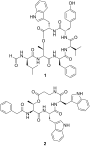
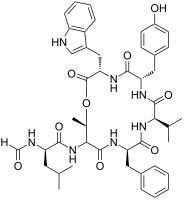
Figure 1: Structure of depsipeptides szentiamide (1) [12] and xenematide (2) [8] identified in Xenorhabdus strains.

Scheme 1: Overview of the synthetic strategy.

Scheme 2: Synthesis of compound 1.
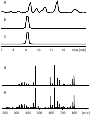
Figure 2: HPLC–MS data of an XAD-extract of X. szentirmaii (a; base-peak chromatogram), the natural 1 (b; ext...
Multicomponent synthesis of artificial nucleases and their RNase and DNase activity
- Anton V. Gulevich,
- Lyudmila S. Koroleva,
- Olga V. Morozova,
- Valentina N. Bakhvalova,
- Vladimir N. Silnikov and
- Valentine G. Nenajdenko
Beilstein J. Org. Chem. 2011, 7, 1135–1140, doi:10.3762/bjoc.7.131

- or 12 carbon atoms by the standard formylation–dehydration protocol (Scheme 2). We found that these diisocyanides 3 participate successfully in the catalytic three-component reaction via a modified List procedure [25]. Diamides 4 with benzyl protective groups were synthesized in moderate to good

Graphical Abstract

Figure 1: Novel artificial RNases based on amino acids.
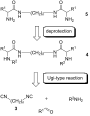
Scheme 1: Multicomponent approach to target molecules.

Scheme 2: Synthesis of starting diisocyanides 3a–3e.

Scheme 3: Synthesis of new aRNAses. Conditions: a. RCHO (3 eqiuv), BnNH2 (3 equiv), PhP(OH)2 (1 equiv), r.t.;...

Figure 2: Results of RT-qPCR of the TBEV RNA cleavage products in presence of 2.5 mM peptidomimetics 5a–g at ...

Figure 3: Results of RT-qPCR of the TBEV RNA cleavage products in the presence of 2.5 mM peptidomimetics afte...

Figure 4: Results of electrophoresis in 2% TBE-agarose gel with ethidium bromide of RT-qPCR products from Figure 3. (...
High chemoselectivity in the phenol synthesis
- Matthias Rudolph,
- Melissa Q. McCreery,
- Wolfgang Frey and
- A. Stephen K. Hashmi
Beilstein J. Org. Chem. 2011, 7, 794–801, doi:10.3762/bjoc.7.90
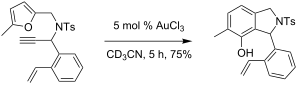
- vinylcarbenoid F, the two competing reactions would be the formation of the phenol 10 and cyclopropanation to form 11. The synthesis of 8 was possible by a short route (Scheme 5). Starting from the commercially available 2-bromostyrene (12), a halogen–metal exchange and subsequent formylation according to a

Graphical Abstract

Scheme 1: Mechanism of the furan–yne reaction.

Scheme 2: Efforts for intermolecular trapping with olefins failed.

Scheme 3: Efforts for intermolecular trapping with ketones failed.

Scheme 4: Potential products of an intramolecular trapping experiment with substrate 8.

Scheme 5: Synthesis of the substrate 8.

Scheme 6: With substrate 8 the product of the phenol synthesis was exclusively obtained.

Figure 1: Solid-state molecular structure of 10.

Scheme 7: Potential products of an intramolecular trapping experiment with substrate 16.

Scheme 8: Synthesis of the substrate 16.

Figure 2: Solid-state molecular structure of 28a.

Scheme 9: With substrate 16 the product of the phenol synthesis is obtained exclusively.

Figure 3: Catalysts 34, 35 and 36.

Figure 4: 1H NMR spectra of the separated diastereoisomers of the substrates for catalysis 28 (left) and of t...

Figure 5: Structure of the desilylation product 38.

Scheme 10: Potential products of an intramolecular trapping experiment with substrate 39.

Scheme 11: Synthesis of the substrate 39.

Scheme 12: With substrate 39 and 45 exclusively the product of the phenol synthesis is obtained.
Synthesis of 5-(6-hydroxy-7H-purine-8-ylthio)- 2-(N-hydroxyformamido)pentanoic acid
- Yanmei Zhang,
- Greg Elliot,
- Adrian Saldanha,
- Igor Tsigelny,
- Dennis Carson and
- Wolf Wrasidlo
Beilstein J. Org. Chem. 2010, 6, 742–747, doi:10.3762/bjoc.6.93
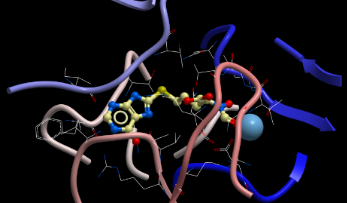
- -formylation produced 12. Finally, debenzylation with boron tribromide afforded the hybrid molecule 13 as a slightly tan powder [9][10][11][12]. All compounds were fully characterized and their structures confirmed by 1H NMR and mass spectroscopy. The purity of the final product was determined by HPLC and

Graphical Abstract

Figure 1: Structure of AdSS catalytic domain from Mg center (light blue) to IMP loop (tan) with compound 13 d...

Scheme 1: Synthesis of the model compound 13.
The efficient synthesis of dibenzo[d,d′]benzo[1,2-b:4,3-b′]dithiophene and cyclopenta[1,2-b:4,3-b′]bis(benzo[d]thiophen)-6-one
- Zhihua Wang,
- Sheng Zhu,
- Jianwu Shi and
- Hua Wang
Beilstein J. Org. Chem. 2009, 5, No. 55, doi:10.3762/bjoc.5.55

- ] as starting material, dibenzo[d,d′]benzo[1,2-b:4,3-b′]dithiophene, a [5]heterohelicene, was synthesized efficiently in 60% yield via formylation and McMurry reaction. Cyclopenta[1,2-b:4,3-b′]bis(benzo[d]thiophen)-6-one, another interesting helical ketone, was also prepared in 79% yield via
- photolysis of RCH(SPh)2 (R = benzo[b]thiophene). However, a non-photochemical method for preparing 1 has, to the best of our knowledge, not been reported. In our work, with 3,3′-bis[benzo[b]thiophenyl] (3) [18] as starting material, 1 (see Figure 1) was synthesized efficiently via formylation and McMurry
- starting material, formylation and McMurry reaction were employed for preparing 1. The formylation step involves sequential deprotonation of 3 and treatment of the intermediate dilithiated species with N,N-dimethylformamide (DMF). Attempted generation of dilithiated 3 with either lithium diisopropylamide

Graphical Abstract

Figure 1: Chemical structures of 1 and 2.

Scheme 1: Synthetic route to 1 and 2. Reagents and conditions: (a) (i) n-BuLi (2.3 equiv), Et2O, reflux; (ii)...

Figure 2: Molecular structure and conformation of 1.

Figure 3: Crystal packing structure of 1.

Figure 4: UV–vis spectra of 1 and 2 in chloroform ([C] = 1 × 10⁻⁵ M).
Radical carbonylations using a continuous microflow system
- Takahide Fukuyama,
- Md. Taifur Rahman,
- Naoya Kamata and
- Ilhyong Ryu
Beilstein J. Org. Chem. 2009, 5, No. 34, doi:10.3762/bjoc.5.34
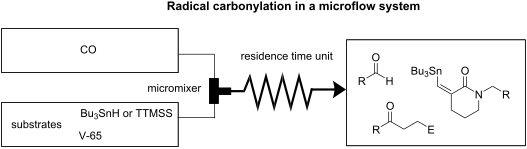
- pressurized carbon monoxide gas. Good to excellent yields of carbonylated products were obtained via radical formylation, carbonylative cyclization and three-component coupling reactions, using tributyltin hydride or TTMSS as a radical mediator. Keywords: continuous flow system; microreactor; radical
- CO and the liquid. Using the microflow system depicted by Figure 1, we carried out the radical formylation of 1-bromododecane (1) with CO in the presence of tributyltin hydride (bath temp. 80 °C) [21]. However, we encountered incomplete conversion of the starting bromide when we used AIBN (2,2
- carbonylation in a microflow system. The radical formylation of 1-bromododecane (1). 1-Bromododecane (1, 1 mmol, 249.5 mg), V-65 (0.1 mmol, 24.8 mg), Bu3SnH (1.2 mmol, 352.9 mg), and decane (59 mg) as an internal standard were dissolved in toluene (50 mL). The toluene solution was placed in a syringe (17 mL

Graphical Abstract

Scheme 1: Tin-mediated radical carbonylation and the competing reduction.

Figure 1: Microflow system available for radical carbonylation using pressurized CO.
Mitomycins syntheses: a recent update
- Jean-Christophe Andrez
Beilstein J. Org. Chem. 2009, 5, No. 33, doi:10.3762/bjoc.5.33

Graphical Abstract

Scheme 1: Aziridine containing natural products.

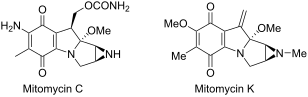
Scheme 2: Mitomycin structures and nomenclature.

Scheme 3: Base catalysed epimerization of mitomycin B.

Scheme 4: Biosynthesis of mitomycin C (MMC) 7.

Scheme 5: Mode of action of mitomycin C.

Scheme 6: The N–C3–C9a disconnection.

Scheme 7: Danishefsky’s Retrosynthesis of mitomycin K.

Scheme 8: Hetero Diels–Alder reaction en route to mitomycins.

Scheme 9: Nitroso Diels–Alder cycloaddition.

Scheme 10: Frank azide cycloadddition.

Scheme 11: Final steps of mitomycin K synthesis. aPDC, DCM; bPhSCH2N3, PhH, 80 °C; cL-selectride, THF, −78 °C; ...

Scheme 12: Naruta–Maruyama retrosynthesis.

Scheme 13: Synthesis of a leucoaziridinomitosane by nitrene cycloaddition. aAlCl3-Et2O; bNaH, ClCH2OMe; cn-BuL...

Scheme 14: Thermal decomposition of azidoquinone 51.

Scheme 15: Diastereoselectivity during the cycloaddition.

Scheme 16: Oxidation with iodo-azide.

Scheme 17: Williams’ approach towards mitomycins.aDEIPSCl, Imidazole, DCM; bPd/C, HCO2NH4, MeOH; cAllocCl, NaH...

Scheme 18: Synthesis of pyrrolidones by homoconjugate addition.
Scheme 19: Homoconjugate addition on the fully functionalized substrate.

Scheme 20: Introduction of the olefin.

Scheme 21: Retrosynthesis of N–C9a, N–C3 bond formation.

Scheme 22: Synthesis of the pyrrolo[1,2]indole 82 using N-PSP activation.aAc2O, Py; bAc2O, Hg(OAc)2, AcOH, 90%...

Scheme 23: Synthesis of an aziridinomitosane. am-CPBA, DCM then iPr2NH, CCl4 reflux; bK2CO3, MeOH; cBnBr, KH; d...

Scheme 24: Oxidation products of a leucoaziridinomitosane obtained from a Polonovski oxidation.

Scheme 25: Polonovski oxidation of an aziridinomitosane. am-CPBA; bPd/C, H2; cDimethoxypropane, PPTS.

Scheme 26: The C1–C9a disconnection.

Scheme 27: Ziegler synthesis of desmethoxymitomycin A.aIm2C=O, THF; bNH3; cTMSOTf, 2,6-di-tert-butylpyridine, ...

Scheme 28: Transformation of sodium erythorbate.aTBDMSCl; bNaN3; cPPh3; d(Boc)2O, DMAP; eTBAF; fTf2O, Pyr.

Scheme 29: Formation of C9,C10-unsaturation in the mitomycins. am-CPBA, DCM; bO3, MeOH; cMe2S; dKHMDS, (EtO)3P...

Scheme 30: Fragmentation mechanism.

Scheme 31: Michael addition-cyclisation.

Scheme 32: SmI2 8-endo-dig cyclisation.

Scheme 33: Synthesis of pyrrolo[1,2-a]indole by 5-exo-dig radical cyclization.

Scheme 34: The C9–C9a disconnection.

Scheme 35: Intramolecular nitrile oxide cycloaddition.

Scheme 36: Regioselectivity of the INOC.

Scheme 37: Fukuyama’s INOC strategy.

Scheme 38: Synthesis of a mitosane core by rearrangement of a 1-(1-pyrrolidinyl)-1,3-butadiene.

Scheme 39: Sulikowski synthesis of an aziridinomitosene. aPd(Tol3P)2Cl2, Bu3SnF, 140; bH2, Pd/C; cTFAA, Et3N; d...

Scheme 40: Enantioselective carbene insertion.

Scheme 41: Parson’s radical cyclization.

Scheme 42: Cha’s mitomycin B core synthesis.

Scheme 43: The N-aromatic disconnection.

Scheme 44: Kishi retrosynthesis.

Scheme 45: Kishi synthesis of a starting material. aallyl bromide, K2CO3, acetone, reflux; bN,N-Dimethylanilin...
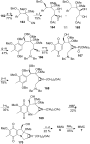
Scheme 46: Kishi synthesis of MMC 7. aLDA, THF, −78 °C then PhSeBr, THF, −78 °C; bH2O2, THF-EtOAc; cDIBAL, DCM...

Scheme 47: Acid catalyzed degradation of MMC 7.

Scheme 48: In vivo formation of apomitomycin B.

Scheme 49: Advanced intermediate for apomitomycin B synthesis.

Scheme 50: Remers synthesis of a functionalized mitosene. aTMSCl, Et3N, ZnCl2 then NBS; bAcOK; cNH2OH; dPd/C, H...

Scheme 51: Coleman synthesis of desmethoxymitomycin A. aSnCl2, PhSH, Et3N, CH3CN; bClCO2Bn, Et3N; cPPh3, DIAD,...

Scheme 52: Transition state and pyrrolidine synthesis.

Scheme 53: Air oxidation of mitosanes and aziridinomitosanes.

Scheme 54: The C9-aromatic disconnection.

Scheme 55: Synthesis of the aziridine precursor. aLHMDS, THF; bNaOH; c(s)-α-Me-BnNH2, DCC, HOBT; dDIBAL; eK2CO3...

Scheme 56: Synthesis of 206 via enamine conjugate addition.

Scheme 57: Rapoport synthesis of an aziridinomitosene.

Scheme 58: One pot synthesis of a mitomycin analog.

Scheme 59: Synthesis of compound 218 via intramolecular Heck coupling. aEtMgCl, THF, then 220; bMsCl, Et3N; cN...

Scheme 60: Elaboration of indole 223. aEt3N, Ac2O; bAcOH; cSOCl2, Et3N; dNaN3, DMF; eH2SO4, THF; fK2CO3, MeOH; ...

Scheme 61: C9-C9a functionalization from indole.

Scheme 62: Synthesis of mitomycin K. a2 equiv. MoO5.HMPA, MeOH; bPPh3, Et3N, THF-H2O; cMeOTf, Py, DCM; dMe3SiCH...

Scheme 63: Configurational stability of mitomycin K derivatives.

Scheme 64: Epimerization of carbon C9a in compound 227b.

Scheme 65: Corey–Chaykovsky synthesis of indol 235.

Scheme 66: Cory intramolecular aza-Darzens reaction for the formation of aziridinomitosene 239.

Scheme 67: Jimenez synthesis of aziridinomitosene 242.

Scheme 68: Von Braun opening of indoline 244.

Scheme 69: C9a oxidation of an aziridinomitosane with DDQ/OsO4.

Scheme 70: Synthesis of epi-mitomycin K. aNaH, Me2SO4; bH2, Pd/C; cMitscher reagent [165]; d[(trimethylsilyl)methyl...

Scheme 71: Mitomycins rearrangement.

Scheme 72: Fukuyama’s retrosynthesis.

Scheme 73: [2+3] Cycloaddition en route to isomitomycin A. aToluene, 110 °C; bDIBAL, THF, −78 °C; cAc2O, Py.; d...

Scheme 74: Final steps of Fukuyama’s synthesis.

Scheme 75: “Crisscross annulation”.

Scheme 76: Synthesis of 274; the 8-membered ring 274 was made using a crisscross annulation. a20% Pd(OH)2/C, H2...

Scheme 77: Conformational analysis of compound 273 and 275.

Scheme 78: Synthesis of a mitomycin analog. aNa2S2O4, H2O, DCM; bBnBr (10 equiv), K2CO3, 18-crown-6 (cat.), TH...

Scheme 79: Vedejs retrosynthesis.

Scheme 80: Formation of the azomethine ylide.

Scheme 81: Vedejs second synthesis of an aziridinomitosene. aDIBAL; bTPAP, NMO; c287; dTBSCl, imidazole.

Scheme 82: Trityl deprotection and new aziridine protecting group 300.

Scheme 83: Ene reaction towards benzazocinones.

Scheme 84: Benzazocenols via homo-Brook rearrangement.

Scheme 85: Pt-catalyzed [3+2] cycloaddition.

Scheme 86: Carbonylative lactamization entry to benzazocenols. aZn(OTf)2, (+)-N-methylephedrine, Et3N, TMS-ace...

Scheme 87: 8 membered ring formation by RCM. aBOC2O, NaHCO3; bTBSCl, Imidazole, DMF; callyl bromide, NaH, DMF; ...

Scheme 88: Aziridinomitosene synthesis. aTMSN3; bTFA; cPOCl3, DMF; dNaClO2, NaH2PO4, 2-methyl-2-butene; eMeI, ...

Scheme 89: Metathesis from an indole.

Scheme 90: Synthesis of early biosynthetic intermediates of mitomycins.
A practical synthesis of the 13C/15N- labelled tripeptide N-formyl- Met-Leu-Phe, useful as a reference in solid- state NMR spectroscopy
- Sven T. Breitung,
- Jakob J. Lopez,
- Gerd Dürner,
- Clemens Glaubitz,
- Michael W. Göbel and
- Marcel Suhartono
Beilstein J. Org. Chem. 2008, 4, No. 35, doi:10.3762/bjoc.4.35
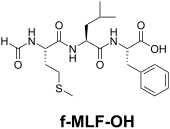
- Wolfgang Goethe University Frankfurt, Max-von-Laue-Str. 9, D-60438 Frankfurt am Main, Germany 10.3762/bjoc.4.35 Abstract A mild synthetic method for N-formyl-Met-Leu-Phe-OH (1) is described. After Fmoc solid phase peptide synthesis, on-bead formylation and HPLC purification, more than 30 mg of the fully
- 13C/15N-labelled tripeptide 1 could be isolated in a typical batch. This peptide can be easily crystallised and is therefore well suited as a standard sample for setting up solid-state NMR experiments. Keywords: Fmoc solid phase peptide synthesis; formylation; f-MLF; magic-angle spinning; Wang resin
- , reflux, 24–65 h) were required to couple the first Boc-protected amino acid to the solid support (chloromethyl resin) and long reaction times (18 h) were necessary to attach further building blocks to the growing peptide chain. The formylation of the N-terminus with formic acid/acetic anhydride was

Graphical Abstract

Scheme 1: Synthesis of f-MLF-OH (1). a) Fmoc-Phe-OH, MSNT, MeIm, over night. b) 1. piperidine, 30 min; 2. Fmo...
Synthesis of the Benzo- fused Indolizidine Alkaloid Mimics
- Daniel L. Comins and
- Kazuhiro Higuchi
Beilstein J. Org. Chem. 2007, 3, No. 42, doi:10.1186/1860-5397-3-42
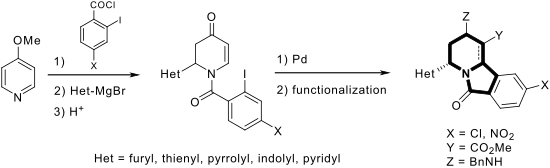
- . Palladium-catalyzed carboalkoxylation reaction of 12 gave the α-methoxycarbonyl dihydropyridone 13 in 82% yield. The addition and modification of functional groups on 8a were investigated (Scheme 4). The protection of the C-4 carbonyl of 8a as a ketal followed by Vilsmeier-Haack formylation [25] furnished

Graphical Abstract

Figure 1: N-Acyldihydropyridone 1 and indolizidine alkaloids.

Scheme 1: Preparation of chloro-substituted compound 8j.

Scheme 2: Preparation of nitro-substituted compound 8k.

Scheme 3: α-Methoxycarbonylation of 11.

Scheme 4: Modification of functional groups within 8a.



