


Search results
Search for "fragmentation" in Full Text gives 258 result(s) in Beilstein Journal of Organic Chemistry. Showing first 200.
Eschenmoser coupling reactions starting from primary thioamides. When do they work and when not?
Beilstein J. Org. Chem. 2023, 19, 808–819, doi:10.3762/bjoc.19.61
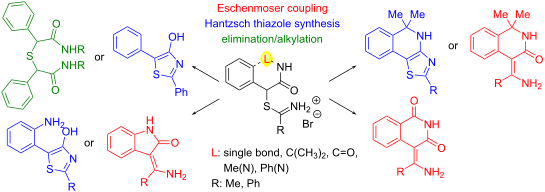
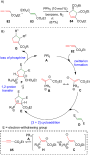
- detected by ESI–MS analysis of the reaction mixture as it has a different fragmentation pattern (easily loses water – see Supporting Information File 1, Figure S1) than the starting isobaric salt 6a (loses benzonitrile and thiobenzamide). However, all attempts to isolate intermediate 7a have always failed


Direct C2–H alkylation of indoles driven by the photochemical activity of halogen-bonded complexes
Beilstein J. Org. Chem. 2023, 19, 575–581, doi:10.3762/bjoc.19.42
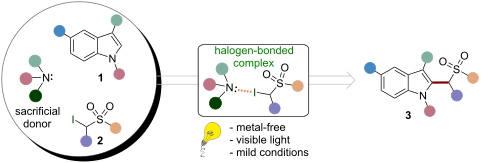
- -electron-transfer (BET), a suitable leaving group (LG) needs to be included in one of the precursors. In this manner, reactive intermediates (e.g., radical species) may be generated in solution through the irreversible fragmentation of the substrates [15][21][22]. These intermediates eventually react to


Strategies to access the [5-8] bicyclic core encountered in the sesquiterpene, diterpene and sesterterpene series
Beilstein J. Org. Chem. 2023, 19, 245–281, doi:10.3762/bjoc.19.23
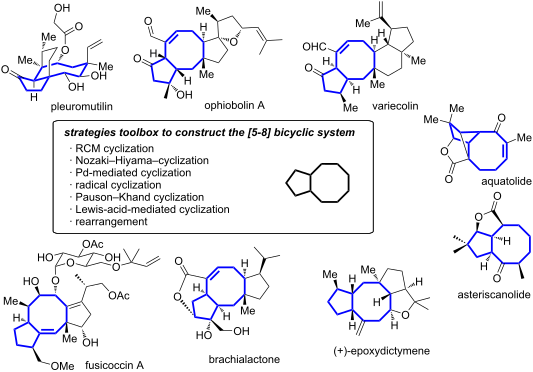
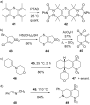
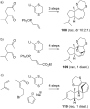
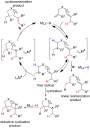
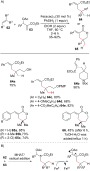
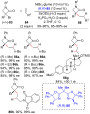
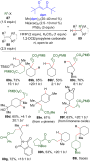
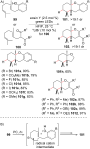
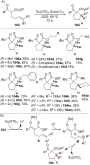
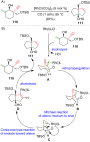
- Criegee- or a Grob-type fragmentation to generate cyclooctadione 163. Pleuromutilin (1) was then accessed in 4 additional steps (Scheme 32). 4.5 Reductive radical cascade cyclization: toward total synthesis of (−)-6-epi-ophiobolin N (168) and (+)-6-epi-ophiobolin A (173) Despite indisputable success of


Investigation of cationic ring-opening polymerization of 2-oxazolines in the “green” solvent dihydrolevoglucosenone
Beilstein J. Org. Chem. 2023, 19, 217–230, doi:10.3762/bjoc.19.21
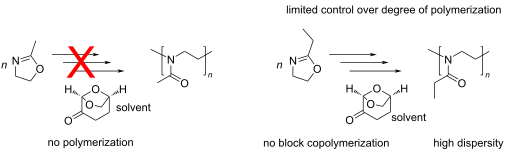
- distributions (ε) and (δ) of low intensity can be attributed to a methyl-initiated and proton-initiated PEtOx formed after termination at position C2 with the final fragmentation of the formed ester group during the MALDI-TOF MS assay carrying Na+ and H+ ions, respectively. It is well known that water and
- + (δ) ion doping could also be observed (Figure S10 in Supporting Information File 1). It is important to note that fragmentation during analysis cannot be excluded. The SEC traces of the resulting PEtOx after initiation with BnBr show monomodality and a relatively broad molar mass distribution (Ð


1,4-Dithianes: attractive C2-building blocks for the synthesis of complex molecular architectures
Beilstein J. Org. Chem. 2023, 19, 115–132, doi:10.3762/bjoc.19.12
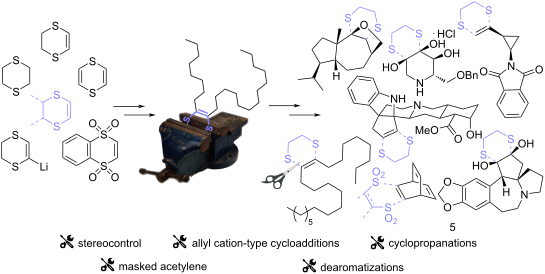
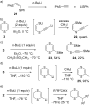
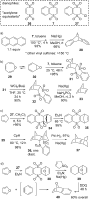
- reverse (3 + 2) cycloaddition which expels a heteroatomic anion via a β-elimination-type mechanism somewhat similar to a classical Grob-type fragmentation. Similarly, 1,3-dithiolanes undergo fragmentation at relatively low reaction temperatures, limiting their synthetic application to alkylation with
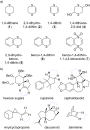
- generality in this aspect. In principle, 1,4-dithianes should offer good options for the development as C2-synthons that are complementary in scope to the more widely used 1,3-dithianes, but the β-fragmentation problem (cf. Scheme 2) hampers their easy derivatization. It should be noted that this elimination
- of this heterocycle is quite challenging due to the ease of the β-fragmentation pathway of lithiated derivatives (Scheme 2). Chlorination or oxygenation of the ring sulfur atom(s) in 1, followed by Pummerer-type rearrangement and elimination, affords a straightforward access to the more useful










Digyalipopeptide A, an antiparasitic cyclic peptide from the Ghanaian Bacillus sp. strain DE2B
Beilstein J. Org. Chem. 2022, 18, 1763–1771, doi:10.3762/bjoc.18.185
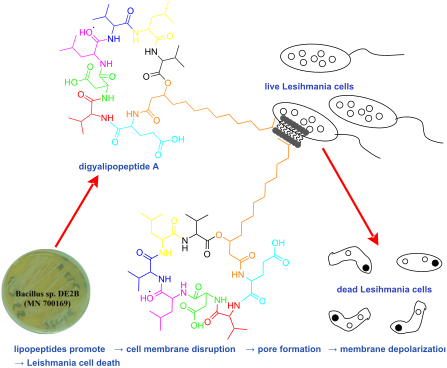
- acid and the elaborate system of aliphatic side chains, the sequence tag ions generated by systematic loss of amino acids were each subjected to several facile losses of H2O, –CH3, –C2H2O and CO resulting in the generation of several peaks in the LC–HRESIMSn spectrum. The b and y ion fragmentation


Using UHPLC–MS profiling for the discovery of new sponge-derived metabolites and anthelmintic screening of the NatureBank bromotyrosine library
Beilstein J. Org. Chem. 2022, 18, 1544–1552, doi:10.3762/bjoc.18.164
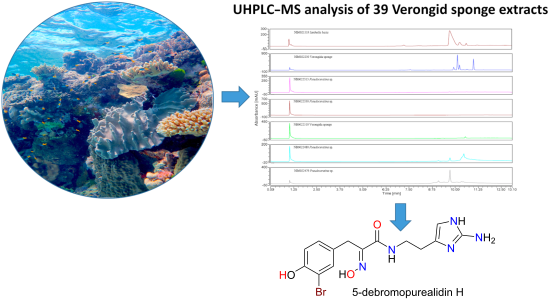
- , fragmentation of the mitochondrial tubular network, chromosome misalignment, and cell cycle arrest in mitosis in LNCaP prostate cancer cells [38]. The bastadin structure class is well-documented within the literature for their cytotoxic activity [37][39][40][41], with both bastadins 4 and 8 exhibiting in vitro


Polymer and small molecule mechanochemistry: closer than ever
Beilstein J. Org. Chem. 2022, 18, 1225–1235, doi:10.3762/bjoc.18.128
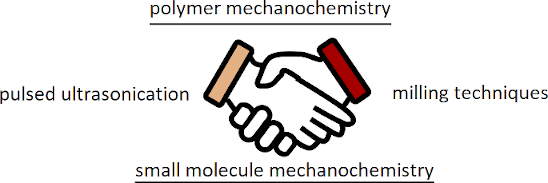
- BMPF mechanophore into glassy and rubbery polymeric networks such as poly(butyl methacrylate) and a poly(hexyl methacrylate) [28]. Upon treatment of the polymeric material 2 in a mixer mill (Figure 1b), the BMPF units underwent a mechanical homolytic fragmentation of the O−O peroxide bond, releasing


Identification of the new prenyltransferase Ubi-297 from marine bacteria and elucidation of its substrate specificity
Beilstein J. Org. Chem. 2022, 18, 722–731, doi:10.3762/bjoc.18.72
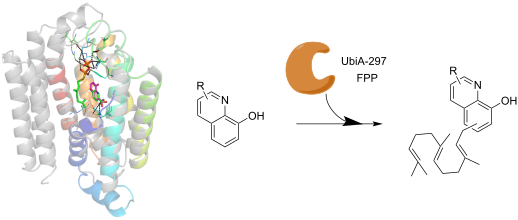
- farnesylation of 8-HQA; B) calculated MS2 fragmentation pattern of farnesylated 8-HQA; C) extracted ion chromatogram (EIC) for m/z 394.2376 (tR 18.03 min, red arrow) of enriched UbiA-297 protein fractions, cell-membrane fraction containing UbiA-297 (Maribacter sp. MS6), denaturated enriched UbiA-297 (negative
- , and point mutated UbiA-297 (R145A) from Maribacter sp. MS6; E and F) HRMS and MS2 spectrum showing fragmentation of prenylated 8-HQA (m/z 394.2367, tR 18.03 min). Supporting Information Supporting Information File 176: Sequence analysis and copies of MS/MS and NMR spectra. Acknowledgements We would


Amamistatins isolated from Nocardia altamirensis
Beilstein J. Org. Chem. 2022, 18, 360–367, doi:10.3762/bjoc.18.40
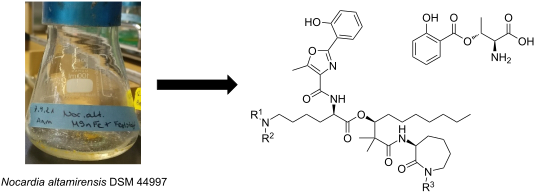
- : R1 = H, R2 = H, R3 = H; 4: R1 = H, R2 = OH, R3 = H; 5: R1 = CHO, R2 = OH, R3 = OH. 1H,1H COSY and selected 1H,13C HMBC correlations in compounds 1 and 6. MS–MS fragmentation of amamistatins (1–5). Proposed biosynthesis of amamistatins isolated in this study. 1H and 13C NMR spectroscopic data for


Tenacibactins K–M, cytotoxic siderophores from a coral-associated gliding bacterium of the genus Tenacibaculum
Beilstein J. Org. Chem. 2022, 18, 110–119, doi:10.3762/bjoc.18.12
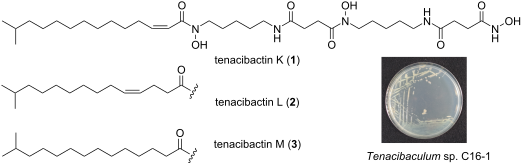
- /succinic acid module (Scheme 1, paths E1 and E2). The third elimination product, C15-ketene (structure in square brackets, Scheme 1) was not observed, but a pentadecenoate anion, appearing at m/z 239, warranted the existence of fragmentation path E3 and also the chain length of the acyl unit. Hydration of
- acquired on a quadrupole time-of-flight mass spectrometer in the negative ion mode. MS/MS fragmentation pathway for compound 1. 1H and 13C NMR data for tenacibactin K (1) in DMSO-d6. 1H and 13C NMR data for tenacibactins L (2) and M (3) in DMSO-d6. Cytotoxicity data of compounds 1–3. Supporting


Adjusting the length of supramolecular polymer bottlebrushes by top-down approaches
Beilstein J. Org. Chem. 2021, 17, 2621–2628, doi:10.3762/bjoc.17.175
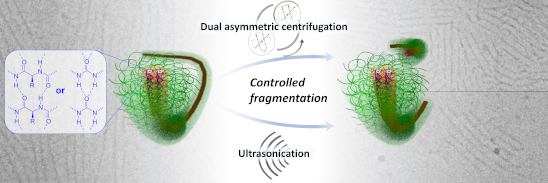
- interest. While ultrasonication (US) represents a standard but rather harsh fragmentation technique, we additionally introduced dual asymmetric centrifugation (DAC) as an excellent alternative top-down method for effective, more controlled, and adaptable preparation of polymer nanostructures [24][25][26
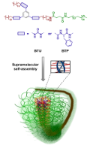
- ][27][28]. Both methods are applied for fragmentation of initially µm-long SPBs based on BTU–PEO and BTP–PEO conjugates. The resulting nanofibers were characterized in detail by cryogenic transmission electron microscopy (cryoTEM), as well as by asymmetrical flow field-flow fractionation measurements
- comparably mild treatment already caused a significant fragmentation of the µm-long fibers, resulting in structures of 50–200 nm length according to the cryoTEM images after 10 min of treatment (Figure 2). An average fiber length of 92 ± 51 nm and 74 ± 39 nm for BTU DAC (10 min, 1,000 rpm) and BTP DAC (10



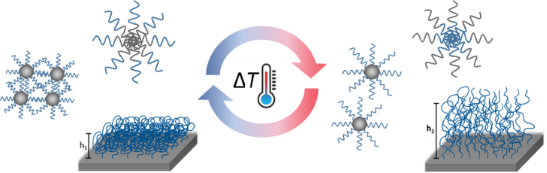
Constrained thermoresponsive polymers – new insights into fundamentals and applications
Beilstein J. Org. Chem. 2021, 17, 2123–2163, doi:10.3762/bjoc.17.138


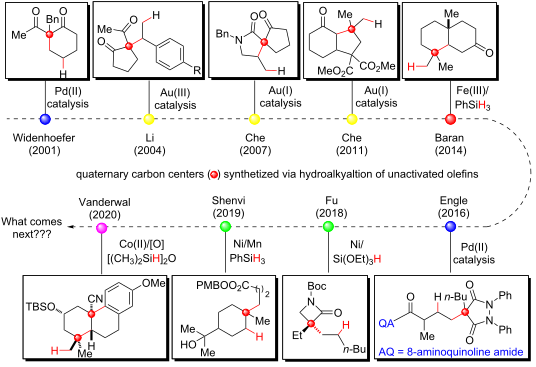
Methodologies for the synthesis of quaternary carbon centers via hydroalkylation of unactivated olefins: twenty years of advances
Beilstein J. Org. Chem. 2021, 17, 1565–1590, doi:10.3762/bjoc.17.112
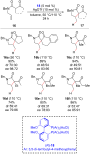
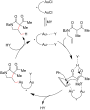
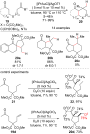
- substituted hydrazones obviated their generation in situ, and as ethanol was identified as a better solvent in the initial coupling step, no solvent exchange was necessary in the fragmentation step of the hydrazide intermediate. The addition of triethylamine and heating the reaction to 80 °C for 1 hour were













Icilio Guareschi and his amazing “1897 reaction”
Beilstein J. Org. Chem. 2021, 17, 1335–1351, doi:10.3762/bjoc.17.93
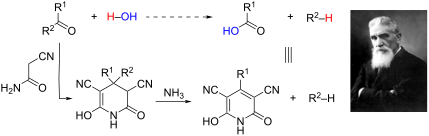
- carbonyl derivative. Guareschi found that the fragmentation was quantitative when an ethanolic solution of the imide was treated with magnesium hydroxide, poorly soluble but sufficient to ionize the cyanopyridone. It should be pointed out that the identification of gaseous compounds was not at all trivial








A new glance at the chemosphere of macroalgal–bacterial interactions: In situ profiling of metabolites in symbiosis by mass spectrometry
Beilstein J. Org. Chem. 2021, 17, 1313–1322, doi:10.3762/bjoc.17.91
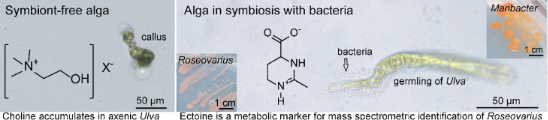
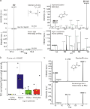
- the marine bacteria. To separate algal and bacterial metabolism, single colonies of Roseovarius sp. MS2 and Maribacter sp. MS6 were deposited onto glass slides and analysed with AP-SMALDI-HRMS/MS. Using spectral similarity matching based on the fragmentation pattern obtained from AP-SMALDI-HRMS/MS
- , choline). MS/MS experiments were performed with AP-SMALDI-HRMS to match the fragmentation pattern between the standard ectoine and bacteria monoculture profile. Fragmentation spectra of ectoine were acquired from the bacterial isolate Roseovarius sp. MS2 and an ectoine standard. To perform a measurement
- covered with the DHB matrix, following the standard ectoine procedure. Samples were analysed in positive ion mode, with the number of laser shots per spot set to 30 (approximately 1.2 μJ shot−1). All-ion fragmentation (AIF) mode was set as follows: molecular ion of ectoine at m/z 143.1; isolation window m


Prins cyclization-mediated stereoselective synthesis of tetrahydropyrans and dihydropyrans: an inspection of twenty years
Beilstein J. Org. Chem. 2021, 17, 932–963, doi:10.3762/bjoc.17.77
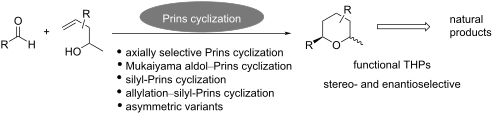
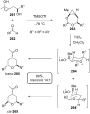
- -trimethylsilylalkenyl cation 242 formed by the Grob-type fragmentation (Scheme 57), which was trapped by the subsequent attack of the halide anion, leading to the formation of Prins product 244. On the basis of theoretical calculations, the authors could conclude factors controlling the alkyne Prins cyclization over








Breakdown of 3-(allylsulfonio)propanoates in bacteria from the Roseobacter group yields garlic oil constituents
Beilstein J. Org. Chem. 2021, 17, 569–580, doi:10.3762/bjoc.17.51
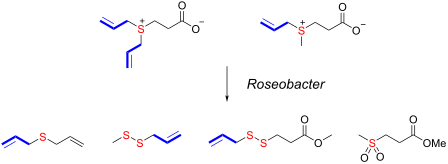
- compounds, structural suggestions were made based on their mass spectrometric fragmentation pattern and confirmed by the synthesis of reference compounds. The results of the feeding experiments allowed to conclude on the substrate tolerance of DMSP degrading enzymes in marine bacteria. Keywords: Allium
- fragmentation pattern of the mass spectrum (Figure 3A). The molecular ion together with its isotope pattern pointed to two sulfur atoms, while the fragment ion at m/z = 64 ([S2]+) pointed to a disulfide. The fragment ions at m/z = 59 ([C2O2H3]+) and 161 ([M − OMe]+) indicated a methyl ester, and the series of m
- . The analysis of the fragmentation pattern (Figure 3B) suggested that 27 could be methyl 3-(methylsulfonyl)propanoate, an oxidation product of 23. This hypothesis was confirmed by the chemical oxidation of 23, yielding methyl 3-(methylsulfonyl)propanoate with an identical mass spectrum and retention


Amino- and polyaminophthalazin-1(2H)-ones: synthesis, coordination properties, and biological activity
Beilstein J. Org. Chem. 2021, 17, 558–568, doi:10.3762/bjoc.17.50
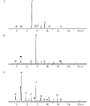
- 63Cu2+/65Cu2+ ion complex containing two ligands L2. However, a significant amount of unchanged ligand was also visible. For the ion at m/z = 719.5 Da, tandem spectra were recorded. The first fragmentation gave ions at m/z = 329.3 Da (L2 + H+) and 391.4 Da (ligand L2 and copper). The further
- fragmentation of the ion at m/z = 391.4 Da gave rise to an ion series: 362.4 Da (probably after elimination of HCO), 311.4 Da, 286.3 Da (100%), and 235.4 Da. We did not observe in the tandem spectra the signal after the elimination of copper alone. Similarly, the ESIMS spectrum of an equimolar mixture of
- compound 7 (L3) and CuCl2 showed the presence of two types of complexes containing one and two phthalazinone ligands: [(L3)Cu(II)Cl]+ and [(L3)2Cu2(II)Cl3]+. The most abundant peak at m/z = 422.3 Da corresponded to the complex [(L3)Cu(II)Cl]+. The MS/MS fragmentation of the ions at m/z = 422.3 Da for 63Cu





Coupling biocatalysis with high-energy flow reactions for the synthesis of carbamates and β-amino acid derivatives
Beilstein J. Org. Chem. 2021, 17, 379–384, doi:10.3762/bjoc.17.33
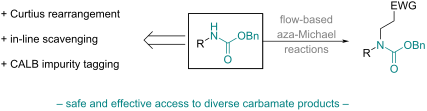
- interesting case concerned the use of 3-oxocyclobutanecarboxylic acid (1m), which yielded the desired carbamate product 3m along with the carbamoyl-urea species 3m’. This observation parallels recent reports [25] proposing a fragmentation of the desired carbamate followed by a combination of the resulting


Insight into functionalized-macrocycles-guided supramolecular photocatalysis
Beilstein J. Org. Chem. 2021, 17, 139–155, doi:10.3762/bjoc.17.15
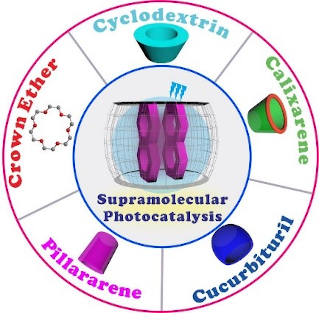
- occur within the CB[8] cavity via host–guest interactions, and thus predominantly produced the syn- instead of the anti-dimers. An alternative approach introduced by An et al. is about the 2:1 CB[7]–perylene diimide (PDI) host–guest-assisted reversible addition–fragmentation chain transfer (RAFT






Molecular basis for protein–protein interactions
Beilstein J. Org. Chem. 2021, 17, 1–10, doi:10.3762/bjoc.17.1
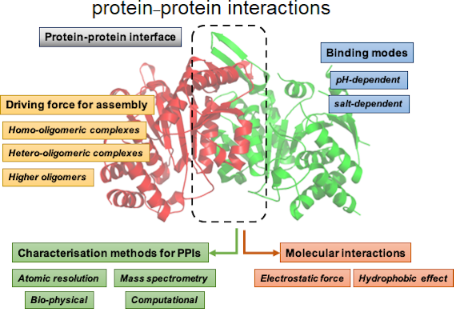
- incorporated deuterium can then be localised through protease-generated peptide fragments or fragmentation within the mass spectrometer. The rate of hydrogen-to-deuterium exchange provides insight into the solvent accessibility. HDXMS provides information on the conformation of the protein, PPIs, and even


Semiautomated glycoproteomics data analysis workflow for maximized glycopeptide identification and reliable quantification
Beilstein J. Org. Chem. 2020, 16, 3038–3051, doi:10.3762/bjoc.16.253
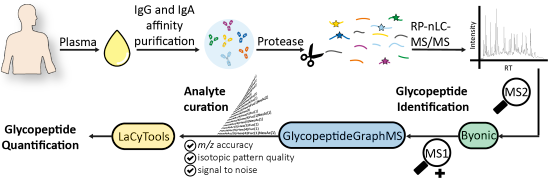
- digest from affinity-purified immunoglobulins G and A was analyzed on a nano-reversed-phase liquid chromatography–tandem mass spectrometry platform with a high-resolution mass analyzer and higher-energy collisional dissociation fragmentation. Initial glycopeptide identification based on MS/MS data was
- ]. Advances in MS technologies tremendously enhanced the detection and informative fragmentation of glycopeptides in the past years [9]. The large amount of highly complex data acquired using these technologies shifted the major bottleneck in glycopeptide analysis to the data processing steps. Next to the
- glycopeptide identification by GlycopeptideGraphMS. In MS/MS scoring approaches such as Byonic, the definition of a threshold for the automated assignment of glycopeptides is generally a challenge as the scores depend largely on the fragmentation method, the peptide characteristics (e.g., peptide length or


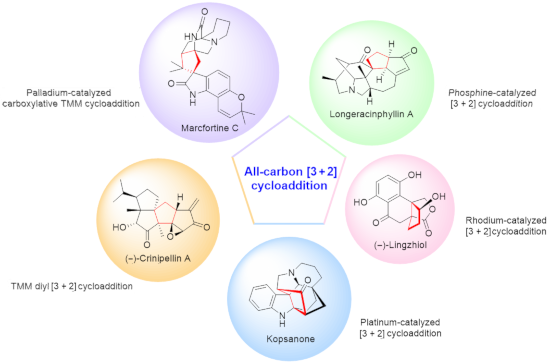
All-carbon [3 + 2] cycloaddition in natural product synthesis
Beilstein J. Org. Chem. 2020, 16, 3015–3031, doi:10.3762/bjoc.16.251
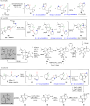
- fragmentation to afford alkene 72 in 61% yield. Marcfortine B (8) was synthesized from alkene 72 in seven steps. The enantioselective synthesis of marcfortine C (9) commenced with a catalytic asymmetric cyano-substituted TMM cycloaddition of oxindole 73 and TMM donor 75 with Pd(dba)2/74 as catalyst to give a
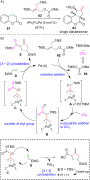
- complex B (Scheme 11B). A facile migration–fragmentation process of complex B eliminates a ketone through fragmentation and produces metal-carbene intermediate C. The freshly prepared metal-carbene C is equilibrated to stabilized 1,3-dipole D. D undergoes a diastereoselective [3 + 2] cycloaddition to give







Ultrasound-assisted Strecker synthesis of novel 2-(hetero)aryl-2-(arylamino)acetonitrile derivatives
Beilstein J. Org. Chem. 2020, 16, 2929–2936, doi:10.3762/bjoc.16.242
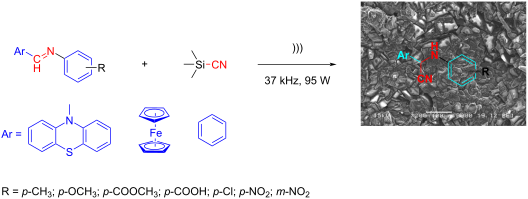
- frequencies between 20 and 100 kHz were reported in the literature as optimal to enhance the nucleation and fragmentation rates, but the exact optimal frequency is probably reactor and system specific [8]. The exciting properties of the heterocyclic phenothiazine core displaying tunable chemical, redox





