


Search results
Search for "intermediates" in Full Text gives 1507 result(s) in Beilstein Journal of Organic Chemistry. Showing first 200.
Synthesis of the tetracyclic skeleton of Aspidosperma alkaloids via PET-initiated cationic radical-derived interrupted [2 + 2]/retro-Mannich reaction
Beilstein J. Org. Chem. 2025, 21, 2470–2478, doi:10.3762/bjoc.21.189
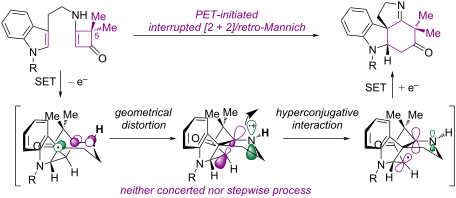
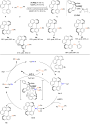
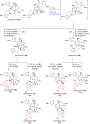
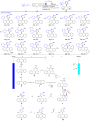
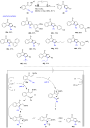
- formation of unique radical intermediates [9][10]. We previously demonstrated the Ir-catalyzed [2 + 2] cyclization/retro-Mannich reaction of a tryptamine-substituted cyclopentenone F, which led to the formation of indoline J (Figure 1b) [15]. Unlike other reported methods [16][17][18], the PET reaction of F
- TS2, the reactant (IN2), and the C19–C3 bond cleavage product IN3 wells (Figure 2c). Possible intermediates with a bicyclo[2.2.0]hexane unit located on the PES minimum were investigated by performing two-dimensional scans of simplified structures to find a minimum. When the nonbonding sp3 orbital of
- order [34][35] analyses were performed to determine the hyperconjugative interactions in the intermediates, transition states, and transient structures along the IRC path (Figure 2c and 2d). In the early stage of this process (Figure 2f, IN2 → R-50 → R-24 → TS2), formation of the C19–C3 bond arises from


Catalytic enantioselective synthesis of selenium-containing atropisomers via C–Se bond formations
Beilstein J. Org. Chem. 2025, 21, 2447–2455, doi:10.3762/bjoc.21.186
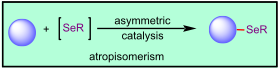
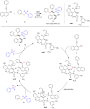
- selenides, recognized as valuable synthetic intermediates and biologically active compounds, have been demonstrated to exhibit a broad spectrum of biological activities. Among them, the synthesis of β-(selenium)vinyl sulfones can be accomplished via selenosulfonylation reactions initiated by free radicals




Transformation of the cyclohexane ring to the cyclopentane fragment of biologically active compounds
Beilstein J. Org. Chem. 2025, 21, 2416–2446, doi:10.3762/bjoc.21.185
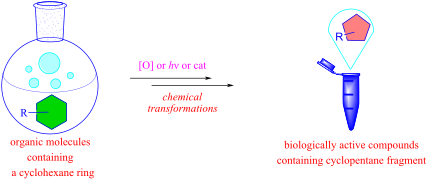
- simple building blocks [72]. The main feature of light-induced transformations is the involvement of electronically excited states that occur during photon absorption, leading to the formation of reactive intermediates causing significant changes in chemical compound reactivity. As a result, light energy
- contraction is demonstrated by the example of converting organoborane intermediates into alcohols, amines, and E-alkenes (Scheme 32). 4 Meinwald rearrangements of epoxides The rearrangements of oxiranes annelated to cyclohexane occupy an important place in the synthesis of cyclopentanes due to the
- promotes tandem transformations with the Lewis acid, resulting in oxygen-containing bicyclic compounds 198 and 199 through the formation of oxonium intermediates E and F. In the work of Kulciţki et al. [89], a very attractive acid-induced rearrangement of homodrimanic epoxide 200 was described. This


The high potential of methyl laurate as a recyclable competitor to conventional toxic solvents in [3 + 2] cycloaddition reactions
Beilstein J. Org. Chem. 2025, 21, 2389–2415, doi:10.3762/bjoc.21.184
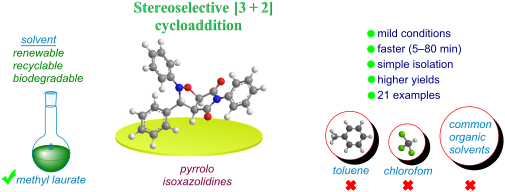
- formation of the five-membered isoxazolidine ring motif, which displays a range of biologically active properties [26][27][28][29][30]. It is notable that the fused pyrrolo-isoxazolidines represent a particularly versatile class of heterocyclic compounds and intermediates, which have been demonstrated to
- scaffolds. From the standpoint of organic chemistry, it is evident that these compounds can be efficiently converted into a variety of versatile organic intermediates through the application of ring-opening reactions [49][50][51][52]. In addition to the aforementioned useful properties, the current methods







Synthetic study toward vibralactone
Beilstein J. Org. Chem. 2025, 21, 2376–2382, doi:10.3762/bjoc.21.182

- ; Introduction β-Lactones have attracted continuous interest and have been widely utilized as key intermediates in the synthesis of natural products and polymers due to their innate ring strain [1][2][3][4][5][6]. Moreover, several natural products and their derivatives containing β-lactone as key structural


Rotaxanes with integrated photoswitches: design principles, functional behavior, and emerging applications
Beilstein J. Org. Chem. 2025, 21, 2345–2366, doi:10.3762/bjoc.21.179

- ). However, the cis isomer may undergo a 6π-electrocyclization, forming dihydrophenanthrene intermediates that further oxidize into phenanthrene derivatives, thereby irreversibly deactivating the photoswitch [75]. The first stilbene-based rotaxane was reported by Anderson and co-workers in 2001, featuring a


Comparative analysis of complanadine A total syntheses
Beilstein J. Org. Chem. 2025, 21, 2334–2344, doi:10.3762/bjoc.21.178
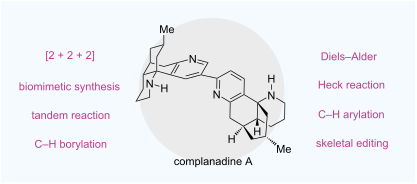
- removal of the two Boc protecting groups completed the Sarpong total synthesis of complanadine A. Efficient access of key coupling intermediates 33 and 34 further enabled Sarpong and co-workers to successfully synthesize other lycopodium alkaloids. For example, to synthesize complanadine B with mono
- enantiomers of 51 allowed Tsukano and co-workers to prepare both enantiomers of complanadine A. Their further biological evaluation of the complanadines and several synthetic intermediates revealed that the pseudo-dimeric structure, absolute configuration, and oxidation level are important for the observed


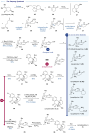
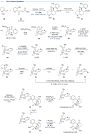
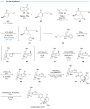

Recent advances in Norrish–Yang cyclization and dicarbonyl photoredox reactions for natural product synthesis
Beilstein J. Org. Chem. 2025, 21, 2315–2333, doi:10.3762/bjoc.21.177
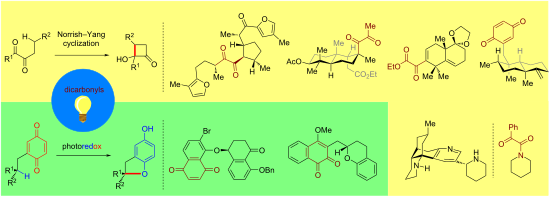
- -hydroxy-β-lactams or 2-hydroxycyclobutanones can function either as inherent structural motifs in target natural products or as strained reactive intermediates, facilitating C–H functionalization via four-membered ring opening [6][7][8][9][10][11]. Quinones display distinct photochemical reactivities
- generated diverse biradical intermediates via regioselective hydrogen transfer (δ-H or ε-H), further constructing various C–C bonds. This enabled efficient synthesis of the core skeletons of five natural products. The divergent strategy significantly reduces redundant synthetic steps, embodies synthetic
- (50) and D (52), respectively. Alternatively, nucleophilic addition of MeOH to 54a and 56a, followed by ring-opening elimination, arrived at the corresponding γ-keto aldehyde intermediates 72/73. Subsequent intramolecular aldol cyclization of these intermediates furnished gracilisoids C/G (51/55) and




Enantioselective radical chemistry: a bright future ahead
Beilstein J. Org. Chem. 2025, 21, 2283–2296, doi:10.3762/bjoc.21.174
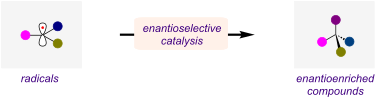
- enantioenriched catalysts ranging from chiral organometallic complexes to organocatalysts (small organic molecules) have been designed, synthesized, and successfully used in several organic transformations [1][2][3]. Despite these advances, catalytic methods involving radical intermediates were very rare until
- polycyclic products in a highly diastereo- and enantioselective manner [45]. The polyene substrates were designed to facilitate a radical cyclization process, with alternating electron-poor and electron-rich olefins so as to enable polarity matching of the olefins and radical intermediates. With this design


Pathway economy in cyclization of 1,n-enynes
Beilstein J. Org. Chem. 2025, 21, 2260–2282, doi:10.3762/bjoc.21.173
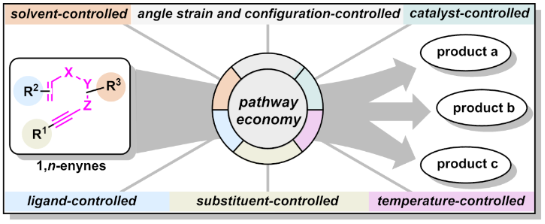
- ]. Similar to “atom and step economies”, this concept emphasizes prioritizing the minimization of redox manipulations during synthesis to achieve linear and stable progression of oxidation states in intermediates. In recent years, “pot economy” and “time economy” were proposed by Hayashi, underscoring the
- components such as solvents, catalysts, ligands and so on. Unlike traditional “one-to-one” reactions, pathway-controlled “one-to-many” transformations synthesize multiple products from single intermediates, dramatically reducing preparation time and reagent requirements (Scheme 1b). As an exceptionally
- synthetic intermediates, and used to successfully modify diverse bioactive scaffolds via late-stage functionalization, collectively demonstrating the method’s synthetic utility. In 2025, the Das group developed a palladium-catalyzed cycloisomerization of 2-alkynylbenzoate-cyclohexadienone that enables


Thiadiazino-indole, thiadiazino-carbazole and benzothiadiazino-carbazole dioxides: synthesis, physicochemical and early ADME characterization of representatives of new tri-, tetra- and pentacyclic ring systems and their intermediates
Beilstein J. Org. Chem. 2025, 21, 2220–2233, doi:10.3762/bjoc.21.169
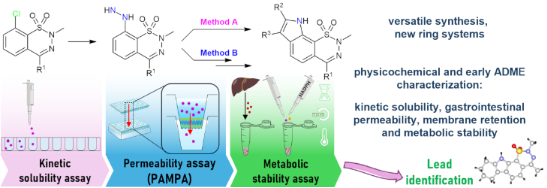
- variety of new tri-, tetra- and pentacyclic ring systems. The structural characterization of (E)- and (Z)-hydrazones was supported by 2D NMR techniques, while that of the target compounds by single-crystal X-ray measurements. The hydrazone intermediates and the new title compounds were subjected to a
- synthesis [18][19][20][21]. Sudhakara et al. described the advantages of using bismuth nitrate as catalyst in the synthesis of hydrazones and in the one-pot Fischer synthesis of indoles from ketones and hydrazines [22][23]. Adopting this method, hydrazone intermediates 7a–j were obtained by treatment of
- phenylhydrazone structural unit is present in several marketed drugs (herombopag [28], eltrombopag [29], levosimendan [30]) and in drug candidates that reached the human clinical trials (totrombopag [31], FP-21399 [32], sivifene [33]), hydrazone intermediates 7a–j and (E)-9a,b were also involved in the tests. The


Electrochemical cyclization of alkynes to construct five-membered nitrogen-heterocyclic rings
Beilstein J. Org. Chem. 2025, 21, 2173–2201, doi:10.3762/bjoc.21.166
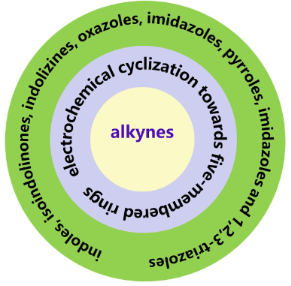
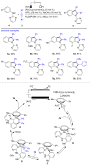
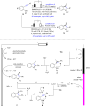
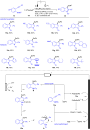
- reaction mechanisms are disclosed if available. Keywords: alkyne; catalysis; cyclization; electrochemistry; five-membered ring; Introduction Organic five-membered rings, an essential class of organic compounds, not only are frequently used as important starting materials, intermediates or ligands in
- properties and wide applications. Alkynes were extensively used as starting materials or intermediates for the synthesis of five-membered rings. Recently, the electrochemical synthesis of organic five-membered rings from alkynes have been developed due to the superiorities of electrochemical transformations









C2 to C6 biobased carbonyl platforms for fine chemistry
Beilstein J. Org. Chem. 2025, 21, 2103–2172, doi:10.3762/bjoc.21.165
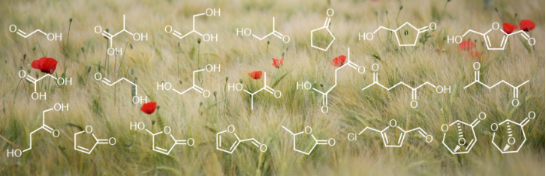
- building block applied in the synthesis of many different substances. These are summarized in Figure 3 below [120][137][138][139][140][141][142][143][144][145][146][147]. Other furanones Several other furanones are key intermediates towards important chemicals. For example, the direct oxidation of furfural
- toward useful biobased functional compounds or intermediates with applications in fuels, polymer chemistry and fine organic synthesis (CH activation, Piancatelli rearrangement, etc.). Conversion of furfural to alcohols, aldehydes and ketones: One of the most important transformations of furfural is its
- polyamides possess unusual intrinsic luminescence and high and selective affinity towards Fe2+ and Fe3+ metal ions, which could be used as fluorescent probes in the biomedical field [195]. Heptamethine cyanine Cy7 is a very important class of intermediates in the fields of biology and photomedicine. The


The application of desymmetric enantioselective reduction of cyclic 1,3-dicarbonyl compounds in the total synthesis of terpenoid and alkaloid natural products
Beilstein J. Org. Chem. 2025, 21, 2085–2102, doi:10.3762/bjoc.21.164
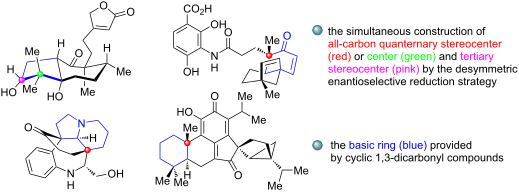
- insertion [74] with ketone 91 and deprotection of the dithiane group delivered alleneketone 92. Sequential treatment of 92 with TsNHNH2 and NaH, the trimethylenemethane (TMM) diyl-mediated cycloaddition via intermediates 93 and 94 proceeded uneventfully to form the tetracyclic product 95. Next, reductive
- observed that the early-stage application of desymmetric enantioselective reduction could efficiently provide access to enantiomerically enriched intermediates with multiple stereocenters containing an all-carbon quaternary chiral center. Taking aforementioned advantages of this strategy, the synthetic


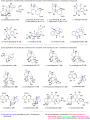


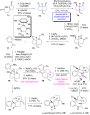

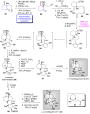


Further elaboration of the stereodivergent approach to chaetominine-type alkaloids: synthesis of the reported structures of aspera chaetominines A and B and revised structure of aspera chaetominine B
Beilstein J. Org. Chem. 2025, 21, 2072–2081, doi:10.3762/bjoc.21.162
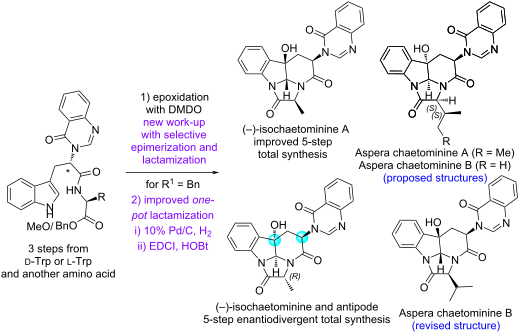
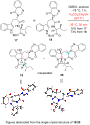
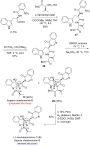
- our third-generation strategy featuring the employment of benzyl ʟ-valinate as the coupling component [63], tripeptide derivative 28 was synthesized in three steps. Exposure of 28 to DMDO in acetone followed by treating the resulting intermediates with Na2SO3 produced the proposed structure of aspera




Measuring the stereogenic remoteness in non-central chirality: a stereocontrol connectivity index for asymmetric reactions
Beilstein J. Org. Chem. 2025, 21, 1995–2006, doi:10.3762/bjoc.21.155
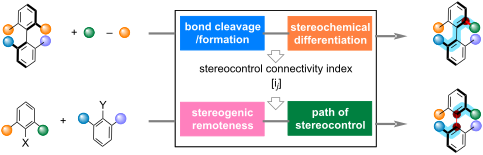
- chiral allenes [15] is defined as [60] (Scheme 4A), while the desymmetrizing reactions of allenes [16] (Scheme 4B) and anthracenylidene [17] (Scheme 4C) are both classified as [54]. In the cases of Scheme 3A and 3C, the reaction intermediates (i.e., the p-quinone methide and the carbopalladation
- biphenyl ether backbone (H vs Me, highlighted in grey), which is reflected by the relatively large values of the index [74]. Although we intend to avoid reaction intermediates in the assignment of the stereocontrol connectivity index, we recognize the limitations in cases that chemical bonds are cleaved
- and restored in the course of the transformations (e.g., Scheme 4A and 4C). Such limitations become obvious in the cases of multistep, multi-intermediate reactions [32][33], particularly in the case of helical chirality where chirality transfer of intermediates is common [34][35][36][37][38][39]. In





Aryl iodane-induced cascade arylation–1,2-silyl shift–heterocyclization of propargylsilanes under copper catalysis
Beilstein J. Org. Chem. 2025, 21, 1984–1994, doi:10.3762/bjoc.21.154
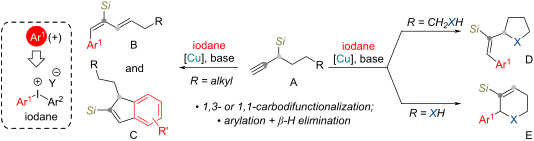
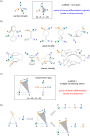
- stabilized allyl cation intermediates that undergo regioselective trapping by internal O- and N-nucleophiles furnishing functionalized heterocycles. This method provides access to tetrahydrofuran or pyrrolidine frameworks, each bearing a trifunctionalized (E)-configured vinyl side chain. The use of a shorter


Photochemical reduction of acylimidazolium salts
Beilstein J. Org. Chem. 2025, 21, 1973–1983, doi:10.3762/bjoc.21.153
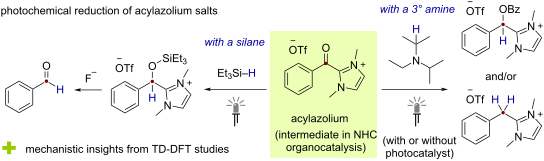
- offer many synthetic advantages while the wide availability of chiral NHCs can also allow for high levels of enantioselectivity. As effective enamine and active ester derivatives, Breslow and acylazolium intermediates A and B typically react via classical two-electron polar mechanisms, however, recent
- research has demonstrated that NHCs are also capable of stabilizing radical or excited-state species [12][13]. In 2020, our group reported the concept of photo-NHC catalysis where direct excitation of acylazolium intermediates generated from o-toluoyl fluoride substrates with UV-A light resulted in a novel


Enantioselective desymmetrization strategy of prochiral 1,3-diols in natural product synthesis
Beilstein J. Org. Chem. 2025, 21, 1932–1963, doi:10.3762/bjoc.21.151
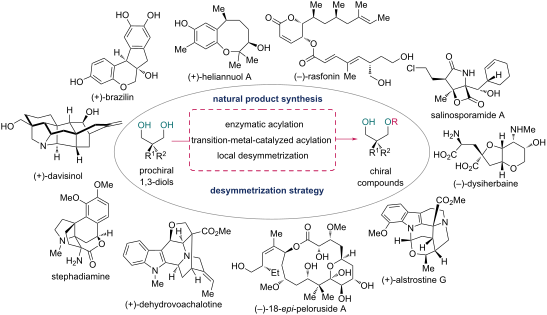
- optically pure intermediates in total synthesis. This section focuses on applications of lipase-catalyzed acylation of prochiral 1,3-diols in total synthesis. Porcine pancreatic lipase (PPL) PPL, a commercially available lipase isolated from fresh porcine pancreas [26], is one of the most widely used










Synthesis, biological and electrochemical evaluation of glycidyl esters of phosphorus acids as potential anticancer drugs
Beilstein J. Org. Chem. 2025, 21, 1909–1916, doi:10.3762/bjoc.21.148
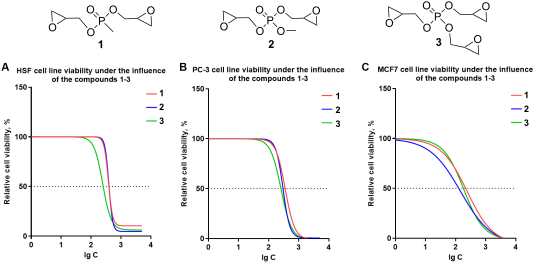
- , phosphine oxides, and bisphosphonates, allows for tailored modifications that enhance selectivity, bioavailability, and reduce potential side effects [8][9][10][11][12][13]. This versatility makes them valuable not only as drugs but also as intermediates in synthetic organic chemistry, facilitating access


Systematic pore lipophilization to enhance the efficiency of an amine-based MOF catalyst in the solvent-free Knoevenagel reaction
Beilstein J. Org. Chem. 2025, 21, 1854–1863, doi:10.3762/bjoc.21.144
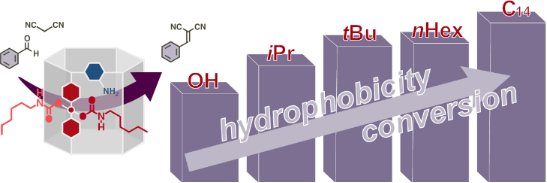
- . This trend suggests that the lipophilic surfaces may destabilize hydrophilic intermediates, promoting faster conversion of HPMM to BMN, similar to the ground-state destabilization of polar substrates observed in enzymes with lipophilic pockets [54][55]. It should be noted that this result is in


Photoswitches beyond azobenzene: a beginner’s guide
Beilstein J. Org. Chem. 2025, 21, 1808–1853, doi:10.3762/bjoc.21.143




Fe-catalyzed efficient synthesis of 2,4- and 4-substituted quinolines via C(sp2)–C(sp2) bond scission of styrenes
Beilstein J. Org. Chem. 2025, 21, 1799–1807, doi:10.3762/bjoc.21.142
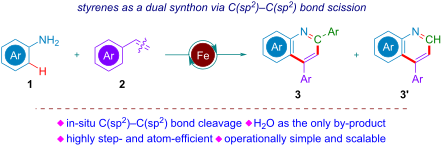
- styrene, leading to the in situ generation of two valuable intermediates that act as dual synthons for the synthesis of 2,4- and 4-substituted quinolines. As part of our ongoing efforts to develop innovative C–C and C–H activation strategies for constructing nitrogen-containing heterocycles [55][56], we
- herein report the first example of the earth-abundant iron-catalyzed oxidative cleavage of C(sp2)–C(sp2) bonds of styrenes and further utilization of the intermediates as dual synthons for the synthesis of two essential quinoline moieties as shown in Scheme 1b. Results and Discussion To validate our
- corresponding imines I and I′, as supported by the detection of imine I during GC–MS analysis. Both imines coordinate with the Lewis acid FeIII forming intermediates II and II′ with enhanced electrophilicity, respectively. Another equivalent of styrene (2a) attacks the electrophilic carbon, leading to the




Preparation of a furfural-derived enantioenriched vinyloxazoline building block and exploring its reactivity
Beilstein J. Org. Chem. 2025, 21, 1737–1741, doi:10.3762/bjoc.21.136

- amino alcohols derived from furfural and ʟ- or ᴅ-valinol were subjected to Torii-type ester electrosynthesis to obtain the corresponding unsaturated esters. These served as key intermediates to prepare (S)- and (R)-enantioenriched unsaturated amides by N-Alloc deprotection which induced concomitant


3,3'-Linked BINOL macrocycles: optimized synthesis of crown ethers featuring one or two BINOL units
Beilstein J. Org. Chem. 2025, 21, 1719–1729, doi:10.3762/bjoc.21.134
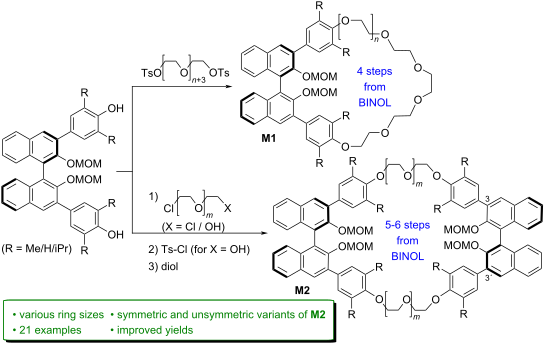
- synthetic approaches (see Figure 1e) toward BINOL macrocycles had successfully used either Williamson-type reactions or Suzuki couplings for the synthesis of intermediates. Thus, we chose to compare the use of two-fold Suzuki coupling or two-fold Williamson reaction for the synthesis of macrocycles M1. For
- (in a two-fold Suzuki coupling) or with the BINOL-derived diol Me-2 (in a two-fold Williamson reaction) gave no meaningful yields of the desired intermediates Me-36 or Me-46, respectively. For this reason, we resorted to an alternative synthesis of the BINOL-based bistosylates Me/H/iPr-36. For the





