Search results
Search for "red" in Full Text gives 1140 result(s) in Beilstein Journal of Organic Chemistry. Showing first 200.
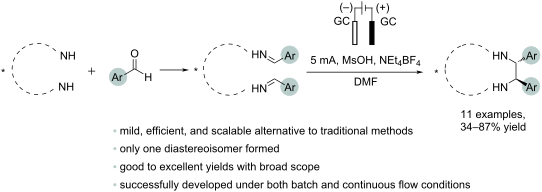
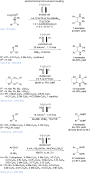
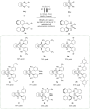
Stereoselective electrochemical intramolecular imino-pinacol reaction: a straightforward entry to enantiopure piperazines
Beilstein J. Org. Chem. 2025, 21, 1897–1908, doi:10.3762/bjoc.21.147
- 1a (10 mM) in presence of 1 equiv of methanesulfonic acid (10 mM) recorded in a 0.325 M solution of Et4NBF4 in DMF (green line). Cyclic voltammetry of diimine 1a (10 mM) in presence of 2 equiv of methanesulfonic acid (20 mM) recorded in a 0.325 M solution of Et4NBF4 in DMF (dark-red line). Cyclic
- voltammetry of diimine 1a (10 mM) in presence of 3 equiv of methanesulfonic acid (30 mM) recorded in a 0.325 M solution of Et4NBF4 in DMF (light-red line). Glassy carbon as working, glassy carbon as counter, and Ag/AgCl as reference electrodes with 0.1 V/s as scan rate. Screening of the imino-pinacol reaction





Preparation of spirocyclic oxindoles by cyclisation of an oxime to a nitrone and dipolar cycloaddition
Beilstein J. Org. Chem. 2025, 21, 1890–1896, doi:10.3762/bjoc.21.146
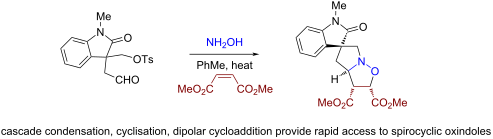
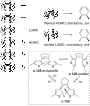
- , 52.7, 39.4, 26.8; HRESIMS (m/z): [M + H]+ calcd for C18H21N2O6, 361.1400, found: 361.1404. Representative oxindole alkaloids. Orientation for the cycloaddition (left) and the crystal structure of the major stereoisomer 5a (right) with the anisotropic displacement parameters drawn at 50% (oxygen – red


Photoswitches beyond azobenzene: a beginner’s guide
Beilstein J. Org. Chem. 2025, 21, 1808–1853, doi:10.3762/bjoc.21.143
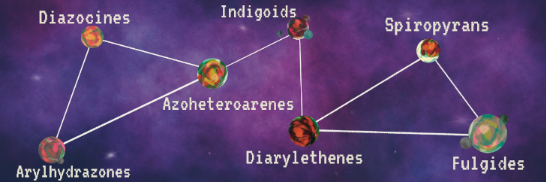
- it is switched to one that absorbs at a higher wavelength (i.e., blue). The opposite phenomenon is called negative or inverse photochromism [3]. A shift towards higher energies is called hypsochromic or blue shift, while a shift towards lower energies is called bathochromic or red shift. When working
- conjugated with the chromophore structure, will influence its absorption spectrum and stability [4]. The solvent will also affect the properties, as it can stabilise or destabilise either the ground or the excited state, resulting in a red- or blue shift of the spectra. The thermal half-life (t1/2) measures
- wavelength (P-type) or through thermal back isomerisation (T-type). As a general rule, the absorption can be red-shifted by the choice of electron-donating rings (pyrrole, thiophene), while electron-withdrawing rings (pyridine, pyrimidine, pyrazole, imidazole, thiazole) give the opposite effect [12




Photocatalysis and photochemistry in organic synthesis
Beilstein J. Org. Chem. 2025, 21, 1645–1647, doi:10.3762/bjoc.21.128
- Review article discussing photocatalysts capable of harnessing low-energy red light to trigger chemical reactions [19]. In addition to photoredox catalysis, several mechanistic platforms that leverage light – such as the use of electron donor–acceptor complexes [20], proton-coupled electron transfer [21

On the aromaticity and photophysics of 1-arylbenzo[a]imidazo[5,1,2-cd]indolizines as bicolor fluorescent molecules for barium tagging in the study of double-beta decay of 136Xe
Beilstein J. Org. Chem. 2025, 21, 1627–1638, doi:10.3762/bjoc.21.126
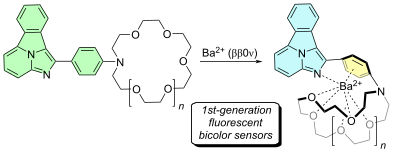
- for the λem values of 18·Ba(ClO4)2. However, the situation was found to be different when the Δλem values were calculated. In this case, M06 (which even predicted a red shift) and PBE were the less accurate functionals, whereas M06-2X was the most precise functional, followed by wB97XD, the other
- perchlorate, as indicated in Figure 2 (X = O, Y, Z = Me). The possible coordination patterns are shown. NICS(iso) and NICSzz values at the molecular plane (z = 0) and 1 Å (z = 1) above this plane in a perpendicular direction. Points a–c correspond to the respective ring points, in light red. Perpendicular


Transition-state aromaticity and its relationship with reactivity in pericyclic reactions
Beilstein J. Org. Chem. 2025, 21, 1613–1626, doi:10.3762/bjoc.21.125
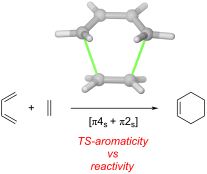
- between isoprene and methyl acrylate (black lines) and the analogous process catalyzed by AlCl3 (red lines) and projected onto the C···C bond-forming distance. (a) Evolution of the NICS(3, +1) values along a z-axis perpendicular to the molecular plane of the TS involved in the 1-butene and acetaldehyde
- acetaldehyde (black lines) and the analogous process catalyzed by AlCl3 (red lines) and projected onto the C···C bond-forming distance. AICD (a) and EDDB (b) plots for the transition state involved in the DGRT between ethene and ethane. Comparative activation strain analyses (a) and energy decomposition
- analysis (b) of the DGRT between ethane and formaldehyde (black lines) and the analogous process involving methanol (red lines) and projected onto the C···H bond-forming distance. AICD plots of the transition states associated with the Hopf cyclization reactions involving cis-hexa-1,3-diene-5-yne (a) and


Synthesis of optically active folded cyclic dimers and trimers
Beilstein J. Org. Chem. 2025, 21, 1603–1612, doi:10.3762/bjoc.21.124

- photoluminescence (PL) spectra of (Sp)-6 and (Sp)-7 in diluted CHCl3 solutions (1.0 × 10⁻⁵ M) are depicted in Figure 1. The absorption bands are derived from the π–π* transitions of a phenylene–ethynylene conjugation system. The spectra of (Sp)-6 and (Sp)-7 are similar, and the absorption peak top of (Sp)-7 is red
- -shifted compared with that of (Sp)-6 because of the bent structure of the p-phenylene–ethynylene moieties in (Sp)-6 and extended π-conjugation of (Sp)-7. Such a red-shift of a UV–vis absorption spectrum has been observed in previously reported [2.2]paracyclophane-based cyclic oligomers [39]. CHCl3



Thermodynamic equilibrium between locally excited and charge transfer states in perylene–phenothiazine dyads
Beilstein J. Org. Chem. 2025, 21, 1577–1586, doi:10.3762/bjoc.21.121
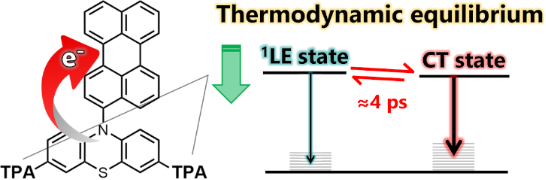
- local excited (LE) and charge-transfer (CT) states can be experimentally observed as dual fluorescence: a structured, higher-energy emission from the LE state and a broad, red-shifted emission from the CT state [8][9]. Classical systems such as 4-(N,N-dimethylamino)benzonitrile (DMABN) and pyrene-o
- : a structured band in the 450–500 nm region associated with the LE state of the Pe moiety, and a broad, red-shifted band in the 550–750 nm region attributed to the CT emission (Figure 3b). The CT emission showed strong solvent dependence, i.e., shifting to longer wavelengths and decreasing in




Synthesis of an aza[5]helicene-incorporated macrocyclic heteroarene via oxidation of an o-phenylene-pyrrole-thiophene icosamer
Beilstein J. Org. Chem. 2025, 21, 1561–1567, doi:10.3762/bjoc.21.119
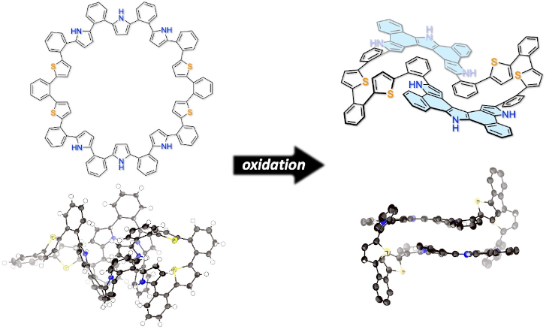
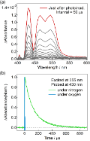
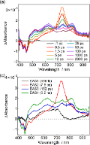
- emission spectra of 4 were measured in DMSO (Figure 5a). As observed for other o-phenylene-bridged cyclic heteroarenes in previous reports, compound 4 exhibited a broad featureless absorption band up to 450 nm, with emission peaked at 546 nm. The red-shifted emission is likely due to a significant


Facile synthesis of hydantoin/1,2,4-oxadiazoline spiro-compounds via 1,3-dipolar cycloaddition of nitrile oxides to 5-iminohydantoins
Beilstein J. Org. Chem. 2025, 21, 1552–1560, doi:10.3762/bjoc.21.118

- (Figure 3b, red ring) than 4-NO2 or 4-Cl substituents (IC50 of 5h was lower than 5l and 5f). The presence of a methoxy group in the imine aromatic core (blue ring) also had a significant impact on cytotoxicity. This can be concluded from the results obtained for compounds 5f and 5g: the substitution of



Azobenzene protonation as a tool for temperature sensing
Beilstein J. Org. Chem. 2025, 21, 1528–1534, doi:10.3762/bjoc.21.115
- different azo compounds [23][24][25]. More recent work has harnessed protonation to enable red-light switching [12][13][26] and to control the stability of the cis-isomer [27][28][29]. These studies have focused on how protonation affects isomerization, with less attention given on how external stimuli
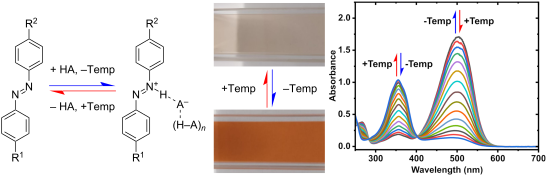
- and solvent polarity, we demonstrate that the degree of protonation, and thus solution color, is highly temperature-dependent, changing from pale yellow to deep red as temperature decreases. We also present mechanistic insights and compare our experimental findings with computational results. Results
- and protonated species. Protonation leads to a notable red-shift in the absorption spectrum from 320–360 nm to 420–510 nm, as shown in Figure 1B using methanesulfonic acid (MSA) in 1,2-dichloroethane (DCE). We assume that in DCE alone, no protonation occurs. In MSA, on the other hand, full protonation


Ambident reactivity of enolizable 5-mercapto-1H-tetrazoles in trapping reactions with in situ-generated thiocarbonyl S-methanides derived from sterically crowded cycloaliphatic thioketones
Beilstein J. Org. Chem. 2025, 21, 1508–1519, doi:10.3762/bjoc.21.113
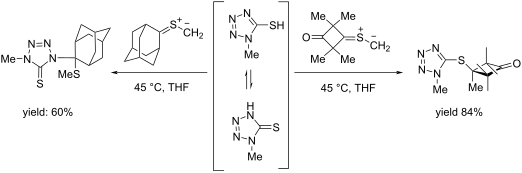
- : To a magnetically stirred solution of the thioketone 7c (833.0 mg, 4 mmol) in 5 mL pentane, placed in a water/ice bath, dry solution of diazomethane in pentane was added dropwise until the red color of starting 7c vanished. The colorless solution was cooled down in a dry ice container, and after few


Highly distinguishable isomeric states of a tripodal arylazopyrazole derivative on graphite through electron/hole-induced switching at ambient conditions
Beilstein J. Org. Chem. 2025, 21, 1496–1507, doi:10.3762/bjoc.21.112
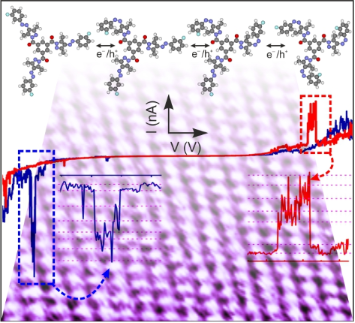
- isomerization of the molecules at both positive and negative sample voltages (marked by red/blue arrow heads); 2) the switching probability increases exponentially with increasing voltage; 3) the switching probability at positive voltage is almost double than that at negative sample voltage; 4) a strong
- asymmetry in the switching probability induced by electrons and holes. The threshold voltage of switching suggests that the switching is electron/hole-induced [7][10][11][12][15][33][38]. The threshold voltage observed for the electron injection (marked by red arrowhead) and hole injection (marked by blue
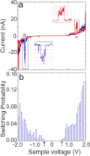
- observed in a given voltage window to the total number of I–V measurements performed. The binning of I–V measurements is 10 mV. Each data point depicts the average probability for switching in intervals of 50 mV. Blue and red arrowheads depict the threshold voltage for switching at negative and positive



Wittig reaction of cyclobisbiphenylenecarbonyl
Beilstein J. Org. Chem. 2025, 21, 1454–1461, doi:10.3762/bjoc.21.107
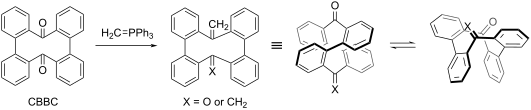
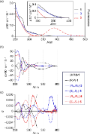
- circle and red triangle mean selected signals due to figure-eight and bathtub conformations, respectively. Simulated dynamics of bis-olefin 5 at the B3LYP/6-31G(d) level of theory. The description for the configuration of A and B are based on the helical chirality of the 1,1-diphenylethylene units and
- the axial chirality of the biaryl segments, respectively. (a) UV–vis absorption (solid lines) and emission (dashed lines) spectra of 1 (black), 3 (blue), and 5 (red). (b) CD spectra of 1 (black), 3 (blue), and 5 (red). (c) CD g values of 1 (black), 3 (blue), and 5 (red). λ = wavelength; ε = extinction



Advances in nitrogen-containing helicenes: synthesis, chiroptical properties, and optoelectronic applications
Beilstein J. Org. Chem. 2025, 21, 1422–1453, doi:10.3762/bjoc.21.106
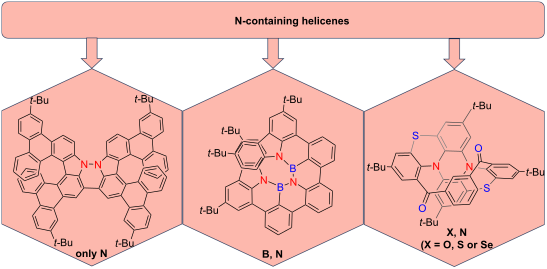
- core [17]. Compared to 4a, compound 4b exhibits bathochromic shifts of 12 nm in absorption and 45 nm in emission, as well as a higher ΦF (0.75 vs 0.68). Both isomers display TADF at room temperature and phosphorescence at 77 K. Notably, 4a demonstrates a long-lived red afterglow persisting for up to 30
- −1 (Table 3). Importantly, both dimers displayed selective fluoride ion recognition through hydrogen bonding, with (M,M)-12c exhibiting a high binding constant (Ka = 2 × 10⁵ M−1). The resulting [12c·F−] and [12d·F−] complexes exhibited red-shifted circular dichroism (CD), fluorescence, and CPL
- solvents, highlighting their potential for NIR bio-imaging applications. In parallel, Církva’s group synthesized a series of aza[n]helicenes 14a–d via photocyclodehydrochlorination [27]. These compounds exhibited dual fluorescence bands, with emission red-shifting progressively with increasing helical

Tautomerism and switching in 7-hydroxy-8-(azophenyl)quinoline and similar compounds
Beilstein J. Org. Chem. 2025, 21, 1404–1421, doi:10.3762/bjoc.21.105
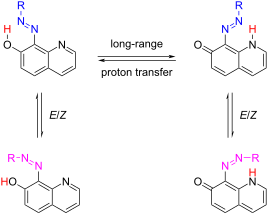
- seen from Figure 5, in the spectrum of 2 in acetonitrile a single band is observed at 500 nm. Upon addition of a very small amount of trifluoroacetic acid this band disappears and a new band at 400 nm appears, suggesting that the red-shifted band can be attributed to E−. The spontaneous deprotonation
- to 1 leads to a red shift in the absorption spectra of both tautomers. At the same time the long-wavelength maximum of 7K is blue shifted in respect to 7E, which in practical means would lead again to a red shift when switching from the more stable former to latter. Of course, the results in this
- solution during 20 min. The resulting red-orange mixture was stirred at 0 °C for 2 h, and at rt for 15 h. The mixture was neutralized with 1 N aqueous sodium hydroxide, filtered, washed with cold water (5 mL) and dried under vacuum. The dark orange crude material was purified by flash column chromatography




Recent advances and future challenges in the bottom-up synthesis of azulene-embedded nanographenes
Beilstein J. Org. Chem. 2025, 21, 1272–1305, doi:10.3762/bjoc.21.99
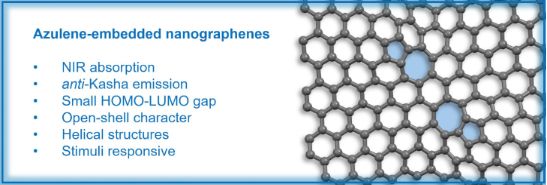
- due to the dominance of surrounding benzenoid rings or the presence of biradical character. As a result, these PAHs despite, possessing formal azulene may exhibit properties typical of benzenoid molecules rather than the characteristic azulene features such as red-shifted absorption, a small HOMO–LUMO
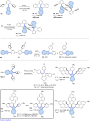
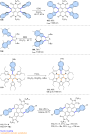
- red solid in only 4% yield. A similar strategy was used by Osborn for the synthesis of isomeric compound 6 (Scheme 1) [32]. In this case, compound 3 was dehydrogenated giving compound 4 which was then reduced to the direct precursor 5. Subsequent oxidation using chloranil yielded cyclohepta[klm]benz[e
- antiaromatic character of the pentagon, in contrast to pristine azulene. This results in a significantly red-shifted optical absorption at 997 nm. Therefore, compound 24 should be considered a formally antiaromatic extended indeno[1,2-b]fluorene, rather than a ‘true’ extended azulene. Similarly, Müllen and co




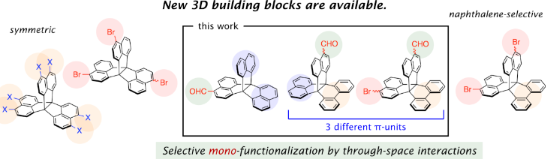
Selective monoformylation of naphthalene-fused propellanes for methylene-alternating copolymers
Beilstein J. Org. Chem. 2025, 21, 1183–1191, doi:10.3762/bjoc.21.95
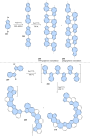
- (open circles) isotherms of [3.3.3]_oligo (dark red), [3.3.3]_linear (red), [3.3.3]_branch (orange), [4.3.3]_oligo (purple), [4.3.3]_linear (blue), and [4.3.3]_branch (green). a) CO2 at 298 K and b) N2 at 77 K. Formylation of naphthalene-fused propellanes. Properties of methylene-alternating


Enhancing chemical synthesis planning: automated quantum mechanics-based regioselectivity prediction for C–H activation with directing groups
Beilstein J. Org. Chem. 2025, 21, 1171–1182, doi:10.3762/bjoc.21.94
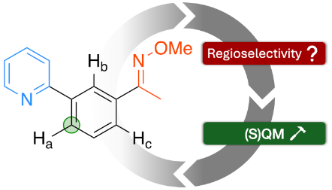
- carbon atom), and the lowest DG strength if the other two priorities are unambiguous. Figure 2 and Table 1 show examples of the results from running the program with “CCCN(C)C(=O)c1ccc(C(=O)c2ccccc2)cc1” as the input SMILES string. The sites marked with red indicate the predicted reaction sites. The
- resulted in more specific SMARTS patterns matching the DG. For example, Figure 3a shows the result from Tomberg et al. [9], which does not include the carbonyl oxygen in the SMARTS pattern match although the pattern marked in red in Figure 3b is part of the database. This example also highlights that in
- predict the experimentally observed reaction site with 78% accuracy over the whole dataset when using no energy threshold, meaning that only the reaction site corresponding to the lowest-energy complex is predicted to be the reaction centre. In Figure 9A, the predictions, correct (green) or wrong (red


A multicomponent reaction-initiated synthesis of imidazopyridine-fused isoquinolinones
Beilstein J. Org. Chem. 2025, 21, 1161–1169, doi:10.3762/bjoc.21.92
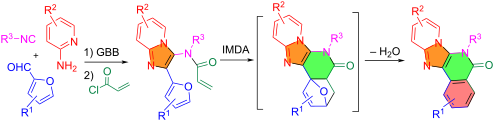
- compounds bearing imidazopyridine (red) and isoquinolinone-kind (blue) rings. Transition state analysis of IMDA reactions for 6a, 6j, 6h and 6r. Relative energy diagram for the synthesis of 8a from 6a. GBB-initiated synthesis of imidazopyridine-fused isoquinolinones. GBB reaction and N-acylation for the


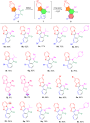
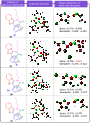


Synthetic approach to borrelidin fragments: focus on key intermediates
Beilstein J. Org. Chem. 2025, 21, 1135–1160, doi:10.3762/bjoc.21.91
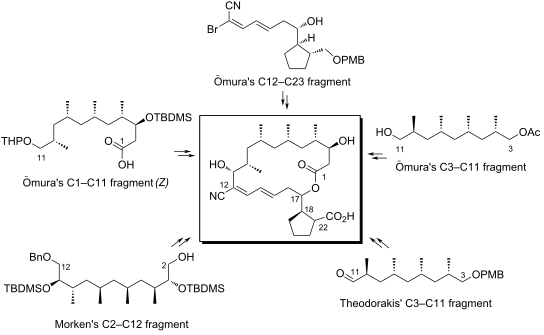
- strain from the Red Sea (Egypt), further enriching the borrelidin series. A halophilic actinomycete strain (HYJ128) from Jeung-do Island (Shinan-gun, Jeollanamdo, Korea), belonging to the genus Nocardiopsis, inhabits a hypersaline saltern and was found to produce a series of new polyketide-derived
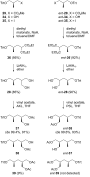
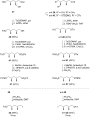
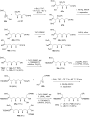
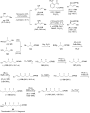
- , tert-butyl hydroperoxide (TBHP), and Ti(OiPr)4, resulting in the desired epoxide 63 with a 90% yield. Regioselective reductive opening of this epoxide was successfully carried out with Red-Al®, yielding diol 79. The more reactive primary alcohol in diol 79 was selectively masked as TBDPS ether 80 (94


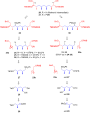






Investigations of amination reactions on an antimalarial 1,2,4-triazolo[4,3-a]pyrazine scaffold
Beilstein J. Org. Chem. 2025, 21, 1126–1134, doi:10.3762/bjoc.21.90
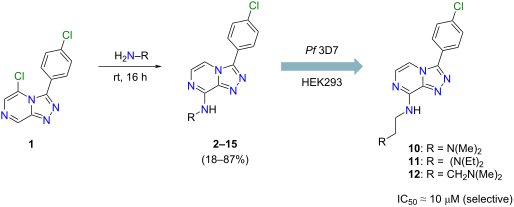
- purified by the Davis group [8]. In vitro antiplasmodial image-based assay Plasmodium falciparum 3D7 were cultured in RPMI1640 (Life Technologies, Camarillo, CA, USA) supplemented with 2.5 mg/mL Albumax II, 5% AB human serum, 25 mM HEPES, and 0.37 mM hypoxanthine. Human red blood cells (RBC) (O+) were
- supplied by Australian Red Cross LifeBlood in accordance with agreement 23-05QLD-23. Use of human RBC for antiplasmodial experimentation was in accordance with Griffith University Human Ethics Exemption Approval #03/08/11019. Ring-stage parasites were treated with compounds following two rounds of sorbitol
- Australian Red Cross LifeBlood for the provision of fresh red blood cells, without which antimalarial testing could not have been performed. Funding The authors acknowledge the Australian Research Council (ARC) for support towards NMR and MS equipment (grants LE0668477, LE140100119, and LE0237908). The




Gold extraction at the molecular level using α- and β-cyclodextrins
Beilstein J. Org. Chem. 2025, 21, 1116–1125, doi:10.3762/bjoc.21.89
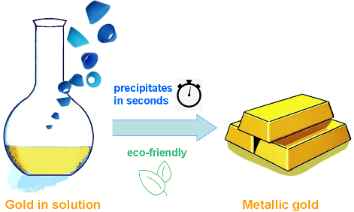
- . C skyblue, O red, Br brown, Au yellow. (c) Schematic illustration of the mechanism leading to precipitation (named “supramolecular polymerisation” by the authors) after adding various additives to the solution of β-CD and [AuBr4]− anions. Reproduced from [51] (© 2023 H. Wu et al., published by


Supramolecular assembly of hypervalent iodine macrocycles and alkali metals
Beilstein J. Org. Chem. 2025, 21, 1095–1103, doi:10.3762/bjoc.21.87
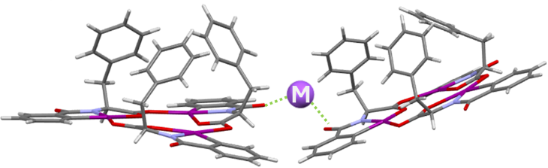
- system [12]. In addition to these covalent bonding interactions, additional secondary bonding (e.g., red-dotted bonds between iodine and oxygen in phenylalanine-based hypervalent iodine macrocycle in benzene system in Figure 1A) can arise in these systems from neighboring atom lone pairs. Secondary
- the area of the electrophilic cavity of HIM (shown in red) being smaller, which suggests lower electron density. In contrast, the red areas of the three outwardly projected carbonyl oxygens (formerly the carbonyl of benzoic acid) are larger, demonstrating the higher overall electron density of that
- for marked differences in the arrangement of groups in space. The overlaid image of lithium complexes 2 and 3 (Figure 8) shows the similar arrangement of all groups on plane except for one benzyl ring (highlighted by a red asterisk) in complex 2 that faces outside the interior of the macrocycle. A


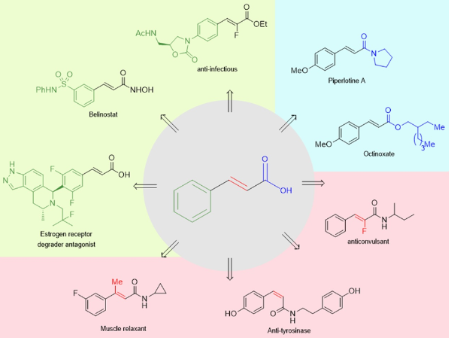
Recent advances in synthetic approaches for bioactive cinnamic acid derivatives
Beilstein J. Org. Chem. 2025, 21, 1031–1086, doi:10.3762/bjoc.21.85
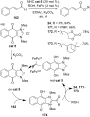
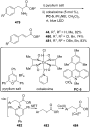
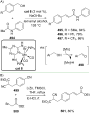
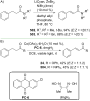
- oxidation of azolium intermediate 174 under ambient air conditions (Scheme 55). The reduced catalyst red-cat 5 is reoxidized by the co-catalyst Fe(III) phthalocyanine (FePc), closing the catalytic cycle [98]. On the other hand, Syaikh and co-workers (2021) converted cinnamaldehyde (162) into methyl