Search results
Search for "room temperature" in Full Text gives 2200 result(s) in Beilstein Journal of Organic Chemistry. Showing first 200.
Tandem hydrothiocyanation/cyclization of CF3-iminopropargyl alcohols with NaSCN in the presence of AcOH
Beilstein J. Org. Chem. 2025, 21, 2694–2702, doi:10.3762/bjoc.21.207
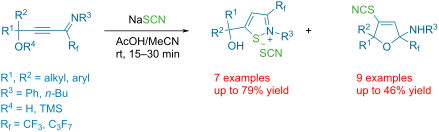
- MSCN/acid system. In comparison to ynamides [19] and alkynehydrazones [22], whose adducts cyclize with the involvement of nitrogen functional groups at elevated temperatures and extended reaction times, the reaction of CF3-substituted iminopropargyl alcohols occurred at room temperature within 15 min
- acetic acid. The reaction was carried out at room temperature and with vigorous stirring for 15 minutes. Next, the solvent was removed and the residue was purified using column chromatography (eluting with diethyl ether/hexane 1:8, then acetone/hexane 2:1 to give products 2 and 3. Procedure for oxidation



Recent advancements in the synthesis of Veratrum alkaloids
Beilstein J. Org. Chem. 2025, 21, 2657–2693, doi:10.3762/bjoc.21.206
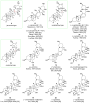
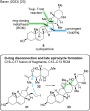
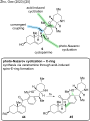
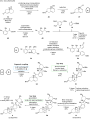
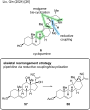
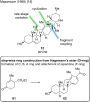
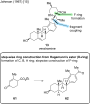
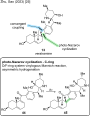
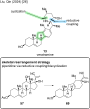
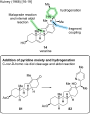
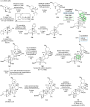
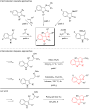
- resulted in a hydroxy group, which was oxidized to furnish Nazarov precursor 54 in 52% yield. Key step of this sequence was the photoinduced excited-state Nazarov reaction, which involved irradiation of 54 in dichloroethane at 366 nm for 30 min at room temperature. Remarkably, this method had been
















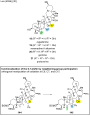
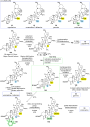
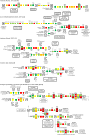
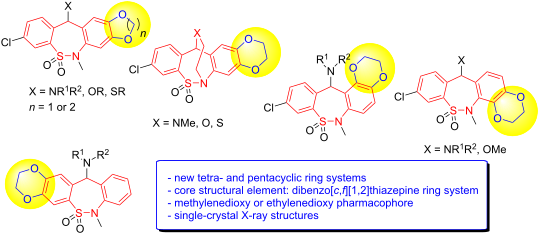
Synthesis of new tetra- and pentacyclic, methylenedioxy- and ethylenedioxy-substituted derivatives of the dibenzo[c,f][1,2]thiazepine ring system
Beilstein J. Org. Chem. 2025, 21, 2645–2656, doi:10.3762/bjoc.21.205
- amorphous character of the compounds exhibiting wide melting ranges (21b, 38d, 54f) were proven by XRPD measurements performed on a PANalytical Empyrean X-ray powder diffractometer at room temperature. Powder samples (without grinding) were placed between two Mylar foils in the sample holder at a reflection
- to 0–5 °C, and SnCl4 (47.28 g, 182 mmol, 21.2 mL) was added to the reaction mixture. The red suspension obtained was stirred at 0–5 °C for 1 h, then at room temperature for 2 h. It was poured onto a mixture of crushed ice (1500 g) and conc. hydrochloric acid (200 mL). It was stirred while warming to
- room temperature (ca 3 h). The crystalline product separated was filtered, washed with diluted hydrochloric acid (5%, 2 × 50 mL) and water (2 × 50 mL), then air-dried to give crude 7 (17.6 g of off-white solid). The two-phase filtrate was separated, the strongly acidic aqueous phase was washed with DCM


Thiazolidinones: novel insights from microwave synthesis, computational studies, and potentially bioactive hybrids
Beilstein J. Org. Chem. 2025, 21, 2618–2636, doi:10.3762/bjoc.21.203
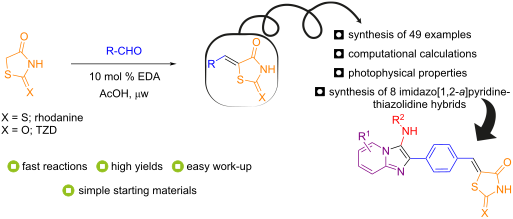
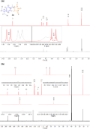
- experimental spectrum. In blue, suppressed or absent carbon atoms bound to hydrogen atoms. a) Visual impressions of the solvatochromic study in various solvents (10−5 M) after excitation with a natural light. b) UV–vis absorption spectra of 3n in different solvents (10−5 M) at room temperature. c) Normalized
- emission spectra of 3n in different solvents (10−5 M) at room temperature. d) Lippert–Mataga plot showing Stokes shift as a function of solvent orientation polarizability (Δf) for compound 3n. Photophysical study in aqueous solution under different pH values for compound 3n (10−5 M) at room temperature. a






Visible-light-driven NHC and organophotoredox dual catalysis for the synthesis of carbonyl compounds
Beilstein J. Org. Chem. 2025, 21, 2584–2603, doi:10.3762/bjoc.21.200
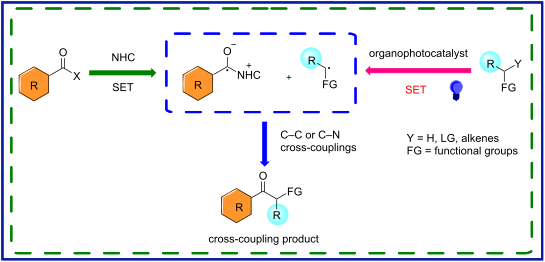
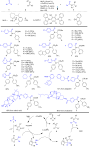
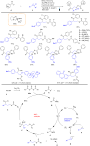
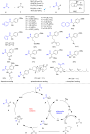
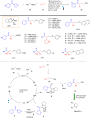
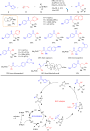
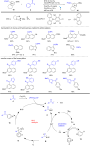
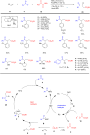
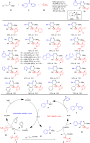
- enables the highly regioselective formation of meta-acylated ketone products 16 through a radical pathway. The NHC-catalyzed novel acylation was achieved using acyl fluorides 4 and electron-rich arenes 15 in the presence of NHC (20 mol %), photocatalyst (5 mol %), and Cs2CO3 in CH3CN at room temperature





Pentacyclic aromatic heterocycles from Pd-catalyzed annulation of 1,5-diaryl-1,2,3-triazoles
Beilstein J. Org. Chem. 2025, 21, 2524–2534, doi:10.3762/bjoc.21.194
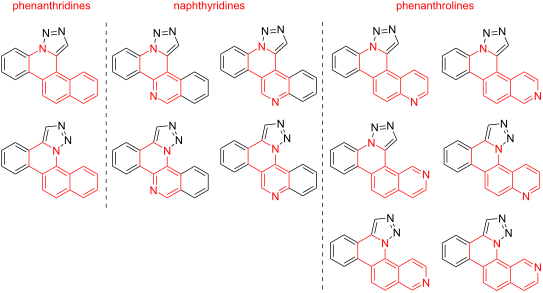
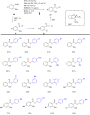
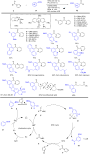
- pentacyclic ring system. A general downfield shifting of the entire set of signals by no less than 0.5 ppm supports the expansion of the overall aromatic π-system upon annulation. Aromatic signal symmetry for non-annulated compounds 12 and 42 show a lack of distinct rotational isomers at room temperature on


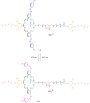
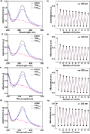
Effect of a photoswitchable rotaxane on membrane permeabilization across lipid compositions
Beilstein J. Org. Chem. 2025, 21, 2498–2512, doi:10.3762/bjoc.21.192
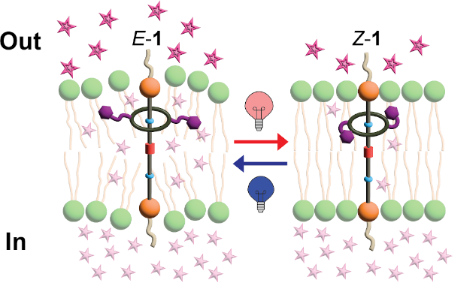
- formation of liquid-ordered (Lo) domains [16]. To further assess the effect of membrane rigidity on rotaxane behavior, we also studied LUVs composed solely of DPPC lipids, which form a highly ordered gel phase (Lβ) at room temperature due to their saturated acyl chains [17]. Rotaxane 1 was incorporated into
- ). Similarly, in LUVs composed of pure DPPC, which adopts a highly ordered gel phase (Lβ) at room temperature [17], minimal release was observed: 7% with rotaxane 1-E, 3% with rotaxane 1-Z, 6% with rotaxane 2, and 4% with axle 3 (Table 1, Figure 4a, and Supporting Information File 1, Figures S1d and S10). Our




Assembly strategy for thieno[3,2-b]thiophenes via a disulfide intermediate derived from 3-nitrothiophene-2,5-dicarboxylate
Beilstein J. Org. Chem. 2025, 21, 2489–2497, doi:10.3762/bjoc.21.191
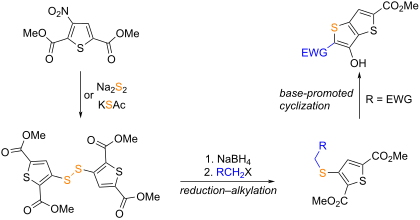
- 3) was used as solvent, the reduction of disulfide 3 with NaBH4 proceeded more efficiently at reflux for 2 h. The reaction mixture was then treated with K2CO3 and the alkylating agent at room temperature. The product was identified as the desired 3-benzylthio-substituted thiophene-2,5-dicarboxylate
- reactions, probably involving ester hydrolysis or alkylating agent decomposition, can be avoided by omitting the external base. In addition, Na2S2O4 was investigated as a reductant in a DMF/water 9:1 (v/v) mixture at room temperature (Table 2, entry 6). In the presence of both K2CO3 and the alkylating agent
- also gave product 7a in about 25% yield, along with the formation of a mixture of byproducts. It was found that the most favorable conditions for cyclization of compounds 4a, 4b, and 5a were their treatment with excess LiH in a solution of dry DMF at room temperature for 24 h. In this way, products 7a



Palladium-catalyzed regioselective C1-selective nitration of carbazoles
Beilstein J. Org. Chem. 2025, 21, 2479–2488, doi:10.3762/bjoc.21.190
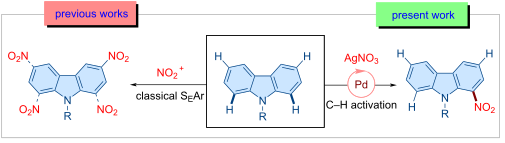
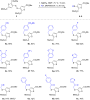
- NiCl2/NaBH4 in methanol at room temperature, affording the corresponding amine 4 in 93% yield. To align with green chemistry principles, we employed a recently reported mechanochemical protocol by Ito and co-workers for the reduction of nitro compounds to amines [72]. Using this solvent-free method
- , 1.2 equiv). Then, the solvent 1,4-dioxane (2.0 mL) was added, and the reaction mixture was allowed to stir in a preheated oil bath at 120 °C for 24 h. Upon completion of the reaction time, the reaction mixture was cooled to room temperature and diluted with dichloromethane (10 mL). The reaction

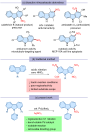

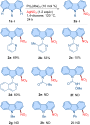
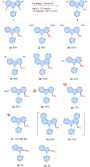
Ex-situ generation of gaseous nitriles in two-chamber glassware for facile haloacetimidate synthesis
Beilstein J. Org. Chem. 2025, 21, 2465–2469, doi:10.3762/bjoc.21.188
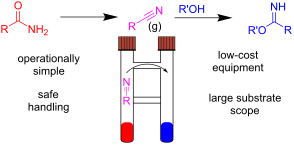
- [14][15][16][17]. Recently, 2,2,2-trifluoroacetaldehyde O-(aryl)oxime has been introduced as a precursor for trifluoroacetonitrile allowing to work under mild conditions at room temperature (Figure 1) [18]. Whether one prepares a precursor or the actual reagent, a separate setup is needed and hence
- conclusion, we have developed a simple and safe methodology for the on-demand ex situ generation of stoichiometric amounts of gaseous haloacetonitriles in a closed system at room temperature. The methodology is safe, robust, and operationally simple on a laboratory scale. The method was exemplified by the


Catalytic enantioselective synthesis of selenium-containing atropisomers via C–Se bond formations
Beilstein J. Org. Chem. 2025, 21, 2447–2455, doi:10.3762/bjoc.21.186
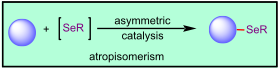
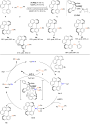
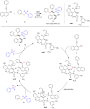
- reaction yielded the desired product at room temperature with high regioselectivity and stereoselectivity (E/Z ratio >99:1). Notably, when chiral catalyst (cat.1) was used, the reaction afforded the axially chiral product 9 in 43% yield with 84% ee. The proposed mechanism proceeds as follows. Catalyst cat




Transformation of the cyclohexane ring to the cyclopentane fragment of biologically active compounds
Beilstein J. Org. Chem. 2025, 21, 2416–2446, doi:10.3762/bjoc.21.185
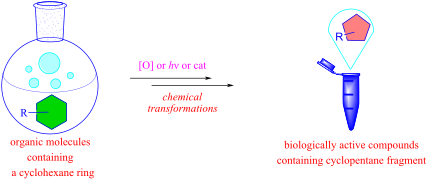
- have been little studied, and are of interest to synthetic chemists. Thus, the interaction of (−)-metaphanine (70) with ammonia in CH3OH at room temperature led to the in situ formation of imine 72, which, as a result of an intramolecular aza-benzilic acid-type rearrangement, was converted in more than


The high potential of methyl laurate as a recyclable competitor to conventional toxic solvents in [3 + 2] cycloaddition reactions
Beilstein J. Org. Chem. 2025, 21, 2389–2415, doi:10.3762/bjoc.21.184
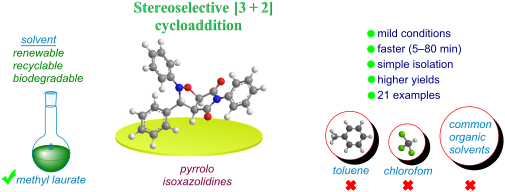
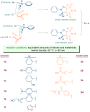
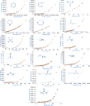
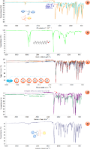
- experiment was conducted in which a series of organic solvents and water were subjected to solubility tests. For the purposes of this experiment, approximately 15 mg of nitrone was mixed with 1 mL of solvent in a 10 mL test tube at room temperature (22 °C). As demonstrated in Figure 8c, the solvents under
- completely consumed. Subsequently, the reaction mixture was cooled to room temperature and hexane was added with rapid stirring, allowing the cycloaddition product to precipitate as a mixture of cis and trans diastereoisomers in the form of a white solid. The precipitate was then washed with a small quantity






An Fe(II)-catalyzed synthesis of spiro[indoline-3,2'-pyrrolidine] derivatives
Beilstein J. Org. Chem. 2025, 21, 2383–2388, doi:10.3762/bjoc.21.183
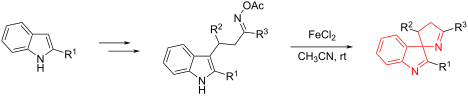
- model ketone oxime acetate from β-3-indolyl ketone 3a using the previously described telescopic protocol [17]. This substrate was subjected to FeCl2-catalyzed spirocyclization in acetonitrile at room temperature, affording the desired spirocyclic product 4a in 70% yield as a mixture of diastereomers (dr




Rotaxanes with integrated photoswitches: design principles, functional behavior, and emerging applications
Beilstein J. Org. Chem. 2025, 21, 2345–2366, doi:10.3762/bjoc.21.179

- stiff-stilbene facilitated the formation of aggregates, resulting in organic room-temperature phosphorescence. The phosphorescent properties can be modulated by inducing macrocycle translation through acid–base stimuli or by disrupting the aggregates via stiff-stilbene photoisomerization. The authors


Recent advances in Norrish–Yang cyclization and dicarbonyl photoredox reactions for natural product synthesis
Beilstein J. Org. Chem. 2025, 21, 2315–2333, doi:10.3762/bjoc.21.177
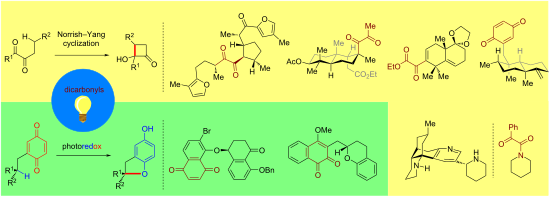
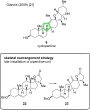
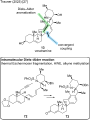
- blue LEDs at room temperature constructed a single diastereoisomer 23 in 90% yield. From 23, the ABCDE pentacyclic skeleton of phainanoids (27) was ultimately established via a Mitsunobu reaction, intramolecular nucleophilic substitution with in situ-generated aryllithium, and protecting group
- room temperature, delivering spiroacetal (S)-114 with complete retention of configuration (>99% ee). The subsequent one-pot acetylation generated (S)-115 in 83% overall yield over three steps from (S)-112. The following functional group manipulations of (S)-115 – including debenzylation/debromination




Halogenated butyrolactones from the biomass-derived synthon levoglucosenone
Beilstein J. Org. Chem. 2025, 21, 2297–2301, doi:10.3762/bjoc.21.175
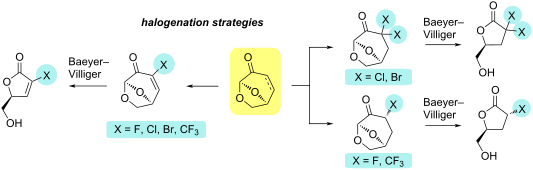
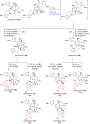
- enamine 9b, which was completely consumed in 6 hours at room temperature. Following acidic hydrolysis of the enamine, a mixture of α-trifluoromethylated ketone diastereomers was obtained, and subsequent epimerization with K2CO3 afforded 19 as a single stereoisomer in 48% yield. The equatorial position of



Thiadiazino-indole, thiadiazino-carbazole and benzothiadiazino-carbazole dioxides: synthesis, physicochemical and early ADME characterization of representatives of new tri-, tetra- and pentacyclic ring systems and their intermediates
Beilstein J. Org. Chem. 2025, 21, 2220–2233, doi:10.3762/bjoc.21.169
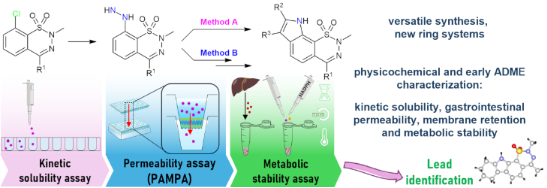
- 100 μM target concentration (1% DMSO). In the case of 7i, 7j, (E)-9a, and (E)-9b, samples were prepared with 50 μM (1% DMSO) and 100 μM (10% DMSO) target concentration, respectively. The plate was then sealed and shaken for 2 hours at room temperature. Each compound was investigated in 3 replicates
- PBS (pH 6.5) in each well to achieve 100 μM target concentration (1% DMSO). These samples were shaken for 1 hour at room temperature then filtered the same way as the kinetic solubility samples to make initial solutions for the PAMPA assay. The artificial membrane was fabricated by dissolving ʟ-α


A m-quaterphenyl probe for absolute configurational assignments of primary and secondary amines
Beilstein J. Org. Chem. 2025, 21, 2211–2219, doi:10.3762/bjoc.21.168
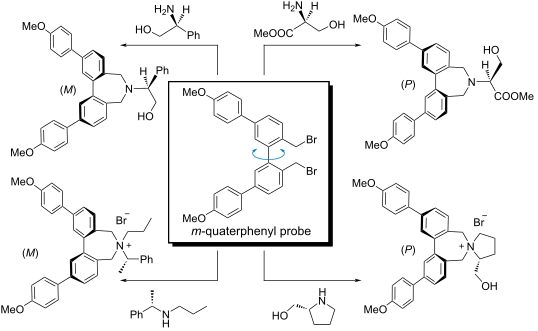
- at room temperature [41][42][43]. The central biphenyl moiety of conjugates 2a–h also rotates freely, forming an equilibrium mixture of P and M conformers. The relative amounts of P and M conformers depend on the chirality of the linked amine moieties. Figure 1a shows the UV and CD spectra of the
- )-5,7-dihydro-6H-dibenzo[c,e]azepin-6-yl]propan-1-ol ((S)-2a). A mixture of m-quaterphenyl probe 1 (290 mg, 0.526 mmol), ʟ-alaninol (48.3 mg, 0.643 mmol) and K2CO3 (294 mg, 2.12 mmol) in CH3CN (12 mL) was stirred at 85 °C for 3 h. After cooling to room temperature, the mixture was filtered through a pad


C2 to C6 biobased carbonyl platforms for fine chemistry
Beilstein J. Org. Chem. 2025, 21, 2103–2172, doi:10.3762/bjoc.21.165
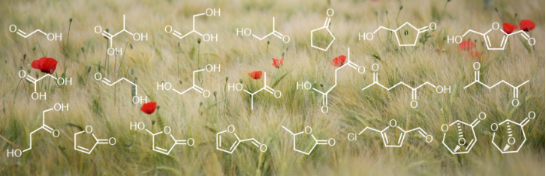
- -synthesis of formamides and formates was achieved in particularly good yield by selective oxidation of DHA using a Cu/Al2O3 catalyst with single active CuII species at room temperature without using a base (Scheme 20). 1-Hydroxypropan-2-one Gu et al. reported the [3 + 2] cyclization reaction of 1
- HFO with benzoic acid amide or furan-2-carboxamide in 1:1 molar ratio at 70 °C for 4–8 h (Scheme 42, path c) [132]. The reaction of HFO with 2-methylfuran in a 1:2.2 molar ratio in diethyl ether solution at room temperature in the presence of catalytic amounts of perchloric acid for 5 hours led to the


Solar thermal fuels: azobenzene as a cyclic photon–heat transduction platform
Beilstein J. Org. Chem. 2025, 21, 2036–2047, doi:10.3762/bjoc.21.159
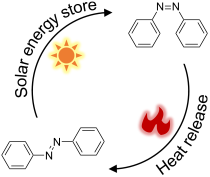
- temperature and the Tm of the isomerized cis-azobenzene is below room temperature, while others require solvent-assisted charging mechanisms [70][71]. This structural and functional diversity makes them particularly valuable for solar thermal storage applications. Feng et al. incorporated fluorinated
- azobenzene small molecules into polymer fibers [65], enabling solvent-free charging and discharging under visible light (Figure 6a). This material exhibited good capacity for releasing high-temperature heat (80–95 °C) at room temperature and in cold environments, along with an energy storage lifetime
- azobenzene derivatives [82][83][84][85][86][87][88]. From an energy charging perspective, some solvent-free systems store energy in the solid state [89] or via photoinduced solid–liquid phase transitions [61][69][74], which occur because the melting temperature (Tm) of trans-azobenzene is above room




Switchable pathways of multicomponent heterocyclizations of 5-amino-1,2,4-triazoles with salicylaldehydes and pyruvic acid
Beilstein J. Org. Chem. 2025, 21, 2030–2035, doi:10.3762/bjoc.21.158
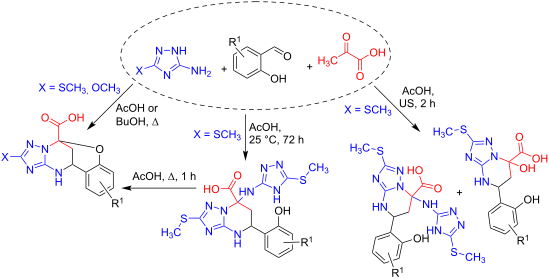
- -triazoles, pyruvic acid, and salicylaldehydes were studied under different conditions. Upon conventional heating, benzotriazolooxadiazocine-5-carboxylic acids were formed in the three-component reactions as single reaction products. Upon ultrasonic activation or mechanical stirring at room temperature, the
- -aminotriazoles 1a,b having pronounced electron-donating substituents (methylthio- and methoxy groups). On the other hand, the MCR of the reagents 1a, 2a–c and 3 under ultrasonic irradiation for 2 h at room temperature (25 °C) (Scheme 3) afforded a mixture of 5-(2-hydroxyphenyl)-2-(methylthio)-7-((3-(methylthio
- compounds 5d and 6d). Unfortunately, all attempts to separate these mixtures were unsuccessful. However, repeating the reaction under mechanical stirring at room temperature for 72 h yielded tetrahydrotriazolopyrimidine-7-carboxylic acids 5a–c as a mixture of two diastereomers (Scheme 3, Table 2). In the


Aryl iodane-induced cascade arylation–1,2-silyl shift–heterocyclization of propargylsilanes under copper catalysis
Beilstein J. Org. Chem. 2025, 21, 1984–1994, doi:10.3762/bjoc.21.154
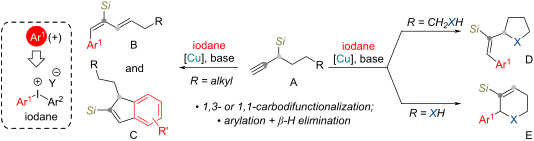
- ) resulted in the formation of more side products (Table 3, entry 9), and we therefore decided to proceed with 5 mol % of the catalyst for the substrate scope. We also observed that, in the absence of base, even at room temperature, only the protodecupration product 12 was obtained (with up to 69% NMR yield


Asymmetric total synthesis of tricyclic prostaglandin D2 metabolite methyl ester via oxidative radical cyclization
Beilstein J. Org. Chem. 2025, 21, 1964–1972, doi:10.3762/bjoc.21.152
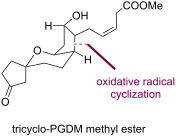
- was initially investigated (Scheme 3). Chan’s diene (16) was subjected to condensation with freshly distilled aldehyde 17 in THF at room temperature, using a catalytic system comprising Ti(OiPr)4/(S)-BINOL complex (2.0 mol %). Subsequent deprotection with pyridinium p-toluenesulfonate (PPTS) at 0 °C
- was treated with p-toluenesulfonic acid (p-TSA) in EtOH at room temperature to afford ketal 24 in 83% yield as a single diastereomer. Subsequently, palladium-catalyzed decarboxylative allylation delivered compound 25 in 89% yield. The efficiency of our first-generation strategy for asymmetric
- -triisopropylbenzenethiol (TRIPSH) through a hydrogen atom transfer (HAT) process to afford intermediate 30 [39], which then cyclized to yield product 21. To install the allyl group at C8 with the desired stereochemistry, we treated compound 21 with p-TSA in EtOH at room temperature, and ketal 31 was obtained in 87% yield



Synthesis of N-doped chiral macrocycles by regioselective palladium-catalyzed arylation
Beilstein J. Org. Chem. 2025, 21, 1917–1923, doi:10.3762/bjoc.21.149
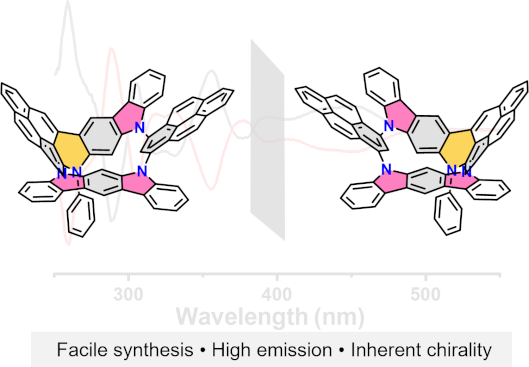
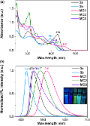
- (c) MC3. (d) Molecular arrangements of MC3. Hydrogen atoms are omitted for clarity. (a) Absorptions and (b) emissions of compounds 3a, 3b, MC1, MC2, and MC3 measured in dichloromethane at room temperature. The inset shows the photographs under UV light at 365 nm. The concentration is 10 μM
- . Calculated frontier molecular orbitals and relative energy levels of MC1 (left), MC2 (middle), and MC3 (right) calculated at the B3LYP/6-31G(d) level of theory. (a) CD spectra, (b) |gabs|, and (c) glum values of enantiomers of MC1 measured in dichloromethane at room temperature. The concentrations were 10 μM