Search results
Search for "glycosides" in Full Text gives 144 result(s) in Beilstein Journal of Organic Chemistry.
A selective and mild glycosylation method of natural phenolic alcohols
Beilstein J. Org. Chem. 2016, 12, 524–530, doi:10.3762/bjoc.12.51
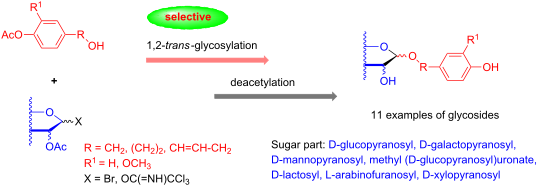
- to the stereoselective glycoside synthesis. The final products were obtained by conventional Zemplén deacetylation. Keywords: diastereoselectivity; p-hydroxyphenylalkyl glycosides; mild promoters; natural products; 1,2-trans-glycosylation; Introduction Arylalkyl (substituted benzyl, phenethyl and
- phenylpropenyl) glycosides having a free phenolic function at the para-position of the aglycone are substances widely occurring in plants. They exhibit numerous biological activities which are in many cases related to their structure–antioxidant activity relationship. 4-Hydroxy-3-methoxybenzyl β-D
- exhibit a hypotensive effect [14] (Figure 1). The activities of the above mentioned glycosides are primarily related to the structure of the aglycone. The glycosylation of the poorly soluble hydroxyalkylphenols, such as 4-hydroxybenzyl, vanillyl, 4-hydroxyphenethyl and coniferyl alcohols, significantly


Mycothiol synthesis by an anomerization reaction through endocyclic cleavage
Beilstein J. Org. Chem. 2016, 12, 328–333, doi:10.3762/bjoc.12.35
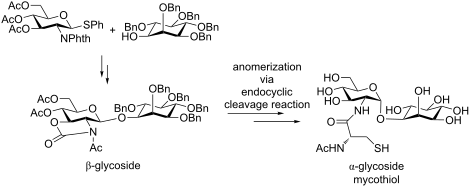
- glycolipids [35][36][37]. Sulfated sugars are isomerized from pyranosides to furanosides [38]. The anomerization reaction would be a useful methodology to prepare 1,2-cis-glycosides such as heparin and glycosylphosphatidylinositol (GPI) anchors. Structure of mycothiol 1. Detoxification pathway mediated by MSH


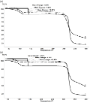
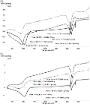
Thermal and oxidative stability of Atlantic salmon oil (Salmo salar L.) and complexation with β-cyclodextrin
Beilstein J. Org. Chem. 2016, 12, 179–191, doi:10.3762/bjoc.12.20
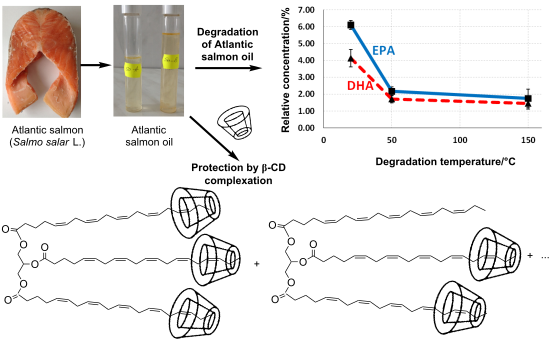
- natural antioxidants are flavonoids, anthocyanins and their glycosides. Huber and collaborators [18] revealed the inhibition of PUFA oxidation by quercetin and its 3-O-glucoside. They were as effective as butylated hydroxytoluene (BHT, a synthetic antioxidant) against the oxidation of DHA and methylated



Synthesis of D-fructose-derived spirocyclic 2-substituted-2-oxazoline ribosides
Beilstein J. Org. Chem. 2015, 11, 2289–2296, doi:10.3762/bjoc.11.249
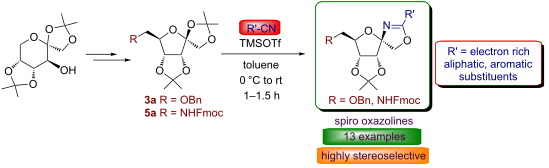
- nucleophilic substitution at the anomeric center by vicinal participation of the C2 acylamino group. These are highly reactive and favor the formation of 1,2-trans-glycosides in a diastereoselective fashion [23][24][25][26]. Secondly, the C1 N-linked 1,2-glycooxazolines (Figure 1, 5) are derived from either


Synthesis, antimicrobial and cytotoxicity evaluation of new cholesterol congeners
Beilstein J. Org. Chem. 2015, 11, 1922–1932, doi:10.3762/bjoc.11.208
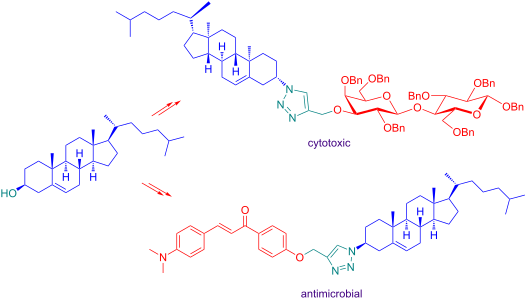
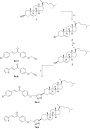
- (V), were used to prepare nontoxic unilamellar vesicles as nanocarriers for gene delivery into Neuro2A cells, which are involved in neurodegenerative diseases [19]. Also, the involvement of cholesterol metal ion complexes in Alzheimer’s disease was reviewed [20]. Cholesterol glycosides are known for




Dicarboxylic esters: Useful tools for the biocatalyzed synthesis of hybrid compounds and polymers
Beilstein J. Org. Chem. 2015, 11, 1583–1595, doi:10.3762/bjoc.11.174

- these molecules along with the presence of multiple functional groups make their chemical manipulation difficult. This inherent “fragility” makes biocatalysis an attractive method for their derivatization. Specifically, glycosides and polyhydroxylated compounds can be selectively acylated at specific
- the alkaline protease from Bacillus subtilis on 7 [25]. The carboxyacetyl (malonyl) derivative of some flavonoid glycosides (i.e., 8b) and of ginsenoside Rg1 (9b) could be obtained with two-step sequences. The preliminary CAL-B catalyzed acylations of 8 with dibenzyl malonate and of 9 with bis(2,2,2


Cross-metathesis reaction of α- and β-vinyl C-glycosides with alkenes
Beilstein J. Org. Chem. 2015, 11, 1392–1397, doi:10.3762/bjoc.11.150

- ClCH2CH2Cl the latter required the presence of CuI in CH2Cl2 to achieve good yields of the products. A simple method for the preparation of α- and β-vinyl C-deoxyribosides was also developed. In addition, feasibility of deprotection and further transformations were briefly explored. Keywords: C-glycosides
- ; catalysis; carbohydrates; cross-metathesis; ruthenium; Introduction Natural and unnatural C-substituted glycosides are important compounds with a plethora of attractive biological properties and they often have been used as artificial DNA components [1]. Among various synthetic procedures providing C
- (8) There have been, to the best of our knowledge, just a handful of reports of cross-metathesis reactions of other vinyl C-glycosides. Among these reports metatheses of 1-(D-glucopyranosyl)prop-2-ene derivatives with various alkenes [36][37][38][39][40] and one report regarding a 1-(α-D


Are D-manno-configured Amadori products ligands of the bacterial lectin FimH?
Beilstein J. Org. Chem. 2015, 11, 1096–1104, doi:10.3762/bjoc.11.123
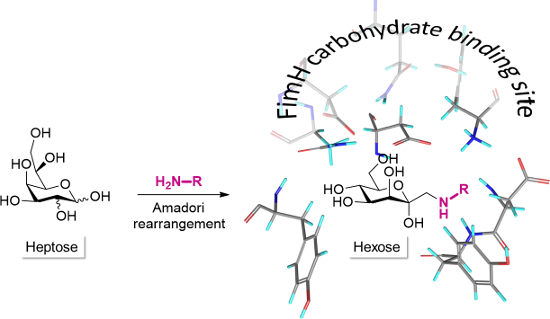
- potential as therapeutics and as tools for mechanistic studies in biology. This is because they are not sensitive towards enzymatic hydrolysis such as in physiological environment, in contrast to the naturally occurring O- and N-glycosides. With respect to our long-lasting interest in the design and
- predictions made by molecular docking, inhibition–adhesion studies using type 1-fimbriated fluorescent E. coli were performed [30]. Accordingly, the manno-configured glycosides 9 and 10 were used as inhibitors of FimH-mediated bacterial adhesion to mannan employing a microtiter plate format and GFP


N-Alkyl derivatives of diosgenyl 2-amino-2-deoxy-β-D-glucopyranoside; synthesis and antimicrobial activity
Beilstein J. Org. Chem. 2015, 11, 869–874, doi:10.3762/bjoc.11.97
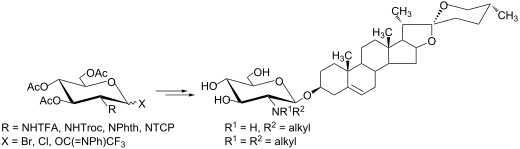
- . Keywords: antimicrobial activities; D-glucosamine; diosgenin glycosylation; N-alkylation; Introduction Saponins are a group of steroid or triterpenoid glycosides, widely distributed in the plant kingdom [1]. Saponins are characteristic by their foaming properties in aqueous solution, causing them to be
- saponins have been investigated [12][13][14][15][16][17][18][19][20][21][22] as well as the evaluation of their antitumor activities [23][24][25][26][27]. Naturally-occurring diosgenyl glycosides are the most abundant steroidal saponins. They have been continuously synthesized [28][29][30][31][32] and
- their cardiovascular, antifungal, anticancer [33][34][35][36] and antithrombotic activities [37] have been investigated. Gelation ability of the pentose derivatized diosgenyl saponins have also been reported [38]. In the family of diosgenyl β-glycosides D-glucopyranose is the first sugar attached to the


Synthesis of carbohydrate-scaffolded thymine glycoconjugates to organize multivalency
Beilstein J. Org. Chem. 2015, 11, 668–674, doi:10.3762/bjoc.11.75
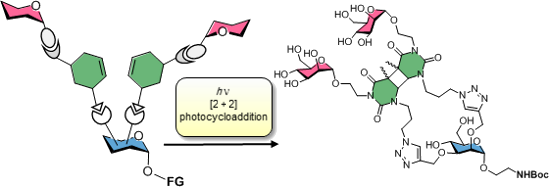
- , it is known that the thymine heterocycle can be easily N3-alkylated with, for example, bromoalkyl glycosides. This reaction can be used to install specific sugar moieties for biological recognition [5]. Hence, thymine was employed as the photosensitive control element, a functionalized mannoside was



Synthesis of 1,2-cis-2-C-branched aryl-C-glucosides via desulfurization of carbohydrate based hemithioacetals
Beilstein J. Org. Chem. 2015, 11, 583–588, doi:10.3762/bjoc.11.64
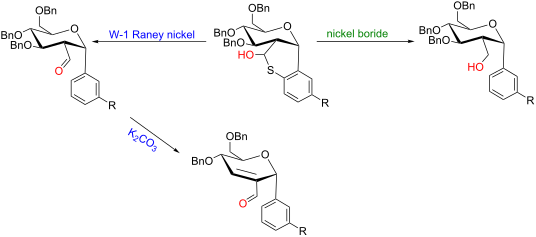
- biologically important compounds. Although the synthesis of such carbohydrate derivatives is extensively studied, the synthesis of 1,2-cis-2-C-branched C-, S-, and N-glycosides is less explored. In this article a synthetic strategy for the synthesis of 1,2-cis-2-C-branched-aryl-C-glucosides is reported via a
- stereospecific preparation of 2,3-unsaturated-aryl-C-glycosides (Ferrier products). Keywords: aryl-C-glucoside; desulfurization; Ferrier product; hemithioacetal; Introduction 1-C (C-glycosides) and 2-C-branched carbohydrates are important carbohydrate analogues which have found wide application in
- glycochemistry and medicinal chemistry [1][2][3][4][5]. C-Glycosides, especially aryl-C-glycosides, are the main structural features of a number of biologically active natural products such as pluramycins (antibacterial and antitumor activities), angucyclines (antibacterial, antitumor activities, and inhibitors


Electrochemical oxidation of cholesterol
Beilstein J. Org. Chem. 2015, 11, 392–402, doi:10.3762/bjoc.11.45
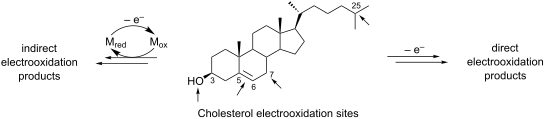
- electrochemical acetoxylation of cholesterol at the allylic position. Direct anodic oxidation of cholesterol in dichloromethane. A plausible mechanism of the electrochemical oxidation of cholesterol in dichloromethane. The electrochemical formation of glycosides and glycoconjugates. Efficient electrochemical


Photovoltaic-driven organic electrosynthesis and efforts toward more sustainable oxidation reactions
Beilstein J. Org. Chem. 2015, 11, 280–287, doi:10.3762/bjoc.11.32
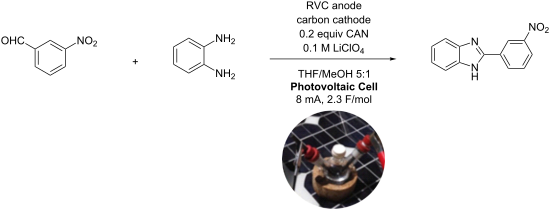
- , commercially available, photovoltaic cell. Electrochemical recycling of a chemical oxidant. Examples of solar-driven direct electrochemical oxidations. Overoxidation of dithioketal. Examples of solar-driven, indirect electrochemical oxidations. Solar-driven synthesis of C-glycosides. Solar-driven oxidative


Natural phenolic metabolites with anti-angiogenic properties – a review from the chemical point of view
Beilstein J. Org. Chem. 2015, 11, 249–264, doi:10.3762/bjoc.11.28
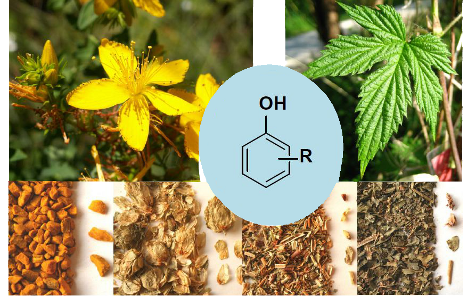
- flavonoids fisetin (67) and quercetin (68) belong to the flavonol subgroup that exhibit a double bond between C-2/C-3 and a hydroxy group at C-3. Flavonols are the most abundant flavonoid subtype in plants and commonly occur as glycosides. Nevertheless, pharmacological testing was historically concentrated
- on the investigation of the aglycones. Although this has been often criticized, it is most likely an important aspect with regard to flavonoid metabolism. It has been shown that the flavonoid glycosides are not absorbed after oral intake but are cleaved by lactase-phlorizin hydrolase and absorbed as
- that fisetin inhibits MMPs and reduces tumor-cell invasiveness and endothelial cell tube formation. Together with kaempferol, quercetin is the most abundant aglycone in flavonol glycosides. Quercetin glycosides occur in higher concentrations in onions, red wine, and green tea and in various medicinal


3α,5α-Cyclocholestan-6β-yl ethers as donors of the cholesterol moiety for the electrochemical synthesis of cholesterol glycoconjugates
Beilstein J. Org. Chem. 2015, 11, 162–168, doi:10.3762/bjoc.11.16
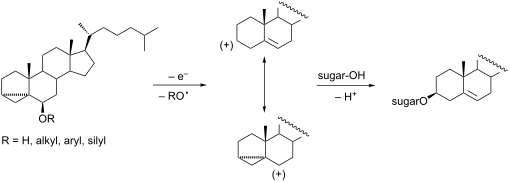
- derivatives show similar reactivities to those of previously studied 3α,5α-cyclocholestan-6β-thioethers. Keywords: cholesterol; electrochemical oxidation; glycosylation; i-cholesteryl ethers; i-steroids; Introduction We have recently elaborated an electrochemical method for the preparation of glycosides and
- glycoconjugates from 3β-hydroxy-Δ5-steroids (sterols). The method consists of electrooxidation of a proper cholesterol derivative in the presence of an unactivated sugar with a free hydroxy group at the anomeric position (formation of glycosides) or at any other position (preferentially a primary position) that


Synthesis of divalent ligands of β-thio- and β-N-galactopyranosides and related lactosides and their evaluation as substrates and inhibitors of Trypanosoma cruzi trans-sialidase
Beilstein J. Org. Chem. 2014, 10, 3073–3086, doi:10.3762/bjoc.10.324
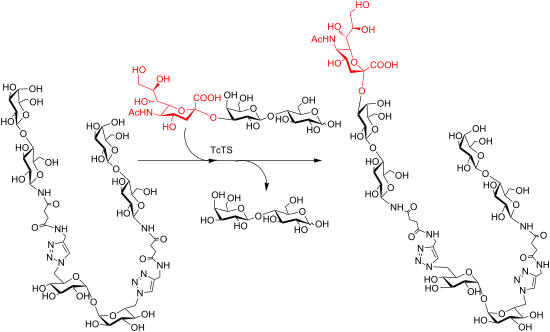
- ’-sialyllactose as sialic acid donor, in the presence of the acceptor having βGalp non reducing ends. The products were analyzed by high performance anion exchange chromatography with pulse amperometric detection (HPAEC-PAD). The ability of the different S-linked and N-linked glycosides to inhibit the sialic acid
- ). Again, they showed very similar NMR spectra. For example, in the 13C spectra the anomeric signals appeared at ca. 101 ppm, 91–97 ppm and 82 ppm, corresponding respectively to the terminal βGal, αGlc from the scaffold and the βSGlc residues. N-linked precursors 10, 12, 15 and 17 and S-glycosides 19 and
- infection process. Experimental The synthetic general methods are described in the Supporting Information File 1. Synthesis of compounds 10, 12, 15, 17, 20 and 22. General procedure for the click reaction [43][44]. The corresponding azido-saccharides 9 or 14 [34] (0.20 mmol) and N-linked glycosides 3 or 6




Galactan synthesis in a single step via oligomerization of monosaccharides
Beilstein J. Org. Chem. 2014, 10, 2658–2663, doi:10.3762/bjoc.10.279
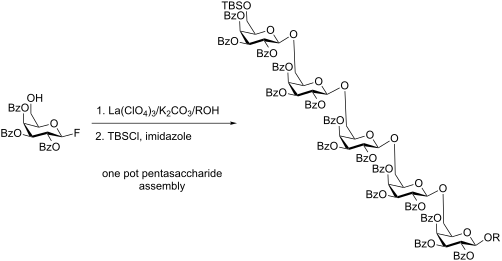
- separable oligosaccharide products that are functionalized as glycosides at their reducing termini [16]. We report here the oligomerization of a galactosyl donor in the presence of an initiating alcohol to prepare galactans ranging from mono- to pentasaccharides with concomitant control of stereochemistry


A general metal-free approach for the stereoselective synthesis of C-glycals from unactivated alkynes
Beilstein J. Org. Chem. 2014, 10, 2649–2653, doi:10.3762/bjoc.10.277
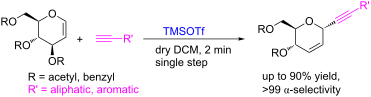
- , India 10.3762/bjoc.10.277 Abstract A novel metal-free strategy for a rapid and α-selctive C-alkynylation of glycals was developed. The reaction utilizes TMSOTf as a promoter to generate in situ trimethylsilylacetylene for C-alkynylation. Thanks to this methodology, we can access C-glycosides in a
- single step from a variety of acetylenes , i.e., arylacetylenes and most importantly aliphatic alkynes. Keywords: α-selective; C-alkynylation; glycal; metal free; TMSOTf; Introduction C-Glycosides represent an important class of carbohydrate mimics, owing to their presence in a large number of
- groups, while the stereoelectronic control allows the α-pseudo-axial orbital to form the bond [35]. Conclusion In conclusion, we developed a highly efficient and α-selective method for the synthesis of alkynyl glycosides from virtually any alkyne, that is, aliphatic and aromatic. To the best of our



Synthesis of aromatic glycoconjugates. Building blocks for the construction of combinatorial glycopeptide libraries
Beilstein J. Org. Chem. 2014, 10, 2453–2460, doi:10.3762/bjoc.10.256
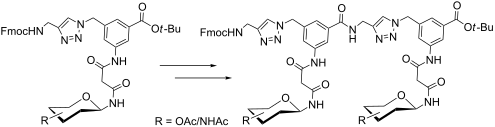
- aromatic backbone building blocks 7 and 9. Synthesis of dimers 17, 20, 22 and 24. Synthesis of glycosides 11 and 12. Synthesis of glycopeptide building blocks 1 and 2. Supporting Information Supporting Information File 387: Experimental data. Supporting Information File 388: NMR Spectra. Acknowledgements


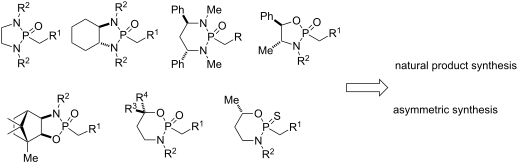
Application of cyclic phosphonamide reagents in the total synthesis of natural products and biologically active molecules
Beilstein J. Org. Chem. 2014, 10, 1848–1877, doi:10.3762/bjoc.10.195
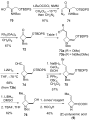
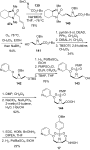
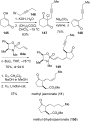
- inflammation and traumatic bleeding. The leaves and stems of this plant contain oleoside-type secoiridoid glucosides with structurally interesting tetrasubstituted cyclopentanoid monoterpene units [116]. Two representative examples of these glycosides are nudifloside A (151) and D (13), which share a common








Synthesis of rigid p-terphenyl-linked carbohydrate mimetics
Beilstein J. Org. Chem. 2014, 10, 1749–1758, doi:10.3762/bjoc.10.182
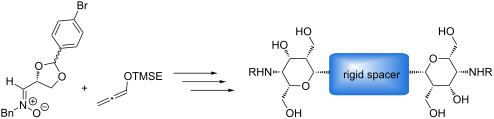
- . Unnatural divalent rigid p-terphenyl-linked C-aryl glycosides with 2.0 nm dimension are available using Suzuki cross-couplings. The key compound, a p-bromophenyl-substituted 1,2-oxazine, was prepared by a stereoselective [3 + 3]-cyclization of a D-isoascorbic acid-derived (Z)-nitrone and lithiated TMSE
- -glycosides which possess structural and functional aspects of the corresponding carbohydrates, these disadvantages can be overcome, resulting in an improved bioavailability, higher affinities and improved selectivities [8][9][10][11][12][13]. Recent results indicate that divalent rigid carbohydrate
- to heat, air and moisture compared to other organometallic reagents [21]. Up to now there are not many examples of nanorod-like carbohydrate dimers with aryl-linked divalent glycosides. A mannopyranoside dimer was generated by a palladium-catalyzed Ullmann-type reductive homocoupling [22] and


The chemoenzymatic synthesis of clofarabine and related 2′-deoxyfluoroarabinosyl nucleosides: the electronic and stereochemical factors determining substrate recognition by E. coli nucleoside phosphorylases
Beilstein J. Org. Chem. 2014, 10, 1657–1669, doi:10.3762/bjoc.10.173
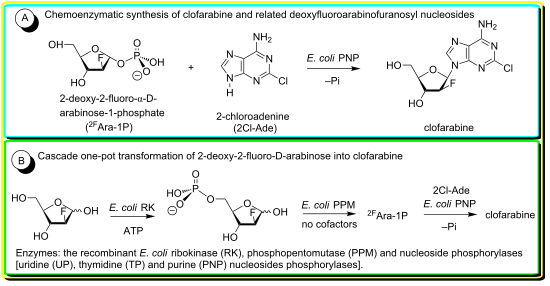
- formation of the α/β mixtures of N-9 and N-7 glycosides (cf. [17]). Despite the detailed analysis and optimization of the clofarabine process [12][13] and the bulk production of the protected nucleoside glycon 9 by chemists at Eli Lilly and Co. [18] this chemical synthesis is connected with the use of great


Expedient synthesis of 1,6-anhydro-α-D-galactofuranose, a useful intermediate for glycobiological tools
Beilstein J. Org. Chem. 2014, 10, 1651–1656, doi:10.3762/bjoc.10.172
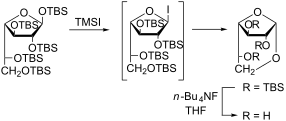
- the silica gel plate. The addition of simple alcohols or partially protected sugars as acceptors and EtN(iPr)2 as an acid scavenger led to the complete consumption of both compounds and afforded the corresponding glycosides (Scheme 2) [32]. With an excess of TMSI, a third product (Rf = 0.62) was


Synthesis and solvodynamic diameter measurements of closely related mannodendrimers for the study of multivalent carbohydrate–protein interactions
Beilstein J. Org. Chem. 2014, 10, 1524–1535, doi:10.3762/bjoc.10.157
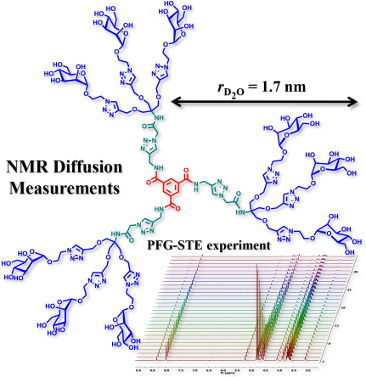
- quantitative structure–activity relationships (QSARs). In most of the studies related to aglycon modifications, it was concluded that aromatic glycosides possessed improved binding properties due to the ubiquitous presence of aromatic amino acids in the cognate binding sites [23][24][25]. This is also


Multichromophoric sugar for fluorescence photoswitching
Beilstein J. Org. Chem. 2014, 10, 1471–1481, doi:10.3762/bjoc.10.151
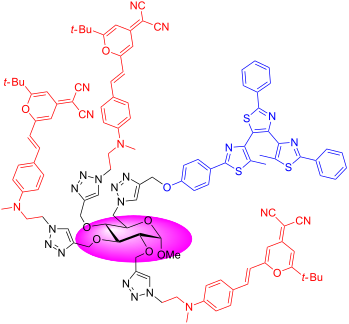
- could lead to a better ON vs OFF fluorescence contrast. By a careful molecular engineering, combining photophysical analysis and synthetic work, we are endeavoring to tune optimally the fluorophore/photochrome ratio. Glycosides, and more generally sugar molecules, may further provide appropriate