


Search results
Search for "mechanisms" in Full Text gives 692 result(s) in Beilstein Journal of Organic Chemistry. Showing first 200.
Ceratinadin G, a new psammaplysin derivative possessing a cyano group from a sponge of the genus Pseudoceratina
Beilstein J. Org. Chem. 2024, 20, 3215–3220, doi:10.3762/bjoc.20.267
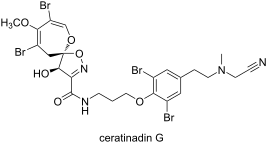
- [25][26][27][28]. It is known that natural nitrile compounds are biosynthesized through various mechanisms [29]. Rinehart and co-workers demonstrated that 2-(3,5-dibromo-4-hydroxyphenyl)acetonitrile is biosynthesized from ʟ-tyrosine via 3,5-dibromo-ʟ-tyrosine, based on experiments using 14C- and 15N


Direct trifluoroethylation of carbonyl sulfoxonium ylides using hypervalent iodine compounds
Beilstein J. Org. Chem. 2024, 20, 3182–3190, doi:10.3762/bjoc.20.263
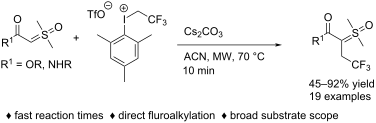
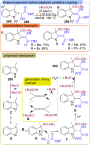
- -mediated and SN2 reaction mechanisms. Ultimately, the nudged elastic band climbing image (NEB-CI) method predicted the SN2 pathway to be favoured, and transition state optimization showed this to possess a Gibbs free energy of activation of 24.3 kcal/mol. This report shows the ease with which sulfoxonium
- mesh) as a stationary phase (eluent n-hex/AcOEt 5:95%). Representative examples of fluorine containing, biologically active compounds. Possible mechanisms for the reaction of 1a and 2a leading to 3a (via B), proceeding via either halogen-bonded adducts and reductive elimination (path 1) or directly via


Hypervalent iodine-mediated intramolecular alkene halocyclisation
Beilstein J. Org. Chem. 2024, 20, 3113–3133, doi:10.3762/bjoc.20.258
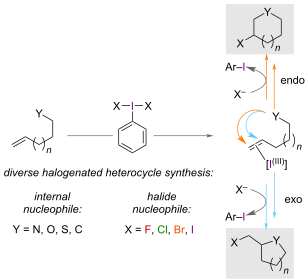
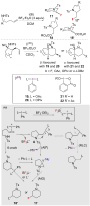
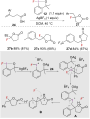
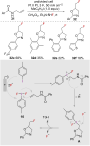
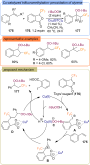
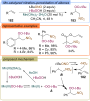
- in poor yield with α preference for 7-membered rings 7 in a ratio of 1:9.3. The authors proposed two mechanisms for the reaction (Scheme 1). In pathway A (top), the alkene-activated iodonium is formed, intramolecular attack of nitrogen forms the 6-membered ring A before an SN2 reaction with the
- difluoroiodobenzene 10 is formed in situ, which is activated by HF. Two possible mechanisms were given for the synthesis of pyrrolidines 14, which are the same two proposed for the synthesis of piperidines 6 (Scheme 1). Either an alkene-activated iodonium is formed or an activated electrophilic nitrogen is generated
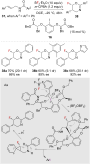
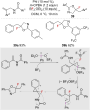
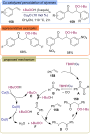
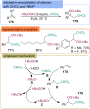
- tetrahydrofurans 25 and tetrahydropyrans 26. Unsaturated carboxylic acids 24 was also cyclised to form 5-membered fluorinated lactones 27. The mechanisms proposed for the cyclisation of unsaturated alcohols and carboxylic acids both proceed first through the activation of the alkene by the iodane (Scheme 11). The



















Advances in the use of metal-free tetrapyrrolic macrocycles as catalysts
Beilstein J. Org. Chem. 2024, 20, 3085–3112, doi:10.3762/bjoc.20.257
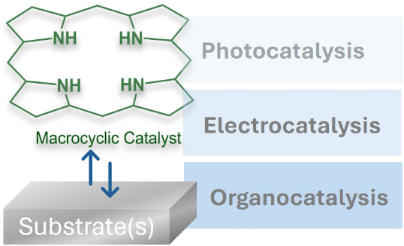
- light turned out to be as effective as blue light, providing good yields of various photochemical reactions that proceed via both oxidative and reductive quenching mechanisms. Further, using of metal-free porphyrins as photocatalysts in bioorthogonal chemistry was explored. They can be utilized in
- evolution reaction (OER). There are several reviews focusing on the relationship between metallo-catalyst structures and HER, OER, and ORR performance/mechanisms, selection of the central metal ion, and peripheral functionalization of the catalysts [106][107][108][109]. This review summarizes recent


Enantioselective regiospecific addition of propargyltrichlorosilane to aldehydes catalyzed by biisoquinoline N,N’-dioxide
Beilstein J. Org. Chem. 2024, 20, 3069–3076, doi:10.3762/bjoc.20.255
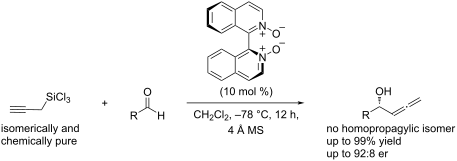
- % yield with 61:39–92:8 enantiomeric ratios. Furthermore, possible mechanisms of propargyl–allenyl isomerization of propargyltrichlorosilane were computationally investigated. Keywords: α-allenic alcohol; computational chemistry; Lewis base catalysis; organocatalysis; propargyltrichlorosilane
- allenyltrichlorosilane in the presence of N,N-diisopropylethylamine upon standing after distillation (i.e., without solvent). Although the base-promoted propargyl–allenyl isomerization is well precedented in literature [60][61], we decided to investigate possible mechanisms of the propargyltrichlorosilane isomerization
- catalytic regiospecific addition reaction to aldehydes via a systematic catalyst structure–reactivity and selectivity relationship study, and computationally investigated possible mechanisms of N,N-diisopropylethylamine-promoted propargyl–allenyl isomerization of propargyltrichlorosilane. The observed


Chemical structure metagenomics of microbial natural products: surveying nonribosomal peptides and beyond
Beilstein J. Org. Chem. 2024, 20, 3050–3060, doi:10.3762/bjoc.20.253

- ingredient(s) and their mechanisms of action, humans have taken advantage of the therapeutic effects of herbal and microbial extracts for thousands of years [1]. We now know that natural products, genetically encoded secondary metabolites, are in most cases responsible for the desirable effects in these


Advances in radical peroxidation with hydroperoxides
Beilstein J. Org. Chem. 2024, 20, 2959–3006, doi:10.3762/bjoc.20.249
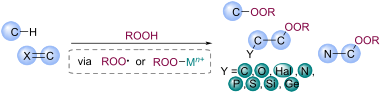
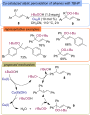
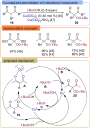
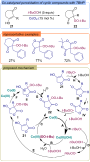
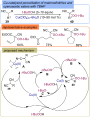
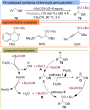
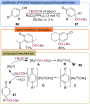
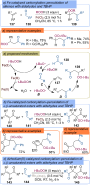
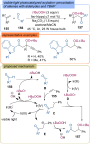
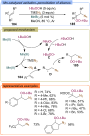
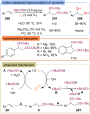
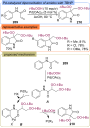
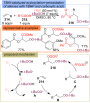
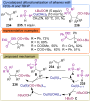
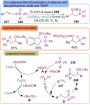
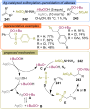
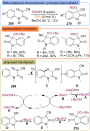
- -exchanged Montmorillonite K10 [63] were presented (Scheme 19). Chemical and kinetic data confirm that the mechanisms of the described processes are probably of a radical nature with the formation of MOO-t-Bu complexes [61]. The proposed pathway of the peroxidation is shown on the example of 9-substituted































Structure and thermal stability of phosphorus-iodonium ylids
Beilstein J. Org. Chem. 2024, 20, 2931–2939, doi:10.3762/bjoc.20.245
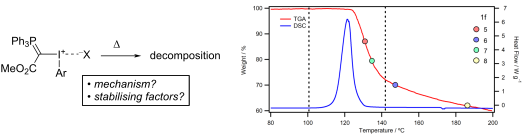
- ][26][27] and the mechanisms by which they decompose when heated through a systematic investigation of structural data from X-ray diffraction (XRD) and thermal stability data from differential scanning calorimetry (DSC) and thermogravimetric analysis (TGA). The insights from this study will galvanise


Recent advances in transition-metal-free arylation reactions involving hypervalent iodine salts
Beilstein J. Org. Chem. 2024, 20, 2891–2920, doi:10.3762/bjoc.20.243

- five to seven-membered cyclic compounds [47]. Arylation reactions using diaryliodonium salts can occur through four distinct mechanisms. First, the arylation can occur under metal-free conditions, involving the formation of a three-membered ring transition state through ligand coupling, leading to the




Synthesis of tricarbonylated propargylamine and conversion to 2,5-disubstituted oxazole-4-carboxylates
Beilstein J. Org. Chem. 2024, 20, 2827–2833, doi:10.3762/bjoc.20.238

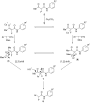
- through successive nucleophilic additions to the central carbon atom of DEMO. Cyclization of 4a quenched by D2O. Plausible mechanisms for the ring closure of 4. Hydration of the ethynyl group of 4a. Optimization of the reaction conditions for the reaction of 1a with the lithium acetylide of 3a. Addition


Investigation of a bimetallic terbium(III)/copper(II) chemosensor for the detection of aqueous hydrogen sulfide
Beilstein J. Org. Chem. 2024, 20, 2818–2826, doi:10.3762/bjoc.20.237

- fall short in environments where multiple, overlapping signals or low concentrations are present. The emerging strategies discussed in this article aim to overcome these limitations by leveraging novel materials, advanced synthesis techniques, and cutting-edge detection mechanisms for the detection of


Synthesis and antimycotic activity of new derivatives of imidazo[1,2-a]pyrimidines
Beilstein J. Org. Chem. 2024, 20, 2806–2817, doi:10.3762/bjoc.20.236
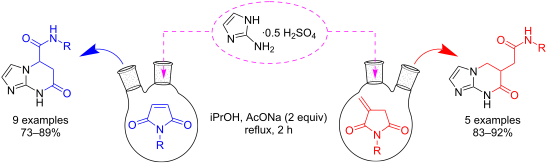
- this work was a preliminary evaluation of the potential bioactivity of the obtained compounds. In particular, a molecular docking experiment to investigate the binding mechanisms to the CYP51 enzyme and an evaluation of the antifungal activity of imidazo[1,2-a]pyrimidines against Candida albicans were


Mechanochemical difluoromethylations of ketones
Beilstein J. Org. Chem. 2024, 20, 2799–2805, doi:10.3762/bjoc.20.235
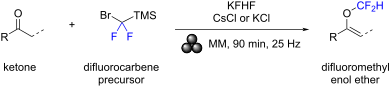
- as heteroconjugated alkenes with difluorocarbene to give 2,2-difluoro-2,3-dihydrofurans [50] remained unsuccessful (Scheme S2 in Supporting Information File 1). Two mechanisms have been proposed for the difluoromethylation of ketones, as illustrated in Scheme 4A. In both cases, the process begins


Interaction of a pyrene derivative with cationic [60]fullerene in phospholipid membranes and its effects on photodynamic actions
Beilstein J. Org. Chem. 2024, 20, 2732–2738, doi:10.3762/bjoc.20.231

- same time, unusually fast conversion of O2•– to •OH was also suggested in this system. The results above suggest that catC60-lip generated both types of ROS (1O2 and •OH) via energy transfer and electron transfer mechanisms. The present results are in line with previous studies of photoinduced ROS


Synthesis of spiroindolenines through a one-pot multistep process mediated by visible light
Beilstein J. Org. Chem. 2024, 20, 2722–2731, doi:10.3762/bjoc.20.230
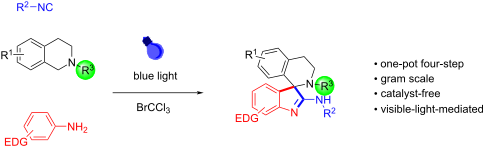
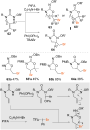
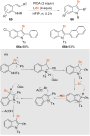
- Scheme 6. Based on the results reported by Zeitler [28], several mechanisms are involved in the oxidation of N-Ph-THIQ. The most probable involves the photoexcitation of the EDA (Electron Donor-Acceptor) complex promoting an electron transfer from N-Ph-THIQ to BrCCl3 to afford the amine radical cation
- and highly reactive BrCCl3 radical anion. Anyway, the N-Ph-THIQ can undergo numerous pathways towards the iminium ion 1a (see reference [28] for details). The oxidation of compound 2d may occur according to the same mechanism. However, alternative mechanisms, such as the direct hydride transfer from





Young investigators in natural products chemistry, biosynthesis, and enzymology
Beilstein J. Org. Chem. 2024, 20, 2720–2721, doi:10.3762/bjoc.20.229
- clusters, and enzymes, development of chemical probes, biocatalysis and chemoenzymatic total synthesis, enzymatic mechanisms, and computational investigations of chemical structures and reactions. All of the major classes of natural products are represented here: nonribosomal peptides, ribosomally
Synthesis of fluoroalkenes and fluoroenynes via cross-coupling reactions using novel multihalogenated vinyl ethers
Beilstein J. Org. Chem. 2024, 20, 2691–2703, doi:10.3762/bjoc.20.226

- , Suzuki–Miyaura and Sonogashira cross-coupling with 1 has a broad substrate scope and can be used to synthesize various fluoroalkenes 2 and fluoroenyne 3. We speculate that these reaction mechanisms were similar to general cross-coupling mechanisms [45][46]. Conclusion We used Suzuki–Miyaura and


Computational design for enantioselective CO2 capture: asymmetric frustrated Lewis pairs in epoxide transformations
Beilstein J. Org. Chem. 2024, 20, 2668–2681, doi:10.3762/bjoc.20.224
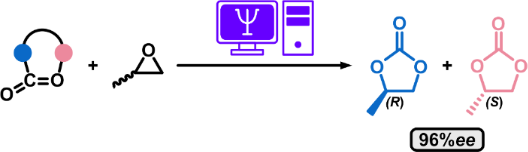
- noted previously [51][52], the reaction depicted in Scheme 1 can proceed via two distinct mechanisms. In the first mechanism, the catalyst initiates epoxide opening, followed by CO2 insertion. The second mechanism suggests that CO2 activation by the catalyst precedes its transfer to the epoxide. To
- ). All the structures studied exhibit the classical FLP characteristics, except for some systems that can be considered as “masked FLPs” (Table S4, Supporting Information File 1). Possible mechanisms As established in the previous section. the general mechanism of the coupling reaction proceeds through
- ). Passing through TS23, the product is released. Similar to mechanism 2, mechanism 3 contains eleven stationary points (Figure 5C). After the capture of CO2 by the FLP, the opening of the epoxide takes place along with the insertion reaction. The main difference from the previous two mechanisms is that a


Deciphering the mechanism of γ-cyclodextrin’s hydrophobic cavity hydration: an integrated experimental and theoretical study
Beilstein J. Org. Chem. 2024, 20, 2635–2643, doi:10.3762/bjoc.20.221

- process. An occupancy of up to 7 hydration water molecules has been found and a comparison between α-CD, β-CD, and γ-CD hydration mechanisms is provided. Results and Discussion Nonhydrated γ-CD As with the other two cyclodextrins (α- and β-), before proceeding to the complexes with water, we considered


A review of recent advances in electrochemical and photoelectrochemical late-stage functionalization classified by anodic oxidation, cathodic reduction, and paired electrolysis
Beilstein J. Org. Chem. 2024, 20, 2500–2566, doi:10.3762/bjoc.20.214
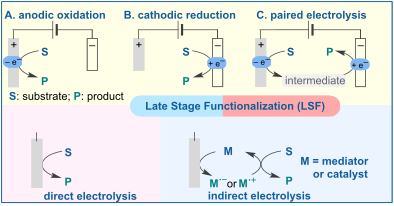
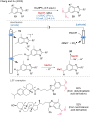
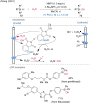
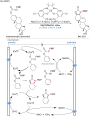
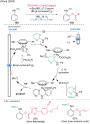
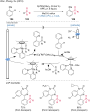
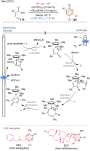
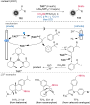
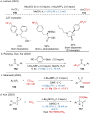
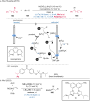
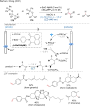
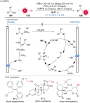
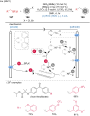
- electrochemical transformations. Detailed reaction conditions, such as electrolyte, electrode material, and the use of constant current or constant voltage, are presented. Additionally, we discuss the mechanisms of some representative reactions and provide selected examples of LSF of relevant bioactive compounds


























Machine learning-guided strategies for reaction conditions design and optimization
Beilstein J. Org. Chem. 2024, 20, 2476–2492, doi:10.3762/bjoc.20.212

- extensive effort. This involves complex parameter optimization, meticulous validation against experimental data, and careful consideration of diverse reaction conditions and possible reaction mechanisms [28][29]. Although some studies employ transition-state (TS) theory to simulate activation energies and
- reaction mechanisms. These models are particularly valuable in areas where experimental data are sparse or challenging to obtain, thereby extending the range of ML applications in chemistry. Educating the next generation of chemists, engineers, and data scientists in both ML and chemical synthesis is


Asymmetric organocatalytic synthesis of chiral homoallylic amines
Beilstein J. Org. Chem. 2024, 20, 2349–2377, doi:10.3762/bjoc.20.201
- , an observation that is in good agreement with previously obtained data on bisurea catalysts [36]. To further distinguish between the SN1 and SN2 mechanisms, the authors performed an in silico simulation of the non-catalysed reaction to determine the possible potential energy surface and found that
- –Sakurai reaction of allyltrimethylsilane with N-Fmoc aldimines. The pyrrolidine unit gem-methyl group conformational control in the squaramide-based catalyst [34]. The energetic difference between the transition states of the two proposed modes of the reaction (SN1 and SN2 mechanisms). The concerted SN2




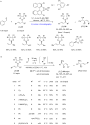


Hydrogen-bond activation enables aziridination of unactivated olefins with simple iminoiodinanes
Beilstein J. Org. Chem. 2024, 20, 2305–2312, doi:10.3762/bjoc.20.197
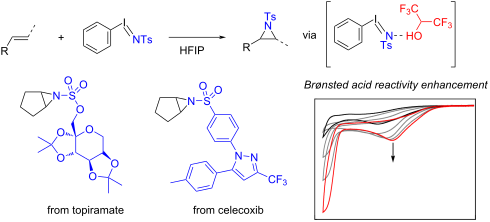
- the combination of synthetically tunable iodine-centered electrophilicity and the diversity of substrate functionalization mechanisms that can be accessed [1][2]. Large families of iodine(III)- and iodine(V)-based reagents have been developed – including iodobenzene diacetate (PhI(OAc)2, PIDA


Catalysing (organo-)catalysis: Trends in the application of machine learning to enantioselective organocatalysis
Beilstein J. Org. Chem. 2024, 20, 2280–2304, doi:10.3762/bjoc.20.196
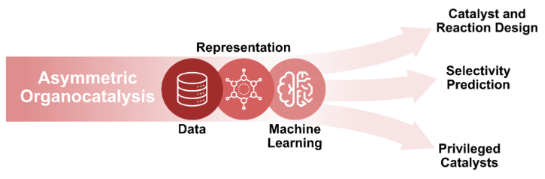
- effect studies and isotopic substitution experiments revealed multiple different mechanisms of enantioinduction for the respective combinations. To rationalise relevant interactions, MLR models were trained on subsets of the data set. For each different mechanism of enantioinduction previously elucidated
- organocatalysis, we expect a steady increase in studies aiming to bridge the gaps between different reactions that are mechanistically transferable via ML. Using this strategy, it is possible to both increase the available data (since more reactions are considered), as well as investigate more general mechanisms


Cage-like microstructures via sequential Ugi reactions in aqueous emulsions
Beilstein J. Org. Chem. 2024, 20, 2078–2083, doi:10.3762/bjoc.20.179
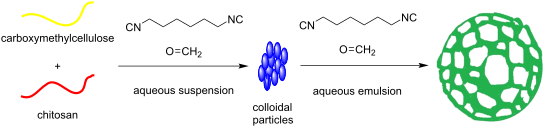
- principle, two possible mechanisms were considered: (1) Soft CMC/chitosan gel particles interacted with the surface and flattened to form discs. (2) When particles were deposited on the surface, they did not completely cover it, forming a network. In this work, we tested these hypotheses and found arguments





