


Search results
Search for "DDQ" in Full Text gives 163 result(s) in Beilstein Journal of Organic Chemistry.
Mechanochemical synthesis of small organic molecules
- Tapas Kumar Achar,
- Anima Bose and
- Prasenjit Mal
Beilstein J. Org. Chem. 2017, 13, 1907–1931, doi:10.3762/bjoc.13.186
- 11) using 2,3-dichloro-5,6-dicyanoquinone (DDQ) as an efficient oxidant [67]. Su and co-workers have also reported an asymmetric version of the CDC reaction between terminal alkynes and sp3 C–H bonds under high speed ball milling conditions [68]. Several optically active 1-alkynyl
- tetrahydroisoquinoline derivatives were synthesized using a pyridine-based chiral ligand (PyBox, Scheme 12) in the presence of DDQ (2,3-dichloro-5,6-dicyano-1,4-benzoquinone). The coupling products were isolated in fair yields with ee’s (enantiomeric excesses) up to 79%. The milling copper balls were also identified as
- reacting catalyst. Su and co-workers reported an Fe(III)-catalyzed coupling of 3-benzyl indoles with molecules having active methylene group under solvent-free ball-mill in presence of silica gel as milling auxiliary. Using 10 mol % Fe(NO3)3·9H2O as catalyst and 1.0 equiv of DDQ afforded good yield of

Graphical Abstract

Scheme 1: Mechanochemical aldol condensation reactions [48].

Scheme 2: Enantioselective organocatalyzed aldol reactions under mechanomilling. a) Based on binam-(S)-prolin...

Scheme 3: Mechanochemical Michael reaction [51].

Scheme 4: Mechanochemical organocatalytic asymmetric Michael reaction [52].

Scheme 5: Mechanochemical Morita–Baylis–Hillman (MBH) reaction [53].

Scheme 6: Mechanochemical Wittig reactions [55].

Scheme 7: Mechanochemical Suzuki reaction [56].

Scheme 8: Mechanochemical Suzuki–Miyaura coupling by LAG [57].

Scheme 9: Mechanochemical Heck reaction [59].

Scheme 10: a) Sonogashira coupling under milling conditions. b) The representative example of a double Sonogas...

Scheme 11: Copper-catalyzed CDC reaction under mechanomilling [67].

Scheme 12: Asymmetric alkynylation of prochiral sp3 C–H bonds via CDC [68].

Scheme 13: Fe(III)-catalyzed CDC coupling of 3-benzylindoles [69].

Scheme 14: Mechanochemical synthesis of 3-vinylindoles and β,β-diindolylpropionates [70].

Scheme 15: Mechanochemical C–N bond construction using anilines and arylboronic acids [78].

Scheme 16: Mechanochemical amidation reaction from aromatic aldehydes and N-chloramine [79].

Scheme 17: Mechanochemical CDC between benzaldehydes and benzyl amines [81].

Scheme 18: Mechanochemical protection of -NH2 and -COOH group of amino acids [85].

Scheme 19: Mechanochemical Ritter reaction [87].

Scheme 20: Mechanochemical synthesis of dialkyl carbonates [90].

Scheme 21: Mechanochemical transesterification reaction using basic Al2O3 [91].

Scheme 22: Mechanochemical carbamate synthesis [92].

Scheme 23: Mechanochemical bromination reaction using NaBr and oxone [96].

Scheme 24: Mechanochemical aryl halogenation reactions using NaX and oxone [97].

Scheme 25: Mechanochemical halogenation reaction of electron-rich arenes [88,98].

Scheme 26: Mechanochemical aryl halogenation reaction using trihaloisocyanuric acids [100].

Scheme 27: Mechanochemical fluorination reaction by LAG method [102].

Scheme 28: Mechanochemical Ugi reaction [116].

Scheme 29: Mechanochemical Passerine reaction [116].

Scheme 30: Mechanochemical synthesis of α-aminonitriles [120].

Scheme 31: Mechanochemical Hantzsch pyrrole synthesis [121].

Scheme 32: Mechanochemical Biginelli reaction by subcomponent synthesis approach [133].

Scheme 33: Mechanochemical asymmetric multicomponent reaction[134].

Scheme 34: Mechanochemical Paal–Knorr pyrrole synthesis [142].

Scheme 35: Mechanochemical synthesis of benzothiazole using ZnO nano particles [146].

Scheme 36: Mechanochemical synthesis of 1,2-di-substituted benzimidazoles [149].

Scheme 37: Mechanochemical click reaction using an alumina-supported Cu-catalyst [152].

Scheme 38: Mechanochemical click reaction using copper vial [155].

Scheme 39: Mechanochemical indole synthesis [157].

Scheme 40: Mechanochemical synthesis of chromene [158].

Scheme 41: Mechanochemical synthesis of azacenes [169].

Scheme 42: Mechanochemical oxidative C-P bond formation [170].

Scheme 43: Mechanochemical C–chalcogen bond formation [171].

Scheme 44: Solvent-free synthesis of an organometallic complex.

Scheme 45: Selective examples of mechano-synthesis of organometallic complexes. a) Halogenation reaction of Re...

Scheme 46: Mechanochemical activation of C–H bond of unsymmetrical azobenzene [178].

Scheme 47: Mechanochemical synthesis of organometallic pincer complex [179].

Scheme 48: Mechanochemical synthesis of tris(allyl)aluminum complex [180].

Scheme 49: Mechanochemical Ru-catalyzed olefin metathesis reaction [181].

Scheme 50: Rhodium(III)-catalyzed C–H bond functionalization under mechanochemical conditions [182].

Scheme 51: Mechanochemical Csp2–H bond amidation using Ir(III) catalyst [183].

Scheme 52: Mechanochemical Rh-catalyzed Csp2–X bond formation [184].

Scheme 53: Mechanochemical Pd-catalyzed C–H activation [185].

Scheme 54: Mechanochemical Csp2–H bond amidation using Rh catalyst.

Scheme 55: Mechanochemical synthesis of indoles using Rh catalyst [187].

Scheme 56: Mizoroki–Heck reaction of aminoacrylates with aryl halide in a ball-mill [58].

Scheme 57: IBX under mechanomilling conditions [8].

Scheme 58: Thiocarbamoylation of anilines; trapping of reactive aryl-N-thiocarbamoylbenzotriazole intermediate...
Oxidative dehydrogenation of C–C and C–N bonds: A convenient approach to access diverse (dihydro)heteroaromatic compounds
- Santanu Hati,
- Ulrike Holzgrabe and
- Subhabrata Sen
Beilstein J. Org. Chem. 2017, 13, 1670–1692, doi:10.3762/bjoc.13.162
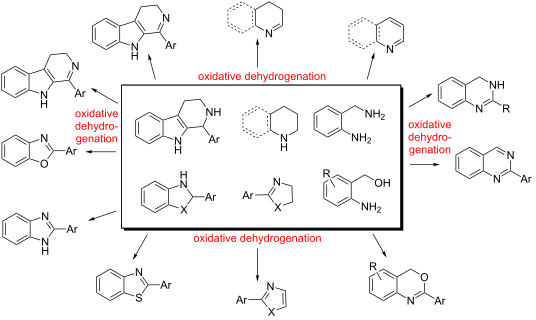
- -dichloro-5,6-dicyano-1,4-benzoquinone (DDQ), KMnO4, transition metal-based oxidants and air have been extensively used to promote this transformation. o-Iodoxybenzoic acid (IBX)-mediated oxidative dehydrogenation IBX was first introduced as an oxidant (in oxidative dehydrogenation) by Nicolaou and co
- were facilitated by iodine and DDQ-mediated oxidative dehydrogenation as depicted in Scheme 6 [37][38][39][40]. Typically, quinazolinone 25 was refluxed in the polar solvent ethanol with iodine to afford the dihydro derivative 26 (Scheme 6). Interestingly, DDQ facilitated similar reactions at room
- temperature. DDQ also induced oxidative dehydrogenation in 2-thiazolidines 27 and 2-oxazolidines 28 at room temperature in the presence of 4 Å molecular sieves with dichloromethane as solvent to generate diversely substituted 2-thiazoles 29 and 2-oxazoles 30 (Scheme 7) [41]. The putative mechanism initiated

Graphical Abstract

Figure 1: Representative bioactive heterocycles.

Scheme 1: The concept of oxidative dehydrogenation.
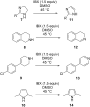
Scheme 2: IBX-mediated oxidative dehydrogenation of various heterocycles [31-34].

Scheme 3: Potential mechanism of IBX-mediated oxidative dehydrogenation of N-heterocycles [31-34].

Scheme 4: IBX-mediated room temperature one-pot condensation–oxidative dehydrogenation of o-aminobenzylamines....

Scheme 5: Anhydrous cerium chloride-catalyzed, IBX-mediated oxidative dehydrogenation of various heterocycles...

Scheme 6: Oxidative dehydrogenation of quinazolinones with I2 and DDQ [37-40].

Scheme 7: DDQ-mediated oxidative dehydrogenation of thiazolidines and oxazolidines.

Scheme 8: Oxone-mediated oxidative dehydrogenation of intermediates from o-phenylenediamine and o-aminobenzyl...

Scheme 9: Transition metal-free oxidative cross-dehydrogenative coupling.

Scheme 10: NaOCl-mediated oxidative dehydrogenation.

Scheme 11: NBS-mediated oxidative dehydrogenation of tetrahydro-β-carbolines.

Scheme 12: One-pot synthesis of various methyl(hetero)arenes from o-aminobenzamide in presence of di-tert-buty...

Scheme 13: Oxidative dehydrogenation of 1, 4-DHPs.

Scheme 14: Synthesis of quinazolines in the presence of MnO2.

Scheme 15: Selenium dioxide and potassium dichromate-mediated oxidative dehydrogenation of tetrahydro-β-carbol...

Scheme 16: Synthesis of substituted benzazoles in the presence of barium permanganate.
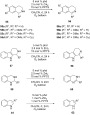
Scheme 17: Oxidative dehydrogenation with phenanthroline-based catalysts. PPTS = pyridinium p-toluenesulfonic ...

Scheme 18: Oxidative dehydrogenation with Flavin mimics.

Scheme 19: o-Quinone based bioinspired catalysts for the synthesis of dihydroisoquinolines.

Scheme 20: Cobalt-catalyzed aerobic dehydrogenation of Hantzch 1,4-DHPs and pyrazolines.

Scheme 21: Mechanism of cobalt-catalyzed aerobic dehydrogenation of Hantzch 1,4-DHPs.

Scheme 22: DABCO and TEMPO-catalyzed aerobic oxidative dehydrogenation of quinazolines and 4H-3,1-benzoxazines....

Scheme 23: Putative mechanism for Cu(I)–DABCO–TEMPO catalyzed aerobic oxidative dehydrogenation of tetrahydroq...

Scheme 24: Potassium triphosphate modified Pd/C catalysts for the oxidative dehydrogenation of tetrahydroisoqu...

Scheme 25: Ruthenium-catalyzed polycyclic heteroarenes.

Scheme 26: Plausible mechanism of the ruthenium-catalyzed dehydrogenation.

Scheme 27: Bi-metallic platinum/iridium alloyed nanoclusters and 5,5’,6,6’-tetrahydroxy-3,3,3’,3’-tetramethyl-...

Scheme 28: Magnesium iodide-catalyzed synthesis of quinazolines.

Scheme 29: Ferrous chloride-catalyzed aerobic dehydrogenation of 1,2,3,4-tetrahydroquinolines.

Scheme 30: Cu(I)-catalyzed oxidative aromatization of indoles.

Scheme 31: Putative mechanism of the transformation.

Scheme 32: Oxidative dehydrogenation of pyrimidinones and pyrimidines.
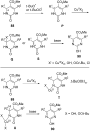
Scheme 33: Putative mechanisms (radical and metal-catalyzed) of the transformation.

Scheme 34: Ferric chloride-catalyzed, TBHP-oxidized synthesis of substituted quinazolinones and arylquinazolin...

Scheme 35: Iridium-catalyzed oxidative dehydrogenation of quinolines.

Scheme 36: Microwave-assisted synthesis of β-carboline with a catalytic amount of Pd/C in lithium carbonate at...

Scheme 37: 4-Methoxy-TEMPO-catalyzed aerobic oxidative synthesis of 2-substituted benzazoles.

Scheme 38: Plausible mechanism of the 4-methoxy-TEMPO-catalyzed transformation.

Scheme 39: One-pot synthesis of 2-arylquinazolines, catalyzed by 4-hydroxy-TEMPO.

Scheme 40: Oxidative dehydrogenation – a key step in the synthesis of AZD8926.

Scheme 41: Catalytic oxidative dehydrogenation of tetrahydroquinolines to afford bioactive molecules.

Scheme 42: Iodobenzene diacetate-mediated synthesis of β-carboline natural products.
The chemistry and biology of mycolactones
- Matthias Gehringer and
- Karl-Heinz Altmann
Beilstein J. Org. Chem. 2017, 13, 1596–1660, doi:10.3762/bjoc.13.159
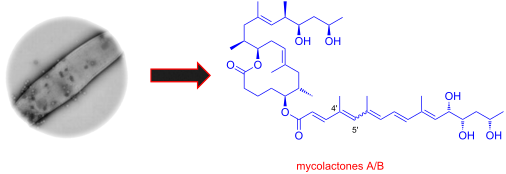

Graphical Abstract

Figure 1: Initial proposal for the core macrolactone structure (left) and the established complete structure ...
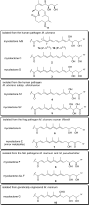
Figure 2: Mycolactone congeners and their origins.

Figure 3: Misassigned mycolactone E structure according to Small et al. [50] (11) and the correct structure (6) f...

Figure 4: Schematic illustration of Kishi’s improved mycolactone TLC detection method exploiting derivatizati...

Figure 5: Fluorescent probes derived from natural mycolactone A/B (1a,b) or its synthetic 8-desmethyl analogs...

Figure 6: Tool compounds used by Pluschke and co-workers for elucidating the molecular targets of mycolactone...

Figure 7: Synthetic strategies towards the extended mycolactone core. A) General strategies. B) Kishi’s appro...

Scheme 1: Kishi’s 1st generation approach towards the extended core structure of mycolactones. Reagents and c...

Scheme 2: Kishi’s 2nd generation approach towards the extended core structure of mycolactones. Reagents and c...

Scheme 3: Kishi’s 3rd generation approach towards the extended core structure of mycolactones. Reagents and c...

Scheme 4: Negishi’s synthesis of the extended core structure of mycolactones. Reagents and conditions: a) (i) ...

Scheme 5: Burkart’s (incomplete) 1st generation approach towards the extended core structure of mycolactones....
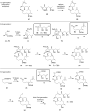
Scheme 6: Burkart’s (incomplete) 1st, 2nd and 3rd generation approach towards the extended mycolactone core s...

Scheme 7: Altmann’s synthesis of alkyl iodide 91. Reagents and conditions: a) (i) PMB-trichloroacetimidate, T...

Scheme 8: Final steps of Altmann’s synthesis of the extended core structure of mycolactones. Reagents and con...

Scheme 9: Basic principles of the Aggarwal lithiation–borylation homologation process [185,186].

Scheme 10: Aggarwal’s synthesis of the C1–C11 fragment of the mycolactone core. Reagents and conditions: a) Cl...

Scheme 11: Aggarwal’s synthesis of the linear C1–C20 fragment of the mycolactone core. Reagents and conditions...

Figure 8: Synthetic strategies towards the mycolactone A/B lower side chain.

Scheme 12: Gurjar and Cherian’s synthesis of the C1’–C8’ fragment of the mycolactone A/B pentaenoate side chai...

Scheme 13: Gurjar and Cherian’s synthesis of the benzyl-protected mycolactone A/B pentaenoate side chain. Reag...

Scheme 14: Kishi’s synthesis of model compounds for elucidating the stereochemistry of the C7’–C16’ fragment o...

Scheme 15: Kishi’s synthesis of the mycolactone A/B pentaenoate side chain. (a) (i) NaH, (EtO)2P(O)CH2CO2Et, T...

Scheme 16: Feringa and Minnaard's incomplete synthesis of mycolactone A/B pentaenoate side chain. Reagents and...

Scheme 17: Altmann’s approach towards the mycolactone A/B pentaenoate side chain. Reagents and conditions: a) ...

Scheme 18: Negishi’s access to the C1’–C7’ fragment of mycolactone A. Reagents and conditions: a) (i) n-BuLi, ...

Scheme 19: Negishi’s approach to the C1’–C7’ fragment of mycolactone B. Reagents and conditions: a) (i) DIBAL-...

Scheme 20: Negishi’s synthesis of the C8’–C16’ fragment of mycolactone A/B. Reagents and conditions: a) 142, BF...

Scheme 21: Negishi’s assembly of the mycolactone A and B pentaenoate side chains. Reagents and conditions: a) ...

Scheme 22: Blanchard’s approach to the mycolactone A/B pentaenoate side chain. a) (i) Ph3P=C(Me)COOEt, CH2Cl2,...

Scheme 23: Kishi’s approach to the mycolactone C pentaenoate side chain exemplified for the 13’R,15’S-isomer 1...

Scheme 24: Altmann’s (unpublished) synthesis of the mycolactone C pentaenoate side chain. Reagents and conditi...

Scheme 25: Blanchard’s synthesis of the mycolactone C pentaenoate side chain. Reagents and conditions: a) (i) ...

Scheme 26: Kishi’s synthesis of the tetraenoate side chain of mycolactone F exemplified by enantiomer 165. Rea...

Scheme 27: Kishi’s synthesis of the mycolactone E tetraenoate side chain. Reagents and conditions: a) (i) CH2=...

Scheme 28: Wang and Dai’s synthesis of the mycolactone E tetraenoate side chain. Reagents and conditions: a) (...

Scheme 29: Kishi’s synthesis of the dithiane-protected tetraenoate side chain of the minor oxo-metabolite of m...

Scheme 30: Kishi’s synthesis of the mycolactone S1 and S2 pentaenoate side chains. Reagents and conditions: a)...

Scheme 31: Kishi’s 1st generation and Altmann’s total synthesis of mycolactone A/B (1a,b) and Negishi’s select...

Scheme 32: Kishi’s 2nd generation total synthesis of mycolactone A/B (1a,b). Reagents and conditions: a) 2,4,6...

Scheme 33: Blanchard’s synthesis of the 8-desmethylmycolactone core. Reagents and conditions: a) (i) TsCl, TEA...

Scheme 34: Altmann’s (partially unpublished) synthesis of the C20-hydroxylated mycolactone core. Reagents and ...

Scheme 35: Altmann’s and Blanchard’s approaches towards the 11-isopropyl-8-desmethylmycolactone core. Reagents...

Scheme 36: Blanchard’s synthesis of the saturated variant of the C11-isopropyl-8-desmethylmycolactone core. Re...

Scheme 37: Structure elucidation of photo-mycolactones generated from tetraenoate 224.

Scheme 38: Kishi’s synthesis of the linear precursor of the photo-mycolactone B1 lower side chain. Reagents an...

Scheme 39: Kishi’s synthesis of the photo-mycolactone B1 lower side chain. Reagents and conditions: a) LiTMP, ...

Scheme 40: Kishi’s synthesis of a stabilized lower mycolactone side chain. Reagents and conditions: a) (i) TBD...
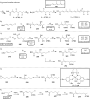
Scheme 41: Blanchard’s variation of the C12’,C13’,C15’ stereocluster. Reagents and conditions: a) (i) DIBAL-H,...

Scheme 42: Blanchard’s synthesis of aromatic mycolactone polyenoate side chain analogs. Reagents and condition...

Scheme 43: Small’s partial synthesis of a BODIPY-labeled mycolactone derivative and Demangel’s partial synthes...

Scheme 44: Blanchard’s synthesis of the BODIPY-labeled 8-desmethylmycolactones. Reagents and conditions: a) (i...
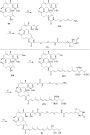
Scheme 45: Altmann’s synthesis of biotinylated mycolactones. Reagents and conditions: a) (i) CDI, THF, rt, 2 d...

Figure 9: Kishi’s elongated n-butyl carbamoyl mycolactone A/B analog.
Total synthesis of elansolids B1 and B2
- Liang-Liang Wang and
- Andreas Kirschning
Beilstein J. Org. Chem. 2017, 13, 1280–1287, doi:10.3762/bjoc.13.124
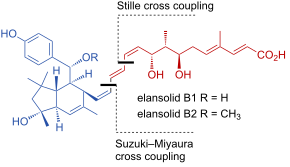
- iodide 17 after O-acylation, iodination of the terminal alkyne and finally diimide-mediated syn-reduction [11]. Next, DDQ-mediated removal of the PMB protecting group yielded vinyl iodide 18. The synthesis of both fragments 13 and 18 set the stage for the Suzuki–Miyaura coupling which delivered the
- , 695.1837. Synthesis of vinyl iodide 18 DDQ (56.5 mg, 0.25 mmol, 3.0 equiv) was added to a stirred solution of 17 (55.8 mg, 0.083 mmol, 1.0 equiv) in CH2Cl2 (4.5 mL)/pH 7.0 phosphate buffer (0.45 mL) at 0 °C. After stirring for 1.5 h, the reaction mixture was terminated by addition of a saturated, aqueous

Graphical Abstract

Figure 1: Elansolids A1/A2, B1, B2 and A3 (1–4).

Scheme 1: IMDA to generate the tetrahydroindane unit of the elansolids by oxidation of benzyl ether 8 as prec...

Scheme 2: Stille cross-coupling reaction and formation of eastern fragment 13.
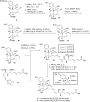
Scheme 3: Total synthesis of elansolids B1 (2) and B2 (3).
Total syntheses of the archazolids: an emerging class of novel anticancer drugs
- Stephan Scheeff and
- Dirk Menche
Beilstein J. Org. Chem. 2017, 13, 1085–1098, doi:10.3762/bjoc.13.108
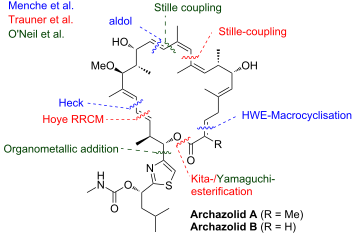
- protection of the free alcohol and deprotection of the primary PMB-protected alcohol with DDQ, the resulting alcohol was oxidized to the corresponding aldehyde. The crude aldehyde was then directly transformed into the (Z)-α,β-unsaturated ester 62 as a single stereoisomer by a Still–Gennari [72] olefination

Graphical Abstract

Scheme 1: Molecular structures of the archazolids.

Scheme 2: Retrosynthetic analysis of archazolid A by the Menche group.

Scheme 3: Synthesis of north-eastern fragment 5 through a Paterson anti-aldol addition and multiple Still–Gen...

Scheme 4: Synthesis of 4 through an Abiko–Masamune anti-aldol addition.

Scheme 5: Thiazol construction and synthesis of the southern fragment 6.

Scheme 6: Completion of the total synthesis of archazolid A.

Scheme 7: Synthesis of archazolid B (2) by a ring closing Heck reaction of 38.

Scheme 8: Retrosynthetic analysis of archazolid B by the Trauner group.

Scheme 9: Synthesis of acid 40 from Roche ester 41 involving a highly efficient Trost–Alder ene reaction.

Scheme 10: Synthesis of precursor 39 for the projected relay RCM reaction.

Scheme 11: Final steps of Trauner’s total synthesis of archazolid B.

Scheme 12: Overview of the different retrosynthetic approaches for the synthesis of dihydroarchazolid B (3) re...

Scheme 13: Fragment synthesis of 69 towards the total synthesis of 3.

Scheme 14: Organometallic addition of the side chain to access free alcohol 75.
Synthesis of D-manno-heptulose via a cascade aldol/hemiketalization reaction
- Yan Chen,
- Xiaoman Wang,
- Junchang Wang and
- You Yang
Beilstein J. Org. Chem. 2017, 13, 795–799, doi:10.3762/bjoc.13.79

- , Scheme 4). In addition, a trace amount of the deacetylated product was also detected . DDQ-mediated oxidative cleavage of the PMB group in alcohol 14 produced only a moderate yield (≈50%) of the 5,7-diol probably due to the presence of the free 7-hydroxy group. We envisaged that protection of the free 7
- -hydroxy group in 14 followed by treatment with DDQ could yield the desired 5-hydroxy product in high yield. Indeed, acetylation of alcohol 14 with acetic anhydride delivered ester 15 in 91% yield. Removal of the PMB group in 15 with DDQ resulted in a very clean reaction, affording alcohol 16 in an

Graphical Abstract

Scheme 1: Retrosynthetic analysis of D-manno-heptulose.

Scheme 2: Initial attempt on the synthesis of the C4 aldehyde from D-lyxose (5).

Scheme 3: Synthesis of differentially protected ketoheptose building block 2.

Scheme 4: Synthesis of D-manno-heptulose (1).
Synthesis of 1-indanones with a broad range of biological activity
- Marika Turek,
- Dorota Szczęsna,
- Marek Koprowski and
- Piotr Bałczewski
Beilstein J. Org. Chem. 2017, 13, 451–494, doi:10.3762/bjoc.13.48
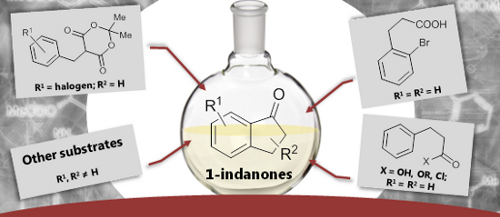

Graphical Abstract

Figure 1: Biologically active 1-indanones and their structural analogues.

Figure 2: Number of papers about (a) 1-indanones, (b) synthesis of 1-indanones.

Scheme 1: Synthesis of 1-indanone (2) from hydrocinnamic acid (1).

Scheme 2: Synthesis of 1-indanone (2) from 3-(2-bromophenyl)propionic acid (3).

Scheme 3: Synthesis of 1-indanones 5 from 3-arylpropionic acids 4.

Scheme 4: Synthesis of kinamycin (9a) and methylkinamycin C (9b).

Scheme 5: Synthesis of trifluoromethyl-substituted arylpropionic acids 12, 1-indanones 13 and dihydrocoumarin...

Scheme 6: Synthesis of 1-indanones 16 from benzoic acids 15.

Scheme 7: Synthesis of 1-indanones 18 from arylpropionic and 3-arylacrylic acids 17.

Scheme 8: The NbCl5-induced one-step synthesis of 1-indanones 22.

Scheme 9: Synthesis of biologically active 1-indanone derivatives 26.

Scheme 10: Synthesis of enantiomerically pure indatraline ((−)-29).

Scheme 11: Synthesis of 1-indanone (2) from the acyl chloride 30.

Scheme 12: Synthesis of the mechanism-based inhibitors 33 of coelenterazine.

Scheme 13: Synthesis of the indane 2-imidazole derivative 37.

Scheme 14: Synthesis of fluorinated PAHs 41.

Scheme 15: Synthesis of 1-indanones 43 via transition metal complexes-catalyzed carbonylative cyclization of m...

Scheme 16: Synthesis of 6-methyl-1-indanone (46).

Scheme 17: Synthesis of 1-indanone (2) from ester 48.

Scheme 18: Synthesis of benzopyronaphthoquinone 51 from the spiro-1-indanone 50.

Scheme 19: Synthesis of the selective endothelin A receptor antagonist 55.

Scheme 20: Synthesis of 1-indanones 60 from methyl vinyl ketone (57).

Scheme 21: Synthesis of 1-indanones 64 from diethyl phthalate 61.

Scheme 22: Synthesis of 1-indanone derivatives 66 from various Meldrum’s acids 65.

Scheme 23: Synthesis of halo 1-indanones 69.

Scheme 24: Synthesis of substituted 1-indanones 71.

Scheme 25: Synthesis of spiro- and fused 1-indanones 73 and 74.

Scheme 26: Synthesis of spiro-1,3-indanodiones 77.

Scheme 27: Mechanistic pathway for the NHC-catalyzed Stetter–Aldol–Michael reaction.

Scheme 28: Synthesis of 2-benzylidene-1-indanone derivatives 88a–d.

Scheme 29: Synthesis of 1-indanone derivatives 90a–i.

Scheme 30: Synthesis of 1-indanones 96 from o-bromobenzaldehydes 93 and alkynes 94.

Scheme 31: Synthesis of 3-hydroxy-1-indanones 99.

Scheme 32: Photochemical preparation of 1-indanones 103 from ketones 100.

Scheme 33: Synthesis of chiral 3-aryl-1-indanones 107.

Scheme 34: Photochemical isomerization of 2-methylbenzil 108.

Scheme 35: Synthesis of 2-hydroxy-1-indanones 111a–c.

Scheme 36: Synthesis of 1-indanone derivatives 113 and 114 from η6-1,2-dioxobenzocyclobutene complex 112.

Scheme 37: Synthesis of nakiterpiosin (117).

Scheme 38: Synthesis of 2-alkyl-1-indanones 120.

Scheme 39: Synthesis of fluorine-containing 1-indanone derivatives 123.

Scheme 40: Synthesis of 2-benzylidene and 2-benzyl-1-indanones 126, 127 from the chalcone 124.

Scheme 41: Synthesis of 2-bromo-6-methoxy-3-phenyl-1-indanone (130).

Scheme 42: Synthesis of combretastatin A-4-like indanones 132a–s.

Figure 3: Chemical structures of investigated dienones 133 and synthesized cyclic products 134–137.

Figure 4: Chemical structures of 1-indanones and their heteroatom analogues 138–142.

Scheme 43: Synthesis of 2-phosphorylated and 2-non-phosphorylated 1-indanones 147 and 148 from β-ketophosphona...

Scheme 44: Photochemical synthesis of 1-indanone derivatives 150, 153a, 153b.

Scheme 45: Synthesis of polysubstituted-1-indanones 155, 157.

Scheme 46: Synthesis of 1-indanones 159a–g from α-arylpropargyl alcohols 158 using RhCl(PPh3)3 as a catalyst.

Scheme 47: Synthesis of optically active 1-indanones 162 via the asymmetric Rh-catalyzed isomerization of race...

Scheme 48: Mechanism of the Rh-catalyzed isomerization of α-arylpropargyl alcohols 161 to 1-indanones 162.

Figure 5: Chemical structure of abicoviromycin (168) and its new benzo derivative 169.

Scheme 49: Synthesis of racemic benzoabicoviromycin 172.

Scheme 50: Synthesis of [14C]indene 176.

Scheme 51: Synthesis of indanone derivatives 178–180.

Scheme 52: Synthesis of racemic pterosin A 186.

Scheme 53: Synthesis of trans-2,3-disubstituted 1-indanones 189.

Scheme 54: Synthesis of 3-aryl-1-indanone derivatives 192.

Scheme 55: Synthesis of 1-indanone derivatives 194 from 3-(2-iodoaryl)propanonitriles 193.

Scheme 56: Synthesis of 1-indanones 200–204 by cyclization of aromatic nitriles.

Scheme 57: Synthesis of 1,1’-spirobi[indan-3,3’-dione] derivative 208.

Scheme 58: Total synthesis of atipamezole analogues 211.

Scheme 59: Synthesis of 3-[4-(1-piperidinoethoxy)phenyl]spiro[indene-1,1’-indan]-5,5’-diol hydrochloride 216.

Scheme 60: Synthesis of 3-arylindan-1-ones 219.

Scheme 61: Synthesis of 2-hydroxy-1-indanones 222.

Scheme 62: Synthesis of the 1-indanone 224 from the THP/MOM protected chalcone epoxide 223.

Scheme 63: Synthesis of 1-indanones 227 from γ,δ-epoxy ketones 226.

Scheme 64: Synthesis of 2-hydroxy-2-methylindanone (230).

Scheme 65: Synthesis of 1-indanone derivatives 234 from cyclopropanol derivatives 233.

Scheme 66: Synthesis of substituted 1-indanone derivatives 237.

Scheme 67: Synthesis of 7-methyl substituted 1-indanone 241 from 1,3-pentadiene (238) and 2-cyclopentenone (239...

Scheme 68: Synthesis of disubstituted 1-indanone 246 from the siloxydiene 244 and 2-cyclopentenone 239.

Scheme 69: Synthesis of 5-hydroxy-1-indanone (250) via the Diels–Alder reaction of 1,3-diene 248 with sulfoxid...

Scheme 70: Synthesis of halogenated 1-indanones 253a and 253b.

Scheme 71: Synthesis of 1-indanones 257 and 258 from 2-bromocyclopentenones 254.

Scheme 72: Synthesis of 1-indanone 261 from 2-bromo-4-acetoxy-2-cyclopenten-1-one (260) and 1,2-dihydro-4-viny...

Scheme 73: Synthesis of 1-indanone 265 from 1,2-dihydro-7-methoxy-4-vinylnaphthalene (262) and bromo-substitut...

Scheme 74: Synthesis of 1-indanone 268 from dihydro-3-vinylphenanthrene 266 and 4-acetoxy-2-cyclopenten-1-one (...

Scheme 75: Synthesis of 1-indanone 271 from phenylselenyl-substituted cyclopentenone 268.

Scheme 76: Synthesis of 1-indanone 272 from the trienone 270.

Scheme 77: Synthesis of the 1-indanone 276 from the aldehyde 273.

Scheme 78: Synthesis of 1-indanones 278 and 279.

Scheme 79: Synthesis of 1-indanone 285 from octa-1,7-diyne (282) and cyclopentenone 239.

Scheme 80: Synthesis of benz[f]indan-1-one (287) from cyclopentenone 239 and o-bis(dibromomethyl)benzene (286)....

Scheme 81: Synthesis of 3-methyl-substituted benz[f]indan-1-one 291 from o-bis(dibromomethyl)benzene (286) and...

Scheme 82: Synthesis of benz[f]indan-1-one (295) from the anthracene epidioxide 292.

Scheme 83: Synthesis of 1-indanone 299 from homophthalic anhydride 298 and cyclopentynone 297.

Scheme 84: Synthesis of cyano-substituted 1-indanone derivative 301 from 2-cyanomethylbenzaldehyde (300) and c...

Scheme 85: Synthesis of 1-indanone derivatives 303–305 from ketene dithioacetals 302.

Scheme 86: Synthesis of 1-indanones 309–316.

Scheme 87: Mechanism of the hexadehydro-Diels–Alder (HDDA) reaction.

Scheme 88: Synthesis of 1-indenone 318 and 1-indanones 320 and 321 from tetraynes 317 and 319.

Scheme 89: Synthesis of 1-indanone 320 from the triyn 319.

Scheme 90: Synthesis 1-indanone 328 from 2-methylfuran 324.

Scheme 91: Synthesis of 1-indanones 330 and 331 from furans 329.

Scheme 92: Synthesis of 1-indanone 333 from the cycloadduct 332.

Scheme 93: Synthesis of (S)-3-arylindan-1-ones 335.

Scheme 94: Synthesis of (R)-2-acetoxy-1-indanone 338.

Figure 6: Chemical structures of obtained cyclopenta[α]phenanthrenes 339.

Scheme 95: Synthesis of the benzoindanone 343 from arylacetaldehyde 340 with 1-trimethylsilyloxycyclopentene (...
Total synthesis of a Streptococcus pneumoniae serotype 12F CPS repeating unit hexasaccharide
- Peter H. Seeberger,
- Claney L. Pereira and
- Subramanian Govindan
Beilstein J. Org. Chem. 2017, 13, 164–173, doi:10.3762/bjoc.13.19
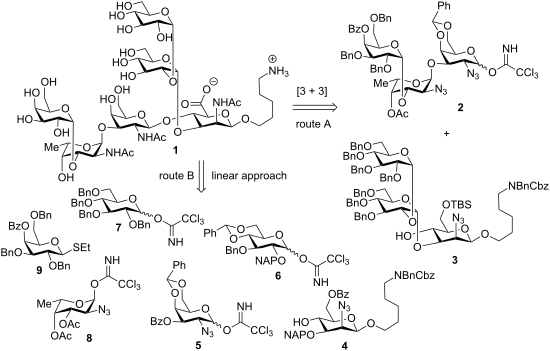
- reducing to the non-reducing end (Scheme 8). Union of 4 and 5 (Scheme 7) produced disaccharide 41 as the key intermediate, the naphthyl protecting group of which was cleaved in 70% yield using DDQ [37] to afford 42. Thioglycoside 43 failed to react with disaccharide 42 to furnish the desired trisaccharide
- activator proceeded to produce trisaccharide 44 in 65% yield. Removal of the C2 naphthyl ether using DDQ provided acceptor 45, which in turn was reacted with glucosyl thioglycoside 7 in the presence of NIS and TfOH to produce α-linked tetrasaccharide 46 in 62% yield (Scheme 8). At this stage, the 2
- protected hexasaccharide 51. Reagents and conditions: (a) DDQ, CH2Cl2/MeOH (9:1), rt, 70%; (b) 43, NIS, TfOH, CH2Cl2, −20 °C (no reaction) or 6, TMSOTf, Et2O/CH2Cl2 (4:1), −20 °C (65%); (c) DDQ, CH2Cl2/MeOH (9:1), rt, 55%; (d) 7, TMSOTf, Et2O/CH2Cl2 (4:1), −20 °C, 62%; (e) NaOMe (0.5 M in MeOH), THF/MeOH (1

Graphical Abstract

Figure 1: Structure of the S. pneumoniae serotype 12F capsular polysaccharide repeating unit [15].

Scheme 1: Retrosynthetic analyses of the S. pneumoniae hexasaccharide 1.

Scheme 2: Attempted synthesis of mannosazide building block 15. Reagents and conditions: (a) levulinic acid, ...

Scheme 3: Synthesis of mannosazide building block 18. Reagents and conditions: (a) TBSCl, imidazole, DCM, 0 °...

Scheme 4: Synthesis of the reducing-end trisaccharide 3. Reagents and conditions: (a) TMSOTf, (CH3CH2)2O/CH2Cl...

Scheme 5: Synthesis of monosaccharide building blocks 8, 9 and 26. Reagents and conditions: (a) acetic anhydr...

Scheme 6: Synthesis of the non-reducing end trisaccharide 2. Reagents and conditions: (a) TMSOTf, CH2Cl2, −30...

Scheme 7: Attempted synthesis of hexasaccharide repeating unit 36 via a convergent [3 + 3] glycosylation stra...

Scheme 8: Linear assembly of fully protected hexasaccharide 51. Reagents and conditions: (a) DDQ, CH2Cl2/MeOH...

Scheme 9: Global deprotection to furnish S. pneumonia serotype 12F repeating unit hexasaccharide 1. Reagents ...
Copper-catalyzed asymmetric sp3 C–H arylation of tetrahydroisoquinoline mediated by a visible light photoredox catalyst
- Pierre Querard,
- Inna Perepichka,
- Eli Zysman-Colman and
- Chao-Jun Li
Beilstein J. Org. Chem. 2016, 12, 2636–2643, doi:10.3762/bjoc.12.260
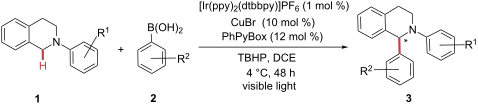
- of THIQs with arylboronic esters via asymmetric organocatalysis methodology [25][28]. The use of chiral tartaric acid derivatives, 2,3-dichloro-5,6-dicyano-1,4-benzoquinone (DDQ) and high temperature (70 °C) were found to be the optimal conditions to obtain the desired arylated product with

Graphical Abstract

Scheme 1: Design light-mediated arylation of THIQs.
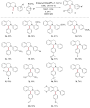
Figure 1: Reaction scope. Reaction conditions: THIQs (0.10 mmol), arylboronic acid (0.30 mmol), TBHP (0.2 mmo...

Scheme 2: Evaluation of chiral ligands.

Scheme 3: Proposed reaction mechanism.
Total synthesis of leopolic acid A, a natural 2,3-pyrrolidinedione with antimicrobial activity
- Atul A. Dhavan,
- Rahul D. Kaduskar,
- Loana Musso,
- Leonardo Scaglioni,
- Piera Anna Martino and
- Sabrina Dallavalle
Beilstein J. Org. Chem. 2016, 12, 1624–1628, doi:10.3762/bjoc.12.159
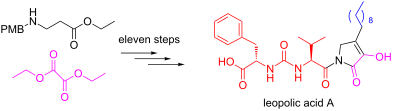
- cleavage with cerium ammonium nitrate (CAN) or 2,3-dichloro-5,6-dicyanobenzoquinone (DDQ). Thus, 2,3-pyrrolidinedione 3 was obtained by the reaction of ethyl acrylate with p-methoxybenzylamine, followed by treatment with diethyl oxalate (Scheme 1) [12]. On the basis of NMR data, the compound exists as an
- DIBAL-H gave the corresponding primary alcohol, which was converted into bromide 5 by Appel reaction with PPh3 and CBr4. The phosphonium salt obtained from this bromide was subjected to a Wittig reaction with nonanal, to afford compound 6 [12]. Attempts to remove the PMB protecting group (CAN, DDQ, TFA

Graphical Abstract

Figure 1: Structure of leopolic acid A.

Scheme 1: Synthesis of leopolic acid A. Reagents and conditions: a) p-methoxybenzylamine, EtOH, rt, 12 h, 98%...
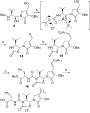
Scheme 2: Synthesis of compound 17. Reagents and conditions: a) Oxalyl chloride, DMSO, CH2Cl2, TEA, −78 °C to...
Efficient syntheses of climate relevant isoprene nitrates and (1R,5S)-(−)-myrtenol nitrate
- Sean P. Bew,
- Glyn D. Hiatt-Gipson,
- Graham P. Mills and
- Claire E. Reeves
Beilstein J. Org. Chem. 2016, 12, 1081–1095, doi:10.3762/bjoc.12.103
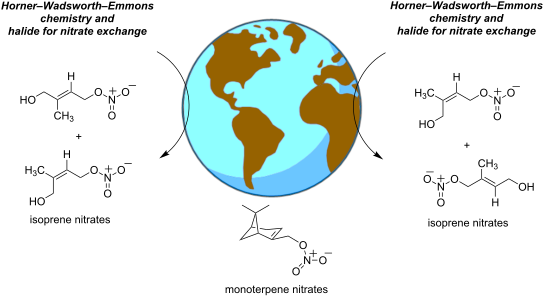
- bromide (56), we envisaged its subsequent deprotonation and addition to chloroacetone would afford (E)-1-((2-methyl-4-chlorobut-2-enyloxy)methyl)-4-methoxybenzene (57). Inclusion of the PMB-ether was beneficial due to the ease with which it can be cleaved using readily available reagents, e.g., DDQ or CAN
- -methoxybenzyloxy)-3-methylbut-2-enyl nitrate (68% yield) as stable, colourless oils. Mild oxidative cleavage of the PMB groups using DDQ in wet DCM generated the desired 1° allylic alcohol (E)-3-methyl-4-hydroxybut-2-enyl nitrate ((E)-11) and (Z)-3-methyl-4-hydroxybut-2-enyl nitrate ((Z)-12) in 62% and 53% yields
- the moderate yield was not problematic as rac-68 and rac-69 were readily separable, allowing rac-68 to be recycled (based on recovered starting material the yield was almost quantitative). Oxidative O-PMB deprotection of rac-69 using DDQ in biphasic dichloromethane/water generated 1° alcohol (±)-2

Graphical Abstract

Scheme 1: Simplified overview outlining how a small number of different IPNs are synthesised and are able to ...

Scheme 2: Protocols for the synthesis of O-nitrated alcohols using (±)-isoprene epoxide and 2° alcohols as st...

Scheme 3: Attempted synthesis of O-nitrate ester rac-19 and rac-20 synthesis.

Scheme 4: Olah et al. O-nitrated alcohol syntheses of 23–33 using N-nitro-2,4-6-trimethylpyridinium tetrafluo...

Scheme 5: O-nitration study using 22 and the alcohols 34–37.

Scheme 6: Silver nitrate mediated synthesis of 2-oxopropyl nitrate 43.

Scheme 7: Application of isoprene for the synthesis of precursors to IPNs and synthesis via ‘halide for nitra...

Scheme 8: Synthesis of (E)-3-methyl-4-chlorobut-2-en-1-ol ((E)-60) and (Z)-3-methyl-4-chlorobut-2-en-1-ol ((Z...

Scheme 9: Using NOESY interactions to establish the conformations of the C=C bonds within (E)-10 and (Z)-9.

Scheme 10: Synthesis of isoprene nitrates (E)-11 and (Z)-12 from ketone 63.

Scheme 11: Attempted synthesis of rac-8 from O-mesylate rac-71.

Scheme 12: Synthesis of O-nitrate 73 from O-mesylate 72.

Scheme 13: Attempted synthesis of 2° alcohol containing 1° nitrate ester rac-19 and the unexpected synthesis o...

Scheme 14: Synthesis of monoterpene derived (1R,5S)-(−)-myrtenol nitrate 86.
Indenopyrans – synthesis and photoluminescence properties
- Andreea Petronela Diac,
- Ana-Maria Ţepeş,
- Albert Soran,
- Ion Grosu,
- Anamaria Terec,
- Jean Roncali and
- Elena Bogdan
Beilstein J. Org. Chem. 2016, 12, 825–834, doi:10.3762/bjoc.12.81
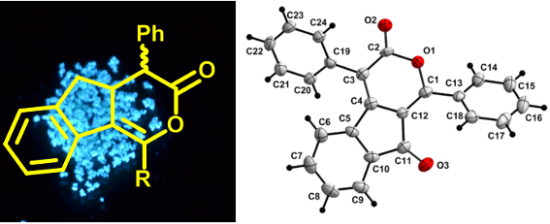
- -benzoquinone (DDQ), led to indeno-α-pyrones 4–6 (Scheme 2), in not very satisfying yields. Investigations carried out for the dehydrogenation reaction of the isomeric mixture 2'a/3''a (Scheme 2) revealed the formation of the α-pyrone 6a (15% yield), which was the oxidation product of isomer 3''a. In the same

Graphical Abstract

Scheme 1: Synthesis of dihydroindeno[1,2-c]pyran-3-ones 2 and 3.

Figure 1: Possible isomers of dihydroindeno[1,2-c]pyran-3-ones 2 and 3.

Figure 2: 1H NMR spectra (600 MHz, CDCl3) of isomers 2'b (top), 2''b (middle) and 3''b (bottom).

Figure 3: Normalized absorption spectra of dihydroindenopyrones 2'a–d, 2''b–d and 3''b, recorded in acetonitr...

Figure 4: Normalized UV–vis (left) spectra at excitation wavelengths and fluorescence (right) spectra of dihy...
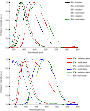
Figure 5: Normalized solid-state and solution (acetonitrile) fluorescence spectra of diastereoisomers 2a–d.

Scheme 2: Synthesis of α-pyrones 4–6.
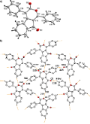
Figure 6: a) View of the asymmetric unit in the crystal of 6a, shown with 40% probability ellipsoids. b) View...
Muraymycin nucleoside-peptide antibiotics: uridine-derived natural products as lead structures for the development of novel antibacterial agents
- Daniel Wiegmann,
- Stefan Koppermann,
- Marius Wirth,
- Giuliana Niro,
- Kristin Leyerer and
- Christian Ducho
Beilstein J. Org. Chem. 2016, 12, 769–795, doi:10.3762/bjoc.12.77
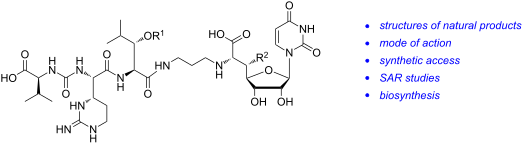
- Bu4NBr resulted in bromohydrine 47, followed by levulinyl (Lev) protection of the hydroxy group (product 48). Nucleophilic substitution at the 6'-position with Bu4NN3 gave the naturally occurring (5'S,6'S)-stereochemistry of the uridine core structure in a double inversion manner [78][99]. DDQ oxidation

Graphical Abstract
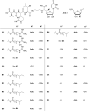
Figure 1: Structures of the naturally occurring muraymycins isolated by McDonald et al. [22].
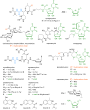
Figure 2: Structures of selected classes of nucleoside antibiotics. Similarities to the muraymycins are highl...

Figure 3: Structure of peptidoglycan. Long chains of glycosides (alternating GlcNAc (green) and MurNAc (blue)...

Figure 4: Schematic representation of bacterial cell wall biosynthesis.
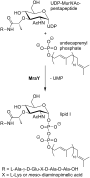
Figure 5: Translocase I (MraY) catalyses the reaction of UDP-MurNAc-pentapeptide with undecaprenyl phosphate ...

Figure 6: Proposed mechanisms for the MraY-catalysed reaction. A: Two-step mechanism postulated by Heydanek e...

Scheme 1: First synthetic access towards simplified muraymycin analogues as reported by Yamashita et al. [76].

Scheme 2: Synthesis of (+)-caprazol (19) reported by Ichikawa, Matsuda et al. [92].

Scheme 3: Synthesis of the epicapreomycidine-containing urea dipeptide via C–H activation [96,97].

Scheme 4: Synthesis of muraymycin D2 and its epimer reported by Ichikawa, Matsuda et al. [96,97].

Scheme 5: Synthesis of the urea tripeptide unit as a building block for muraymycins reported by Kurosu et al. ...

Scheme 6: Synthesis of the uridine-derived core structure of naturally occuring muraymycins reported by Ducho...
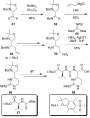
Scheme 7: Synthesis of the epicapreomycidine-containing urea dipeptide from Garner's aldehyde reported by Duc...

Scheme 8: Synthesis of a hydroxyleucine-derived aldehyde building block reported by Ducho et al. [107].

Scheme 9: Synthesis of 5'-deoxy muraymycin C4 (65) as a closely related natural product analogue [78,109,110].

Figure 7: Summary of modifications on semisynthetic muraymycin analogues tested by Lin et al. [86]. Most active c...

Figure 8: Bioactive muraymycin analogues identified by Yamashita et al. [76].

Figure 9: Muraymycin D2 and several non-natural lipidated analogues 91a–d [77,114].
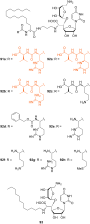
Figure 10: Non-natural muraymycin analogues with varying peptide structures [77,114].

Figure 11: SAR results for several structural variations of the muraymycin scaffold.

Figure 12: Muraymycin analogues designed for potential anti-Pseudomonas activity (most active analogues are hi...

Scheme 10: Proposed outline pathway for muraymycin biosynthesis based on the analysis of the biosynthetic gene...

Scheme 11: Biosynthesis of the nucleoside core structure of A-90289 antibiotics (which is identical to the mur...

Scheme 12: Transaldolase-catalysed formation of the key intermediate GlyU 101 in the biosynthesis of muraymyci...
A selective and mild glycosylation method of natural phenolic alcohols
- Mária Mastihubová and
- Monika Poláková
Beilstein J. Org. Chem. 2016, 12, 524–530, doi:10.3762/bjoc.12.51
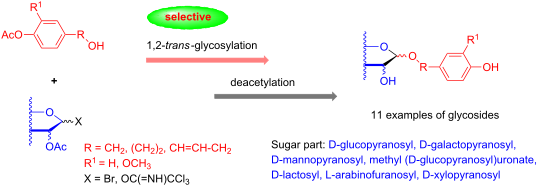
- by the reduction of the corresponding acetylated aldehydes or acids. Various stereoselective 1,2-trans-O-glycosylation methods were studied, including the DDQ–iodine or ZnO–ZnCl2 catalyst combination. Among them, ZnO–iodine has been identified as a new glycosylation promoter and successfully applied
- performed in the presence of known mild catalysts such as Ag2O [33] (method A), the less frequently used ZnO–ZnCl2 system [34] (method B) and the combination of 2,3-dichloro-5,6-dicyano-1,4-benzoquinone (DDQ) with iodine (DDQ–I2) [35] (method C). In addition ZnO–I2 (method D) was successfully applied as a
- reactions in DCM promoted by Ag2O (Table 1, entry 1, 57%) and ZnO–I2 (Table 1, entry 4, 56%) gave comparably good yields. DDQ–I2 in ACN (Table 1, entry 3, 68%) gave 21b in the highest yield, in addition to the exclusive selectivity and the shortest reaction time (Table 1, entry 5). Therefore this promoter

Graphical Abstract

Figure 1: Structures of vanillyl β-D-glucoside (1), salidroside (2) and isoconiferin (3).

Scheme 1: Reagents and conditions: a) Ac2O, pyridine, rt, 10 h, >98%; b) NaBH4, H3PO4, −5 °C, 85–95%.

Scheme 2: Reagents and conditions: a) Ac2O, H2SO4, 5 °C to rt, 30 min, >94%; b) 1. NaBH4, THF, 5 °C, 10 min, ...

Figure 2: Synthesized glycosyl donors.

Scheme 3: General reaction scheme for the synthesis of p-hydroxyphenylalkyl glycosides.

Figure 3: Overview of protected and deprotected products.
Study on the synthesis of the cyclopenta[f]indole core of raputindole A
- Nils Marsch,
- Mario Kock and
- Thomas Lindel
Beilstein J. Org. Chem. 2016, 12, 334–342, doi:10.3762/bjoc.12.36

- –Schuster products could also be observed, but in small amounts and not as pure compounds. It is worth mentioning that treatment of 22 with DDQ led to removal of the DMB group, affording the major product 27 (23%) exhibiting a keto group in the benzylic indole position (Scheme 4). This transformation might

Graphical Abstract

Figure 1: Bisindole alkaloid raputindole A (1) from the Amazonian tree Raputia simulans.

Scheme 1: Investigated synthetic precursors B–E of the cyclopenta[f]indole moiety (A) of raputindole A (1), a...
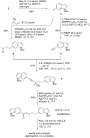
Scheme 2: 6-Iodoindole (2) serves twice as starting material towards indole-6-yl-substituted enone 8, obtaine...

Scheme 3: Assembly of 5-oxygenated bisindolylpentenones. DMB: 3,4-dimethoxybenzyl, DMFDMA: N,N-dimethylformal...

Scheme 4: Benzylic oxidation as side reaction of DMB removal.

Scheme 5: Hydroxyalkylation of N-protected indoles with β-cyclocitral and SnCl4-induced cyclization.

Scheme 6: Behavior of indolines after SnCl4-induced generation of allyl cations.

Scheme 7: Pt(II) and Au(I)-catalyzed cyclizations of propargylacetates 46 and 47 afforded cyclopenta[f]indoli...
Recent developments in copper-catalyzed radical alkylations of electron-rich π-systems
- Kirk W. Shimkin and
- Donald A. Watson
Beilstein J. Org. Chem. 2015, 11, 2278–2288, doi:10.3762/bjoc.11.248
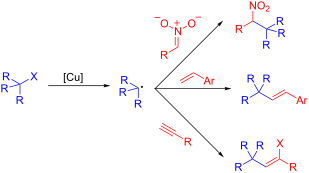
- dihydrofurans could be easily converted into furans using DDQ in a one-pot process. In addition to α-bromo esters and ketones, Lei and co-workers have also recently shown that benzylic halides could undergo radical alkenylation via copper catalysis [39]. By exploiting the propensity of benzyl halides to form

Graphical Abstract

Scheme 1: Reactivity of nitronate anions towards alkyl electrophiles.

Scheme 2: Ligands tested in the alkylation of nitroalkanes with alkyl halides. aNaOt-Bu as base, hexanes as s...

Scheme 3: Scope of the copper-catalyzed nitroalkane benzylation.

Scheme 4: Application of the nitro-alkylation reaction to the synthesis of phentermine.

Scheme 5: Possible mechanism of the thermal redox process.

Scheme 6: Scope of the reaction of nitroalkanes with α-bromocarbonyls.

Scheme 7: Synthesis of highly congested β-amino acids.

Scheme 8: Copper-catalyzed alkenylation reactions.

Scheme 9: Proposed mechanism of the copper-catalyzed alkenylation reaction.

Scheme 10: Scope of the copper-catalyzed alkenylation of tertiary electrophiles.

Scheme 11: Scope of the exo-methylene styrene synthesis.

Scheme 12: Phenol-directed synthesis of Z-alkenes.

Scheme 13: Scope of the phenol-directed Z-alkene synthesis.

Scheme 14: Rationale for the formal [3 + 2] cycloaddition.

Scheme 15: Scope of the formal [3 + 2] cycloaddition.

Scheme 16: Benzylation of styrenes using copper catalysis.

Scheme 17: Copper-catalyzed carboiodination of alkynes.

Scheme 18: Copper-catalyzed trans-carbohalogenation of alkynes. aNaI (2 equiv) was added.
Easy access to heterobimetallic complexes for medical imaging applications via microwave-enhanced cycloaddition
- Nicolas Desbois,
- Sandrine Pacquelet,
- Adrien Dubois,
- Clément Michelin and
- Claude P. Gros
Beilstein J. Org. Chem. 2015, 11, 2202–2208, doi:10.3762/bjoc.11.239
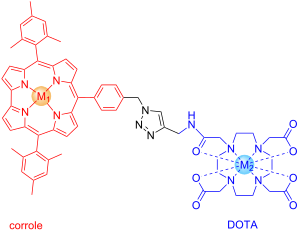
- trifluoroacetic acid, followed by oxidation under the action of DDQ. Cu and Ga complexes were prepared by the strategy outlined in Scheme 2. The insertion of Cu into corrole 1 was easily achieved with Cu(OAc)2·H2O in THF during 15 min. To obtain the gallium corrole 8b, free-base azidocorrole 1 was dissolved in a

Graphical Abstract

Figure 1: Selected ligands for the copper(I)-catalyzed Huisgen cycloaddition.

Scheme 1: Structure of different bimetallic complexes 5–7.

Scheme 2: Synthesis of 8a,b and 9a–d. (i) for 8a: THF, N2, Cu(OAc)2·H2O, rt 15 min; for 8b: GaCl3 0.114 M in ...

Scheme 3: Synthesis of 10a,b and 12a,b. (i) For 10a: Milli-Q water, Gd(NO3)3·5H2O, 50 °C, 17 h, pH 8.0; for 1...
Recent applications of ring-rearrangement metathesis in organic synthesis
- Sambasivarao Kotha,
- Milind Meshram,
- Priti Khedkar,
- Shaibal Banerjee and
- Deepak Deodhar
Beilstein J. Org. Chem. 2015, 11, 1833–1864, doi:10.3762/bjoc.11.199
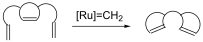
- required RRM product 208 was formed in 26% yield. Later, the expected chiral buckybowl 209 was assembled via aromatization of 208 in the presence of DDQ (Scheme 42). Design of intricate polyquinanes has been considered as a challenging task for synthetic chemists. To this end, Fallis and co-workers [46

Graphical Abstract

Figure 1: Ruthenium alkylidene catalysts used in RRM processes.
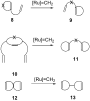
Figure 2: General representation of various RRM processes.

Figure 3: A general mechanism for RRM process.

Scheme 1: RRM of cyclopropene systems.

Scheme 2: RRM of cyclopropene with catalyst 2. (i) catalyst 2 (2.5 mol %), ethylene (24, 1 atm), (ii) toluene...

Scheme 3: RRM of various cyclopropene derivatives with catalyst 2. (i) catalyst 2 (2.5 mol %), CH2Cl2 (c = 0....

Scheme 4: RRM of substituted cyclopropene system with catalyst 2.

Scheme 5: RRM of cyclobutene system with catalyst 2.

Scheme 6: RRM approach to various bicyclic compounds.

Scheme 7: RRM approach to erythrina alkaloid framework.

Scheme 8: ROM–RCM sequence to lactone derivatives.

Scheme 9: RRM protocol towards the synthesis of lactone derivative 58.

Scheme 10: RRM protocol towards the asymmetric synthesis of asteriscunolide D (61).

Scheme 11: RRM strategy towards the synthesis of various macrolide rings.

Scheme 12: RRM protocol to dipiperidine system.

Scheme 13: RRM of cyclopentene system to generate the cyclohexene systems.

Scheme 14: RRM of cyclopentene system 74.

Scheme 15: RRM approach to compound 79.

Scheme 16: RRM approach to spirocycles.

Scheme 17: RRM approach to bicyclic dihydropyrans.

Scheme 18: RCM–ROM–RCM cascade using non strained alkenyl heterocycles.

Scheme 19: First ROM–RCM–ROM–RCM cascade for the synthesis of trisaccharide 97.

Scheme 20: RRM of cyclohexene system.

Scheme 21: RRM approach to tricyclic spirosystem.

Scheme 22: RRM approach to bicyclic building block 108a.

Scheme 23: ROM–RCM protocol for the synthesis of the bicyclo[3.3.0]octene system.

Scheme 24: RRM protocol to bicyclic enone.

Scheme 25: RRM protocol toward the synthesis of the tricyclic system 118.

Scheme 26: RRM approach toward the synthesis of the tricyclic enones 122a and 122b.

Scheme 27: Synthesis of tricyclic and tetracyclic systems via RRM protocol.

Scheme 28: RRM protocol towards the synthesis of tetracyclic systems.

Scheme 29: RRM of the propargylamino[2.2.1] system.

Scheme 30: RRM of highly decorated bicyclo[2.2.1] systems.

Scheme 31: RRM protocol towards fused tricyclic compounds.

Scheme 32: RRM protocol to functionalized tricyclic systems.

Scheme 33: RRM approach to functionalized polycyclic systems.

Scheme 34: Sequential RRM approach to functionalized tricyclic ring system 166.

Scheme 35: RRM protocol to functionalized CDE tricyclic ring system of schintrilactones A and B.

Scheme 36: Sequential RRM approach to 7/5 fused bicyclic systems.

Scheme 37: Sequential ROM-RCM protocol for the synthesis of bicyclic sugar derivatives.

Scheme 38: ROM–RCM sequence of the norbornene derivatives 186 and 187.

Scheme 39: RRM approach toward highly functionalized bridge tricyclic system.

Scheme 40: RRM approach toward highly functionalized tricyclic systems.

Scheme 41: Synthesis of hexacyclic compound 203 by RRM approach.

Scheme 42: RRM approach toward C3-symmetric chiral trimethylsumanene 209.

Scheme 43: Triquinane synthesis via IMDA reaction and RRM protocol.

Scheme 44: RRM approach to polycyclic compounds.

Scheme 45: RRM strategy toward cis-fused bicyclo[3.3.0]carbocycles.

Scheme 46: RRM protocol towards the synthesis of bicyclic lactone 230.

Scheme 47: RRM approach to spiro heterocyclic compounds.

Scheme 48: RRM approach to spiro heterocyclic compounds.

Scheme 49: RRM approach to regioselective pyrrolizidine system 240.

Scheme 50: RRM approach to functionalized bicyclic derivatives.

Scheme 51: RRM approach to tricyclic derivatives 249 and 250.

Scheme 52: RRM approach to perhydroindoline derivative and spiro system.

Scheme 53: RRM approach to bicyclic pyran derivatives.

Scheme 54: RRM of various functionalized oxanorbornene systems.

Scheme 55: RRM to assemble the spiro fused-furanone core unit. (i) 129, benzene, 55 °C, 3 days; (ii) Ph3P=CH2B...

Scheme 56: RRM protocol to norbornenyl sultam systems.

Scheme 57: Ugi-RRM protocol for the synthesis of 2-aza-7-oxabicyclo system.

Scheme 58: Synthesis of spiroketal systems via RRM protocol.

Scheme 59: RRM approach to cis-fused heterotricyclic system.

Scheme 60: RRM protocol to functionalized bicyclic systems.

Scheme 61: ROM/RCM/CM cascade to generate bicyclic scaffolds.

Scheme 62: RCM of ROM/CM product.

Scheme 63: RRM protocol to bicyclic isoxazolidine ring system.

Scheme 64: RRM approach toward the total synthesis of (±)-8-epihalosaline (300).

Scheme 65: Sequential RRM approach to decalin 304 and 7/6 fused 305 systems.

Scheme 66: RRM protocol to various fused carbocyclic derivatives.

Scheme 67: RRM to cis-hydrindenol derivatives.

Scheme 68: RRM protocol towards the cis-hydrindenol derivatives.

Scheme 69: RRM approach toward the synthesis of diversed polycyclic lactams.

Scheme 70: RRM approach towards synthesis of hexacyclic compound 324.

Scheme 71: RRM protocol to generate luciduline precursor 327 with catalyst 2.

Scheme 72: RRM protocol to key building block 330.

Scheme 73: RRM approach towards the synthesis of key intermediate 335.

Scheme 74: RRM protocol to highly functionalized spiro-pyran system 339.

Scheme 75: RRM to various bicyclic polyether derivatives.
Structure and conformational analysis of spiroketals from 6-O-methyl-9(E)-hydroxyiminoerythronolide A
- Ana Čikoš,
- Irena Ćaleta,
- Dinko Žiher,
- Mark B. Vine,
- Ivaylo J. Elenkov,
- Marko Dukši,
- Dubravka Gembarovski,
- Marina Ilijaš,
- Snježana Dragojević,
- Ivica Malnar and
- Sulejman Alihodžić
Beilstein J. Org. Chem. 2015, 11, 1447–1457, doi:10.3762/bjoc.11.157
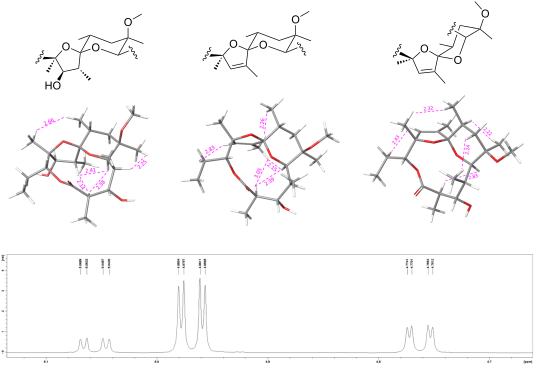
- 3: 1H NMR (600 MHz, CDCl3) δ 0.85 (d, J = 7.3 Hz, 3H, 8-Me), 0.87 ( t, J = 7.3 Hz, 3H,15-H), 1.10 (s, 3H, 6-Me), 1.23 (d, J = 7.5 Hz, 3H, 4-Me), 1.27 (s, 3H, 12-Me), 1.32 (d, J = 7.2 Hz, 3H, 2-Me), 1.35 (ddq, J = 14.0, 11.9, 7.3 Hz, 1H, 14-H), 1.46 (dd, J = 14.1 Hz, 1H, 7-H), 1.66 (dqd, J = 14.0
- , 3H, 6-Me), 1.42 (ddq, J = 14.0, 11.0, 7.3 Hz, 1H, 14-H), 1.61 (dd, J = 12.4, 4.0 Hz, 1H, 7-H), 1.68 (dqd, J = 14.0, 7.3, 2.4 Hz, 1H, 14-H), 1.67–1.72 (m, 1H, 7-H), 1.72 (d, J = 1.6 Hz, 3H, 10-Me), 1.87 (dqd, J = 13.3, 6.7, 4.2 Hz, 1H, 8-H), 2.31 (q, J = 7.1 Hz, 1H, 4-H), 2.89 (dq, J = 7.5 Hz, 1H, 2-H
- ), 1.18 (s, 3H, 12-Me), 1.33 (s, 3H, 6-Me), 1.35 (ddq, J = 14.5, 11.3, 7.2 Hz, 1H, 14-H), 1.50 (dd, J = 12.7 Hz, 1H, 7-H), 1.62 (dd, J = 12.0, 3.7 Hz, 1H, 7-H), 1.67 (dqd, J = 14.0, 7.5, 2.4 Hz, 1H, 14-H), 1.66 (d, J = 1.6 Hz, 3H, 10-Me), 1.86 (dqd, J = 13.4, 6.6, 3.8 Hz, 1H, 8-H), 2.18 (qdd, J = 7.8, 3.0

Graphical Abstract

Scheme 1: Synthetic route to spiroketals 2–4. Reaction conditions: a) Na2S2O5/HCOOH/EtOH/water/70 °C, b) DCl/...

Figure 1: Modelling-derived structure of 2 showing key nOe interactions (calculated distances in Å).
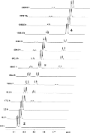
Figure 2: Time-dependent 1H NMR spectra of 2, 3 and 4 (13-H multiplets region). The experiments were performe...

Figure 3: Interconversion kinetics of compounds 2 (blue), 3 (orange) and 4 (grey).

Figure 4: Modelling-derived structure of 3 showing key nOe interactions (calculated distances in Å).

Figure 5: Modelling-derived structure of compound 4 showing key nOe interactions (calculated distances in Å).

Figure 6: Comparison of the spiroketal ring system stereochemistry and conformations in compounds 2–4.

Figure 7: Overlay of the computed structures of 3 (green) and 4 (blue).
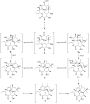
Scheme 2: Postulated mechanism for the formation of compounds 2–4.
Selected synthetic strategies to cyclophanes
- Sambasivarao Kotha,
- Mukesh E. Shirbhate and
- Gopalkrushna T. Waghule
Beilstein J. Org. Chem. 2015, 11, 1274–1331, doi:10.3762/bjoc.11.142
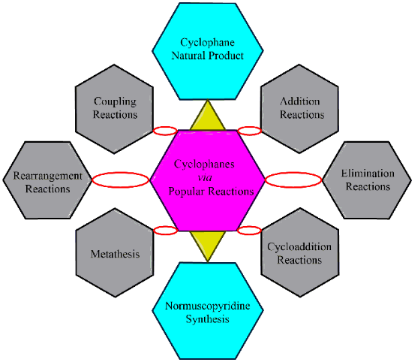

Graphical Abstract

Figure 1: General representation of cyclophanes.

Figure 2: cyclophanes one or more with heteroatom.

Figure 3: Metathesis catalysts 12–17 and C–C coupling catalyst 18.

Figure 4: Natural products containing the cyclophane skeleton.

Figure 5: Turriane family of natural products.

Scheme 1: Synthesis of [3]ferrocenophanes through Mannich reaction. Reagents and conditions: (i) excess HNMe2...

Scheme 2: Synthesis of cyclophanes through Michael addition. Reagents and conditions: (i) xylylene dibromide,...

Scheme 3: Synthesis of normuscopyridine analogue 37 through an oxymercuration–oxidation strategy. Reagents an...

Scheme 4: Synthesis of tribenzocyclotriyne 39 through Castro–Stephens coupling reaction. Reagents and conditi...

Scheme 5: Synthesis of cyclophane 43 through Glaser–Eglinton coupling. Reagents and conditions: (i) 9,10-bis(...

Scheme 6: Synthesis of the macrocyclic C-glycosyl cyclophane through Glaser coupling. Reagents and conditions...

Scheme 7: Synthesis of cyclophane-containing complex 49 through Glaser–Eglinton coupling reaction. Reagents a...

Scheme 8: Synthesis of cyclophane 53 through Glaser–Eglinton coupling. Reagents and conditions: (i) K2CO3, ac...

Figure 6: Cyclophanes 54–56 that have been synthesized through Glaser–Eglinton coupling.

Figure 7: Synthesis of tetrasubstituted [2.2]paracyclophane 57 and chiral cyclophyne 58 through Eglinton coup...

Scheme 9: Synthesis of cyclophane through Glaser–Hay coupling reaction. Reagents and conditions: (i) CuCl2 (1...

Scheme 10: Synthesis of seco-C/D ring analogs of ergot alkaloids through intramolecular Heck reaction. Reagent...

Scheme 11: Synthesis of muscopyridine 73 via Kumada coupling. Reagents and conditions: (i) 72, THF, ether, 20 ...

Scheme 12: Synthesis of the cyclophane 79 via McMurry coupling. Reagents and conditions: (i) 75, decaline, ref...

Scheme 13: Synthesis of stilbenophane 81 via McMurry coupling. Reagents and conditions: (i) TiCl4, Zn, pyridin...

Scheme 14: Synthesis of stilbenophane 85 via McMurry coupling. Reagents and conditions: (i) NBS (2 equiv), ben...
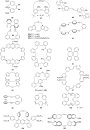
Figure 8: List of cyclophanes prepared via McMurry coupling reaction as a key step.

Scheme 15: Synthesis of paracyclophane by cross coupling involving Pd(0) catalyst. Reagents and conditions: (i...

Scheme 16: Synthesis of the cyclophane 112 via the pinacol coupling and 113 by RCM. Reagents and conditions: (...

Scheme 17: Synthesis of cyclophane derivatives 122a–c via Sonogoshira coupling. Reagents and conditions: (i) C...

Scheme 18: Synthesis of cyclophane 130 via Suzuki–Miyaura reaction as a key step. Reagents and conditions: (i)...

Scheme 19: Synthesis of the mycocyclosin via Suzuki–Miyaura cross coupling. Reagents and conditions: (i) benzy...

Scheme 20: Synthesis of cyclophanes via Wurtz coupling reaction Reagents and conditions: (i) PhLi, Et2O, C6H6,...

Scheme 21: Synthesis of non-natural glycophanes using alkyne metathesis. Reagents and conditions: (i) G-I (12)...

Figure 9: Synthesis of cyclophanes via ring-closing alkyne metathesis.

Scheme 22: Synthesis of crownophanes by cross-enyne metathesis. Reagents and conditions: (i) G-II (13), 5 mol ...

Scheme 23: Synthesis of (−)-cylindrocyclophanes A (156) and (−)-cylindrocyclophanes F (155). Reagents and cond...

Scheme 24: Synthesis of cyclophane 159 derivatives via SM cross-coupling and RCM. Reagents and conditions: (i)...

Scheme 25: Sexithiophene synthesis via cross metathesis. Reagents and conditions: (i) 161, Pd(PPh3)4, K2CO3, T...

Scheme 26: Synthesis of pyrrole-based cyclophane using enyne metathesis. Reagents and conditions: (i) Se, chlo...

Scheme 27: Synthesis of macrocyclic derivatives by RCM. Reagents and conditions: (i) G-I/G-II, CH2Cl2, 0.005 M...

Scheme 28: Synthesis of enantiopure β-lactam-based dienyl bis(dihydrofuran) 179. Reagents and conditions: (i) ...

Scheme 29: Synthesis of a [1.1.6]metaparacyclophane derivative 183 via SM cross coupling. Reagents and conditi...

Scheme 30: Synthesis of a [1.1.6]metaparacyclophane derivative 190 via SM cross coupling. Reagents and conditi...

Scheme 31: Template-promoted synthesis of cyclophanes involving RCM. Reagents and conditions: (i) acenaphthene...

Scheme 32: Synthesis of [3.4]cyclophane derivatives 200 via SM cross coupling and RCM. Reagents and conditions...
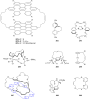
Figure 10: Examples for cyclophanes synthesized by RCM.

Scheme 33: Synthesis of the longithorone C framework assisted by fluorinated auxiliaries. Reagents and conditi...

Scheme 34: Synthesis of the longithorone framework via RCM. Reagents and conditions: (i) 213, NaH, THF, rt, 10...

Scheme 35: Synthesis of floresolide B via RCM as a key step. Reagents and conditions: (i) G-II (13, 0.1 equiv)...

Scheme 36: Synthesis of normuscopyridine (223) by the RCM strategy. Reagents and condition: (i) Mg, THF, hexen...

Scheme 37: Synthesis of muscopyridine (73) via RCM. Reagents and conditions: (i) 225, NaH, THF, 0 °C to rt, 1....

Scheme 38: Synthesis of muscopyridine (73) via RCM strategy. Reagents and conditions: (i) NaH, n-BuLi, 5-bromo...

Scheme 39: Synthesis of pyridinophane derivatives 223 and 245. Reagents and conditions: (i) PhSO2Na, TBAB, CH3...

Scheme 40: Synthesis of metacyclophane derivatives 251 and 253. Reagents and conditions: (i) 240, NaH, THF, rt...

Scheme 41: Synthesis of normuscopyridine and its higher analogues. Reagents and conditions: (i) alkenyl bromid...

Scheme 42: Synthesis of fluorinated ferrocenophane 263 via a [2 + 2] cycloaddition. Reagents and conditions: (...

Scheme 43: Synthesis of [2.n]metacyclophanes 270 via a [2 + 2] cycloaddition. Reagents and conditions: (i) Ac2...

Scheme 44: Synthesis of metacyclophane 273 by a [2 + 2 + 2] co-trimerization. Reagents and conditions: (i) [Rh...

Scheme 45: Synthesis of paracyclophane 276 via a [2 + 2 + 2] cycloaddition reaction. Reagents and conditions: ...

Scheme 46: Synthesis of cyclophane 278 via a [2 + 2 + 2] cycloaddition reaction. Reagents and conditions: (i) ...

Scheme 47: Synthesis of cyclophane 280 via a [2 + 2 + 2] cycloaddition. Reagents and conditions: (i) [(Rh(cod)(...

Scheme 48: Synthesis of taxane framework by a [2 + 2 + 2] cycloaddition. Reagents and conditions: (i) Cp(CO)2 ...

Scheme 49: Synthesis of cyclophane 284 and 285 via a [2 + 2 + 2] cycloaddition reaction. Reagents and conditio...

Scheme 50: Synthesis of pyridinophanes 293a,b and 294a,b via a [2 + 2 + 2] cycloaddition. Reagents and conditi...

Scheme 51: Synthesis of pyridinophanes 296 and 297 via a [2 + 2 + 2] cycloaddition. Reagents and conditions: (...

Scheme 52: Synthesis of triazolophane by a 1,3-dipolar cycloaddition. Reagents and conditions: (i) propargyl b...

Scheme 53: Synthesis of glycotriazolophane 309 by a click reaction. Reagents and conditions: (i) LiOH, H2O, Me...

Figure 11: Cyclophanes 310 and 311 prepared via click chemistry.

Scheme 54: Synthesis of cyclophane via the Dötz benzannulation. Reagents and conditions: (i) THF, 100 °C, 12 h...

Scheme 55: Synthesis of [6,6]metacyclophane by a Dötz benzannulation. Reagents and conditions: (i) THF, 100 °C...

Scheme 56: Synthesis of cyclophanes by a Dötz benzannulation. Reagents and conditions: (i) THF, 65 °C, 3 h; (i...

Scheme 57: Synthesis of muscopyridine (73) via an intramolecular DA reaction of ketene. Reagents and condition...

Scheme 58: Synthesis of bis[10]paracyclophane 336 via Diels–Alder reaction. Reagents and conditions: (i) DMAD,...

Scheme 59: Synthesis of [8]paracyclophane via DA reaction. Reagents and conditions: (i) maleic anhydride, 3–5 ...

Scheme 60: Biomimetic synthesis of (−)-longithorone A. Reagents and conditions: (i) Me2AlCl, CH2Cl2, −20 °C, 7...

Scheme 61: Synthesis of sporolide B (349) via a [4 + 2] cycloaddition reaction. Reagents and conditions: (i) P...

Scheme 62: Synthesis of the framework of (+)-cavicularin (352) via a [4 + 2] cycloaddition. Reagents and condi...

Scheme 63: Synthesis of oxazole-containing cyclophane 354 via Beckmann rearrangement. Reagents and conditions:...

Scheme 64: Synthesis of cyclophanes 360a–c via benzidine rearrangement. Reagents and conditions: (i) 356a–d, K2...

Scheme 65: Synthesis of cyclophanes 365a–c via benzidine rearrangement. Reagents and conditions: (i) BocNHNH2,...

Scheme 66: Synthesis of metacyclophane 367 via Ciamician–Dennstedt rearrangement. Reagents and conditions: (i)...

Scheme 67: Synthesis of cyclophane by tandem Claisen rearrangement and RCM as key steps. Reagents and conditio...

Scheme 68: Synthesis of cyclophane derivative 380. Reagents and conditions: (i) K2CO3, CH3CN, allyl bromide, r...

Scheme 69: Synthesis of metacyclophane via Cope rearrangement. Reagents and conditions: (i) MeOH, NaBH4, rt, 1...

Scheme 70: Synthesis of cyclopropanophane via Favorskii rearrangement. Reagents and conditions: (i) Br2, CH2Cl2...

Scheme 71: Cyclophane 389 synthesis via photo-Fries rearrangement. Reagents and conditions: (i) DMAP, EDCl/CHCl...

Scheme 72: Synthesis of normuscopyridine (223) via Schmidt rearrangement. Reagents and conditions: (i) ethyl s...

Scheme 73: Synthesis of crownophanes by tandem Claisen rearrangement. Reagents and conditions: (i) diamine, Et3...

Scheme 74: Attempted synthesis of cyclophanes via tandem Claisen rearrangement and RCM. Reagents and condition...

Scheme 75: Synthesis of muscopyridine via alkylation with 2,6-dimethylpyridine anion. Reagents and conditions:...

Scheme 76: Synthesis of cyclophane via Friedel–Craft acylation. Reagents and conditions: (i) CS2, AlCl3, 7 d, ...

Scheme 77: Pyridinophane 418 synthesis via Friedel–Craft acylation. Reagents and conditions: (i) 416, AlCl3, CH...

Scheme 78: Cyclophane synthesis involving the Kotha–Schölkopf reagent 421. Reagents and conditions: (i) NBS, A...

Scheme 79: Cyclophane synthesis involving the Kotha–Schölkopf reagent 421. Reagents and conditions: (i) BEMP, ...

Scheme 80: Cyclophane synthesis by coupling with TosMIC. Reagents and conditions: (i) (a) ClCH2OCH3, TiCl4, CS2...

Scheme 81: Synthesis of diaza[32]cyclophanes and triaza[33]cyclophanes. Reagents and conditions: (i) DMF, NaH,...

Scheme 82: Synthesis of cyclophane 439 via acyloin condensation. Reagents and conditions: (i) Na, xylene, 75%;...

Scheme 83: Synthesis of multibridged binuclear cyclophane 442 by aldol condensation. Reagents and conditions: ...

Scheme 84: Synthesis of various macrolactones. Reagents and conditions: (i) iPr2EtN, DMF, 77–83%; (ii) TBDMSCl...

Scheme 85: Synthesis of muscone and muscopyridine via Yamaguchi esterification. Reagents and conditions: (i) 4...

Scheme 86: Synthesis of [5]metacyclophane via a double elimination reaction. Reagents and conditions: (i) LiBr...

Figure 12: Cyclophanes 466–472 synthesized via Hofmann elimination.

Scheme 87: Synthesis of cryptophane via Baylis–Hillman reaction. Reagents and conditions: (i) methyl acrylate,...

Scheme 88: Synthesis of cyclophane 479 via double Chichibabin reaction. Reagents and conditions: (i) excess 478...

Scheme 89: Synthesis of cyclophane 483 via double Chichibabin reaction. Reagents and conditions: (i) 481, OH−;...

Scheme 90: Synthesis of cyclopeptide via an intramolecular SNAr reaction. Reagents and conditions: (i) TBAF, T...

Scheme 91: Synthesis of muscopyridine (73) via C-zip ring enlargement reaction. Reagents and conditions: (i) H...

Figure 13: Mechanism of the formation of compound 494.

Scheme 92: Synthesis of indolophanetetraynes 501a,b using the Nicholas reaction as a key step. Reagents and co...

Scheme 93: Synthesis of cyclophane via radical cyclization. Reagents and conditions: (i) cyclododecanone, phen...

Scheme 94: Synthesis of (−)-cylindrocyclophanes A (156) and (−)-cylindrocyclophanes F (155). Reagents and cond...

Scheme 95: Cyclophane synthesis via Wittig reaction. Reagents and conditions: (i) LiOEt (2.1 equiv), THF, −78 ...

Figure 14: Representative examples of cyclophanes synthesized via Wittig reaction.

Scheme 96: Synthesis of the [6]paracyclophane via isomerization of Dewar benzene. Reagents and conditions: (i)...
Advances in the synthesis of functionalised pyrrolotetrathiafulvalenes
- Luke J. O’Driscoll,
- Sissel S. Andersen,
- Marta V. Solano,
- Dan Bendixen,
- Morten Jensen,
- Troels Duedal,
- Jess Lycoops,
- Cornelia van der Pol,
- Rebecca E. Sørensen,
- Karina R. Larsen,
- Kenneth Myntman,
- Christian Henriksen,
- Stinne W. Hansen and
- Jan O. Jeppesen
Beilstein J. Org. Chem. 2015, 11, 1112–1122, doi:10.3762/bjoc.11.125
- -benzoquinone (DDQ) gives 6, which is purified by column chromatography, in 52% overall yield (22.5 g) from 12. We have also consistently obtained comparable yields of around 55% using the same method at approximately half this scale. The ability to isolate multigram quantities of 6, which can be stored for
- . Reagents and conditions: a) PhMe, reflux, 19 h, 74%; b) LiBr, NaBH4, THF, MeOH, −10 °C → rt, 20 h, 77%; c) PBr3, THF, 0 °C → rt, 20 h, 75%; d) (i) 13, MeCN, DMF, 80 °C, 15 min, (ii) Hg(OAc)2, CHCl3, AcOH, rt, 24 h, (iii) DDQ, PhCl, reflux, 4 h, 52% (from 12). Preparation of 7. Reagents and conditions: a

Graphical Abstract

Figure 1: The sequential, reversible oxidation of TTF (1) to its stable radical cation (2) and dication (3) s...

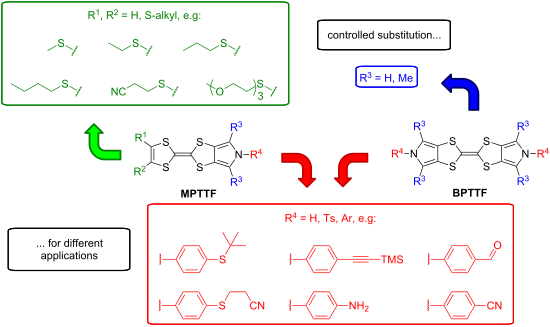
Figure 2: Structures and possible substitution positions of MPTTFs (4) and BPTTFs (5).

Scheme 1: Large-scale synthesis of 6. Reagents and conditions: a) PhMe, reflux, 19 h, 74%; b) LiBr, NaBH4, TH...

Scheme 2: Preparation of 7. Reagents and conditions: a) TsCl, Et3N, DMAP, MeCN, rt → reflux, 3.5 h, 82%; b) (...

Scheme 3: Homo and cross-coupling reactions of 6 or 7 afford BPTTFs and MPTTFs, respectively. Reagents and co...

Scheme 4: Deprotection and methylation of cyanoethyl-protected thiol moieties on MPTTFs as reported by Jeppes...

Scheme 5: Deprotection and alkylation of cyanoethyl-protected thiol moieties on MPTTFs using CsOH·H2O or DBU....

Scheme 6: Deprotection and N-arylation of tosylated MPTTFs. Reagents and conditions: a) NaOMe, THF, MeOH, ref...

Scheme 7: Deprotection and N,N-diarylation of tosylated BPTTFs. Reagents and conditions: a) NaOMe, THF, MeOH,...
Glycoluril–tetrathiafulvalene molecular clips: on the influence of electronic and spatial properties for binding neutral accepting guests
- Yoann Cotelle,
- Marie Hardouin-Lerouge,
- Stéphanie Legoupy,
- Olivier Alévêque,
- Eric Levillain and
- Piétrick Hudhomme
Beilstein J. Org. Chem. 2015, 11, 1023–1036, doi:10.3762/bjoc.11.115
- onto compound 11 [34]. The hydroquinone moieties were subjected to a dehydrogenation reaction using DDQ in THF to reach desired glycolurildiquinone 13 [35] in 91% yield. The Diels–Alder cycloaddition was carried out by treatment of bis-dienophile 13 with TTF derivative 14 [36], able to give rise in

Graphical Abstract

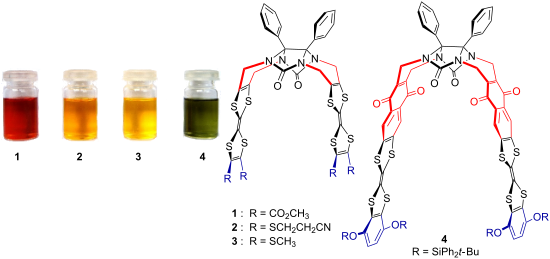
Figure 1: Structures of molecular clips 1–4.
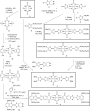
Scheme 1: Different routes developed for the synthesis of molecular clips 1–4.

Scheme 2: Reaction between diphenylglycoluril with 4,5-bis(bromomethyl)-2-thioxo-1,3-dithiole.

Figure 2: Intramolecular distances between TTF moieties from X-ray analysis for clips 2 and 3 and theoretical...

Figure 3: Cyclic voltammograms of molecular clips 1, 2, 3, 4 and F4-TCNQ at 10−3 M in 0.1 M TBAPF6/CH2Cl2/CH3...

Figure 4: Cyclic voltammograms of molecular clip 2 at different concentrations (left: 10−5 M; middle: 10−4 M;...

Scheme 3: Graphical representation of the stepwise oxidation of molecular clips 1, 2 and 3.

Scheme 4: Electrochemical mechanism used to simulate the CVs of molecular clips 1, 2 and 3.

Figure 5: Chemical oxidation of molecular clip 1 (10−4 M, CH2Cl2) using aliquots of NOSbF6 oxidizing reagent ...

Figure 6: Spectroelectrochemical experiment of molecular clip 1 during the first oxidation step at different ...

Figure 7: Molecular structure of molecular clip 15 and representation of its stepwise oxidation processes pro...

Figure 8: Molecular packing diagram of clips 2 (left) and 3 (right) obtained from X-ray analysis. A molecule ...

Figure 9: Left: Job plot analysis for DNB vs molecular clip 3 ([3 + DNB] = 10−3 M in o-C6H4Cl2 at 800 nm) at ...

Figure 10: UV–visible absorption spectra of F4-TCNQ (CH2Cl2, 10−5 M) upon titration with molecular clip 3 (CH2...

Figure 11: Redox interaction (left) and complexation (right) of F4-TCNQ with molecular clips 3 and 4.
Discrete multiporphyrin pseudorotaxane assemblies from di- and tetravalent porphyrin building blocks
- Mirko Lohse,
- Larissa K. S. von Krbek,
- Sebastian Radunz,
- Suresh Moorthy,
- Christoph A. Schalley and
- Stefan Hecht
Beilstein J. Org. Chem. 2015, 11, 748–762, doi:10.3762/bjoc.11.85
- ), BF3·Et2O, DDQ, CHCl3, rt; b) Zn(OAc)2, CHCl3/MeOH, rt; c) dipyrromethane 6, BF3·Et2O, DDQ, CHCl3, rt; d) Zn(OAc)2, CHCl3/MeOH, rt; e) 1. benzylamine, trimethyl orthoformate, rt, 2. NaBH4, THF/MeOH, rt; f) Boc2O, triethylamine, CH2Cl2, rt; g) 1. ethynyltrimethylsilane, CuI, PPh3, Pd(PPh3)4, TEA
- , 3,4-dihydroxybenzaldehyde, DMF, 85 °C; d) 1. pyrrole (4), propionic acid, 140 °C, 2. Zn(OAc)2, MeOH/CHCl3, rt; e) 1. dipyrromethane (6), BF3·Et2O, DDQ, CHCl3, rt, 2. Zn(OAC)2, MeOH/CHCl3, rt. Supporting Information Supporting Information File 370: Detailed synthetic procedures. Acknowledgements The

Graphical Abstract

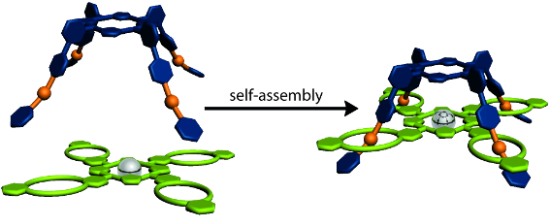
Figure 1: Mono-, di-, and tetravalent axles A1, A2 and A4 and mono-, di-, and tetravalent hosts C1, C2 and C4...

Scheme 1: Overview of the synthesis of the guests A2 and A4. a) Pyrrole (4), BF3·Et2O, DDQ, CHCl3, rt; b) Zn(...

Scheme 2: Synthesis of crown ether hosts C4 and C2: a) K2CO3, LiBr, 17, 2-[2-(2-chloroethoxy)ethoxy]ethanol, ...
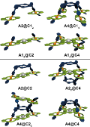
Figure 2: Schematic representation of the host–guests complexes. Top: complexes A2@C12, A4@C14, A12@C2 and A14...

Figure 3: 1H NMR (500 MHz, 298 K, CD2Cl2, 3 mM) of a) C1 (top), A2@C12 (middle) and A2 (bottom); b) C1 (top), ...
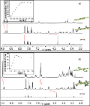
Figure 4: 1H NMR (500 MHz, 298 K, CD2Cl2, 3 mM) of a) C2 (top), A12@C2 (middle) and A1 (bottom) and b) C4 (to...

Figure 5: Normalized UV–vis absorption spectra (CH2Cl2, 3 μM) of A2, A4, C2 and C4 and their complexes formed...

Figure 6: ESI-Q-TOF-MS spectra (CH2Cl2, 0.2 µM; left hand side) and respective experimental and calculated is...

Figure 7: 1H NMR (500 MHz, 298 K, CD2Cl2, 1 mM) of a) C4 (top), A22@C4 (middle) and A2 (bottom); b) C2 (top), ...

Figure 8: 1H NMR (500 MHz, 298 K, CD2Cl2, 1 mM) of a) C4 (top), A4@C4 (middle) and A4 (bottom) and b) C2 (top...

Figure 9: Normalized UV–vis absorption spectra (CH2Cl2, 2 μM) of the guests A2 and A4 (black), the hosts C2 a...

Figure 10: ESI-Q-TOF-MS spectra (CH2Cl2, 0.2 µM; left hand side) and respective experimental and calculated is...
Bis(vinylenedithio)tetrathiafulvalene analogues of BEDT-TTF
- Erdal Ertas,
- İlknur Demirtas and
- Turan Ozturk
Beilstein J. Org. Chem. 2015, 11, 403–415, doi:10.3762/bjoc.11.46
- of 52 was prepared with the acceptor 2,3-dichloro-5,6-dicyano-p-benzoquinone (DDQ) 53 (1:1) in dichloromethane at room temperature to investigate the optical constant and optical band gap of the complex (Scheme 8) [56]. A solution of the salt was evaporated on a quartz substrate until ≈110 nm
- ([1,3]dithiolo[4,5-b][1,4]dithiinylidene) 52 – DDQ 53. Reaction conditions (i) (EtO)3P, 110 °C, N2, 2 h. Reaction conditions (i) EtOH, reflux, overnight; (ii) diisopropylethylamine in CH2Cl2, room temperature, overnight; (iii) (AcO)2Hg/AcOH, CHCl3, rt, 3h; iv) (EtO)3P, 110 °C, N2, 2 h; (v) sample in THF

Graphical Abstract

Figure 1: Chemical structure of the TTF analogues and TCNQ.

Figure 2: Oxidation states of TTF.

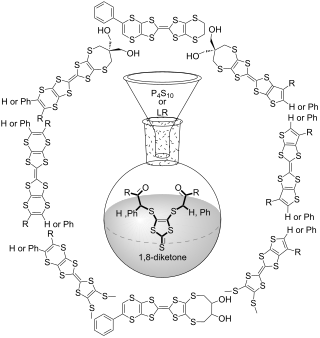
Figure 3: 1,4-Dithiin and thiophene fused TTF analogues from 1,8-diketone.

Scheme 1: Reaction mechanism of fused 1,4-dithiin and thiophene ring systems.

Scheme 2: Reaction conditions (i) LR, toluene, reflux, overnight; (ii) P4S10, toluene, reflux, 3 h.

Scheme 3: Proposed mechanism for side products.

Scheme 4: Reaction conditions (i) Hg(OAc)2, AcOH/CHCl3, rt, 1h; (ii) (EtO)3P, N2, 3 h, 110 °C.

Scheme 5: Reaction conditions (i) iPr2NEt, MEMCl, THF, rt, 12 h; (ii) LiAlH4, dry ether, rt, 24 h; (iii) tosy...

Scheme 6: Reagents and conditions (i) P4S10, toluene, reflux, dark, 3 h; (ii) P4S10, toluene, reflux, 3 h; (i...

Scheme 7: Reagents and conditions (i) Hg(OAc)2–AcOH, CHCl3, 3 h, rt; (ii) (EtO)3P, 110 °C, N2, 2 h.

Scheme 8: Charge transfer complex of 5,5',6,6'-tetraphenyl-2,2'-bi([1,3]dithiolo[4,5-b][1,4]dithiinylidene) 52...

Scheme 9: Reaction conditions (i) (EtO)3P, 110 °C, N2, 2 h.

Scheme 10: Reaction conditions (i) EtOH, reflux, overnight; (ii) diisopropylethylamine in CH2Cl2, room tempera...

Scheme 11: Reaction and conditions (i) P4S10, NaHCO3, toluene, reflux, 3 h; (ii) P4S10, p-TSA, toluene, reflux...
A simple and efficient method for the preparation of 5-hydroxy-3-acyltetramic acids
- Johanna Trenner and
- Evgeny V. Prusov
Beilstein J. Org. Chem. 2015, 11, 323–327, doi:10.3762/bjoc.11.37
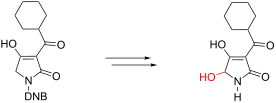
- DMB group with CAN [17] produced no product either. Successful removal of the DMB-protecting group from hydroxylated tetramic acid 16 and (trimethylsilyl)ethyl hemiaminal 19 was achieved upon treatment with an excess of DDQ in wet DCM. Treatment of the N-allyl-protected compound using catalytic

Graphical Abstract

Figure 1: Naturally occurring 5-hydroxylated 3-acyltetramic acids.

Scheme 1: Synthesis of model tetramic acids.

Scheme 2: Synthesis of hemiaminal ethers and deprotection of the tetramic acids.



