


Search results
Search for "aryl iodides" in Full Text gives 113 result(s) in Beilstein Journal of Organic Chemistry.
Functionalization of heterocyclic compounds using polyfunctional magnesium and zinc reagents
Beilstein J. Org. Chem. 2011, 7, 1261–1277, doi:10.3762/bjoc.7.147
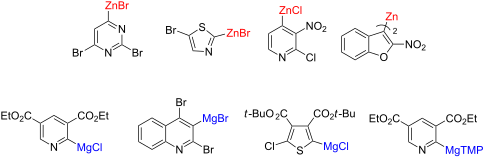
- direct insertion of zinc dust to alkyl iodides proceeds readily, the insertion to aryl iodides is very slow in THF and requires the use of polar solvents [4] or highly activated zinc [5]. Recently, we found that the presence of LiCl greatly facilitates the insertion of zinc to aryl iodides [6]. Thus, the
- limitation due to the use of zinc as a reducing agent. Zinc has only moderate reducing properties, therefore its insertion into organic halides only proceeds smoothly in the case of aryl iodides and electron-poor substituted aryl bromides. The use of highly reactive zinc (Rieke-zinc) [20][21] solves the


Combined directed ortho-zincation and palladium-catalyzed strategies: Synthesis of 4,n-dimethoxy-substituted benzo[b]furans
Beilstein J. Org. Chem. 2011, 7, 1255–1260, doi:10.3762/bjoc.7.146

- heterocyclization. In recent years, the direct hydroxylation of aryl halides has been developed by several groups by using palladium- or copper-catalyzed protocols. Whereas the reactions under copper catalysis work well for aryl iodides [45][46][47][48], the palladium-catalyzed hydroxylation also takes place with


Asymmetric Au-catalyzed cycloisomerization of 1,6-enynes: An entry to bicyclo[4.1.0]heptene
Beilstein J. Org. Chem. 2011, 7, 1021–1029, doi:10.3762/bjoc.7.116
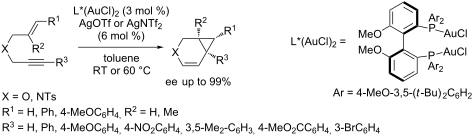
- presence of diversely functionalized aryl iodides (Scheme 2). The corresponding substituted alkynes 2b–e [46] were isolated in 71–85% yield. An analogous 1,6-enyne 6 [64] was also reacted with 3-bromoiodobenzene under the same reaction conditions and led to the formation of substrate 2f in 58% isolated


Recent advances in the gold-catalyzed additions to C–C multiple bonds
Beilstein J. Org. Chem. 2011, 7, 897–936, doi:10.3762/bjoc.7.103
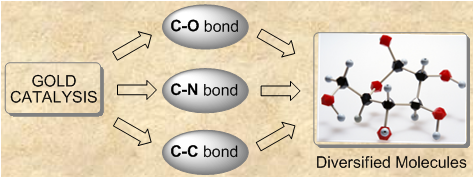
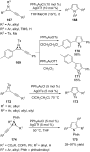
- carbon–carbon bond coupling reactions have been less explored [88][89]. In 2008, Li et al. reported a gold(I) iodide catalyzed Sonogashira reaction [88]. Terminal alkynes 197 reacted smoothly with aryl iodides and bromides 198 in the presence of 1 mol % AuI and 1 mol % dppf to generate the corresponding








Air-stable, recyclable, and time-efficient diphenylphosphinite cellulose-supported palladium nanoparticles as a catalyst for Suzuki–Miyaura reactions
Beilstein J. Org. Chem. 2011, 7, 378–385, doi:10.3762/bjoc.7.48

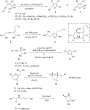
- as base (Scheme 3). The typical experimental results are summarized in Table 4. The data presented in Table 4 show that the Cell–OPPh2–Pd0 catalyst was highly effective for both aryl bromides and aryl iodides. Most of these reactions proceeded rapidly and were complete within 20 min. The catalytic
- reactivity of aryl bromides was slightly lower than that of the corresponding aryl iodides and in these cases a prolonged time was required. The reaction of aryl chlorides with arylboronic acids was sluggish and gave only small amounts of products in acceptable times. The reusability of the supported


Studies on Pd/NiFe2O4 catalyzed ligand-free Suzuki reaction in aqueous phase: synthesis of biaryls, terphenyls and polyaryls
Beilstein J. Org. Chem. 2011, 7, 310–319, doi:10.3762/bjoc.7.41
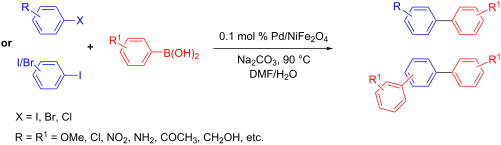
- catalyzed Suzuki reaction tolerated a wide range of functional groups such as NO2, CHO, Me, Cl, OMe, OH, NH2, and Ac. The aryl iodides and electron deficient aryl bromides showed excellent reactivity with phenyl- and 3-(hydroxymethyl)phenylboronic acid and led to the expected products in high yields within
- reaction times compared to arylboronic acids, probably as a result of strong coordination of the heterocyclic nitrogen with Pd metal. Ortho substituted aryl iodides required slightly longer reaction times to give the corresponding biaryls. The coupling of 4-chloroiodobenzene with phenylboronic acid gave

Palladium- and copper-mediated N-aryl bond formation reactions for the synthesis of biological active compounds
Beilstein J. Org. Chem. 2011, 7, 59–74, doi:10.3762/bjoc.7.10
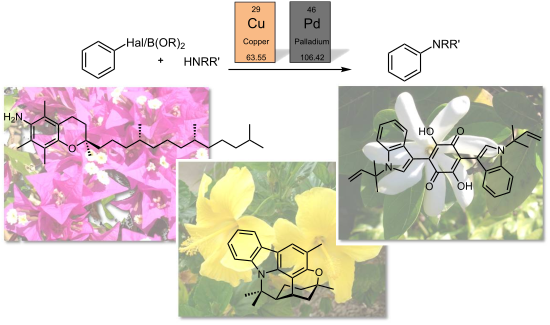
- series of aryl halides, aryl iodides 63 were the most active. The presence of air and water gave only slightly lower yields. Other heteroarylamines also gave good yields [39]. The copper-catalysed domino-indole synthesis facilitated access to new Chek1/KDR kinase inhibitors 67 from
- of aryl halides 72 with the N-acylhistidine 73 was total regioselective on the imidazole ring, but suffered from complicated isolation procedures due to difficulties in separating the product from stoichiometric quantities of the ligand. Sufficient reactivity was only observed for aryl iodides and




Aromatic and heterocyclic perfluoroalkyl sulfides. Methods of preparation
Beilstein J. Org. Chem. 2010, 6, 880–921, doi:10.3762/bjoc.6.88


Structure and reactivity in neutral organic electron donors derived from 4-dimethylaminopyridine
Beilstein J. Org. Chem. 2010, 6, No. 73, doi:10.3762/bjoc.6.73
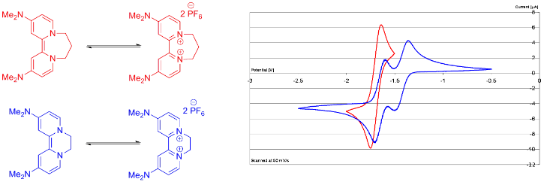
- provided by four nitrogens, with aromatic stabilization in its oxidised forms. This exceptional donor has the power to reduce aryl iodides (E0 = −2.2 V) to aryl radicals, but not to aryl anions [21]. This is paradoxical in view of the standard potential of the second step; E0 = 0.05 V vs SCE in MeCN for
- DMF) [22][23][24][25] and the 4-dimethylaminopyridine (4-DMAP)-derived donor 8 [E1/2 (DMF) = −1.69 V vs Fc/Fc+] [26][27][28][29], which would equate to −1.24 V vs SCE [E (DMF)Fc/Fc+ = 0.45 V vs SCE] [41] react with aryl iodides to afford aryl anions. As an indication of their enhanced donor properties


Efficient and improved synthesis of Telmisartan
Beilstein J. Org. Chem. 2010, 6, No. 25, doi:10.3762/bjoc.6.25
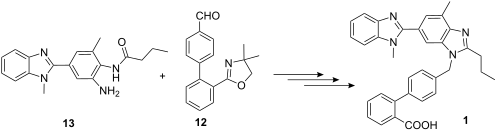
- in the final step [6]. However, the main shortcomings of the synthesis remained, namely, the unsatisfactory regioselectivity in the alkylation of 8 with 4 and the intricate synthesis of the biaryl intermediate 7. In the original protocol, the latter was synthesized via an Ullmann coupling of the aryl
- iodides 5 and 6 using 5 equiv of copper [7]. Modern syntheses of 7 involve cross-couplings of sensitive aryl magnesium [8], zinc [9], or boron [10][11] compounds with alkyl 2-halobenzoates. Since the commercialization of Telmisartan, 7 has become readily available at low cost, so that most subsequent


Synthesis and binding studies of two new macrocyclic receptors for the stereoselective recognition of dipeptides
Beilstein J. Org. Chem. 2010, 6, No. 5, doi:10.3762/bjoc.6.5
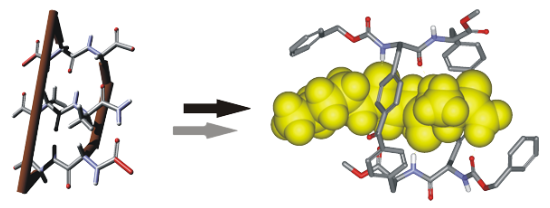
- ][27][28][29] to obtain the Fmoc N-protected amino acid that was subsequently esterified with diazomethane affording Fmoc-I-Phe-OMe, 4d. The diprotected aryl iodides, 4a and 4b, were converted uneventfully to the corresponding diprotected aryl trimethylstannane derivatives, 5a and 5b, by reaction with







Polyionic polymers – heterogeneous media for metal nanoparticles as catalyst in Suzuki–Miyaura and Heck–Mizoroki reactions under flow conditions
Beilstein J. Org. Chem. 2009, 5, No. 21, doi:10.3762/bjoc.5.21
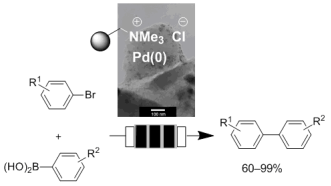
- industrial relevance is the Heck–Mizoroki reaction. We were able to perform C-C coupling reaction under flow conditions with aryl iodides 23–28 using catalyst 3 (Table 2). Optimization of the conditions for our monolithic flow reactor was conducted with 4′-iodoacetophenone (23) and styrene (29) as coupling
- with 4′-bromoacetophenone coupling with styrene yielded Heck-product 30 in only 35%. In order to generalize the reaction protocol different aryl iodides were coupled with styrene. In all cases, the C-C coupling products were formed within 0.5 to 24 h in very good yield with excellent stereocontrol (see


Reduction of arenediazonium salts by tetrakis(dimethylamino)ethylene (TDAE): Efficient formation of products derived from aryl radicals
Beilstein J. Org. Chem. 2009, 5, No. 1, doi:10.3762/bjoc.5.1
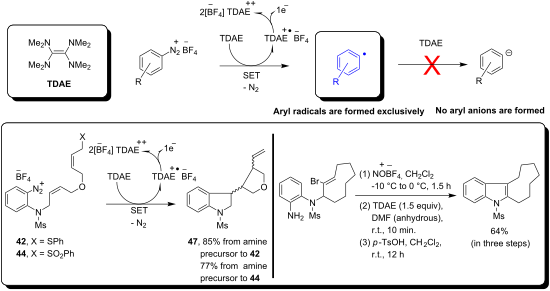
- anion, a substrate other than an aryl halide would need to be used. As the one-electron reduction of an arenediazonium salt occurs [60] at much more positive potentials (Ep 0.16 V vs SCE) than for aryl iodides [61] (Ep −2.2 V vs SCE), this gives a much better chance to observe a second reductive peak in





