


Search results
Search for "carbohydrates" in Full Text gives 202 result(s) in Beilstein Journal of Organic Chemistry. Showing first 200.
Mutagenic activity of quaternary ammonium salt derivatives of carbohydrates
Beilstein J. Org. Chem. 2016, 12, 1434–1439, doi:10.3762/bjoc.12.138
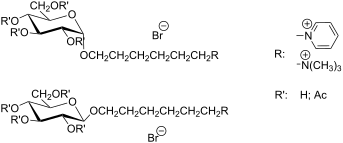
- mutagenicity test; quaternary ammonium salt; Introduction Carbohydrates and alditols occur broadly in nature and possess many biological functions essential to living organisms. Sugars not only contribute as energetic substances, but also serve as building materials for fungi, microbes, plants, and animals
- RNA and DNA, respectively. The mechanisms of molecular recognition and cell interaction are mostly explained by the interaction of carbohydrates with proteins, called lectins, exposed at the cell surface. This process, on the one hand, allows bacteria to interact with other cells during infection, but


A robust synthesis of 7,8-didemethyl-8-hydroxy-5-deazariboflavin
Beilstein J. Org. Chem. 2016, 12, 912–917, doi:10.3762/bjoc.12.89
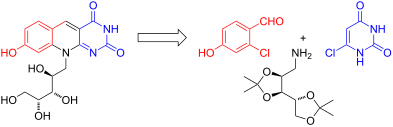
- compound with high purity. Keywords: carbohydrates; heterocyclic compounds; protective groups; riboflavin derivatives; ribose derivatives; Introduction The deazariboflavin cofactor F420 plays an important role in bacterial methanogenesis [1][2] and was – in contrast to other, ubiquitous biological redox


Synthesis and in vitro cytotoxicity of acetylated 3-fluoro, 4-fluoro and 3,4-difluoro analogs of D-glucosamine and D-galactosamine
Beilstein J. Org. Chem. 2016, 12, 750–759, doi:10.3762/bjoc.12.75
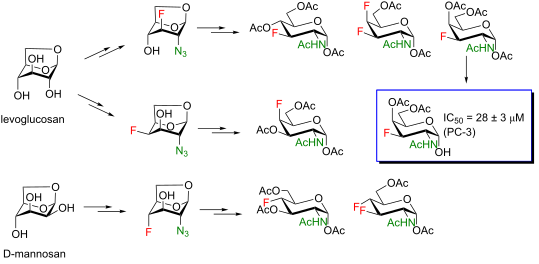
- -2-azido-hexopyranoses have potential as synthons in oligosaccharide assembly. Keywords: amino sugars; cytotoxicity; fluorinated carbohydrates; fluorine; hexosamines; Introduction Derivatives of D-glucosamine (GlcN) and D-galactosamine (GalN) are essential amino sugar components of glycans in



Diastereoselective synthesis of new O-alkylated and C-branched inositols and their corresponding fluoro analogues
Beilstein J. Org. Chem. 2016, 12, 353–361, doi:10.3762/bjoc.12.39
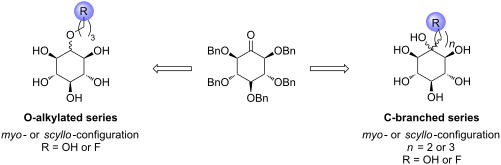
- (Figure 1). These new inositol members could represent attractive tools for the development of further inositol analogues. Indeed, this arm could improve some properties as the lipophilicity for example and should allow the easy anchoring of various groups or molecules, such as carbohydrates for example
- biological evaluations but also as useful diastereoisomeric intermediates to anchor various groups such as carbohydrates, for example, opening up new avenues for the total synthesis of new inositol derivatives. The synthesized inositol derivatives with fluorinated arms could be more specifically interesting


Enabling technologies and green processes in cyclodextrin chemistry
Beilstein J. Org. Chem. 2016, 12, 278–294, doi:10.3762/bjoc.12.30
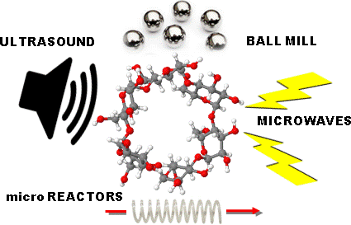
- excluded. A good example of a mixed reaction mechanism is the glycosylation reported by Tyagi et al. [88], where SN2 glycosylation seems to be dominant, with no neighbouring group participation, which is typical of glycosylation reactions of activated acetylated carbohydrates. A more pure SN2 reaction is




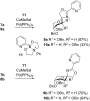
Spiro-fused carbohydrate oxazoline ligands: Synthesis and application as enantio-discrimination agents in asymmetric allylic alkylation
Beilstein J. Org. Chem. 2016, 12, 166–171, doi:10.3762/bjoc.12.18
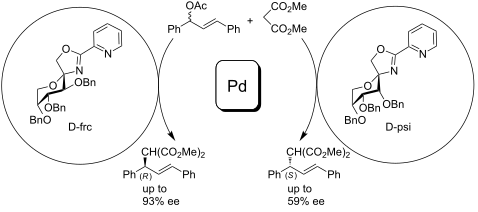
- ; carbohydrates; oxazolines; palladium; spiro compounds; Introduction The design of new chiral ligands for stereo-differentiating metal catalysts that enable asymmetric syntheses is still a highly active field of research in organic chemistry, for there is a continuously growing demand for enantiomeric pure
- building blocks for pharmaceuticals, agrochemicals or flavors. Carbohydrates are inexpensive and easy to obtain enantiomerically pure natural products and therefore, nearly ideal starting materials for ex-chiral pool syntheses. In addition, carbohydrates have significantly gained attention as ligands for
- metal complexes that enable asymmetric catalysis over the past decades, and an array of highly efficient privileged ligands for metal-catalyzed enantioselective syntheses have been derived from carbohydrates so far [1][2][3][4][5][6]. However, the enantioselective construction of C–C bonds, especially




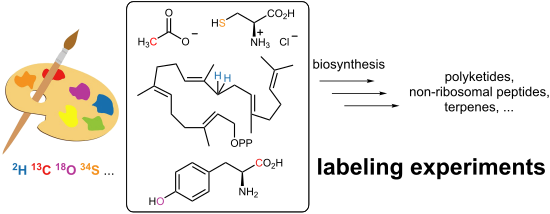
Recent highlights in biosynthesis research using stable isotopes
Beilstein J. Org. Chem. 2015, 11, 2493–2508, doi:10.3762/bjoc.11.271
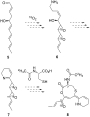
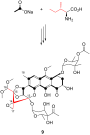
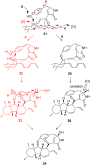
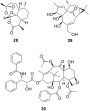
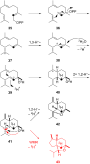
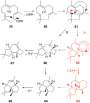
- from acetate (bold) and L-isoleucine (red) as deduced from labeling experiments. Labels introduced into the carbohydrates and methyl groups are omitted. Proposed biosynthetic assembly of clostrubin A (12). Bold bonds show intact acetate units. Proposed biosynthesis of aspirochlorine (20) via 18 and 19











Synthesis of D-fructose-derived spirocyclic 2-substituted-2-oxazoline ribosides
Beilstein J. Org. Chem. 2015, 11, 2289–2296, doi:10.3762/bjoc.11.249
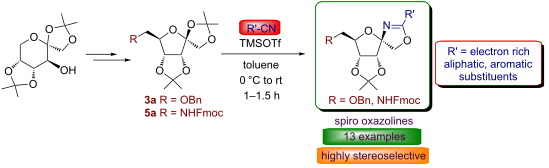
- spiro [42] 2-oxazolines [43] are limited, to the best of our knowledge. With our interest in the area of glycopeptides [44] and carbohydrates [45], and owing to the importance of ribosides in general and spiroribofuranoses [46] in particular for drug discovery, in this paper, we report the synthesis of


Towards inhibitors of glycosyltransferases: A novel approach to the synthesis of 3-acetamido-3-deoxy-D-psicofuranose derivatives
Beilstein J. Org. Chem. 2015, 11, 1547–1552, doi:10.3762/bjoc.11.170

- mimetics. Despite all the effort and the numerous GTs inhibitors identified, only a few achieved significant activity. On the basis of the previous investigations, a new class of GTs inhibitors imitating carbohydrates has been revealed [17]. These structurally modified carbohydrates are designed to


Cross-metathesis reaction of α- and β-vinyl C-glycosides with alkenes
Beilstein J. Org. Chem. 2015, 11, 1392–1397, doi:10.3762/bjoc.11.150

- ; catalysis; carbohydrates; cross-metathesis; ruthenium; Introduction Natural and unnatural C-substituted glycosides are important compounds with a plethora of attractive biological properties and they often have been used as artificial DNA components [1]. Among various synthetic procedures providing C


Synthesis and evaluation of the biostability and cell compatibility of novel conjugates of nucleobase, peptidic epitope, and saccharide
Beilstein J. Org. Chem. 2015, 11, 1352–1359, doi:10.3762/bjoc.11.145
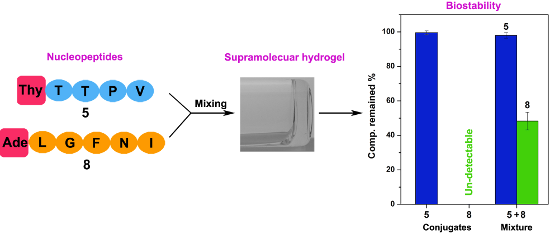
- they constitute three key types of biomacromolecules–proteins, nucleic acids, and carbohydrates. Inspired by this molecular foundation resulted from evolution, we are developing biomaterials that consist of the covalent conjugates of these three classes of the basic building blocks of life. For example


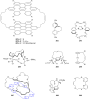
Selected synthetic strategies to cyclophanes
Beilstein J. Org. Chem. 2015, 11, 1274–1331, doi:10.3762/bjoc.11.142
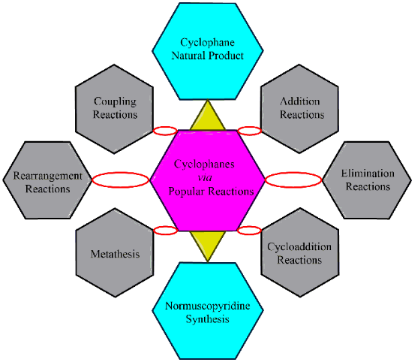
- 139 by using the Wurtz coupling as a key step (Scheme 20). Metathesis Alkyne metathesis reaction: In 2010, Murphy and Jarikote [139] have developed a useful protocol for assembling non-natural macrocyclic compounds containing carbohydrates. Compound 140 was prepared in several steps and was further






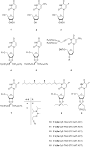
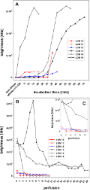
Terminal lipophilization of a unique DNA dodecamer by various nucleolipid headgroups: Their incorporation into artificial lipid bilayers and hydrodynamic properties
Beilstein J. Org. Chem. 2015, 11, 913–929, doi:10.3762/bjoc.11.103
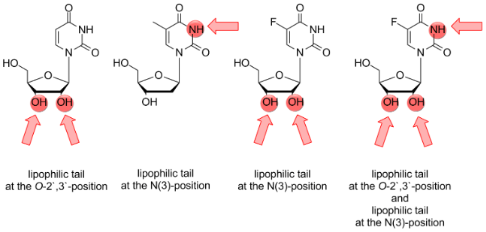
- lipo-oligonucleotides. Keywords: lipid bilayer; lipo-oligonucleotides; nucleic acids; nucleolipids; Introduction For proper cell function, the biosynthetic lipophilization of proteins and carbohydrates, such as palmitoylation and farnesylation, is of decisive importance [1]. The same seems to be true






Glycodendrimers: tools to explore multivalent galectin-1 interactions
Beilstein J. Org. Chem. 2015, 11, 739–747, doi:10.3762/bjoc.11.84
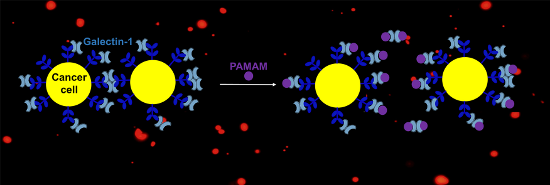
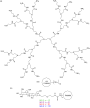
- located on apposing faces of the dimer (Figure 1). Although individual binding interactions with carbohydrates are weak [8], ligands for galectin-1 typically possess an array of carbohydrates to enhance the binding affinity [1][9][10]. Galectin-1 binding to carbohydrates cross-links adjacent




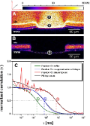
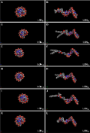
Probing multivalency in ligand–receptor-mediated adhesion of soft, biomimetic interfaces
Beilstein J. Org. Chem. 2015, 11, 720–729, doi:10.3762/bjoc.11.82
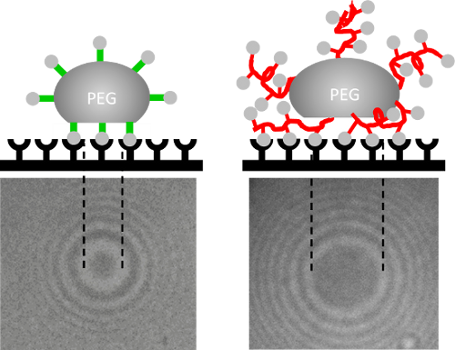
- protein receptors are formed to control cell–cell recognition, cell adhesion and related processes. The aim of this work is to shed light on the principles of complex formation between surface anchored carbohydrates and receptor surfaces by measuring the specific adhesion between surface bound mannose on
- carbohydrates of the glycocalyx, a glycan coating enveloping prokaryotic or eukaryotic cells. By specific binding to cell receptors, the carbohydrate units of the glycocalyx control important processes such as cell adhesion, communication and inflammatory response [1]. For this reason great effort is set forth
- ligands are typically oligomers consisting of multiple subunits of varying complexity. When binding to receptors this leads to a receptor clustering or so-called glycocluster effect. However, multivalency even goes further: For example when cells form contact layers of surface anchored carbohydrates the


DNA display of glycoconjugates to emulate oligomeric interactions of glycans
Beilstein J. Org. Chem. 2015, 11, 707–719, doi:10.3762/bjoc.11.81
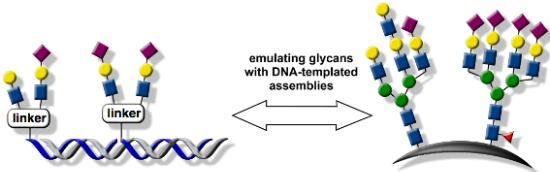
- is a longstanding interest in tools to manipulate these interactions for structure–function studies and as potential therapeutics [8][9]. The demonstration that the high avidity of oligomeric interactions with cell surface carbohydrates can be outcompeted with a synthetic scaffold that recapitulates
- diverse glycans could be iteratively introduced on amino acid linkers. Inspired by Shoda’s activation [40] which provides facile access to complex glycosyl azides from native carbohydrates, we subsequently applied reiterative CuAAC conjugation of glycans on propargyl glycine residues within a peptide [41


Synthesis of multivalent carbohydrate mimetics with aminopolyol end groups and their evaluation as L-selectin inhibitors
Beilstein J. Org. Chem. 2015, 11, 638–646, doi:10.3762/bjoc.11.72
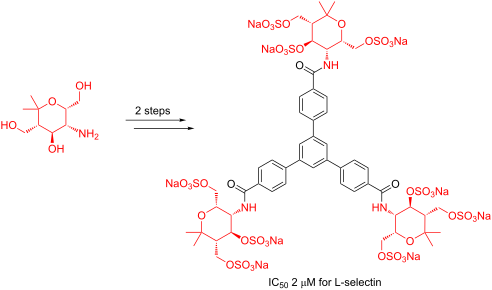
- since in the literature similar conditions were found for the synthesis of multivalent acetyl-protected carbohydrates [29]. As possible explanation we assume that the formation of product 6 is sterically too hindered due to the bulkiness of the TBS-protecting groups of 3 and the short distance between


Synthesis of 1,2-cis-2-C-branched aryl-C-glucosides via desulfurization of carbohydrate based hemithioacetals
Beilstein J. Org. Chem. 2015, 11, 583–588, doi:10.3762/bjoc.11.64
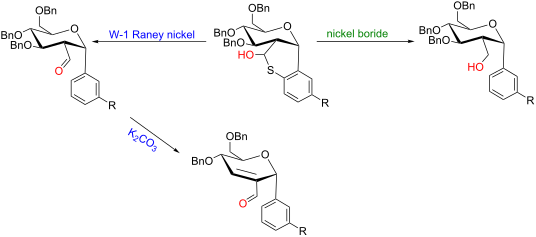
- Henok H. Kinfe Fanuel M. Mebrahtu Mandlenkosi M. Manana Kagiso Madumo Mokela S. Sokamisa Department of Chemistry, University of Johannesburg, PO Box 524, Auckland Park 2006, South Africa 10.3762/bjoc.11.64 Abstract 1-C and 2-C-branched carbohydrates are present as substructures in a number of
- stereospecific preparation of 2,3-unsaturated-aryl-C-glycosides (Ferrier products). Keywords: aryl-C-glucoside; desulfurization; Ferrier product; hemithioacetal; Introduction 1-C (C-glycosides) and 2-C-branched carbohydrates are important carbohydrate analogues which have found wide application in
- to C-glycosides are 2-C-branched carbohydrates which are employed as bioisosters of the natural 2-acetamido glycoside derivatives. Gammon et al. prepared a series of 2-C-branched carbohydrates as potential inhibitors of enzymes implicated in the biosynthesis of mycothiol, Mycobacterium tuberculosis’s


Properties of cationic monosubstituted tetraalkylammonium cyclodextrin derivatives – their stability, complexation ability in solution or when deposited on solid anionic surface
Beilstein J. Org. Chem. 2015, 11, 192–199, doi:10.3762/bjoc.11.20
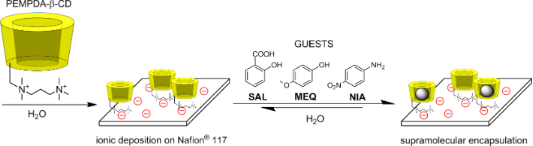
- , yet robust and a straightforward process as well. Keywords: cyclodextrins; inclusion properties; solid surface; tetraalkylammonium derivatives; thermal stability; Introduction Cyclodextrins (CDs) are a very interesting group of natural macrocyclic carbohydrates, which were first described by


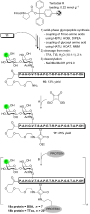
Synthesis and biological evaluation of a novel MUC1 glycopeptide conjugate vaccine candidate comprising a 4’-deoxy-4’-fluoro-Thomsen–Friedenreich epitope
Beilstein J. Org. Chem. 2015, 11, 155–161, doi:10.3762/bjoc.11.15
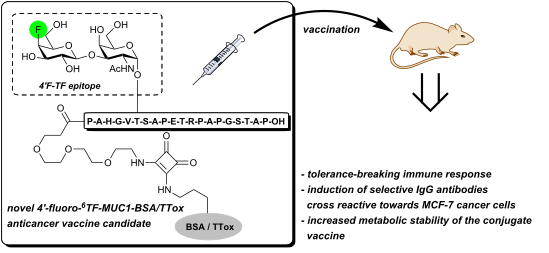
- selective IgG antibodies that are cross-reactive with native MUC1 epitopes on MCF-7 human cancer cells. Keywords: cancer immunotherapy; fluorinated carbohydrates; glycoconjugates; MUC1; TACA; Introduction Since cancer has advanced to one of the leading causes of death in economical developed countries




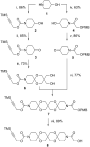
Articulated rods – a novel class of molecular rods based on oligospiroketals (OSK)
Beilstein J. Org. Chem. 2015, 11, 74–84, doi:10.3762/bjoc.11.11

- relatively rigid molecular and supramolecular systems. These systems mainly consist of peptides and proteins (e.g., scleroproteins, globular proteins, and membrane proteins), lipids (e.g., biological membranes), carbohydrates (e.g., cellulose) and nucleic acids (DNA, RNA). The impressive performance of the




Release of β-galactosidase from poloxamine/α-cyclodextrin hydrogels
Beilstein J. Org. Chem. 2014, 10, 3127–3135, doi:10.3762/bjoc.10.330
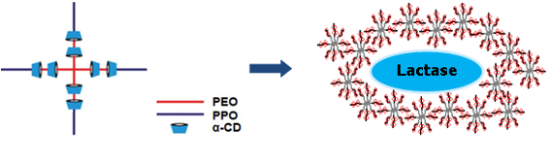
- : controlled release; cyclodextrins; lactase; polypseudorotaxane; supramolecular gel; Introduction In the Western diet, carbohydrates contribute about 50% of calories, distributed in the following ratio: starch (50%), sucrose (30%), lactose (6%), maltose (1–2%), and others (12%: trehalose, glucose, fructose


Synthesis and characterization of pH responsive D-glucosamine based molecular gelators
Beilstein J. Org. Chem. 2014, 10, 3111–3121, doi:10.3762/bjoc.10.328
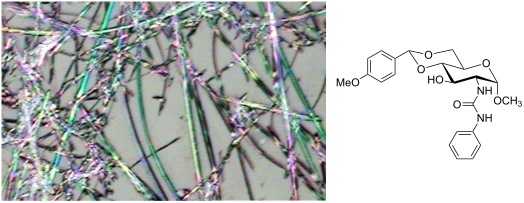
- be effective LMWGs, including derivatives from amino acids, carbohydrates, and cholesterols derivatives [8][9][10][11][12][13][14][15][16]. The reversible organogels and hydrogels have been explored for many applications including drug delivery, protein binding and separation, tissue engineering, and




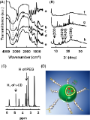
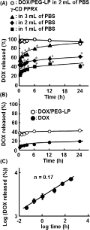
Preparation and evaluation of cyclodextrin polypseudorotaxane with PEGylated liposome as a sustained release drug carrier
Beilstein J. Org. Chem. 2014, 10, 2756–2764, doi:10.3762/bjoc.10.292
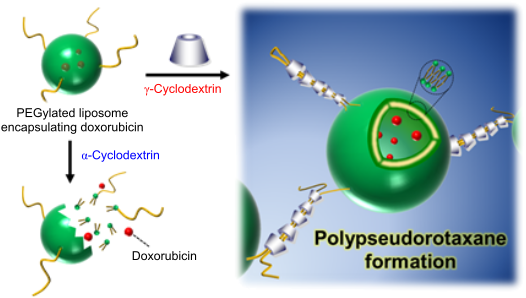
- rapid removal from the systemic circulation by the reticuloendothelial system (RES). To produce long-circulating LPs, hydrophilic polymers, carbohydrates, peptides and proteins have been used to modify the surface of LPs [29]. Additionally, the targeting efficiency of LPs has been improved by appending


Synthesis of aromatic glycoconjugates. Building blocks for the construction of combinatorial glycopeptide libraries
Beilstein J. Org. Chem. 2014, 10, 2453–2460, doi:10.3762/bjoc.10.256
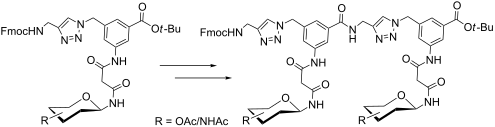
- acids; aniline; carbohydrates; glycoconjugates; glycopeptides; Introduction Glycans or other complex oligosaccharide structures, present on the surface of every prokaryotic and eukaryotic cell, are important for a large number of biological recognition processes like, for example, intercellular





