Search results
Search for "concentration" in Full Text gives 1454 result(s) in Beilstein Journal of Organic Chemistry. Showing first 200.
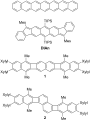
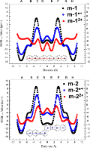
Oxidation of [3]naphthylenes to cations and dications converts local paratropicity into global diatropicity
Beilstein J. Org. Chem. 2025, 21, 277–285, doi:10.3762/bjoc.21.20

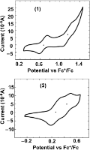
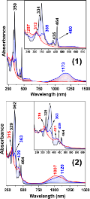
- +) couple. Electrolyte solutions, at a concentration 0.1 M, were prepared from anhydrous, degassed HPLC grade CH2Cl2 and anhydrous Bu4NPF6. Voltammograms were recorded at a sweep rate of 100 mV s−1. Sample concentrations were ca. 1–2 mM. Electronic spectroscopy UV–vis–NIR spectroelectrochemical studies were
- working and counter electrodes, respectively. A Ag wire was employed as the pseudo-reference electrode in a 0.1 M solution of Bu4NPF6 in freshly distilled CH2Cl2. Sample concentration was 1 mM. The spectra were collected by constant potential electrolysis, and the potentials were changed in intervals of


Synthesis and characterizations of highly luminescent 5-isopropoxybenzo[rst]pentaphene
Beilstein J. Org. Chem. 2025, 21, 270–276, doi:10.3762/bjoc.21.19
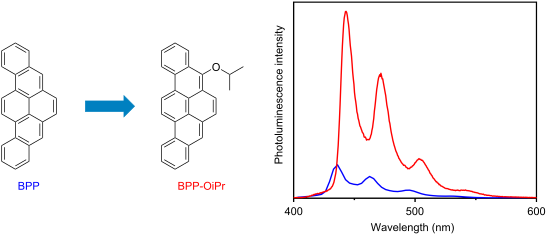
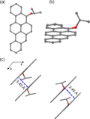
- intriguing rod-like nano- to microcrystals and/or longer wires, which were visualized by scanning electron microscopy (SEM). Results and Discussion BPP 2 could be prepared by the “DPEX” reaction [12] in 60% yield on a 0.1 g scale from dialdehyde 1 with a concentration of 0.60 mM (Table 1, entry 1). However
- , the yield of BPP decreased to 40% when the amount of 1 was increased to 1.0 g with a concentration of 2.6 mM (Table 1, entry 2). In our attempt to improve the yield of BPP 2, we decreased the equivalent of SnCl2·2H2O and increased the volume ratio of iPrOH, which unexpectedly provided BPP-OiPr 3 as a




Three-component reactions of conjugated dienes, CH acids and formaldehyde under diffusion mixing conditions
Beilstein J. Org. Chem. 2025, 21, 262–269, doi:10.3762/bjoc.21.18
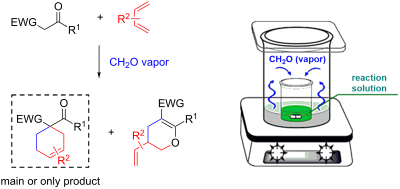
- method was successfully used to generate highly active nitrile oxides and nitrilimines for 1,3-dipolar cycloaddition reactions [19][20][21]. Based on our previous experience with diffusion mixing, we assumed that formaldehyde vapor diffusion into the reaction would lead to an extremely low concentration
- placed an open small vial with a solution of the other starting compounds (Figure 1). During the reaction, formaldehyde vapors from the outer vial were slowly absorbed by the mixture in the inner vial, which ensured an extremely low concentration of CH2O and intermediates in the reaction. An alternative


Synthesis of disulfides and 3-sulfenylchromones from sodium sulfinates catalyzed by TBAI
Beilstein J. Org. Chem. 2025, 21, 253–261, doi:10.3762/bjoc.21.17
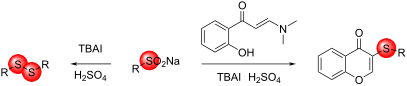
- the reaction, an attempt was made to increase the concentration, reducing the amount of solvent to 1 mL (Table 1, entry 12), product 2a was obtained in 67%, and a further reduction to 0.5 mL failed to increase the yield significantly (Table 1, entry 13). Although the amount of solvent used could have




Hydrogen-bonded macrocycle-mediated dimerization for orthogonal supramolecular polymerization
Beilstein J. Org. Chem. 2025, 21, 179–188, doi:10.3762/bjoc.21.10
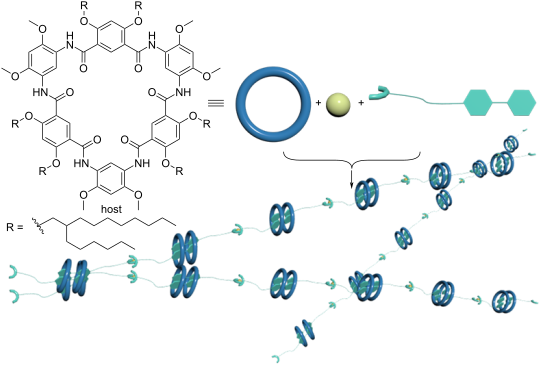
- polymerization concentration of 17 μM. These polymers were highly concentration-dependent. Establishing this new dimerization motif with shape-persistent H-bonded macrocycles widens the scope of noncovalent building blocks for supramolecular polymers and augurs well for the future development of functional
- H1, G2, and Zn2+ with a respective concentration of 1 mM and 3 mM revealed a nanoglobular suprastructure, and a larger nanoirregular block suprastructure at higher concentration (5 mM, Figure 5). To confirm aggregate formation, 1H NMR titration experiments were carried out, in which different equiv
- addition of the macrocycle to a G2/Zn2+ complex were consistent with the formation of supramolecular polymers. The supramolecular polymers formed were further characterized by viscosity and variable-concentration NMR experiments. One important feature of supramolecular polymers is the dependency of their



Hot shape transformation: the role of PSar dehydration in stomatocyte morphogenesis
Beilstein J. Org. Chem. 2025, 21, 47–54, doi:10.3762/bjoc.21.5
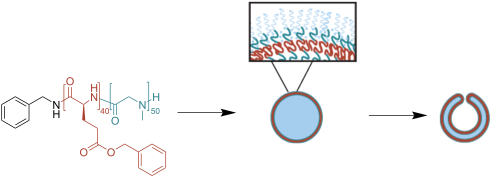
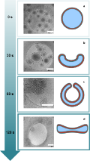
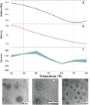
- solute concentration proved ineffective; an alternative approach was needed. Examining the van 't Hoff equation for osmotic pressure, Π = iMRT, four factors play significant roles: solute concentration M (in this case, PEG), the van 't Hoff constant i (which is 1 for non-dissociating molecules
- ), temperature T, and the ideal gas constant R. Increasing the temperature can enhance osmotic pressure, similar to solute concentration. This equation does not directly include membrane permeability as it only relates the osmotic pressure to temperature and concentration. However, membrane permeability
- indirectly affects osmotic pressure difference over the membrane. Permeability influences the concentration gradient of solute particles across the membrane [21], meaning that in this case membrane permeability affects the osmotic pressure that can be exerted on the membrane. Dehydrating polysarcosine by


Emerging trends in the optimization of organic synthesis through high-throughput tools and machine learning
Beilstein J. Org. Chem. 2025, 21, 10–38, doi:10.3762/bjoc.21.3
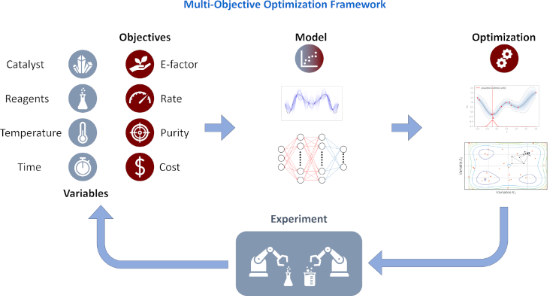
- . Using this configuration, the platform can perform a calibration of the reagent and product concentration through a standard addition method. Once the PAT is calibrated, the platform performs dynamic experiments where the concentration of the reagents is ramped to explore the parametric space. Finally
- to maximize the space–time yield (STY) while minimizing either the E-factor of the SNAr reaction or the impurity concentration of the N-benzylation reaction. For both reactions, there were four variables to optimize, including metrics for reaction time, reagent concentration, and temperature. After


Synthesis, characterization, and photophysical properties of novel 9‑phenyl-9-phosphafluorene oxide derivatives
Beilstein J. Org. Chem. 2024, 20, 3299–3305, doi:10.3762/bjoc.20.274
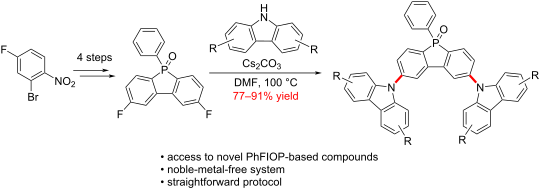
- ORTEP drawing obtained using the X-ray crystallographic data of 7-H. (a) UV–vis absorption spectra of the PhFlOP-based emitters 7 measured at a concentration of ≈10−5 M in toluene at room temperature. (b) UV–vis absorption spectra of 7-H measured at a concentration of ≈10−4 M in different solvents at




Giese-type alkylation of dehydroalanine derivatives via silane-mediated alkyl bromide activation
Beilstein J. Org. Chem. 2024, 20, 3274–3280, doi:10.3762/bjoc.20.271
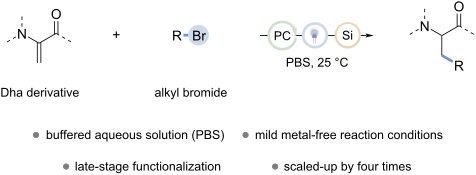
- , entry 5). Upon increasing the concentration of the PBS solution to 0.4 M, no change in yield was observed (60% yield, 100% conv.; Table 1, entry 6). Lastly, the optimal reaction time was determined to be 3 hours (67% yield, 100% conv.; Table 1, entry 7). Having optimized the reaction conditions, a scope



Efficient synthesis of fluorinated triphenylenes with enhanced arene–perfluoroarene interactions in columnar mesophases
Beilstein J. Org. Chem. 2024, 20, 3263–3273, doi:10.3762/bjoc.20.270
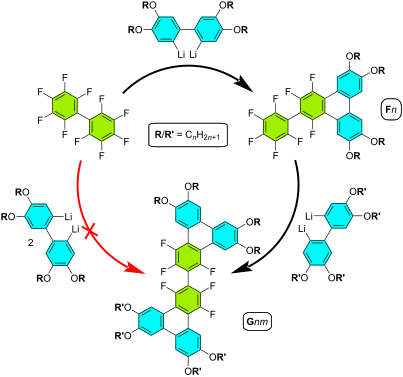
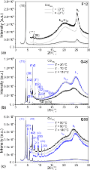
- concentration of 1 × 10⁻⁵ mol/L and in solid-state thin film. DFT calculated frontier molecular orbitals and optimized molecular structures for F1 and G11. Synthesis, yields, and nomenclature of 1,2,4-trifluoro-6,7,10,11-tetraalkoxy-3-(perfluorophenyl)triphenylene (Fn, n = 3–12) and corresponding 1,1',3,3',4,4




Discovery of ianthelliformisamines D–G from the sponge Suberea ianthelliformis and the total synthesis of ianthelliformisamine D
Beilstein J. Org. Chem. 2024, 20, 3205–3214, doi:10.3762/bjoc.20.266
- OD600 and resazurin (RSZ) metabolic assay, respectively. The final concentration of DMSO in the assays was 1% (v/v). The negative controls consisted of inoculum and 1% DMSO. The antibiotic tobramycin (Sigma-Aldrich; 16 µg/mL) was used as a positive control. The initial OD600 and final OD600 were read


![[Graphic 1]](/bjoc/content/inline/1860-5397-20-266-i2.svg?max-width=637&scale=1.18182)
![[Graphic 2]](/bjoc/content/inline/1860-5397-20-266-i3.svg?max-width=637&scale=1.18182)
![[Graphic 3]](/bjoc/content/inline/1860-5397-20-266-i4.svg?max-width=637&scale=1.18182)

![[Graphic 4]](/bjoc/content/inline/1860-5397-20-266-i5.svg?max-width=637&scale=1.18182)
![[Graphic 5]](/bjoc/content/inline/1860-5397-20-266-i6.svg?max-width=637&scale=1.18182)

Direct trifluoroethylation of carbonyl sulfoxonium ylides using hypervalent iodine compounds
Beilstein J. Org. Chem. 2024, 20, 3182–3190, doi:10.3762/bjoc.20.263
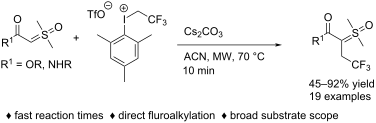
- reaction with Cs2CO3 (1.3 equiv) produced 3a in a much improved 60% yield (Table 1, entry 2). We screened other solvents and tested the impact of other inorganic bases but none of these changes improved the formation of the ylide 3a (Table 1, entries 3–6). And while increasing the reaction concentration


Multicomponent reactions driving the discovery and optimization of agents targeting central nervous system pathologies
Beilstein J. Org. Chem. 2024, 20, 3151–3173, doi:10.3762/bjoc.20.261

- inhibitors, and their effects were investigated using the Amplex-Red® kit in C. elegans. Individuals exposed to compounds 2a, 2b, 2c, 2d, 2e, and 2f at a concentration of 1 mM were analyzed for AChE activity in their extracts. The results revealed significant inhibition of AChE levels, with compound 2e
- and 31.6 μM, respectively), which is the concentration required to double the specific luciferase reporter activity, compared to melatonin (CD = 66.4 µM). The results suggest that compounds 3a and 3b are promising as potent antioxidant therapeutic agents. Furthermore, the results of the ORAC-FL assay
- conducted at a concentration of 10 μM, with donepezil serving as a positive control. To measure their impact on cellular tau oligomerization, the fluorescence resonance energy transfer (FRET) signal intensity was quantified in a cellular tau FRET assay at the same 10 μM concentration, using MK-886, a known


Controlled oligomerization of [1.1.1]propellane through radical polarity matching: selective synthesis of SF5- and CF3SF4-containing [2]staffanes
Beilstein J. Org. Chem. 2024, 20, 3134–3143, doi:10.3762/bjoc.20.259
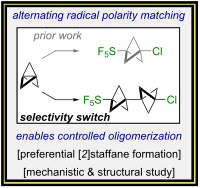
- to how favoring the path to INT2 may be achieved in practice through increasing concentration of 1. Subsequently, INT2 could abstract a Cl atom from SF5Cl via TS3 to form 2 or add to a third equiv of 1 through TS4, leading to INT3. Once again, Cl atom abstraction is thermodynamically (ΔΔG = −11.7
- here that the free energy of activation is lower for chlorination, albeit only by 0.4 kcal/mol. This is consistent with the notion that the kinetic preference can be overcome by increasing the concentration of 1 relative to CF3SF4Cl. In the second product-determining step, Cl atom abstraction by INT5


Advances in the use of metal-free tetrapyrrolic macrocycles as catalysts
Beilstein J. Org. Chem. 2024, 20, 3085–3112, doi:10.3762/bjoc.20.257
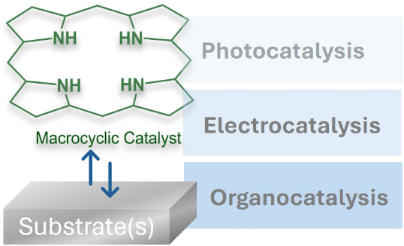
- to Fc+) was reported to be very slow and independent of HTB concentration in the absence of 18 (H2TPP), suggesting that the porphyrin macrocycle is necessary for the O2 reduction to H2O2 (Figure 21a). From these observations, the authors concluded that O2 binding to the diprotonated form of 18 (H2TPP
- ) via NH+···O2 hydrogen bonds initiated the ORR, whereas an increase in the HTB concentration inhibited the ORR by blocking NH+ binding sites for O2. Further, the role of the proton source on ORR was confirmed by testing a stronger acid, TFA: in this case, the O2 reduction rate is decreased to almost


Cyclodextrin-based rotaxanes for polymer materials: challenge on simultaneous realization of inexpensive production and defined structures
Beilstein J. Org. Chem. 2024, 20, 3026–3049, doi:10.3762/bjoc.20.252
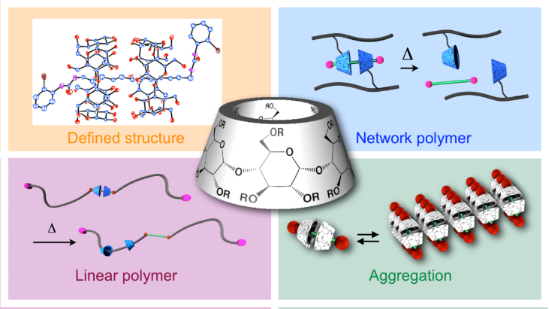
- = 20,000), revealing that the average number of penetrated CDs could be controlled from 3 to 125 (theoretical maximum was 227) by adjusting the concentration ratio of α-CD to PEG, the reaction temperature, and the end-capping method (Scheme 4B) [65]. Concurrently, in 2007, Jouini and co-workers reported
- of 8 shaped two CD rings movable along the polymer main chains. Thus, the applied stress can be distributed to the entire material by the movement of the crosslinking points to avoid a stress concentration, leading to a higher toughness than the conventional materials. Since a lot of existing review






4,6-Diaryl-5,5-difluoro-1,3-dioxanes as chiral dopants for liquid crystal compositions
Beilstein J. Org. Chem. 2024, 20, 2940–2945, doi:10.3762/bjoc.20.246
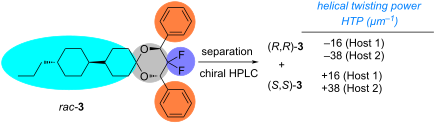
- from neat chiral mesogens, or through the addition of a chiral dopant to an achiral nematic liquid crystal [5][6]. The ability of the dopant to induce chirality in the nematic phase is defined as the helical twisting power [HTP; β = (pc)−1; with p the helical pitch and c the molar concentration]. The
- most common type of liquid crystal displays (LCD) is based on the so-called twisted nematic (TN) mode and requires only a quite small HTP (typically around 10–15 µm−1) with a low dopant concentration (around 0.1%) [1][2][7]. However, there are other display modes, such as super-twisted nematic (STN


N-Glycosides of indigo, indirubin, and isoindigo: blue, red, and yellow sugars and their cancerostatic activity
Beilstein J. Org. Chem. 2024, 20, 2840–2869, doi:10.3762/bjoc.20.240
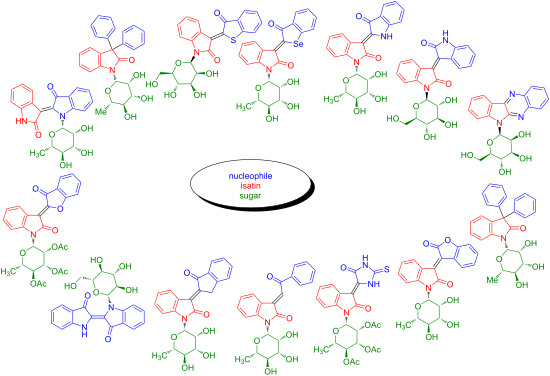
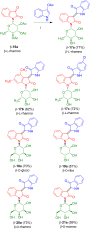
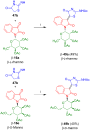
- cytotoxic activity against melanoma and squamous cell carcinoma cells, lung cancer and glioblastoma cells [30]. It was shown in a WST-1 assay that these compounds exhibit a concentration-dependent inhibition of the metabolic activity of A375 and A431 cells, while the non-glycosylated derivative 34 proved to
- be inactive. The activities of β-33b and 34 on the cell viability was independently studied by using crystal violet as a dye for viable cells following a 48 h incubation of A375 melanoma cells and A431 squamous carcinoma cells. Interestingly, a concentration-dependent cytotoxicity was again observed
- inhibition of colony formation were observed. Likewise, a concentration-dependent decrease of both the basal and ATP-linked oxygen consumption rate and of the capacity of oxidative respiration were observed at the mitochondrial level in the presence of compound β-33b. In addition, the morphology of the










Investigation of a bimetallic terbium(III)/copper(II) chemosensor for the detection of aqueous hydrogen sulfide
Beilstein J. Org. Chem. 2024, 20, 2818–2826, doi:10.3762/bjoc.20.237

- -DPA)3]3−, Tb.1 exhibited limited solubility in water, becoming insoluble at concentrations exceeding 100 μM. Therefore, a 1 mM stock solution of Tb.1 was prepared in DMSO, with the final concentration of DMSO in analytical solutions kept at ≤5%. Initial luminescence analysis of a 5 μM solution of Tb.1
- concentration range of 0–15 μM (R2 = 0.974, Figure 4). The linear increase in luminescence, compared to the “lag-phase” observed in HEPES buffer, can be attributed to the Tris-HCl buffer forming a complex with Cu2+ ions, a phenomenon only weakly observed with HEPES buffer [19][20]. We hypothesize that using
- each addition. In situ preparation of the [Tb.1·3Cu]3+ sensor. Solutions of 5 μM [Tb.1·3Cu]3+ were prepared by combining a DMSO stock solution of Tb.1 (100 μM) with 1 mM Cu(NO3)2·5H2O(aq). Solutions were then diluted with the appropriate amount of buffer (final concentration 10 mM Tris–HCl or 10 mM


Mechanochemical difluoromethylations of ketones
Beilstein J. Org. Chem. 2024, 20, 2799–2805, doi:10.3762/bjoc.20.235
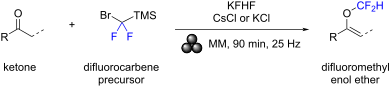
- absorption of mechanical energy and they are influenced by several factors, including the lack of solvation, changes in morphology and rheology of the reaction mixtures during the milling, and variations in concentration and dielectric environment. Consequently, an increased reactivity can be achieved
- difluorocarbene typically requires harsh conditions and involves toxic precursors, alongside with the risk of dimerization to tetrafluoroethylene [31]. Although this dimerization can be mitigated by controlling the concentration and reaction environment, as longer half-lives are observed for difluorocarbenes in


C–C Coupling in sterically demanding porphyrin environments
Beilstein J. Org. Chem. 2024, 20, 2784–2798, doi:10.3762/bjoc.20.234
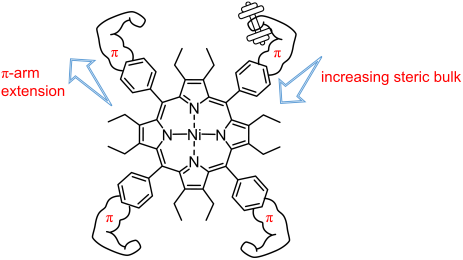
- of lower yields experienced for porphyrins 41, 42, and 43 of 4%, 30%, and 10%, respectively. Overall, a general trend of decreased yield moving from the para- to meta-position was observed, also a general increased catalyst concentration was needed for reactivity to occur at the meta-position. Lastly


Interaction of a pyrene derivative with cationic [60]fullerene in phospholipid membranes and its effects on photodynamic actions
Beilstein J. Org. Chem. 2024, 20, 2732–2738, doi:10.3762/bjoc.20.231

- Figure 4a, the intensity decreased upon increasing the concentration of the catC60 in the liposomes, showing the quench of PyBA fluorescence by catC60, presumably by interacting in the liposome membrane. The incomplete quenching after the addition of PyBA at a concentration comparable to that of catC60
- °C to prepare the lipid films. The lipid films were then dried overnight in vacuo. Then, the films were hydrated with PBS(–) (137 mM NaCl, 2.68 mM KCl, 8.1 mM Na2HPO4, 1.47 mM KH2PO4) so that the theoretical value of DMPC concentration was 3 mg/mL, and the resulting suspension was sonicated at 30 °C
- spectrometer (Shimadzu Corporation, Kyoto, Japan). Fluorescence measurement DMPC liposomes containing 0, 5.4, or 54 µM catC60 were mixed with PyBA (final concentration of 50 µM) in PBS(–), and the mixture was dialysed against 3 L PBS for 2 h to remove free PyBA. Fluorescence spectra were measured using an RF


Synthesis of fluoroalkenes and fluoroenynes via cross-coupling reactions using novel multihalogenated vinyl ethers
Beilstein J. Org. Chem. 2024, 20, 2691–2703, doi:10.3762/bjoc.20.226

- , Table 2, we selected bis(triphenylphosphine)palladium as an effective catalyst, but increase of 5a to 1.5 equiv did not improve the reaction yield. Diluting the reaction concentration from 0.83 M to 0.2 M achieved to give 3a in a 63% yield (Table 2, entry 12). Increasing the amount of palladium catalyst


Photoluminescence color-tuning with polymer-dispersed fluorescent films containing two fluorinated diphenylacetylene-type fluorophores
Beilstein J. Org. Chem. 2024, 20, 2682–2690, doi:10.3762/bjoc.20.225
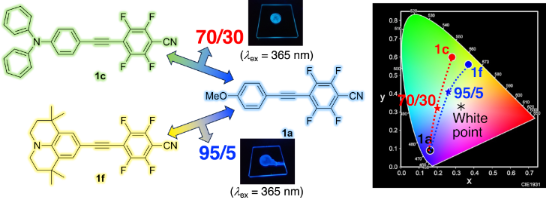
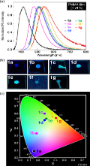
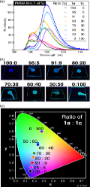
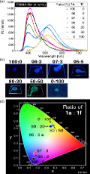
- from the ideal white point. Conclusion In conclusion, we prepared PMMA dispersion films with a single component of fluorinated diphenylacetylene or a blend of two fluorinated diphenylacetylenes at a concentration of 1 wt % and investigated their PL behavior in detail. Among the fluorinated


Transition-metal-free decarbonylation–oxidation of 3-arylbenzofuran-2(3H)-ones: access to 2-hydroxybenzophenones
Beilstein J. Org. Chem. 2024, 20, 2655–2667, doi:10.3762/bjoc.20.223
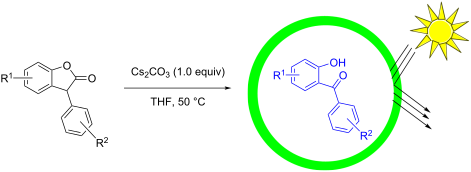
- -absorption studies UV–vis absorbance spectra of the 5-substituted-2-hydroxybenzophenones 4aa–ka were recorded in triplicates at room temperature (298 K) in ethanol at a concentration of 40 µM, in the range of 225–500 nm at 1 nm intervals [11]. The obtained data were corrected using calibration methods with
- ethanol as a blank. The critical wavelength (λc) and UVA/UVB ratio were calculated using Equation 1 and Equation 2, respectively, as shown below. Determination of SPF (sun protection factor) An ethanolic solution of the compounds 4aa–ka was prepared at a concentration of 200 μg/mL. The UV–vis absorption