Search results
Search for "cyclodextrin" in Full Text gives 233 result(s) in Beilstein Journal of Organic Chemistry. Showing first 200.
Radical polymerization by a supramolecular catalyst: cyclodextrin with a RAFT reagent
Beilstein J. Org. Chem. 2016, 12, 2495–2502, doi:10.3762/bjoc.12.244
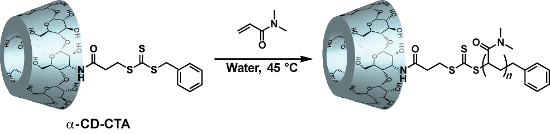
- transfer agent (CTA) that has α-cyclodextrin (α-CD) as a host molecule (α-CD-CTA). Prior to the polymerization of N,N-dimethylacrylamide (DMA), we investigated the complex formation of α-CD with DMA. Single X-ray analysis demonstrated that α-CD includes DMA inside its cavity. When DMA was polymerized in
- distributed polymers. In the presence of 1,6-hexanediol (C6 diol) which works as a competitive molecule by being included in the α-CD cavity, the reaction yield was lower than that without C6 diol. Keywords: cyclodextrin; radical polymerization; RAFT polymerization; substrate recognition site; supramolecular


Efficient mechanochemical synthesis of regioselective persubstituted cyclodextrins
Beilstein J. Org. Chem. 2016, 12, 2364–2371, doi:10.3762/bjoc.12.230
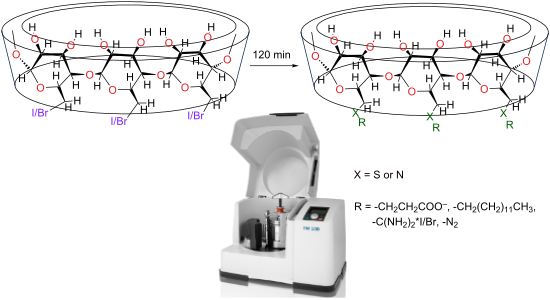
- -6-substituted cyclodextrin derivative syntheses have been effectively carried out in a planetary ball mill under solvent-free conditions. The preparation of Bridion® and important per-6-amino/thiocyclodextrin intermediates without polar aprotic solvents, a source of byproducts and persistent


Potent triazine-based dehydrocondensing reagents substituted by an amido group
Beilstein J. Org. Chem. 2016, 12, 1897–1903, doi:10.3762/bjoc.12.179
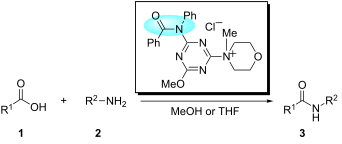
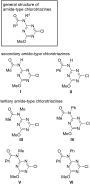
- catalytic amide-forming reactions in water using triazinylammonium salts (DMT-Am) generated in situ from CDMT and a catalytic amount of tertiary amines 5 (Scheme 1d). Most notably, by introducing various functional groups into 5, it was possible to develop a cyclodextrin-based artificial acyltransferase [7




From supramolecular chemistry to the nucleosome: studies in biomolecular recognition
Beilstein J. Org. Chem. 2016, 12, 1863–1869, doi:10.3762/bjoc.12.175
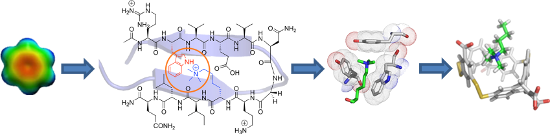
- viewed as the most challenging and most important medium for molecular recognition. This led to my decision to postdoc for Ron Breslow at Columbia University, who is known for biomimetic chemistry, but at the heart of his cyclodextrin-based enzyme mimics is molecular recognition in water. Breslow’s style


Cross-linked cyclodextrin-based material for treatment of metals and organic substances present in industrial discharge waters
Beilstein J. Org. Chem. 2016, 12, 1826–1838, doi:10.3762/bjoc.12.172
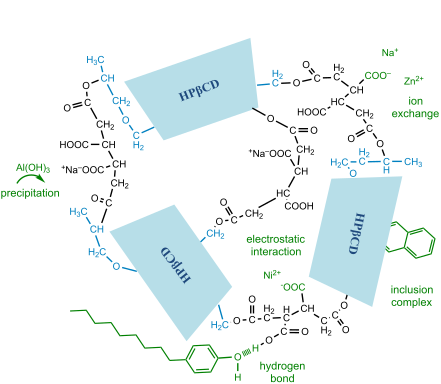
- Abstract In this study, a polymer, prepared by crosslinking cyclodextrin (CD) by means of a polycarboxylic acid, was used for the removal of pollutants from spiked solutions and discharge waters from the surface treatment industry. In spiked solutions containing five metals, sixteen polycyclic aromatic
- calcium at high concentrations, which competed with other pollutants for the adsorption sites of the adsorbent. Keywords: alkylphenols; adsorption; cyclodextrin; metals; polycyclic aromatic hydrocarbons; Introduction Although considerable efforts have been made by the industrial sector over the last 30
- distinct commercial materials. To our knowledge, materials able to combine the two functions are rare. Recently, bifunctional natural derivatives have been proposed for this purpose. For example, Zhao et al. [3] proposed a new cyclodextrin-based material for the simultaneous adsorption of metals and


Superstructures with cyclodextrins: chemistry and applications III
Beilstein J. Org. Chem. 2016, 12, 937–938, doi:10.3762/bjoc.12.91
- impregnation enabled to prepare highly active and selective Ru/TiO2 catalysts for the hydrogenation of oleic acid methyl ester [13]. The latest results of CD chemistry have been exchanged at two international conferences in 2015. The Joint Conference of 8th Asian Cyclodextrin Conference and 32nd Cyclodextrin
- congress with 130 presentations covered all fields of cyclodextrin research such as pharmacy, materials, catalysis, remediation, formulation and chemical analysis. Some remarkable original papers and reviews are published in this Thematic Series of the Beilstein Journal of Organic Chemistry. In particular
From steroids to aqueous supramolecular chemistry: an autobiographical career review
Beilstein J. Org. Chem. 2016, 12, 684–701, doi:10.3762/bjoc.12.69
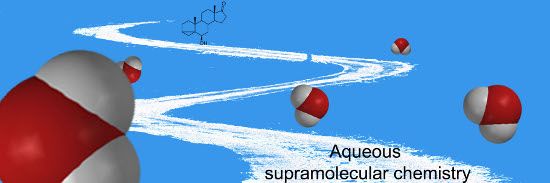
- exquisitely shaped hydrophobic pocket/active site. Ronald Breslow was asking similar questions and addressing it with cyclodextrin derivatives as enzyme mimics, but as I neared the end of my Ph.D. degree I confess I knew nothing of this facet of supramolecular chemistry. In 1991, as lab work started to be




Interactions between 4-thiothymidine and water-soluble cyclodextrins: Evidence for supramolecular structures in aqueous solutions
Beilstein J. Org. Chem. 2016, 12, 549–563, doi:10.3762/bjoc.12.54
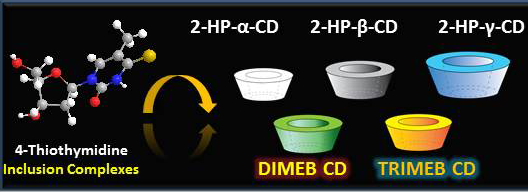
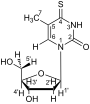
- complexation mode of the inclusion complexes involving 4-thiothymidine (S4TdR, a known photosensitizer) and five CDs, namely 2-hydroxypropyl-α-cyclodextrin (2-HP-α-CD), 2-hydroxypropyl-β-cyclodextrin (2-HP-β-CD), 2-hydroxypropyl-γ-cyclodextrin (2-HP-γ-CD), heptakis-(2,6-di-O-methyl)-β-cyclodextrin (DIMEB CD
- ) and heptakis-(2,3,6-tri-O-methyl)-β-cyclodextrin (TRIMEB CD) were investigated by different spectroscopic techniques (UV–vis, FTIR–ATR, 1H NMR) and cyclic voltammetry analysis (CV). This work is necessary for a prospective research on the photoreactivity of S4TdR in aqueous environment and in the



New synthetic strategies for xanthene-dye-appended cyclodextrins
Beilstein J. Org. Chem. 2016, 12, 537–548, doi:10.3762/bjoc.12.53
- Milo Malanga Andras Darcsi Mihaly Balint Gabor Benkovics Tamas Sohajda Szabolcs Beni CycloLab, Cyclodextrin R&D Ltd., Budapest, H-1097 Illatos út 7, Hungary Department of Pharmacognosy, Semmelweis University, H-1085 Üllői út 26, Hungary, Department of Organic Chemistry, Faculty of Science, Charles
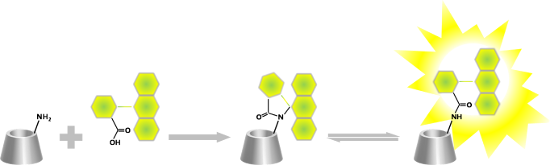
- can reversibly cyclize. In this context we report a green approach for the synthesis of switchable xanthene-dye-appended cyclodextrins based on the coupling agent 4-(4,6-dimethoxy-1,3,5-triazin-2-yl)-4-methylmorpholinium chloride (DMT-MM). By using 6-monoamino-β-cyclodextrin and commercially available
- a convenient tool for the synthesis of amides and esters [10]. The first example of xanthene-dye-appended cyclodextrin based on the modification of the carboxylic moiety of the fluorophore was reported by Ueno’s group [11]. In the study, they modified 6-monotosyl-β-CD with the sodium salt of


Optimized methods for preparation of 6I-(ω-sulfanyl-alkylene-sulfanyl)-β-cyclodextrin derivatives
Beilstein J. Org. Chem. 2016, 12, 349–352, doi:10.3762/bjoc.12.38
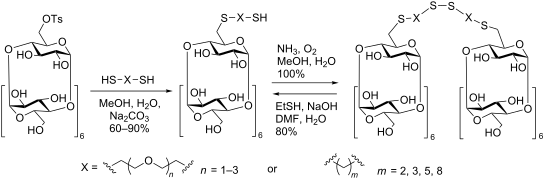
- Prague, Hlavova 8, 128 43, Prague 2, Czech Republic 10.3762/bjoc.12.38 Abstract A general high-yielding method for the preparation of monosubstituted β-cyclodextrin derivatives which have attached a thiol group in position 6 is described. The thiol group is attached through linkers of different lengths
- disulfides are derivatives usable for well-defined covalent attachment of cyclodextrin to gold or polydopamine-coated solid surfaces. Keywords: cyclodextrins; disulfides; monosubstituted derivatives; thiols; Introduction Cyclodextrins (CDs) [1], cyclic oligomers of α-D-glucopyranose, are used for their
- (disulfides 6a–g) are quite stable compounds and were prepared in quantitative yield just by bubbling air through the water/methanol solution of the thiol which was basified by addition of aqueous ammonia. The disulfides 6 can be used, as well as the thiols, for the attachment of the cyclodextrin cavity to a


Enabling technologies and green processes in cyclodextrin chemistry
Beilstein J. Org. Chem. 2016, 12, 278–294, doi:10.3762/bjoc.12.30
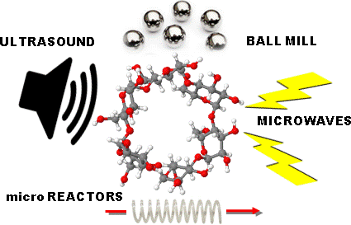
- ; cyclodextrin; microwaves; synthesis; ultrasound; Review The last decade has witnessed the development of highly efficient alternative synthetic methods which make use of new enabling technologies. The need for a more rational approach to the synthesis of cyclodextrin (CD) derivatives has led to several energy




Interactions of cyclodextrins and their derivatives with toxic organophosphorus compounds
Beilstein J. Org. Chem. 2016, 12, 204–228, doi:10.3762/bjoc.12.23
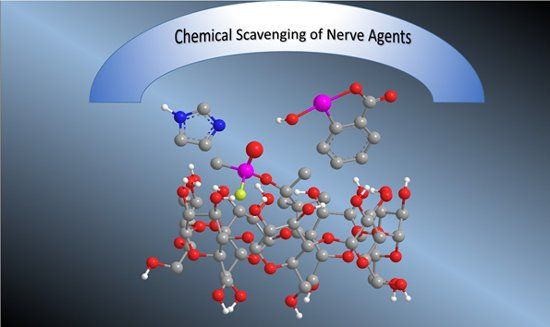
- scavengers able to trap and hydrolyze the organophosphorus compounds before they reach their biological target. Keywords: cyclodextrin; enzyme mimic; nerve agents; organophosphorus compounds; pesticides; Introduction Due to their biological activities, organophosphorus compounds have had considerable
- formation of the inclusion complex. Thus, on the basis of these last results, the formation of an internal inclusion complex was favored by the authors. In 2013, Cruickshank reported the X-ray crystal structures of the heptakis(2,3,6-trimethyl)-β-cyclodextrin (TRIMEB)–fenthion complex (complex with 2
- 20b and 20c, strengthen this hypothesis. Finally, the para-substituted pyridinium derivative 20c is much less reactive than the meta compound 20b. This tends to prove that even slight structural differences have a major impact on the hydrolytic reactivity of the cyclodextrin. Based on these results






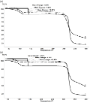
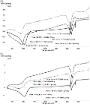
Thermal and oxidative stability of Atlantic salmon oil (Salmo salar L.) and complexation with β-cyclodextrin
Beilstein J. Org. Chem. 2016, 12, 179–191, doi:10.3762/bjoc.12.20
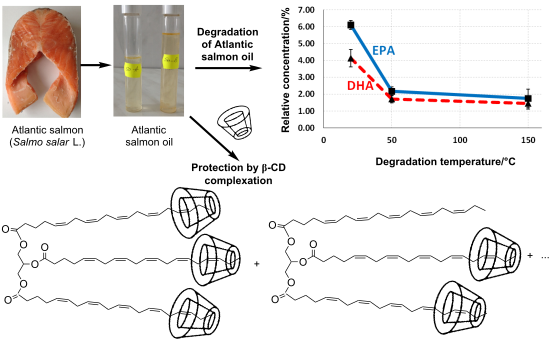
- Sciences and Veterinary Medicine “King Mihai I of Romania” - Timişoara, Calea Aradului 119, 300645 Timişoara, Romania 10.3762/bjoc.12.20 Abstract The thermal and oxidative stability of Atlantic salmon oil (Salmo salar L.) as well as its β-cyclodextrin (β-CD) complexation ability has been verified for the
- well with the KFT kinetic data for β-CD/ASO complexes. Keywords: Atlantic salmon oil (ASO); β-cyclodextrin; differential scanning calorimetry; Karl Fischer titration; omega-3 fatty acid; thermogravimetry; Introduction Functional food products containing omega-3 supplementation are becoming more and



Supramolecular structures based on regioisomers of cinnamyl-α-cyclodextrins – new media for capillary separation techniques
Beilstein J. Org. Chem. 2016, 12, 97–109, doi:10.3762/bjoc.12.11
- Gabor Benkovics Ondrej Hodek Martina Havlikova Zuzana Bosakova Pavel Coufal Milo Malanga Eva Fenyvesi Andras Darcsi Szabolcs Beni Jindrich Jindrich Department of Organic Chemistry, Faculty of Science, Charles University in Prague, Hlavova 8, 128 43, Prague 2, Czech Republic CycloLab, Cyclodextrin
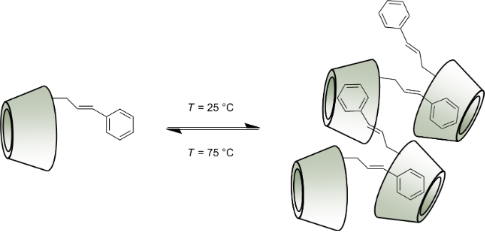
- that the position of the cinnamyl group plays an important role in the intermolecular complex formation. Keywords: capillary electrophoresis; cyclodextrin derivatives; mono-cinnamyl; regioisomers; supramolecular structures; Introduction Supramolecular polymers (SP) are aggregates of monomer units
- separation media in separation science remained an unexplored area [2]. The recent work focused on the preparation of supramolecular structures based on cyclodextrin (CD) [3] derivatives and on their application as chiral separation environment in capillary separation techniques. CDs are widely used in


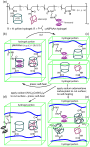
Supramolecular polymer assembly in aqueous solution arising from cyclodextrin host–guest complexation
Beilstein J. Org. Chem. 2016, 12, 50–72, doi:10.3762/bjoc.12.7
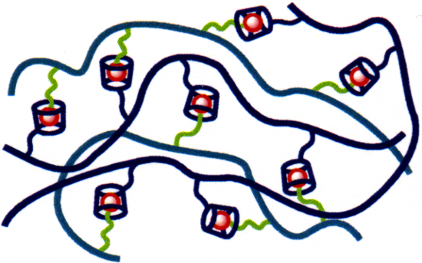
- , Australia Department of Chemical Engineering, Princeton University, Princeton, NJ 08544, USA 10.3762/bjoc.12.7 Abstract The employment of cyclodextrin host–guest complexation to construct supramolecular assemblies with an emphasis on polymer networks is reviewed. The main driving force for this
- supramolecular assembly is host–guest complexation between cyclodextrin hosts and guest groups either of which may be discrete molecular species or substituents on a polymer backbone. The effects of such complexation on properties at the molecular and macroscopic levels are discussed. It is shown that
- cyclodextrin complexation may be used to design functional polymer materials with tailorable properties, especially for photo-, pH-, thermo- and redox-responsiveness and self-healing. Keywords: cyclodextrin; host–guest; polymer; smart-material; supramolecular; Introduction Supramolecular assembly driven by


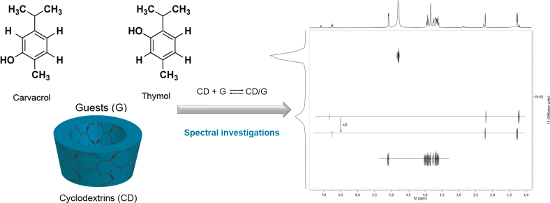
Determination of formation constants and structural characterization of cyclodextrin inclusion complexes with two phenolic isomers: carvacrol and thymol
Beilstein J. Org. Chem. 2016, 12, 29–42, doi:10.3762/bjoc.12.5




Polydisperse methyl β-cyclodextrin–epichlorohydrin polymers: variable contact time 13C CP-MAS solid-state NMR characterization
Beilstein J. Org. Chem. 2015, 11, 2785–2794, doi:10.3762/bjoc.11.299
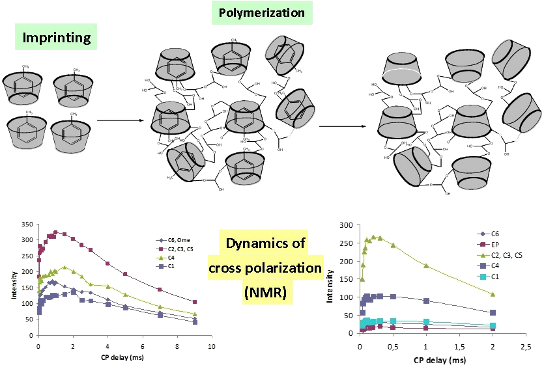
- Celoria, 2 I-20133 Milano, Italy 10.3762/bjoc.11.299 Abstract The polymerization of partially methylated β-cyclodextrin (CRYSMEB) with epichlorohydrin was carried out in the presence of a known amount of toluene as imprinting agent. Three different preparations (D1, D2 and D3) of imprinted polymers were
- the paper pointed out that TCH is sensitive to the imprinting process, showing variations related to the toluene/cyclodextrin molar ratio used for the preparation of the materials. Conversely, the observed values of T1ρ did not show dramatic variations with the imprinting protocol, but rather
- spectroscopy; Introduction Cyclodextrin polymers are a subject of great interest because of their use in pharmaceutical industry [1][2], analytical chemistry [3][4][5], wastewater treatment [6] and food industry [7][8][9]. Water-insoluble β-cyclodextrin (β-CD) polymers [10] have been widely described to




Physical properties and biological activities of hesperetin and naringenin in complex with methylated β-cyclodextrin
Beilstein J. Org. Chem. 2015, 11, 2763–2773, doi:10.3762/bjoc.11.297
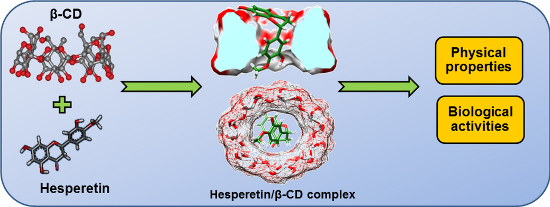
- 1090, Austria Department of Chemistry, Faculty of Science, Chiang Mai University, Chiang Mai, 50200, Thailand Starch and Cyclodextrin Research Unit, Department of Biochemistry, Faculty of Science, Chulalongkorn University, Bangkok 10330, Thailand 10.3762/bjoc.11.297 Abstract The aim of this work is to
- improve physical properties and biological activities of the two flavanones hesperetin and naringenin by complexation with β-cyclodextrin (β-CD) and its methylated derivatives (2,6-di-O-methyl-β-cyclodextrin, DM-β-CD and randomly methylated-β-CD, RAMEB). The free energies of inclusion complexes between
- several benefits, the use of these flavonoids is frequently limited by their low water solubility and stability with a consequence of exerting rather low biological activity. The natural β-cyclodextrin (β-CD) is a cyclic oligosaccharide consisting of seven D-glucopyranose units linked by α-(1,4


Synthesis and photophysical characteristics of polyfluorene polyrotaxanes
Beilstein J. Org. Chem. 2015, 11, 2677–2688, doi:10.3762/bjoc.11.288
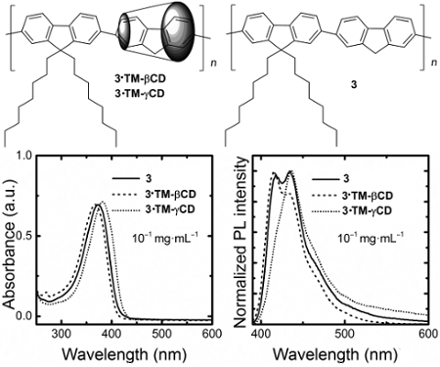
- and 3·TM-γCD) have been synthesized by the coupling of 2,7-dibromofluorene encapsulated into 2,3,6-tri-O-methyl-β- or γ-cyclodextrin (TM-βCD, TM-γCD) cavities with 9,9-dioctylfluorene-2,7-diboronic acid bis(1,3-propanediol) ester. Their optical, electrochemical and morphological properties have been


Exploring architectures displaying multimeric presentations of a trihydroxypiperidine iminosugar
Beilstein J. Org. Chem. 2015, 11, 2631–2640, doi:10.3762/bjoc.11.282

- high multivalent effects towards jack-bean α-mannosidase were reported for fullerene- [11], cyclodextrin- [12][13] and porphyrin- [14] based scaffolds decorated with 1-deoxynojirimycin (DNJ) or 1-deoxymannojirimycin as the bioactive iminosugars. Self-assembled DNJ-based glycopeptides also experienced a




Inclusion complexes of 2-methoxyestradiol with dimethylated and permethylated β-cyclodextrins: models for cyclodextrin–steroid interaction
Beilstein J. Org. Chem. 2015, 11, 2616–2630, doi:10.3762/bjoc.11.281
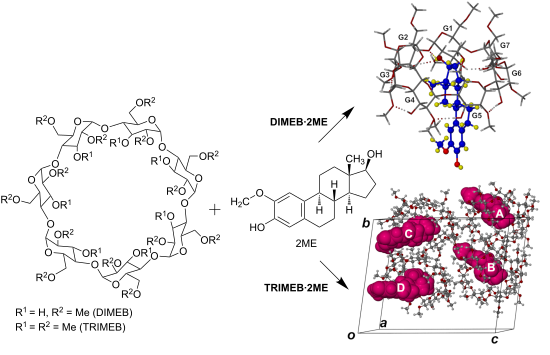
- host–guest β-CD inclusion complex, prepared by two methods, yielded very rapid dissolution in water at 37 °C relative to untreated 2ME, attaining complete dissolution within 15 minutes (co-precipitated complex) and 45 minutes (complex from kneading). Keywords: complexation; cyclodextrin; 2
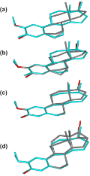
- structures to be described are the first for crystalline CD inclusion complexes of a representative bioactive steroid and as such, their molecular structures shed some light on the nature of cyclodextrin-steroid interactions, including the phenomenon of ‘mutually induced fit’ accompanying complexation. This
- illustrate for the first time details of the encapsulation of a ‘classical’ steroidal molecule by cyclodextrin hosts. In addition, from the variety of host and guest conformations observed in the TRIMEB·2ME complex, even in one crystal, it is evident that complex formation involves some degree of ‘mutually





Aggregation behaviour of amphiphilic cyclodextrins: the nucleation stage by atomistic molecular dynamics simulations
Beilstein J. Org. Chem. 2015, 11, 2459–2473, doi:10.3762/bjoc.11.267
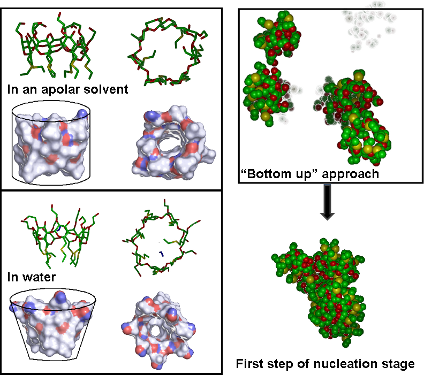
- methods with a “bottom up” approach that can provide important information about the initial aggregates of few molecules. The focus is on the interaction pattern of amphiphilic cyclodextrin (aCD), which may interact by mutual inclusion of the substituent groups in the hydrophobic cavity of neighbouring


Size-controlled and redox-responsive supramolecular nanoparticles
Beilstein J. Org. Chem. 2015, 11, 2388–2399, doi:10.3762/bjoc.11.260
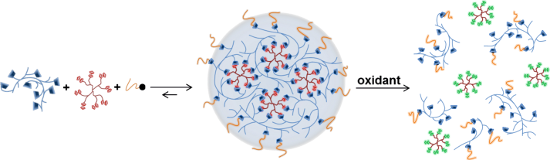
- ) grafted with β-cyclodextrin (CD) and a positively charged ferrocene (Fc)-terminated poly(amidoamine) dendrimer, with a monovalent stabilizer at the surface. Fc was chosen for its loss of CD-binding properties when oxidizing it to the ferrocenium cation. The ionic strength was shown to play an important
- . Davis et al. showed the formation of SNPs using attractive electrostatic interactions between positively charged β-cyclodextrin (CD)-containing polymers and negatively charged siRNA at the core [8]. Neutral adamantyl-grafted poly(ethylene glycol) (Ad-PEG) was incorporated at the surface to stabilize
- according to earlier reports with slight modifications [25][26]. A reaction between 6-monotosyl-β-cyclodextrin (TsCD) and PEI in DMSO was performed using an excess of triethylamine as a base, followed by purification by dialysis. In order to control the stoichiometry of the host and guest moieties, the


Preparation of Pickering emulsions through interfacial adsorption by soft cyclodextrin nanogels
Beilstein J. Org. Chem. 2015, 11, 2355–2364, doi:10.3762/bjoc.11.257
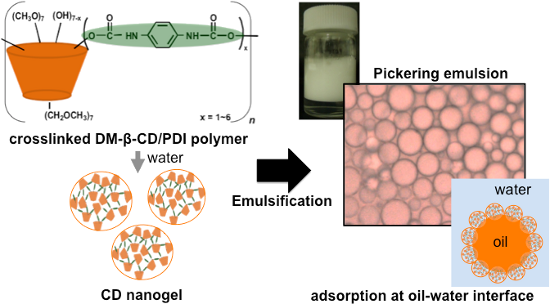
- cyclodextrin (CD) works as an attractive emulsion stabilizer through the formation of a CD–oil complex at the oil–water interface, a high concentration of CD is normally required. Our research focuses on an effective Pickering emulsifier based on a soft colloidal CD polymer (CD nanogel) with a unique surface
- -active property. Results: CD nanogels were prepared by crosslinking heptakis(2,6-di-O-methyl)-β-cyclodextrin with phenyl diisocyanate and subsequent immersion of the resulting polymer in water. A dynamic light scattering study shows that primary CD nanogels with 30–50 nm diameter assemble into larger CD
- property of CD nanogels on the droplet surface has great potential to become new microcapsule building blocks with porous surfaces. These microcapsules may act as stimuli-responsive nanocarriers and nanocontainers. Keywords: crosslinked cyclodextrin polymer; interfacial adsorption; nanogel; Pickering


Co-solvation effect on the binding mode of the α-mangostin/β-cyclodextrin inclusion complex
Beilstein J. Org. Chem. 2015, 11, 2306–2317, doi:10.3762/bjoc.11.251
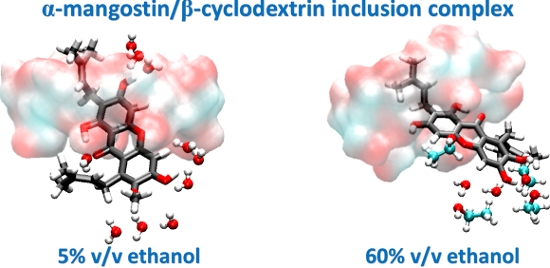
- -solvent enhances the solubility of α-MGS with some effects on the binding affinity with β-CD, depending on the concentration employed. Keywords: α-mangostin; β-cyclodextrin; binary complex; inclusion complex; Introduction Solubilization of otherwise poorly soluble drugs under physiological conditions to