


Search results
Search for "electron donor" in Full Text gives 184 result(s) in Beilstein Journal of Organic Chemistry.
The reductive decyanation reaction: an overview and recent developments
Beilstein J. Org. Chem. 2017, 13, 267–284, doi:10.3762/bjoc.13.30
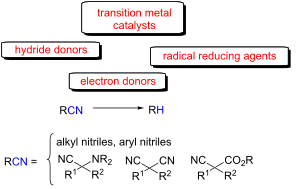
- advantages of the nitrile functional group before its removal. Mechanistic details and applications to organic synthesis are provided. Keywords: α-aminonitrile; decyanation; electron donor; hydride; malononitrile; transition metal catalysis; Introduction Many strategies in organic synthesis involve the
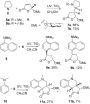
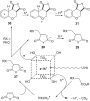
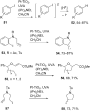
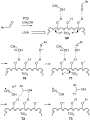
- ) iodide/THF/HMPA at respectively 0 °C and room temperature [123]. Metallic samarium can also promote the decyanation [124]. Doni and Murphy have reported the reductive decyanation of malononitriles and α-cyanoesters by using the neutral organic electron donor 78 (Scheme 25) under photoactivation (method A
- highly efficient neutral organic electron donor (Scheme 25) [127]. This compound is able to reduce aryl halides and appears as the only reductant able to reduce dialkylarenesulfonamides as well as malononitriles without photoexcitation. Electron donor 80 can be isolated but is more conveniently generated


Direct arylation catalysis with chloro[8-(dimesitylboryl)quinoline-κN]copper(I)
Beilstein J. Org. Chem. 2016, 12, 2757–2762, doi:10.3762/bjoc.12.272
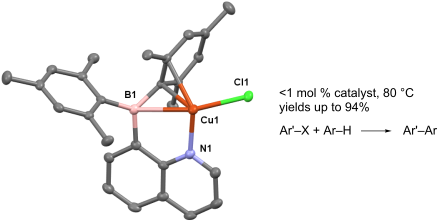
- ) to form benzyne or that organic electron donors form in situ with suitable additives under the basic conditions of the reaction [58][59][60]. For example, observation of faster direct arylation in the presence of DMF led to proposals of deprotonated DMF as one electron donor [61] or forming a dibasic
- -enediol in situ as an electron donor [62]. While the SET mechanism has drawn much interest, our observation of large rate enhancement upon addition of the preformed catalyst 2 may be better described with a metalation–deprotonation step followed by oxidative addition/reductive elimination (Scheme 2) [63


Effects of solvent additive on “s-shaped” curves in solution-processed small molecule solar cells
Beilstein J. Org. Chem. 2016, 12, 2543–2555, doi:10.3762/bjoc.12.249
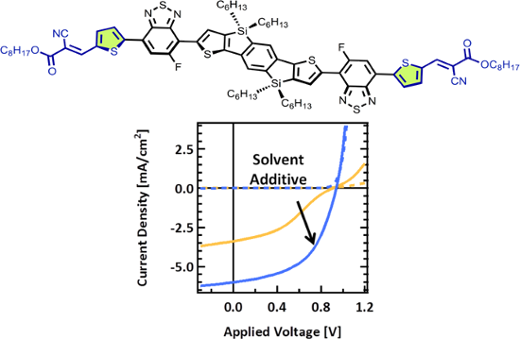
- , National Taiwan University, Taipei, 10617, Taiwan 10.3762/bjoc.12.249 Abstract A novel molecular chromophore, p-SIDT(FBTThCA8)2, is introduced as an electron-donor material for bulk heterojunction (BHJ) solar cells with broad absorption and near ideal energy levels for the use in combination with common
- counterparts [5][6]. Also of import stands the fact that easily modified, modular structures lead to finely-tunable energy levels and optical properties through molecular design [7][8]. Most high-performing small molecule electron-donor materials are configured such that the conjugated backbone consists of


High performance p-type molecular electron donors for OPV applications via alkylthiophene catenation chromophore extension
Beilstein J. Org. Chem. 2016, 12, 2298–2314, doi:10.3762/bjoc.12.223
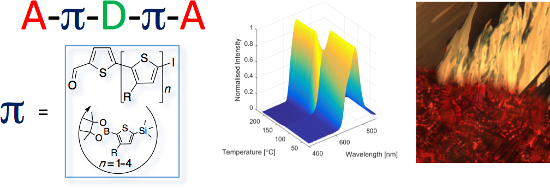
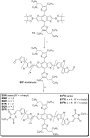
- -donor– π-bridge-acceptor (A–π-D–π-A) electron donor molecules. Based on the known benzodithiophene-terthiophene-rhodanine (BTR) material, the BXR series of materials, BMR (X = M, monothiophene), BBR (X = B, bithiophene), known BTR (X = T, terthiophene), BQR (X = Q, quaterthiophene), and BPR (X = P(penta
- to the SVA devices indicates that further optimization may be required. It is evident that modification of the chromophore length has a large impact on the device stability and performance. BQR as a molecular electron donor is the stand-out performer with the best initial results under all device
- devices optimization is still required. The performance of BQR as a molecular electron donor and the stability of BQR containing BHJ devices encouraged the examination of BQR in ternary BHJ devices. It has been reported that addition of a small percentage of a molecular electron donor to polymer:fullerene




Comparing blends and blocks: Synthesis of partially fluorinated diblock polythiophene copolymers to investigate the thermal stability of optical and morphological properties
Beilstein J. Org. Chem. 2016, 12, 2150–2163, doi:10.3762/bjoc.12.205
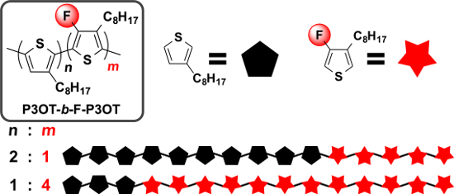
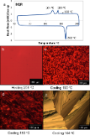
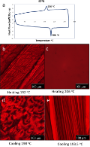
- -scale is of particular interest in the field of organic photovoltaics (OPV), where separation of the electron donor and acceptor domains on the order of the exciton diffusion length (5–10 nm) is required [1][6][7][8][9]. Many approaches have been reported to tether two or more light-absorbing polymers


The in situ generation and reactive quench of diazonium compounds in the synthesis of azo compounds in microreactors
Beilstein J. Org. Chem. 2016, 12, 1987–2004, doi:10.3762/bjoc.12.186
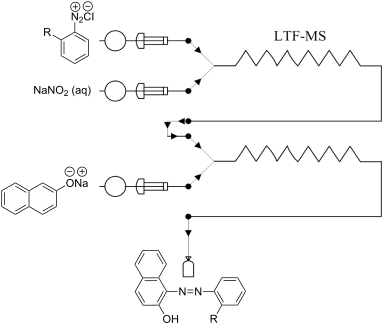
- with an increase in electron donor strength of the coupling compound. This method eliminates the use of alkaline and acidic solutions (Scheme 1). In another method developed by Rahimizadeh et al., ferric hydrogen sulfate was used as a catalyst to synthesize azo compounds from aromatic amines and 2


Synthesis and characterization of fluorinated azadipyrromethene complexes as acceptors for organic photovoltaics
Beilstein J. Org. Chem. 2016, 12, 1925–1938, doi:10.3762/bjoc.12.182
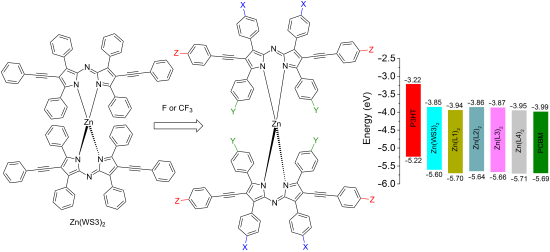
- configuration using P3HT as the electron donor. The best results obtained so far are reported in Table 3. For comparison, we also included results for a typical P3HT:PCBM solar cell. First, we note that best PCEs for Zn(WS3)2 are lower than in our previous publication, 2.36% instead of 4.10% [10]. The main




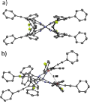
Experimental and theoretical investigations on the high-electron donor character of pyrido-annelated N-heterocyclic carbenes
Beilstein J. Org. Chem. 2016, 12, 1884–1896, doi:10.3762/bjoc.12.178
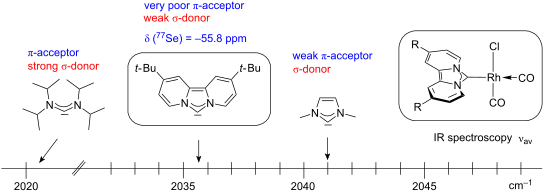
- character than that of typical unsaturated NHCs is expected. However, the IR stretching frequencies of their Rh(CO)2Cl complexes suggest an electron-donor character even stronger than that of saturated NHCs. We ascribe this to the extremely weak π-acceptor character of the dipyrido-annelated NHCs caused by
- ; electron donor character; N-heterocyclic carbene; rhodium; Introduction N-Heterocyclic carbenes form a ligand class that is typically characterized by a strong σ-donor and a weak or even negligible π-acceptor effect [1][2][3], although Meyer has shown pronounced π-acceptor ability in Cu complexes [4][5][6
- -conjugated 14 πe− system into which the “empty” pπ-orbital of the carbene is embedded and therefore, could also act as a π-electron donor. To obtain further experimental evidence for this unusually weak π-acceptor (or already weak π-donor character), we determined the 77Se NMR chemical shift of the


Practical synthetic strategies towards lipophilic 6-iodotetrahydroquinolines and -dihydroquinolines
Beilstein J. Org. Chem. 2016, 12, 1851–1862, doi:10.3762/bjoc.12.174
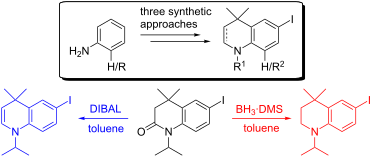
- suitability of general structure 1 as an electron donor for the design of charge transfer fluorophores. Finally, crystallographic analysis of the boronic esters 29 and 30 highlighted a subtle flattening of the DHQ structure when compared to the saturated THQ; a structural characteristic that was found to
- cause fluorescence in 30, indicating that the DHQ may be a more effective electron donor than the THQ. We are currently utilising the optimised syntheses of these interesting compounds in a range of novel fluorophores, and their applications will be communicated in due course. Experimental Synthetic


Synthesis and properties of fluorescent 4′-azulenyl-functionalized 2,2′:6′,2″-terpyridines
Beilstein J. Org. Chem. 2016, 12, 1812–1825, doi:10.3762/bjoc.12.171
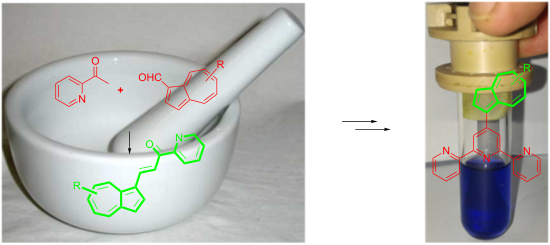
- introducing conjugated moieties at the 4′-position [10][11][12]. In this context, the synthesis of tailored terpyridine derivatives with appropriate electron-donor/acceptor moieties may allow for a further improvement of their spectroscopic and electrochemical properties. Owing to its unique fluorescent and


Effect of the π-conjugation length on the properties and photovoltaic performance of A–π–D–π–A type oligothiophenes with a 4,8-bis(thienyl)benzo[1,2-b:4,5-b′]dithiophene core
Beilstein J. Org. Chem. 2016, 12, 1788–1797, doi:10.3762/bjoc.12.169
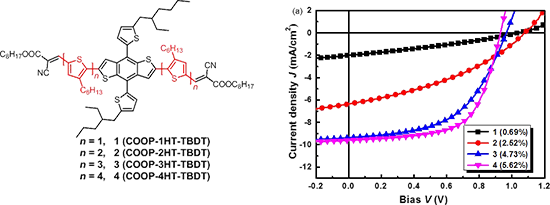
- levels increased (from −5.68 to −5.34 eV) with the increase of the length of the π-conjugated bridge. Organic solar cells using the synthesized compounds as the electron donor and PC61BM as the electron acceptor were fabricated and tested. Results showed that compounds with longer oligothiophene π
- for constructing high-performance A–π–D–π–A-type organic semiconductors for organic solar cells, where A represents the terminal electron acceptor unit, D represents the core electron donor unit, and π represents the conjugated π-bridge [13][14], and a maximum PCE of 9.95% was reported for a
- . Organic solar cells based these conjugated small molecules as the electron donor were fabricated and tested. In addition, long-term stability of these solar cells was also studied, and a general structure–property–performance relationship of these type of molecules is evaluated, which could serve as a



Synthesis and characterization of benzodithiophene and benzotriazole-based polymers for photovoltaic applications
Beilstein J. Org. Chem. 2016, 12, 1629–1637, doi:10.3762/bjoc.12.160
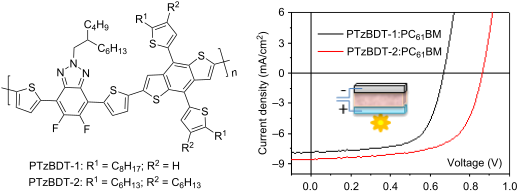
- a blend of π-conjugated polymer (electron donor) and fullerene derivative (electron acceptor) sandwiched between two electrodes (anode and cathode) [1][2][3][4]. Noticeable achievements have been recorded in terms of the power conversion efficiency (PCE) of lab-scale single junction BHJ PSCs
- alkylthiophene side chains on the properties of the resulting pristine and blended films are collected and discussed. Solution-processed BHJ PSCs using PTzBDT-1 or PTzBDT-2 as electron-donor materials and PC61BM as electron-acceptor counterpart were fabricated, optimized, and fully characterized. PCEs of 3.3


Star-shaped and linear π-conjugated oligomers consisting of a tetrathienoanthracene core and multiple diketopyrrolopyrrole arms for organic solar cells
Beilstein J. Org. Chem. 2016, 12, 1459–1466, doi:10.3762/bjoc.12.142
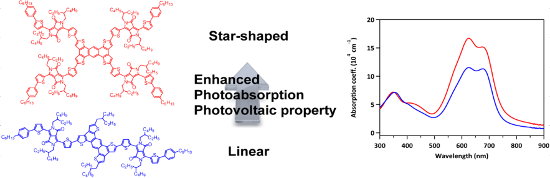
- LUMO energy levels were calculated to be –3.72 and –3.75 eV for TTA-DPP4 and TTA-DPP2, respectively. Because of their deep-lying HOMO levels and sufficient LUMO offsets (>0.5 eV), both TTA-DPP4 and TTA-DPP2 can serve as electron-donor materials in combination with [6,6]-phenyl-C71-butyric acid methyl
- ester (PC71BM) as an acceptor materials, which has a LUMO level of –4.3 eV. Photovoltaic properties The photovoltaic properties of TTA-DPP4 and TTA-DPP2 were also evaluated. BHJ-OSCs were fabricated using TTA-DPP4 and TTA-DPP2 as electron-donor materials and PC71BM as an electron-acceptor material, with


The synthesis of functionalized bridged polycycles via C–H bond insertion
Beilstein J. Org. Chem. 2016, 12, 985–999, doi:10.3762/bjoc.12.97
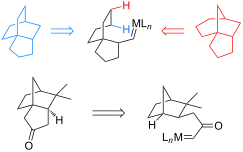
- intramolecular C–H bond insertions to form monocyclic and fused bicyclic rings [36][37][38][39][40][41][42][43][44][45][46][47][48][49][50][51][52][53][54][55][56][57][58][59]. The stronger the electron donor, the greater the observed insertion at the C–H bond on the carbon with that donor. For example




Separation and identification of indene–C70 bisadduct isomers
Beilstein J. Org. Chem. 2016, 12, 903–911, doi:10.3762/bjoc.12.88
- a number of advantages, such as lightweight flexible devices and low-cost fabrication using roll-to-roll printing [1]. Bulk-heterojunction organic solar cells (BHJ OSC) are a specific type of OSCs which contain a blend of organic electron donor and acceptor materials as the photoactive component
- increasing crystallinity of IC70BA can improve the charge carrier mobility of the bulk material but the miscibility with the P3HT electron donor material can also change. A key feature of efficient BHJ solar cell devices is the nanoscale phase separation of the electron donor and acceptor materials into
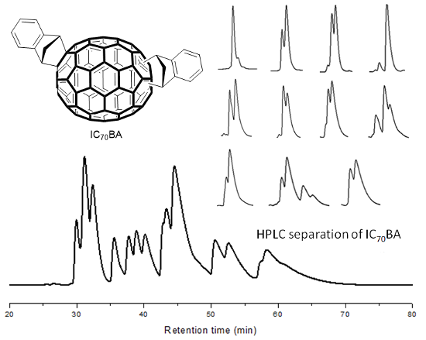
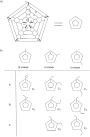
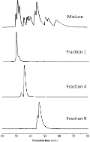
- electron donor and an electron acceptor) with the film nanostructure being extremely important for the device performance. Molecular structure of IC60BA and IC70BA. a) Schlegel diagram of C70; b) illustrations of three regioisomers of IC70BA and their geometrical isomers. Chromatograms of IC70BA mixture




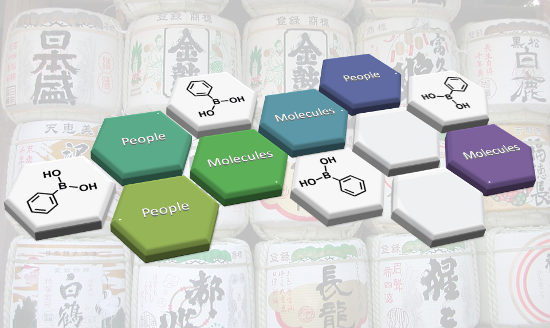
Self and directed assembly: people and molecules
Beilstein J. Org. Chem. 2016, 12, 391–405, doi:10.3762/bjoc.12.42
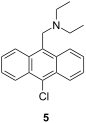
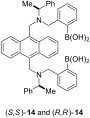
- collaborate and in particular we worked together to improve the chiral discriminating systems. In order to improve the chiral systems we designed sensors using a d-PET rather than the normal a-PET fluorescence sensing mechanism. With d-PET systems the fluorophore is the electron donor and the protonated amine
- for acidic guests such as tartaric acid and sugar acids [62][63][64][65] (Figure 11). The best chiral discriminating d-PET system was constructed using a phenothiazine fluorophore 17 and 18 [66]. The phenothiazine fluorophore was chosen because it is a very strong electron donor. These sensors






Rhodium, iridium and nickel complexes with a 1,3,5-triphenylbenzene tris-MIC ligand. Study of the electronic properties and catalytic activities
Beilstein J. Org. Chem. 2015, 11, 2584–2590, doi:10.3762/bjoc.11.278
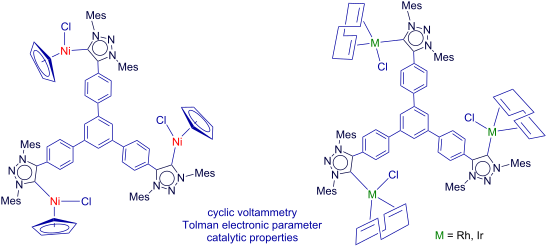
- which the reported TEP was 2045 cm−1, therefore suggesting that the tris-MIC ligand B is a stronger electron donor than ligand A. However, this comparison must be taken with care, because the tris-carbene ligands A and B, not only differ in the nature of their carbenes (MIC vs NHC), but also in their
- -Ir(I) complex. Both techniques indicate that the ligand is a stronger electron donor than its related tris-NHC analogue. It is even more important to mention that the tris-MIC ligand is a stronger electron donor than its more closely related mono-MIC ligand – a situation that is also true for the


Biocatalysis for the application of CO2 as a chemical feedstock
Beilstein J. Org. Chem. 2015, 11, 2370–2387, doi:10.3762/bjoc.11.259
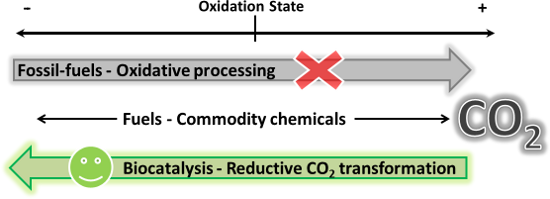
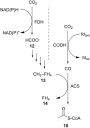
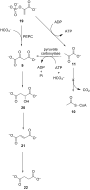
- -potential electron donor ferredoxin [26], with a requirement for strict anaerobicity, thus limiting the distribution of the reductive TCA cycle. As detailed in Scheme 2, the reductive TCA cycle contains three CO2 fixation steps [24]. Succinyl-CoA (5) is carboxylated by ferredoxin-dependent 2-oxoglutarate
- utilise H2 as an electron donor for the reduction of CO2 [118]. Furthermore, there is a growing list of examples of non-acetogenic metallo-FDHs, naturally catalysing formate oxidation, found to also be capable of catalysing CO2 reduction in vitro. FDH from Pseudomonas oxalaticus was the first isolated
- the visible spectrum (>1.35 eV) and coupled to FDH activity through a mediator to drive CO2 reduction. Two W-dependent FDHs, isolated from the syntrophic bacterium Syntrophobacter fumaroxidans, showed high catalytic activity for CO2 reduction, using reduced methyl viologen as the electron donor. Later






Photoinduced 1,2,3,4-tetrahydropyridine ring conversions
Beilstein J. Org. Chem. 2015, 11, 2166–2170, doi:10.3762/bjoc.11.234
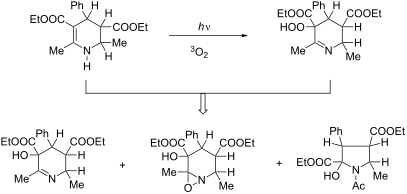
- corresponding ground state species. The reaction between photochemically generated radical cations and radical anions by electron transfer from photoexcited electron donor to electron acceptors is often reversible [37] thus reproducing the reactant pair without the formation of a chemical bond. As the dioxygen


Conformational equilibrium in supramolecular chemistry: Dibutyltriuret case
Beilstein J. Org. Chem. 2015, 11, 2105–2116, doi:10.3762/bjoc.11.227
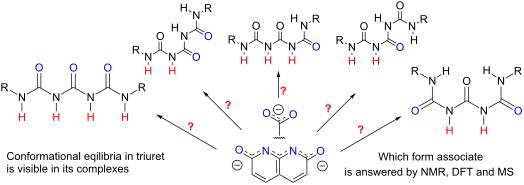
- complexes The VT 1H NMR experiments were conducted to have a deeper insight into the nature of the rotameric equilibrium within the complexes. The following salts were chosen (at various [1]:[benzoate] ratios [1] = 18.9 mmol dm−3): a) unsubstituted 5 (R = H), b) carrying electron donor 2 (R = NMe2) and c


Profluorescent substrates for the screening of olefin metathesis catalysts
Beilstein J. Org. Chem. 2015, 11, 1886–1892, doi:10.3762/bjoc.11.203
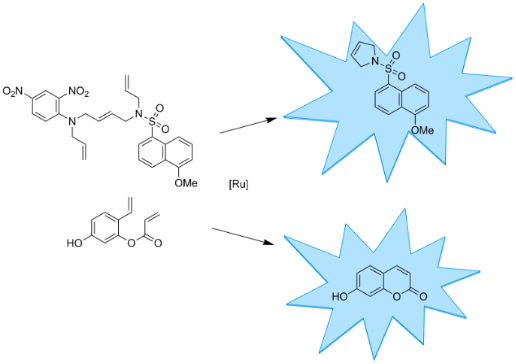
- (umbelliferone) (9) upon ring-closing metathesis. The synthesis of coumarin derivatives using this approach was described in previous publications [20][21]. By introducing an electron donor in the 7-position, a fluorescent product is obtained upon ring-closing metathesis [22]. Synthesis of the profluorescent


Polythiophene and oligothiophene systems modified by TTF electroactive units for organic electronics
Beilstein J. Org. Chem. 2015, 11, 1749–1766, doi:10.3762/bjoc.11.191
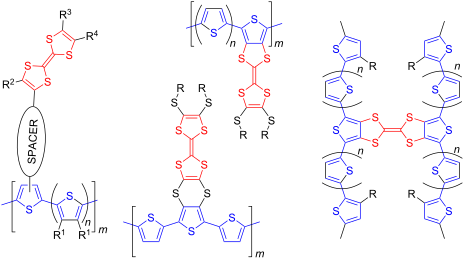
- ) electron donor and polythiophene (PT) conjugated systems are highly popular classes of organic compounds which have shown fascinating conducting and electronic properties. The advantages of PT-based materials are their synthetic versatility, excellent film-forming properties and potential to increase the
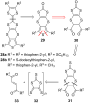
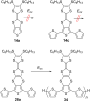
- dithienyl-thieno-TTF unit and the localised nature of the LUMO led to donor–acceptor interactions in the solid phase, making it impossible for efficient overlap between LUMOs, which would normally be required for an efficient n-type semiconductor. BHJSCs were fabricated from 48 as the electron donor and




Dicarboxylic esters: Useful tools for the biocatalyzed synthesis of hybrid compounds and polymers
Beilstein J. Org. Chem. 2015, 11, 1583–1595, doi:10.3762/bjoc.11.174

- based on the conjugation of an acylated sylibin derivative (19) with L-ascorbic acid (20), tyrosol (21) and trolox alcohol (22) (Scheme 4) [44]. These compounds proved to have excellent electron donor, antiradical, antioxidant as well as cytoprotective abilities. Moreover, in a different research area


Preparative semiconductor photoredox catalysis: An emerging theme in organic synthesis
Beilstein J. Org. Chem. 2015, 11, 1570–1582, doi:10.3762/bjoc.11.173
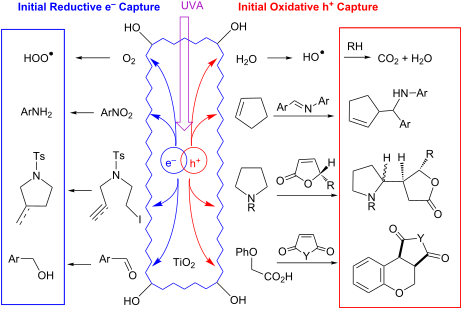
- where the electron can reduce an electron acceptor with a suitable redox potential to a radical anion (A–•) and/or the hole can oxidize an electron donor to the radical cation (D+•, Figure 1). Recombination, whereby the electron drops back down to the VB, occurs in competition with this in the bulk of
- a reaction partner because on photoactivation it supplies electrons and holes while also donating protons from surface hydroxy groups. An interesting adjunct to these results was our finding that aryloxy-, arylthio- and anilino-acetic acids, carrying electron donor substituents (2-, 3- or 4-MeO, t
- transformations an excess of a sacrificial electron donor (reductive quencher) is needed to scavenge the VB holes and prevent e−/h+ recombination. Alcohols and amines have been successfully deployed in this role. Reductions of nitroaromatics took place effectively in photoactivated aqueous TiO2 slurries, with







Synthesis of racemic and chiral BEDT-TTF derivatives possessing hydroxy groups and their achiral and chiral charge transfer complexes
Beilstein J. Org. Chem. 2015, 11, 1561–1569, doi:10.3762/bjoc.11.172
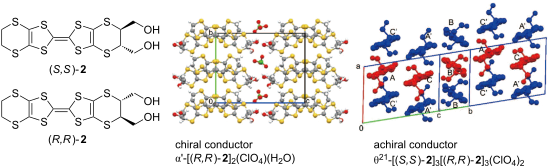
- chiral salt α’-[(S,S)-2]ClO4 without H2O, but has a similar donor arrangement. According to the molecular design by introduction of hydroxy groups and a ClO4− anion, many intermediate-strength intermolecular hydrogen bonds (2.6–3.0 Å) were observed in these crystals between electron donor molecules
- ][17], ethylenedioxy [18], and pyrazino [19]), due to the difficulty of chiral-crystal growth. In order to improve the crystallinity, the inclusion of hydroxy groups in the BEDT-TTF molecule has been postulated to produce hydrogen bonding interactions between electron-donor molecules, electron-acceptor





