


Search results
Search for "glycine" in Full Text gives 198 result(s) in Beilstein Journal of Organic Chemistry.
DMAP-assisted sulfonylation as an efficient step for the methylation of primary amine motifs on solid support
Beilstein J. Org. Chem. 2017, 13, 806–816, doi:10.3762/bjoc.13.81
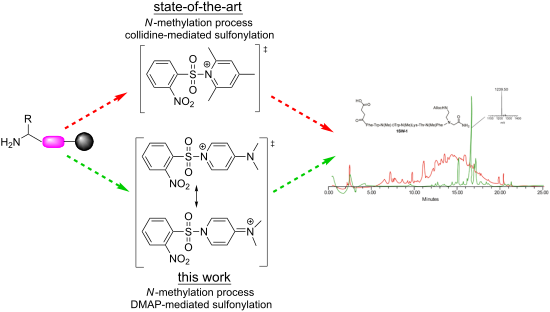
- addition to a protected Nα-alkylated glycine in the sequence. Because of its complexity, 1SW-1 was selected as our model in order to evaluate the efficiency of multiple sites N-methylation synthesis. The synthesis of 1SW-1 using the standard protocols yielded a crude mixture in which the isolation of the



Fluorescent carbon dots from mono- and polysaccharides: synthesis, properties and applications
Beilstein J. Org. Chem. 2017, 13, 675–693, doi:10.3762/bjoc.13.67
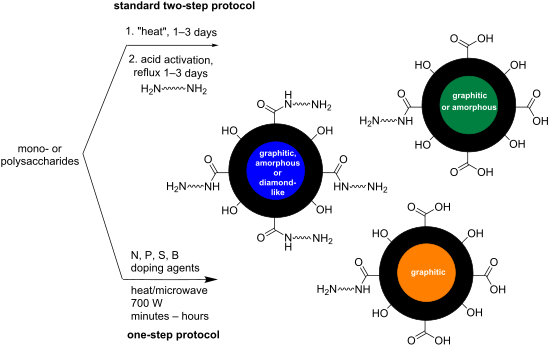
- procedures as previously described for other CD preparations, hyaluronate was heated in a Teflon-lined autoclave in the presence of glycine, which was found to be key, to 200 °C for 4 h to yield CDs of under 10 nm in size (Scheme 22). Structural analysis of the resultant CDs indicated the presence of


Posttranslational isoprenylation of tryptophan in bacteria
Beilstein J. Org. Chem. 2017, 13, 338–346, doi:10.3762/bjoc.13.37
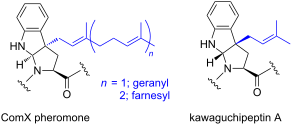
- also critical for the isoprenylation activity, similar to the second aspartate residue in SARM in the FPP and GGPP synthases [45][46]. In addition, the first amino acid residue of the pseudo-SARM in ComQ, asparagine (or glycine), is crucial for the ComQ function. Particularly, the mutation from




Synthesis of acylhydrazino-peptomers, a new class of peptidomimetics, by consecutive Ugi and hydrazino-Ugi reactions
Beilstein J. Org. Chem. 2016, 12, 2865–2872, doi:10.3762/bjoc.12.285
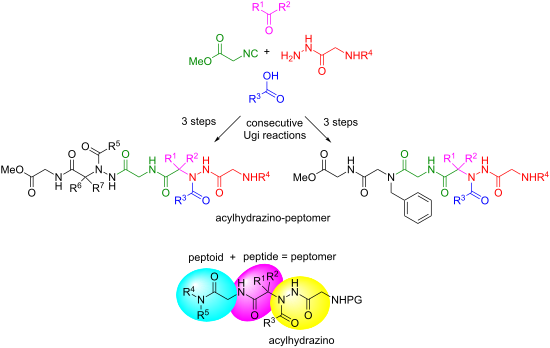
- some of the most important classes of peptidomimetics so far obtained and highlights the differences among them. Of these, peptoids (oligomers of N-substituted glycine residues) [9][10][11][12] are the most common and may have interesting biological activities. For instance, peptoid 1 is a target for
- hydrazino-Ugi reaction (or a classical Ugi reaction). The hydrazides 3a–c used in the first MCR were prepared by the reaction of glycine-derived esters 2, 5 and 7 with hydrazine monohydrate (hydrazinolysis), following a known procedure [63][64] (Scheme 2). The obtained hydrazides were then reacted with


A non-canonical peptide synthetase adenylates 3-methyl-2-oxovaleric acid for auriculamide biosynthesis
Beilstein J. Org. Chem. 2016, 12, 2766–2770, doi:10.3762/bjoc.12.274
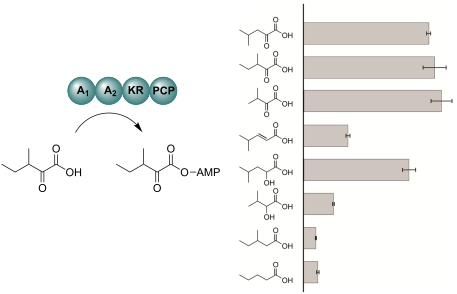
- position (D235 in PheA) is normally indicative of the substrate class to be used by the NRPS. Curiously, in AulA-A2 this corresponds to a glycine residue, associated with the activation of anthranilic acid [21][22] and diverts from what is often observed for the activation of aliphatic or aromatic α-keto


Enduracididine, a rare amino acid component of peptide antibiotics: Natural products and synthesis
Beilstein J. Org. Chem. 2016, 12, 2325–2342, doi:10.3762/bjoc.12.226
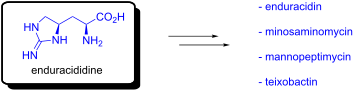
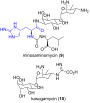
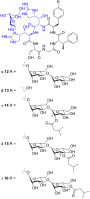
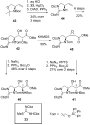
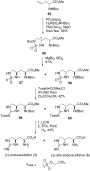
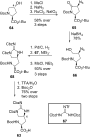
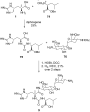
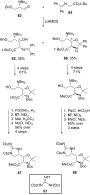
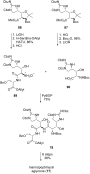
- synthetically broken down into tripeptides 78 and 79 (Scheme 15). Tripeptide 78 was further disconnected into protected serine 80 and protected β-hydroxyenduracididine residues 81 and 82. The synthesis of key amino acids 81 and 82 was based on an aldol reaction between protected aldehyde 83 and glycine 84












Stereoselective synthesis of fused tetrahydroquinazolines through one-pot double [3 + 2] dipolar cycloadditions followed by [5 + 1] annulation
Beilstein J. Org. Chem. 2016, 12, 2204–2210, doi:10.3762/bjoc.12.211
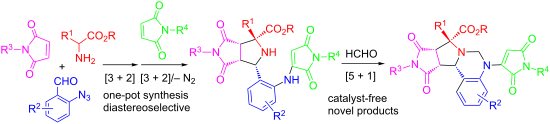
- of azomethine ylide was carried out using glycine methyl ester (3a), 2-azidobenzaldehyde (4a), and N-methylmaleimide (5a) as reactants [33]. After exploring the reactions with different temperatures, times, solvents, and bases, it was found that with a 1.2:1.1:1.0 ratio of 3a:4a:5a, Et3N as a base


The in situ generation and reactive quench of diazonium compounds in the synthesis of azo compounds in microreactors
Beilstein J. Org. Chem. 2016, 12, 1987–2004, doi:10.3762/bjoc.12.186
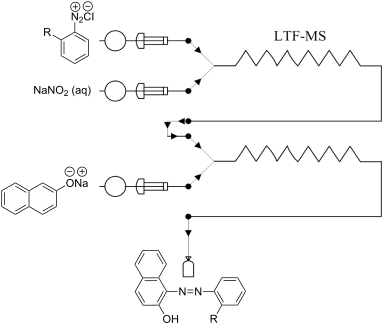
- ): Sodium nitrite (0.2914 g) was dissolved in DMF (5 mL) and made up to a volume (50 mL) with distilled water. Solution C (coupler): 2-naphthol (0.35 g) was dissolved in 10% aqueous NaOH (10 mL) to which DMF (15 mL) was added. The pH of the solution was adjusted to 8.55–9 with 10% glycine solution. The


Synthesis and NMR studies of malonyl-linked glycoconjugates of N-(2-aminoethyl)glycine. Building blocks for the construction of combinatorial glycopeptide libraries
Beilstein J. Org. Chem. 2016, 12, 1939–1948, doi:10.3762/bjoc.12.183
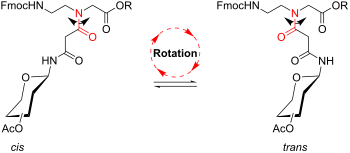
- determine the coalescence temperature which resulted in calculated rotation barriers of 17.9–18.3 kcal/mol for the rotamers. Keywords: amino acids; carbohydrates; glycoconjugates; glycopeptides; N-(2-aminoethyl)glycine; Introduction The glycocalyx is a fringy or fuzzy polysaccharide layer coating most
- ligand are highly desirable [10][11][12][13]. In our previous work we introduced various trifunctional glycopeptide building blocks derived from aspartic acid, 3-aminomethyl-5-aminobenzoic acid [14] and from the PNA-like N-(2-aminoethyl)glycine (AEG) backbone to which sugar moieties were linked through


Biosynthesis of oxygen and nitrogen-containing heterocycles in polyketides
Beilstein J. Org. Chem. 2016, 12, 1512–1550, doi:10.3762/bjoc.12.148




Development of chiral metal amides as highly reactive catalysts for asymmetric [3 + 2] cycloadditions
Beilstein J. Org. Chem. 2016, 12, 1447–1452, doi:10.3762/bjoc.12.140

- Schiff bases of glycine ester that proceed with low catalyst loadings (ca. 0.01 mol %). Catalytic asymmetric [3 + 2] cycloadditions of Schiff bases of α-amino esters to olefins are useful for synthesizing optically active pyrrolidine derivatives [10][11][12], and many highly stereoselective reactions
- , relatively high catalyst loadings (0.5–25 mol %) are required to achieve high yield and selectivities [15][45]. First, we investigated the catalytic asymmetric [3 + 2] cycloaddition of Schiff base 1a, prepared from glycine methyl ester and benzaldehyde, with N-phenylmaleimide (2a) in the presence of CuN


Cyclisation mechanisms in the biosynthesis of ribosomally synthesised and post-translationally modified peptides
Beilstein J. Org. Chem. 2016, 12, 1250–1268, doi:10.3762/bjoc.12.120
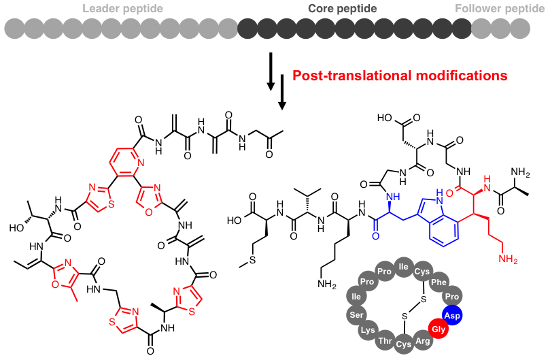
- domain that catalyses the hydrolysis of glutamine to glutamic acid and ammonia [95]. The McjB peptidase first removes the leader peptide to expose an N-terminal amino group, which is usually a glycine residue, although other residues have been identified at this position [97][98]. McjC then catalyses





Marine-derived myxobacteria of the suborder Nannocystineae: An underexplored source of structurally intriguing and biologically active metabolites
Beilstein J. Org. Chem. 2016, 12, 969–984, doi:10.3762/bjoc.12.96
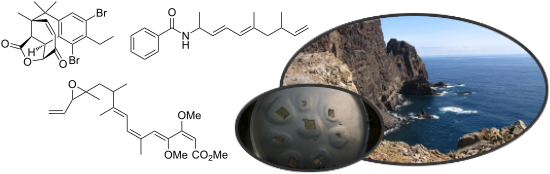
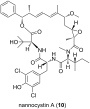
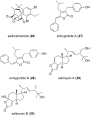
- expected. This hypothesis is supported by the fact that all strains investigated so far can grow within a relatively wide range of salinity. Also, the terrestrial strain M. xanthus, which is slightly halotolerant, uses organic osmolytes, i.e., glycine betaine to combat osmotic stress [16]. Analyses on the






Muraymycin nucleoside-peptide antibiotics: uridine-derived natural products as lead structures for the development of novel antibacterial agents
Beilstein J. Org. Chem. 2016, 12, 769–795, doi:10.3762/bjoc.12.77
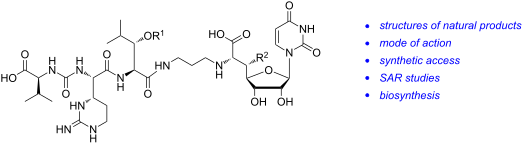
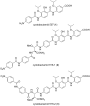
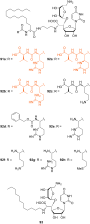
- μg/mL and 4 μg/mL. Derivatives with unnatural D-stereochemistry in the pentadecyl glycine motif possessed a similar antibacterial activity (potency within factor 2). Truncated analogues lacking the L-valine urea terminus (Cbz-protected 92d and N-terminally unprotected 92e) showed only a minor loss of
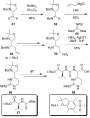
- give uridine-5'-aldehyde 99. Aldehyde 99 then supposedly undergoes an aldol addition with glycine 100 as the enol(ate) component, thus furnishing the amino acid–nucleoside hybrid 5'-C-glycyluridine (GlyU, 101). Alkylation of the 6'-amino group is then achieved by reaction with S-adenosyl methionine
- glycine (100). Hence, LipK was revealed to be a transaldolase mediating a retro-aldol reaction of L-threonine (119) towards the enol(ate) and acetaldehyde (120), followed by a stereoselective aldol addition of the former to uridine-5'-aldehyde 99 (Scheme 12). Using synthetic reference compounds, it could









Gold-catalyzed direct alkynylation of tryptophan in peptides using TIPS-EBX
Beilstein J. Org. Chem. 2016, 12, 745–749, doi:10.3762/bjoc.12.74
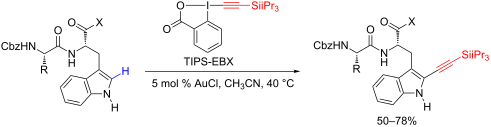
- reaction time. With the optimized conditions in hand, we investigated the scope of the reaction with different amino acids in the dipeptide (Scheme 2). With glycine as second amino acid, the desired product 5b could be obtained in 66% yield. The reaction was selective for tryptophan in the presence of



Strecker degradation of amino acids promoted by a camphor-derived sulfonamide
Beilstein J. Org. Chem. 2016, 12, 732–744, doi:10.3762/bjoc.12.73
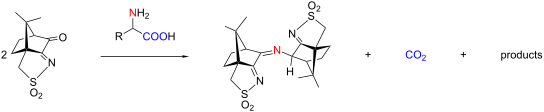
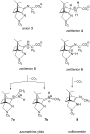
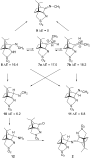
- 1 (O2SNC10H13O), reacts with amino acids (glycine, L-alanine, L-phenylalanine, L-leucine) to form a compound O2SNC10H13NC10H14NSO2 (2) which was characterized by spectroscopic means (MS and NMR) and supported by DFT calculations. The product, a single diastereoisomer, contains two oxoimine units
- by spectroscopic means. Surprisingly, in 2 the only obvious trace of the amino acid is the bridging nitrogen atom, which means that the rest of the amino acid disappeared. From reactions of 1 with several amino acids (glycine, alanine, leucine, phenylalanine) always compound 2 was obtained. This
- pale yellow solid (2) that unexpectedly displays analytical and spectroscopic data (NMR, IR) independent of the amino acid (R = H, glycine; R = CH3, L-alanine; R = CH2Ph, L-phenylalanine; R = CH2CH(CH3)2, leucine). The absence of the characteristic oxoimine CO stretching band (1760 cm−1) in the IR





Bifunctional phase-transfer catalysis in the asymmetric synthesis of biologically active isoindolinones
Beilstein J. Org. Chem. 2015, 11, 2591–2599, doi:10.3762/bjoc.11.279
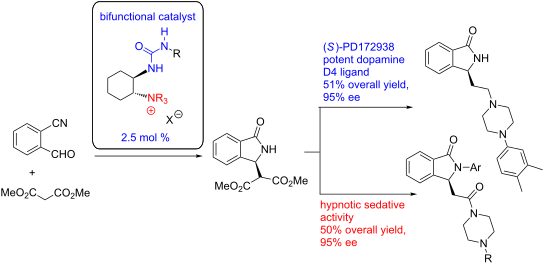
- cascade reaction, investigating novel trans-1,2-cyclohexane diamine-based bifunctional ammonium salts 8. These catalysts were recently introduced by our groups in a variety of different reactions [27][28][29], as exemplified by a related aldol-initiated cascade reaction of glycine Schiff base with 2


Recent highlights in biosynthesis research using stable isotopes
Beilstein J. Org. Chem. 2015, 11, 2493–2508, doi:10.3762/bjoc.11.271
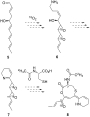
- , Scheme 5), a toxin from Aspergillus oryzae, provides an interesting example. Its importance arises from the use of the producing organism in Asian food industry [46]. The biosynthesis of 20 can be hypothesized from phenylalanine and glycine. To investigate this, (ring-2H5)Phe and (2-13C)Gly were fed and
- via NMR. It turned out that the label was incorporated into the N-methoxy group, and not into the presumptive glycine unit of the diketopiperazine structure. In summary, these results support an unusual conversion of one phenylalanine-derived side chain to a glycin-like moiety. The observed
- incorporation of labeled Gly into the methyl group was rationalized by glycine degradation, directing the labeling via tetrahydrofolate and SAM into aspirochlorine biosynthesis. The conversion of the Phe residue to Gly may proceed through either oxidative C–C bond cleavage or a retro-aldol reaction in 18, in











Active site diversification of P450cam with indole generates catalysts for benzylic oxidation reactions
Beilstein J. Org. Chem. 2015, 11, 1713–1720, doi:10.3762/bjoc.11.186
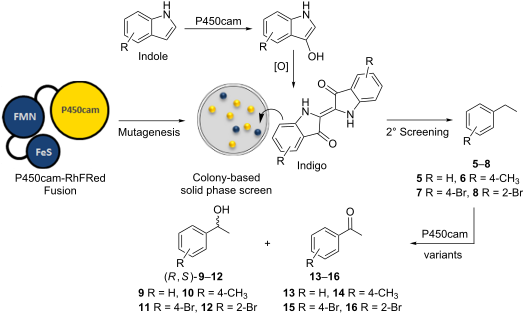
- chains, including that of Gly, introducing space in the upper part of the active site and substrate entrance channel. The small glycine side chain was substituted at seven different positions including former Phe, Thr, Met, Leu and Asp residues. Library II also included a Gly–Gly double substitution


Pyridinoacridine alkaloids of marine origin: NMR and MS spectral data, synthesis, biosynthesis and biological activity
Beilstein J. Org. Chem. 2015, 11, 1667–1699, doi:10.3762/bjoc.11.183
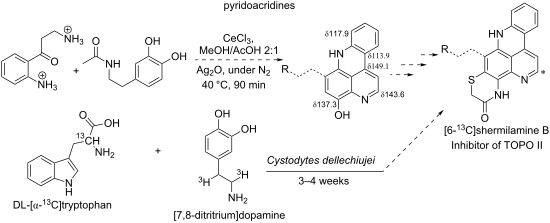
- , threonine, glycine or γ-aminobutyric acid gave different types of these marine alkaloids. Previously, Gellerman demonstrated (Figure 7) that catechol (64) and kynuramine (65) could be potential precursors in the eilatin (58) (or other pyridoacridines) biosynthesis [75]. The feeding experiments with labelled










Orthogonal dual-modification of proteins for the engineering of multivalent protein scaffolds
Beilstein J. Org. Chem. 2015, 11, 784–791, doi:10.3762/bjoc.11.88
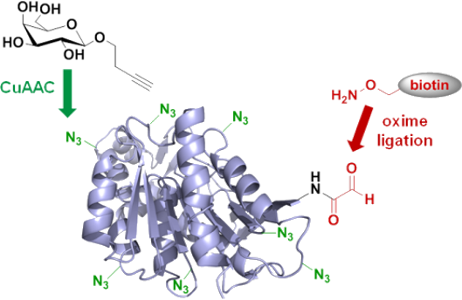
- amino acids like glycine, alanine or serine in the native process of N-terminal methionine excision (NME) [43]. This process exposes Ser2 at the N-terminus for subsequent N-terminal oxime ligation. It has to be noted that the incorporation of Aha, as known [42][44], can hamper NME and therefore delivers


Regulation of integrin and growth factor signaling in biomaterials for osteodifferentiation
Beilstein J. Org. Chem. 2015, 11, 773–783, doi:10.3762/bjoc.11.87
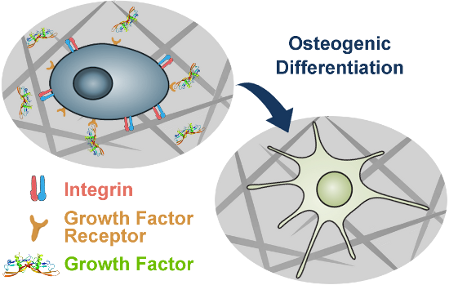
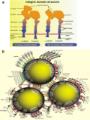
- adhesion proteins, on the other hand, bind to multiple integrin receptors (Figure 2b) [18]. A set of receptor–ligand combinations with high-affinity interaction has even been identified. The best characterized and most widely used ligand is the arginine-glycine-aspartic acid (RGD) sequence. RGD motifs are




DNA display of glycoconjugates to emulate oligomeric interactions of glycans
Beilstein J. Org. Chem. 2015, 11, 707–719, doi:10.3762/bjoc.11.81
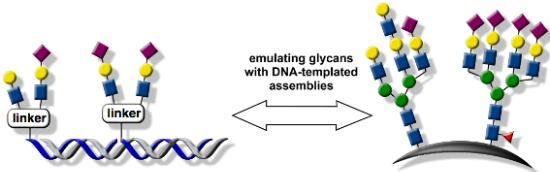
- diverse glycans could be iteratively introduced on amino acid linkers. Inspired by Shoda’s activation [40] which provides facile access to complex glycosyl azides from native carbohydrates, we subsequently applied reiterative CuAAC conjugation of glycans on propargyl glycine residues within a peptide [41


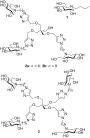
Design, synthesis and photochemical properties of the first examples of iminosugar clusters based on fluorescent cores
Beilstein J. Org. Chem. 2015, 11, 659–667, doi:10.3762/bjoc.11.74
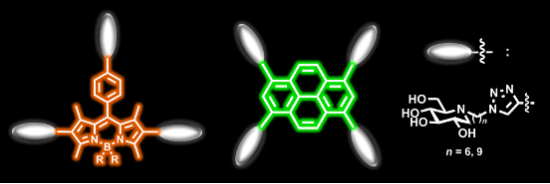
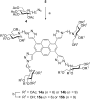
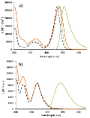
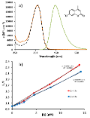
- /methanol or water/DMSO mixtures, those mixtures prevent the agregation of the pyrene core. Photophysical properties The absorption and emission features of the BODIPY-based cluster 13a and the pyrene-based cluster 15a dyes were investigated in an aqueous buffer solution of glycine (0.1 M) at pH 10.7. This
- of 24% (in aqueous glycine buffer at pH 10.7), the profile of the band mirrors the absorption with a maximum at 558 nm which is in keeping with little reorganization in the excited state and characteristic of a singlet emitter. The modest Stokes shift (Δss = 1020 cm−1) and the short excited state
- to the successive pyrene excited states, S0→S1 at 391 nm and S0→S2 at 295 nm (Figure 3b) [71]. Emission maximum was recorded at 534 nm from an excitation at 390 nm or 295 nm with a quantum of 43% (in aqueous glycine buffer at pH 10.7). Unlike the BODIPY homologue, the pyrene-based cluster 15a has a



A simple and efficient method for the preparation of 5-hydroxy-3-acyltetramic acids
Beilstein J. Org. Chem. 2015, 11, 323–327, doi:10.3762/bjoc.11.37
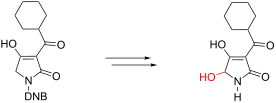
- ] variant of Lacey–Dieckmann [8] condensation (Scheme 1) [9][10]. Reaction of either β-ketoester 4 or Meldrum’s acid derivative 9 with suitably protected glycine esters (5,6,10), followed by base-induced condensation furnished the desired tetramic acid model compounds as crystalline solids after treatment





