Search results
Search for "nucleophilic" in Full Text gives 1361 result(s) in Beilstein Journal of Organic Chemistry. Showing first 200.
Recent advances in the electrochemical synthesis of organophosphorus compounds
Beilstein J. Org. Chem. 2025, 21, 770–797, doi:10.3762/bjoc.21.61
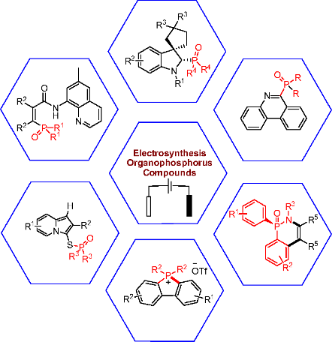
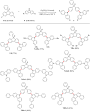
- )(OR)2. The final product was formed by a simple nucleophilic substitution of the phosphorus center (Scheme 20). The N–P bond formation is a critical process in organic synthesis due to the preparation of various materials with different biological and medicinal activities. In 2021 Wang et al. [65
- reaction proceeded with anodic oxidation of iodide to iodine, followed by a reaction with dialkyl phosphite to give I–P(O)(OR)2. The final product was formed by a simple nucleophilic substitution of phenols with I–P(O)(OR)2. In 2021, Wang et al. [65] presented a report on electrochemical P–O bond formation
- the rings contained electron-withdrawing groups. It is suggested that the reaction proceeded via single-electron oxidation of thiocyanate at the anode. DBU was used in the reaction for a simple nucleophilic substitution of phosphonate with a cyanide group in the formed intermediate (Scheme 28). In


Development and mechanistic studies of calcium–BINOL phosphate-catalyzed hydrocyanation of hydrazones
Beilstein J. Org. Chem. 2025, 21, 755–765, doi:10.3762/bjoc.21.59
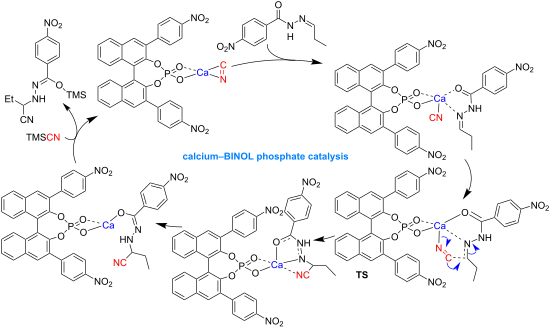
- observation of enantioselectivity must be explained by relative energies of stereoisomeric forms of TS 9-10. Reversible formation of product 10 from nucleophilic addition step via TS 9-10 is slightly endothermic (Figure 3). In 10, cyanide is still attached via nitrogen to calcium, forming a formal Ca–N–C–C–N


Copper-catalyzed domino cyclization of anilines and cyclobutanone oxime: a scalable and versatile route to spirotetrahydroquinoline derivatives
Beilstein J. Org. Chem. 2025, 21, 749–754, doi:10.3762/bjoc.21.58
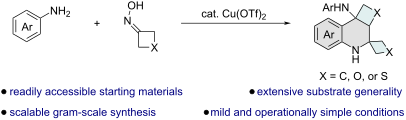
- conditions were optimized for the effective formation of tetrahydroquinoline derivatives with varying substituents, showing high yields under mild conditions. Mechanistic studies suggest a catalytic cycle involving nucleophilic attack by the aniline on the cyclobutanone oxime, followed by cyclization to form
- into tetrahydroquinoline (THQ)-based 6-6-4-membered ring systems through a combination of nucleophilic addition and borate-mediated [2 + 2] photocycloaddition, offering a catalyst-free approach to construct conformationally constrained 2D/3D frameworks with high functional group compatibility and


Orthogonal photoswitching of heterobivalent azobenzene glycoclusters: the effect of glycoligand orientation in bacterial adhesion
Beilstein J. Org. Chem. 2025, 21, 736–748, doi:10.3762/bjoc.21.57
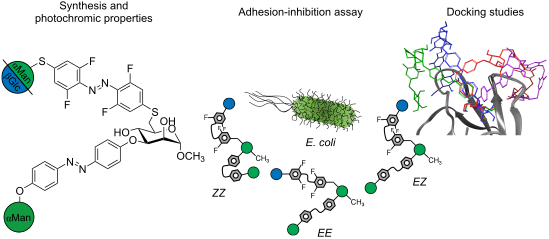
- azobenzene derivative 9 [34] to furnish 10. This reaction had to be carried out at −78 °C in order to suppress nucleophilic substitution of the ortho-fluorine substituents in 9 by the thiol 8, a reaction that competes with the desired cross-coupling. For the second Buchwald–Hartwig–Migita cross-coupling, the


Synthesis of HBC fluorophores with an electrophilic handle for covalent attachment to Pepper RNA
Beilstein J. Org. Chem. 2025, 21, 727–735, doi:10.3762/bjoc.21.56
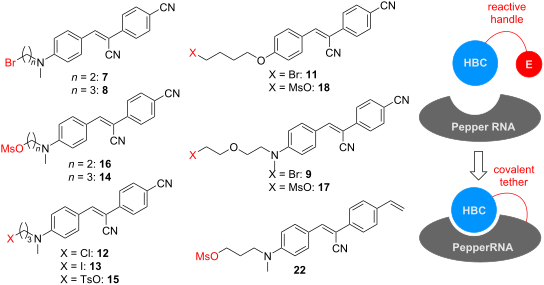
- nucleophilic aromatic substitution of 4-fluorobenzaldehyde with 2-(methylamino)ethanol, 3-methylamino-1-propanol or 2-[2-(methylamino)ethoxy]ethan-1-ol in the presence of potassium carbonate to afford benzaldehyde derivatives 1, 2, and 3 in excellent yields. Next, the piperidine-induced condensation with 4



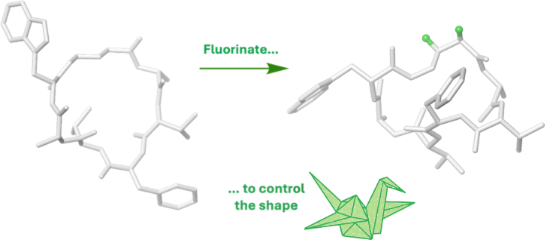
Origami with small molecules: exploiting the C–F bond as a conformational tool
Beilstein J. Org. Chem. 2025, 21, 680–716, doi:10.3762/bjoc.21.54


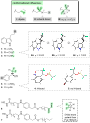
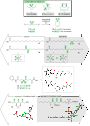
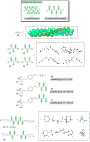
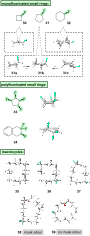


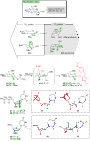
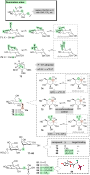
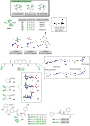
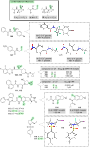




Recent advances in allylation of chiral secondary alkylcopper species
Beilstein J. Org. Chem. 2025, 21, 639–658, doi:10.3762/bjoc.21.51
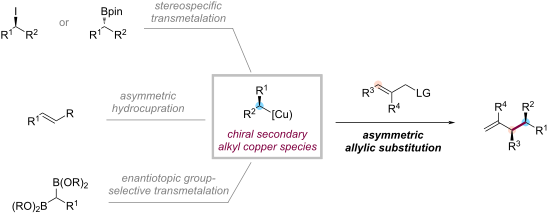
- largely depends on the choice of the nucleophilic organometallic species (Scheme 2). For example, the asymmetric copper-catalyzed allylic alkylation utilizing organometallic species 5 bearing a primary carbon–metal bond predominantly constructs the stereogenic center derived from electrophiles. The




Sequential two-step, one-pot microwave-assisted Urech synthesis of 5-monosubstituted hydantoins from L-amino acids in water
Beilstein J. Org. Chem. 2025, 21, 596–600, doi:10.3762/bjoc.21.46
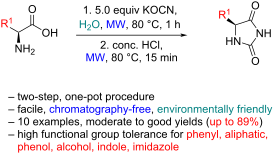
- conversion of the thioether-containing methionine to hydantoin (H2j) was obtained with a moderate yield of 59%. Lastly, no hydantoin product was observed by 1H NMR when cysteine was subject to the one-pot procedure, possibly due to disulfide formation of the highly nucleophilic thiol group of the cysteine


Formaldehyde surrogates in multicomponent reactions
Beilstein J. Org. Chem. 2025, 21, 564–595, doi:10.3762/bjoc.21.45
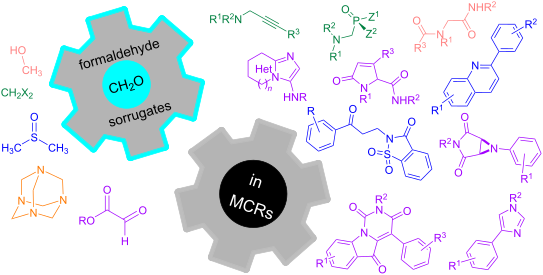
- decompose into DMS (dimethyl sulfide), which then can act as a nucleophile in several MCRs (Scheme 4) [19][20][21][22]. In this context, DMSO can be used as a source of the methylsulfanyl (-SCH3) group after DMS follows a nucleophilic addition or substitution, allowing one to obtain different types of
- nucleophilic species present in the reaction medium, MMS can act as a methylene source. Under hydrolysis conditions, it can be a source of formaldehyde (Scheme 5a), but with other nucleophiles, after nucleophilic addition, the sulfide group can work as a leaving group, allowing for a sequential domino process
- conversion of DMSO to MMS, a wide range of 4-arylquinolines can be synthesized (Scheme 8, path I) [24]. In this reaction, the persulfate ion generates the thionium ion (MMS), which is trapped by a nucleophilic aniline. The loss of methyl sulfide generates an imine intermediate B, which, in turn, reacts with


Study of the interaction of 2H-furo[3,2-b]pyran-2-ones with nitrogen-containing nucleophiles
Beilstein J. Org. Chem. 2025, 21, 556–563, doi:10.3762/bjoc.21.44
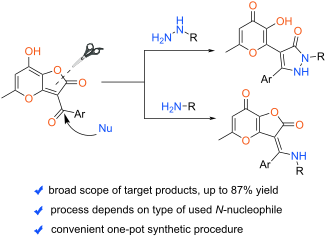
- subsequent opening of the furanone ring and proton transfer results in final compounds 8, 10 and 11. The synthetic application of obtained pyrazolones 8 was demonstrated by its further derivatization. The interaction with electrophilic agents is determined by the presence of several nucleophilic centers in


Asymmetric synthesis of β-amino cyanoesters with contiguous tetrasubstituted carbon centers by halogen-bonding catalysis with chiral halonium salt
Beilstein J. Org. Chem. 2025, 21, 547–555, doi:10.3762/bjoc.21.43
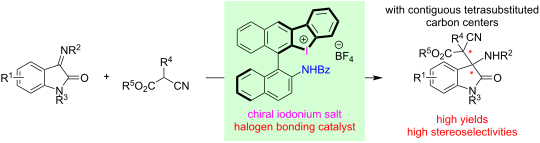
- exchange from tetrafluoroborate to the halonium moiety to form chiral ion pair II. Attack of the chiral nucleophilic intermediate II to imine 7 leads to intermediate III. The latter is protonated by in the situ-formed potassium bicarbonate to form the desired product 17, together with the regenerated


Vinylogous functionalization of 4-alkylidene-5-aminopyrazoles with methyl trifluoropyruvates
Beilstein J. Org. Chem. 2025, 21, 533–540, doi:10.3762/bjoc.21.41
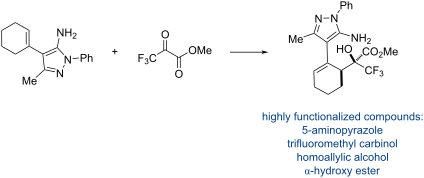
- diastereoselectivity (up to 7:1). Keywords: alcohols; diastereoselectivity; nitrogen heterocycles; pyrazoles; vinylogous reaction; Introduction Vinylogy refers to the transmission of electronic effects through a conjugated π-system, enabling the extension of a functional group's nucleophilic or electrophilic
- biologically active compounds, particularly antibacterial and antifungal agents [13][14]. This class of functionalized nitrogen heterocycles is notable for its synthetic versatility, because it shows different nucleophilic positions, making regioselectivity a synthetic challenge. Numerous studies have reported
- functionalize 5-aminopyrazoles. Biologically active compounds featuring a trifluoromethyl carbinol motif. Nucleophilic sites of 5-aminopyrazoles and 4-alkenyl-5-aminopyrazoles. Stereoselective synthesis of trifluoromethyl carbinols through an vinylogous addition reaction of 4-alkenyl-5-aminopyrazoles to alkyl



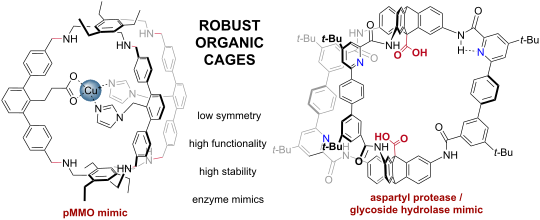
Beyond symmetric self-assembly and effective molarity: unlocking functional enzyme mimics with robust organic cages
Beilstein J. Org. Chem. 2025, 21, 421–443, doi:10.3762/bjoc.21.30
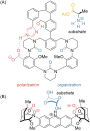
- phosphodiesters by 105–107 by electrophilic activation of ester and nucleophilic activation of water or peroxide at the metal ion [101][102]. The takeaway message is that polarization is most effective when it is bifunctional. In enzymes, there is never just a nucleophile – there is always a metal, “oxyanion hole
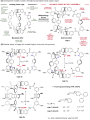
- generated large electrostatic effects by functionalizing the capsule exteriors with charged groups (Figure 4D) [136][137]. Observed rate accelerations for capsule-promoted nucleophilic substitution reactions demonstrate significant enthalpic stabilization of the transition state attributable due to the
- nucleophile and electrophile in a glycosylation reaction [105]. (D) An externally charged cavitand promotes charge-stabilized nucleophilic substitution reactions of hydrophobically encapsulated substrates [136][137]. (A) Metal-organic cages and key modes in catalysis. (B) Charged metals or ligands can result




Identification and removal of a cryptic impurity in pomalidomide-PEG based PROTAC
Beilstein J. Org. Chem. 2025, 21, 407–411, doi:10.3762/bjoc.21.28
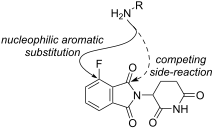
- drug”) class of PROTAC molecules with a PEG linker is frequently used to promote targeted protein degradation. The standard protocol for their synthesis involves nucleophilic aromatic substitution of 4-fluorothalidomide with a PEG-amine. We report herein the identification of a commonly ignored
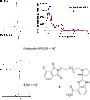
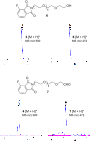
- impurity generated in this process. Nucleophilic acyl substitution competes with aromatic substitution to displace glutarimide and gives a byproduct that can co-elute with the desired product on HPLC throughout the remainder of the synthesis. Scavenging with taurine is a convenient way to minimize this
- contamination. Keywords: glutarimide; IMiD; impurity; nucleophilic acyl substitution; PROTAC; Introduction Targeted protein degradation capitalizing on the concept of chemically induced dimerization has emerged as a new therapeutic approach recently [1]. In particular, the modularity of proteolysis targeting




The effect of neighbouring group participation and possible long range remote group participation in O-glycosylation
Beilstein J. Org. Chem. 2025, 21, 369–406, doi:10.3762/bjoc.21.27
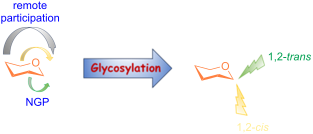
- glycosylation. Conventional glycosylation involves the ‘nucleophilic substitution’ of the leaving group at the sp3 anomeric centre of the donor moiety with a suitable carbohydrate or non-carbohydrate-based aglycon with the help of an electrophilic promoter to form the equatorial glycoside 7 or the axial
- directions away from the central oxocarbenium ion intermediate in the limiting dissociative process involving diastereomeric ion pairs. Destabilisation and greater reactivity of the oxocarbenium intermediate causes the nucleophilic acceptor moiety to attack in a concerted process following a classical SN2
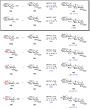
- the anomeric carbon forming an electron-deficient bicyclic acyloxonium ion intermediate 11 which blocks the α-face of the glycosyl ring, inducing the attack of the nucleophilic acceptor 12 to approach from the opposite face to form the 1,2-trans glycoside 13 primarily. Various protecting groups for




Molecular diversity of the reactions of MBH carbonates of isatins and various nucleophiles
Beilstein J. Org. Chem. 2025, 21, 286–295, doi:10.3762/bjoc.21.21
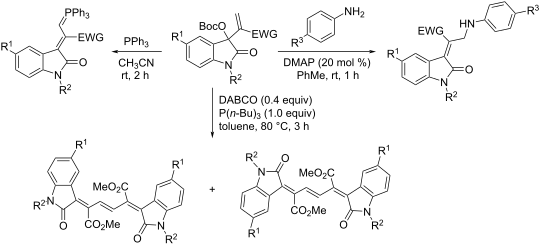
- Zi-Ying Xiao Jing Sun Chao-Guo Yan College of Chemistry & Chemical Engineering, Yangzhou University, Yangzhou 225002, China 10.3762/bjoc.21.21 Abstract In this paper, the nucleophilic substitution reactions of various N- and P-containing nucleophiles to MBH carbonates of isatins were investigated
- have made them to become valuable building blocks in organic synthesis. Nucleophilic additions or spiroannulation of the highly reactive carbonyl group at the C-3 position of isatins have various fascinating applications in organic synthesis, which allowed transformation of isatins into various
- synthetic methodologies and in continuation of our aim to develop domino reactions based on MBH carbonates of isatins for efficient construction of diverse polycyclic spiroindolinones [42][43][44][45][46][47][48][49][50][51][52], herein, we wish to report the nucleophilic substitution reactions of various N


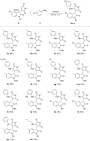


Three-component reactions of conjugated dienes, CH acids and formaldehyde under diffusion mixing conditions
Beilstein J. Org. Chem. 2025, 21, 262–269, doi:10.3762/bjoc.21.18
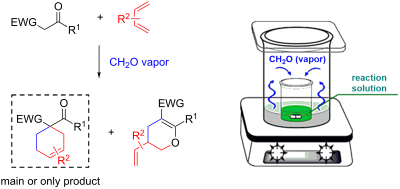
- role in most cases is to generate highly reactive species in situ from the nucleophilic reaction component. This can subsequently interact with other reaction components to form target products. Compared to the crotonic condensation products of other aliphatic and aromatic aldehydes, methylidene


Streamlined modular synthesis of saframycin substructure via copper-catalyzed three-component assembly and gold-promoted 6-endo cyclization
Beilstein J. Org. Chem. 2025, 21, 226–233, doi:10.3762/bjoc.21.14
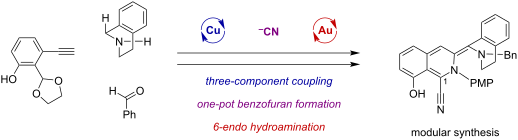
- antitumor activity, triggered by DNA alkylation [6][7][8]. The aminonitrile/hemiaminal at C21 generates an iminium cation while releasing a cyanide or a hydroxy group under physiological conditions. This iminium cation facilitates nucleophilic attack by guanine residues in the minor groove of the GC-rich
- reaction involves an in situ generation of the iminium cation A followed by isomerization to the thermodynamically more stable iminium cation B. Subsequent nucleophilic attack of a copper acetylide enabled regioselective C–C bond formation at the C11 position. After removal of the cyclic acetal, the
- , was obtained in one-pot, presumably via generation of the aminonitrile 17 and subsequent nucleophilic attack of the phenolic hydroxy group to form the five-membered ring. Our efforts to optimize this one-pot sequence led to the best results, affording 11 in 73% isolated yield, when acetone cyanohydrin


Heteroannulations of cyanoacetamide-based MCR scaffolds utilizing formamide
Beilstein J. Org. Chem. 2025, 21, 217–225, doi:10.3762/bjoc.21.13
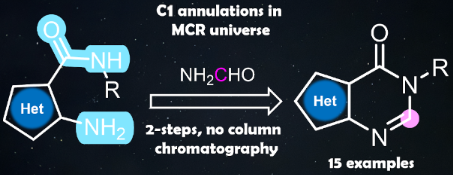
- the desired thienopyrimidones 5a–e, quinolinopyrimidones 6a–e and indolopyrimidones 7a–e, respectively, as reported in the literature [42][44]. In accordance with the reported mechanism, after the initial formylation of the amino group at position 2, an intramolecular nucleophilic attack by the NH




Dioxazolones as electrophilic amide sources in copper-catalyzed and -mediated transformations
Beilstein J. Org. Chem. 2025, 21, 200–216, doi:10.3762/bjoc.21.12
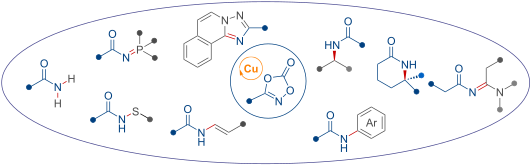
- electrophiles in various nucleophilic transformations due to their susceptibility to rapid decomposition into the corresponding isocyanates (Scheme 1a) [2][3]. They have attracted increasing interest as electrophilic amide sources in amidation using transition-metal catalysts such as ruthenium, rhodium, and
- dioxazolone 7. Subsequently, nitrene insertion of INT-12 into the Cu–C bond, forms INT-13, which then undergoes isomerization and protodemetalation, followed by catalyst regeneration, as suggested by the DFT calculations. Finally, the nucleophilic addition of the amine to the electrophilic intermediate INT-15


Recent advances in electrochemical copper catalysis for modern organic synthesis
Beilstein J. Org. Chem. 2025, 21, 155–178, doi:10.3762/bjoc.21.9

- standard Cu-catalyzed electrochemical protocol. Based on mechanistic studies, the proposed mechanism is shown in Figure 9. First, hydroquinone 34 is oxidized at the anode to generate a quinone intermediate 38. Meanwhile, the chiral copper catalyst reacts with the Schiff base 33, generating a nucleophilic
- standard conditions. Subsequently, radical-polar coupling between electrophilic Ni-bound α-carbonyl radical intermediate 45 and remaining nucleophilic Cu-enolate 44 provides a chiral product 42 containing vicinal quaternary stereocenters with high stereoselectivity, and all three possible stereoisomers of
- an alkene to generate a radical intermediate, followed by oxidation, which enables radical-polar crossover (RPC) and the subsequent nucleophilic attack of the cationic intermediate [67]. Alternatively, the initial radical intermediate can be trapped by a transition-metal catalyst, followed by a cross








Cu(OTf)2-catalyzed multicomponent reactions
Beilstein J. Org. Chem. 2025, 21, 122–145, doi:10.3762/bjoc.21.7

- to multiple C–C bonds generates extended carbon radicals capable of giving further functionalization. Regarding the ionic mechanism, the key step generally comprises the complexation with the unsaturated substrate leading to activation of the alkenyl/alkynyl moiety towards a nucleophilic attack. In
- some cases, activation of a carbonyl group by the copper catalyst to facilitate nucleophilic attack has also been reported. Moreover, both activations can be operative simultaneously. Since copper shows affinity either for multiple C–C bonds or polar functional groups, it seems the ideal tool for this
- (Scheme 16) [33]. The reaction, which occurs with formation of C–C, C–N and C–O bonds, involves a nucleophilic addition of the activated alkyne XIV to the in situ-generated iminium ion XV, followed by cyclization to form a quinoxalin-2-one intermediate XVI. A subsequent 5-endo-dig cyclization involving






Recent advances in organocatalytic atroposelective reactions
Beilstein J. Org. Chem. 2025, 21, 55–121, doi:10.3762/bjoc.21.6
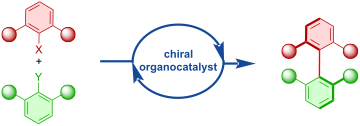
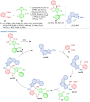
- intermediate Int-9. As the assumed rate-determining step the intramolecular nucleophilic addition takes place, followed by further cyclization and finally, release of the organocatalyst to form the axially chiral product 9. Various aryl-substituted indolines 9 were obtained in good yields and high enantiomeric
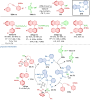
- enantioselectivity during the nucleophilic addition, and the subsequent aromatization completes central-to-axial chirality conversion delivering products 68. Dynamic kinetic resolution of naphthylindoles 69 was performed by reaction with bulky electrophiles such as azodicarboxylates 70 or o-hydroxybenzyl alcohols 72
- . The proposed reaction pathway follows hydrogen bonding with alkynylnaphthylamine and later nucleophilic addition of the allene intermediate. The synthesis on the preparative scale provided product 183 with almost no deterioration in yield or enantioselectivity (90%, 91% ee). This product could then be






Emerging trends in the optimization of organic synthesis through high-throughput tools and machine learning
Beilstein J. Org. Chem. 2025, 21, 10–38, doi:10.3762/bjoc.21.3
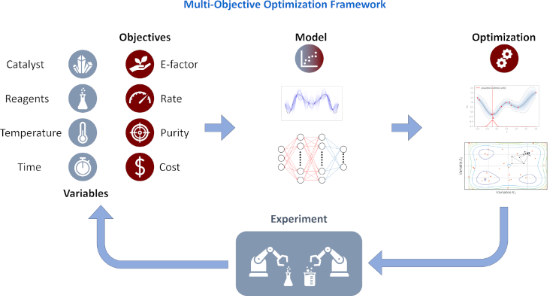
- , photoredox-catalytic, and nucleophilic aromatic substitution reactions, as well as in the two-step synthesis of cyclobutanone. The molecules synthesized under the optimal conditions are presented in Figure 6b, employing the stable noisy optimization by branch and fit (SNOBFIT) algorithm. SNOBFIT offers a


Synthesis, characterization, and photophysical properties of novel 9‑phenyl-9-phosphafluorene oxide derivatives
Beilstein J. Org. Chem. 2024, 20, 3299–3305, doi:10.3762/bjoc.20.274
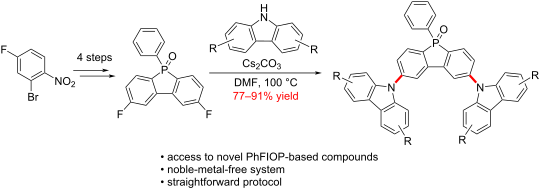
- available 2-bromo-4-fluoro-1-nitrobenzene, featuring a noble-metal-free system, mild reaction conditions, and a good yield, especially for the final Cs2CO3-facilitated nucleophilic substitution (77–91% yield). The characterization data obtained from IR and NMR spectroscopy (1H, 13C, 19F, and 31P) as well as
- hand, we turned our attention to the synthesis of PhFlOP-based compounds through a Cs2CO3-facilitated nucleophilic substitution with substituted carbazoles as the nucleophiles (Scheme 2). For example, tert-butyl, bromo, carbazolyl, or phenyl substituents were introduced into the carbazoles. To our