Search results
Search for "silicon" in Full Text gives 203 result(s) in Beilstein Journal of Organic Chemistry. Showing first 200.
Synthesis and photophysical properties of novel benzophospholo[3,2-b]indole derivatives
Beilstein J. Org. Chem. 2017, 13, 2304–2309, doi:10.3762/bjoc.13.226
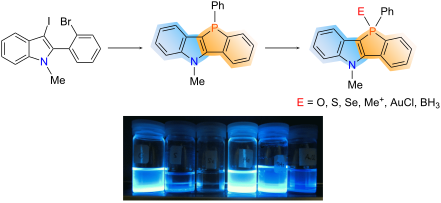
- -b]phosphole dioxides (Figure 1A) [25][26] and benzophosphole-fused tetracyclic heteroacenes, containing boron (B) [27][28][29], silicon (Si) [30], oxygen (O) [31], and sulfur (S) [32][33][34] (Figure 1B), were synthesized and their physical properties were studied. However, to the best of our


Phosphonic acid: preparation and applications
Beilstein J. Org. Chem. 2017, 13, 2186–2213, doi:10.3762/bjoc.13.219
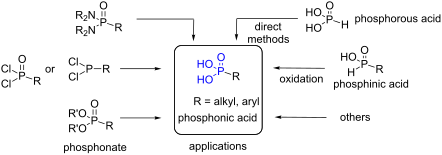
- step. As suggested in the initial works of McKenna, the mechanism occurs by an oxophilic substitution on the silicon atom whereas bromide acts as a leaving group to produce the intermediate I (Figure 14). This intermediate is then dealkylated following a similar path than that occurring with the
- the terminal oxygen doubly bonded to the phosphorus atom was indeed the nucleophilic atom that attacks the silicon atom [159]. Regarding the mechanism of this reaction, the oxophilic silylation involving the oxygen atom which is doubly bonded to the phosphorus atom, thus producing the intermediate I


Superstructures with cyclodextrins: Chemistry and applications IV
Beilstein J. Org. Chem. 2017, 13, 2157–2159, doi:10.3762/bjoc.13.215

- Thematic Series in the article by Leclercq [19]. For example, β-CD was immobilized onto a silicon substrate and incubated with various bacteria. These bacteria could be captured nearly quantitatively at the surface and released again by competitive binding with free methylated β-CD [20]. The proteins
Synthesis of substituted Z-styrenes by Hiyama-type coupling of oxasilacycloalkenes: application to the synthesis of a 1-benzoxocane
Beilstein J. Org. Chem. 2017, 13, 2122–2127, doi:10.3762/bjoc.13.209
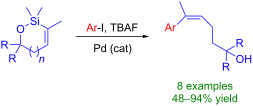
- ; palladium; silicon; Introduction The development of transition metal-catalyzed cross-coupling technologies over the last four decades revolutionized the synthetic chemistry. Indeed, the importance of Pd-catalyzed coupling was recognized with the 2010 Nobel Prize awarded to Heck, Negishi and Suzuki [1][2


Intramolecular glycosylation
Beilstein J. Org. Chem. 2017, 13, 2028–2048, doi:10.3762/bjoc.13.201
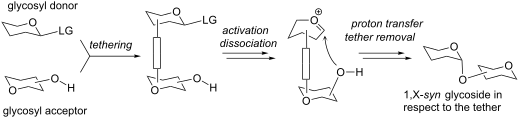
- attachments that could provide more flexibility in the synthesis of longer oligosaccharides [62][65]. Some representative examples of this general concept include benzyl–silicon tether [72], which is a hybrid approach to xylylene and a regular silicon [59] type of tethering. Another example of a non
- significantly higher yields in comparison to those reported in the original protocols. Since the IAD has been overviewed multiple times [41][48][49][50], presented herein are only the basics as well as the key recent developments of this. Stork and Bols independently demonstrated that silicon bridge-mediated
- studies by Stork and Bols, Montgomery et al. further expanded the idea of the long range IAD via silicon tethering [90]. In the most recent report, they hypothesized that the conformational restriction of the pyranose should position the C-6 oxygen of the donor away from the developing oxacarbenium


High-speed vibration-milling-promoted synthesis of symmetrical frameworks containing two or three pyrrole units
Beilstein J. Org. Chem. 2017, 13, 1957–1962, doi:10.3762/bjoc.13.190
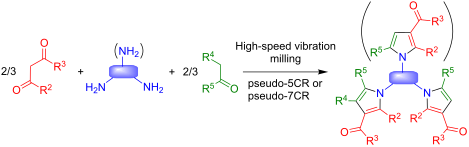
- functionalized spacers is interesting in that they may allow additional interactions with biological targets. Furthermore, the tetramethyldisiloxane derivatives are of relevance in view of the current interest in silicon-containing compounds for drug discovery applications, which has led to the “silicon switch




2-Methyl-2,4-pentanediol (MPD) boosts as detergent-substitute the performance of ß-barrel hybrid catalyst for phenylacetylene polymerization
Beilstein J. Org. Chem. 2017, 13, 1498–1506, doi:10.3762/bjoc.13.148
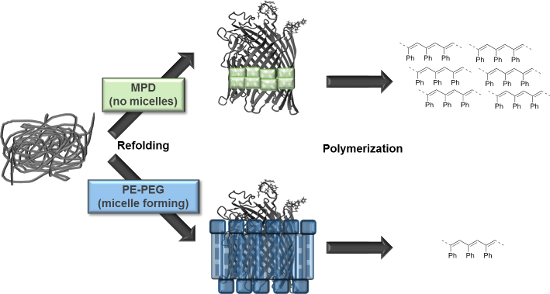
- improved. Recent examples are the construction of metatheases [3][4], asymmetric transfer hydrogenases [5][6], Diels-Alderases [7][8][9][10], an enzyme for carbon–silicon bond formation [11], a phenylacetylene polymerase [12][13] and others [14][15][16][17]. A challenge to overcome are unintended substrate


Interactions between shape-persistent macromolecules as probed by AFM
Beilstein J. Org. Chem. 2017, 13, 938–951, doi:10.3762/bjoc.13.95
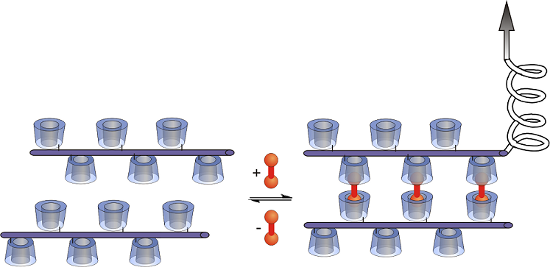
- measurements. Small-angle neutron and X-ray (SANS/SAXS) scattering experiments confirm the stiffness of the polymer chains with an apparent contour length of about 130 Å. Surface modification of planar silicon wafers as well as AFM tips was realized by covalent bound formation between the terminal amino groups
- AFM tip and found enhancement factors up to 2, depending on the force loading rate [46]. We have previously explored the adhesion characteristics of dense CD layers on an AFM tip and a planar silicon surface connected by various ditopic linker molecules. In this system we were able to switch adhesion
- concentration of connector 9 necessary for the almost complete precipitation of the host polymer 8 can be explained by the high integrability of the host–guest system based on the shape-persistence of the polyconjugated polymer backbone of 8. Attachment of polymer 8 to silicon surfaces Planar silicon wafers, as




Fast and efficient synthesis of microporous polymer nanomembranes via light-induced click reaction
Beilstein J. Org. Chem. 2017, 13, 558–563, doi:10.3762/bjoc.13.54
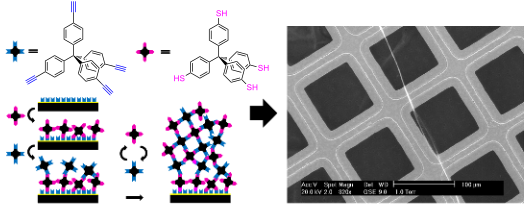
- using light-induced TYC reaction in the presence of the photoinitiator 2-hydroxy-1-[4-(2-hydroxyethoxy)phenyl]-2-methylpropan-1-one. IRRA-Spectrum of the CMP thin film on a gold-coated silicon wafer and the corresponding band assignments. AFM image and line-scan across the edge of the CMP thin film. SEM


Diels–Alder reactions of myrcene using intensified continuous-flow reactors
Beilstein J. Org. Chem. 2017, 13, 120–126, doi:10.3762/bjoc.13.15
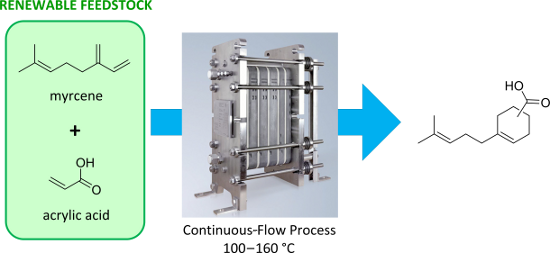
- circumstances of this side-reaction are unknown; it only occurred in the stainless steel reactor and not in the PFA tubing of the Vapourtec R-series flow reactor or the silicon carbide module of the plate flow reactor. Hence, it was postulated that a metal catalyzed polymerisation on the stainless steel reactor
- silicon carbide plate-type flow reactor. Two reactant solutions were prepared, one containing myrcene (208.2 g of myrcene stock solution with a 90% purity, 1.375 mol of myrcene) in toluene (21.2 mL), and the other containing 2b (90.1 g, 1.250 mol), in toluene (80.1 mL). The two feed solutions were pumped
- a series of 3M™ silicon carbide microstructured plates (see also Figures S2 and S3 in Supporting Information File 1), which was thermally regulated by a Lauda Integral XT 150 heater/chiller unit. The total reactor volume was 105 mL. An SSI Prep 100 dual piston pump with PEEK pump heads was used to


Silyl-protective groups influencing the reactivity and selectivity in glycosylations
Beilstein J. Org. Chem. 2017, 13, 93–105, doi:10.3762/bjoc.13.12

- or high stereoselectivity. This mini review will summarize these findings. Keywords: Carbohydrate; conformation; glycosylation; reactivity; selectivity; Introduction Silicon-based protective groups of alcohols have a long history in organic chemistry [1][2][3]. The most popular and commercially
- provide an alternative orthogonal protective group to the more conventional acetyl, benzoyl and benzyl groups. Particularly in oligosaccharide synthesis where many orthogonal hydroxy protective groups are required silicon protective groups have frequently been introduced in both glycosyl donors and
- benzoylated thioglycosides with high chemoselectivity and was therefore used in a range of high yielding oligosaccharide syntheses [38]. The bifunctional silicon protective group DTBS (Figure 1) has been used both to increase and decrease the reactivity of glycosyl donors. The 4,6-O-DTBS-protected


Orthogonal protection of saccharide polyols through solvent-free one-pot sequences based on regioselective silylations
Beilstein J. Org. Chem. 2016, 12, 2748–2756, doi:10.3762/bjoc.12.271
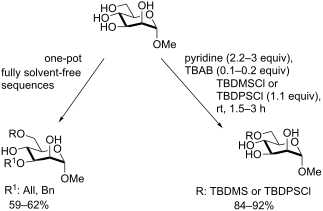
- protecting groups are featuring the presence of hindered substituents at silicon such as in tert-butyldimethylsilyl (TBDMS) and tert-butyldiphenylsilyl (TBDPS) groups. Their bulkiness allows in many cases regioselective silyl protection of primary alcohols. Commonly, O-silylation is performed by exposing the


The direct oxidative diene cyclization and related reactions in natural product synthesis
Beilstein J. Org. Chem. 2016, 12, 2104–2123, doi:10.3762/bjoc.12.200
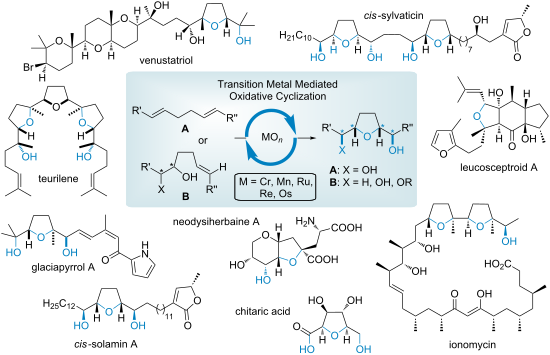
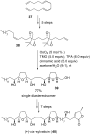
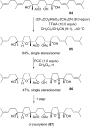
- ) and then successfully connected in a silicon-tethered ring closing metathesis (RCM) [98] to provide the main backbone of cis-sylvaticin (40). Moreover, in 2009, Brown and co-workers reported on a short synthesis of the non-adjacent bis-THF core of cis-sylvaticin (40) making use of a permanganate






Rearrangements of organic peroxides and related processes
Beilstein J. Org. Chem. 2016, 12, 1647–1748, doi:10.3762/bjoc.12.162



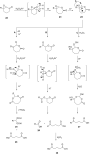


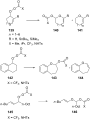


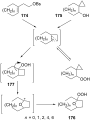


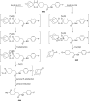


Synthesis and characterization of benzodithiophene and benzotriazole-based polymers for photovoltaic applications
Beilstein J. Org. Chem. 2016, 12, 1629–1637, doi:10.3762/bjoc.12.160
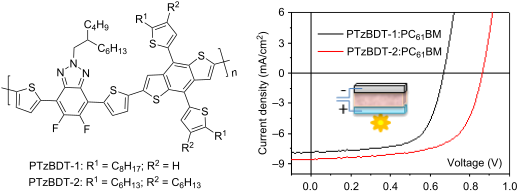
- recorded by a Keithley 236 source-measure unit under AM1.5G simulated solar irradiation, 100 mW/cm2 (Abet Technologies Sun 2000 Solar Simulator). The light intensity was determined by a calibrated silicon solar cell fitted with a KG5 color glass filter to bring spectral mismatch to unity. The active area


Star-shaped and linear π-conjugated oligomers consisting of a tetrathienoanthracene core and multiple diketopyrrolopyrrole arms for organic solar cells
Beilstein J. Org. Chem. 2016, 12, 1459–1466, doi:10.3762/bjoc.12.142
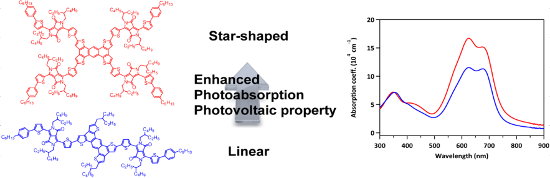
- AM 1.5G solar illumination at 100 mW cm−2 (1 sun), using a Xe lamp-based Bunko-Keiki SRO-25 GD solar simulator. The light intensity was calibrated using a standard silicon photovoltaic reference cell. Chemical structures of TTA-DPP4 and TTA-DPP2. HOMO and LUMO distributions, calculated energy levels


Biradical vs singlet oxygen photogeneration in suprofen–cholesterol systems
Beilstein J. Org. Chem. 2016, 12, 1196–1202, doi:10.3762/bjoc.12.115
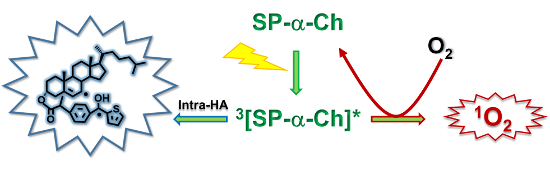
- photolysis cell in right-angle geometry. An excimer laser (LEXTRA50 Lambda Physik) was used for the excitation at 308 nm (laser excitation at 5 low-pulse energies for each molecule). A 5 mm thick (5 cm in diameter) 1050 nm cut-off silicon filter and a 1270 nm interference filter were placed between the diode


Syntheses of dibenzo[d,d']benzo[2,1-b:3,4-b']difuran derivatives and their application to organic field-effect transistors
Beilstein J. Org. Chem. 2016, 12, 805–812, doi:10.3762/bjoc.12.79
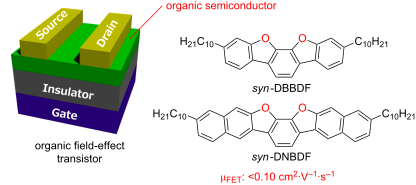
- conventional silicon-based semiconductors. Organic semiconducting materials can be used as active layers in organic field-effect transistors (OFETs) [1][2][3][4][5][6][7], organic light-emitting diodes (OLEDs) [8][9][10], and organic photovoltaics (OPVs) [11][12]. Among many organic semiconducting materials so




Art, auto-mechanics, and supramolecular chemistry. A merging of hobbies and career
Beilstein J. Org. Chem. 2016, 12, 362–376, doi:10.3762/bjoc.12.40
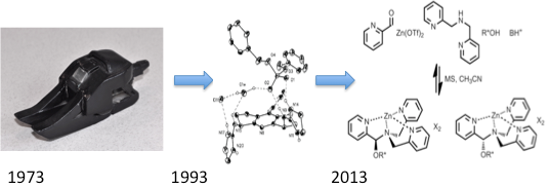
- beads placed in micromachined divots on a silicon chip (Figure 9A), and solvents and samples were introduced to the system via an external HPLC [69]. While the miniature nature of the system was intriguing, such a device was going to be difficult for supramolecular chemists to adopt. More user-friendly




Regioselective palladium-catalyzed ring-opening reactions of C1-substituted oxabicyclo[2,2,1]hepta-2,5-diene-2,3-dicarboxylates
Beilstein J. Org. Chem. 2016, 12, 239–244, doi:10.3762/bjoc.12.25
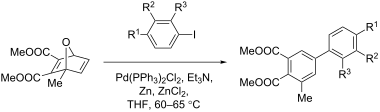
- bridgehead carbon appears to impact the reactions’ outcome by hindering access to the site of carbo-palladation. SiMe3 gave a moderate yield of 64% (Table 3, entry 4). The silicon–carbon bond is longer than carbon–carbon bonds, making TMS less bulky than its hydrocarbon counterparts. Both of the electron


Bright molecules for sensing, computing and imaging: a tale of two once-troubled cities
Beilstein J. Org. Chem. 2015, 11, 2774–2784, doi:10.3762/bjoc.11.298
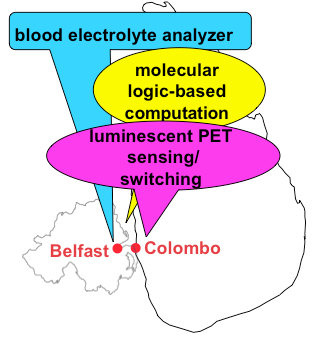
- modern manifestations of these processors are the logic gates cut from silicon. Of course, stored-program computers (as the name suggests) require software in order to command and coordinate complex computations. I was fortunate to receive programming instruction from Gihan Wickramanayake (University of
- interface somewhat akin to those found in a touch-screen of a mobile telephone or in a mouse-driven screen of a stored-program computer. The treated paper could build an image after receiving a projection of the object. We do this by using a photoacid generator 6 (used to sculpt features in silicon chips







Pyridylidene ligand facilitates gold-catalyzed oxidative C–H arylation of heterocycles
Beilstein J. Org. Chem. 2015, 11, 2737–2746, doi:10.3762/bjoc.11.295
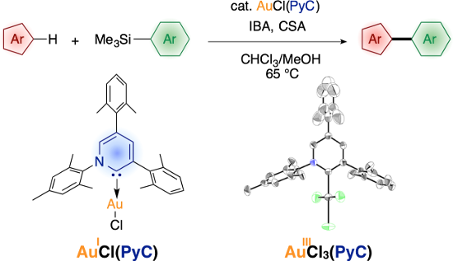
- mmol), 2-iodosobenzoic acid (IBA, 53 mg, 0.20 mmol), 10-camphorsulfonic acid (CSA) (47 mg, 0.20 mmol) and a stir bar were placed in a screw test tube, and dry CHCl3/MeOH (1.0 mL/0.10 mL) was added under N2 atmosphere. The tube was sealed with a cap equipped with a Teflon®-coated silicon rubber septum
- added under N2 atmosphere. The tube was sealed with a cap equipped with a Teflon®-coated silicon rubber septum and heated at 65 °C for 30 min. After cooling to room temperature, LiCl (8.4 mg, 0.20 mmol) was added. 1,1,2,2-Tetrachloroethane was added as an internal standard and an NMR yield of AuCl3(PyC




Copper-catalyzed stereoselective conjugate addition of alkylboranes to alkynoates
Beilstein J. Org. Chem. 2015, 11, 2444–2450, doi:10.3762/bjoc.11.265

- , 0.289 mmol) and (9-BBN-H)2 (33.6 mg, 0.138 mmol) were placed in a vial containing a magnetic stirring bar. The vial was sealed with a Teflon®-coated silicon rubber septum, and the vial was evacuated and filled with argon. 1,4-Dioxane (0.4 mL) was added to the vial, and the mixture was stirred at 60 °C
- for 1 h to prepare an alkylborane 2a. Meanwhile, CuOAc (1.5 mg, 0.0125 mmol), P(OPh)3 (6.9 μL, 0.025 mmol) and t-BuOK (1.4 mg, 0.0125 mmol) were placed in another vial. The vial was sealed with a Teflon®-coated silicon rubber septum, evacuated, and then filled with argon. After 1,4-dioxane (0.6 mL


Size-controlled and redox-responsive supramolecular nanoparticles
Beilstein J. Org. Chem. 2015, 11, 2388–2399, doi:10.3762/bjoc.11.260
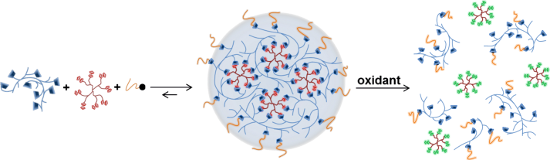
- images were taken with a Carl Zeiss Merlin scanning electron microscope. The samples were prepared by drop-casting 10 μL of a SNP solution onto a silicon wafer. After 60 s, excess of water was removed by filter paper. The particle dimensions are obtained from SEM images with ImageJ software. For each


Olefin metathesis in air
Beilstein J. Org. Chem. 2015, 11, 2038–2056, doi:10.3762/bjoc.11.221
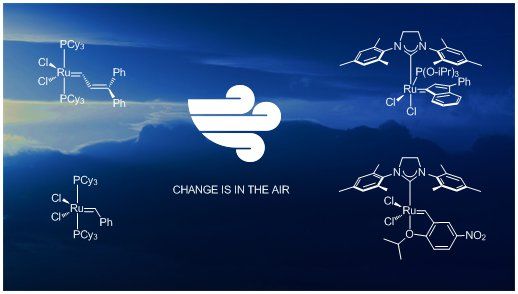
- conducted in water [31][32]. They discovered that Ru(H2O)6(tos)2 could polymerize 7-oxanorbonene 1 in water under air (Scheme 1). In 1991, Marciniec and Pietraszuck reported the catalytic activity of RuCl2(PPh3)3 in the self-metathesis of silicon-contaning olefins. The reactions were performed with 1 mol