


Search results
Search for "conformers" in Full Text gives 245 result(s) in Beilstein Journal of Organic Chemistry. Showing first 200.
Hydrolysis, polarity, and conformational impact of C-terminal partially fluorinated ethyl esters in peptide models
Beilstein J. Org. Chem. 2017, 13, 2442–2457, doi:10.3762/bjoc.13.241
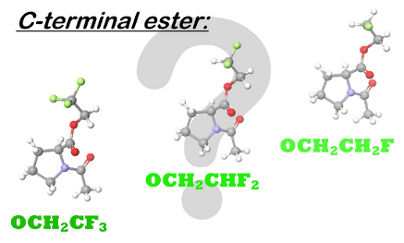
- characteristic checkmark-shape, while the side chain conformation was not affected. The amide isomerism remained unchanged in polar aqueous medium. Conversely, in the nonpolar solvents, the equilibrium between the two conformers was shifted toward a more compact arrangement of the polar groups in the s-trans








One-pot syntheses of blue-luminescent 4-aryl-1H-benzo[f]isoindole-1,3(2H)-diones by T3P® activation of 3-arylpropiolic acids
Beilstein J. Org. Chem. 2017, 13, 2340–2351, doi:10.3762/bjoc.13.231
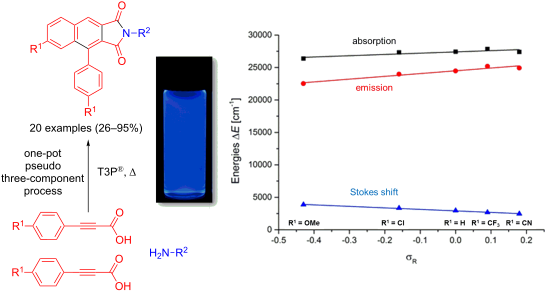
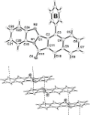
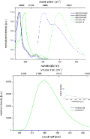
- shoulder. This appearance might result from the free rotation of the N-phenyl substituents, furnishing emissive conformers that arise from a coplanar (λmax,em at 468.0 nm as a shoulder for compound 4a) and torsional orientation (λmax,em at 408.5 nm as a maximum for compound 4a) of the N-phenyl substituent




Dialkyl dicyanofumarates and dicyanomaleates as versatile building blocks for synthetic organic chemistry and mechanistic studies
Beilstein J. Org. Chem. 2017, 13, 2235–2251, doi:10.3762/bjoc.13.221
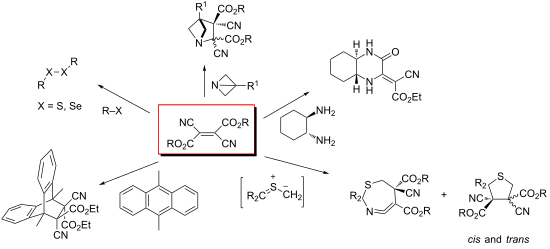
- -trimethoxy derivative 45. In analogy to 1-methoxybuta-1,3-diene, 1-(dimethylamino)buta-1,3-diene was reacted with E- and Z-1b in CH2Cl2 at −50 °C yielding a single cycloadduct, which exists in equilibrium of two conformers as characterized by 1H NMR spectroscopy [46]. In the case of Z-1b, the initial


A mechanochemical approach to access the proline–proline diketopiperazine framework
Beilstein J. Org. Chem. 2017, 13, 2169–2178, doi:10.3762/bjoc.13.217
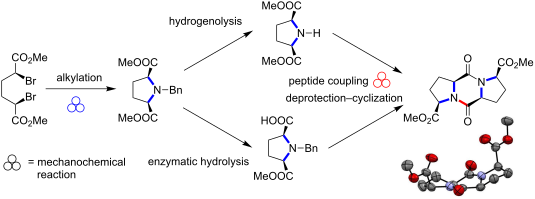
- proline derivatives. The diastereoselective cyclization, which was clearly supported by DFT calculations is noteworthy. Further developments and applications of these scaffolds are currently underway. Optimized geometries for the two conformers presenting interactions with either Ca (16a) or Cb (16b). H


Remarkable functions of sn-3 hydroxy and phosphocholine groups in 1,2-diacyl-sn-glycerolipids to induce clockwise (+)-helicity around the 1,2-diacyl moiety: Evidence from conformation analysis by 1H NMR spectroscopy
Beilstein J. Org. Chem. 2017, 13, 1999–2009, doi:10.3762/bjoc.13.196
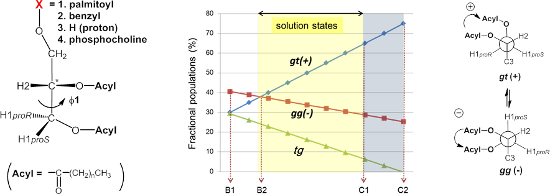
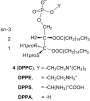
- phosphates). The 1H NMR analysis indicated that the helical property around the 1,2-diacyl moiety is considerably affected by these sn-3 substituents. The sn-3 hydroxy group induced a unique helical property, which was considerably dependent on the solvents used. In CDCl3 solution, three staggered conformers
- , namely gt(+), gg(−) and tg, were randomized, while in more polar solvents, the gt(+) conformer with (+)-helicity was amplified at the expense of gg(−) and tg conformers. The sn-3 phosphocholine in phosphatidylcholine exhibited a greater effect on the gt(+) conformer, which was independent of the solvents
- ; deuterium labeling; sn-glycerol; glycerolipids; glycerophospholipids; helicity; Karplus equation; proton NMR spectroscopy; staggered conformers; Introduction Glycerophospholipids, constituting the basic elements of cytoplasm bilayer membranes, are responsible for several cell functions [1][2][3]. These




Are boat transition states likely to occur in Cope rearrangements? A DFT study of the biogenesis of germacranes
Beilstein J. Org. Chem. 2017, 13, 1969–1976, doi:10.3762/bjoc.13.192
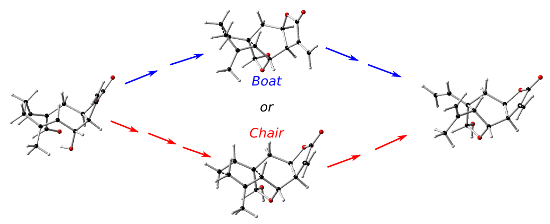
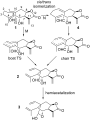
- elemanes formed via a Cope rearrangement from germacranolides only depends on the configuration of the most stable germacrane conformer since it is mainly a concerted reaction [15][18][33]. It is accepted that the conformers that normally carry out a Cope rearrangement are the ones that have crossed double



Conformational impact of structural modifications in 2-fluorocyclohexanone
Beilstein J. Org. Chem. 2017, 13, 1781–1787, doi:10.3762/bjoc.13.172

- conformational population and intramolecular interactions. The 3JH,H coupling constant has been widely used to estimate conformers population in an equilibrium [18], because of its dependence with the H–C–C–H dihedral angle, according to the Karplus curve. Chemical shifts can also be used, but they are more
- sensitive to solvent changes [27]. In the present study, the calculated H-1 and F-19 chemical shifts (Table 4) are too close for both conformers to differentiate them by comparing the absolute (calculated) and the mean experimental values. Also, the calculated long-range coupling constants 4JH,H are too


A new member of the fusaricidin family – structure elucidation and synthesis of fusaricidin E
Beilstein J. Org. Chem. 2017, 13, 1430–1438, doi:10.3762/bjoc.13.140
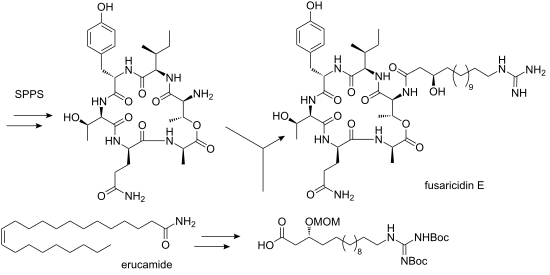
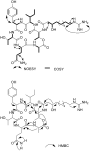
- ). Unfortunately, we observed two signal sets in NMR spectra (intensity 3:1) for the product which could not be attributed to conformers or rotamers as evidenced by variable temperature and NOESY NMR experiments. These results, and the fact that Cochrane also reported problems due to epimerization during



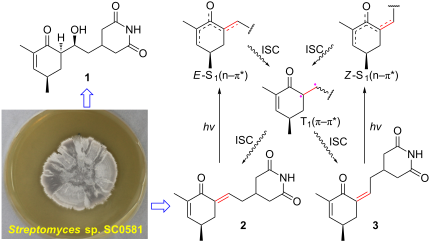
Cycloheximide congeners produced by Streptomyces sp. SC0581 and photoinduced interconversion between (E)- and (Z)-2,3-dehydroanhydrocycloheximides
Beilstein J. Org. Chem. 2017, 13, 1039–1049, doi:10.3762/bjoc.13.103
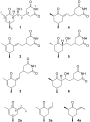
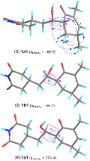
- low-energy conformers (ΔG < 2.5 kcal/mol) for (4R,6R,αS)-1 and (4R,6R,αR)-1, respectively (Table S1, Supporting Information File 1). Among the low-energy conformers of (4R,6R,αS)-1, those having a gauche relationship between H-α/H-6 were found to be greatly dominant (accounting for about 96%) in the
- equilibrium mixture in MeOH, which could be categorized into two groups, (S)-1a and (S)-1b, based on the torsion angle of H6–C6–Cα–Hα (ΦH6/Hα) being around either −62° or +55° and each group constituted about 48% equilibrium populations. As can be seen in Figure 2, conformers in both (S)-1a and (S)-1b groups
- , represented by the second lowest energy minimum (S)-1a1 (ΔG = 0.02 kcal/mol) and the global energy minimum (S)-1b1, respectively, matched up well with the proton coupling constant between H6/Hα (J = 4.3 Hz) and the aforementioned NOESY correlations. Furthermore, conformers in group (S)-1a were also consistent




Aggregation behaviour of a single-chain, phenylene-modified bolalipid and its miscibility with classical phospholipids
Beilstein J. Org. Chem. 2017, 13, 995–1007, doi:10.3762/bjoc.13.99
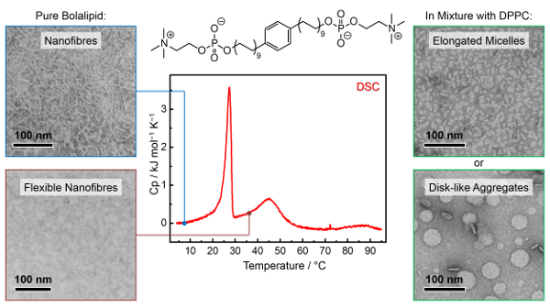
- ) were conducted. The position of the symmetric methylene stretching vibrational band (νsCH2) gives information about the order of the alkyl chain, whether gauche conformers are present or not [41][42]. The wavenumber of the νs(CH2) vibrational band as a function of temperature is shown in Figure 2. At T
- gauche conformers and a more flexible alkyl chain. However, this increase in wavenumber is not as pronounced as for PC-C17pPhC17-PC within its main DSC transition, where the wavenumber of νs(CH2) jumps to 2851.5 cm–1 [35]. If we compare the increase in frequency of νs(CH2) of phenylene-free bolalipids at
- conformers and a higher flexibility of the alkyl chains. The corresponding cooling curve shows the same pattern except for a hysteresis of 5–7 K, which is indicative for a hindered reformation of the ordered fibrous aggregates. A comparable hysteresis is visible in the DSC scan. TEM To analyse the structure





Conformational study of L-methionine and L-cysteine derivatives through quantum chemical calculations and 3JHH coupling constant analyses
Beilstein J. Org. Chem. 2017, 13, 925–937, doi:10.3762/bjoc.13.94
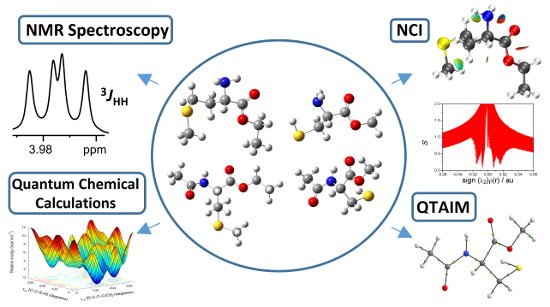
- conformational analysis of esterified and N-acetylated derivatives of L-methionine and L-cysteine using a combination of 1H NMR and electronic structure calculations is reported. The geometries and energies of the most stable conformers in isolated phase and taking into account the implicit solvent effects
- happens in the biological environment. The conformers of L-Met and L-Cys have been investigated by several experimental and theoretical methodologies, including FTIR [11], rotational and IR−UV double resonance spectroscopies [12][13], photon ionization mass spectrometry [14], X-ray absorption [15] and
- insights about the main conformers and the operating effects in the compounds, both in isolated phase and in various aprotic solvents, 1H NMR spectroscopy and quantum chemical calculations, including natural bond orbitals (NBO), quantum theory of atoms in molecules (QTAIM), and noncovalent interactions




Dimerization reactions of aryl selenophen-2-yl-substituted thiocarbonyl S-methanides as diradical processes: a computational study
Beilstein J. Org. Chem. 2017, 13, 410–416, doi:10.3762/bjoc.13.44

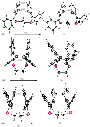
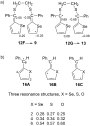
- a 1.2 kcal/mol activation barrier (TS2) forming a C–C bond to give the intermediate, delocalized diradical 12 in a spontaneous reaction (∆G = −50.5 kcal/mol, Figure 3). This diradical can adopt a number of conformations. While the conformer surface was not fully explored, five conformers were
- located (see Supporting Information File 1, Figure SI1), and three of them are considered to be able to form another C–C bond to give, potentially, products 9, 13, or 14 (Scheme 2, Figure 3 and Figure 4). All of the conformers 12 are diradicals as judged by a spin-squared value
close to 1.0 (see
- Supporting Information File 1, Table SI1) in the broken symmetry solution. The further conversion of the conformers of the intermediate diradical 12 into the macroheterocycle 9, the six-membered 1,4-dithiane 13, and the ten-membered heterocycle 14, respectively, is governed by two factors: the unpaired spin


Synthesis and optical properties of new 5'-aryl-substituted 2,5-bis(3-decyl-2,2'-bithiophen-5-yl)-1,3,4-oxadiazoles
Beilstein J. Org. Chem. 2017, 13, 313–322, doi:10.3762/bjoc.13.34
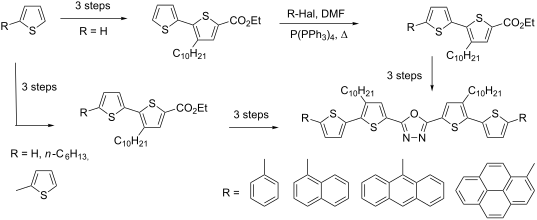
- same time, unsymmetrical substituents lead to additional conformational variety, e.g., the naphtalen-1-yl-substituted derivative 15e can be represented by five different conformers. Table 3 collects selected geometrical parameters for the studied conformers, whereas their graphical representations are
- of 5'-aryl-substituted 2,5-bis(3-decyl-2,2'-bithiophen-5-yl)-1,3,4-oxadiazoles 15b–g in DCM. Selected geometrical parameters (bond lengths, B and dihedral angles, D) for all found conformers of the studied compoundsa, as well as relative energies, Erel, for each conformer in the ground state obtained


Characterization of the synthetic cannabinoid MDMB-CHMCZCA
Beilstein J. Org. Chem. 2016, 12, 2808–2815, doi:10.3762/bjoc.12.279
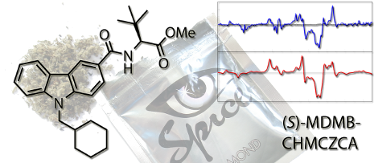
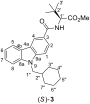
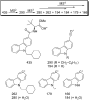
- geometry convergence criteria, and an ultrafine integration grid yielded 619 conformers after removal of duplicates based on comparison of the electronic energies and dipole moments. The 242 conformers within a relative electronic energy range up to 10 kcal/mol were selected from this set. The geometries
- dipole moments as well as the free enthalpies and dipole moments (235 survivors). The 43 conformers within a relative electronic energy range up to 5 kcal/mol were selected from this set, the structures were confirmed as local minima (no imaginary frequencies), and enthalpy-Boltzmann-averaged IR and VCD
- were then compared using these optimized parameters. The set of 242 conformers mentioned above was also subjected to a reoptimization and vibrational frequency calculation at the B3LYP/6-311G** level [23][24][25][26][27][28] with IEFPCM solvation [29] for acetonitrile, tight geometry convergence




From betaines to anionic N-heterocyclic carbenes. Borane, gold, rhodium, and nickel complexes starting from an imidazoliumphenolate and its carbene tautomer
Beilstein J. Org. Chem. 2016, 12, 2673–2681, doi:10.3762/bjoc.12.264
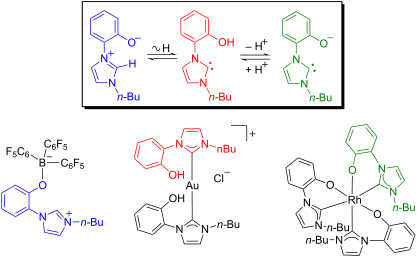
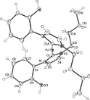
- adduct displays two different conformers in the unit cell which differ inter alia in the torsion angles around the Nimidazole–Cphenol bonds [−53.32(16)° vs 114.12(13)°] and the Cphenyl–O bonds [49.43(17)° vs −15.29(18)°] (Figure 2). A gold complex of the N-heterocyclic carbene tautomer 6B can be obtained
- )), wR2 = 0.074 (all data), S = 1.04, largest diff. peak/hole = 0.359/−0.191 e Å−3. There are 2 different conformers in the asymmetric unit. 9: colorless crystals, C26H32AuN4O2∙0.19(Br)∙0.81(Cl), Mr = 673.42, crystal size 0.24 × 0.12 × 0.06 mm, monoclinic, space group C2/c (No. 15), a = 15.0275(9) Å, b




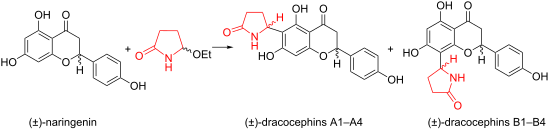
Biomimetic synthesis and HPLC–ECD analysis of the isomers of dracocephins A and B
Beilstein J. Org. Chem. 2016, 12, 2523–2534, doi:10.3762/bjoc.12.247
- column with the eluent hexane/2-propanol 80:20 (Supporting Information File 1, Figure S1). The initial conformational search of (R)-1 with the Merck Molecular Force Field (MMFF) and CHCl3 solvent model yielded 8 conformers within a 21 kJ/mol energy window, which were reoptimized at five different DFT
- levels [B3LYP/6-31G(d) in vacuo, B3LYP/TZVP PCM/CHCl3, B97D/TZVP [10][11] PCM/CHCl3, CAM-B3LYP/TZVP [12][13] PCM/CHCl3 and M06-2X/TZVP [14][15] PCM/CHCl3]. While the B3LYP and CAM-B3LYP functionals resulted in 4 low-energy conformers over 2% Boltzmann population with an equatorial C-2 aryl group near
- coplanar with the C-2– H-2 bond, the B97D and M06-2X ones afforded 8 conformers including four high-energy ones with an axial C-2 aryl group (Supporting Information File 1, Figures S2, S4, S6, and S8). The four CAM-B3LYP/TZVP (PCM/CHCl3) conformers (Figure 3) differed mostly in the orientation of the 7


Synthesis, dynamic NMR characterization and XRD studies of novel N,N’-substituted piperazines for bioorthogonal labeling
Beilstein J. Org. Chem. 2016, 12, 2478–2489, doi:10.3762/bjoc.12.242
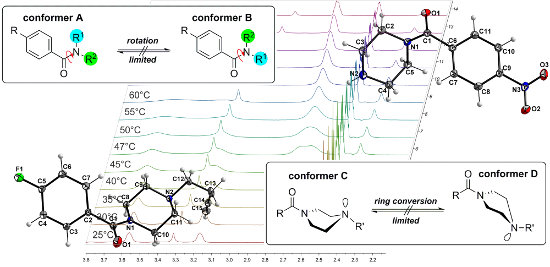
- Novel, functionalized piperazine derivatives were successfully synthesized and fully characterized by 1H/13C/19F NMR, MS, elemental analysis and lipophilicity. All piperazine compounds occur as conformers resulting from the partial amide double bond. Furthermore, a second conformational shape was
- , 49.0 ppm) are found when analyzing the 13C NMR spectra. Two effects are responsible for this behavior. The first arises from the presence of two different conformers (rotamers); this is caused by the limited interconversion by rotation about the C–N amide bond resulting from the partial double bond
- , interconversion of the amine is also reduced at room temperature. Normally, such formation of conformers is found for piperazines [21][22] and morpholines [21][23] only at lower temperatures (below −10 °C). Additionally, only the protons of 4-nitrobenzoylamides 3a, 4a and 5a exhibit this behavior at room




Experimental and theoretical investigations into the stability of cyclic aminals
Beilstein J. Org. Chem. 2016, 12, 2280–2292, doi:10.3762/bjoc.12.221
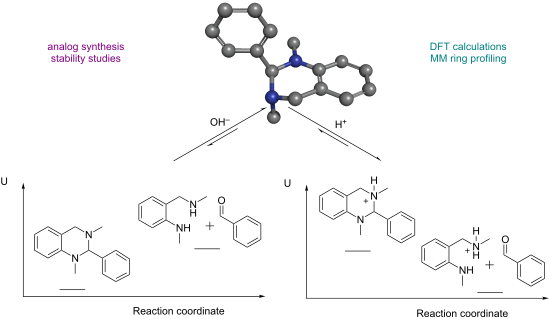
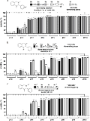
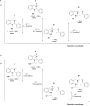
- findings, minimum conformational energy calculations were conducted. We found that all compounds adhere to two groups of conformers in accordance with crystal structures reported in literature. Changing the minimum energy conformers of 9b and 13b,c into the reference structure 8a revealed an increase in
- diamine 2 and aldehyde 3 in basic or neutral media as well as for the protonated tetrahydroquinazoline 1’ and the corresponding diamine 2’ and aldehyde 3 in acidic media. Minimum energy conformers in their neutral form with (a) an axial orientation of the phenyl system exemplarily shown for compound 8a





New furoisocoumarins and isocoumarins from the mangrove endophytic fungus Aspergillus sp. 085242
Beilstein J. Org. Chem. 2016, 12, 2077–2085, doi:10.3762/bjoc.12.196
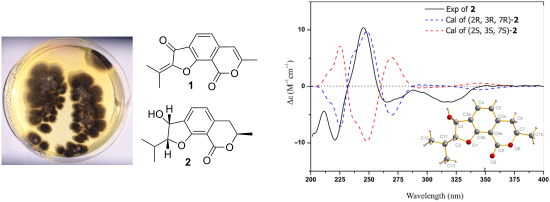
- program, respectively. Conformers within 10 kcal/mol energy window were generated and optimized using DFT calculations at B3LYP/6-31G(d) level. Conformers with Boltzmann distribution over 1% were chosen for ECD calculations in methanol at B3lYP/6-311+g(2d,p) level. The IEF-PCM solvent model for MeOH was


Thiophene-forming one-pot synthesis of three thienyl-bridged oligophenothiazines and their electronic properties
Beilstein J. Org. Chem. 2016, 12, 2055–2064, doi:10.3762/bjoc.12.194
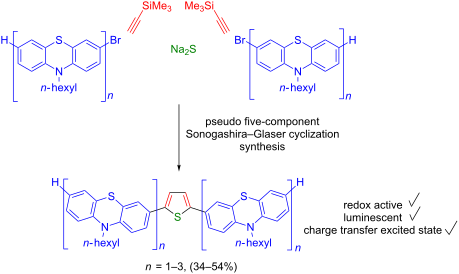
- proceeds with lower oxidation potentials and consistently reversible oxidations can be identified. The Stokes shifts are large and substantial fluorescence quantum yields can be measured. Computational chemistry indicates lowest energy conformers with sigmoidal and helical structure, similar to
- structures were confirmed by the absence of imaginary vibrations in the analytical frequency analyses. The inspection of the computed molecular structures 3 indicates that these molecules adopt sigmoidal and helical minimum conformers (Figure 4) as already shown for consanguineous series of higher
- and typical for many 3-(hetero)arylphenothiazines the Stokes shifts are large and substantial fluorescence quantum yields can be measured. Computational chemistry supports lowest-energy conformers with sigmoidal and helical structure, similar to oligophenothiazines. Furthermore, TD-DFT and even


Varioloid A, a new indolyl-6,10b-dihydro-5aH-[1]benzofuro[2,3-b]indole derivative from the marine alga-derived endophytic fungus Paecilomyces variotii EN-291
Beilstein J. Org. Chem. 2016, 12, 2012–2018, doi:10.3762/bjoc.12.188
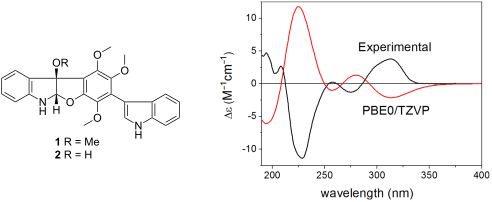
- (Merck Molecular Force Field) level resulted in 55 conformers within a 21 kJ/mol energy window. These conformers were reoptimized at two different DFT levels, namely B3LYP/6-31G(d) in vacuo and B97D/TZVP [16][17] with a Polarizable Continuum Model (PCM) for MeCN [18]. The B3LYP optimization yielded 10
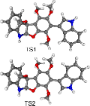
- low-energy conformers above 2% Boltzmann population, while the number of low-energy conformers was 14 at the applied B97D level (Figure 3). The conformers differed in the orientation of the methoxy groups and the value of the ωC12−C13−C3’−C9’ biaryl torsional angle resulting in different orientations
- of the C-13 indol and dihydro-5aH-[1]benzofuro [2,3-b]indole moieties. The different biaryl torsional angles produced markedly different computed ECD spectra for the conformers having M and P helicity such as the two lowest-energy computed B3LYP/6-31G(d) conformers (Figure 4). The two high-wavelength



Stereo- and regioselectivity of the hetero-Diels–Alder reaction of nitroso derivatives with conjugated dienes
Beilstein J. Org. Chem. 2016, 12, 1949–1980, doi:10.3762/bjoc.12.184
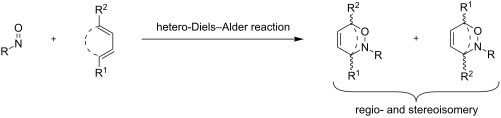
- authors explained this observation by a low-energy discrimination between the Panti and Psyn conformers of chiral diene 31e (Scheme 9) and by the high asynchronicity of the formation of the new bond with a nitroso partner (Panti and Psyn refers to the conformation of the O=P–C(1)–C(2) dihedral angles




Experimental and theoretical insights in the alkene–arene intramolecular π-stacking interaction
Beilstein J. Org. Chem. 2016, 12, 1616–1623, doi:10.3762/bjoc.12.158
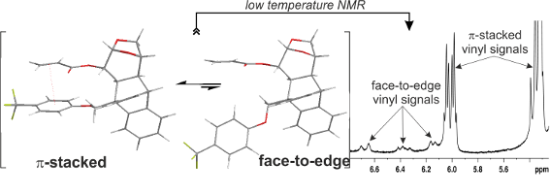
- moieties lie parallel to each other, and the distances from the centroid of the aromatic ring to the midpoint of the C=C double bond are in the range of 3.25–3.31 Å, consistent with the distances for other π-stacked systems [2]. On the other hand, in the anti conformers the remoteness of the phenyl and
- conformational change can be responsible not only for the broadening of the NMR signals of some nuclei at room temperature, but also for the NMR splitting observed upon cooling. In the gauche conformers a significant shielding of the vinyl protons is expected, while in the anti rotamers those nuclei should not
- (6a), 95:5 (6b) and 91:9 (6c) in very good agreement with the average 9:1 value experimentally obtained from the low temperature NMR spectra. Moreover, the higher population of the π-stacked conformers found for 6a accounts for the magnitude of the shielding of the acrylate protons (Figure 2). In an




Beta-hydroxyphosphonate ribonucleoside analogues derived from 4-substituted-1,2,3-triazoles as IMP/GMP mimics: synthesis and biological evaluation
Beilstein J. Org. Chem. 2016, 12, 1476–1486, doi:10.3762/bjoc.12.144
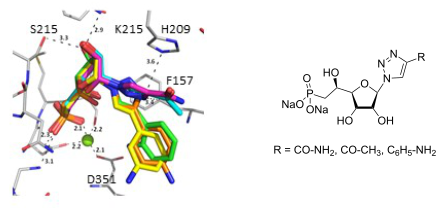
- behaves as several conformers in solution (Figure 4). Indeed, the NOESY experiment shows correlations between the two protons in the ortho position (Ho and Ho’) of the phenyl ring and the H5 of the triazole. In this case, the position of the exocyclic amino group in meta position does not allow the
- formation of a strong H-bond and the C–C bond linking the triazole and the aromatic rings is free to rotate. To our surprise, a cross-peak between the H5 of the triazole and the H3’ was observed (as well as with the anomeric proton), indicating that both syn- and anti-conformers may be present. Enzyme


The hydrolysis of geminal ethers: a kinetic appraisal of orthoesters and ketals
Beilstein J. Org. Chem. 2016, 12, 1467–1475, doi:10.3762/bjoc.12.143
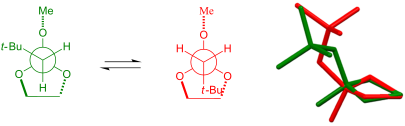
- structures (see Experimental section). The half-chair (C2) arrangement was found to be the only stable conformer for the 1,3-dioxolane ring with all other conformers being rotamers about the C(2)–CH2R and C(2)–OMe bonds [where R = H (5) or t-Bu (16)]. The orientation of the C(2)O–Me group is ignored from
- projections of 9, 12 and 16 (viewed along Cβ→Cα). Newman projections [viewed Cα–C(2)] of the preferred C2 arrangement of the 1,3-dioxolane ring depicting the syn (16a,b), anti (16c) conformers, with (d) the superimposed calculated syn (16a = green) and anti (16c = red) structures viewed C(4)→C(5) [the C(2)O
- NOESY spectra (10/11/14), MS(CI) spectra (5*/16*), experimentally determined values of kH+ for the reacting mixtures of geminal ethers: [6 + 2], [3 + 2], [6 + 13], [6 + 5], [6 + 8], [6 + 10 + 11 + 14], [6 + 16], and Cartesian coordinates of conformers 16c. Supporting Information File 190: Analytical





