


Search results
Search for "donor/acceptor" in Full Text gives 206 result(s) in Beilstein Journal of Organic Chemistry. Showing first 200.
Synthesis and supramolecular self-assembly of glutamic acid-based squaramides
Beilstein J. Org. Chem. 2018, 14, 2065–2073, doi:10.3762/bjoc.14.180
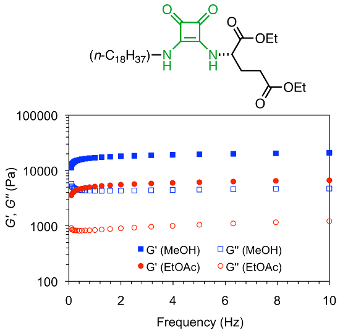
- conjugated to an aromatic cyclobutenedione ring, can be easily synthesized from different derivatives of squaric acid and amines [1][2][3][4]. The possibility to fabricate chiral squaramide derivatives and their efficient hydrogen bond donor/acceptor ability has driven the pivotal role of these compounds in


Synthesis of 9-arylalkynyl- and 9-aryl-substituted benzo[b]quinolizinium derivatives by Palladium-mediated cross-coupling reactions
Beilstein J. Org. Chem. 2018, 14, 1871–1884, doi:10.3762/bjoc.14.161
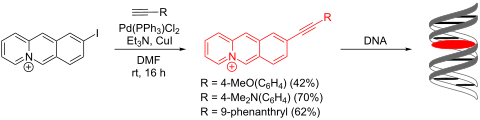
- positively charged nitrogen atoms and π···π donor–acceptor attractions between the phenyl and pyridinium moieties. In our case, the situation is somehow more complex as the novel compounds bear aromatic substituents (via alkyne spacer) in the benzo[b]quinolizinium 9 position. These aromatic substituents now
- engage in π···π donor–acceptor attractions with the pyridinium moiety (outer most ring of the tricyclic moiety) and the two positively charged nitrogen atoms are per se much further apart due to the larger intramolecular separation between the intermolecularly interacting π-systems. In addition, the
- . Notably, for 2b the phenyl to phenyl π···π interaction of one molecule is not with the same neighbor as the π···π donor–acceptor attraction between the phenyl and pyridinium rings. Therefore, these two distinct π-system-based attractions alternate and form infinite chains of molecules roughly protruding


Preparation and X-ray structure of 2-iodoxybenzenesulfonic acid (IBS) – a powerful hypervalent iodine(V) oxidant
Beilstein J. Org. Chem. 2018, 14, 1854–1858, doi:10.3762/bjoc.14.159
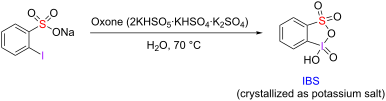
- . In addition, a water molecule was observed in the crystal structure of 6, which forms two strong hydrogen bonds (≈2.05 Å for O(21)–H(2)···O(11) and ≈2.07 Å for O(21)–H(3)···O(5)) with neighbouring oxygen atoms and two short donor–acceptor interactions with K(1) and K(2) potassium ions. Overall, the


Hypervalent organoiodine compounds: from reagents to valuable building blocks in synthesis
Beilstein J. Org. Chem. 2018, 14, 1508–1528, doi:10.3762/bjoc.14.128
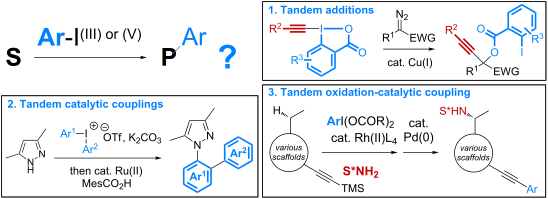
- benzoate motif and the alkynyl group are obtained from various acceptor or donor–acceptor diazo compounds 30, while the use of vinyldiazo derivatives 32 leads to enynes 33 arising from the vinylogous addition of the carboxylate. Significantly, the benzoyloxy-alkynylation reaction can be applied to the late




Recent advances in phosphorescent platinum complexes for organic light-emitting diodes
Beilstein J. Org. Chem. 2018, 14, 1459–1481, doi:10.3762/bjoc.14.124
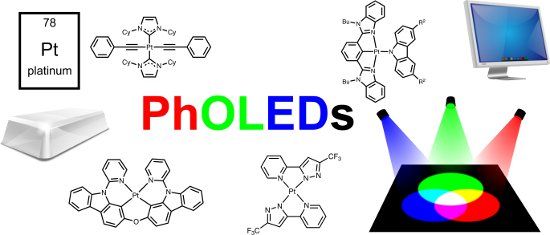
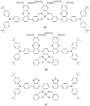
- between these donor-acceptor groups, namely meta- and para-substitution. As expected, the intramolecular charge transfer character was less prominent in the absorption features of compounds with meta-linkages. Nevertheless, all compounds showed a 3IL/3MLCT emission in the green region, that resembled well






D–A–D-type orange-light emitting thermally activated delayed fluorescence (TADF) materials based on a fluorenone unit: simulation, photoluminescence and electroluminescence studies
Beilstein J. Org. Chem. 2018, 14, 672–681, doi:10.3762/bjoc.14.55
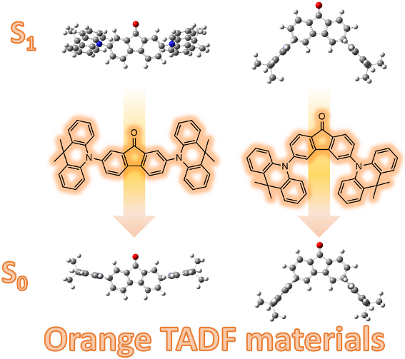
- . China 10.3762/bjoc.14.55 Abstract The design of orange-light emitting, thermally activated, delayed fluorescence (TADF) materials is necessary and important for the development and application of organic light-emitting diodes (OLEDs). Herein, two donor–acceptor–donor (D–A–D)-type orange TADF materials


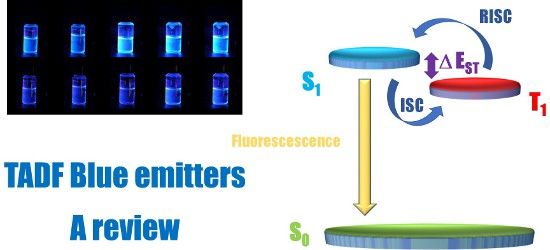
Recent advances on organic blue thermally activated delayed fluorescence (TADF) emitters for organic light-emitting diodes (OLEDs)
Beilstein J. Org. Chem. 2018, 14, 282–308, doi:10.3762/bjoc.14.18
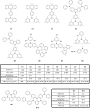
- in the D–A diad is observed, resulting in a drastic reduction of the PLQY and thus of the external quantum efficiency. In the same study, authors examined the case of two TADF emitters based on a donor–acceptor–donor (D–A–D) structure, i.e., T3 and T4, where azasiline was used as the donor and
- in donor-acceptor-based TADF emitters [57]. Considering that the electron acceptor is not symmetrical anymore, positions of the nitrogen atoms will significantly influence the distribution of the electronic cloud and potentially the overlap with the HOMO level. Examination of the electronic








Synthesis and spectroscopic properties of β-meso directly linked porphyrin–corrole hybrid compounds
Beilstein J. Org. Chem. 2018, 14, 187–193, doi:10.3762/bjoc.14.13
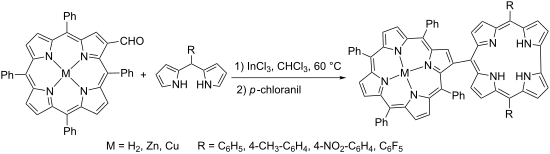
- characters, high fluorescence quantum yields and favorable electronic properties. Porphyrin–corrole conjugates have been successfully used as donor–acceptor systems in photoinduced charge separation processes. It was shown that derivatives of these conjugates could be potentially used in photovoltaic


Fluorescent nucleobase analogues for base–base FRET in nucleic acids: synthesis, photophysics and applications
Beilstein J. Org. Chem. 2018, 14, 114–129, doi:10.3762/bjoc.14.7
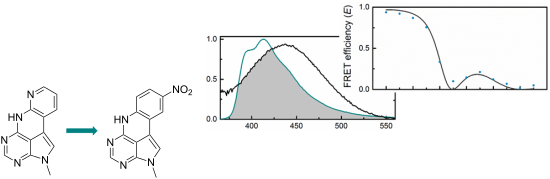
- without the acceptor molecule present. This efficiency (E) depends on the distance (RDA) between the donor and acceptor as described in Equation 1: where R0 is the Förster distance (Equation 2), a characteristic distance of the donor–acceptor pair at which the energy transfer efficiency (E) is 50%. As can
- be seen in Equation 2 the Förster distance depends on the quantum yield of the donor (ΦD), the donor/acceptor spectral overlap integral (JDA, overlap between energies of donor emission and acceptor absorption envelope), the refractive index of the medium (n), and importantly the geometric factor (κ






Photocatalytic formation of carbon–sulfur bonds
Beilstein J. Org. Chem. 2018, 14, 54–83, doi:10.3762/bjoc.14.4
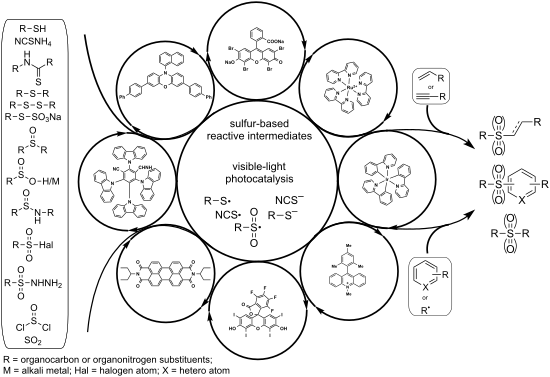
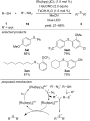
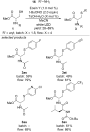
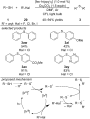
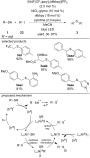
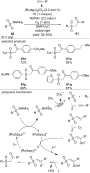
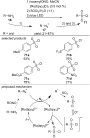
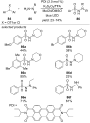
- base and DMSO as solvent they observed a colouring of the reaction mixture, whereas the reagents are colourless themselves. They suggest that the thiol becomes deprotonated to the respective thiolate anion and subsequently an electron donor–acceptor complex with the aryl halide is formed. Irradiation
- starting materials absorbs visible-light, the mixture of all reagents shows absorption in the visible-light region, which indicates the formation of donor–acceptor complexes. The exact origin of the absorption could not be specified until now. The reaction tolerates diverse functional groups. Electron-rich





























Hydrolysis, polarity, and conformational impact of C-terminal partially fluorinated ethyl esters in peptide models
Beilstein J. Org. Chem. 2017, 13, 2442–2457, doi:10.3762/bjoc.13.241
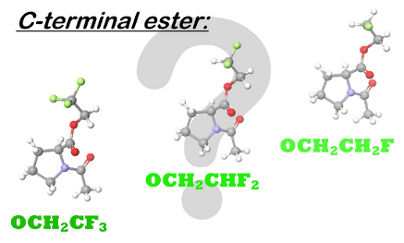
- polypeptides is still not fully understood and it may appear controversial in the literature. For example, a donor–acceptor type enhancement of the face-to-face stacking of phenyl- and pentafluorophenyl groups has been suggested [36]; though, subsequent studies of α-helical [37], peptoid [38], and collagen








Preactivation-based chemoselective glycosylations: A powerful strategy for oligosaccharide assembly
Beilstein J. Org. Chem. 2017, 13, 2094–2114, doi:10.3762/bjoc.13.207
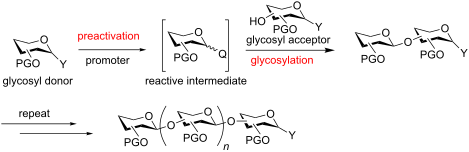
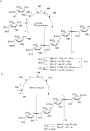
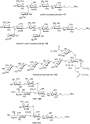
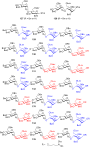
- ][13][14], fluorine-supported glycosylation [15][16] and automated solid-phase synthesis [17]. All of these methods use the donor/acceptor premixed approach and preferential activation of the donor is achieved by the higher anomeric reactivity of the donor towards the promoter compared to the acceptor







Intramolecular glycosylation
Beilstein J. Org. Chem. 2017, 13, 2028–2048, doi:10.3762/bjoc.13.201
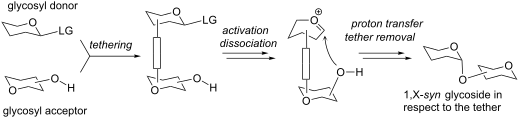
- an intermolecular reaction. This is usually credited to the facial selectivity for the glycosyl acceptor attack restricted by the tethering (Scheme 1b). However, the execution of this concept requires additional steps for the preparation of the tethered donor–acceptor combinations, and in some cases
- disaccharide 9 in 74% as a pure 1,2-trans isomer [52]. Expansion of this approach to other positions and sugar series showed that the stereoselectivity could be relaxed, and seemed to be dependent of the donor–acceptor match–mismatch. Thus, when succinoyl was attached to the 6-OH of the galactosyl acceptor
- attachment to the neighboring C-2 position. In contrast, 6,6’-linked donor–acceptor pair 13 led to the formation of the (1→4)-linked regioisomer 15 [64]. Apparently, the rigid phthaloyl tether helps to achieve high regioselectivity because the anomeric center of the activated donor cannot easily reach out


p-tert-Butylthiacalix[4]arenes functionalized by N-(4’-nitrophenyl)acetamide and N,N-diethylacetamide fragments: synthesis and binding of anionic guests
Beilstein J. Org. Chem. 2017, 13, 1940–1949, doi:10.3762/bjoc.13.188
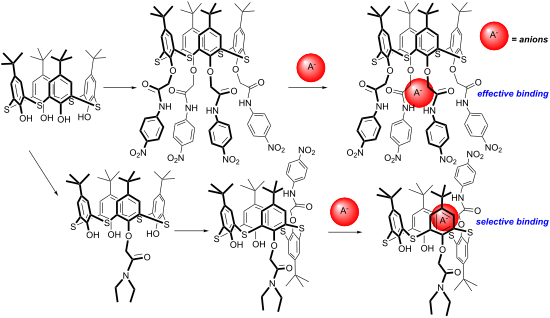
- negatively charged substrates. Usually, receptors for anions are charged systems capable of electrostatic interaction with anions [1][44][45] or neutral systems using other types of interactions, such as donor–acceptor interactions, hydrogen bonds, hydrophobic effects, etc. [46][47][48][49][50][51][52][53


Molecular-level architectural design using benzothiadiazole-based polymers for photovoltaic applications
Beilstein J. Org. Chem. 2017, 13, 863–873, doi:10.3762/bjoc.13.87
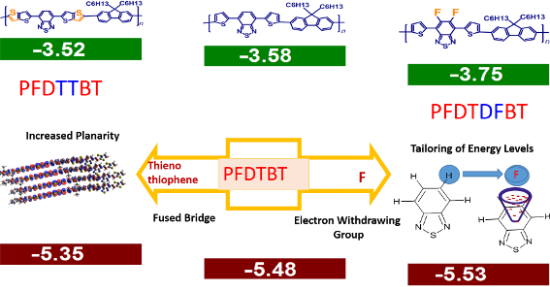
- backbone was also studied. This enhanced planarity led to the highest observed mobility among the reported three polymers as well as to an improvement in the device efficiency by more than 40% for P3. Keywords: bulk heterojunction; donor–acceptor–donor polymer; low band gap polymer; organic photovoltaics
- OPV devices led to a new type of device, the so-called bulk heterojunction (BHJ) solar cells, with improved power-conversion efficiency (PCE) [2][3][4]. A large number of polymer semiconducting materials of donor–acceptor–donor (D–A–D) architecture have been synthesized and used in OPV devices
- parameters to consider for the design of a new donor polymer system. In OPV devices, a bicontinuous layer of a donor and an acceptor material is sandwiched between two electrodes. After the absorption of light, excitons are generated which dissociate towards the interface of the donor–acceptor layer and are



Synthesis and optical properties of new 5'-aryl-substituted 2,5-bis(3-decyl-2,2'-bithiophen-5-yl)-1,3,4-oxadiazoles
Beilstein J. Org. Chem. 2017, 13, 313–322, doi:10.3762/bjoc.13.34
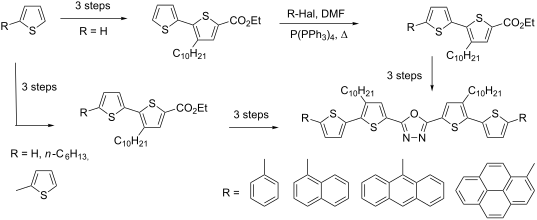
- Gliwice, Poland Faculty of Chemistry , Warsaw University of Technology, Noakowskiego 3, 00-664 Warszawa, Poland Department of Organic Chemistry, Omsk F.M. Dostoevsky State University, 55a Mira pr., 644077 Omsk, Russian Federation 10.3762/bjoc.13.34 Abstract New photoluminescent donor–acceptor–donor (DAD
- by quantum chemical DFT/TDDFT calculations carried out for these new molecules. Keywords: bithiophene; donor–acceptor; luminescence; 1,3,4-oxadiazole; palladium-catalyzed coupling; Introduction π-Conjugated donor–acceptor (D-A) compounds are of significant scientific interest because they
- field calls for elaboration of new synthetic procedures affording tailor-made molecules with tunable physical properties. In this respect, we have recently developed an efficient and flexible approach to the synthesis of π-conjugated donor–acceptor compounds [16][17]. The proposed synthetic pathway


Interactions between photoacidic 3-hydroxynaphtho[1,2-b]quinolizinium and cucurbit[7]uril: Influence on acidity in the ground and excited state
Beilstein J. Org. Chem. 2017, 13, 203–212, doi:10.3762/bjoc.13.23
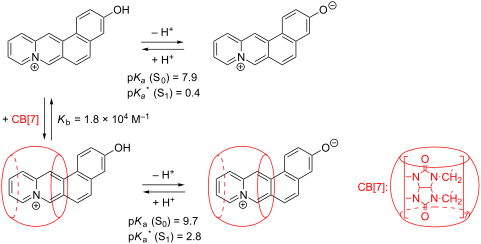
- , the strongly red-shifted broad absorption and emission bands correspond to the conjugate base 2cB. The red-shifted absorption of 2cB is the result of the formation of the strongly electron-donating oxyanion functionality that leads to a pronounced donor–acceptor interplay with the quinolizinium core


A new class of organogelators based on triphenylmethyl derivatives of primary alcohols: hydrophobic interactions alone can mediate gelation
Beilstein J. Org. Chem. 2017, 13, 138–149, doi:10.3762/bjoc.13.17
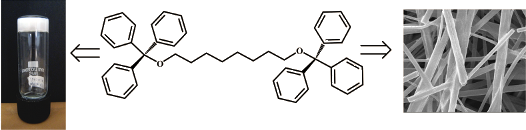
- -stacking, donor–acceptor interaction, electrostatic, metal coordination, hydrophobic forces or van der Waals’ interactions [4][5][6]. We know a great deal about the aggregation behaviour of gelator molecules from many studies conducted during the past several years. However, rational design and accurate
- ][21][22]. As mentioned above, developing a new gelator is still largely a trial and error method. The most widely used design strategy involves the inclusion of structural components favouring intermolecular non-covalent interactions (like H-bonding, π-stacking, donor–acceptor interaction, metal





Silyl-protective groups influencing the reactivity and selectivity in glycosylations
Beilstein J. Org. Chem. 2017, 13, 93–105, doi:10.3762/bjoc.13.12

- than the corresponding benzylated thioglycosides in competition reactions and used the reactivity differences in a one-pot glycosylation reaction between 37, a disarmed donor/acceptor 38 and an acceptor 39, which gave the trisaccharide 40 in a remarkable yield of 88% (Scheme 7). This reaction works so


New approaches to organocatalysis based on C–H and C–X bonding for electrophilic substrate activation
Beilstein J. Org. Chem. 2016, 12, 2834–2848, doi:10.3762/bjoc.12.283
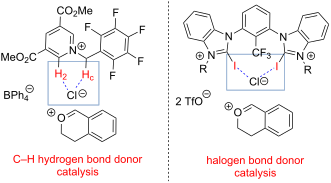
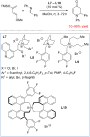
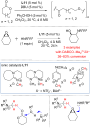
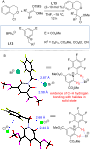
- attempting to elucidate the nature of halogen complexes have emerged since then; however, the structural features of these interactions were unclear until the work of Mulliken who proposed the formation of donor–acceptor complexes [65][66] and Odd Hassel who conducted crystallographic studies of bromine








Protonated paramagnetic redox forms of di-o-quinone bridged with p-phenylene-extended TTF: A EPR spectroscopy study
Beilstein J. Org. Chem. 2016, 12, 2450–2456, doi:10.3762/bjoc.12.238
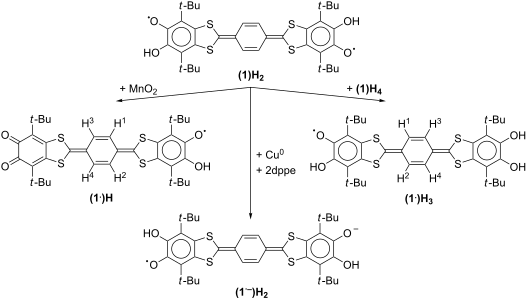
- reaction exists in solution as a solvent-separated ion pair with a copper cation. A character of spin-density distribution in a radical anion species leads to the conclusion that the ligand corresponds to type III of the Robin–Day classification. Keywords: acceptor–donor–acceptor triad; bridging ligand
- ; EPR spectroscopy; extended tetrathiafulvalene; protonated semiquinone; Introduction The main idea that led to the creation of the system constructed of two o-quinone terminal moieties bridged with annulated extended tetrathiafulvalene (TTF) insertion, was an attempt to explore acceptor–donor–acceptor
- acceptor–donor–acceptor triad 1. The EPR spectrum of (1·)H in CHCl3, 293 K: a) experimental and b) experimental + D2O. The EPR spectrum of (1·)H3 in CHCl3, 293 K: a) experimental, b) simulated, c) experimental + D2O and d) simulated + D2O. The EPR spectrum of (1·−)H2 THF, 293 K: a) experimental and b


Comparing blends and blocks: Synthesis of partially fluorinated diblock polythiophene copolymers to investigate the thermal stability of optical and morphological properties
Beilstein J. Org. Chem. 2016, 12, 2150–2163, doi:10.3762/bjoc.12.205
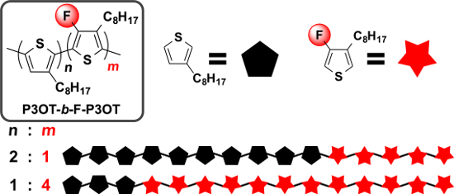
- collection. With the thermal stability of all-polymer and polymer-fullerene blend microstructures being particularly problematic [19], block copolymers present a potential solution. Indeed, it has been shown that when block copolymers are used as additives in bulk heterojunction donor–acceptor blend layers


Thiophene-forming one-pot synthesis of three thienyl-bridged oligophenothiazines and their electronic properties
Beilstein J. Org. Chem. 2016, 12, 2055–2064, doi:10.3762/bjoc.12.194
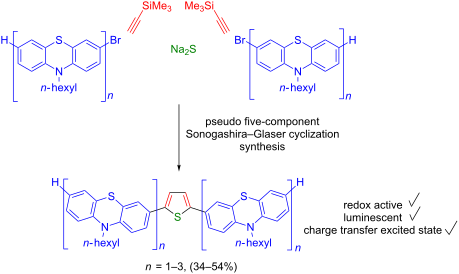
- [53][54][55] substituted (oligo)phenothiazines. Their pronounced reversible oxidation potentials, their electro- and photochromicity [56], and their luminescence [57][58] have rendered (oligo)phenothiazines interesting candidates as donors in donor–acceptor conjugates with photo-induced electron
- magnitude of the oscillator strengths f, corresponding with significant decadic molar extinction coefficients of the associated bands (Figure 5). In principle these phenothiazine conjugates can be considered as donor–acceptor–donor systems, a topology that can be favorably developed further in molecular
- . This represents in principle a donor–acceptor–donor topology, suitable for further development toward molecular electronics. Studies employing the presented synthetic methodology and the concept of bridging oligophenothiazines with conjugating bridges of variable electronic nature are currently


Synthesis and properties of fluorescent 4′-azulenyl-functionalized 2,2′:6′,2″-terpyridines
Beilstein J. Org. Chem. 2016, 12, 1812–1825, doi:10.3762/bjoc.12.171
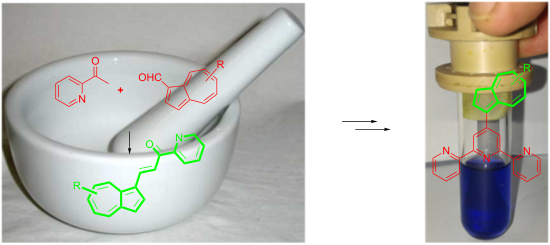
- introducing conjugated moieties at the 4′-position [10][11][12]. In this context, the synthesis of tailored terpyridine derivatives with appropriate electron-donor/acceptor moieties may allow for a further improvement of their spectroscopic and electrochemical properties. Owing to its unique fluorescent and





