


Search results
Search for "nucleophilic" in Full Text gives 1361 result(s) in Beilstein Journal of Organic Chemistry. Showing first 200.
Reactivity of hypervalent iodine(III) reagents bearing a benzylamine with sulfenate salts
Beilstein J. Org. Chem. 2024, 20, 3281–3289, doi:10.3762/bjoc.20.272
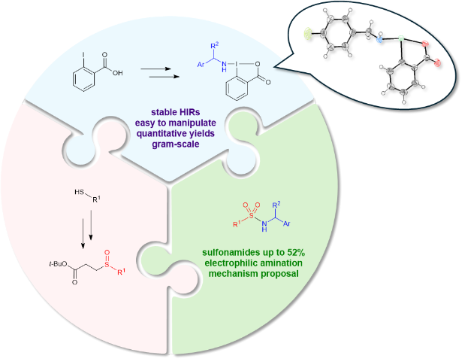
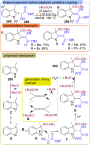
- in electrophilic transfer reactions, with emphasis on umpolung reactivity of usually nucleophilic functional groups. Thus constituting a powerful synthetic tool, opening room for new synthetic disconnections [10]. Within the benziodoxol(on)e class, a range of HIRs featuring nitrogen-containing groups
- reaction (Table 1, entry 1) [4]. In the presence of potassium carbonate, only starting material 4a was detected. A stronger base to generate the nucleophilic intermediate was tested, and sulfonamide 5aa was detected in trace amounts (Table 1, entry 2). Considering the low solubility of the hypervalent



Efficient synthesis of fluorinated triphenylenes with enhanced arene–perfluoroarene interactions in columnar mesophases
Beilstein J. Org. Chem. 2024, 20, 3263–3273, doi:10.3762/bjoc.20.270
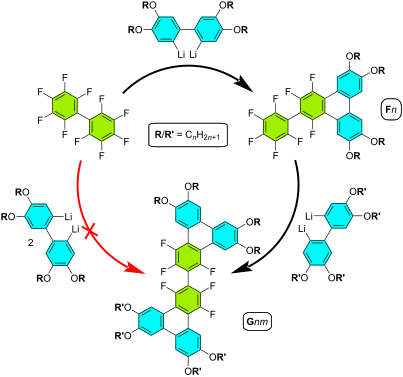
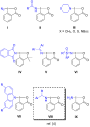
- chains and derived from the classical triphenylene core self-assembling in columnar mesophases based on this paradigm. These mesogenic compounds were simply obtained in good yields by the nucleophilic substitution (SNFAr) of various types of commercially available fluoroarenes with the electrophilic
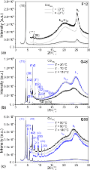
- subsequent second annulation, yielding a new series of extended polyaromatic mesomorphic compounds, i.e., 1,1',3,3',4,4'-hexafluoro-6,6',7,7',10,10',11,11'-octaalkoxy-2,2'-bitriphenylene (Gnm) which were found to display a Colrec mesophase. The specific nucleophilic substitution patterns of the Fn
- red-shift of the emission peak. Keywords: arene–perfluoroarene interaction; decafluorobiphenyl; fluorinated triphenylene; fluoroarene nucleophilic substitution; organolithium; Introduction Non-covalent arene–fluoroarene intermolecular interactions [1][2] are drawing increasing attention due to their




Non-covalent organocatalyzed enantioselective cyclization reactions of α,β-unsaturated imines
Beilstein J. Org. Chem. 2024, 20, 3221–3255, doi:10.3762/bjoc.20.268
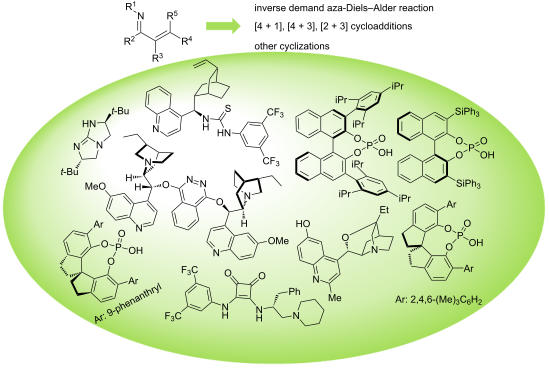
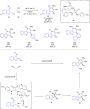
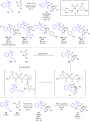
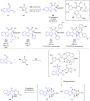
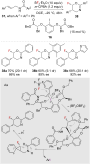
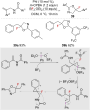
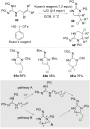
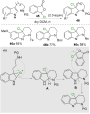
- hydrogen bonding with the protonated tertiary amine. Then, a Michael addition of malononitrile to the azadiene takes place to obtain exclusively the (S)-intermediate A. Subsequently an intramolecular nucleophilic addition of the nitrile leads to the intermediate B, which undergoes tautomerization to
- -derived azadiene by H-bonding. This dual activation promotes a stereoselective addition of 3-chlorooxindole to the azadiene leading to intermediate A. The latter is also activated by the chiral guanidine and undergoes an intramolecular nucleophilic substitution which delivers the product 19b with the
- the nitrogen atoms. Then, the azlactone enolate undergoes a nucleophilic attack on its Si-face via Mannich reaction with the 2-benzothiazolimine leading to intermediate A which evolves toward its resonance form B, responsible of the intramolecular attack of the negatively charged nitrogen to the









Synthesis of 2H-azirine-2,2-dicarboxylic acids and their derivatives
Beilstein J. Org. Chem. 2024, 20, 3191–3197, doi:10.3762/bjoc.20.264
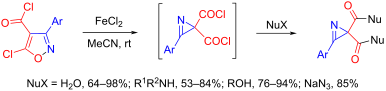
- derivatives [1]. In particular, the catalytic isomerization of 5-chloroisoxazoles allows the generation of azirine-2-carbonyl chlorides, which can be easily converted into a variety of azirine-2-carboxylic acid derivatives by reactions with nucleophilic reagents. Using this approach, numerous 2-(1H-pyrazol-1




Direct trifluoroethylation of carbonyl sulfoxonium ylides using hypervalent iodine compounds
Beilstein J. Org. Chem. 2024, 20, 3182–3190, doi:10.3762/bjoc.20.263
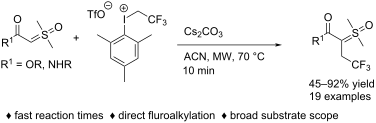
- fluoroalkyliodonium salts as sources of electrophilic trifluoroethyl synthon. Given the non-nucleophilic nature of the iodoarene byproduct, this protocol should not suffer from further reactivity that decomposes the ylide. We describe here the coupling of α-carbonyl sulfoxonium ylides with polyfluoroalkyl(aryl
- arene moieties. These observations confirmed the LUMO as an appropriate lobe for nucleophilic attack via the SN2 pathway (path 2), and confirmed the LUMO+1 as an appropriate lobe for substitution via reductive elimination (path 1). As such, neither mechanism could be immediately discarded, and we were


Controlled oligomerization of [1.1.1]propellane through radical polarity matching: selective synthesis of SF5- and CF3SF4-containing [2]staffanes
Beilstein J. Org. Chem. 2024, 20, 3134–3143, doi:10.3762/bjoc.20.259
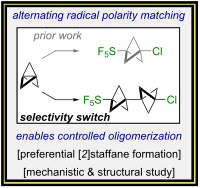
- , e.g., a radical or cation) on the transannular carbon atom of a bicyclopentyl moiety can interact through space [35][63][64]. The consequence is ostensibly that more "nucleophilic" INT2 and INT5 are better matched for Cl atom abstraction from the "electrophilic" reagent (SF5Cl or CF3SF4Cl). To test
- becomes more negative (or less positive) the farther it is from either the SF5 or CF3SF4 substituent, consistent with the notion that it becomes more nucleophilic. Moreover, the Δq is largest between the first two intermediates in both series – INT1 vs INT2 and INT3 vs INT4 – indicating that the most
- [72][73][74]. The data show that BCP has a higher N value – thus stronger nucleophilic tendency – compared to both SF5Cl and CF3SF4Cl. Conversely, comparison of ω values shows significantly higher electrophilicity of SF5Cl and CF3SF4Cl compared to BCP. These results, coupled with decreasing ω and


Hypervalent iodine-mediated intramolecular alkene halocyclisation
Beilstein J. Org. Chem. 2024, 20, 3113–3133, doi:10.3762/bjoc.20.258
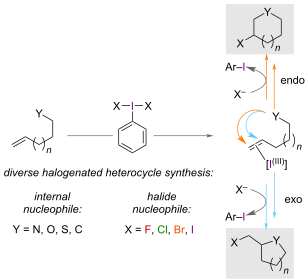
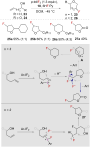
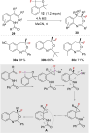
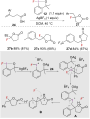
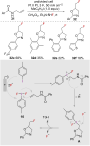
- firstly through the coordination of an alkene by the HVI reagent, which activates it toward intramolecular attack by an internal nucleophile. Following this, substitution of the iodane(III) can occur from the nucleophilic halide in solution to reveal the halo-cyclised product (Figure 2). In this review
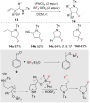
- fluoride ion to displace PhI. In pathway B (bottom), the nitrogen is oxidised by the iodane, generating an electrophilic intermediate B. Nucleophilic attack by the double bond subsequently forms the 6-membered ring intermediate C, which is either immediately attacked by fluoride to form both cis and trans
- ring A (Scheme 2). The Pd(II) intermediate is oxidised by PhI(OPiv)2/AgF, forming Pd(IV). Formation of the product can occur either by reductive elimination by Pd(IV) or SN2 nucleophilic attack by fluorine with concomitant palladium reduction. Reductive elimination of the Pd(II) intermediate forms the



















Advances in the use of metal-free tetrapyrrolic macrocycles as catalysts
Beilstein J. Org. Chem. 2024, 20, 3085–3112, doi:10.3762/bjoc.20.257
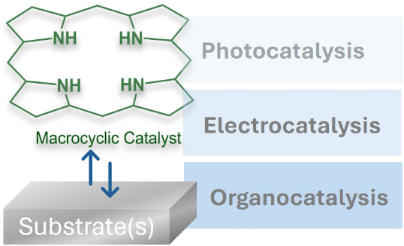
- (Table 5). DFT calculations predicted that the catalytically active species is the adduct of porphyrin and TBACl (18-I), which forms an activated complex (18-II) with the substrate followed by a ring-opening nucleophilic attack of Cl−. The electron-rich nitrogen atom in 18-III further activates


Chemical structure metagenomics of microbial natural products: surveying nonribosomal peptides and beyond
Beilstein J. Org. Chem. 2024, 20, 3050–3060, doi:10.3762/bjoc.20.253

- thioesterase (TE) domain and determines the topology of the final NRP product. The TE may release the NRP as a linear peptide or cyclic peptide, and the latter further manifests many possible topologies (Figure 5b). In a nutshell, offloading is a TE-catalyzed nucleophilic attack to release an NRP from the
- offloading step always entails the same chemical reaction, wherein nucleophilic attack is promoted by the catalytic triad of a TE via general base catalysis. This is likely why traditional mechanistic studies that focused on the enzyme active site failed to work out how TEs control NRP topology. A priori
- , respectively. Based on the position of the nucleophile, a NRP can be cyclized head-to-tail, via an amino acid side-chain, a nucleophilic heteroatom on the N-terminal fatty acyl chain, or as a multimer of repeating sub-structures (Figure 5b). The ring size, ratio of ʟ- and ᴅ-amino acids, etc. may also be the


Cyclodextrin-based rotaxanes for polymer materials: challenge on simultaneous realization of inexpensive production and defined structures
Beilstein J. Org. Chem. 2024, 20, 3026–3049, doi:10.3762/bjoc.20.252
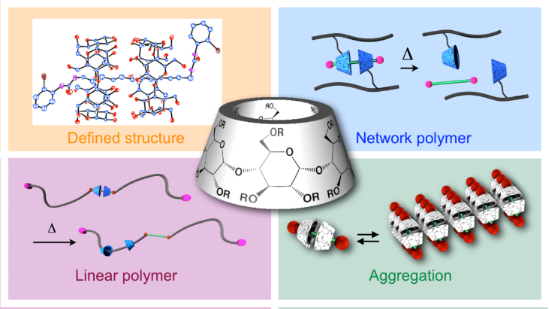
- structure in the early days. Rotaxane bearing a dumbbell comprising only covalent bonds was first reported by Harada and co-workers in 1997 (Scheme 1B) [38]. In this system, the end-capping reaction was based on the nucleophilic substitution of the amino groups on the axle ends. Afterward, such nucleophilic
- synthesis, Harada and co-workers reported the end-capping reaction based on nucleophilic substitution by the amino groups on axle ends (Scheme 2) [43]. Similarly, other highly efficient reactions have been performed as end-capping reactions to produce polyrotaxane [13][14][15]. In addition to the simple






Advances in radical peroxidation with hydroperoxides
Beilstein J. Org. Chem. 2024, 20, 2959–3006, doi:10.3762/bjoc.20.249
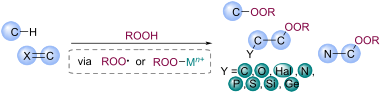
- mainly include: nucleophilic addition or nucleophilic substitution with H2O2 or ROOH [17][18], autoxidation with O2, pericyclic reactions of unsaturated bonds with O3 or O2, and metal-catalyzed peroxidation (Isayama–Mukaiyama hydrosilylperoxidation [19][20], for example) [21][22][23]. As the topic is
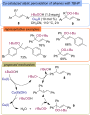
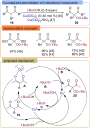
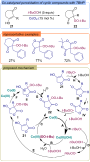
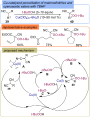
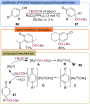
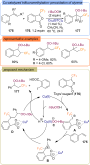
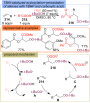
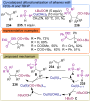
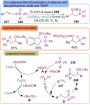
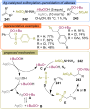
- generate the nucleophilic carbon radical B. The intramolecular 1,5-HAT of B provided the alkyl radical C, which then cross-coupled with the in situ-generated high-valent Mnn+1OO-t-Bu species to form the 1,6-difunctionalized product 42 via peroxy-ligand transfer. The remote trifluoromethylthiolation
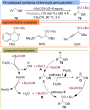
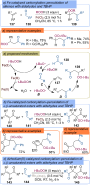
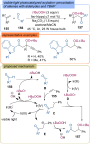
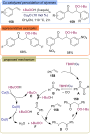
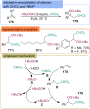
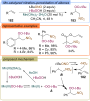
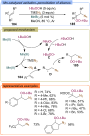
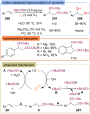
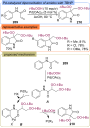
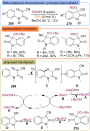
- be generated by nucleophilic attack of the tert-butylperoxy radical to the radical intermediate A or TBHP to the carbocation intermediate B. Using carboxylic acids 215 and TBHP, the synthesis of β-peroxy-α-acyloxy derivatives 216 was developed via the TBAI-promoted acyloxylation–peroxidation of































Synthesis of fluorinated acid-functionalized, electron-rich nickel porphyrins
Beilstein J. Org. Chem. 2024, 20, 2954–2958, doi:10.3762/bjoc.20.248
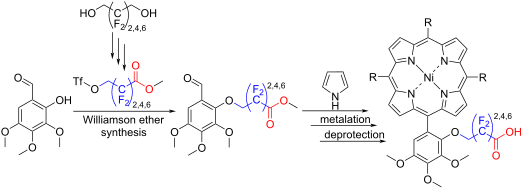
- 20 in a yield of 89% [13]. To convert the iodo to an OH group, compound 20 was reacted with Cu2O, 2-pyridinaldoxime and CsOH to give 2-hydroxy-3,4,5-trimethoxybenzaldehyde (21, 65%) [13]. In a subsequent nucleophilic substitution, the fluorinated alkyl chains of 16, 17, and 18 were linked via a


gem-Difluorovinyl and trifluorovinyl Michael acceptors in the synthesis of α,β-unsaturated fluorinated and nonfluorinated amides
Beilstein J. Org. Chem. 2024, 20, 2946–2953, doi:10.3762/bjoc.20.247
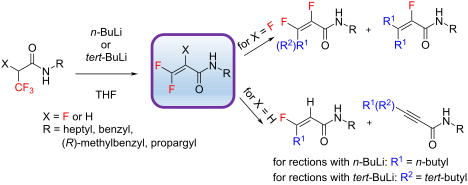
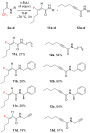
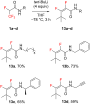
- synthesis, e.g., via pericyclic reactions or nucleophilic additions. Results and Discussion We commenced our research by screening the nature of the base to generate carbanion at alpha position. We chose 2,3,3,3-tetrafluoro-N-heptylpropanamide, obtained according to the procedure developed earlier in our




Recent advances in transition-metal-free arylation reactions involving hypervalent iodine salts
Beilstein J. Org. Chem. 2024, 20, 2891–2920, doi:10.3762/bjoc.20.243

- compounds (Scheme 16) [68]. The novel iodine(III) intermediate was generated through nucleophilic substitution of a heteroatom nucleophile, which initiated the reaction. A subsequent aryl migration from the iodine to the heteroatom resulted in the formation of the arylated nucleophile. In addition to
- diaryliodonium salts 40 (Scheme 18) [69], which however, does not produce the diarylated compounds. The intramolecular aryl migration from the iodine to the nitrogen leads to a quaternary ammonium ion intermediate A. Consequently, a nucleophilic ring opening of cyclic amine in 42 occurred via cleavage of the
- intramolecular. In the presence of a base, the triflate anion is extracted, forming a cationic trifluoromethanesulfonyl group as an intermediate. Thus, the products are believed to form via a sulfonyl-directed nucleophilic aromatic substitution pathway. Finally, the products are obtained through the dissociation




C–H Trifluoromethylthiolation of aldehyde hydrazones
Beilstein J. Org. Chem. 2024, 20, 2883–2890, doi:10.3762/bjoc.20.242
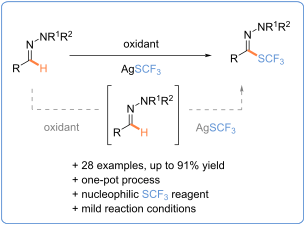
- of 5-thioxo-1,2,4-triazolium inner salts by the nucleophilic thiocyanation of N,N-dialkylhydrazonoyl bromides, in situ generated from aldehyde-derived hydrazones in the presence of an oxidant (NBS, (NH4)2S2O8), Scheme 1). In 2024, the synthesis of 2‑imino-1,3,4-thiadiazoles was achieved by
- % yield) using readily available reagents, namely NBS and the nucleophilic reagent AgSCF3. This approach provides a straightforward access to an unprecedented class of trifluoromethylthiolated derivatives. This method offers new avenues for synthesizing a plethora of valuable SCF3-containing molecules


Synthesis of pyrrole-fused dibenzoxazepine/dibenzothiazepine/triazolobenzodiazepine derivatives via isocyanide-based multicomponent reactions
Beilstein J. Org. Chem. 2024, 20, 2870–2882, doi:10.3762/bjoc.20.241
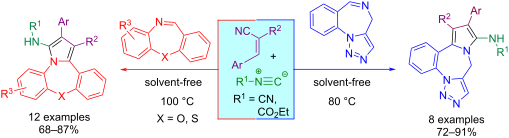
- addition to the application of isocyanides in a variety of MCRs, one of the unique reactions involves the formation of zwitterions from isocyanides upon reaction with acetylene and active olefin compounds such as alkyl acetylenedicarboxylates and gem-diactivated olefins. Due to having nucleophilic and
- electron-donating substituents (Scheme 3). The cause of this phenomenon is probably related to the electron-widthdawing effect of these substitution groups in olefin, which affects the nucleophilic attack of the isocyanides. When a carboxylate substituent was present instead of the carbonitrile in the gem
- synthesizing pyrrole-fused dibenzoxazepine is illustrated in Scheme 5. The reaction is initiated by the nucleophilic attack of the isocyanide 2 on the gem-diactivated olefin 1 to give the zwitterion intermediate 7. The reaction proceeds with the nucleophilic attack of the zwitterion intermediate 8 on the






Multicomponent synthesis of α-branched amines using organozinc reagents generated from alkyl bromides
Beilstein J. Org. Chem. 2024, 20, 2834–2839, doi:10.3762/bjoc.20.239
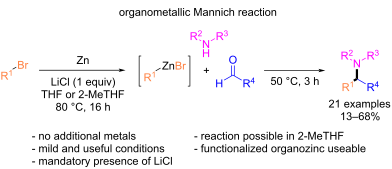
- reagents is rather limited. Indeed, most examples involve dimethyl- or diethylzinc compounds as more elaborated dialkylzinc reagents represent a considerable synthetic challenge. Indeed, dialkylzinc reagents are accessible essentially through nucleophilic displacement of ZnCl2 by Grignard reagents or
- remains tenuous. Indeed, until recently, mixed alkylzinc species were only employed by Carretero and co-workers in related nucleophilic additions to activated imines under Cu catalysis [22]. In 2022, our group demonstrated that alkyl iodides offer a reliable source of heteroleptic organozinc compounds
- nucleophilic organozincate complexes (e.g., LiBuZnBrCl), which is a well-established process in THF [29][30]. Due to the hygroscopic character of LiCl and the necessity to determine the amount of organozinc by iodolysis [20] in order to adjust the stoichiometry of the reagents for the multicomponent coupling


Synthesis of tricarbonylated propargylamine and conversion to 2,5-disubstituted oxazole-4-carboxylates
Beilstein J. Org. Chem. 2024, 20, 2827–2833, doi:10.3762/bjoc.20.238

- -acylamine; oxazole; propargylamine; Introduction Propargylamine is an important motif in the synthesis of heterocyclic compounds [1][2][3][4] and drug discovery [5][6] due to its multifunctionality, which includes a basic and nucleophilic amino group, an electrophilic and dipolarophilic triple bond, and an
- ] because of their easily modifiable dipeptide frameworks. Several methods exist for accessing PCPAs, such as the amination of 1-halo-1-alkynes [16][17], tandem reactions of α-imino esters with nucleophiles and electrophiles [18], and the nucleophilic addition of an acetylide to α-carbonylated N-acylimines
- derivative has been employed (Scheme 1) [13][14]. Recently, we have demonstrated that the central carbonyl group of DEMO is highly electrophilic, facilitating the nucleophilic addition of less reactive reagents such as acid amides [23][24][25][26]. When the reaction was conducted in the presence of acetic


Synthesis and antimycotic activity of new derivatives of imidazo[1,2-a]pyrimidines
Beilstein J. Org. Chem. 2024, 20, 2806–2817, doi:10.3762/bjoc.20.236
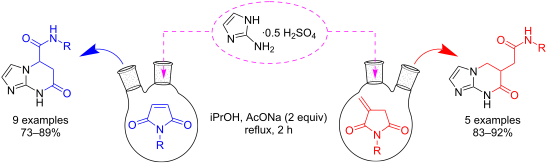
- polyfunctional precursors 1, 2, and 3, two pathways are theoretically possible (Scheme 2 and Scheme 3). The first one involves the N-nucleophilic Michael addition to the activated multiple bond of the imide, leading to the formation of linear intermediates 6 or 8 (pathways A1 and B1) at the expense of the endo
- imidazole nucleophilic center not involved in the first step. This process leads to the formation of alternative final products: imidazo[1,2-a]imidazoles 10 and 12, imidazo[1,5-a]pyrimidines 4, 5, 11 and 14, and imidazo[1,2-a]diazines 13 and 15. The analysis of the spectral data (1H and 13C NMR, 2D NMR


Mechanochemical difluoromethylations of ketones
Beilstein J. Org. Chem. 2024, 20, 2799–2805, doi:10.3762/bjoc.20.235
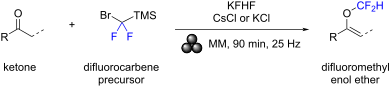
- by these findings, we now explored difluoromethylation reactions with compounds bearing less nucleophilic functional groups. Ketones caught our particular attention as they contain a weak nucleophilic carbonyl oxygen adjacent to an electrophilic carbonyl carbon. Previous studies have focused on
- with the generation of difluorocarbene from TMSCF2Br and KFHF. This is followed by a nucleophilic attack of the oxygen atom of ketone 1 on the difluorocarbene. Subsequently, a protonation–deprotonation sequence occurs, which can either be intermolecular, involving a molecule of HF, or intramolecular


Copper-catalyzed yne-allylic substitutions: concept and recent developments
Beilstein J. Org. Chem. 2024, 20, 2739–2775, doi:10.3762/bjoc.20.232
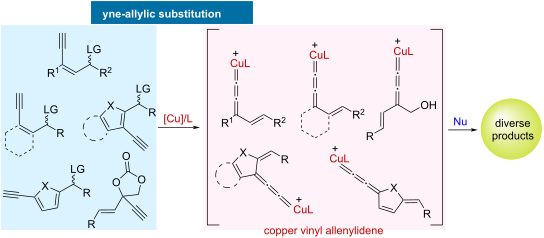
- were found to be suitable for the reaction, delivering 1,3-enynes with medium to high yields and excellent regioselectivities (Scheme 3, 3a–e, 3n–p). Interestingly, when the 3-position of indole was blocked by a methyl group, the 2-position of indole underwent nucleophilic attack with an E/Z ratio of 2
- chelation interaction between the enolate derived from acyclic 1,3-dicarbonyl compounds and copper (Scheme 5, 8a–j). Detailed control experiments indicate that the terminal alkyne moiety is critical and the reaction proceeds through an SN1 mechanism. An outer-sphere nucleophilic attack through copper
- acetylide-bonded allylic cation as the key intermediate is proposed (Scheme 6a). It is worth noting that the nucleophilic attack favors a less sterically hindered site. Therefore, disubstituted alkene moiety prefers γ-attack while trisubstituted alkene moiety is inclined to α-attack (Scheme 6b). Lin and He


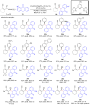


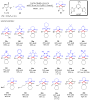


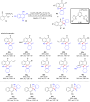


Synthesis of benzo[f]quinazoline-1,3(2H,4H)-diones
Beilstein J. Org. Chem. 2024, 20, 2708–2719, doi:10.3762/bjoc.20.228
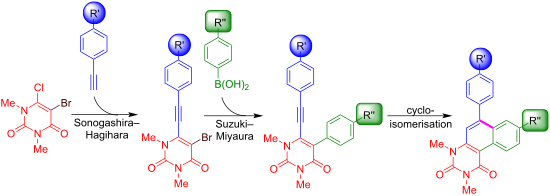
- likely by nucleophilic aromatic substitution during aqueous workup. Interestingly, electron-donor groups, such as N,N-dimethylamino, proved to be beneficial in terms of yield when they are located at the alkyne-linked aryl group (Scheme 4a). In contrast, the N,N-dimethylanilino group is disadvantageous




5th International Symposium on Synthesis and Catalysis (ISySyCat2023)
Beilstein J. Org. Chem. 2024, 20, 2704–2707, doi:10.3762/bjoc.20.227
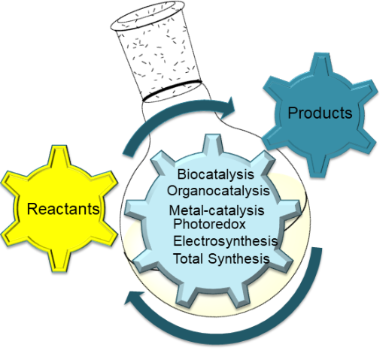
- preparation of biologically active compounds [15]. The synthesis was achieved via a sulfonyl group rearrangement driven by the azide–tetrazole equilibrium in quinazolines. The researchers utilized two synthetic pathways to prepare the target compounds. The first pathway involved a nucleophilic aromatic
- nucleophilic substitution reaction between cyanuric chloride and 4-aminophenylphosphonate or 4-hydroxyphenylphosphonate derivatives. These synthesized dopants were used to prepare the modified Nafion membranes using a casting methodology. Almodovar and Tomé reported the synthesis and characterization of nine

Synthesis of fluoroalkenes and fluoroenynes via cross-coupling reactions using novel multihalogenated vinyl ethers
Beilstein J. Org. Chem. 2024, 20, 2691–2703, doi:10.3762/bjoc.20.226

- blocks. When using them as nucleophilic reagents [15][16][17][18][19][20], the reaction between anion species, such as fluorine-containing Horner–Wadsworth–Emmons reagents, and carbonyl compounds led to E-selective olefination (Scheme 1A) [15]. On the other hand, some reactions with electrophilic


Computational design for enantioselective CO2 capture: asymmetric frustrated Lewis pairs in epoxide transformations
Beilstein J. Org. Chem. 2024, 20, 2668–2681, doi:10.3762/bjoc.20.224
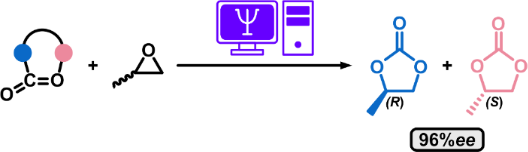
- initial study, it can be concluded that the mechanism for our system proceeds according to mechanism two. The following simulations were performed on this conclusion. Regioselectivity PO exhibits two distinct electrophilic sites, which can be subject to nucleophilic attack (Figure 2B). Thus, the





