Search results
Search for "catalysis" in Full Text gives 1304 result(s) in Beilstein Journal of Organic Chemistry. Showing first 200.
Synthesis and reactivity of the di(9-anthryl)methyl radical
Beilstein J. Org. Chem. 2024, 20, 2254–2260, doi:10.3762/bjoc.20.193
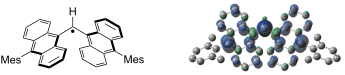
- Tomohiko Nishiuchi Kazuma Takahashi Yuta Makihara Takashi Kubo Department of Chemistry, Graduate School of Science, Osaka University, 1-1 Machikaneyama, Toyonaka, Osaka 560-0043, Japan Innovative Catalysis Science Division, Institute for Open and Transdisciplinary Research Initiatives (ISC-OTRI
- . Keywords: anthracene; cation; dimerization; radical; reactivity; Introduction Organic radicals have garnered significant attention in various research fields, including catalysis [1][2][3][4], chromophores [5][6][7][8], and as agents in dynamic nuclear polarization [9][10][11][12]. Recently, highly stable


Heterocycle-guided synthesis of m-hetarylanilines via three-component benzannulation
Beilstein J. Org. Chem. 2024, 20, 2208–2216, doi:10.3762/bjoc.20.188
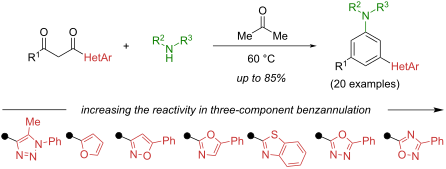
- ) demonstrates the synthetic utility of the developed method. Keywords: aniline; benzannulation; condensation; 1,3-diketone; Hammett constants; terphenyl; Introduction The aniline moiety is omnipresent in the synthetic chemistry with applications ranging from building blocks to catalysis [1][2][3][4]. Among
- 2356151). No significant improvement in the yield was observed by varying the reaction conditions. Surprisingly, the reaction of 1,3-diketone 1a, morpholine and acetone without the use of molecular sieves and acid catalysis (conditions A) resulted in 81% yield of meta-substituted aniline 3ab. Applying the


Natural resorcylic lactones derived from alternariol
Beilstein J. Org. Chem. 2024, 20, 2171–2207, doi:10.3762/bjoc.20.187
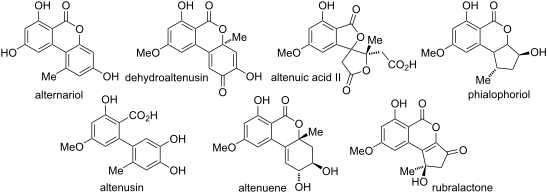
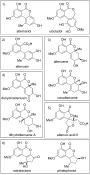
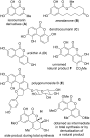
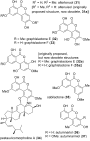
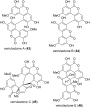
- polyketide synthase (PKS) into account [25], since polyketides like zearalenone are synthesized by means of a type I PKS [22][26], while alternariol and its derivatives are likely to be obtained by catalysis with a PKS of type II [27] or possibly of type III [28]. However, no reliable information in this






Novel truxene-based dipyrromethanes (DPMs): synthesis, spectroscopic characterization and photophysical properties
Beilstein J. Org. Chem. 2024, 20, 2163–2170, doi:10.3762/bjoc.20.186
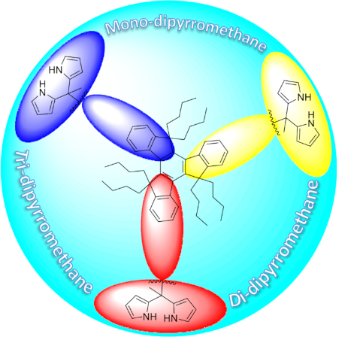
- ), organogels, molecular wires, self-assembly and so forth [14][15][16][17][18][19][20][21][22][23][24][25]. Moreover, nowadays these invaluable compounds have also received great attention of supramolecular chemists, and finds applications in sensing, catalysis, donor–acceptor systems, energy transfer and
- potential applications in the arena of supramolecular chemistry in general, sensing, molecular recognition and self-assembly in particular in has yet to be explored. Moreover, applications of the truxene derivatives in catalysis are also scared, and needs to be advanced in future research. Experimental


Factors influencing the performance of organocatalysts immobilised on solid supports: A review
Beilstein J. Org. Chem. 2024, 20, 2129–2142, doi:10.3762/bjoc.20.183
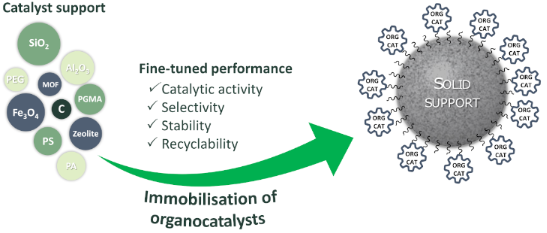
- and an environmental perspective. An efficient catalytic process is characterised by the fact that the catalyst can be easily and, if possible, completely separated from the reaction mixture. Catalysts can be classified into homogeneous and heterogeneous catalysts. In homogeneous catalysis, the
- reaction components and the catalyst are in the same phase. Active catalytic sites are readily accessible to the reactants and therefore generally result in higher catalytic activity and selectivity [8]. As a result, homogeneous catalysis is generally preferred to heterogeneous catalysis, especially in the
- recycling of homogeneous catalysts can be addressed by heterogenisation of homogeneous catalysts [10], either following their application as homogeneous catalysts or before their application (heterogeneous catalysis). In heterogeneous catalysis, catalysts and reactants are present in different phases


Efficacy of radical reactions of isocyanides with heteroatom radicals in organic synthesis
Beilstein J. Org. Chem. 2024, 20, 2114–2128, doi:10.3762/bjoc.20.182
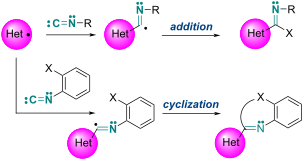
- reaction into B–H or B–B bonds has been reported, but the reactions by a radical mechanism are largely unknown. Very recently, Turlik and Schuppe reported a novel generation of nucleophilic boryl radicals using hydrogen atom transfer (HAT) and photoredox catalysis. Furthermore, its reaction with


Computational toolbox for the analysis of protein–glycan interactions
Beilstein J. Org. Chem. 2024, 20, 2084–2107, doi:10.3762/bjoc.20.180
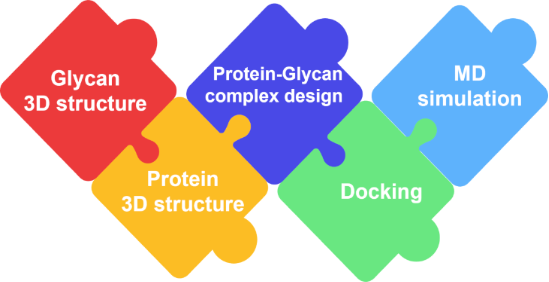
- events affecting the health and well-being of living organisms and the natural environment. Being key participants in the molecular dialogue, glycan binding proteins emerge as fascinating and critical components of molecular events that regulate life at its core. Their functions span from the catalysis


Multicomponent syntheses of pyrazoles via (3 + 2)-cyclocondensation and (3 + 2)-cycloaddition key steps
Beilstein J. Org. Chem. 2024, 20, 2024–2077, doi:10.3762/bjoc.20.178

- pyrazole synthesis is the synthetic accessibility of hydrazines. To circumvent this limitation, arylboronic acids can be coupled with Boc-protected diimide 23 under copper catalysis to form the hydrazine precursor in situ. Subsequent removal of the Boc groups and cyclocondensation with 1,3-dicarbonyl
- addition to form the corresponding trispyrazole 35 (Scheme 10) [61]. Similarly, aromatic aldehydes furnish the corresponding bispyrazolylmethanes either under ultrasound irradiation in low-boiling solvents [62] or under Ag/TiO2 catalysis [63]. In addition to 1,3-dicarbonyl compounds, 1,3,5-tricarbonyl
- solvents (DES) [83]. Catalysis can also be achieved using molecular iodine [84], AlCl3 [85], sodium ascorbate [86], and even solid-state and nanoparticle-mediated catalysts like CuO/ZrO2 [87], Fe3O4@Si@MoO2 [88], caspacin-cyclodextrin functionalized magnetite nanoparticles (CPS CD) [89], and Mg-Fe




Understanding X-ray-induced isomerisation in photoswitchable surfactant assemblies
Beilstein J. Org. Chem. 2024, 20, 2005–2015, doi:10.3762/bjoc.20.176
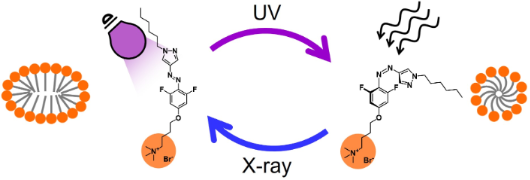
- guidelines for future X-ray experiments using photoswitchable molecules, which can aid more accurate understanding of these materials for application in solar energy storage, catalysis or controlled drug delivery. Keywords: arylazopyrazole; azobenzene; micelle; photoswitch; X-ray; Introduction The design
- hydrophilicity [6]. This, in turn, affects the interfacial and self-assembly properties of the PS [4][5][6]. The uniquely tuneable properties of these photoswitchable molecules have led to their successful application in areas such as DNA compaction [8], photorheological fluids [9][10] and micellar catalysis [11
- guidelines for X-ray experiments using photoswitchable molecules, which is required to ensure these systems are understood accurately on designing them for applications such as solar energy storage [32], catalysis [11] or drug delivery [3]. Results and Discussion Effect of light irradiation First, in-situ UV



Development of a flow photochemical process for a π-Lewis acidic metal-catalyzed cyclization/radical addition sequence: in situ-generated 2-benzopyrylium as photoredox catalyst and reactive intermediate
Beilstein J. Org. Chem. 2024, 20, 1973–1980, doi:10.3762/bjoc.20.173
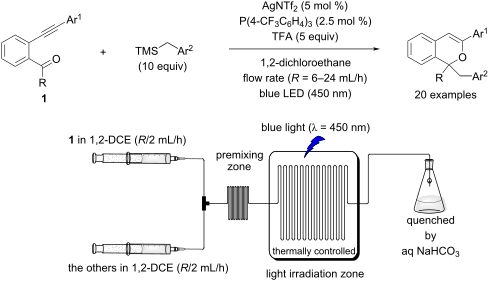
- , experimental procedures, and characterization data. Supporting Information File 30: Copies of NMR spectra. Funding This work was partially supported by a Grant-in-Aid for Scientific Research on Innovative Areas “Hybrid Catalysis for Enabling Molecular Synthesis on Demand” (JP17H06447) and a Grant-in-Aid for
- Transformative Research Areas (A) “Green Catalysis Science for Renovating Transformation of Carbon-Based Resources” (JP23H04908) from MEXT, Japan and a Grant-in-Aid for Young Scientists (JP19K15552) from JSPS.


Negishi-coupling-enabled synthesis of α-heteroaryl-α-amino acid building blocks for DNA-encoded chemical library applications
Beilstein J. Org. Chem. 2024, 20, 1922–1932, doi:10.3762/bjoc.20.168
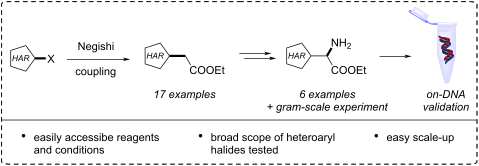
- , this approach was applied to the synthesis of N-substituted pyrazoles and poly-substituted isothiazoles [24][25]. Glycine derivatives can be reacted with indoles using copper catalysis or metallophotoredox catalysis [26]. Le et al. reported the use of the same approach for imidazo[1,2-a]pyridines [27


A facile three-component route to powerful 5-aryldeazaalloxazine photocatalysts
Beilstein J. Org. Chem. 2024, 20, 1831–1838, doi:10.3762/bjoc.20.161
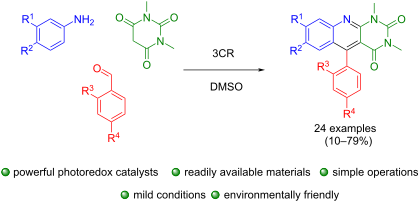
- bearing electron-donating or halogen groups. This practical method is characterised by atom economy and offers a direct route to the introduction of an aryl moiety into the C(5)-position of deazaalloxazines, thereby generating novel catalysts for photoredox catalysis without the need for subsequent
- purification. Thus, it significantly improves existing approaches. Keywords: catalysis; deazaalloxazine; flavin; multicomponent approach; one-pot reaction; Introduction Heterocyclic compounds containing pyrimidine and quinoline motifs in their structure, both of natural and synthetic origin, find a wide set
- of applications in medicinal chemistry, chemosensors, polymers and catalysis [1][2][3][4][5][6][7][8]. Among them, flavins (Fl) are essential redox-active natural compounds that act as enzyme cofactors in numerous biochemical processes [9]. Structurally related to flavins are isomeric alloxazines




Hetero-polycyclic aromatic systems: A data-driven investigation of structure–property relationships
Beilstein J. Org. Chem. 2024, 20, 1817–1830, doi:10.3762/bjoc.20.160
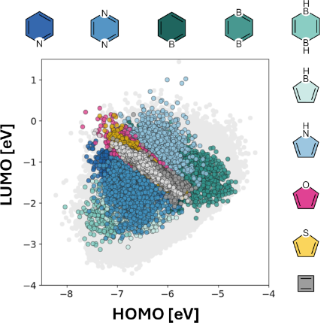
- Sabyasachi Chakraborty Eduardo Mayo Yanes Renana Gershoni-Poranne Schulich Faculty of Chemistry and the Resnick Sustainability Center for Catalysis, Technion – Israel Institute of Technology, Haifa 32000, Israel 10.3762/bjoc.20.160 Abstract Polycyclic aromatic systems (PASs) are pervasive


Chiral bifunctional sulfide-catalyzed enantioselective bromolactonizations of α- and β-substituted 5-hexenoic acids
Beilstein J. Org. Chem. 2024, 20, 1794–1799, doi:10.3762/bjoc.20.158
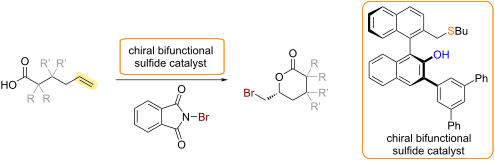
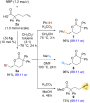
- without substituents on the carbon–carbon double bond have remained a formidable challenge. To address this limitation, we report herein the asymmetric bromolactonization of 5-hexenoic acid derivatives catalyzed by a BINOL-derived chiral bifunctional sulfide. Keywords: asymmetric catalysis
- research fellowship (DC2). T.M. thanks the Nagasaki University for a planetary health research fellowship. This work was supported by JSPS KAKENHI (Grant Numbers 23K04752 for S. Shirakawa & 24KJ1826 for K.O.), and the Joint Usage/Research Center for Catalysis (24DS0655 for S. Shirakawa).


Oxidative fluorination with Selectfluor: A convenient procedure for preparing hypervalent iodine(V) fluorides
Beilstein J. Org. Chem. 2024, 20, 1785–1793, doi:10.3762/bjoc.20.157
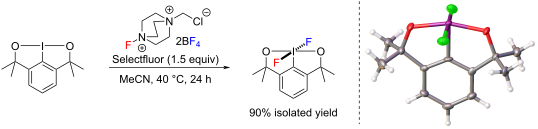
- stability and is highly hygroscopic, it is often prepared in situ and Gilmour [3][4][5][6][7][8] has reported a range of fluorination protocols utilising hypervalent iodine(I/III) catalysis (Scheme 1A). Lennox has also demonstrated that 1 can be generated cleanly by electrochemical oxidation [9][10]. In an


Chemo-enzymatic total synthesis: current approaches toward the integration of chemical and enzymatic transformations
Beilstein J. Org. Chem. 2024, 20, 1693–1712, doi:10.3762/bjoc.20.151
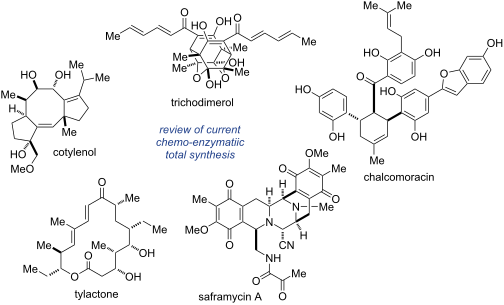
- through directed evolution [11]. P450 catalysis during the oxidation phase enabled the total synthesis of mitrephorone A [12], chevalone A [13], polysin [14], excolide B [15], and gedunin [16]. Fe(II)/2OG-dependent dioxygenases, such as FtmOx1, were employed as versatile catalysts in the synthesis of 13
- deprotonation to form exomethylene. Subsequent in situ removal of the silyl protecting groups led to the total synthesis of brassicicene K (27). Thus, the biosynthetic proposal featuring the Wagner–Meerwein-type skeletal rearrangement (9→11) through the catalysis of P450 enzyme BscF was successfully emulated by
- catalysis with chemical synthesis [86]. By taking advantage of the chemo-enzymatically accessible 4, Sherman and co-workers further implemented the systematic total synthesis of juvenimicins and the M-4365 series via enzymatic and chemical late-stage modifications (Scheme 8B) [68]. In vivo glycosylation


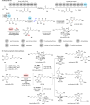
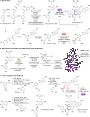


Methyltransferases from RiPP pathways: shaping the landscape of natural product chemistry
Beilstein J. Org. Chem. 2024, 20, 1652–1670, doi:10.3762/bjoc.20.147
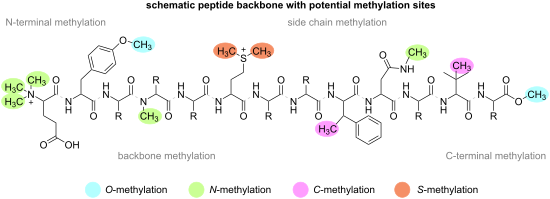
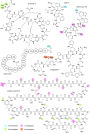
- , PDB ID: 6UAK (https://doi.org/10.2210/pdb6UAK/pdb), [72]. The residues involved in SAH binding are depicted in red. Reaction scheme of the PAMT´s catalysis, leading to the enzymatic conversion of aspartate to aspartyl-O-methyl ester, followed by a two-step non-enzymatic conversion via succinimide




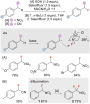
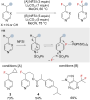
Benzylic C(sp3)–H fluorination
Beilstein J. Org. Chem. 2024, 20, 1527–1547, doi:10.3762/bjoc.20.137

- . This review aims to give context to these transformations and strategies, highlighting the different tactics to achieve fluorination of benzylic C–H bonds. Keywords: benzylic; C–H functionalization; fluorination; photoredox catalysis; Introduction The development of new fluorination methodologies is
- monofluorination radiolabelling using [18F]NFSI. Electrophilic fluorination of benzylic C–H bonds has been demonstrated as a powerful approach. However, these techniques can be constrained to defined substrate classes and the requirement of using strong bases. Palladium catalysis Palladium-catalysed chemistry is
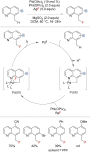
- solubility issues of metal fluoride salts, safety issues with hydrogen fluoride, poor nucleophilicity [79], and side reactivity as a base [75][79], a few elegant examples of nucleophilic benzylic C(sp3)–H fluorination have been reported. Metal catalysis Fluoride sources have been used in combination with








Primary amine-catalyzed enantioselective 1,4-Michael addition reaction of pyrazolin-5-ones to α,β-unsaturated ketones
Beilstein J. Org. Chem. 2024, 20, 1518–1526, doi:10.3762/bjoc.20.136
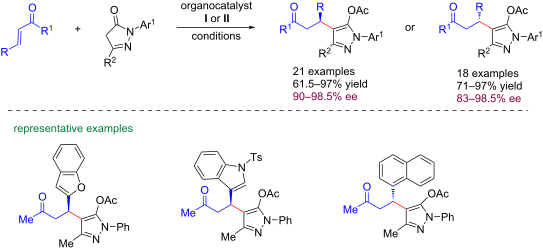
- yields (up to 97%) and high enantioselectivities (up to 98.5% ee) under mild reaction conditions. In addition, this protocol was further expanded to synthesize highly enantioenriched hybrid molecules bearing biologically relevant heterocycles. Keywords: α,β-unsaturated ketones; iminium catalysis
- -covalent catalysis via bifunctional hydrogen-bonding organocatalysts. The C-4 nucleophilicity of pyrazolin-5-ones was also explored in enantioselective reactions with α,β-unsaturated carbonyl compounds through covalent catalysis with chiral amine-based catalysts; however, it has achieved limited success




Tetrabutylammonium iodide-catalyzed oxidative α-azidation of β-ketocarbonyl compounds using sodium azide
Beilstein J. Org. Chem. 2024, 20, 1510–1517, doi:10.3762/bjoc.20.135
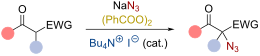
- catalysis concept for such transformations [32][33][34][35][36]. These oxidative approaches, which usually proceed via the in situ formation of catalytically-competent ammonium hypoiodite species, can normally be carried out under operationally simple conditions, thus allowing for the use of easily
- remarkable advancement in this field (Scheme 1B [31]). In contrast to previous oxidative quaternary ammonium iodide catalysis reports [28][29][30], this method does not require the use of TMSN3, thus presenting an efficient oxidative α-azidation protocol utilizing NaN3, which arguably represents the most


Towards an asymmetric β-selective addition of azlactones to allenoates
Beilstein J. Org. Chem. 2024, 20, 1504–1509, doi:10.3762/bjoc.20.134
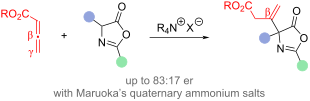
- ; quaternary ammonium salt catalysis; Introduction The development of asymmetric synthesis routes to access non-natural amino acids has for decades been one of the most heavily investigated tasks in organic synthesis and catalysis-oriented research [1][2][3][4][5][6][7][8][9][10][11][12][13]. As a consequence
- variety of asymmetric α-carbo- and α-heterofunctionalization reactions by utilizing different catalysis strategies [20][21][22]. We have recently carried out systematic investigations concerning the syntheses of advanced β-AA by means of asymmetric α-carbofunctionalization reactions and during these
- studies we also realized that the masked β-AA derivatives 2 undergo enantioselective β-addition to allenoates 3 under chiral ammonium salt catalysis (Scheme 1B) [18]. Interestingly, hereby we also found that the use of alternative catalyst systems (i.e., tertiary phosphines) allows for a γ-selective


Electrophotochemical metal-catalyzed synthesis of alkylnitriles from simple aliphatic carboxylic acids
Beilstein J. Org. Chem. 2024, 20, 1497–1503, doi:10.3762/bjoc.20.133
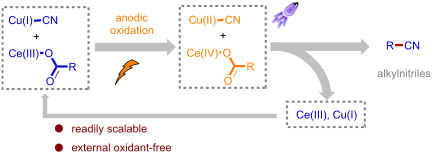
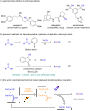
- different types of aliphatic acids including primary ones could be successfully employed (Figure 1B, reaction 1). The groups of Waser [23] and Gonzalez-Gomez [24] reported the direct conversion of aliphatic acids to the corresponding alkylnitriles by merging photoredox catalysis and radical cyanation
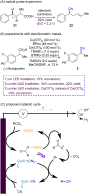
- electrophotochemical transition metal catalysis [26][27][28][29][30][31] as a unique and powerful synthetic platform for radical decarboxylative functionalization of aliphatic carboxylic acids [32][33][34][35][36][37]. In particular, the commonly required high activation energy for radical decarboxylation was provided
- invention of cooperative catalysis with electrochemical transition metal catalysis, which generally has mild oxidation potential for the generation of persistent radicals in the form of nucleophile-bound metal complexes. We and other groups have successfully applied this reaction design to enantioselective


Bioinformatic prediction of the stereoselectivity of modular polyketide synthase: an update of the sequence motifs in ketoreductase domain
Beilstein J. Org. Chem. 2024, 20, 1476–1485, doi:10.3762/bjoc.20.131
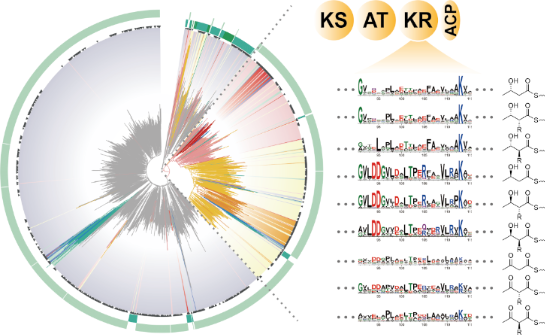
- of DH-ER-KR tridomain (Figure 2c). This finding suggests that the helix αB may have an allosteric interaction with DH or potential large conformational changes between DH and KR during catalysis. Sequence logo analysis of KRC from β-modules Based on the clear stereoselectivity-dependent clades


Predicting bond dissociation energies of cyclic hypervalent halogen reagents using DFT calculations and graph attention network model
Beilstein J. Org. Chem. 2024, 20, 1444–1452, doi:10.3762/bjoc.20.127
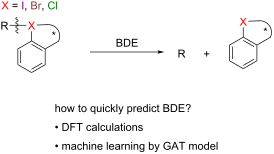
- ; machine learning; Introduction Hypervalent iodine reagents are increasingly gaining attention in the fields of organic synthesis and catalysis due to their environmental benefits, accessibility, and cost-efficiency [1][2][3][4][5][6][7][8][9][10][11]. Over the last three decades, a series of cyclic


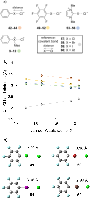
A comparison of structure, bonding and non-covalent interactions of aryl halide and diarylhalonium halogen-bond donors
Beilstein J. Org. Chem. 2024, 20, 1428–1435, doi:10.3762/bjoc.20.125
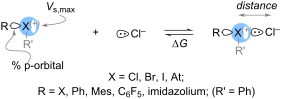
- diarylhalonium salts in halogen-bonding catalysis [13][14][15][16][17][18][19]. Crabtree has outlined the similarity in molecular orbitals (MO) formed in halogen bonds and hypervalent bonds (and hydrogen bonds) [20]. Recently, we [21], and Legault and Huber [22], independently investigated the connection between