


Search results
Search for "macrocycles" in Full Text gives 210 result(s) in Beilstein Journal of Organic Chemistry. Showing first 200.
From steroids to aqueous supramolecular chemistry: an autobiographical career review
Beilstein J. Org. Chem. 2016, 12, 684–701, doi:10.3762/bjoc.12.69
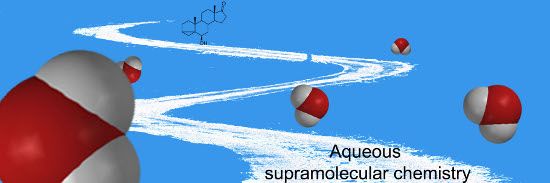
- to be useful hosts, these deep-cavity cavitands also demonstrated that resorcinarenes could be used as covalent templates to form macrocycles. For example, the deep-cavity cavitand shown in Scheme 8 can be treated with excess BBr3 to cleave the four, benzal-bridges and liberate a new family of


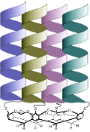


Creating molecular macrocycles for anion recognition
Beilstein J. Org. Chem. 2016, 12, 611–627, doi:10.3762/bjoc.12.60
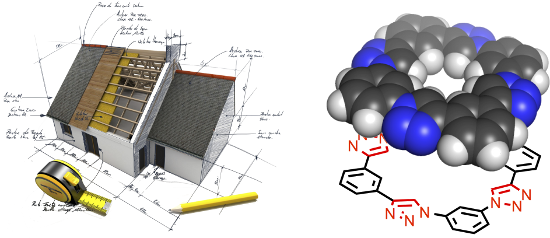
- Amar H. Flood Department of Chemistry, Indiana University, Bloomington, IN 47405, USA 10.3762/bjoc.12.60 Abstract The creation and functionality of new classes of macrocycles that are shape persistent and can bind anions is described. The genesis of triazolophane macrocycles emerges out of
- upon in the creation of two new macrocycles. First, cyanostars are larger and like to capture large anions. Second is tricarb, which also favors large anions but shows a propensity to self-assemble in an orderly and stable manner, laying a foundation for future designs of hierarchical nanostructures
- . Keywords: anion receptors macrocycles self-assembly surface architectures switches; Review “Well, maybe it started that way. As a dream, but doesn’t everything. Those buildings. These lights. This whole city. Somebody had to dream about it first. And maybe that is what I did. I dreamed about coming here


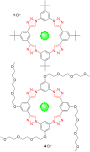


A journey in bioinspired supramolecular chemistry: from molecular tweezers to small molecules that target myotonic dystrophy
Beilstein J. Org. Chem. 2016, 12, 125–138, doi:10.3762/bjoc.12.14
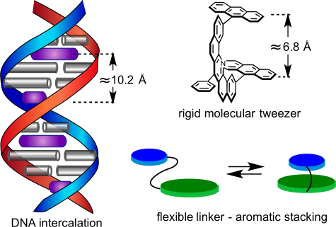
- ; intercalation; macrocycles; multi-target drug discovery; RNA recognition; RNase mimic; Review Early childhood and overview I was born on October 8, 1957 in Evanston, Illinois, the second of three boys. Our parents, Howard E. Zimmerman and Jane Zimmerman, née Kirschenheiter, were very much in love and also
- macrocycle and the act of reading the polymer sequence would have to be performed sequentially rather than random access. Macrocycles make an appearance: macrocyclic bisintercalators and our early efforts to develop DNA probes As just illustrated, one of the major advantages of the molecular tweezer approach


Synthesis and photophysical characteristics of polyfluorene polyrotaxanes
Beilstein J. Org. Chem. 2015, 11, 2677–2688, doi:10.3762/bjoc.11.288
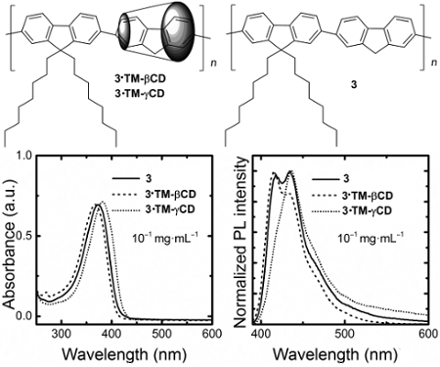
- was also synthesized by coupling 1 with 2 under similar reaction conditions (Scheme 1). TM-βCD and TM-γCD macrocyclic molecules were prepared according to previously reported procedures [47]. 1·TM-βCD and 1·TM-γCD were synthesized in water by using a 2:1 molar ratio of macrocycles and monomer 1. The
- absorption peaks in this interval. Consequently, the disappearance of the characteristic peaks in 1159–1042 cm−1 region in the FTIR spectrum of reference 3 evidences the presence of macrocycles on 3·TM-βCD and 3·TM-γCD, well consistent with 1H NMR results. As expected, the 1H NMR spectrum of 3·TM-βCD
- polarity when the PF core is inside the macrocycles’ cavity. The 3·TM-γCD polyrotaxane copolymer, instead, displays a red-shift of about 8 nm thereby suggesting the presence of some intrachain species. We consider such a red-shift however, not to be sufficient to infer the presence of fluorenone defects



Aggregation behaviour of amphiphilic cyclodextrins: the nucleation stage by atomistic molecular dynamics simulations
Beilstein J. Org. Chem. 2015, 11, 2459–2473, doi:10.3762/bjoc.11.267
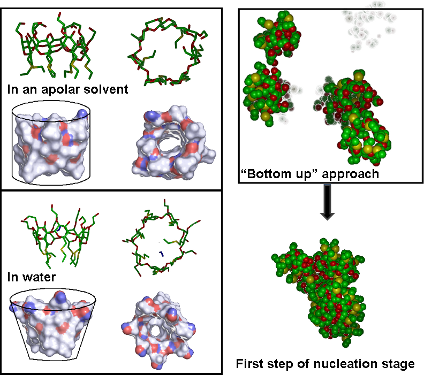
- periodically saved for further analysis. The system equilibration was monitored by the time change of the total and potential energy of the system and of its components, and of relevant intermolecular distances, in particular those between the centres of mass of the interacting macrocycles. Based on these
- H and P groups in neighbouring macrocycles. Thus, in addition to a shallow self-inclusion of an H group, molecule B of Figure 7c shows inclusion of one H group in the macrocycle of C, and of two H groups in the macrocycle of A. Moreover, molecule A shows inclusion of one P group within the
- between the centers of mass of their macrocycles. These molecules are somewhat off-axis so as to optimize the interactions between their H groups that tightly inter-digitate, with a mutual shallow inclusion of a few of them into the cavity of the facing molecule. Furthermore, there is a looser side


Life lessons
Beilstein J. Org. Chem. 2015, 11, 2350–2354, doi:10.3762/bjoc.11.256
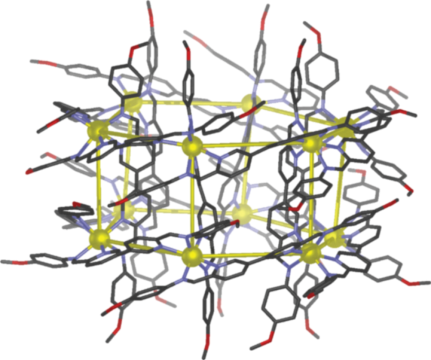
- ) macrocycles [1][2].


Beyond catalyst deactivation: cross-metathesis involving olefins containing N-heteroaromatics
Beilstein J. Org. Chem. 2015, 11, 2223–2241, doi:10.3762/bjoc.11.241
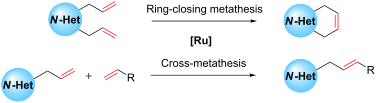
- for avoiding the nitrogen-induced deactivation of the catalyst by both electronic and steric effects (Scheme 22). Macrocycles embedding N-heteroaromatics have been prepared using a RCM reaction. Shirbate et al. used a RCM to synthesize normuscopyridine and analogues [62]. When a diastereomeric mixture
- hindrance may be invoked to explain the absence of catalyst deactivation (Scheme 24). Similarly, 15- to 18-membered ring macrocycles that incorporate an imidazole group were synthesized using a RCM of the corresponding dienes using GII as the catalyst (Scheme 25) [64][65][66]. By examining all these
- involving alkenes containing various N-heteroaromatics. Synthesis of dihydroisoquinoline using a RCM. Formation of tricyclic compound 59. RCM in the synthesis of normuscopyridine. Synthesis of macrocycle 64. Synthesis of macrocycles possessing an imidazole group. Retrosynthesis of an analogue of


Easy access to heterobimetallic complexes for medical imaging applications via microwave-enhanced cycloaddition
Beilstein J. Org. Chem. 2015, 11, 2202–2208, doi:10.3762/bjoc.11.239
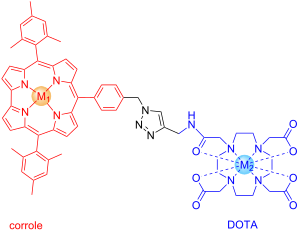
- agents for MRI. Indeed, manganese complexes of DOTA/NOTA macrocycles are thermodynamically less stable than other transition metal ions or Gd3+ analogues [13]. Over the years and to overcome this problem, a variety of Mn(III) porphyrins have been prepared and investigated for their potential use as MRI


Supramolecular chemistry: from aromatic foldamers to solution-phase supramolecular organic frameworks
Beilstein J. Org. Chem. 2015, 11, 2057–2071, doi:10.3762/bjoc.11.222
- Lin. I finished the synthesis of several fluorine-containing macrocycles and published my first research paper in the journal Heterocycles [2]. The starting materials for these macrocycles were initially designed for the preparation of biologically active molecules, which was the main project in this
- laboratory. Using them to prepare new macrocycles became a small independent dissertation project for me. In 1990, I joined Professor Qing-Yun Chen’s group as a Ph.D. candidate. Professor Chen is a distinguished, esteemed Chinese chemist in organic fluorine chemistry. His group developed new
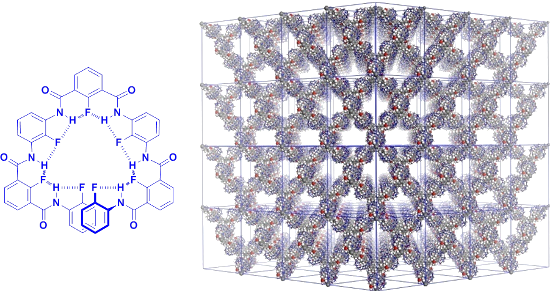
- intramolecular hydrogen bonding, which is typical for aromatic amide backbones [40][41][42]. The diamine and diacyl chloride precursors for 21 had been used by Gong and co-workers to prepare the first family of hydrogen bonding-promoted aromatic amide macrocycles [43]. The main aim for designing these folded


![[Graphic 1]](/bjoc/content/inline/1860-5397-11-222-i19.png?max-width=637&scale=1.18182) 16 and dynamic [2]catenane formed by compounds 17–19.
16 and dynamic [2]catenane formed by compounds 17–19.


Preparative semiconductor photoredox catalysis: An emerging theme in organic synthesis
Beilstein J. Org. Chem. 2015, 11, 1570–1582, doi:10.3762/bjoc.11.173
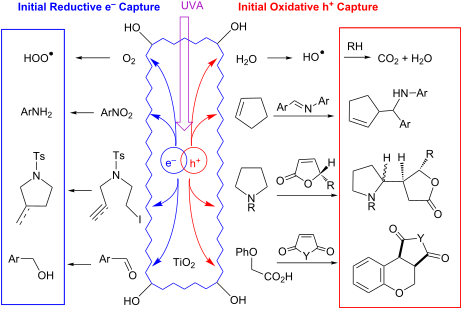
- far accessed include adducts from alkenes and imines, a wide range of heterocycles from ring closures, radical homo-dimers and macrocycles as well as hydrogenated products from nitro-aromatics, alkenes and aldehydes. There is obvious scope for the discovery of additional donor and acceptor precursors







Synthesis and spectroscopic properties of β-triazoloporphyrin–xanthone dyads
Beilstein J. Org. Chem. 2015, 11, 1434–1440, doi:10.3762/bjoc.11.155
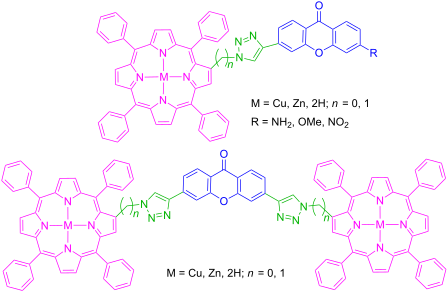
- fluorescence spectra of these porphyrin–xanthone dyads. Keywords: 1,3-dipolar cycloaddition; fluorescence; synthesis; triazoloporphyrin-xanthone dyads; UV–vis spectroscopy; Introduction In the past few decades, porphyrin macrocycles have emerged as a unique class of heterocyclic compounds and as most


Selected synthetic strategies to cyclophanes
Beilstein J. Org. Chem. 2015, 11, 1274–1331, doi:10.3762/bjoc.11.142
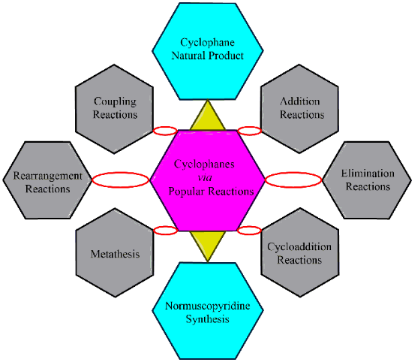
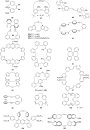
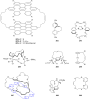
- -binding abilities, an improved affinity can be achieved by polytopic hosts [61][62][63] through multivalency effects in macrocycles. Olefin metathesis has played a key role in the development of cyclophane chemistry. Some of the catalysts used for this purpose are listed in Figure 3. The development of
- macrocycles. These molecules show excellent chiroptical properties such as high fluorescence quantum efficiency and a large circularly polarized luminescence dissymmetry factor. Cyclophanes are carbon-rich materials containing extensive alkyne moieties with a persistent molecular architecture. Orita and co
- have reported the synthesis of ethylene-bridged phenothiazinophane 92 using the McMurry coupling reaction. Also cyclic voltammetry experiments indicated the intramolecular electronic communication between the phenothiazinyl subunits. Calixarene-based macrocycles bind with various metal ions. Lee and






Hybrid macrocycle formation and spiro annulation on cis-syn-cis-tricyclo[6.3.0.02,6]undeca-3,11-dione and its congeners via ring-closing metathesis
Beilstein J. Org. Chem. 2015, 11, 1123–1128, doi:10.3762/bjoc.11.126

- based macrocycle 6 involving Fischer indolization and ring-closing metathesis (RCM). Various spiro-polyquinane derivatives have been assembled via RCM as a key step. Keywords: aza-polyquiananes; Fischer indolization; macrocycles; ring-closing metathesis; spiropolyquinanes; Introduction Design and


Advances in the synthesis of functionalised pyrrolotetrathiafulvalenes
Beilstein J. Org. Chem. 2015, 11, 1112–1122, doi:10.3762/bjoc.11.125
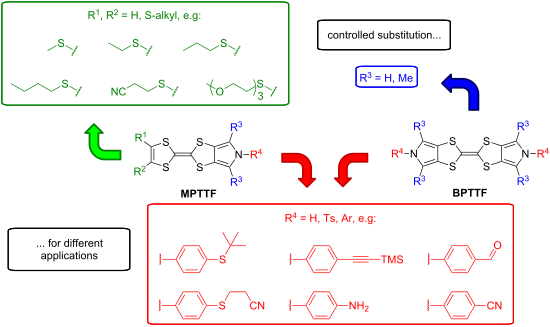
- systems [11][27], to the incorporation of MPTTFs and BPTTFs into more complex molecular architectures such as macrocycles [8][9][14], calix-pyrroles [1][10][11], calixarenes [29] and porphyrins [30]. Note that for MPTTFs, R1 and R2 can be either the same or different. Here, we present recent developments


Carboxylated dithiafulvenes and tetrathiafulvalene vinylogues: synthesis, electronic properties, and complexation with zinc ions
Beilstein J. Org. Chem. 2015, 11, 957–965, doi:10.3762/bjoc.11.107
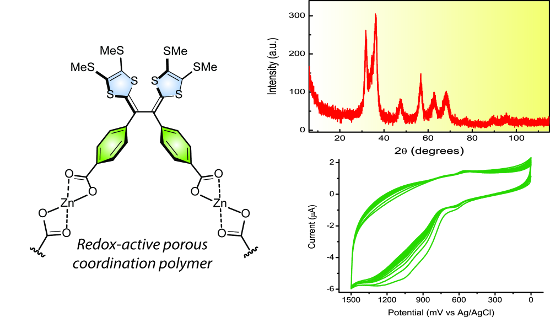
- some TTFV-based macrocycles and polymers [12][28]. Previously, we have investigated a series of diphenyl-TTFVs with alkynyl groups attached to the phenyl units as synthetic building blocks, through which extension of π-conjugated structures could be conveniently executed via the Pd-catalysed coupling





Tuning of tetrathiafulvalene properties: versatile synthesis of N-arylated monopyrrolotetrathiafulvalenes via Ullmann-type coupling reactions
Beilstein J. Org. Chem. 2015, 11, 860–868, doi:10.3762/bjoc.11.96
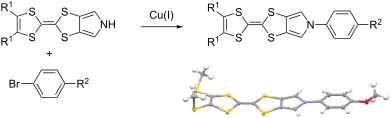
- regioselective functionalization of TTF, however, remains problematic due to the presence of four identical attachment sites. Incorporation of the TTF moiety in macrocycles usually leads to poorly separable mixtures of cis/trans isomers [7][8][9]. Even if separation is possible, TTFs are prone to cis/trans



Synthesis of antibacterial 1,3-diyne-linked peptoids from an Ugi-4CR/Glaser coupling approach
Beilstein J. Org. Chem. 2015, 11, 25–30, doi:10.3762/bjoc.11.4
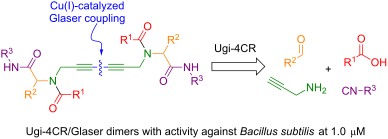
- , this reaction has been used in the synthesis of bioactive peptides and pseudopeptides, e.g., tubulysin mimetics [13], julocrotine derivatives [14], architecturally complex peptoid macrocycles [15][16], building blocks for diversity-oriented synthesis [17], and heterocyclic compounds [18]. Complex


Synthesis of an organic-soluble π-conjugated [3]rotaxane via rotation of glucopyranose units in permethylated β-cyclodextrin
Beilstein J. Org. Chem. 2014, 10, 2800–2808, doi:10.3762/bjoc.10.297

- IMWs with polyrotaxane structures via polymerization of π-conjugated [1]rotaxane monomers bearing PMCDs as macrocycles [14]. Further, we confirmed that such IMWs with poly[1]rotaxane structure are highly soluble in a variety of organic solvents and have good rigidity, photoluminescence efficiency [15


Mono- and multilayers of molecular spoked carbazole wheels on graphite
Beilstein J. Org. Chem. 2014, 10, 2783–2788, doi:10.3762/bjoc.10.295
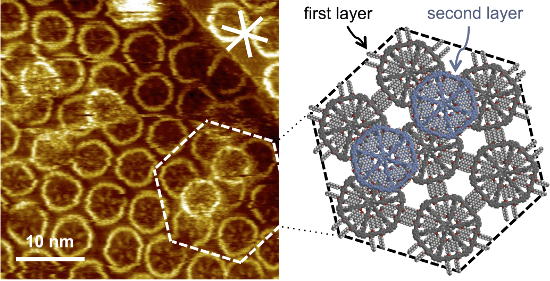
- ]. They can be viewed as shape-persistent arylene–alkynylene macrocycles in which the intraannular spoke system increases the stiffness (persistence length) of the ring. They are non-collapsible monodisperse cyclooligomers with a fixed and predictable conformation, and their side-chain substitution
- guarantees their solubility in organic media. Our previous works on freely rotating chains of rigid rod segments and on shape-persistent macrocycles [6][7] have recently led us to a set of molecular polygons (macrocycles) of discrete sizes and symmetries, e.g., triangles, squares, pentagons, and hexagons [8
- resulting molecule–surface interaction decrease the ability to form a regular pattern, probably (also) due to a lower compound solubility. We observed a similar behavior for phenylene–ethynylene–butadiynylene macrocycles which we compared to their acyclic analoga of identical oligomerization degree [7


Self-assembled monolayers of shape-persistent macrocycles on graphite: interior design and conformational polymorphism
Beilstein J. Org. Chem. 2014, 10, 2774–2782, doi:10.3762/bjoc.10.294
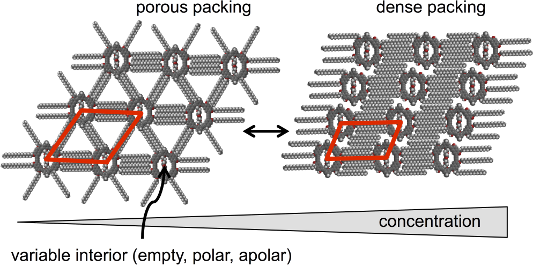
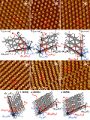
- macrocycles of identical backbone structures and extraannular substitution patterns but different (empty, apolar, polar) nanopore fillings are self-assembled at the solid/liquid interface of highly oriented pyrolytic graphite and 1,2,4-trichlorobenzene. Submolecularly resolved images of the resulting two
- macrocycle distances are mainly determined by their size and symmetry. This is an excellent example that the graphite acts as a template for the macrocycle organization independent from their specific interior. Keywords: conformational polymorphism; self-assembled monolayers; shape-persistent macrocycles
- –alkynylene macrocycles are promising candidates as future mounts for functional units. These are separated from each other and cannot interact intermolecularly if the rings are adsorbed in parallel to the substrate. The exterior of the macrocycles can be substituted with alkyl side chains (or their alkoxy



De novo macrolide–glycolipid macrolactone hybrids: Synthesis, structure and antibiotic activity of carbohydrate-fused macrocycles
Beilstein J. Org. Chem. 2014, 10, 2215–2221, doi:10.3762/bjoc.10.229
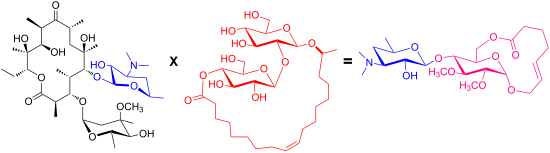
- of Montana, Missoula, MT 59812, USA 10.3762/bjoc.10.229 Abstract Natural product-like macrocycles were designed as potential antibacterial compounds. The macrocycles featured a D-glucose unit fused into a 12- or 13-member macrolactone. The rings are connected via the C6’ and anomeric (C1’) positions
- of the monosaccharide. The new macrocycles/macrolides were characterized by X-ray crystallography. Their structures showed that, in addition to the ester and alkene units, the dihedral angle about the glycosidic linkage (exo-anomeric effect) influenced the overall shape of the molecules
- macrocycle through the C1’ (glycosidic) and C6’ oxygens. The new macrolides bear a resemblance to sophorolipid lactone 2 and to polyketide macrocycles that contain a tetrahydropyran moiety [20][21][22]. We report on the synthesis, X-ray crystal structures and antibiotic activities of the new compounds


The effect of permodified cyclodextrins encapsulation on the photophysical properties of a polyfluorene with randomly distributed electron-donor and rotaxane electron-acceptor units
Beilstein J. Org. Chem. 2014, 10, 2145–2156, doi:10.3762/bjoc.10.222
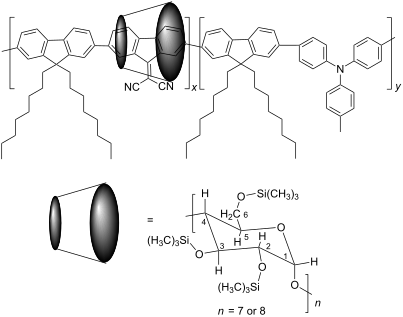
- accurately due to the strong UV absorbance of this solvent. Thus, Ks measurements were performed in CHCl3. The Ks was determined by measuring the change in the absolute optical density (OD) at 314 nm with an increasing concentration of TMS-β-CD or TMS-γ-CD macrocycles and the fitting according to a 1:1 host
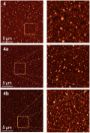
- DCM solution of 4a and 4b copolymers suggested no improvements of Φ compared with previously reported results [13], which restrict us to point out a distinctive effect of the rotaxane formation with TMS-β-CD and TMS-γ-CD macrocycles. To further understand Φ results, we also carried out fluorescence


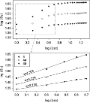
Macrocyclic bis(ureas) as ligands for anion complexation
Beilstein J. Org. Chem. 2014, 10, 1834–1839, doi:10.3762/bjoc.10.193
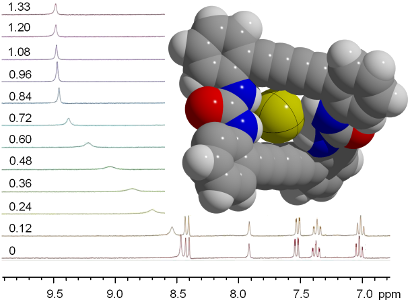
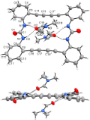
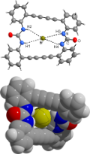
- planar ligand, as was shown by indole-based macrocycles [9]. This ligand system represents a stiff ring of two bis(indole) units connected via two ethynylene groups as linkers. As proven by a crystal structure determination, a chloride ion fits into the cavity bound via four N−H∙∙∙Cl bonds and strong



Improving the reactivity of phenylacetylene macrocycles toward topochemical polymerization by side chains modification
Beilstein J. Org. Chem. 2014, 10, 1613–1619, doi:10.3762/bjoc.10.167
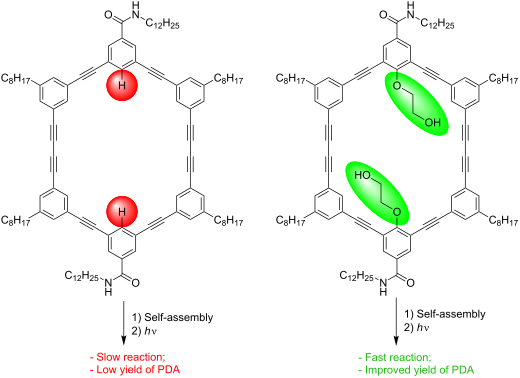
- -assembly of two new phenylacetylene macrocycle (PAM) organogelators were performed. Polar 2-hydroxyethoxy side chains were incorporated in the inner part of the macrocycles to modify the assembly mode in the gel state. With this modification, it was possible to increase the reactivity of the macrocycles in
- ; phenylacetylene macrocycles; polydiacetylenes; topochemical polymerization; Introduction The self-assembly of molecular building blocks is an increasingly popular method for the preparation of new semiconducting materials. Rational design of building blocks and their assembly using non-covalent interactions can
- . Moreover, subtle changes in the chemical nature of the building blocks can have a dramatic impact on the self-assembly process. This was exemplified in the case of nanotubes obtained from self-assembled butadiyne-containing macrocycles, which stack on top of each other in columnar fashion to give


Design and synthesis of multivalent neoglycoconjugates by click conjugations
Beilstein J. Org. Chem. 2014, 10, 1325–1332, doi:10.3762/bjoc.10.134
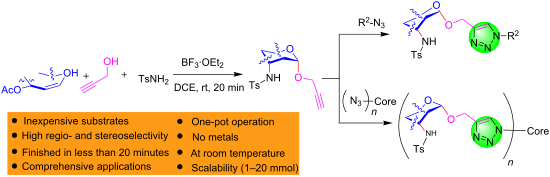
- especially versatile for the effective construction of complex glycosylated structures such as clusters, dendrimers, polymers, peptides and macrocycles. In all the cases the triazole ring plays a crucial role in combining divergent units together to establish a complex molecular architecture [23][24][25][26





