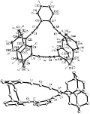
Search for "structural features" in Full Text gives 223 result(s) in Beilstein Journal of Organic Chemistry. Showing first 200.
Beilstein J. Org. Chem. 2015, 11, 1583–1595, doi:10.3762/bjoc.11.174

Graphical Abstract
Scheme 1: Activated derivatives of dicarboxylic acids.
Figure 1: Example of natural compounds selectively acylated with dicarboxylic esters.
Figure 2: C6-dicarboxylic acid diesters derivatives of NAG-thiazoline.
Figure 3: Sylibin dimers obtained by CAL-B catalyzed trans-acylation reactions.
Scheme 2: Biocatalyzed synthesis of paclitaxel derivatives.
Figure 4: 5-Fluorouridine derivatives obtained by CAL-B catalysis.
Scheme 3: Biocatalyzed synthesis of hybrid diesters 17 and 18.
Scheme 4: Hybrid derivatives of sylibin.
Figure 5: Bolaamphiphilic molecules containing (L)- and/or (D)-isoascorbic acid moieties.
Figure 6: Doxorubicin (29) trapped in a polyester made of glycolate, sebacate and 1,4-butandiol units.
Figure 7: Polyesters containing functionalized pentofuranose derivatives.
Figure 8: Polyesters containing disulfide moieties.
Figure 9: Polyesters containing epoxy moieties.
Figure 10: Biocatalyzed synthesis of polyesters containing glycerol.
Figure 11: Iataconic (34) and malic (35) acid.
Figure 12: Oxidized poly(hexanediol-2-mercaptosuccinate) polymer.
Figure 13: C-5-substituted isophthalates.
Figure 14: Curcumin-based polyesters.
Figure 15: Silylated polyesters.
Figure 16: Polyesters containing reactive ether moieties.
Figure 17: Polyesters obtained by CAL-B-catalyzed condensation of dicarboxylic esters and N-substituted dietha...
Figure 18: Polyesters comprising mexiletine (38) moieties.
Figure 19: Poly(amide-co-ester)s comprising a terminal hydroxy moiety.
Figure 20: Polymer comprising α-oxydiacid moieties.
Figure 21: Telechelics with methacrylate ends.
Figure 22: Telechelics with allyl-ether ends.
Figure 23: Telechelics with ends functionalized as epoxides.
Beilstein J. Org. Chem. 2015, 11, 1441–1446, doi:10.3762/bjoc.11.156
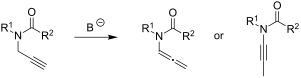
Graphical Abstract
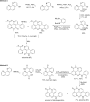
Scheme 1: Preparation of propargylamides through alkylation of secondary amides and base-catalyzed isomerizat...
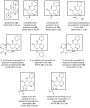
Figure 1: Set of studied compounds.
Figure 2: Anti and syn conformations around the N–C=C=C bond for N-allenyl compounds 12b–14b.
Beilstein J. Org. Chem. 2015, 11, 1367–1372, doi:10.3762/bjoc.11.147
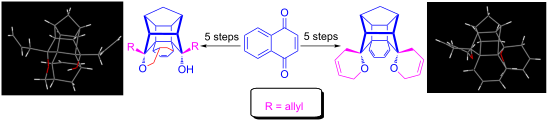
Graphical Abstract
Figure 1: Structures of diverse biologically as well as theoretically interesting molecules.
Figure 2: Retrosynthetic analysis of bis-spiro-pyrano cage compound 7.
Scheme 1: Synthesis of hexacyclic cage dione 10.
Scheme 2: Synthesis of tetrahydrofuran-based cage compounds 12 and 13.
Figure 3: (a)Optimized structure of 12, (b) optimized structure of 13.
Scheme 3: Synthesis di-allyl cage compound 11.
Scheme 4: Synthesis of spiro-pyrano cage molecules 7 and 17.
Figure 4: (a) Optimized structure of 18, (b) optimized structure of 7.
Scheme 5: Synthesis of octacyclic cage compound 18 via intramolecular DA reaction.
Scheme 6: Attempted synthesis to cage compound 20.
Beilstein J. Org. Chem. 2015, 11, 1274–1331, doi:10.3762/bjoc.11.142
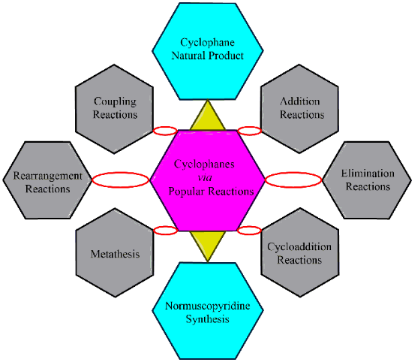
Graphical Abstract
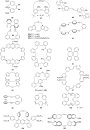
Figure 1: General representation of cyclophanes.
Figure 2: cyclophanes one or more with heteroatom.
Figure 3: Metathesis catalysts 12–17 and C–C coupling catalyst 18.
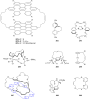
Figure 4: Natural products containing the cyclophane skeleton.
Figure 5: Turriane family of natural products.
Scheme 1: Synthesis of [3]ferrocenophanes through Mannich reaction. Reagents and conditions: (i) excess HNMe2...
Scheme 2: Synthesis of cyclophanes through Michael addition. Reagents and conditions: (i) xylylene dibromide,...
Scheme 3: Synthesis of normuscopyridine analogue 37 through an oxymercuration–oxidation strategy. Reagents an...
Scheme 4: Synthesis of tribenzocyclotriyne 39 through Castro–Stephens coupling reaction. Reagents and conditi...
Scheme 5: Synthesis of cyclophane 43 through Glaser–Eglinton coupling. Reagents and conditions: (i) 9,10-bis(...
Scheme 6: Synthesis of the macrocyclic C-glycosyl cyclophane through Glaser coupling. Reagents and conditions...
Scheme 7: Synthesis of cyclophane-containing complex 49 through Glaser–Eglinton coupling reaction. Reagents a...
Scheme 8: Synthesis of cyclophane 53 through Glaser–Eglinton coupling. Reagents and conditions: (i) K2CO3, ac...
Figure 6: Cyclophanes 54–56 that have been synthesized through Glaser–Eglinton coupling.
Figure 7: Synthesis of tetrasubstituted [2.2]paracyclophane 57 and chiral cyclophyne 58 through Eglinton coup...
Scheme 9: Synthesis of cyclophane through Glaser–Hay coupling reaction. Reagents and conditions: (i) CuCl2 (1...
Scheme 10: Synthesis of seco-C/D ring analogs of ergot alkaloids through intramolecular Heck reaction. Reagent...
Scheme 11: Synthesis of muscopyridine 73 via Kumada coupling. Reagents and conditions: (i) 72, THF, ether, 20 ...
Scheme 12: Synthesis of the cyclophane 79 via McMurry coupling. Reagents and conditions: (i) 75, decaline, ref...
Scheme 13: Synthesis of stilbenophane 81 via McMurry coupling. Reagents and conditions: (i) TiCl4, Zn, pyridin...
Scheme 14: Synthesis of stilbenophane 85 via McMurry coupling. Reagents and conditions: (i) NBS (2 equiv), ben...
Figure 8: List of cyclophanes prepared via McMurry coupling reaction as a key step.
Scheme 15: Synthesis of paracyclophane by cross coupling involving Pd(0) catalyst. Reagents and conditions: (i...
Scheme 16: Synthesis of the cyclophane 112 via the pinacol coupling and 113 by RCM. Reagents and conditions: (...
Scheme 17: Synthesis of cyclophane derivatives 122a–c via Sonogoshira coupling. Reagents and conditions: (i) C...
Scheme 18: Synthesis of cyclophane 130 via Suzuki–Miyaura reaction as a key step. Reagents and conditions: (i)...
Scheme 19: Synthesis of the mycocyclosin via Suzuki–Miyaura cross coupling. Reagents and conditions: (i) benzy...
Scheme 20: Synthesis of cyclophanes via Wurtz coupling reaction Reagents and conditions: (i) PhLi, Et2O, C6H6,...
Scheme 21: Synthesis of non-natural glycophanes using alkyne metathesis. Reagents and conditions: (i) G-I (12)...
Figure 9: Synthesis of cyclophanes via ring-closing alkyne metathesis.
Scheme 22: Synthesis of crownophanes by cross-enyne metathesis. Reagents and conditions: (i) G-II (13), 5 mol ...
Scheme 23: Synthesis of (−)-cylindrocyclophanes A (156) and (−)-cylindrocyclophanes F (155). Reagents and cond...
Scheme 24: Synthesis of cyclophane 159 derivatives via SM cross-coupling and RCM. Reagents and conditions: (i)...
Scheme 25: Sexithiophene synthesis via cross metathesis. Reagents and conditions: (i) 161, Pd(PPh3)4, K2CO3, T...
Scheme 26: Synthesis of pyrrole-based cyclophane using enyne metathesis. Reagents and conditions: (i) Se, chlo...
Scheme 27: Synthesis of macrocyclic derivatives by RCM. Reagents and conditions: (i) G-I/G-II, CH2Cl2, 0.005 M...
Scheme 28: Synthesis of enantiopure β-lactam-based dienyl bis(dihydrofuran) 179. Reagents and conditions: (i) ...
Scheme 29: Synthesis of a [1.1.6]metaparacyclophane derivative 183 via SM cross coupling. Reagents and conditi...
Scheme 30: Synthesis of a [1.1.6]metaparacyclophane derivative 190 via SM cross coupling. Reagents and conditi...
Scheme 31: Template-promoted synthesis of cyclophanes involving RCM. Reagents and conditions: (i) acenaphthene...
Scheme 32: Synthesis of [3.4]cyclophane derivatives 200 via SM cross coupling and RCM. Reagents and conditions...
Figure 10: Examples for cyclophanes synthesized by RCM.
Scheme 33: Synthesis of the longithorone C framework assisted by fluorinated auxiliaries. Reagents and conditi...
Scheme 34: Synthesis of the longithorone framework via RCM. Reagents and conditions: (i) 213, NaH, THF, rt, 10...
Scheme 35: Synthesis of floresolide B via RCM as a key step. Reagents and conditions: (i) G-II (13, 0.1 equiv)...
Scheme 36: Synthesis of normuscopyridine (223) by the RCM strategy. Reagents and condition: (i) Mg, THF, hexen...
Scheme 37: Synthesis of muscopyridine (73) via RCM. Reagents and conditions: (i) 225, NaH, THF, 0 °C to rt, 1....
Scheme 38: Synthesis of muscopyridine (73) via RCM strategy. Reagents and conditions: (i) NaH, n-BuLi, 5-bromo...
Scheme 39: Synthesis of pyridinophane derivatives 223 and 245. Reagents and conditions: (i) PhSO2Na, TBAB, CH3...
Scheme 40: Synthesis of metacyclophane derivatives 251 and 253. Reagents and conditions: (i) 240, NaH, THF, rt...
Scheme 41: Synthesis of normuscopyridine and its higher analogues. Reagents and conditions: (i) alkenyl bromid...
Scheme 42: Synthesis of fluorinated ferrocenophane 263 via a [2 + 2] cycloaddition. Reagents and conditions: (...
Scheme 43: Synthesis of [2.n]metacyclophanes 270 via a [2 + 2] cycloaddition. Reagents and conditions: (i) Ac2...
Scheme 44: Synthesis of metacyclophane 273 by a [2 + 2 + 2] co-trimerization. Reagents and conditions: (i) [Rh...
Scheme 45: Synthesis of paracyclophane 276 via a [2 + 2 + 2] cycloaddition reaction. Reagents and conditions: ...
Scheme 46: Synthesis of cyclophane 278 via a [2 + 2 + 2] cycloaddition reaction. Reagents and conditions: (i) ...
Scheme 47: Synthesis of cyclophane 280 via a [2 + 2 + 2] cycloaddition. Reagents and conditions: (i) [(Rh(cod)(...
Scheme 48: Synthesis of taxane framework by a [2 + 2 + 2] cycloaddition. Reagents and conditions: (i) Cp(CO)2 ...
Scheme 49: Synthesis of cyclophane 284 and 285 via a [2 + 2 + 2] cycloaddition reaction. Reagents and conditio...
Scheme 50: Synthesis of pyridinophanes 293a,b and 294a,b via a [2 + 2 + 2] cycloaddition. Reagents and conditi...
Scheme 51: Synthesis of pyridinophanes 296 and 297 via a [2 + 2 + 2] cycloaddition. Reagents and conditions: (...
Scheme 52: Synthesis of triazolophane by a 1,3-dipolar cycloaddition. Reagents and conditions: (i) propargyl b...
Scheme 53: Synthesis of glycotriazolophane 309 by a click reaction. Reagents and conditions: (i) LiOH, H2O, Me...
Figure 11: Cyclophanes 310 and 311 prepared via click chemistry.
Scheme 54: Synthesis of cyclophane via the Dötz benzannulation. Reagents and conditions: (i) THF, 100 °C, 12 h...
Scheme 55: Synthesis of [6,6]metacyclophane by a Dötz benzannulation. Reagents and conditions: (i) THF, 100 °C...
Scheme 56: Synthesis of cyclophanes by a Dötz benzannulation. Reagents and conditions: (i) THF, 65 °C, 3 h; (i...
Scheme 57: Synthesis of muscopyridine (73) via an intramolecular DA reaction of ketene. Reagents and condition...
Scheme 58: Synthesis of bis[10]paracyclophane 336 via Diels–Alder reaction. Reagents and conditions: (i) DMAD,...
Scheme 59: Synthesis of [8]paracyclophane via DA reaction. Reagents and conditions: (i) maleic anhydride, 3–5 ...
Scheme 60: Biomimetic synthesis of (−)-longithorone A. Reagents and conditions: (i) Me2AlCl, CH2Cl2, −20 °C, 7...
Scheme 61: Synthesis of sporolide B (349) via a [4 + 2] cycloaddition reaction. Reagents and conditions: (i) P...
Scheme 62: Synthesis of the framework of (+)-cavicularin (352) via a [4 + 2] cycloaddition. Reagents and condi...
Scheme 63: Synthesis of oxazole-containing cyclophane 354 via Beckmann rearrangement. Reagents and conditions:...
Scheme 64: Synthesis of cyclophanes 360a–c via benzidine rearrangement. Reagents and conditions: (i) 356a–d, K2...
Scheme 65: Synthesis of cyclophanes 365a–c via benzidine rearrangement. Reagents and conditions: (i) BocNHNH2,...
Scheme 66: Synthesis of metacyclophane 367 via Ciamician–Dennstedt rearrangement. Reagents and conditions: (i)...
Scheme 67: Synthesis of cyclophane by tandem Claisen rearrangement and RCM as key steps. Reagents and conditio...
Scheme 68: Synthesis of cyclophane derivative 380. Reagents and conditions: (i) K2CO3, CH3CN, allyl bromide, r...
Scheme 69: Synthesis of metacyclophane via Cope rearrangement. Reagents and conditions: (i) MeOH, NaBH4, rt, 1...
Scheme 70: Synthesis of cyclopropanophane via Favorskii rearrangement. Reagents and conditions: (i) Br2, CH2Cl2...
Scheme 71: Cyclophane 389 synthesis via photo-Fries rearrangement. Reagents and conditions: (i) DMAP, EDCl/CHCl...
Scheme 72: Synthesis of normuscopyridine (223) via Schmidt rearrangement. Reagents and conditions: (i) ethyl s...
Scheme 73: Synthesis of crownophanes by tandem Claisen rearrangement. Reagents and conditions: (i) diamine, Et3...
Scheme 74: Attempted synthesis of cyclophanes via tandem Claisen rearrangement and RCM. Reagents and condition...
Scheme 75: Synthesis of muscopyridine via alkylation with 2,6-dimethylpyridine anion. Reagents and conditions:...
Scheme 76: Synthesis of cyclophane via Friedel–Craft acylation. Reagents and conditions: (i) CS2, AlCl3, 7 d, ...
Scheme 77: Pyridinophane 418 synthesis via Friedel–Craft acylation. Reagents and conditions: (i) 416, AlCl3, CH...
Scheme 78: Cyclophane synthesis involving the Kotha–Schölkopf reagent 421. Reagents and conditions: (i) NBS, A...
Scheme 79: Cyclophane synthesis involving the Kotha–Schölkopf reagent 421. Reagents and conditions: (i) BEMP, ...
Scheme 80: Cyclophane synthesis by coupling with TosMIC. Reagents and conditions: (i) (a) ClCH2OCH3, TiCl4, CS2...
Scheme 81: Synthesis of diaza[32]cyclophanes and triaza[33]cyclophanes. Reagents and conditions: (i) DMF, NaH,...
Scheme 82: Synthesis of cyclophane 439 via acyloin condensation. Reagents and conditions: (i) Na, xylene, 75%;...
Scheme 83: Synthesis of multibridged binuclear cyclophane 442 by aldol condensation. Reagents and conditions: ...
Scheme 84: Synthesis of various macrolactones. Reagents and conditions: (i) iPr2EtN, DMF, 77–83%; (ii) TBDMSCl...
Scheme 85: Synthesis of muscone and muscopyridine via Yamaguchi esterification. Reagents and conditions: (i) 4...
Scheme 86: Synthesis of [5]metacyclophane via a double elimination reaction. Reagents and conditions: (i) LiBr...
Figure 12: Cyclophanes 466–472 synthesized via Hofmann elimination.
Scheme 87: Synthesis of cryptophane via Baylis–Hillman reaction. Reagents and conditions: (i) methyl acrylate,...
Scheme 88: Synthesis of cyclophane 479 via double Chichibabin reaction. Reagents and conditions: (i) excess 478...
Scheme 89: Synthesis of cyclophane 483 via double Chichibabin reaction. Reagents and conditions: (i) 481, OH−;...
Scheme 90: Synthesis of cyclopeptide via an intramolecular SNAr reaction. Reagents and conditions: (i) TBAF, T...
Scheme 91: Synthesis of muscopyridine (73) via C-zip ring enlargement reaction. Reagents and conditions: (i) H...
Figure 13: Mechanism of the formation of compound 494.
Scheme 92: Synthesis of indolophanetetraynes 501a,b using the Nicholas reaction as a key step. Reagents and co...
Scheme 93: Synthesis of cyclophane via radical cyclization. Reagents and conditions: (i) cyclododecanone, phen...
Scheme 94: Synthesis of (−)-cylindrocyclophanes A (156) and (−)-cylindrocyclophanes F (155). Reagents and cond...
Scheme 95: Cyclophane synthesis via Wittig reaction. Reagents and conditions: (i) LiOEt (2.1 equiv), THF, −78 ...
Figure 14: Representative examples of cyclophanes synthesized via Wittig reaction.
Scheme 96: Synthesis of the [6]paracyclophane via isomerization of Dewar benzene. Reagents and conditions: (i)...
Beilstein J. Org. Chem. 2015, 11, 1175–1186, doi:10.3762/bjoc.11.132
Graphical Abstract
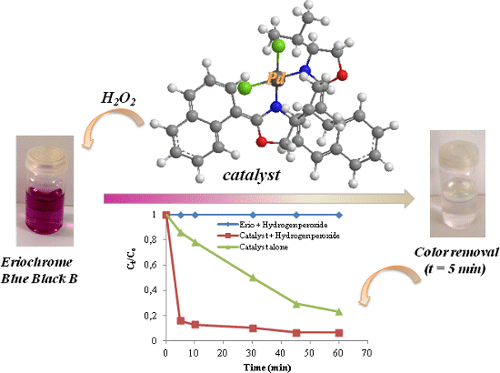
Figure 1: Structure of Eriochrome Blue Black B.
Scheme 1: Cyclopalladation reactions of (S)-4-isopropyl-2-(naphthalen-1-yl)oxazoline.
Scheme 2: Synthesis of cyclopalladated complex from bis-oxazoline.
Figure 2: ORTEP drawing of the complex 8.
Scheme 3: Synthesis of the bis(oxazoline) coordinated complexes.
Figure 3: ORTEP drawing of the complex 9.
Figure 4: Change in color removal in the presence of different catalysts within 10 min (before filtration). T...
Figure 5: Change in color removal in the presence of different catalysts (after filtration over 10 min).
Figure 6: Evolution of the color degradation against time using Eriochrome plus H2O2, the complex plus H2O2 o...
Figure 7: Change of the concentration of the Erio solution with the variation of H2O2 dose.
Figure 8: Evolution of the color removal against initial dye concentration.
Figure 9: Change of the color removal versus temperature.
Figure 10: Recycling experiments for Erio removal (C0 = 30 ppm, 20 mL) in the presence of catalyst 9 at pH 7 a...
Scheme 4: Proposed mechanism of decolorization.
Beilstein J. Org. Chem. 2015, 11, 1043–1051, doi:10.3762/bjoc.11.117
Graphical Abstract
Scheme 1: Chemical structures of Ar-S-TTFs 1–8.
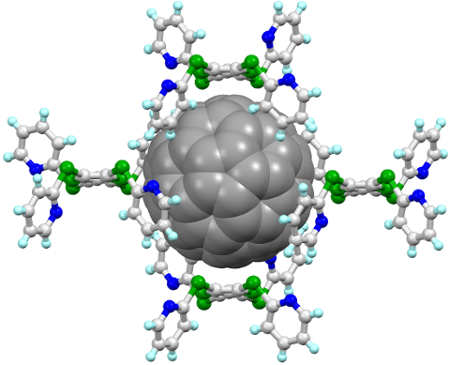
Figure 1: Crystal structure of 5·C70. a) Unit cell contents viewed along the short axis of 5; b) Interactions...
Figure 2: Crystal structure of 1·(C60)2·(CS2)2. a) Interactions of C60 molecule A with 1, where the blue and ...
Figure 3: Packing motifs of C60 molecules A (a) and B (b) of 1·(C60)2·(CS2)2 in the crystallographic ab-plane...
Figure 4: Crystal structure of 2·(C70)4·(PhCl)2. a) Interactions between C70 molecule A and 2; b) Interaction...
Beilstein J. Org. Chem. 2015, 11, 583–588, doi:10.3762/bjoc.11.64
Graphical Abstract
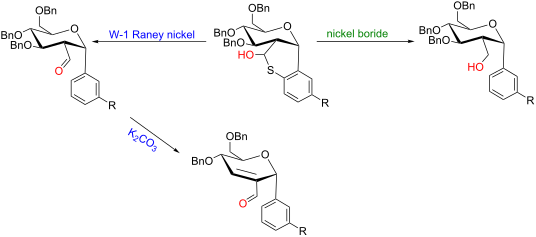
Scheme 1: (i) CAN, wet silica, KBr, CH2Cl2/CH3CN (1:1), rt, 30 min; (ii) a. NaOAc, Ac2O, 140 °C, 3 h; b. K2CO3...
Figure 1: Single X-ray crystal structure of hemithioacetal 3a.
Scheme 2: Proposed reaction sequence for the synthesis of a mixture of carbaldehydes 5a and 5a’ using Raney n...
Scheme 3: K2CO3 (catalytic amount), MeOH, rt, 30 min.
Beilstein J. Org. Chem. 2015, 11, 473–480, doi:10.3762/bjoc.11.53
Graphical Abstract
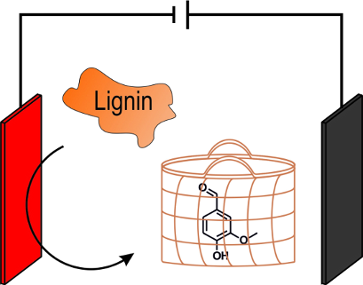
Scheme 1: Direct electrochemical degradation of lignin into low molecular weight phenolic compounds.
Figure 1: Crude product composition after electrochemical treatment of lignin at Ni-based electrodes by gasch...
Figure 2: Influence of the current density onto the yield of 1 using Ni or Stellite 21 anodes.
Figure 3: Influence of the current density on the yield of 1 using different geometries of anodic materials.
Figure 4: Influence of the reaction temperature onto anodic degradation of lignin using stainless steel elect...
Figure 5: Influence of the applied current onto the yield of 1 by electrochemical degradation of lignin using...
Figure 6: Amount of vanillin (1) removed by adsorption in a batch process at different strongly basic anion e...
Figure 7: Different attractive interactions between ion exchange resin and the vanillate anion.
Figure 8: Recovery of vanillin (1) by adsorption from lignin containing reaction solutions after electrochemi...
Figure 9: Adsorption of vanillin (1) on anion exchange resins and size exclusion of lignin particles by appli...
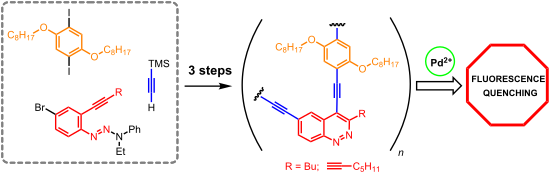
Beilstein J. Org. Chem. 2015, 11, 373–384, doi:10.3762/bjoc.11.43
Graphical Abstract
Figure 1: Recent examples of PAEs and their application for the detection of Hg2+ (a) [11], Ni2+ (b) [12], explosives...
Figure 2: Target structures of PAEs.
Scheme 1: Synthesis of cinnoline-containing PAEs 10a,b.
Figure 3: 1H NMR spectra of PAEs 10a,b solutions in CDCl3.
Figure 4: 13C NMR spectra of PAEs 10a,b solutions in CDCl3.
Figure 5: Irregular chain structure (nonequivalent structural units are marked in different colors).
Figure 6: Optical absorption spectra of PAEs 10a,b in THF solutions.
Figure 7: Emission spectra of PAEs 10a,b in THF solutions.
Figure 8: Optical absorption spectra of PAE 10a in THF before and after the addition of metal analytes.
Figure 9: Optical absorption spectra of PAE 10b in THF before and after the addition of metal analytes.
Figure 10: Emission spectra of PAE 10a in THF before and after the addition of metal ions.
Figure 11: Emission spectra of PAE 10b in THF before and after the addition of metal ions.
Figure 12: Optical absorption spectra of PAE 10a in THF before and after the addition of HCl (10 equiv).
Figure 13: Emission spectra of PAE 10a in THF before and after the addition of HCl (10 equiv).
Figure 14: Optical absorption spectra of PAE 10b in THF before after the addition of methanol solution of PdCl2...
Figure 15: Emission spectra of PAE 10b in THF before and after the addition of methanol solution of PdCl2.
Figure 16: Optical absorption spectra of cinnoline 4a in THF before and after the addition of aqueous solution...
Figure 17: Emission spectra of cinnoline 4a in THF before and after the addition of aqueous solution of PdCl2.
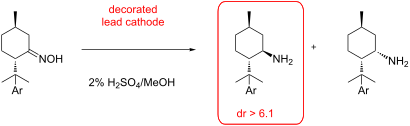
Beilstein J. Org. Chem. 2015, 11, 294–301, doi:10.3762/bjoc.11.34
Graphical Abstract
Scheme 1: Structural features of 8-substituted menthylamines 1.
Scheme 2: Synthetic strategies to menthylamines.
Scheme 3: Stereoselective synthesis of 8-substituted (1R,3R,4S)-menthylamines.
Scheme 4: Influence of the cathode system onto the stereoselectivity of the reduction of (1R,4S)-menthone oxi...
Scheme 5: Preparation of 8-substituted (1R)-menthones 6 and the corresponding oximes 7.
Scheme 6: Influence of cathode material on the preparation of (1R,3R,4S)-menthylamine 8a.
Scheme 7: Protection of the oxime functionality in 7c due to the sterically demanding diphenyl moiety in 8-po...
Scheme 8: Separation of the diastereomeric 8-substituted menthylamines by crystallization of their hydrochlor...
Beilstein J. Org. Chem. 2014, 10, 2930–2954, doi:10.3762/bjoc.10.312
Graphical Abstract
Scheme 1: The Grignard-based synthesis of 6-alkyl phenanthridine.
Scheme 2: Radical-mediated synthesis of 6-arylphenanthridine [14].
Scheme 3: A t-BuO• radical-assisted homolytic aromatic substitution mechanism proposed for the conversion of ...
Scheme 4: Synthesis of 5,6-unsubstituted phenanthridine starting from 2-iodobenzyl chloride and aniline [17].
Scheme 5: Phenanthridine synthesis initiated by UV-light irradiation photolysis of acetophenone O-ethoxycarbo...
Scheme 6: PhI(OAc)2-mediated oxidative cyclization of 2-isocyanobiphenyls with CF3SiMe3 [19,20].
Scheme 7: Targeting 6-perfluoroalkylphenanthridines [21,22].
Scheme 8: Easily accessible biphenyl isocyanides reacting under mild conditions (room temp., visible light ir...
Scheme 9: Microwave irradiation of Diels–Alder adduct followed by UV irradiation of dihydrophenanthridines yi...
Scheme 10: A representative palladium catalytic cycle.
Scheme 11: The common Pd-catalyst for the biphenyl conjugation results simultaneously in picolinamide-directed...
Scheme 12: Pd(0)-mediated cyclisation of imidoyl-selenides forming 6-arylphenanthridine derivatives [16]. The inse...
Scheme 13: Palladium-catalysed phenanthridine synthesis.
Scheme 14: Aerobic domino Suzuki coupling combined with Michael addition reaction in the presence of a Pd(OAc)2...
Scheme 15: Rhodium-catalysed alkyne [2 + 2 + 2] cycloaddition reactions [36].
Scheme 16: The O-acetyloximes derived from 2′-arylacetophenones underwent N–O bond cleavage and intramolecular ...
Scheme 17: C–H arylation with aryl chloride in the presence of a simple diol complex with KOt-Bu (top) [39]; for s...
Scheme 18: The subsequent aza-Claisen rearrangement, ring-closing enyne metathesis and Diels–Alder reaction – ...
Scheme 19: Phenanthridine central-ring cyclisation with simultaneous radical-driven phosphorylation [42].
Scheme 20: Three component reaction yielding the benzo[a]phenanthridine core in excellent yields [44].
Scheme 21: a) Reaction of malononitrile and 1,3-indandione with BEP to form the cyclised DPP products; b) pH c...
Figure 1: Schematic presentation of the intercalative binding mode by the neighbour exclusion principle and i...
Figure 2: Urea and guanidine derivatives of EB with modified DNA interactions [57].
Figure 3: Structure of mono- (3) and bis-biguanide (4) derivative. Fluorescence (y-axis normalised to startin...
Scheme 22: Bis-phenanthridinium derivatives (5–7; inert aliphatic linkers, R = –(CH2)4– or –(CH2)6–): rigidity...
Figure 4: Series of amino acid–phenanthridine building blocks (general structure 10; R = H; Gly) and peptide-...
Figure 5: General structure of 45 bis-ethidium bromide analogues. Reproduced with permission from [69]. Copyright...
Scheme 23: Top: Recognition of poly(U) by 12 and ds-polyAH+ by 13; bottom: Recognition of poly(dA)–poly(dT) by ...
Figure 6: The bis-phenanthridinium–adenine derivative 15 (LEFT) showed selectivity towards complementary UMP;...
Figure 7: The neomycin–methidium conjugate targeting DNA:RNA hybrid structures [80].
Figure 8: Two-colour RNA intercalating probe for cell imaging applications: Left: Chemical structure of EB-fl...
Figure 9: The ethidium bromide nucleosides 17 (top) and 18 (bottom). DNA duplex set 1 and 2 (E = phenanthridi...
Figure 10: Left: various DNA duplexes; DNA1 and DNA2 used to study the impact on the adjacent basepair type on...
Figure 11: Structure of 4,9-DAP derivative 19; Rright: MIAPaCa-2 cells stained with 10 μM 19 after 60 and 120 ...
Figure 12: Examples of naturally occurring phenanthridine analogues.
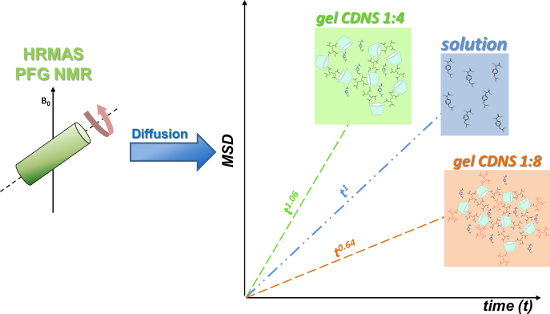
Beilstein J. Org. Chem. 2014, 10, 2715–2723, doi:10.3762/bjoc.10.286
Graphical Abstract
Figure 1: a) 1H high resolution NMR spectrum of IP dissolved in D2O, b) 1H HRMAS NMR spectrum of IP-CDNSEDTA ...
Figure 2: Normalized NMR signal decay I(q,td) as function of q2 for a) IP in D2O solution, b) IP in CDNSEDTA ...
Figure 3: log–log plot of MSD vs diffusion time td for: a) D2O solution, b) CDNSEDTA (1:4) and CDNSEDTA (1:8)....
Figure 4: TEM images of: a) CDNSEDTA (1:4) and b) CDNSEDTA (1:8).
Figure 5: Effect of the increasing amount of crosslinker with respect to CD (expressed here as mol of crossli...
Scheme 1: Schematic representation of the nanosponge synthesis. Acronyms: β-CD: β-cyclodextrin; EDTAn: anhydr...
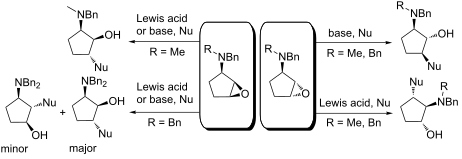
Beilstein J. Org. Chem. 2014, 10, 2513–2520, doi:10.3762/bjoc.10.262
Graphical Abstract
Scheme 1: Preparation of the starting materials.
Figure 1: Amine-based nucleophiles used in the epoxide ring opening reaction.
Scheme 2: Postulated mechanism for the formation of 14a,b.
Beilstein J. Org. Chem. 2014, 10, 2348–2360, doi:10.3762/bjoc.10.245
Graphical Abstract
Figure 1: Structures explaining why large DNA (L-DNA) constructs cannot easily autonomously self-assemble fro...
Figure 2: Watson–Crick pairing rules follow two rules of complementarity: (a) size complementarity (large pur...
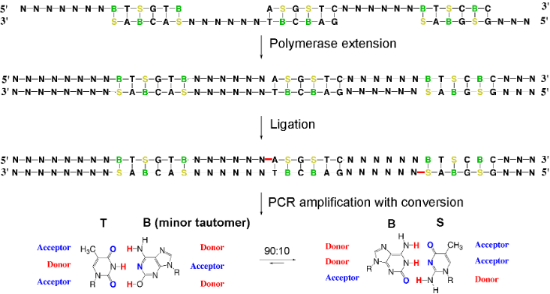
Figure 3: (top) Schematic showing the mix-anneal-extend-ligate-amplify process exploiting AEGIS pairing (to o...
Figure 4: The exact sequences and overlaps of the fragments designed by OligArch to allow the autonomous asse...
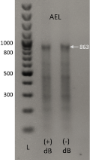
Figure 5: Agarose gel (1%, stained with ethidium bromide) showing the products (before PCR) arising from the ...
Figure 6: LB-agar plates spread, at various dilutions, with 25 µL cells transformed by plasmids containing th...
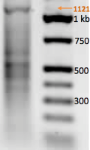
Figure 7: (left) Autonomous assembly of the 32A construct yielded the desired 1,121 base-pair amplicon in a s...
Figure 8: Fragments built only from standard nucleotides, without AEGIS, and designed by OligArch [21] to support...
Beilstein J. Org. Chem. 2014, 10, 2215–2221, doi:10.3762/bjoc.10.229
Graphical Abstract
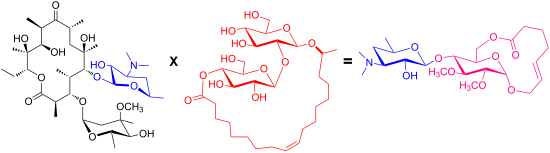
Figure 1: Erythromycin (1), the archetypal macrolide; sophorlipid lactone 2, a glycolipid macrolactone; β-D-g...
Scheme 1: Synthesis of macrolides 5 and 6 by a ring closing metathesis strategy.
Figure 2: Structure of macrolide 3; a) schematic representation of 3 emphasizing four-atom planar units of th...
Figure 3: Structures of 5 and 6 from X-ray crystallographic data; a) and b) side views of 5 (a) and 6 (b) wit...
Beilstein J. Org. Chem. 2014, 10, 2186–2199, doi:10.3762/bjoc.10.226
Graphical Abstract
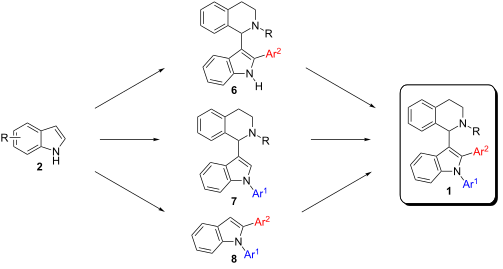
Figure 1: General structures of biologically active dihydroisoquinolines, THIQs and 1,2-diarylindoles.
Scheme 1: Li’s THIQ indolation protocol.
Scheme 2: Possible strategies for the synthesis of target structure 1. Dashed arrows indicate literature-know...
Scheme 3: Nucleophilic substitution of DMEDA with 2-fluoro-3-iodopyridine (10).
Scheme 4: Decomposition of 1-(indol-3-yl)-THIQ 4d during N-arylation (monitored by GC–MS).
Scheme 5: Formation of byproduct 13 via benzylic oxidation.
Scheme 6: Routes towards 1,2-diarylindoles starting from indole; a: PhB(OH)2 (3 equiv), Pd(OAc)2 (5 mol %), A...
Scheme 7: Palladium-catalyzed C2-arylation attempt of 1-(1-phenylindol-3-yl)-N-Boc-THIQ.
Beilstein J. Org. Chem. 2014, 10, 2175–2185, doi:10.3762/bjoc.10.225
Graphical Abstract
Scheme 1: Studied DBTAA–adenine conjugates (AP3, AP3am, AP5, AP6) [11], and the reference compounds lacking adeni...
Scheme 2: Preparations of the products AP3am and AP5. Starting compounds were synthesized according to previo...
Figure 1: Changes in the UV–vis spectrum of AP3am (c = 1.0 × 10⁻⁵ mol dm−3) upon titration with poly dA–poly ...
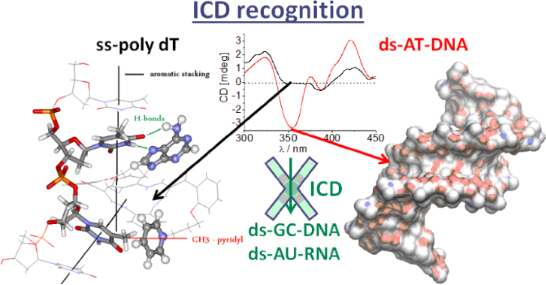
Figure 2: Induced CD bands observed for AP3, AP3am, AP6 for poly dA–poly dT and poly (dAdT)2 (c = 3.0 × 10⁻⁵ ...
Figure 3: Comparison of AP3 ICD bands for ss-DNA (dA and dT) with alternating- and homo-AT ds-polynucleotides...
Figure 4: Self-folding of AP5 (upper left – note the stacking of DBTAA and adenine) and AP3 (lower left – not...
Figure 5: Schematic presentation of self-folded AP5 (free AP5 see Figure 4; upper left) in the minor groove of poly d...
Beilstein J. Org. Chem. 2014, 10, 2089–2121, doi:10.3762/bjoc.10.218
Graphical Abstract
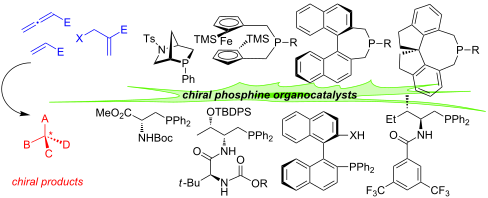
Figure 1: Cyclic chiral phosphines based on bridged-ring skeletons.
Figure 2: Cyclic chiral phosphines based on binaphthyl skeletons.
Figure 3: Cyclic chiral phosphines based on ferrocene skeletons.
Figure 4: Cyclic chiral phosphines based on spirocyclic skeletons.
Figure 5: Cyclic chiral phosphines based on phospholane ring skeletons.
Figure 6: Acyclic chiral phosphines.
Figure 7: Multifunctional chiral phosphines based on binaphthyl skeletons.
Figure 8: Multifunctional chiral phosphines based on amino acid skeletons.
Scheme 1: Asymmetric [3 + 2] annulations of allenoates with electron-deficient olefins, catalyzed by the chir...
Scheme 2: Asymmetric [3 + 2] annulations of allenoate and enones, catalyzed by the chiral binaphthyl-based ph...
Scheme 3: Asymmetric [3 + 2] annulations of N-substituted olefins and allenoates, catalyzed by the chiral bin...
Scheme 4: Asymmetric [3 + 2] annulations of 2-aryl-1,1-dicyanoethylenes with ethyl allenoate, catalyzed by th...
Scheme 5: Asymmetric [3 + 2] annulations of 3-alkylideneindolin-2-ones with ethyl allenoate, catalyzed by the...
Scheme 6: Asymmetric [3 + 2] annulations of 2,6-diarylidenecyclohexanones with allenoates, catalyzed by the c...
Scheme 7: Asymmetric [3 + 2] annulations of allenoate with alkylidene azlactones, catalyzed by the chiral bin...
Scheme 8: Asymmetric [3 + 2] annulations of C60 with allenoates, catalyzed by the chiral phosphine B6.
Scheme 9: Asymmetric [3 + 2] annulations of α,β-unsaturated esters and ketones with an allenoate, catalyzed b...
Scheme 10: Asymmetric [3 + 2] annulations of exocyclic enones with allenoates, catalyzed by the ferrocene-modi...
Scheme 11: Asymmetric [3 + 2] annulations of enones with an allenylphosphonate, catalyzed by the ferrocene-mod...
Scheme 12: Asymmetric [3 + 2] annulations of 3-alkylidene-oxindoles with ethyl allenoate, catalyzed by the fer...
Scheme 13: Asymmetric [3 + 2] annulations of dibenzylideneacetones with ethyl allenoate, catalyzed by the ferr...
Scheme 14: Asymmetric [3 + 2] annulations of trisubstituted alkenes with ethyl allenoate, catalyzed by the fer...
Scheme 15: Asymmetric [3 + 2] annulations of 2,6-diarylidenecyclohexanones with allenoates, catalyzed by the f...
Scheme 16: Asymmetric [3 + 2] annulations of α,β-unsaturated ketones with ethyl allenoates, catalyzed by the f...
Scheme 17: Asymmetric [3 + 2] annulations of α,β-unsaturated esters with allenoates, catalyzed by the ferrocen...
Scheme 18: Asymmetric [3 + 2] annulations of alkylidene azlactones with allenoates, catalyzed by the chiral sp...
Scheme 19: Asymmetric [3 + 2] annulations of α-trimethylsilyl allenones and electron-deficient olefins, cataly...
Scheme 20: Asymmetric [3 + 2] annulations of α,β-unsaturated ketones with an allenone, catalyzed by the chiral...
Scheme 21: Asymmetric [3 + 2] annulations of cyclic enones with allenoates, catalyzed by the chiral α-amino ac...
Scheme 22: Asymmetric [3 + 2] annulations of arylidenemalononitriles and analogues with an allenoate, catalyze...
Scheme 23: Asymmetric [3 + 2] annulations of α,β-unsaturated esters with an allenoate, catalyzed by the chiral...
Scheme 24: Asymmetric [3 + 2] annulations of 3,5-dimethyl-1H-pyrazole-derived acrylamides with an allenoate, c...
Scheme 25: Asymmetric [3 + 2] annulations of maleimides with allenoates, catalyzed by the chiral phosphine H10....
Scheme 26: Asymmetric [3 + 2] annulations of α-substituted acrylates with allenoate, catalyzed by the chiral p...
Scheme 27: Asymmetric [3 + 2] annulation of an N-tosylimine with an allenoate, catalyzed by the chiral phosphi...
Scheme 28: Asymmetric [3 + 2] annulations of N-tosylimines with an allenoate, catalyzed by the chiral phosphin...
Scheme 29: Asymmetric [3 + 2] annulations of N-tosylimines with an allenoate, catalyzed by the chiral phosphin...
Scheme 30: Asymmetric [3 + 2] annulations of N-diphenylphosphinoyl aromatic imines with butynoates, catalyzed ...
Scheme 31: Asymmetric [3 + 2] annulations of N-tosylimines with allenylphosphonates, catalyzed by the chiral p...
Scheme 32: Asymmetric [3 + 2] annulation of an N-tosylimine with an allenoate, catalyzed by the chiral phosphi...
Scheme 33: Asymmetric [3 + 2] annulations of N-diphenylphosphinoyl aromatic imines with allenoates (top), cata...
Scheme 34: Asymmetric [3 + 2] annulation of N-diphenylphosphinoylimines with allenoates, catalyzed by the chir...
Scheme 35: Asymmetric [3 + 2] annulation of an azomethine imine with an allenoate, catalyzed by the chiral pho...
Scheme 36: Asymmetric [3 + 2] annulations between α,β-unsaturated esters/ketones and 3-butynoates, catalyzed b...
Scheme 37: Asymmetric intramolecular [3 + 2] annulations of electron-deficient alkenes and MBH carbonates, cat...
Scheme 38: Asymmetric [3 + 2] annulations of methyleneindolinone and methylenebenzofuranone derivatives with M...
Scheme 39: Asymmetric [3 + 2] annulations of activated isatin-based alkenes with MBH carbonates, catalyzed by ...
Scheme 40: Asymmetric [3 + 2] annulations of maleimides with MBH carbonates, catalyzed by the chiral phosphine ...
Scheme 41: A series of [3 + 2] annulations of various activated alkenes with MBH carbonates, catalyzed by the ...
Scheme 42: Asymmetric [3 + 2] annulations of an alkyne with isatins, catalyzed by the chiral phosphine F1.
Scheme 43: Asymmetric [4 + 2] annulations catalyzed by the chiral phosphine B1.
Scheme 44: Asymmetric [4 + 2] annulations catalyzed by the chiral phosphine H5.
Scheme 45: Asymmetric [4 + 2] annulations catalyzed by the chiral phosphines H13 and H12.
Scheme 46: Asymmetric [4 + 2] annulations catalyzed by the chiral phosphine H6.
Scheme 47: Kerrigan’s [2 + 2] annulations of ketenes with imines, catalyzed by the chiral phosphine B7.
Scheme 48: Asymmetric [4 + 1] annulations, catalyzed by the chiral phosphine G6.
Scheme 49: Asymmetric homodimerization of ketenes, catalyzed by the chiral phosphine F5 and F6.
Scheme 50: Aza-MBH/Michael reactions, catalyzed by the chiral phosphine G1.
Scheme 51: Tandem RC/Michael additions, catalyzed by the chiral phosphine H14.
Scheme 52: Intramolecular tandem RC/Michael addition, catalyzed by the chiral phosphine H15.
Scheme 53: Double-Michael addition, catalyzed by the chiral aminophosphine G9.
Scheme 54: Tandem Michael addition/Wittig olefinations, mediated by the chiral phosphine BIPHEP.
Scheme 55: Asymmetric Michael additions, catalyzed by the chiral phosphines H7, H8, and H9.
Scheme 56: Asymmetric γ-umpolung additions, catalyzed by the chiral phosphine A1.
Scheme 57: Asymmetric γ-umpolung additions, catalyzed by the chiral phosphines E2 and E3.
Scheme 58: Intramolecular γ-additions of hydroxy-2-alkynoates, catalyzed by the chiral phosphine D2.
Scheme 59: Intra-/intermolecular γ-additions, catalyzed by the chiral phosphine D2.
Scheme 60: Intermolecular γ-additions, catalyzed by the chiral phosphines B5 and B3.
Scheme 61: Intermolecular γ-additions, catalyzed by the chiral phosphines E6 and B4.
Scheme 62: Asymmetric allylic substitution of MBH acetates, catalyzed by the chiral phosphine G2.
Scheme 63: Allylic substitutions between MBH acetates or carbonates and an array of nucleophiles, catalyzed by...
Scheme 64: Asymmetric acylation of diols, catalyzed by the chiral phosphines E4 and E5.
Scheme 65: Kinetic resolution of secondary alcohols, catalyzed by the chiral phosphine E8 and E9.
Beilstein J. Org. Chem. 2014, 10, 2013–2020, doi:10.3762/bjoc.10.209
Graphical Abstract
Scheme 1: Planar and layered ethynyl aromatics as building blocks for extended aromatic structures.
Scheme 2: Previous coupling experiments with pseudo-ortho-diethynyl[2.2]paracyclophane 4.
Scheme 3: Glaser coupling of pseudo-gem-diethynyl[2.2]paracyclophane 2.
Scheme 4: Glaser coupling of pseudo-ortho-diethynyl[2.2]paracyclophane, 4.
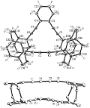
Figure 1: Above: The molecule of compound 11 in the crystal; ellipsoids represent 30% probability levels. Onl...
Figure 2: Above: The molecule of compound 12 in the crystal; ellipsoids represent 50% probability levels. Onl...
Scheme 5: Sonogashira coupling of aldehyde 13 with ortho-diiodobenzene (14).
Scheme 6: Preparation of benzologs of dimers 11/12.
Figure 3: Above: The molecule of compound 19 in the crystal; ellipsoids represent 50% probability levels. Sol...
Figure 4: Above: One of the three independent molecules of compound 20 in the crystal; ellipsoids represent 3...
Scheme 7: Cross dimerization of 1 and 4.
Figure 5: The molecule of compound 22 in the crystal; ellipsoids represent 50% probability levels.
Scheme 8: An attempt to prepare a biphenylenophane.
Figure 6: The molecule of compound 26 in the crystal; ellipsoids represent 50% probability levels.
Beilstein J. Org. Chem. 2014, 10, 1848–1877, doi:10.3762/bjoc.10.195
Graphical Abstract
Figure 1: Examples of phosphonamide reagents used in stereoselective synthesis.
Figure 2: Natural products and bioactive molecules synthesized using phosphonamide-based chemistry (atoms, bo...
Scheme 1: Olefination with cyclic phosphonamide anions, mechanistic rationale, and selected examples 27a–d [18].
Scheme 2: Asymmetric olefination with chiral phosphonamide anions and selected examples 31a–d [1,22].
Scheme 3: Synthesis of α-substituted phosphonic acids 33a–e by asymmetric alkylation of chiral phosphonamide ...
Scheme 4: Asymmetric conjugate additions of C2-symmetric chiral phosphonamide anions to cyclic enones, lacton...
Scheme 5: Asymmetric conjugate additions of P-chiral phosphonamide anions generated from 40a and 44a to cycli...
Scheme 6: Asymmetric cyclopropanation with chiral chloroallyl phosphonamide 47, mechanistic rationale, and se...
Scheme 7: Asymmetric cyclopropanation with chiral chloromethyl phosphonamide 28d [59].
Scheme 8: Stereoselective synthesis of cis-aziridines 57 from chiral chloroallyl phosphonamide 47a [62].
Scheme 9: Synthesis of phosphonamides by (A) Arbuzov reaction, (B) condensation of diamines with phosphonic a...
Figure 3: Original and revised structure of polyoxin A (69) [24-26].
Scheme 10: Synthesis of (E)-polyoximic acid (9) [24-26].
Figure 4: Key assembly strategy of acetoxycrenulide (10) [41,42].
Scheme 11: Total synthesis of (+)-acetoxycrenulide (10) [41,42].
Scheme 12: Synthesis squalene synthase inhibitor 19 by asymmetric sulfuration (A) and asymmetric alkylation (B...
Figure 5: Key assembly strategy of fumonisin B2 (20) and its tricarballylic acid fragment 105 [45,46].
Scheme 13: Final steps of the total synthesis of fumonisin B2 (20) [45,46].
Figure 6: Selected examples of two subclasses of β-lactam antibiotics – carbapenems (111 and 112) and trinems...
Scheme 14: Synthesis of tricyclic β-lactam antibiotic 123 [97].
Scheme 15: Total synthesis of (−)-anthoplalone (8) [56].
Figure 7: Protein tyrosine phosphatase (PTP) inhibitors 130, 131 and model compounds 16, 132 and 133 [68].
Scheme 16: Synthesis of model PTP inhibitors 16a,b [68].
Scheme 17: Synthesis of aziridine hydroxamic acid 17 as MMP inhibitor [63].
Scheme 18: Synthesis of methyl jasmonate (11) [48].
Figure 8: Structures of nudiflosides A (137) and D (13) [49].
Scheme 19: Total synthesis of the pentasubstituted cyclopentane core 159 of nudiflosides A (151) and D (13) an...
Figure 9: L-glutamic acid (161) and constrained analogues [57,124].
Scheme 20: Stereoselective synthesis of DCG-IV (162) [57].
Scheme 21: Stereoselective synthesis of mGluR agonist 21 [124].
Figure 10: Key assembly strategy of berkelic acid (15) [43].
Scheme 22: Total synthesis of berkelic acid (15) [43].
Figure 11: Key assembly strategy of jerangolid A (22) and ambruticin S (14) [27,28].
Scheme 23: Final assembly steps in the total synthesis of jerangolid A [27].
Scheme 24: Key assembly steps in the total synthesis of ambruticin S (14) [28].
Figure 12: General steroid construction strategy based on conjugate addition of 212 to cyclopentenone 48, exem...
Scheme 25: Total synthesis of estrone (12) [44].
Beilstein J. Org. Chem. 2014, 10, 1840–1847, doi:10.3762/bjoc.10.194
Graphical Abstract
Figure 1: Chemical structures and carbon numbering scheme of tricyclo(tc)-DNA (top, left), bicyclo(bc)-DNA (t...
Scheme 1: Conditions: (a) NaBH4, CeCl3·7H2O, MeOH, −78 °C → rt, 1.5 h, 73% (+9% of C6-epimer); (b) TBS-Cl, im...
Scheme 2: Conditions: (a) thymine, BSA, TMSOTf, TMSCl, CH3CN, rt, 2.5 h; (b) DMTrCl, pyridine, rt, 16 h, 29% ...
Figure 2: X-ray structure of top row: nucleosides 8β (left), 11β (center) and overlay of both structures (rig...
Scheme 3: Pathways for elimination of the modified nucleotides during the oxidation step in oligonucleotide a...
Beilstein J. Org. Chem. 2014, 10, 1630–1637, doi:10.3762/bjoc.10.169
Graphical Abstract
Scheme 1: Modular titanocene synthesis via acylation reactions [24].
Figure 1: Carboxylates employed as titanocene starting materials for azide-substituted complexes.
Figure 2: Azides employed in this study and conditions for their synthesis.
Figure 3: Most active titanocenes of this study and their AC50 values.
Beilstein J. Org. Chem. 2014, 10, 1267–1271, doi:10.3762/bjoc.10.127
Graphical Abstract
Scheme 1: General transformation of selenides to selenones.
Scheme 2: Phenylselenone 2 as useful leaving group for the synthesis of different organic molecules.
Beilstein J. Org. Chem. 2014, 10, 1166–1196, doi:10.3762/bjoc.10.117
Graphical Abstract
Scheme 1: Pioneer works of Atherton, Openshaw and Todd reporting on the synthesis of phosphoramidate starting...
Scheme 2: Mechanisms 1 (i) and 2 (ii) suggested by Atherton and Todd in 1945; adapted from [1].
Scheme 3: Two reaction pathways (i and ii) to produce chlorophosphate 2. Charge-transfer complex observed whe...
Scheme 4: Mechanism of the Atherton–Todd reaction with dimethylphosphite according to Roundhill et al. (adapt...
Scheme 5: Synthesis of dialkyl phosphate from dialkyl phosphite (i) and identification of chloro- and bromoph...
Scheme 6: Synthesis of chiral phosphoramidate with trichloromethylphosphonate as the suggested intermediate (...
Scheme 7: Selection of results that address the question of the stereochemistry of the AT reaction (adapted f...
Scheme 8: Synthesis of phenoxy spirophosphorane by the AT reaction (adapted from [34]).
Scheme 9: Suggested mechanism of the Atherton–Todd reaction, (i) and (ii) formation of chlorophosphate with a...
Scheme 10: AT reaction in biphasic conditions (adapted from [38]).
Scheme 11: AT reaction with iodoform as halide source (adapted from [37]).
Scheme 12: AT reaction with phenol at low temperature in the presence of DMAP (adapted from [40]).
Scheme 13: Synthesis of a triphosphate by the AT reaction starting with the preparation of chlorophosphate (ad...
Scheme 14: AT reaction with sulfonamide (adapted from [42]).
Scheme 15: Synthesis of a styrylphosphoramidate starting from the corresponding aniline (adapted from [43]).
Scheme 16: Use of hydrazine as nucleophile in AT reactions (adapted from [48]).
Scheme 17: AT reaction with phenol as a nucleophilic species; synthesis of dioleyl phosphate-substituted couma...
Scheme 18: Synthesis of β-alkynyl-enolphosphate from allenylketone with AT reaction (adapted from [58]).
Scheme 19: Synthesis of pseudohalide phosphate by using AT reaction (adapted from [67]).
Scheme 20: AT reaction with hydrospirophosphorane with insertion of CO2 in the product (adapted from [69]).
Scheme 21: AT reaction with diaryl phosphite (adapted from [70]).
Scheme 22: AT reaction with O-alkyl phosphonite (adapted from [71]).
Scheme 23: Use of phosphinous acid in AT reactions (adapted from [72]).
Scheme 24: AT reaction with secondary phosphinethiooxide (adapted from [76]).
Scheme 25: Use of H-phosphonothioate in the AT reaction (adapted from [78]).
Scheme 26: AT-like reaction with CuI as catalyst and without halide source (adapted from [80]).
Scheme 27: Reduction of phenols after activation as phosphate derivatives (adapted from [81] i ; [82], ii; and [83], iii).
Scheme 28: Synthesis of medium and large-sized nitrogen-containing heterocycles (adapted from [85]).
Scheme 29: Synthesis of arylstannane from aryl phosphate prepared by an AT reaction (adapted from [86]).
Scheme 30: Synthesis and use of aryl dialkyl phosphate for the synthesis of biaryl derivatives (adapted from [89])....
Scheme 31: Synthesis of aryl dialkyl phosphate by an AT reaction from phenol and subsequent rearrangement yiel...
Scheme 32: Selected chiral phosphoramidates used as organocatalyst; i) chiral phosphoramidate used in the pion...
Scheme 33: Determination of ee of H-phosphinate by the application of the AT reaction with a chiral amine (ada...
Scheme 34: Chemical structure of selected flame retardants synthesized by AT reactions; (BDE: polybrominated d...
Scheme 35: Transformation of DOPO (i) and synthesis of polyphosphonate (ii) by the AT reaction (adapted from [117] ...
Scheme 36: Synthesis of lipophosphite (bisoleyl phosphite) and cationic lipophosphoramidate with an AT reactio...
Scheme 37: Use of AT reactions to produce cationic lipids characterized by a trimethylphosphonium, trimethylar...
Scheme 38: Cationic lipid synthesized by the AT reaction illustrating the variation of the structure of the li...
Scheme 39: Helper lipids for nucleic acid delivery synthesized with the AT reaction (adapted from [130]).
Scheme 40: AT reaction used to produce red/ox-sensitive cationic lipids (adapted from [135]).
Scheme 41: Alkyne and azide-functionalized phosphoramidate synthesized by AT reactions,(i); illustration of so...
Scheme 42: Cationic lipids exhibiting bactericidal action – arrows indicate the bond formed by the AT reaction...
Scheme 43: β-Cyclodextrin-based lipophosphoramidates (adapted from [138]).
Scheme 44: Polyphosphate functionalized by an AT reaction (adapted from [139]).
Scheme 45: Synthesis of zwitterionic phosphocholine-bound chitosan (adapted from [142]).
Scheme 46: Synthesis of AZT-based prodrug via an AT reaction (adapted from [143]).
Beilstein J. Org. Chem. 2014, 10, 544–598, doi:10.3762/bjoc.10.50
Graphical Abstract
Scheme 1: The proposed mechanism of the Passerini reaction.
Scheme 2: The PADAM-strategy to α-hydroxy-β-amino amide derivatives 7. An additional oxidation provides α-ket...
Scheme 3: The general accepted Ugi-mechanism.
Scheme 4: Three commonly applied Ugi/cyclization approaches. a) UDC-process, b) UAC-sequence, c) UDAC-combina...
Scheme 5: Ugi reaction that involves the condensation of Armstrong’s convertible isocyanide.
Scheme 6: Mechanism of the U-4C-3CR towards bicyclic β-lactams.
Scheme 7: The Ugi 4C-3CR towards oxabicyclo β-lactams.
Scheme 8: Ugi MCR between an enantiopure monoterpene based β-amino acid, aldehyde and isocyanide resulting in...
Scheme 9: General MCR for β-lactams in water.
Scheme 10: a) Ugi reaction for β-lactam-linked peptidomimetics. b) Varying the β-amino acid resulted in β-lact...
Scheme 11: Ugi-4CR followed by a Pd-catalyzed Sn2 cyclization.
Scheme 12: Ugi-3CR of dipeptide mimics from 2-substituted pyrrolines.
Scheme 13: Joullié–Ugi reaction towards 2,5-disubstituted pyrrolidines.
Scheme 14: Further elaboration of the Ugi-scaffold towards bicyclic systems.
Scheme 15: Dihydroxyproline derivatives from an Ugi reaction.
Scheme 16: Diastereoselective Ugi reaction described by Banfi and co-workers.
Scheme 17: Similar Ugi reaction as in Scheme 16 but with different acids and two chiral isocyanides.
Scheme 18: Highly diastereoselective synthesis of pyrrolidine-dipeptoids via a MAO-N/MCR-procedure.
Scheme 19: MAO-N/MCR-approach towards the hepatitis C drug telaprevir.
Scheme 20: Enantioselective MAO-U-3CR procedure starting from chiral pyrroline 64.
Scheme 21: Synthesis of γ-lactams via an UDC-sequence.
Scheme 22: Utilizing bifunctional groups to provide bicyclic γ-lactam-ketopiperazines.
Scheme 23: The Ugi reaction provided both γ- as δ-lactams depending on which inputs were used.
Scheme 24: The sequential Ugi/RCM with olefinic substrates provided bicyclic lactams.
Scheme 25: a) The structural and dipole similarities of the triazole unit with the amide bond. b) The copper-c...
Scheme 26: The Ugi/Click sequence provided triazole based peptidomimetics.
Scheme 27: The Ugi/Click reaction as described by Nanajdenko.
Scheme 28: The Ugi/Click-approach by Pramitha and Bahulayan.
Scheme 29: The Ugi/Click-combination by Niu et al.
Scheme 30: Triazole linked peptidomimetics obtained from two separate MCRs and a sequential Click reaction.
Scheme 31: Copper-free synthesis of triazoles via two MCRs in one-pot.
Scheme 32: The sequential Ugi/Paal–Knorr reaction to afford pyrazoles.
Scheme 33: An intramolecular Paal–Knorr condensation provided under basic conditions pyrazolones.
Scheme 34: Similar cyclization performed under acidic conditions provided pyrazolones without the trifluoroace...
Scheme 35: The Ugi-4CR towards 2,4-disubstituted thiazoles.
Scheme 36: Solid phase approach towards thiazoles.
Scheme 37: Reaction mechanism of formation of thiazole peptidomimetics containing an additional β-lactam moiet...
Scheme 38: The synthesis of the trisubstituted thiazoles could be either performed via an Ugi reaction with pr...
Scheme 39: Performing the Ugi reaction with DMB-protected isocyanide gave access to either oxazoles or thiazol...
Scheme 40: Ugi/cyclization-approach towards 2,5-disubstituted thiazoles. The Ugi reaction was performed with d...
Scheme 41: Further derivatization of the thiazole scaffold.
Scheme 42: Three-step procedure towards the natural product bacillamide C.
Scheme 43: Ugi-4CR to oxazoles reported by Zhu and co-workers.
Scheme 44: Ugi-based synthesis of oxazole-containing peptidomimetics.
Scheme 45: TMNS3 based Ugi reaction for peptidomimics containing a tetrazole.
Scheme 46: Catalytic cycle of the enantioselective Passerini reaction towards tetrazole-based peptidomimetics.
Scheme 47: Tetrazole-based peptidomimetics via an Ugi reaction and a subsequent sigmatropic rearrangement.
Scheme 48: Resin-bound Ugi-approach towards tetrazole-based peptidomimetics.
Scheme 49: Ugi/cyclization approach towards γ/δ/ε-lactam tetrazoles.
Scheme 50: Ugi-3CR to pipecolic acid-based peptidomimetics.
Scheme 51: Staudinger–Aza-Wittig/Ugi-approach towards pipecolic acid peptidomimetics.
Figure 1: The three structural isomers of diketopiperazines. The 2,5-DKP isomer is most common.
Scheme 52: UDC-approach to obtain 2,5-DKPs, either using Armstrong’s isocyanide or via ethylglyoxalate.
Scheme 53: a) Ugi reaction in water gave either 2,5-DKP structures or spiro compounds. b) The Ugi reaction in ...
Scheme 54: Solid-phase approach towards diketopiperazines.
Scheme 55: UDAC-approach towards DKPs.
Scheme 56: The intermediate amide is activated as leaving group by acid and microwave assisted organic synthes...
Scheme 57: UDC-procedure towards active oxytocin inhibitors.
Scheme 58: An improved stereoselective MCR-approach towards the oxytocin inhibitor.
Scheme 59: The less common Ugi reaction towards DKPs, involving a Sn2-substitution.
Figure 2: Spatial similarities between a natural β-turn conformation and a DKP based β-turn mimetic [158].
Scheme 60: Ugi-based syntheses of bicyclic DKPs. The amine component is derived from a coupling between (R)-N-...
Scheme 61: Ugi-based synthesis of β-turn and γ-turn mimetics.
Figure 3: Isocyanide substituted 3,4-dihydropyridin-2-ones, dihydropyridines and the Freidinger lactams. Bio-...
Scheme 62: The mechanism of the 4-CR towards 3,4-dihydropyridine-2-ones 212.
Scheme 63: a) Multiple MCR-approach to provide DHP-peptidomimetic in two-steps. b) A one-pot 6-CR providing th...
Scheme 64: The MCR–alkylation–MCR procedure to obtain either tetrapeptoids or depsipeptides.
Scheme 65: U-3CR/cyclization employing semicarbazone as imine component gave triazine based peptidomimetics.
Scheme 66: 4CR towards triazinane-diones.
Scheme 67: The MCR–alkylation–IMCR-sequence described by our group towards triazinane dione-based peptidomimet...
Scheme 68: Ugi-4CR approaches followed by a cyclization to thiomorpholin-ones (a) and pyrrolidines (b).
Scheme 69: UDC-approach for benzodiazepinones.
Scheme 70: Ugi/Mitsunobu sequence to BDPs.
Scheme 71: A UDAC-approach to BDPs with convertible isocyanides. The corresponding amide is cleaved by microwa...
Scheme 72: microwave assisted post condensation Ugi reaction.
Scheme 73: Benzodiazepinones synthesized via the post-condensation Ugi/ Staudinger–Aza-Wittig cyclization.
Scheme 74: Two Ugi/cyclization approaches utilizing chiral carboxylic acids. Reaction (a) provided the product...
Scheme 75: The mechanism of the Gewald-3CR includes three base-catalysed steps involving first a Knoevnagel–Co...
Scheme 76: Two structural 1,4-thienodiazepine-2,5-dione isomers by U-4CR/cyclization.
Scheme 77: Tetrazole-based diazepinones by UDC-procedure.
Scheme 78: Tetrazole-based BDPs via a sequential Ugi/hydrolysis/coupling.
Scheme 79: MCR synthesis of three different tricyclic BPDs.
Scheme 80: Two similar approaches both involving an Ugi reaction and a Mitsunobu cyclization.
Scheme 81: Mitsunobu–Ugi-approach towards dihydro-1,4-benzoxazepines.
Scheme 82: Ugi reaction towards hetero-aryl fused 5-oxo-1,4-oxazepines.
Scheme 83: a) Ugi/RCM-approach towards nine-membered peptidomimetics b) Sequential peptide-coupling, deprotect...
Scheme 84: Ugi-based synthesis towards cyclic RGD-pentapeptides.
Scheme 85: Ugi/MCR-approach towards 12–15 membered macrocycles.
Scheme 86: Stereoselective Ugi/RCM approach towards 16-membered macrocycles.
Scheme 87: Passerini/RCM-sequence to 22-membered macrocycles.
Scheme 88: UDAC-approach towards 12–18-membered depsipeptides.
Figure 4: Enopeptin A with its more active derivative ADEP-4.
Scheme 89: a) The Joullié–Ugi-approach towards ADEP-4 derivatives b) Ugi-approach for the α,α-dimethylated der...
Scheme 90: Ugi–Click-strategy for 15-membered macrocyclic glyco-peptidomimetics.
Scheme 91: Ugi/Click combinations provided macrocycles containing both a triazole and an oxazole moiety.
Scheme 92: a) A solution-phase procedure towards macrocycles. b) Alternative solid-phase synthesis as was repo...
Scheme 93: Ugi/cyclization towards cyclophane based macrocycles.
Scheme 94: PADAM-strategy towards eurystatin A.
Scheme 95: PADAM-approach for cyclotheanamide.
Scheme 96: A triple MCR-approach affording RGD-pentapeptoids.
Scheme 97: Ugi-MiBs-approach towards peptoid macrocycles.
Scheme 98: Passerini-based MiB approaches towards macrocycles 345 and 346.
Scheme 99: Macrocyclic peptide formation by the use of amphoteric aziridine-based aldehydes.