


Search results
Search for "π-stacking" in Full Text gives 227 result(s) in Beilstein Journal of Organic Chemistry. Showing first 200.
Synthesis and characterization of pH responsive D-glucosamine based molecular gelators
Beilstein J. Org. Chem. 2014, 10, 3111–3121, doi:10.3762/bjoc.10.328
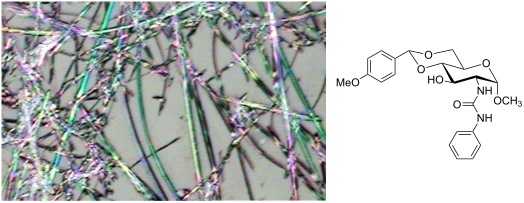
- referred to as supramolecular gelators or molecular gelators. They can form reversible gels in organic solvents, aqueous mixtures, and water. The gelation process is completely driven by weak intermolecular forces such as hydrogen bonding, π–π stacking, hydrophobic forces, and van der Waals forces. The




A one-pot multistep cyclization yielding thiadiazoloimidazole derivatives
Beilstein J. Org. Chem. 2014, 10, 2989–2996, doi:10.3762/bjoc.10.317
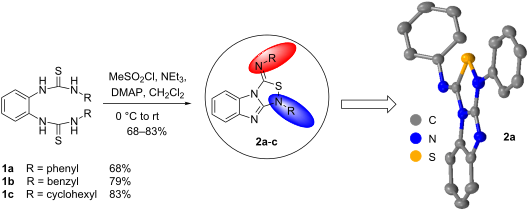
- by multiple π–π stacking (slighly displaced) at a distance of 3.36−3.40 Å (Figure 1c) while the iminophenyl groups are connected by weak intermolecular C(phenyl)-H···π(phenyl) contacts. Moreover, Figure 1a shows that the structure is planar except for the phenyl ring attached to the N4 atom (C2–N4–C5
- –C6 = 49.0°). The phenyl ring attached to the N3 atom is nearly coplanar (C1–N3–C3–C4 = 2.5°) with the thiadiazole ring allowing additional delocalization. This coplanar arrangement might help for intercalation into biological molecules using e.g., π–π stacking, C–H···π or ion–dipole interactions
- –π stacking. To take the solvent into consideration, the thermochemical analyses were performed in dichloromethane using the COSMO model with gas phase optimized geometries. Originally, DMAP should be hydrogen bonded to both amide protons in complex 8 increasing the nucleophilicity of both N-centers


A comparative study of the interactions of cationic hetarenes with quadruplex-DNA forming oligonucleotide sequences of the insulin-linked polymorphic region (ILPR)
Beilstein J. Org. Chem. 2014, 10, 2963–2974, doi:10.3762/bjoc.10.314
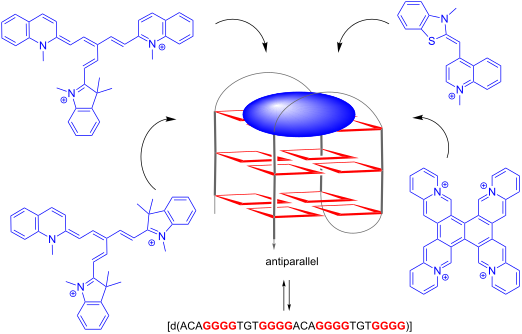
- terminal π-stacking [20], which is in agreement with the observed binding stoichiometry of 1:1 (Figure 7), the different composition of the loops in ILPR-quadruplex (ACA and TGT in ILPR versus TTA in telomeric quadruplex) may affect the binding affinity of ligands towards the ILPR-DNA. On the other hand




Synthesis and characterization of a new photoinduced switchable β-cyclodextrin dimer
Beilstein J. Org. Chem. 2014, 10, 2874–2885, doi:10.3762/bjoc.10.304
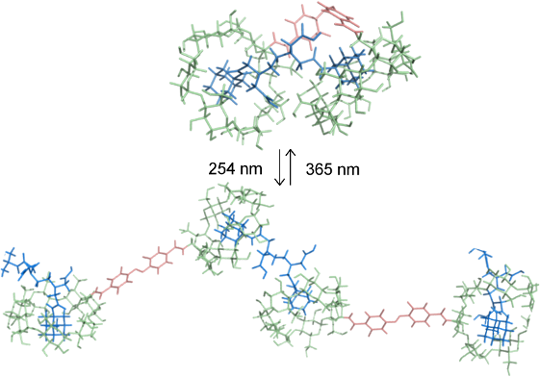
- cyclic polymers are aggregated into larger objects stabilized by hydrogen bonds between cyclodextrin moieties and by π-stacking interactions between azobenzene linkers. Finally, according to the computational data, the complexes of AZO-CDim 1 with ADAdim 4 are further stabilized by intramolecular



Solution processable diketopyrrolopyrrole (DPP) cored small molecules with BODIPY end groups as novel donors for organic solar cells
Beilstein J. Org. Chem. 2014, 10, 2683–2695, doi:10.3762/bjoc.10.283
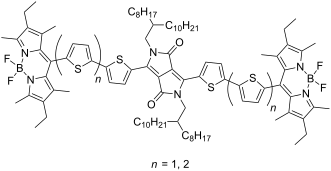
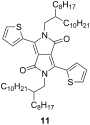
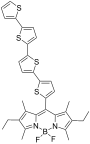
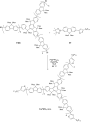
- organic field-effect transistors [24][25]. The DPP-based conjugated polymers usually show good electron and hole mobility and promising PCE values in OPVs due to large intermolecular interactions through π–π stacking. Nguyen et al. have investigated the DPP core in small molecules for OPVs with excellent




Molecular recognition of AT-DNA sequences by the induced CD pattern of dibenzotetraaza[14]annulene (DBTAA)–adenine derivatives
Beilstein J. Org. Chem. 2014, 10, 2175–2185, doi:10.3762/bjoc.10.225
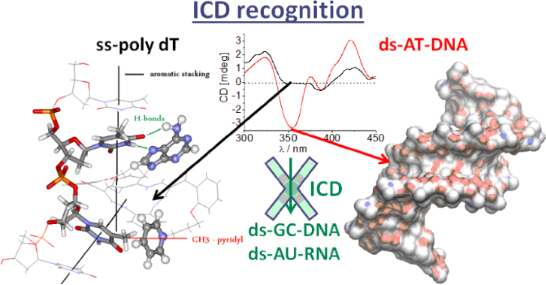
- stacked dimers within the DNA minor groove similar to the crystal structure of close analogue (Figure 4, right). Conversely, the AP5 and AP6 aliphatic linkers are long enough to allow self-folding and easy intramolecular π–π stacking of adenine with DBTAA (Figure 4, upper right). During the binding event
- left – note the stacking of DBTAA and adenine) and AP3 (lower left – note the short linker which does not allow for the stacking of DBTAA and adenine); (right) detail of three molecules packing in crystal by π–π stacking of parallel DBTAA rings with a distance of ca. 3 Å (see [13] and Figure 8 therein


Scalable synthesis of 5,11-diethynylated indeno[1,2-b]fluorene-6,12-diones and exploration of their solid state packing
Beilstein J. Org. Chem. 2014, 10, 2122–2130, doi:10.3762/bjoc.10.219
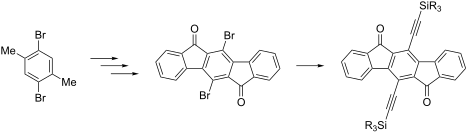
- structure revealed 1-dimensional π-stacking with a close interplanar distance of 3.30 Å [15]. Due to the inherent insolubility of compounds 3 and 4, however, they needed to be vapor deposited under vacuum. More recently IF-diones 5–7 were reported (along with polymeric and other derivatives) with 5 and 6
- backbone and the solubilizing groups, and π-stacking is observed in all but the largest (8f, SiPh3), but there are significant differences in the nature of the π-stacking of the other nine compounds. The smallest (8a, SiMe3, vol. ~130 Å3) is monoclinic, P21/c, with a unit cell elongated along b. The
- )°, giving a variant of the common herringbone motif, despite the lack of a crystallographic glide plane. In addition to the IF-dione π-stacking, inversion-related phenyl groups on the solubilizing groups are paired by π–π interactions. The stacking in compounds 8c and 8d (Si(n-Pr)3 and Si(iPr)3, vol. ~278


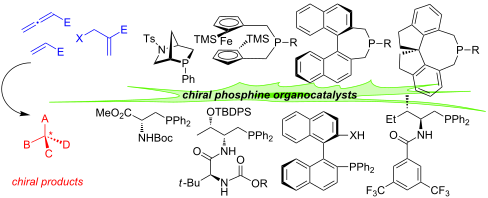
Chiral phosphines in nucleophilic organocatalysis
Beilstein J. Org. Chem. 2014, 10, 2089–2121, doi:10.3762/bjoc.10.218


Supercritical carbon dioxide: a solvent like no other
Beilstein J. Org. Chem. 2014, 10, 1878–1895, doi:10.3762/bjoc.10.196
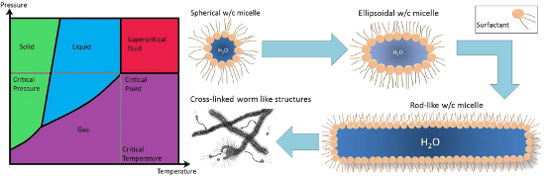
- chain, due to poor solvency of styrene in CO2. It was anticipated that π–π stacking between phenyl groups is a main contributor to the viscosity increase, through its provision of a fundamental intermolecular force needed to raise viscosity in a system. The optimum composition of polymers for viscosity


Aryl substitution of pentacenes
Beilstein J. Org. Chem. 2014, 10, 1692–1705, doi:10.3762/bjoc.10.178
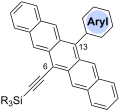
- ; pentacene; π-stacking; polycyclic aromatic hydrocarbon; solid-state structure; Introduction Conjugated organic molecules are promising candidates for use in optoelectronic applications including OLEDs [1], photovoltaics [2], and OFETs [3]. Even though there is literally an infinite number of possibilities
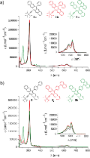
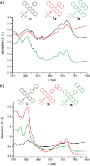
- often observed for samples which give solution cast films that result in significant π-stacking between molecules, such as TIPSPc, in which λmax shifts from 643 nm in solution to ca. 705 nm in the solid film [11][35][40]. This same logic also suggests that the minimal difference between the absorption
- characteristics of 3c and 3h results from both a lack of influence from the different silyl groups, as well as the absence of strong π-stacking for both derivatives in the films, even though X-ray crystallographic analysis suggests that strong interactions might be possible for some derivatives in the solid state




Influence of perylenediimide–pyrene supramolecular interactions on the stability of DNA-based hybrids: Importance of electrostatic complementarity
Beilstein J. Org. Chem. 2014, 10, 1589–1595, doi:10.3762/bjoc.10.164
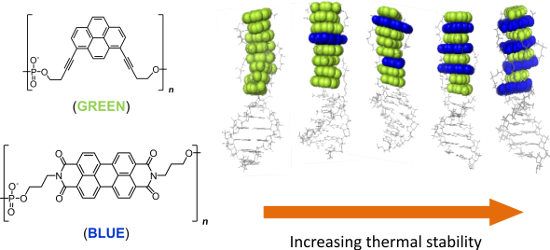
- Christian B. Winiger Simon M. Langenegger Oleg Khorev Robert Haner Department of Chemistry and Biochemistry, University of Bern, Freiestrasse 3, CH-3012 Bern, Switzerland 10.3762/bjoc.10.164 Abstract Aromatic π–π stacking interactions are ubiquitous in nature, medicinal chemistry and materials
- interaction indicating the importance of electrostatic complementarity for aromatic π–π stacking interactions. Keywords: DNA; hybridization; nucleic acids; perylenediimide; pyrene; Introduction When two aromatic molecules are in close proximity they often have a tendency to interact non-covalently in a face
- -to-face stacking arrangement. Face-centered, parallel aromatic π–π stacking interactions have been studied and reviewed in great detail [1][2][3][4][5]. These interactions are especially important for polycyclic aromatic hydrocarbons (PAHs) [6][7]. The interaction is the result of solvophobicity, as

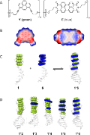


Pyrene-modified PNAs: Stacking interactions and selective excimer emission in PNA2DNA triplexes
Beilstein J. Org. Chem. 2014, 10, 1495–1503, doi:10.3762/bjoc.10.154
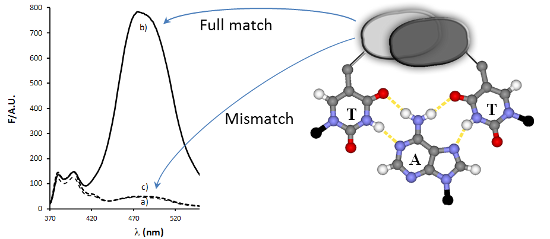
- induced by steric factors; moreover the large aromatic portion introduced with the pyrene ring can interact with the flanking bases of the strand through π–π stacking interactions, thus stabilizing the complex formed. For the evaluation of the sum of all this effects we measured the melting temperatures


Homochiral BINOL-based macrocycles with π-electron-rich, electron-withdrawing or extended spacing units as receptors for C60
Beilstein J. Org. Chem. 2014, 10, 1308–1316, doi:10.3762/bjoc.10.132
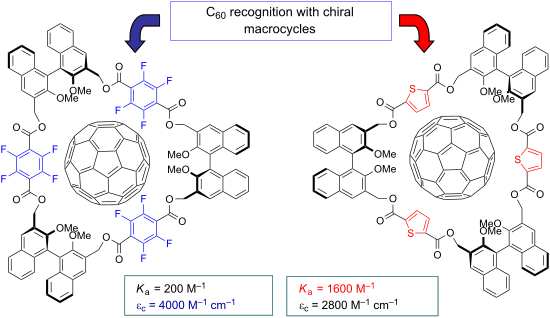
- complexes in solution give insights into the role of nonspecific host–guest interactions (such as π–π stacking) for the overall stabilization of the complexes. We are currently designing binaphthyl-based hosts for the enantioselective recognition and separation of higher fullerenes and chiral nanotubes


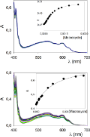
The Ugi four-component reaction as a concise modular synthetic tool for photo-induced electron transfer donor-anthraquinone dyads
Beilstein J. Org. Chem. 2014, 10, 1006–1016, doi:10.3762/bjoc.10.100
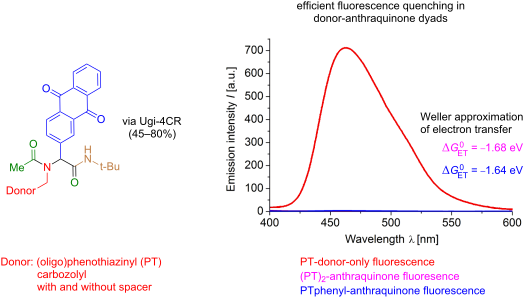
- these novel donor–acceptor dyads. In addition, the X-ray structure of a phenothiazinyl–anthraquinone dyad supports short donor–acceptor distances by an intramolecular π-stacking conformation, an important assumption also implied in the calculations of the Gibbs energies according to the Weller
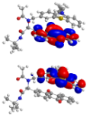
- analysis of the partially oxidized derivative of compound S(O)-1 (Figure 2) [75]. The phenothiazine and anthraquinone moieties are aligned by intramolecular π-stacking with an average distance of ~3.9 Å [76][77]. In the unit cell the R- and S-enantiomers of a single diastereomer (S-oxide) are arranged in
- dyad 1 an electronic prerequisite for electronically favored electron-transfer processes in donor–acceptor systems is the spatial proximity of PT and AQ. This conformer is additionally stabilized by π-stacking of the donor and the acceptor, which is adopted in the solid state and results in a strong




Columnar/herringbone dual crystal packing of pyrenylsumanene and its photophysical properties
Beilstein J. Org. Chem. 2014, 10, 841–847, doi:10.3762/bjoc.10.80
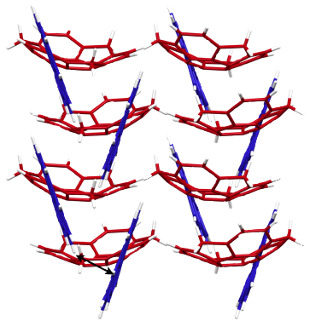
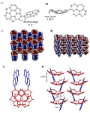
- unidirectional columnar structures based on π–π stacking while the pyrene moieties generate herringbone structures due to CH–π interactions. The absorption and emission maxima of pyrenylsumanene were both red-shifted relative to those of sumanene and pyrene, owing to the extension of π-conjugation. Monomer
- distance of 3.0 Å (Figure 1f). The π–π stacking of pyrene moieties, however, is not evident in the arrangement. The UV–vis absorption and emission spectra and maxima as well as the quantum yields of 1, 3 and pyrene in CH2Cl2 or in the solid state are summarized in Figure 3 and Table 1. The absorption




Charge-transfer interaction mediated organogels from 18β-glycyrrhetinic acid appended pyrene
Beilstein J. Org. Chem. 2013, 9, 2877–2885, doi:10.3762/bjoc.9.324
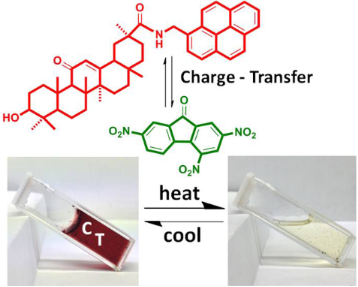
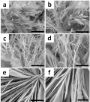
- driving forces for the formation of such self-assembled fibrillar networks include hydrogen-bonding interaction, van der Waals force, π–π stacking, and donor–acceptor interaction [7][8][9][10]. Since LMWGs are often thermally reversible and the gelation can be triggered by pH or the addition of small




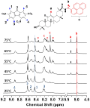
Topochemical control of the photodimerization of aromatic compounds by γ-cyclodextrin thioethers in aqueous solution
Beilstein J. Org. Chem. 2013, 9, 1858–1866, doi:10.3762/bjoc.9.217
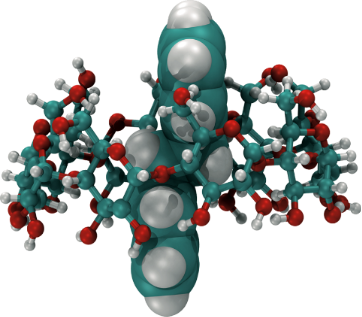
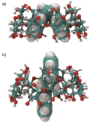
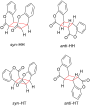
- . This result can be attributed to relatively efficient π–π stacking [48] The most stable syn-HH dimeric aggregate forms the most stable, and therefore, most abundant complex within the γ-CD cavity and consequently the main photo-product. Hence, the photodimerization of COU within host 2 is a



Self-assembly of 2,3-dihydroxycholestane steroids into supramolecular organogels as a soft template for the in-situ generation of silicate nanomaterials
Beilstein J. Org. Chem. 2013, 9, 1826–1836, doi:10.3762/bjoc.9.213
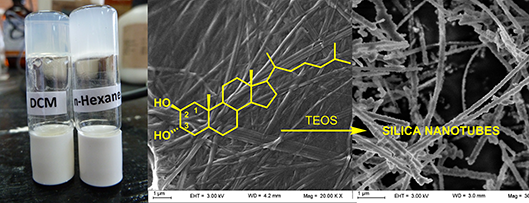
- , electrochemistry, light-harvesting materials and so on [1][2][3][4][5][6]. These small molecules self-assemble into regular supramolecular structures through non covalent interactions such as ion–ion, dipole–dipole, hydrogen bonding, π–π stacking, van der Waals, host–guest, and ion coordination, and in so doing
- , including the additional intermolecular contacts from the pending moieties linked at C-3 (usually hydrogen bond and π–π stacking), lead to a primarily one-dimensional long-range growth and finally produce the interconnected 3D self-assembled fibrillar network (SAFIN), which traps the solvent and turns into


Molecular assembly of amino acid interlinked, topologically symmetric, π-complementary donor–acceptor–donor triads
Beilstein J. Org. Chem. 2013, 9, 1565–1571, doi:10.3762/bjoc.9.178
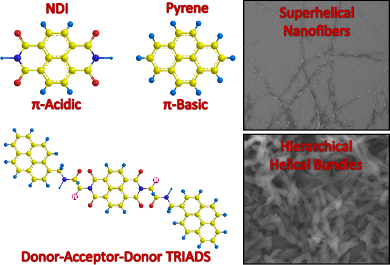
- [18], catenane [19], rotaxane [20], self-healable supramolecular polymer [21], aromatic stacking within a coordination cage [22], superamphiphile [23] and thermochromic [24] materials. Notably, Wilson et al. have reported preferential π-stacking of pyrene and NDI amongst a pool of π-electron D-A


Incorporation of perfluorohexyl-functionalised thiophenes into oligofluorene-truxenes: synthesis and physical properties
Beilstein J. Org. Chem. 2013, 9, 1243–1251, doi:10.3762/bjoc.9.141
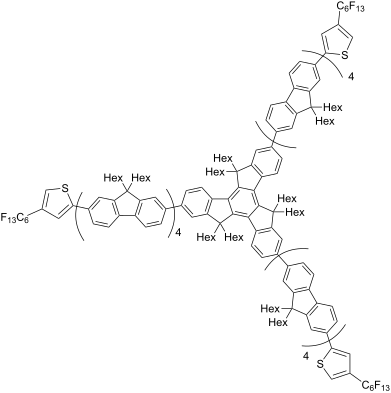
- such as fullerene fragments [4] and liquid-crystalline compounds [5]. Positions C5, C10 and C15 can be functionalised with a range of substituents, commonly saturated alkyl chains, which can enhance the solubility and processability as well as reduce intermolecular π–π stacking [6], but there are also




Enhancement of efficiency in organic photovoltaic devices containing self-complementary hydrogen-bonding domains
Beilstein J. Org. Chem. 2013, 9, 1102–1110, doi:10.3762/bjoc.9.122
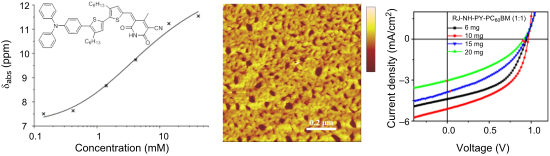
- . The final scenario considered here is that the hydrogen-bonding-mediated interaction is immediately followed by a kinetically faster second supramolecular interaction, leading to the observation by 1H NMR of only the rate-limiting first step. π–π stacking interactions are observed for planar aromatic


Spin state switching in iron coordination compounds
Beilstein J. Org. Chem. 2013, 9, 342–391, doi:10.3762/bjoc.9.39
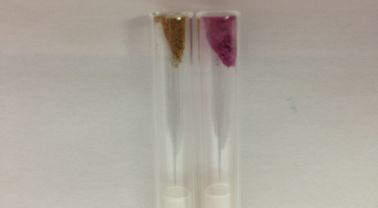
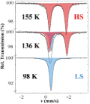
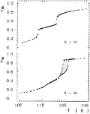
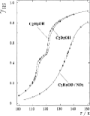
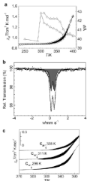
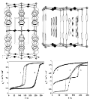
- three synthetic strategies that have been developed to create and strengthen cooperativity, i.e., (i) incorporation of a hydrogen-bonded network; (ii) incorporation of π-stacking moieties; and (iii) coordination of bridging ligands. The thermal ST behavior is commonly expressed in terms of the molar
- with single-crystal structure studies one can unravel the structures of existing networks of hydrogen bonding or specific orderings of π-stacking. Although they are not a prerequisite for thermal ST to take place, such features take part or at least aid in the cooperative interactions involved in the


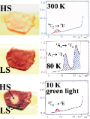





![[Graphic 1]](/bjoc/content/inline/1860-5397-9-39-i3.png?max-width=637&scale=1.18182) ) modes versus the anion volu...
) modes versus the anion volu...






Synthesis and testing of the first azobenzene mannobioside as photoswitchable ligand for the bacterial lectin FimH
Beilstein J. Org. Chem. 2013, 9, 223–233, doi:10.3762/bjoc.9.26
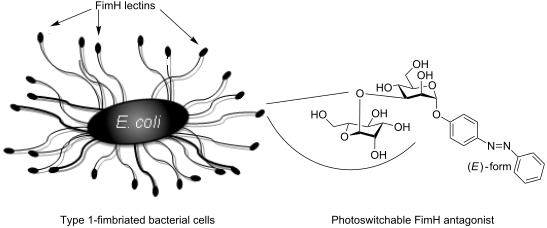
- differs from many other docked FimH ligands. Here, the higher affinity for the open-gate FimH can be explained by strong π–π stacking of the first aromatic ring of the azobenzene unit with the tyrosine gate. As both isomers of 2 interact equally well with FimH, they can’t be used to switch type 1 fimbriae



Mechanochemistry assisted asymmetric organocatalysis: A sustainable approach
Beilstein J. Org. Chem. 2012, 8, 2132–2141, doi:10.3762/bjoc.8.240
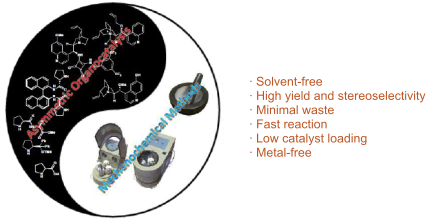
- conditions in comparison to reactions carried out in solvent could be attributed to lower molecular motion due to increased hydrogen bonding between aldehyde and amidic NH, and more effective π–π-stacking interaction between the phenyl ring of the catalyst and aldehyde. The methyl ester of (S)-proline-(S
- large surface area of the lipophilic residue of the tryptophan, reinforced by the hydrophobic environment created by the addition of water, appears to be responsible for the improvement in diastereoselectivity. These factors also enhance the π–π stacking between the catalyst and aldehyde to form a more


Regioselective synthesis of 7,8-dihydroimidazo[5,1-c][1,2,4]triazine-3,6(2H,4H)-dione derivatives: A new drug-like heterocyclic scaffold
Beilstein J. Org. Chem. 2012, 8, 1584–1593, doi:10.3762/bjoc.8.181
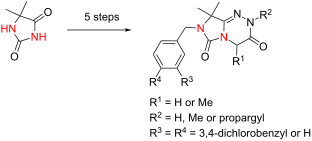
- possibly central nervous system), structural novelty, synthetic accessibility, and the possibility for broad structural variations. In particular, we planned to introduce sp3-hybridized carbon atoms, to avoid completely flat aromatic structures that are prone to low solubility in water due to π-stacking





