Search results
Search for "derivatives" in Full Text gives 2840 result(s) in Beilstein Journal of Organic Chemistry. Showing first 200.
Photochemically assisted synthesis of phenacenes fluorinated at the terminal benzene rings and their electronic spectra
Beilstein J. Org. Chem. 2025, 21, 670–679, doi:10.3762/bjoc.21.53

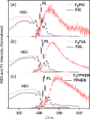
- of phenacene cores could produce a functional aromatic material alternative to fluorinated acenes. In this context, it would be of interest to construct highly fluorinated phenacene derivatives and reveal their structural and electronic natures in order to develop future organic functional molecules





Asymmetric synthesis of fluorinated derivatives of aromatic and γ-branched amino acids via a chiral Ni(II) complex
Beilstein J. Org. Chem. 2025, 21, 659–669, doi:10.3762/bjoc.21.52
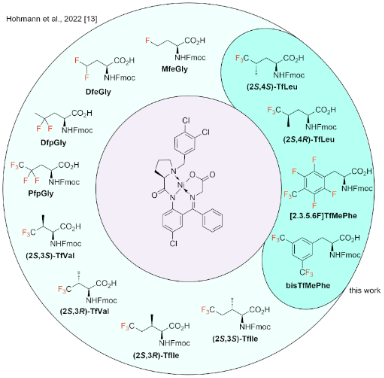
- acids [11][12]. Recently, our working group presented the synthesis of a broad range of fluorinated derivatives of different canonical and non-canonical amino acids (Scheme 1) [13]. Besides the linear fluorinated versions of α‑aminobutyric acid and norvaline, the β‑branched fluorinated amino acids such
- , we introduce our attempts to synthesize the trifluorinated derivatives of leucine: (2S,4S)-trifluoroleucine ((2S,4S)-TfLeu) and (2S,4R)-trifluoroleucine ((2S,4R)-TfLeu) (Scheme 1). Here, we were especially interested in exploring the applicability of the Ni-based strategy to the synthesis of γ
- quantitative yield and with a great enantiomeric excess of >99% ee (Scheme 2). Trifluorinated derivatives of leucine The fluorinated alkyl iodide is commercially available but costly. Thus, we aimed at establishing an appropriate synthesis for this iodide. Our previous work showed that fluorinated alkyl


Recent advances in allylation of chiral secondary alkylcopper species
Beilstein J. Org. Chem. 2025, 21, 639–658, doi:10.3762/bjoc.21.51
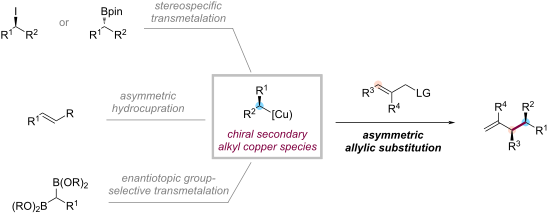
- styrenes with diverse electronic properties as well as those containing sensitive functional groups such as esters, amides, and vinyl halides, to yield the desired β-chiral olefins in high enantioselectivity. Notably, the methodology could even be applied to vinylferrocene and vinylsilane derivatives




Entry to 2-aminoprolines via electrochemical decarboxylative amidation of N‑acetylamino malonic acid monoesters
Beilstein J. Org. Chem. 2025, 21, 630–638, doi:10.3762/bjoc.21.50
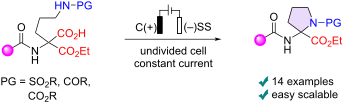
- under constant current conditions in aqueous acetonitrile and provides access to N-sulfonyl, N-benzoyl, and N-Boc-protected 2-aminoproline derivatives. Keywords: anodic oxidation; decarboxylation; electrosynthesis; Hofer–Moest reaction; non-proteinogenic amino acids; Introduction Non-proteinogenic
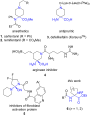
- and the development of efficient synthetic methods to access these medicinally relevant structural motifs. Herein, we report an electrochemical synthesis of 2-aminoproline and 2-aminopipecolic acid derivatives 6 (Figure 1). Recently, we disclosed an electrochemical approach to tetrahydrofuran and
- tetrahydropyran-containing amino acid derivatives via anodic decarboxylation of N-acetylamino malonic acid monoesters to generate a stabilized carbocation (Hofer–Moest conditions), which were then reacted with a tethered oxygen nucleophile [4]. In this follow-up study, we demonstrate that N-protected amines are



Photocatalyzed elaboration of antibody-based bioconjugates
Beilstein J. Org. Chem. 2025, 21, 616–629, doi:10.3762/bjoc.21.49
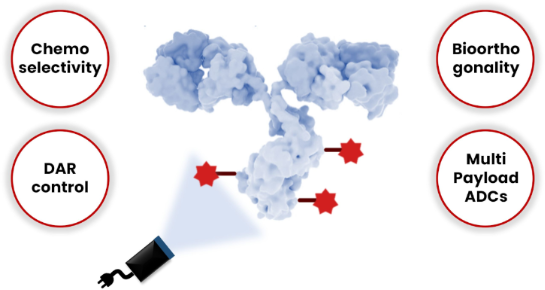
- derivatives round out the most predominant reactions used on non-natural amino acids. However, even though bioengineering allows the incorporation of non-canonical amino acids with astounding effectiveness and near-complete selectivity, this technology is exceedingly expensive and time-consuming, and the


Semisynthetic derivatives of massarilactone D with cytotoxic and nematicidal activities
Beilstein J. Org. Chem. 2025, 21, 607–615, doi:10.3762/bjoc.21.48
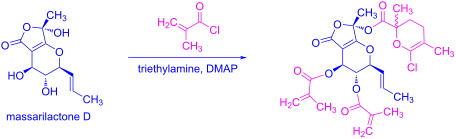
- Massarilactones constitute a rare class of polyketides produced mainly by endophytic fungi. Given that semisynthetic derivatives often exhibit biological activities greater than those of the substrates, seven previously unreported derivatives of massarilactone D, compounds 2–8, were synthetized by acylation with
- , epidermoid carcinoma A431, ovarian carcinoma SKOV-3, and breast cancer MCF-7 cell lines. Compounds 2 and 3 exhibited significant cytotoxicity against all the tested cells. Some of the semisynthetic derivatives were also tested for their nematicidal activity and compound 4 displayed significant and selective
- products can serve as effective scaffold for the design and synthesis of derivatives with improved biological activities [5][6][7]. Massarilactones are produced by marine and endophytic fungi and bear close biogenetic similarity to several other fungal PKS1-derived metabolites including rosigenin, the


Total synthesis of (±)-simonsol C using dearomatization as key reaction under acidic conditions
Beilstein J. Org. Chem. 2025, 21, 601–606, doi:10.3762/bjoc.21.47
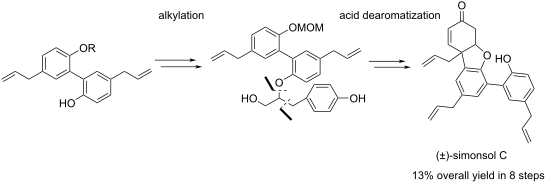
- valuable for the synthesis of related natural products and their derivatives. Representative sesquineolignan compounds. Retrosynthetic analysis of (±)-simonsol C. The first total synthesis of (±)-simonsol C by Banwell’s group. The second total synthesis of (±)-simonsol C developed by the Qin group. Rapid


Sequential two-step, one-pot microwave-assisted Urech synthesis of 5-monosubstituted hydantoins from L-amino acids in water
Beilstein J. Org. Chem. 2025, 21, 596–600, doi:10.3762/bjoc.21.46
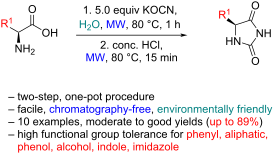
- antibacterial [1], antiviral [2], anticancer [3], anti-inflammatory [4], and anticonvulsant [5]. Hydantoins were traditionally accessed from amino acids by conversion to urea derivatives followed by cyclization (Urech reaction) or from carbonyl compounds through the cyanohydrin intermediate (Bucherer–Bergs) [6
- Discussion As the first step of Urech hydantoin synthesis involved the N-carbamylation of amino acids, we carried out the microwave-assisted synthesis of urea derivatives in water, utilizing ʟ-phenylaniline as the representative amino acid. The optimal conditions for the N-carbamylation of ʟ-phenylaniline


Formaldehyde surrogates in multicomponent reactions
Beilstein J. Org. Chem. 2025, 21, 564–595, doi:10.3762/bjoc.21.45
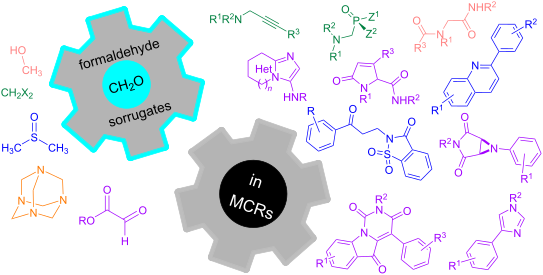
- this context, quinoline and its derivatives are privileged structures in several natural products and biologically active compounds, rendering this scaffold an important synthetic target. An attractive strategy to afford tetrahydroquinolines and quinolines is the Povarov reaction, a type of aza-Diels
- derivatives are isolated as side-products. Interestingly, when Liu et al. [40] modified this reaction by using a copper(II) catalyst under aerobic oxidative conditions, the regioisomers III (2-arylquinolines) were obtained (Scheme 9). To rationalize this singular result, the authors proposed a mechanism in
- consequently, different catalytic strategies to afford the electrophilic addition on the final cyclization step. Finally, other examples show the synthesis of 3-aryl and alkyl quinoline-3-carboxylate derivatives under acid catalysis for the activation of DMSO via the Pummerer reaction (Scheme 10). In these


Study of the interaction of 2H-furo[3,2-b]pyran-2-ones with nitrogen-containing nucleophiles
Beilstein J. Org. Chem. 2025, 21, 556–563, doi:10.3762/bjoc.21.44
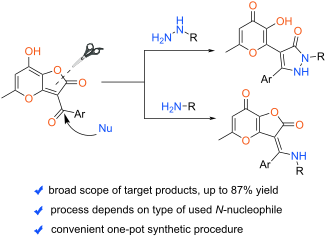
- ][9]. Wherein, the wide variety of easily available starting butenolides and amines allows one to create a huge array of practically useful products. At the same time, the application of hydrazine derivatives expands the range of formed heterocycles. So, along with the aforementioned N-substituted
- process with hydrazine derivatives is known in the literature. Therefore, the study of recyclizations of heterocyclic systems containing the 3-acylfuran-2(5H)-one core under action of various hydrazines is of a great interest. Ongoing our research in the field of allomaltol chemistry in the present
- and allomaltol derivatives have the wide variety of biological activity [12][13][14][15][16]. This means that designing such hybrid products can significantly alter the pharmacological properties. Results and Discussion The starting compounds 1 were prepared from allomaltol employing a previously


Binding of tryptophan and tryptophan-containing peptides in water by a glucose naphtho crown ether
Beilstein J. Org. Chem. 2025, 21, 541–546, doi:10.3762/bjoc.21.42
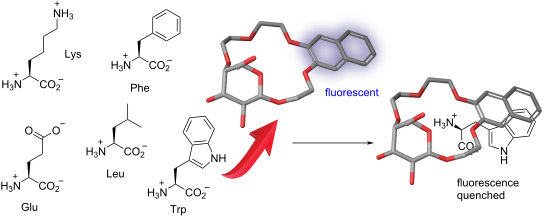
- peptides for binding we prepared the derivatives of peptides 2–4 bearing an acetyl-capped N-terminus (compounds 5–7). As a control we also studied tripeptide 8 containing exclusively alanine residues. The binding of tripeptides was again studied by ITC and fluorescence spectroscopy and the results are


Vinylogous functionalization of 4-alkylidene-5-aminopyrazoles with methyl trifluoropyruvates
Beilstein J. Org. Chem. 2025, 21, 533–540, doi:10.3762/bjoc.21.41
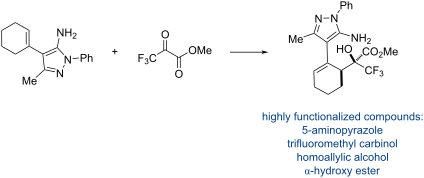
- . Several homoallylic trifluoromethyl carbinols functionalized with a pyrazole moiety were obtained under mild reaction conditions (27–80% yield). This methodology provides a straightforward access to an unprecedented class of trifluoromethyl carbinol derivatives offering a new synthetic approach to



Cryptophycin unit B analogues
Beilstein J. Org. Chem. 2025, 21, 526–532, doi:10.3762/bjoc.21.40
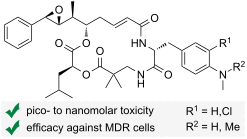
- derivatives lack a covalent attachment handle. By making use of drug conjugates, toxic payloads such as cryptophycins can be selectively delivered to the target site. We present the synthesis of two conjugable cryptophycins with amino groups in unit B, representing potential payloads for drug conjugates
- -phenyl position of unit A [9][10][11] or derivatisation of unit A’s epoxide moiety into a halohydrin (-glycinate) [5][12][13][14][15][16][17]. Cryptophycins modified at the α-position of unit C [18] and, most recently, various derivatives with modifications in unit D [19] were established as potent and
- of, firstly, m-chloro-p-(methylamino) derivative 1 to dissect the structure–activity relationship between the primary (IC50(CCRF-CEM) = 0.58 nM), secondary, and tertiary amine (IC50(CCRF-CEM) = 54 pM) derivatives [20]. Secondly, p-(dimethylamino) derivative 2 was synthesised to investigate the effect



Deep-blue emitting 9,10-bis(perfluorobenzyl)anthracene
Beilstein J. Org. Chem. 2025, 21, 515–525, doi:10.3762/bjoc.21.39
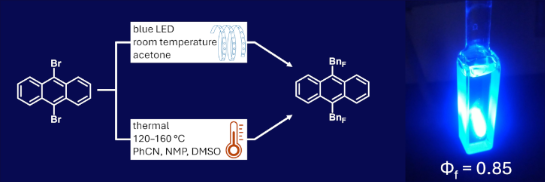
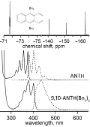
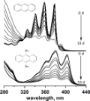
- photostability compared to ANTH and 9,10-ANTH derivatives, and a simple synthetic access makes it an attractive material as a deep-blue OLED emitter and an efficient fluorescent probe. Keywords: anthracene; dibromoanthracene; electron poor polyaromatic systems; fluorescence; perfluoroalkylation
- have promising applications in optoelectronics. For example, investigation of the photophysical and electronic properties of ANTH began in the 1960s [1][2][3], and since then many new ANTH derivatives have been synthesized and explored for their use as fluorescent probes, organic semiconductors, and
- , the size and conformational flexibility of the five BnF groups resulted in significant disruption of CORA–CORA π–π interactions due to the greater CORA–CORA bowl-to-bowl distances relative to the less bulky C5-CORA(CF3)5 analogue [18][19]. However, corannulene derivatives are only weakly fluorescent





Synthesis of the aggregation pheromone of Tribolium castaneum
Beilstein J. Org. Chem. 2025, 21, 510–514, doi:10.3762/bjoc.21.38
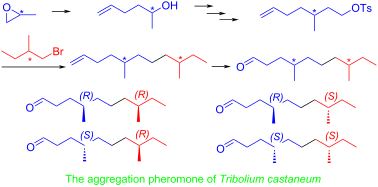
- , Mori and Phillips achieved the complete separation of the derivatives from the four stereoisomers by reversed-phase HPLC at −54 °C, and revealed that the natural pheromone consists of four stereoisomers of 4,8-dimethyldecanal (Figure 1) [16][17]. Previous syntheses mainly focused on chiral sources of


Unprecedented visible light-initiated topochemical [2 + 2] cycloaddition in a functionalized bimane dye
Beilstein J. Org. Chem. 2025, 21, 500–509, doi:10.3762/bjoc.21.37
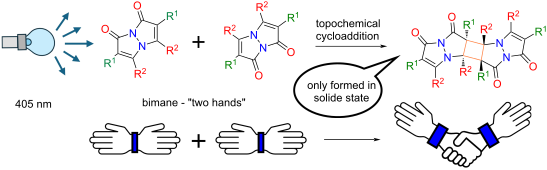
- with the Schmidt criteria for topochemical cycloaddition. Additionally, two other bimane derivatives with different substitution patterns were synthesized and investigated. Our findings suggest that functionalizing bimanes to redshift their absorption maxima into the visible-light spectrum provides a


Synthesis of N-acetyl diazocine derivatives via cross-coupling reaction
Beilstein J. Org. Chem. 2025, 21, 490–499, doi:10.3762/bjoc.21.36
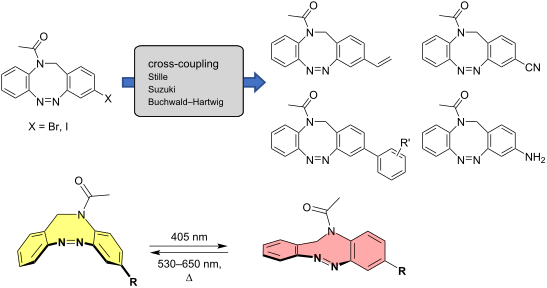
- switching efficiency in aqueous solutions. In order to investigate the chemistry of this promising photoswitch and to unlock further applications, we now investigate strategies for the synthesis of derivatives, which are based on cross-coupling reactions. Fourteen vinyl-, aryl-, cyano-, and amino
- -substituted diazocines were prepared via Stille, Suzuki, and Buchwald–Hartwig reactions. X-ray structures are presented for derivatives 1, 2 and 7. Keywords: cross-coupling; diazocine; N-acetyl diazocine; photoisomerization; photoswitch; thermal relaxation; Introduction Diazocines are frequently used
- diazocine 23 in yields of 61% from bromide 2 and 81% from iodide 3 (Scheme 3). Nitriles are a good starting point for further functional group interconversions [39]. Photochemical characterization With these new N-acetyl diazocine derivatives at hand we turned towards the photochemical characterization, in


Synthesis of electrophile-tethered preQ1 analogs for covalent attachment to preQ1 RNA
Beilstein J. Org. Chem. 2025, 21, 483–489, doi:10.3762/bjoc.21.35
- transcription or translation of the mRNA and results in altered transcript and/or protein levels [5]. In recent years, there has been a growing interest in the modification of preQ1. preQ1 derivatives, preQ1 analogs and mimics of preQ1 have greatly expanded our understanding of preQ1-binding biomolecules, such
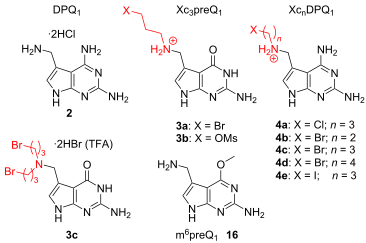
- vitro and in living cells using rationally designed electrophile-tethered derivatives of preQ1 (1) and its Watson–Crick diamino-faced counterpart DPQ1 (2, Scheme 1A). These ligands (compound classes 3 and 4, Scheme 1A) were tailored to target a conserved guanine nucleobase within a natural preQ1-binding
- derivatives have been reported [22][23][24][25][26]. Among these reports, various silylation and protection strategies have been employed to address the poor solubility of preQ1 (and analogs) in organic solvents [9][22][23][25][26][27][28][29]. Herein, we report an optimized three-step protocol, free of


Organocatalytic kinetic resolution of 1,5-dicarbonyl compounds through a retro-Michael reaction
Beilstein J. Org. Chem. 2025, 21, 473–482, doi:10.3762/bjoc.21.34
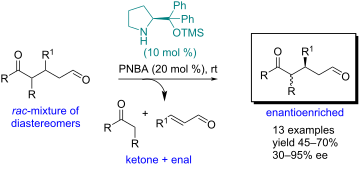
- conditions tested. Similarly, the resolution of nitro aldehydes 16 and 17, prepared by Michael addition of nitromethane to α,β-unsaturated aldehydes (entries 16 and 17, Table 5), was tested, and the same results were obtained as in the cases of the malonate derivatives. These results indicate that dicarbonyl
- compounds are better leaving groups than diesters or nitro derivatives in this type of transformation. Another possible explanation is that Michael adducts other than 1,5-dicarbonyl compounds require more robust bases to shift the equilibrium toward the retro-Michael product. It is essential to highlight


New tandem Ugi/intramolecular Diels–Alder reaction based on vinylfuran and 1,3-butadienylfuran derivatives
Beilstein J. Org. Chem. 2025, 21, 444–450, doi:10.3762/bjoc.21.31
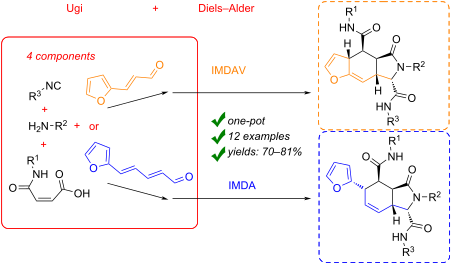
- reaction and Diels–Alder [4 + 2] cycloaddition based on vinylfuran and 1,3-butadienylfuran derivatives was designed and studied. It was found that in the case of 3-(furan-2-yl)acrylaldehyde, a one-pot Ugi reaction and intramolecular Diels–Alder vinylarene (IMDAV) reaction leads to the formation of the
- insufficiently studied furo[2,3-f]isoindole derivatives. Ugi adducts formed from (E)-3-(furan-2-yl)acrylaldehyde, maleic acid monoanilide, isonitrile, and an amine spontaneously underwent the IMDAV reaction with a high level of stereoselectivity, leading to single pairs of enantiomers of 4,4a,5,6,7,7a-hexahydro
- [11][12][13]. Advancements in one-pot syntheses, like combining the Ugi reaction with other methods [14][15][16][17][18], for example, the Huisgen cycloaddition, have led to the creation of unique [1,2,3]triazolo[1,5-a]pyrazine derivatives [19]. Tandem reactions are particularly valued for their atom




Unraveling aromaticity: the dual worlds of pyrazole, pyrazoline, and 3D carborane
Beilstein J. Org. Chem. 2025, 21, 412–420, doi:10.3762/bjoc.21.29
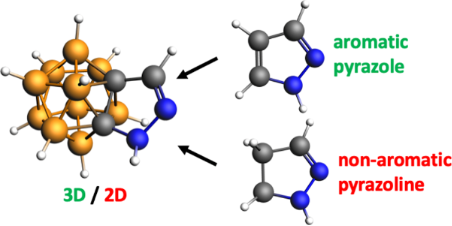
- , exceptional thermal and chemical stability, and robust synthetic versatility [16][17] – make carborane derivatives essential components in various fields. These include pharmaceuticals [18][19][20][21][22], boron neutron capture therapy (BNCT) [23][24][25][26], organometallic ligands [27], and functional


Identification and removal of a cryptic impurity in pomalidomide-PEG based PROTAC
Beilstein J. Org. Chem. 2025, 21, 407–411, doi:10.3762/bjoc.21.28
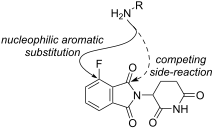
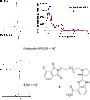
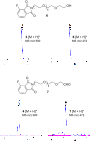
- sulfonate to the byproduct by reacting it with taurine allows for easy decontamination. This method may facilitate the purification of other similar reactions and improve the quality of related pomalidomide derivatives. The structures of veliparib and iVeliparib-AP6. Identification of the cryptic impurity
- silica gel column chromatography. The LUMO and electrostatic charges of thalidomide and its derivatives by DFT calculation at the ωB97X-D/6-311+G** level. The synthetic route for iVeliparib-AP6. The conversion of byproduct 6 to 10 to facilitate its removal. Effects of the length and functionalization of




The effect of neighbouring group participation and possible long range remote group participation in O-glycosylation
Beilstein J. Org. Chem. 2025, 21, 369–406, doi:10.3762/bjoc.21.27
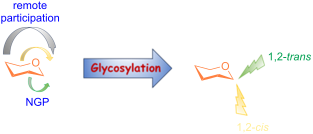
- successfully substituted the acetyl group with the benzoyl group to primarily obtain 1,2-trans glycosides [83][84][85]. Ishida et al. implemented benzoyl protection for the synthesis of 1,2-trans glycosides for the iterative synthesis of oligo-α-rhamnoside derivatives [86]. Both acetyl and benzoyl groups
- glycosylation reactions making them solvent-free and being more environment friendly without compromising on the stereoselectivity. Thus, the acetyl and benzoyl group and similar derivatives are the most widely used protecting groups to obtain 1,2-trans glycosides in oligosaccharide syntheses. Ester groups in
- hydrogenation step to yield the product 38 [107]. Compound 37 shows all-1,2-trans glycosidic bonds due to the installed pivaloyl group in the C-2 position. This cyanopivaloyl group is also widely used in solid-phase automated oligosaccharide synthesis [107] for the synthesis of oligorhamnoside derivatives. Thus


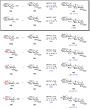


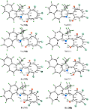
Synthesis, structure, ionochromic and cytotoxic properties of new 2-(indolin-2-yl)-1,3-tropolones
Beilstein J. Org. Chem. 2025, 21, 358–368, doi:10.3762/bjoc.21.26
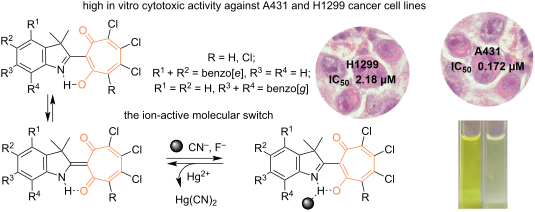
- Comprehensive Cancer Center at University of Alabama at Birmingham, Department of Medicine, Section of Hematology/Oncology, Heersink School of Medicine, Birmingham, AL 35233, USA 10.3762/bjoc.21.26 Abstract The acid-catalyzed reaction of benzo[e(g)] derivatives of 2,3,3-trimethylindolenines with o-chloranil
- antibacterial [4] and cytotoxic activity [6][7]. Existing approaches to the synthesis of 1,3-tropolone derivatives have a number of drawbacks, namely, limited synthesis methodology and low yields of the target compounds [8][9][10][11][12][13][14][15]. Over the past decade, only a few reports have been published
- [16][17]. Indole derivatives, including those with conjugated aromatic and alicyclic rings, are of considerable interest because of their diverse biological activities (antibacterial, antimicrobial, anticancer, antidiabetic, etc.) [18][19][20][21][22]. For this reason, the synthetic goal of this work




Synthesis, characterization, antimicrobial, cytotoxic and carbonic anhydrase inhibition activities of multifunctional pyrazolo-1,2-benzothiazine acetamides
Beilstein J. Org. Chem. 2025, 21, 348–357, doi:10.3762/bjoc.21.25
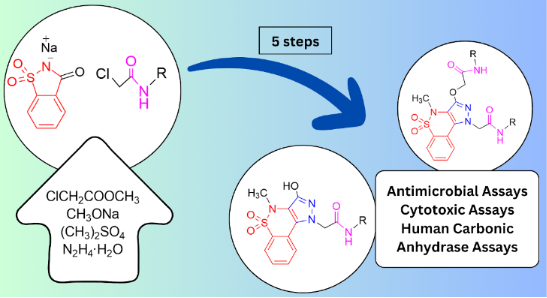
- are synthesized by incorporation of benzothiazine, pyrazole, and amide moieties in a new scaffold to create multifunctional derivatives of pyrazolo-1,2-benzothiazine. The presented compounds have been synthesized and analyzed using spectroscopic and spectrometric techniques including FTIR, HRMS, 1H
- cell line HCT-116 (ATCC CCL-247) revealed that only compound 7l inhibited cell viability, while the rest of the compounds including 7b and 7h showed no significant decrease in mammalian cell viability. Results of human carbonic anhydrase (hCA) inhibition assays discovered that monoalkylated derivatives
- biologically active useful candidates. NSAIDs (non-steroidal anti-inflammatory drugs) currently approved like piroxicam [12], meloxicam [13], and other derivatives of these two are well known for their activities [5]. 1,2-Benzothiazines are highly bioactive moieties and have been explored as antibacterial [14