


Search results
Search for "receptors" in Full Text gives 319 result(s) in Beilstein Journal of Organic Chemistry. Showing first 200.
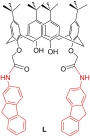
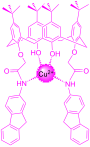
Amidofluorene-appended lower rim 1,3-diconjugate of calix[4]arene: synthesis, characterization and highly selective sensor for Cu2+
Beilstein J. Org. Chem. 2016, 12, 1749–1757, doi:10.3762/bjoc.12.163
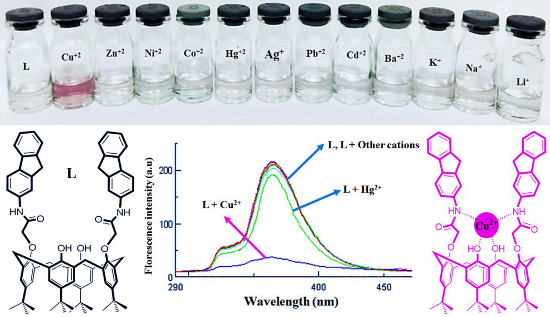
- environmental pollutant or an essential trace element in human body – is a great challenge and the development of synthetic receptors based on organic ligands for the detection of Cu2+ seems to be necessary [13]. Accordingly, during the last decades, synthesis and modification of chemosensors based on




Rearrangements of organic peroxides and related processes
Beilstein J. Org. Chem. 2016, 12, 1647–1748, doi:10.3762/bjoc.12.162
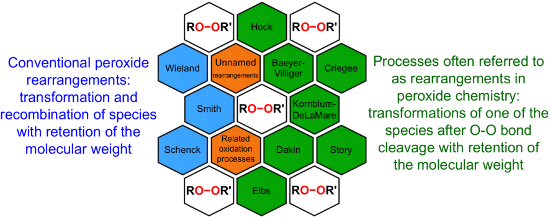
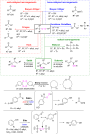
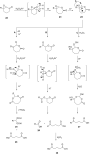
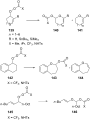
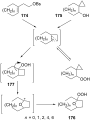
- multistep synthesis of cannabinergic lactones from dimethylheptylresorcinol. Two regioisomeric cannabinergic lactones were obtained, one of which possessed pronounced affinity towards the CB1 receptor and lower affinities for mCB2 and hCB2 receptors [228]. Oxidation with H2O2–acid systems: With in situ









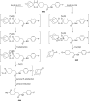


Organic chemistry meets polymers, nanoscience, therapeutics and diagnostics
Beilstein J. Org. Chem. 2016, 12, 1638–1646, doi:10.3762/bjoc.12.161
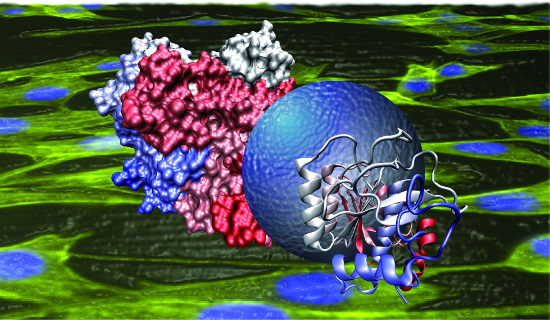
- external regulation [4]. I also took on a brutal project, focused on the synthesis of water-soluble analogs of Kemp's triacid. This project was a massive effort, with a huge number of reactions required to optimize the initial steps. We did, however, obtain the desired receptors and observe some




Creating molecular macrocycles for anion recognition
Beilstein J. Org. Chem. 2016, 12, 611–627, doi:10.3762/bjoc.12.60
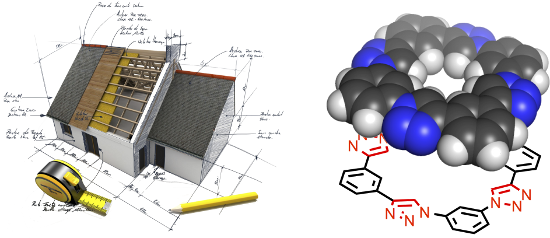
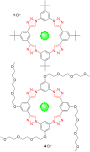
- . Keywords: anion receptors macrocycles self-assembly surface architectures switches; Review “Well, maybe it started that way. As a dream, but doesn’t everything. Those buildings. These lights. This whole city. Somebody had to dream about it first. And maybe that is what I did. I dreamed about coming here
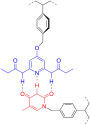
- program the outsides of macrocycles to direct 3D packing. Crescent receptors Crescent receptors, while not as elegant as macrocycles, are succinct models for testing ideas. Over the years (Figure 18), we have tested intramolecular hydrogen bonding for preorganization (19) [38], new CH hydrogen bonding
- crescents linked together into oligomers with interesting dynamic shapes. Foldameric anion receptors Complementing our creation and study of macrocycles is work on foldamers (Figure 19). With their flexibility, foldamers are excellent “character foils” to rigid macrocycles. As a class of compounds




Recent advances in N-heterocyclic carbene (NHC)-catalysed benzoin reactions
Beilstein J. Org. Chem. 2016, 12, 444–461, doi:10.3762/bjoc.12.47
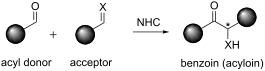
- 36. The aldehydes function as the acyl donor and the imines behave as the receptors (Scheme 21). Addition of NHC to the highly electrophilic N-Boc imines leads to the formation of corresponding aza-Breslow intermediates; however, it is reversible under the reaction conditions. Importantly, the



Effective in silico prediction of new oxazolidinone antibiotics: force field simulations of the antibiotic–ribosome complex supervised by experiment and electronic structure methods
Beilstein J. Org. Chem. 2016, 12, 415–428, doi:10.3762/bjoc.12.45
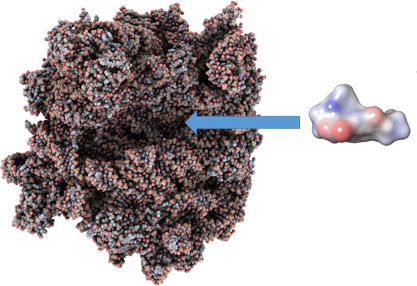
- pocket for the oxazolidinone ring is characterized by universally conserved 23S-rRNA nucleotides, leading to very similar ligand-bound conformations in different bacterial ribosomes [23]. From a theoretical point of view, the simulation of recognition processes employing nucleotide-based receptors is


Self and directed assembly: people and molecules
Beilstein J. Org. Chem. 2016, 12, 391–405, doi:10.3762/bjoc.12.42
- group were developing carbohydrate receptors from what looked like simple molecules requiring just one or two steps to synthesize. Therefore, while working with the late Takaaki Harada, we developed a simple colorimetric system able to “read-out” the chirality of sugars. The system we developed used the
- these collaborative research projects with Japan, myself and Seiji Shinkai as team leaders were awarded a Daiwa-Adrian Prize in 2013 [36] for “Chemonostics: Using chemical receptors in the development of simple diagnostic devices for age-related diseases” with a team including Steven Bull (University of
- /boronic acid moiety as the acceptor (the reverse is true for normal a-PET systems). Therefore, d-PET systems have a significant advantage over the a-PET systems at acidic pH, since background emission for these sensors is much lower. This is particularly important given that we were developing receptors






Art, auto-mechanics, and supramolecular chemistry. A merging of hobbies and career
Beilstein J. Org. Chem. 2016, 12, 362–376, doi:10.3762/bjoc.12.40
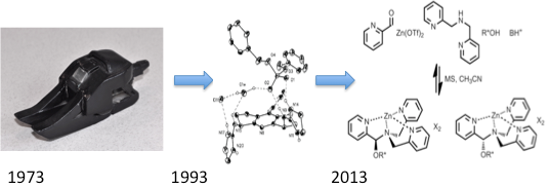
- the creation of synthetic receptors and self-assembly. For synthetic ease, the receptors and assemblies routinely possess a high degree of symmetry, which lends them an aspect of aesthetic beauty. Pictures of electron orbitals similarly can be seen as akin to works of art. This similarity was an early
- responses from a suite of receptors and creates patterns for diagnostic purposes that are beyond what can be achieved by the separate components alone. In fact, we are currently working to push this even further creating multicomponent cascades of reactions yielding a final result that the individual
- group created some of the earliest reported monosaccharide receptors (4) that exploited hydrogen bonding based recognition in chloroform [39][40]. The receptor designs from Hamilton (5) [41] and Thummel (6) [42] at around the same period of time clearly influenced my own designs. This was approximately




Enabling technologies and green processes in cyclodextrin chemistry
Beilstein J. Org. Chem. 2016, 12, 278–294, doi:10.3762/bjoc.12.30
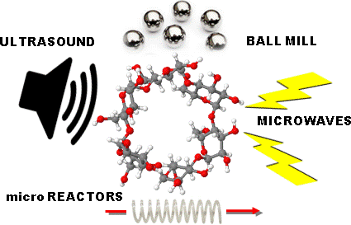
- versatile receptors for molecular recognition and building blocks for functional materials. Due to the binding of two adjacent CD units, bridged bis-CDs display high binding abilities and molecular selectivities compared to native and monosubstituted CDs. A well-organized pseudo-cavity may be provided by




Bright molecules for sensing, computing and imaging: a tale of two once-troubled cities
Beilstein J. Org. Chem. 2015, 11, 2774–2784, doi:10.3762/bjoc.11.298
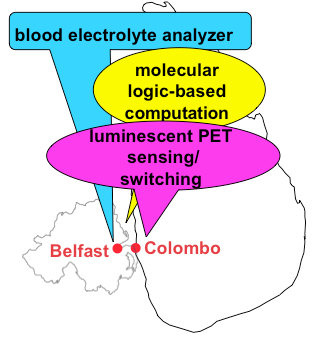
- concentration, knocks out a PET pathway from its corresponding receptor to the lumophore. Even a single PET pathway disables emission. Selective receptors were the key. It is perhaps worth noting that a simple expansion of the 'lumophore–spacer–receptor’ system, with the attachment of an additional spacer and







Synthesis of cyclic N1-pentylinosine phosphate, a new structurally reduced cADPR analogue with calcium-mobilizing activity on PC12 cells
Beilstein J. Org. Chem. 2015, 11, 2689–2695, doi:10.3762/bjoc.11.289
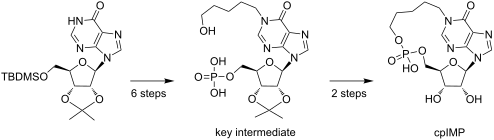
- ]. Among these NNs there is the cyclic ADP-ribose (cADPR 1, Figure 1), a metabolite strictly involved in the homeostasis of cellular calcium ions. cADPR is a second messenger that activates the ryanodine receptors of the sarcoplasmic reticulum and mobilizes Ca2+ ions in many cell types of protozoa, plants


Smart molecules for imaging, sensing and health (SMITH)
Beilstein J. Org. Chem. 2015, 11, 2540–2548, doi:10.3762/bjoc.11.274
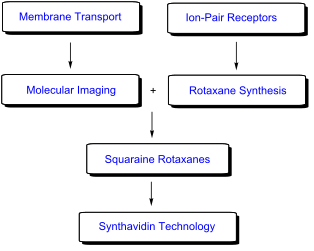
- imaging, ion-pair receptors, rotaxane synthesis, squaraine rotaxanes, and synthtavidin technology. The article concludes with a short perspective of likely future directions in biomedical supramolecular chemistry. Keywords: fluorescence; ion-pair receptors; membrane transport; molecular imaging; rotaxane
- on the cell surface during the process of apoptosis or programmed cell death. Thus, phosphatidylserine is an excellent biomarker of cell death and an attractive target for molecular imaging. We reasoned that synthetic anion receptors such as zinc dipicolylamine (ZnDPA) coordination complexes would
- ][21][22]. The latest discovery is a set of molecular ZnDPA probes that selectively target parasite infections in living subjects such as Leishmaniasis, a lethal disease that afflicts many millions of people around the world [23]. Ion-pair receptors Our early experience with membrane transport raised


Syntheses of 2-substituted 1-amino-4-bromoanthraquinones (bromaminic acid analogues) – precursors for dyes and drugs
Beilstein J. Org. Chem. 2015, 11, 2326–2333, doi:10.3762/bjoc.11.253
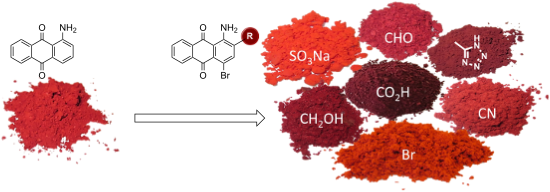
- proposed the compound to interact with ATP-binding sites [33], and it was subsequently used as a pharmacological tool for studying ATP and other nucleotide receptors. RB-2 has played a crucial role in identifying different purine receptor subtypes, since it was found to selectively block only certain


Cu(I)-catalyzed N,N’-diarylation of natural diamines and polyamines with aryl iodides
Beilstein J. Org. Chem. 2015, 11, 2297–2305, doi:10.3762/bjoc.11.250

- receptors and antileishmanial activity [15][16][17]. Up to date no general non-catalytic approach to N,N’-diarylpolyamines has yet been described. Synthetic procedures are multistep [17][18] though sometimes they can be performed as one-pot syntheses [19]. Several catalytic approaches have been described in


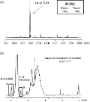
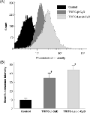
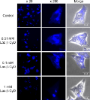
Cholesterol lowering effects of mono-lactose-appended β-cyclodextrin in Niemann–Pick type C disease-like HepG2 cells
Beilstein J. Org. Chem. 2015, 11, 2079–2086, doi:10.3762/bjoc.11.224
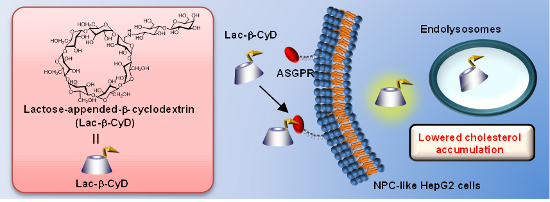
- concentrations within the cells but also minimum concentration at non-target cells, thereby amalgamating high treatment efficacy with low side effects. Of various receptors, asialoglycoprotein receptors (ASGPR) expressing in abundance on hepatocytes could provide advantages for hepatocyte-selective delivery [11




Supramolecular chemistry: from aromatic foldamers to solution-phase supramolecular organic frameworks
Beilstein J. Org. Chem. 2015, 11, 2057–2071, doi:10.3762/bjoc.11.222
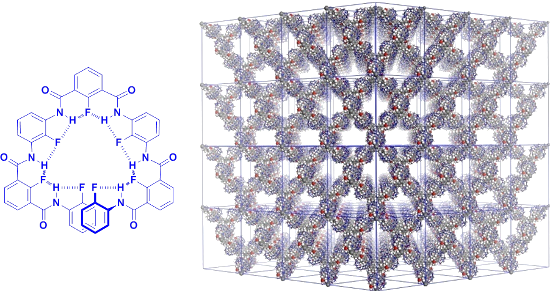
- structures was to explore their potential functions as acyclic receptors. Moore et al. had utilized this approach to investigate the binding of m-phenylene ethynylene foldamers for nonpolar organic molecules in polar media [44]. All the C=O oxygen atoms of 21 point into the cavity of the helix, which has a
- molecules to evaluate their binding to these triazole foldamers. He finally found that these foldamers were good halogen bonding receptors for tritopic and ditopic guests, including 30 in dichloromethane or its mixture with hydrocarbons. Yanhua further utilized the C–H····F hydrogen bonding to induce the


![[Graphic 1]](/bjoc/content/inline/1860-5397-11-222-i19.png?max-width=637&scale=1.18182) 16 and dynamic [2]catenane formed by compounds 17–19.
16 and dynamic [2]catenane formed by compounds 17–19.


Synthesis of constrained analogues of tryptophan
Beilstein J. Org. Chem. 2015, 11, 1997–2006, doi:10.3762/bjoc.11.216
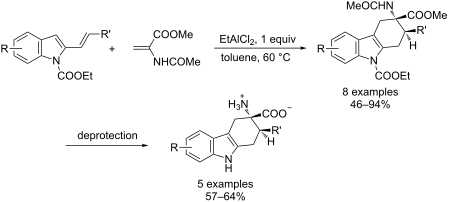
- to the identification of new dual NK1/NK2 antagonists [12], as shown in Figure 2 (B). In 2003, the pharmaceutical company Zentaris patented a series of tetrahydrocarbazole derivatives as ligands for G-protein-coupled receptors (GPCR), and in particular as antagonists of the gonadotropin-releasing


Synthesis, antimicrobial and cytotoxicity evaluation of new cholesterol congeners
Beilstein J. Org. Chem. 2015, 11, 1922–1932, doi:10.3762/bjoc.11.208
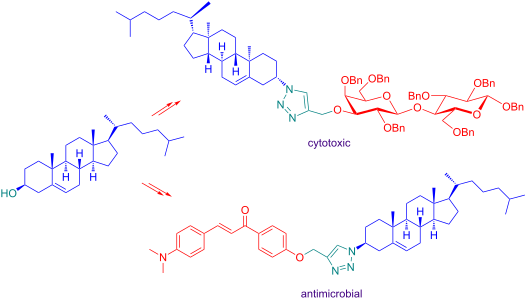
- regulator of cellular cholesterol [8]. Synthetic BODIPY–cholesterol conjugates were reported as probes for visualization of intracellular cholesterol pools and for monitoring cholesterol efflux from cells to extracellular receptors [9]. ABCA1 plays an inevitable role in the resistance against tumorgenesis




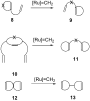
Recent applications of ring-rearrangement metathesis in organic synthesis
Beilstein J. Org. Chem. 2015, 11, 1833–1864, doi:10.3762/bjoc.11.199

- the reaction of 256 with catalyst 5 in the presence of vinyl acetate (258) (Scheme 53). The RRM approach is useful to design diverse analogs of the marine toxin dysiherbaine, which displays antagonistic activity on ionotropic glutamate receptors from oxanorbornenes [54]. The report reveals the




Tetrathiafulvalene-based azine ligands for anion and metal cation coordination
Beilstein J. Org. Chem. 2015, 11, 1379–1391, doi:10.3762/bjoc.11.149
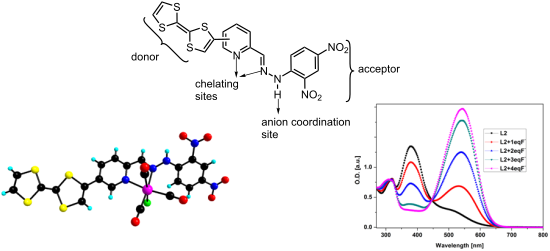
- -responsive receptors for neutral and/or charged guest sensing applications have been prepared [18][19][20][21][22]. On this ground, chemosensors capable of recognizing anionic and/or cationic species constitute an important area of increasing research in supramolecular chemistry, considering the ubiquitous


Donor–acceptor type co-crystals of arylthio-substituted tetrathiafulvalenes and fullerenes
Beilstein J. Org. Chem. 2015, 11, 1043–1051, doi:10.3762/bjoc.11.117
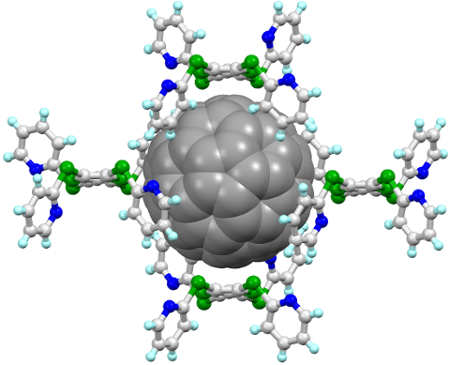
- ratio of the co-crystals, this work further demonstrates that Ar-S-TTFs are promising candidates to serve as receptors for fullerenes and have diverse supramolecular structures. Crystal structures The single crystalline structure of the complex is suitable for X-ray single crystal diffraction
- -crystal. The present results suggest that Ar-S-TTF molecules would be promising receptors for fullerenes as they are easily accessible. Meanwhile, Ar-S-TTFs possess the unique structural features to encapsulate fullerenes. That means the size matches with that of fullerenes and the flexibility is helpful


Glycoluril–tetrathiafulvalene molecular clips: on the influence of electronic and spatial properties for binding neutral accepting guests
Beilstein J. Org. Chem. 2015, 11, 1023–1036, doi:10.3762/bjoc.11.115
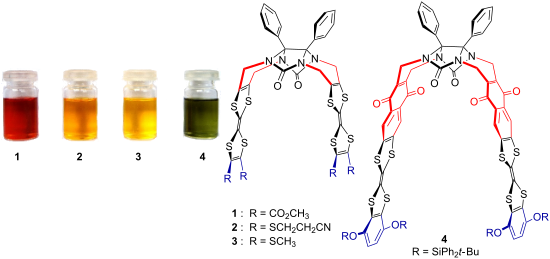
- molecular receptors prone to specifically recognize neutral molecules through donor–accceptor interactions are of particular interest [12], the unique π-donating ability and the planar geometry of the TTF building-block are suited to the construction of such receptors. Nevertheless, the incorporation of TTF
- as a π-donating element in molecular clips or tweezers for recognition of neutral electron acceptor guests is still relatively unexplored [13]. Molecular clips and tweezers can be defined as receptors presenting an open cavity composed of two interaction sites which are separated by a spacer [13][14
- , glycoluril-based molecular clips have shown that they were capable of acting as excellent receptors by exploiting the distance between the two aromatic sidewalls which is usually close to 7 Å. Since then, a large number of host systems based on this principle have been synthesized in order to use them for




Tuning of tetrathiafulvalene properties: versatile synthesis of N-arylated monopyrrolotetrathiafulvalenes via Ullmann-type coupling reactions
Beilstein J. Org. Chem. 2015, 11, 860–868, doi:10.3762/bjoc.11.96
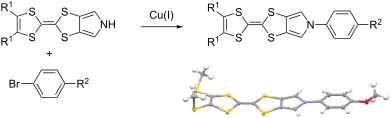
- . Although being reported in the literature, it has so far not found wide spread use and was employed only with a narrow scope of aromatic derivatives with electron-donating substituents and alkylthio-substituted (R = SAlkyl) MPTTFS. Being interested in the preparation of calix[4]arene receptors with MPTTF



Peptide–polymer ligands for a tandem WW-domain, an adaptive multivalent protein–protein interaction: lessons on the thermodynamic fitness of flexible ligands
Beilstein J. Org. Chem. 2015, 11, 837–847, doi:10.3762/bjoc.11.93
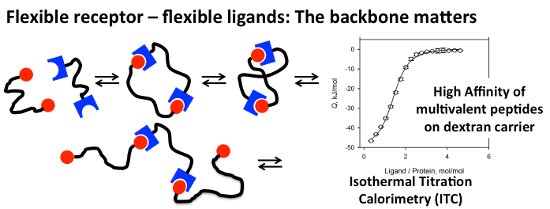
- ; proline-rich peptide sequences; Introduction Multivalency is a general principle in nature for increasing the affinity and specificity of ligand–receptor interactions [1]. Multivalent binding is characterized by the cooperative, over-additive enhancement of binding affinities of ligands and receptors in
- a defined spatial arrangement. The strongest affinity enhancement can be expected in the case of a perfectly fitting, rigid arrangement of ligands and receptors (Figure 1A). In such cases the affinity of the multivalent ligand can be potentiated by the degree of multivalency. Prominent examples for
- this perfect fit have been reported reaching an exponential binding increase [2]. Rigid scaffolds can be used to present ligands in defined spatial arrangements and thus can be exploited to investigate the distances between receptor sites as “molecular ruler” [3][4]. Many multivalent receptors in






Influence of length and flexibility of spacers on the binding affinity of divalent ligands
Beilstein J. Org. Chem. 2015, 11, 804–816, doi:10.3762/bjoc.11.90
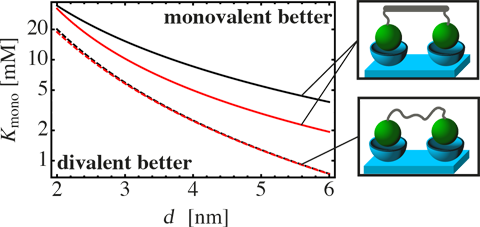
- receptors [1]. Each multivalent ligand consists of several monovalent ligands that are connected via a scaffold. The binding affinity of such a multivalent ligand is determined by the interplay between gain in binding energy and loss of entropy associated with conformational degrees of freedom. The more
- therefore desirable to derive a model that allows one to predict the binding affinity of a given ligand-scaffold construct. Several theoretical studies have been dedicated to study the interaction between multi- and polyvalent ligands with receptors arranged on planar surfaces [8][9][10][11][12][13]. The
- constant Kmono of a monovalent ligand interacting with a monovalent receptor is defined as with [L] and [R] being the concentration of unbound ligands and unbound receptors and [RL] the concentration of bound ligands or equivalently the concentration of bound receptors. If half of all receptors are



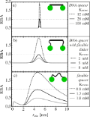

![[Graphic 33]](/bjoc/content/inline/1860-5397-11-90-i83.png?max-width=637&scale=1.18182) is shown for different ligand–spacer constructs. If the monovalent dissociatio...
is shown for different ligand–spacer constructs. If the monovalent dissociatio...



