Search results
Search for "zinc" in Full Text gives 372 result(s) in Beilstein Journal of Organic Chemistry. Showing first 200.
Recent developments in the asymmetric Reformatsky-type reaction
Beilstein J. Org. Chem. 2018, 14, 325–344, doi:10.3762/bjoc.14.21
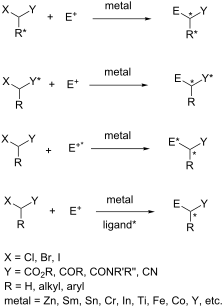
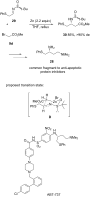
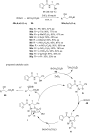
- -hydroxyalkanoates from the reaction of α-halocarbonyl compounds with aldehydes or ketones in the presence of zinc [1]. Today, the Reformatsky reactions are more generally defined as metal insertion into carbon–halogen bonds which are activated by carbonyl groups or related functions at vicinal or vinylogous
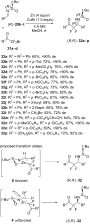
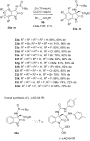
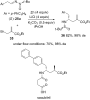
- . Furthermore, the challenging field of catalytic enantioselective (aza)-versions is fast-growing since the discovery that ZnMe2 or ZnEt2 could be used as zinc sources allowing more convenient homogeneous reaction conditions to be used [2][3]. This review collects the important developments in asymmetric
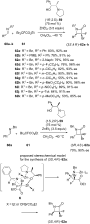
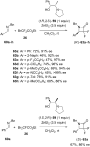
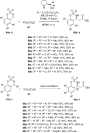
- reactions Intermolecular Reformatsky reactions Chiral β-hydroxyalkanoates constitute key intermediates in the synthesis of biologically active molecules. Diastereoselective zinc-mediated Reformatsky reactions involving either chiral aldehydes or chiral nucleophiles or both of them have been widely applied











Photocatalytic formation of carbon–sulfur bonds
Beilstein J. Org. Chem. 2018, 14, 54–83, doi:10.3762/bjoc.14.4
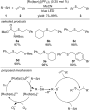
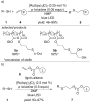
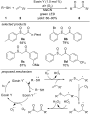
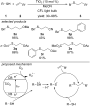
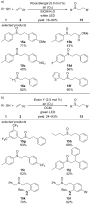
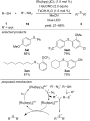
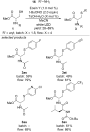
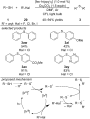
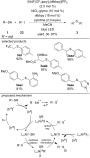
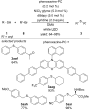
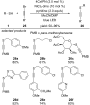
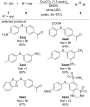
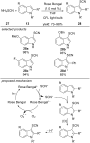
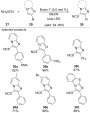
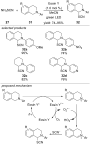
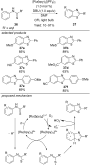
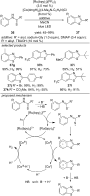
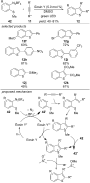
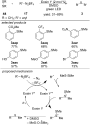
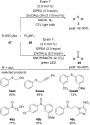
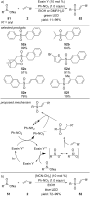
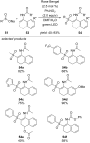
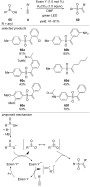
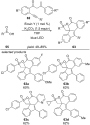
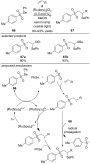
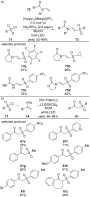
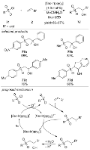
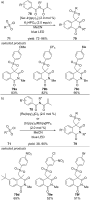
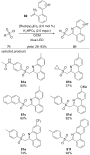
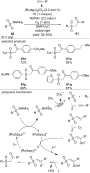
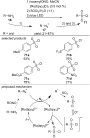
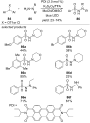
- is accomplished by in situ generated singlet oxygen, which is generated by energy-transfer of the excited state of Eosin Y and only possible under aerobic conditions. The authors also found that zinc acetate is beneficial for the selective oxidation. A series of electron-rich and electron-poor





























Aminosugar-based immunomodulator lipid A: synthetic approaches
Beilstein J. Org. Chem. 2018, 14, 25–53, doi:10.3762/bjoc.14.3
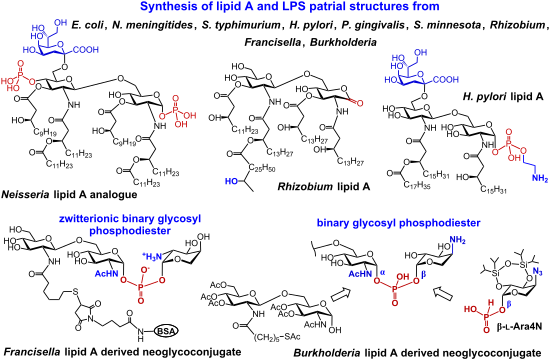
- the azido function with zinc in acetic acid followed by acylation of the liberated amino group with the long-chain acyloxyacyl fatty acid furnished fully acylated 16. In the next steps, the isopropylidene acetal and anomeric TDS ether were removed by treatment with aqueous TFA and the anomeric




Synthetic mRNA capping
Beilstein J. Org. Chem. 2017, 13, 2819–2832, doi:10.3762/bjoc.13.274
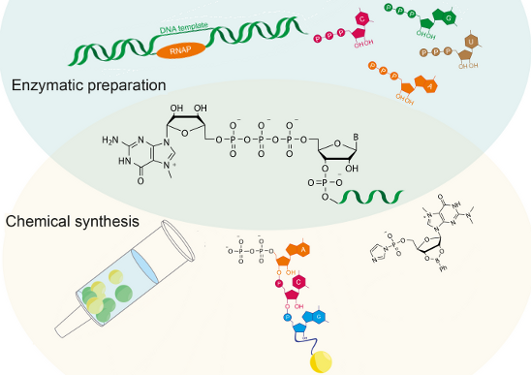
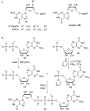
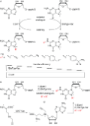
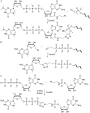
- nucleophiles such as nucleoside mono-, -di- or -triphosphates and are typically reacted in anhydrous DMF in the presence of zinc chloride. The GMP imidazolide (18) is reacted with m7GDP (17) in the presence of ZnCl2 as catalyst to yield m7GpppG (12) [49]. In the past years, variations of this general synthetic



CF3SO2X (X = Na, Cl) as reagents for trifluoromethylation, trifluoromethylsulfenyl-, -sulfinyl- and -sulfonylation and chlorination. Part 2: Use of CF3SO2Cl
Beilstein J. Org. Chem. 2017, 13, 2800–2818, doi:10.3762/bjoc.13.273
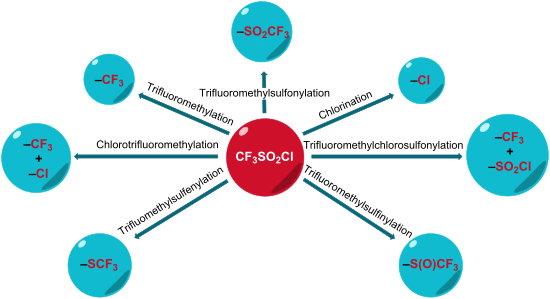
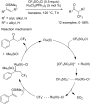
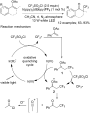
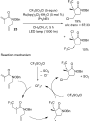
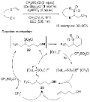
- optimisation phase, which was possible to minimise by increasing the catalyst loading (see later in the text for other chlorinations with CF3SO2Cl). Indirectly, CF3SO2Cl intervened in the trifluoromethylation of (hetero)arenes; indeed, when reacted with zinc in water, it afforded the zinc sulfinate salt








Consecutive hydrazino-Ugi-azide reactions: synthesis of acylhydrazines bearing 1,5-disubstituted tetrazoles
Beilstein J. Org. Chem. 2017, 13, 2596–2602, doi:10.3762/bjoc.13.256

- %) in trifluoroethanol (TFE) at room temperature for 24 h. The presence of catalytic amounts of zinc chloride as Lewis acid in this reaction had already been reported to improve the yields [33]. Indeed, initial studies without the catalyst afforded the desired products 10a in only 28% yield (120 °C, 30


A concise flow synthesis of indole-3-carboxylic ester and its derivatisation to an auxin mimic
Beilstein J. Org. Chem. 2017, 13, 2549–2560, doi:10.3762/bjoc.13.251
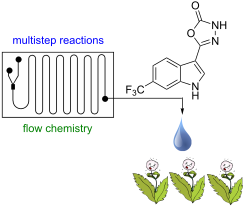
- incomplete reduction were obtained in greater amounts as the flow rate was further increased along with an increasing proportion of the hydroxyaminoindole 15. This correlates with previous literature findings employing catalysed hydrogenation [22][23][24][25][26] or stoichiometric metal (zinc or indium


Exploring mechanochemistry to turn organic bio-relevant molecules into metal-organic frameworks: a short review
Beilstein J. Org. Chem. 2017, 13, 2416–2427, doi:10.3762/bjoc.13.239
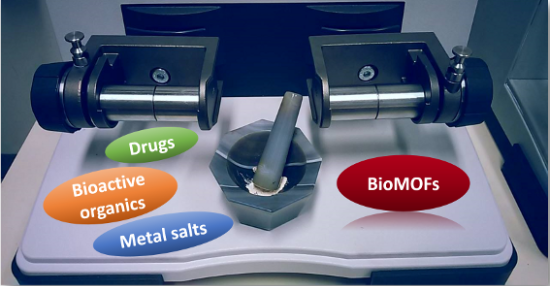
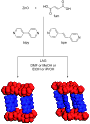
- achieve a controlled release of biologically active copper ions and it has shown to be an effective antifungal agent against representative yeast and mold [135]. Friščić et al. also reported the synthesis of coordination polymers and BioMOFs using LAG by grinding together zinc oxide and fumaric acid. In
- this work, they initially obtained four different coordination polymers, depending on the choice of the grinding liquid: anhydrous zinc fumarate (1) when grinding with ethanol or methanol; a dihydrate (1·2H2O) when using a mixture of water and ethanol; a tetrahydrate (1·4H2O) and a pentahydrate (1·5H2O
- ) when grinding with three or four equiv of water, respectively (Figure 4) [136][137]. This method was further applied to the mechanochemical synthesis of porous materials with introduced auxiliary ligands. These would allow for coordination to zinc in order to generate pillared MOFs, that could be used




Solvent-free copper-catalyzed click chemistry for the synthesis of N-heterocyclic hybrids based on quinoline and 1,2,3-triazole
Beilstein J. Org. Chem. 2017, 13, 2352–2363, doi:10.3762/bjoc.13.232
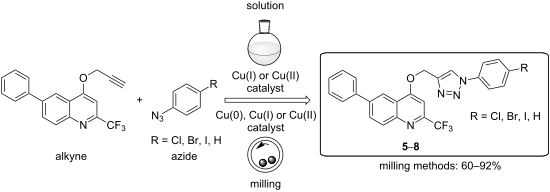
- copper and zinc, which is much harder and mechanically more resistant than pure copper. We tested two approaches, one using a completely brass milling assembly (brass milling vessels and balls), while the other combined brass milling balls with polytetrafluoroethylene (PTFE, Teflon) vessels. Surprisingly



Synthesis of ergostane-type brassinosteroids with modifications in ring A
Beilstein J. Org. Chem. 2017, 13, 2326–2331, doi:10.3762/bjoc.13.229
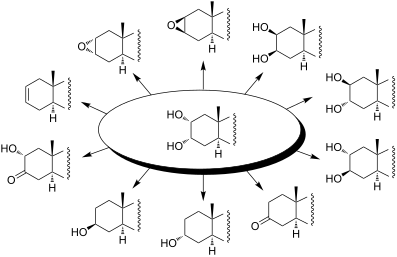
- mesylation of diol 18 produced dimesylate 19, which was treated with zinc dust and sodium iodide in refluxing DMF (Tipson–Cohen reaction [16]) to give, after deacetylation, B-lactone olefin 21 in 96% yield. 2α,3α- and 2β,3β-epoxides of type 4 and 5 Olefins of type 3 are evident intermediates for the


Synthesis and application of trifluoroethoxy-substituted phthalocyanines and subphthalocyanines
Beilstein J. Org. Chem. 2017, 13, 2273–2296, doi:10.3762/bjoc.13.224
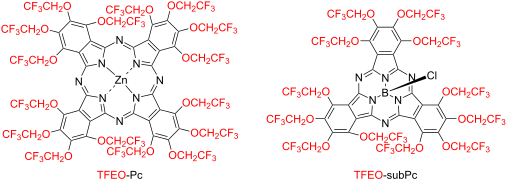
- . Review Properties of trifluoroethoxy-substituted phthalocyanines Research on TFEO-Pc has taken place since the 1990s [42]. The early stages of this research focused on spectroscopic investigations of metal-free phthalocyanine and its zinc complex which showed the most fundamental spectroscopic properties
- among the phthalocyanines [43][44]. Trifluoroethoxy-substituted zinc phthalocyanine (TFEO-ZnPc) shows a very strong absorption peak called the Q band in the longer wavelength region greater than 700 nm. It is red-shifted compared with the unsubstituted phthalocyanine zinc complex due to the influence of
- the other hand, phthalocyanine without any trifluoroethoxy groups such as tert-butyl-substituted zinc phthalocyanine (t-Bu-ZnPc) or perfluorinated zinc phthalocyanine (F-ZnPc), showed low solubility in both forms of CO2 while phthalocyanine with zinc as the central metal tended to have higher








Ni nanoparticles on RGO as reusable heterogeneous catalyst: effect of Ni particle size and intermediate composite structures in C–S cross-coupling reaction
Beilstein J. Org. Chem. 2017, 13, 1796–1806, doi:10.3762/bjoc.13.174
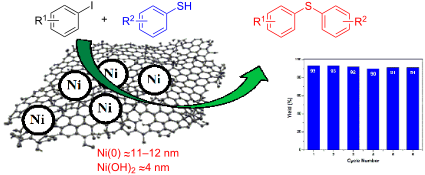
- the given conditions. However, the cross-coupling of bromoarenes could be performed efficiently in the presence of zinc dust (1 equivalent to the substrate bromoarene) in addition to a catalytic amount of Ni/RGO-40 (Table 2, entries 12 and 13). Although the exact role of zinc is not clearly understood
- presence of zinc. Diiodobenzenes, however, underwent smooth coupling affording the bis-coupled products 3m and 3n as the single products (Table 2, entries 14 and 15). Using aliphatic thiols has also resulted in the formation of unsymmetrical aryl alkyl thioether 3o and 3p in relatively lower yields (75–80




The chemistry and biology of mycolactones
Beilstein J. Org. Chem. 2017, 13, 1596–1660, doi:10.3762/bjoc.13.159









Direct catalytic arylation of heteroarenes with meso-bromophenyl-substituted porphyrins
Beilstein J. Org. Chem. 2017, 13, 1524–1532, doi:10.3762/bjoc.13.152
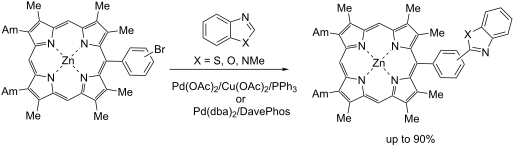
- Osuka and co-workers. Their research was targeted at the Ir-catalyzed β-borylation of porphyrins and zinc porphyrinates with the purpose of the consequent synthesis of di- and polyporphyrin structures [23][24][25], further direct β-arylation of tetrapyrrolic systems with aryl bromides was developed
- Zinc meso-(4-bromophenyl)porphyrinate (1) was chosen as a model substrate for the investigation of the conditions of the catalytic arylation. The reaction with benzothiazole was first catalyzed with Pd(OAc)2/DavePhos (2-dicyclohexylphosphino-2’-dimethylaminobiphenyl) (20:20 mol %) and carried out in
- isocyanide Pd complex followed by the ring closure [32]; on the other hand, the arylation of benzothiophene in the presence of Pd(OAc)2/PCy3*HBF4/PivOH proceeds in accordance with the concerted metalation–deprotonation mechanism [33][34]. We also investigated the reaction of zinc meso-(3-bromophenyl


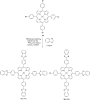
Nitration of 5,11-dihydroindolo[3,2-b]carbazoles and synthetic applications of their nitro-substituted derivatives
Beilstein J. Org. Chem. 2017, 13, 1396–1406, doi:10.3762/bjoc.13.136
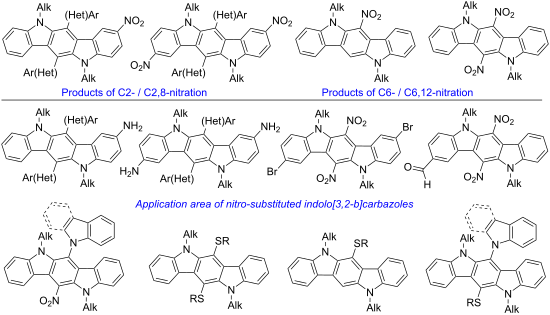
- formation of mono-nitro derivatives (at C-2 or C-6) from the same indolo[3,2-b]carbazoles has also been observed in several cases. Reduction of 2-nitro and 2,8-dinitro derivatives with zinc powder and hydrochloric acid has afforded 2-amino- and 2,8-diamino-substituted indolo[3,2-b]carbazoles, while
- [8]. In this study, we have realized a convenient synthesis of amino-containing ICZ derivatives, starting from 2,8-dinitro-ICZs 2 and 2-nitro-ICZ compounds 3 (Scheme 3). Indeed, nitro compounds 2a–f and 3a,b can easily be reduced on treatment with an excess of zinc powder and hydrochloric acid in THF
- ). We have obtained unexpected results for the reduction of 6,12-dinitro-ICZs with zinc powder and hydrochloric acid in THF solution. Formal exchange of both nitro groups with hydrogen atoms has proved to occur under these reaction conditions, giving 6,12-unsubstituted ICZs 8a and 8e from the nitro


Total synthesis of elansolids B1 and B2
Beilstein J. Org. Chem. 2017, 13, 1280–1287, doi:10.3762/bjoc.13.124
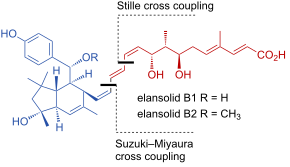
- ) was the installation of the side chain at C1–C13. The synthesis relied on two consecutive Sonogashira–Hagihara cross-coupling reactions that provided the ene–diyne system (C10–C15) 10 in good yield. However, partial hydrogenation (only the zinc–copper couple worked) furnished the desired (Z,E,Z


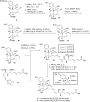
A concise and practical stereoselective synthesis of ipragliflozin L-proline
Beilstein J. Org. Chem. 2017, 13, 1064–1070, doi:10.3762/bjoc.13.105
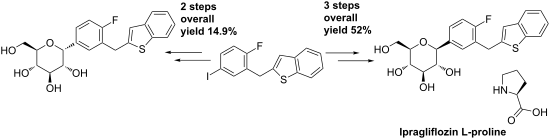
- 10.3762/bjoc.13.105 Abstract A concise and practical stereoselective synthesis of ipragliflozin L-proline was presented starting from 2-[(5-iodo-2-fluorophenyl)methyl]-1-benzothiophene and 2,3,4,6-tetra-O-pivaloyl-α-D-glucopyranosyl bromide without catalyst via iodine–lithium–zinc exchange. The overall
- equiv 2b gave a good result, the amount of 5” was greatly reduced (Table 1, entry 4), while the content of 5 in the crude product was increased to 68% and the isolated yield was 77.7%. It was presumable that a iodine–lithium–zinc exchange and the transmetalation proceeded better than a bromide–lithium
- –zinc exchange and transmetalation to produce the arylzinc derivative in situ in this reaction. However, further increasing the amount of zinc bromide to 1.0 equiv did not improve the reaction (Table 1, entry 5) and elevation of the reaction temperature to −10 °C (Table 1, entry 6) worsened the reaction


Conformational study of L-methionine and L-cysteine derivatives through quantum chemical calculations and 3JHH coupling constant analyses
Beilstein J. Org. Chem. 2017, 13, 925–937, doi:10.3762/bjoc.13.94
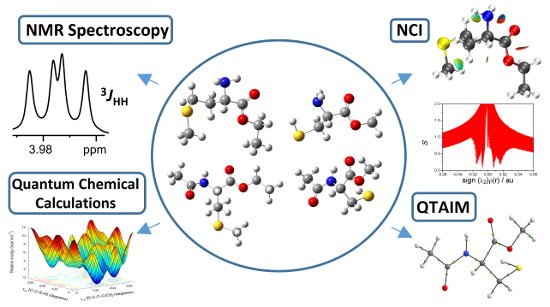
- methionine and cysteine amino acid in the biological environment, such as in polypeptide chains. Experimental Synthesis of compounds 1, 3 and 4 Compound 1 was purchased from Sigma-Aldrich in the form of chloridrate and deprotonated using activated zinc dust, as described in the literature for similar




Synthesis of tetrasubstituted pyrazoles containing pyridinyl substituents
Beilstein J. Org. Chem. 2017, 13, 895–902, doi:10.3762/bjoc.13.90
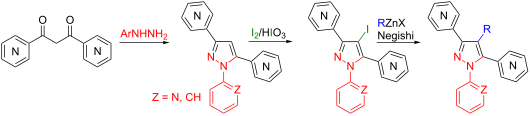
- homocoupling products 7a,b emerged as the predominant reaction products (Scheme 5, middle trace), probably due to preferable halogen–zinc exchange and subsequent homocoupling. Interestingly, such sterically hindered halides provided homocoupling products 7a,b in good yields (66% and 48%, respectively). The
- ), low reactivity was detected with precursors 3c,d resulting in conversion rates below 30% (Scheme 5, lowest trace). An interesting compound was isolated in low yield (≈14%) from the mixture obtained upon the reaction of 3a with (phenylethynyl)zinc bromide. By careful NMR and HRMS analysis the pyrazolo
- –halogen exchange and subsequent carboxylation with iodopyrazoles 3a–d. Attempted cross-coupling reactions with 4-halopyrazoles 5 and 3a. Negishi couplings with 4-iodopyrazoles 3a,b. Formation of pyrazoloquinolizin-6-ium iodide 12 upon reaction of 3a with (phenylethynyl)zinc bromide. Prototropic


Effect of the ortho-hydroxy group of salicylaldehyde in the A3 coupling reaction: A metal-catalyst-free synthesis of propargylamine
Beilstein J. Org. Chem. 2017, 13, 552–557, doi:10.3762/bjoc.13.53
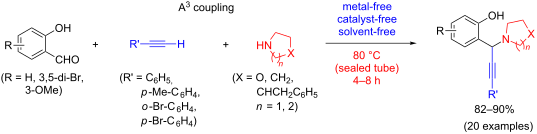
- known as A3 coupling reaction, remains the most common and straightforward method for the synthesis of propargylamine. The A3 coupling reaction is reported under transition-metal-catalyzed conditions using copper [12][17][18][19], gold [17][20][21], silver [17][22], zinc [17][23], nickel [24], iron [25


Synthesis of 1-indanones with a broad range of biological activity
Beilstein J. Org. Chem. 2017, 13, 451–494, doi:10.3762/bjoc.13.48
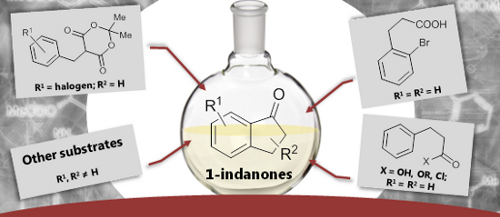
- reaction of malonic acid with chlorobenzaldehyde [21]. In the first step, the substrates reacted in the presence of formic acid and diethylamine to form 3-chlorophenylpropionic acid followed by a intramolecular Friedel–Crafts acylation with malonyl chloride in the presence of zinc chloride to give 5-chloro


Adsorption of RNA on mineral surfaces and mineral precipitates
Beilstein J. Org. Chem. 2017, 13, 393–404, doi:10.3762/bjoc.13.42
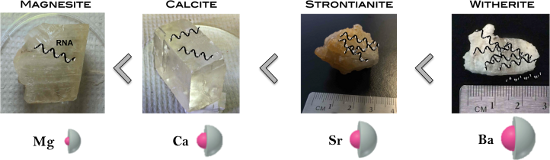
- from water-dissolved salts. These are shown in Table 2. For example, manganese carbonates (rhodochrosite) and zinc carbonate (smithsonite) were examined. Both adsorbed comparable amounts of RNA to their surfaces in the mineral specimens that were examined, 11% and 5% respectively. Comparable amounts of


Efficient access to β-vinylporphyrin derivatives via palladium cross coupling of β-bromoporphyrins with N-tosylhydrazones
Beilstein J. Org. Chem. 2017, 13, 195–202, doi:10.3762/bjoc.13.22
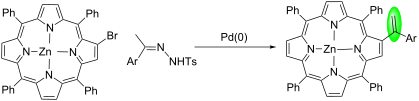
- ]. The use of the porphyrin zinc complex avoids the complexation of the tetrapyrrolic macrocycle with Pd(II) formed during the catalytic cycle, and in this way prevents the loss of the catalyst. In the first experiments, the reactions between 2-bromo-5,10,15,20-tetraphenylporphyrinatozinc(II) (1) and the
- the reactivity of the used N-tosylhydrazones 2a–c were observed. The major compounds isolated in these conditions were the starting porphyrin 1 and the zinc(II) complex of TPP (ZnTPP) resulting from the debromination of porphyrin 1. The reductive removal of the halo moiety has been already described


Extrusion – back to the future: Using an established technique to reform automated chemical synthesis
Beilstein J. Org. Chem. 2017, 13, 65–75, doi:10.3762/bjoc.13.9
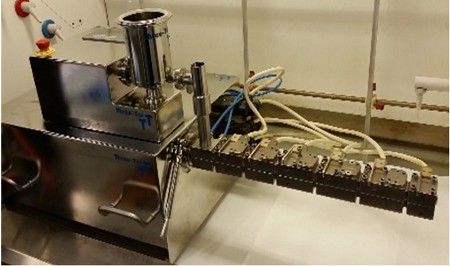
- greater at 3250,000 kg m−3 d−1, whereas batch synthesis was determined to be 500 kg m−3 d−1 [44]. Furthermore, these materials (particularly choline chloride/zinc chloride (1:2)) are known to be incredibly viscous and so very difficult to transport from the batch mixer into storage containers, but


Computational methods in drug discovery
Beilstein J. Org. Chem. 2016, 12, 2694–2718, doi:10.3762/bjoc.12.267
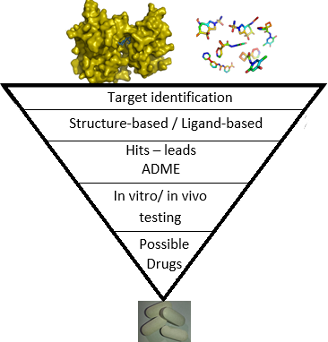
- molecules and target proteins. PubChem, a small molecule repository is available through NIH which contains millions of biologically relevant small molecules [78]. ZINC is a virtual high-throughput screening compound library which is a free public resource [79][80]. This database contains over 35 million