


Search results
Search for "Ru-carbene" in Full Text gives 13 result(s) in Beilstein Journal of Organic Chemistry.
Transition-metal-catalyzed domino reactions of strained bicyclic alkenes
- Austin Pounder,
- Eric Neufeld,
- Peter Myler and
- William Tam
Beilstein J. Org. Chem. 2023, 19, 487–540, doi:10.3762/bjoc.19.38
- would afford the [2 + 2] adduct. Hydroruthenation of the allene produces 103 which can either undergo reductive elimination to afford the cyclopropanated bicyclic alkene or undergo a [2 + 2] cycloreversion to generate the Ru–carbene 104. The Ru–carbene 104 can rearrange to 100 through a 1,3-migration of

Graphical Abstract

Figure 1: Ring-strain energies of homobicyclic and heterobicyclic alkenes in kcal mol−1. a) [2.2.1]-Bicyclic ...
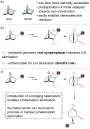
Figure 2: a) Exo and endo face descriptions of bicyclic alkenes. b) Reactivity comparisons for different β-at...

Scheme 1: Ni-catalyzed ring-opening/cyclization cascade of heterobicyclic alkenes 1 with alkyl propiolates 2 ...
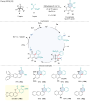
Scheme 2: Ni-catalyzed ring-opening/cyclization cascade of heterobicyclic alkenes 8 with β-iodo-(Z)-propenoat...

Scheme 3: Ni-catalyzed two- and three-component difunctionalizations of norbornene derivatives 15 with alkyne...

Scheme 4: Ni-catalyzed intermolecular three-component difunctionalization of oxabicyclic alkenes 1 with alkyn...

Scheme 5: Ni-catalyzed intermolecular three-component carboacylation of norbornene derivatives 15.

Scheme 6: Photoredox/Ni dual-catalyzed coupling of 4-alkyl-1,4-dihydropyridines 31 with heterobicyclic alkene...

Scheme 7: Photoredox/Ni dual-catalyzed coupling of α-amino radicals with heterobicyclic alkenes 30.

Scheme 8: Cu-catalyzed rearrangement/allylic alkylation of 2,3-diazabicyclo[2.2.1]heptenes 47 with Grignard r...
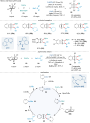
Scheme 9: Cu-catalyzed aminoboration of bicyclic alkenes 1 with bis(pinacolato)diboron (B2pin2) (53) and O-be...

Scheme 10: Cu-catalyzed borylalkynylation of oxabenzonorbornadiene (30b) with B2pin2 (53) and bromoalkynes 62.

Scheme 11: Cu-catalyzed borylacylation of bicyclic alkenes 1.

Scheme 12: Cu-catalyzed diastereoselective 1,2-difunctionalization of oxabenzonorbornadienes 30 for the synthe...

Scheme 13: Fe-catalyzed carbozincation of heterobicyclic alkenes 1 with arylzinc reagents 74.

Scheme 14: Co-catalyzed addition of arylzinc reagents of norbornene derivatives 15.

Scheme 15: Co-catalyzed ring-opening/dehydration of oxabicyclic alkenes 30 via C–H activation of arenes.

Scheme 16: Co-catalyzed [3 + 2] annulation/ring-opening/dehydration domino reaction of oxabicyclic alkenes 1 w...

Scheme 17: Co-catalyzed enantioselective carboamination of bicyclic alkenes 1 via C–H functionalization.

Scheme 18: Ru-catalyzed cyclization of oxabenzonorbornene derivatives with propargylic alcohols for the synthe...

Scheme 19: Ru-catalyzed coupling of oxabenzonorbornene derivatives 30 with propargylic alcohols and ethers 106...

Scheme 20: Ru-catalyzed ring-opening/dehydration of oxabicyclic alkenes via the C–H activation of anilides.

Scheme 21: Ru-catalyzed of azabenzonorbornadiene derivatives with arylamides.

Scheme 22: Rh-catalyzed cyclization of bicyclic alkenes with arylboronate esters 118.

Scheme 23: Rh-catalyzed cyclization of bicyclic alkenes with dienyl- and heteroaromatic boronate esters.

Scheme 24: Rh-catalyzed domino lactonization of doubly bridgehead-substituted oxabicyclic alkenes with seconda...

Scheme 25: Rh-catalyzed domino carboannulation of diazabicyclic alkenes with 2-cyanophenylboronic acid and 2-f...

Scheme 26: Rh-catalyzed synthesis of oxazolidinone scaffolds 147 through a domino ARO/cyclization of oxabicycl...

Scheme 27: Rh-catalyzed oxidative coupling of salicylaldehyde derivatives 151 with diazabicyclic alkenes 130a.

Scheme 28: Rh-catalyzed reaction of O-acetyl ketoximes with bicyclic alkenes for the synthesis of isoquinoline...

Scheme 29: Rh-catalyzed domino coupling reaction of 2-phenylpyridines 165 with oxa- and azabicyclic alkenes 30....

Scheme 30: Rh-catalyzed domino dehydrative naphthylation of oxabenzonorbornadienes 30 with N-sulfonyl 2-aminob...

Scheme 31: Rh-catalyzed domino dehydrative naphthylation of oxabenzonorbornadienes 30 with arylphosphine deriv...

Scheme 32: Rh-catalyzed domino ring-opening coupling reaction of azaspirotricyclic alkenes using arylboronic a...

Scheme 33: Tandem Rh(III)/Sc(III)-catalyzed domino reaction of oxabenzonorbornadienes 30 with alkynols 184 dir...

Scheme 34: Rh-catalyzed asymmetric domino cyclization and addition reaction of 1,6-enynes 194 and oxa/azabenzo...

Scheme 35: Rh/Zn-catalyzed domino ARO/cyclization of oxabenzonorbornadienes 30 with phosphorus ylides 201.

Scheme 36: Rh-catalyzed domino ring opening/lactonization of oxabenzonorbornadienes 30 with 2-nitrobenzenesulf...

Scheme 37: Rh-catalyzed domino C–C/C–N bond formation of azabenzonorbornadienes 30 with aryl-2H-indazoles 210.

Scheme 38: Rh/Pd-catalyzed domino synthesis of indole derivatives with 2-(phenylethynyl)anilines 212 and oxabe...

Scheme 39: Rh-catalyzed domino carborhodation of heterobicyclic alkenes 30 with B2pin2 (53).

Scheme 40: Rh-catalyzed three-component 1,2-carboamidation reaction of bicyclic alkenes 30 with aromatic and h...

Scheme 41: Pd-catalyzed diarylation and dialkenylation reactions of norbornene derivatives.

Scheme 42: Three-component Pd-catalyzed arylalkynylation reactions of bicyclic alkenes.

Scheme 43: Three-component Pd-catalyzed arylalkynylation reactions of norbornene and DFT mechanistic study.

Scheme 44: Pd-catalyzed three-component coupling N-tosylhydrazones 236, aryl halides 66, and norbornene (15a).

Scheme 45: Pd-catalyzed arylboration and allylboration of bicyclic alkenes.

Scheme 46: Pd-catalyzed, three-component annulation of aryl iodides 66, alkenyl bromides 241, and bicyclic alk...

Scheme 47: Pd-catalyzed double insertion/annulation reaction for synthesizing tetrasubstituted olefins.

Scheme 48: Pd-catalyzed aminocyclopropanation of bicyclic alkenes 1 with 5-iodopent-4-enylamine derivatives 249...

Scheme 49: Pd-catalyzed, three-component coupling of alkynyl bromides 62 and norbornene derivatives 15 with el...
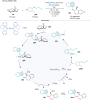
Scheme 50: Pd-catalyzed intramolecular cyclization/ring-opening reaction of heterobicyclic alkenes 30 with 2-i...

Scheme 51: Pd-catalyzed dimer- and trimerization of oxabenzonorbornadiene derivatives 30 with anhydrides 268.

Scheme 52: Pd-catalyzed Catellani-type annulation and retro-Diels–Alder of norbornadiene 15b yielding fused xa...

Scheme 53: Pd-catalyzed hydroarylation and heteroannulation of urea-derived bicyclic alkenes 158 and aryl iodi...

Scheme 54: Access to fused 8-membered sulfoximine heterocycles 284/285 via Pd-catalyzed Catellani annulation c...

Scheme 55: Pd-catalyzed 2,2-bifunctionalization of bicyclic alkenes 1 generating spirobicyclic xanthone deriva...

Scheme 56: Pd-catalyzed Catellani-type annulation and retro-Diels–Alder of norbornadiene (15b) producing subst...

Scheme 57: Pd-catalyzed [2 + 2 + 1] annulation furnishing bicyclic-fused indanes 281 and 283.
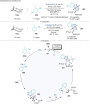
Scheme 58: Pd-catalyzed ring-opening/ring-closing cascade of diazabicyclic alkenes 130a.

Scheme 59: Pd-NHC-catalyzed cyclopentannulation of diazabicyclic alkenes 130a.

Scheme 60: Pd-catalyzed annulation cascade generating diazabicyclic-fused indanones 292 and indanols 294.

Scheme 61: Pd-catalyzed skeletal rearrangement of spirotricyclic alkenes 176 towards large polycyclic benzofur...

Scheme 62: Pd-catalyzed oxidative annulation of aromatic enamides 298 and diazabicyclic alkenes 130a.

Scheme 63: Accessing 3,4,5-trisubstituted cyclopentenes 300, 301, 302 via the Pd-catalyzed domino reaction of ...

Scheme 64: Palladacycle-catalyzed ring-expansion/cyclization domino reactions of terminal alkynes and bicyclic...

Scheme 65: Pd-catalyzed carboesterification of norbornene (15a) with alkynes, furnishing α-methylene γ-lactone...
Combining enyne metathesis with long-established organic transformations: a powerful strategy for the sustainable synthesis of bioactive molecules
- Valerian Dragutan,
- Ileana Dragutan,
- Albert Demonceau and
- Lionel Delaude
Beilstein J. Org. Chem. 2020, 16, 738–755, doi:10.3762/bjoc.16.68
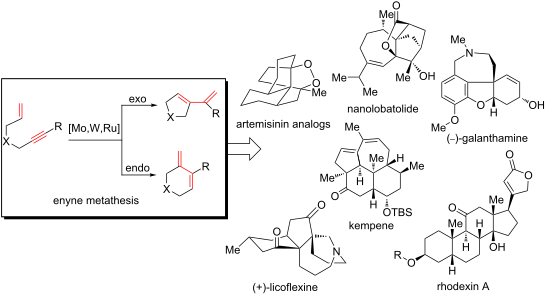
- catalyzed by Grubbs 2nd generation Ru-carbene, these intermediates then led to the tricyclic sesquiterpenoid-like scaffolds I–VIII (Scheme 4), as suitable precursors for the synthesis of artemisinin and its analogs (1a–c). After selecting the optimal tricyclic intermediate, the installation of the bridged

Graphical Abstract

Scheme 1: Intramolecular (A) and intermolecular (B) enyne metathesis reactions.

Scheme 2: Ene–yne and yne–ene mechanisms for intramolecular enyne metathesis reactions.

Scheme 3: Metallacarbene mechanism in intermolecular enyne metathesis.
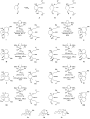
Scheme 4: The Oguri strategy for accessing artemisinin analogs 1a–c through enyne metathesis.

Scheme 5: Access to the tetracyclic core of nanolobatolide (2) via tandem enyne metathesis followed by an Eu(...

Scheme 6: Synthesis of (−)-amphidinolide E (3) using an intermolecular enyne metathesis as the key step.

Scheme 7: Synthesis of amphidinolide K (4) by an enyne metathesis route.

Scheme 8: Trost synthesis of des-epoxy-amphidinolide N (5) [72].

Scheme 9: Enyne metathesis between the propargylic derivative and the allylic alcohol in the synthesis of the...

Scheme 10: Synthetic route to amphidinolide N (6a).

Scheme 11: Synthesis of the stereoisomeric precursors of amphidinolide V (7a and 7b) through alkyne ring-closi...

Scheme 12: Synthesis of the anthramycin precursor 8 from ʟ-methionine by a tandem enyne metathesis–cross metat...

Scheme 13: Synthesis of (−)‐clavukerin A (9) and (−)‐isoclavukerin A (10) by an enyne metathesis route startin...

Scheme 14: Synthesis of (−)-isoguaiene (11) through an enyne metathesis as the key step.

Scheme 15: Synthesis of erogorgiaene (12) by a tandem enyne metathesis/cross metathesis sequence using the sec...

Scheme 16: Synthesis of (−)-galanthamine (13) from isovanilin by an enyne metathesis.

Scheme 17: Application of enyne metathesis for the synthesis of kempene diterpenes 14a–c.

Scheme 18: Synthesis of the alkaloid (+)-lycoflexine (15) through enyne metathesis.

Scheme 19: Synthesis of the AB subunits of manzamine A (16a) and E (16b) by enyne metathesis.

Scheme 20: Jung's synthesis of rhodexin A (17) by enyne metathesis/cross metathesis reactions.

Scheme 21: Total synthesis of (−)-flueggine A (18) and (+)-virosaine B (19) from Weinreb amide by enyne metath...

Scheme 22: Access to virgidivarine (20) and virgiboidine (21) by an enyne metathesis route.

Scheme 23: Enyne metathesis approach to (−)-zenkequinone B (22).

Scheme 24: Access to C-aryl glycoside 23 by an intermolecular enyne metathesis/Diels–Alder cycloaddition.

Scheme 25: Synthesis of spiro-C-aryl glycoside 24 by a tandem intramolecular enyne metathesis/Diels–Alder reac...

Scheme 26: Pathways to (−)-exiguolide (25) by Trost’s Ru-catalyzed enyne cross-coupling and cross-metathesis [94].
Olefin metathesis in multiblock copolymer synthesis
- Maria L. Gringolts,
- Yulia I. Denisova,
- Eugene Sh. Finkelshtein and
- Yaroslav V. Kudryavtsev
Beilstein J. Org. Chem. 2019, 15, 218–235, doi:10.3762/bjoc.15.21

- semicrystalline and amorphous samples of partly hydrogenated PBD underwent ethenolysis in the presence of the Ru-carbene catalyst. This depolymerization procedure resulted in the formation of telechelics with both end vinylated. Then, the ethylene atmosphere was replaced with argon and an additional amount of
- the MCM conditions enables one to obtain copolymers with a controllable average block length ranging from the initial homopolymer length to a few monomer units. Important data on the kinetics of MCM between PNB and PCOE mediated by Gr1 were obtained by combining in situ NMR studies of the Ru-carbene

Graphical Abstract

Scheme 1: Multiblock copolymer synthesis by sequential ROMP, replotted from [51].

Figure 1: The most known commercially available catalysts for olefin metathesis.

Scheme 2: Multiblock copolymer synthesis by combining ROMP and NMP, replotted from [56].

Figure 2: A highly fluorescent multiblock copolymer for bioimaging and in vivo tumor targeting [60].

Scheme 3: Multiblock copolymer synthesis by combining ROMP and click reactions replotted from [61].

Scheme 4: Multiblock copolymer synthesis by combining ADMET and other reactions, replotted from [63,64].

Scheme 5: Synthesis of multiblock bottle-brush copolymers by ROMP, replotted from [68].

Scheme 6: Sacrificial synthesis of multiblock copolymers, replotted from [70].

Scheme 7: Synthesis of supramolecular multiblock copolymers, replotted from [74].

Figure 3: The multiblock copolymer capable of post-functionalization [76].
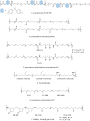
Figure 4: Multiblock copolymers synthesized by macromolecular cross metathesis.

Scheme 8: Macromolecular cross metathesis.

Figure 5: Changes in the DSC thermograms during MCM of PBD and polyesters (left) [84] and PNB–PCOE (right) mediat...

Figure 6: The 13C NMR spectrum recorded after 8 h of the reaction between PCOE, PNB, and Gr1; the homo- and h...

Scheme 9: Elementary reactions of MCM between PNB and PCOE, replotted from [90].

Figure 7: The 1H NMR spectrum recorded after 24 h of the reaction between PCOE, PNB, and Gr1 in CDCl3. The ca...

Scheme 10: Post-modification of multiblock copolymers by hydrogenation (A) [85] and epoxidation (B) [101] of C=C double...

Figure 8: Integral distribution functions for the lamella thickness of crystallites in thermally fractionated...
Ring-closing-metathesis-based synthesis of annellated coumarins from 8-allylcoumarins
- Christiane Schultze and
- Bernd Schmidt
Beilstein J. Org. Chem. 2018, 14, 2991–2998, doi:10.3762/bjoc.14.278
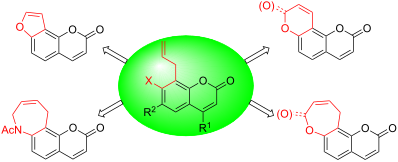
- suitable reagent, a “chemical trigger” [69]. In the case of the RCM/allylic oxidation sequence tert-butyl hydroperoxide is added after completion of the metathesis reaction, which most likely induces a conversion of the metathesis active Ru–carbene species to a Ru(IV)–oxo species. The latter are known to

Graphical Abstract

Figure 1: Illustration of coumarin taxonomy.

Scheme 1: Synthesis of oxepin-2-one-annellated coumarins 13 by RCM of acrylates 12.

Scheme 2: Attempted synthesis of pyran-2-one-annellated coumarin 15d via isomerization-RCM.

Scheme 3: Synthesis of aza-annellated coumarin 21 and attempted synthesis of indole 22.
Domino ring-opening–ring-closing enyne metathesis vs enyne metathesis of norbornene derivatives with alkynyl side chains. Construction of condensed polycarbocycles
- Ritabrata Datta and
- Subrata Ghosh
Beilstein J. Org. Chem. 2018, 14, 2708–2714, doi:10.3762/bjoc.14.248
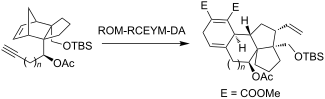
- diene. Thus unlike metathesis of 7a, metathesis of its acetate analogue 7b occurred through a domino ROM–RCEYM process. Addition of the Ru-carbene 10 arising from ring opening of norbornene unit in 7b could add to the acetylenic unit of another molecule of 7b leading to copolymerization. However, this
- process generally does not take place under such low molar concentration of the substrate [38][39][40][41][42][43]. We also did not isolate any copolymerization product. This may be attributed to the much faster rate of addition of the Ru-carbene 10 to the yne unit intramolecularly resulting in ring

Graphical Abstract

Scheme 1: Metathesis of norbornene derivatives.

Figure 1: Structures of retigeranic acids A (1a) and B (1b).

Scheme 2: Synthesis plan.
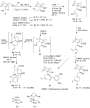
Scheme 3: Metathesis of norbornene derivatives 7a and 7b.

Figure 2: ORTEP of compound 13 (ellipsoids at 30% probability).

Scheme 4: Metathesis of the norbornene derivative 17.

Figure 3: Probable metathesis intermediates.
Identification, synthesis and mass spectrometry of a macrolide from the African reed frog Hyperolius cinnamomeoventris
- Markus Menke,
- Pardha Saradhi Peram,
- Iris Starnberger,
- Walter Hödl,
- Gregory F.M. Jongsma,
- David C. Blackburn,
- Mark-Oliver Rödel,
- Miguel Vences and
- Stefan Schulz
Beilstein J. Org. Chem. 2016, 12, 2731–2738, doi:10.3762/bjoc.12.269
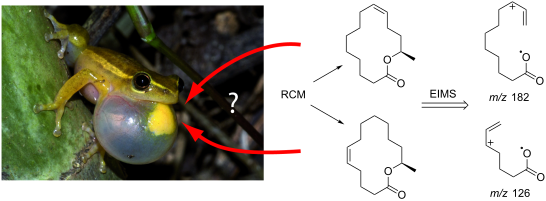
- ), requiring more than 10 steps each. RCM can shorten the synthesis remarkably, but requires careful selection of the RCM catalyst to control the double bond configuration. For example, Fürstner and Langemann obtained rac-1 in 31:69 (E/Z)-mixture using a Ru-carbene type catalyst similar to a Grubbs I catalyst

Graphical Abstract

Figure 1: Macrolactones produced in scent glands of frogs: (Z)-Tetradec-5-en-13-olide (1) or (Z)-tetradec-9-e...

Figure 2: Total ion chromatogram of the gular gland extract of Hyperolius cinnamomeoventris. X: frog anaesthe...

Scheme 1: Synthesis of (9Z,13R)-tetradec-9-en-13-olide (2).

Scheme 2: Synthesis of (5Z,13R)-tetradec-5-en-13-olide ((R)-1). The enantiomer was obtained in a similar sequ...
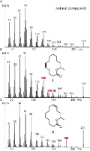
Figure 3: Mass spectra of A) the natural compound A, B) (Z)-tetradec-5-en-13-olide (1), and C) (Z)-tetradec-9...
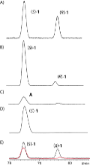
Figure 4: Total ion chromatogram of the enantiomer separation of (Z)-1 on a chiral β-TBDMS- Hydrodex phase. T...

Figure 5: Proposed mass spectrometric fragmentation of macrolides 1 and 2 leading to diagnostic ions of the i...
New metathesis catalyst bearing chromanyl moieties at the N-heterocyclic carbene ligand
- Agnieszka Hryniewicka,
- Szymon Suchodolski,
- Agnieszka Wojtkielewicz,
- Jacek W. Morzycki and
- Stanisław Witkowski
Beilstein J. Org. Chem. 2015, 11, 2795–2804, doi:10.3762/bjoc.11.300
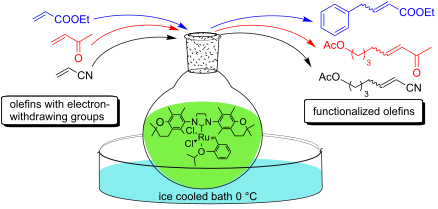
- compounds even at 0 °C. It was also examined in more demanding systems such as conjugated dienes and polyenes. The catalyst is stable, storable and easy to purify. Keywords: chromane derivatives; metathesis catalyst; nitrogen heterocycles; olefin metathesis; Ru-carbene; Introduction Olefin metathesis is

Graphical Abstract

Figure 1: Examples of olefin metathesis ruthenium catalysts.
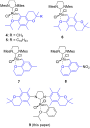
Figure 2: Selected ruthenium metathesis catalyst bearing chromanyl moieties.

Scheme 1: Synthesis of the new NHC precursor. Reagents and conditions: a) HNO3, CH2Cl2, 0 °C, 58%; b) HOCH2SO...

Scheme 2: CM with electron-deficient olefin.

Scheme 3: Possible products of metathesis reaction between diene and alkene.

Figure 3: π-Complex and rutenacyclobutane intermediate with a five-membered ring chelate.

Scheme 4: CM reaction of β-carotene and retinyl acetate with ethyl (2E,4Z/E)-3-methylhexa-2,4-dienoate. React...

Figure 4: Numbering of carbon atoms in the chromanyl moiety.
Recent applications of ring-rearrangement metathesis in organic synthesis
- Sambasivarao Kotha,
- Milind Meshram,
- Priti Khedkar,
- Shaibal Banerjee and
- Deepak Deodhar
Beilstein J. Org. Chem. 2015, 11, 1833–1864, doi:10.3762/bjoc.11.199
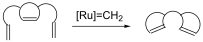
- % yield [51]. The regioselective formation of 240 may be attributed to the facile formation of a Ru–carbene intermediate where the metal participates on the side opposite to that of the methyl ester and thereby minimizing the steric crowding between ruthenium and carbonyl oxygen of an ester functionality
- various Ru–carbene complexes in one-pot sequence generate various complex targets. It is an atom economic process producing a wide range of polycyclic compounds containing highly demanding structures efficiently. Starting with relatively simple substrates, the final compounds obtained by the RRM process

Graphical Abstract

Figure 1: Ruthenium alkylidene catalysts used in RRM processes.
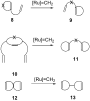
Figure 2: General representation of various RRM processes.

Figure 3: A general mechanism for RRM process.

Scheme 1: RRM of cyclopropene systems.

Scheme 2: RRM of cyclopropene with catalyst 2. (i) catalyst 2 (2.5 mol %), ethylene (24, 1 atm), (ii) toluene...

Scheme 3: RRM of various cyclopropene derivatives with catalyst 2. (i) catalyst 2 (2.5 mol %), CH2Cl2 (c = 0....

Scheme 4: RRM of substituted cyclopropene system with catalyst 2.

Scheme 5: RRM of cyclobutene system with catalyst 2.

Scheme 6: RRM approach to various bicyclic compounds.

Scheme 7: RRM approach to erythrina alkaloid framework.

Scheme 8: ROM–RCM sequence to lactone derivatives.

Scheme 9: RRM protocol towards the synthesis of lactone derivative 58.

Scheme 10: RRM protocol towards the asymmetric synthesis of asteriscunolide D (61).

Scheme 11: RRM strategy towards the synthesis of various macrolide rings.

Scheme 12: RRM protocol to dipiperidine system.

Scheme 13: RRM of cyclopentene system to generate the cyclohexene systems.

Scheme 14: RRM of cyclopentene system 74.

Scheme 15: RRM approach to compound 79.

Scheme 16: RRM approach to spirocycles.

Scheme 17: RRM approach to bicyclic dihydropyrans.

Scheme 18: RCM–ROM–RCM cascade using non strained alkenyl heterocycles.

Scheme 19: First ROM–RCM–ROM–RCM cascade for the synthesis of trisaccharide 97.

Scheme 20: RRM of cyclohexene system.

Scheme 21: RRM approach to tricyclic spirosystem.

Scheme 22: RRM approach to bicyclic building block 108a.

Scheme 23: ROM–RCM protocol for the synthesis of the bicyclo[3.3.0]octene system.

Scheme 24: RRM protocol to bicyclic enone.

Scheme 25: RRM protocol toward the synthesis of the tricyclic system 118.

Scheme 26: RRM approach toward the synthesis of the tricyclic enones 122a and 122b.

Scheme 27: Synthesis of tricyclic and tetracyclic systems via RRM protocol.

Scheme 28: RRM protocol towards the synthesis of tetracyclic systems.

Scheme 29: RRM of the propargylamino[2.2.1] system.

Scheme 30: RRM of highly decorated bicyclo[2.2.1] systems.

Scheme 31: RRM protocol towards fused tricyclic compounds.

Scheme 32: RRM protocol to functionalized tricyclic systems.

Scheme 33: RRM approach to functionalized polycyclic systems.

Scheme 34: Sequential RRM approach to functionalized tricyclic ring system 166.

Scheme 35: RRM protocol to functionalized CDE tricyclic ring system of schintrilactones A and B.

Scheme 36: Sequential RRM approach to 7/5 fused bicyclic systems.

Scheme 37: Sequential ROM-RCM protocol for the synthesis of bicyclic sugar derivatives.

Scheme 38: ROM–RCM sequence of the norbornene derivatives 186 and 187.

Scheme 39: RRM approach toward highly functionalized bridge tricyclic system.

Scheme 40: RRM approach toward highly functionalized tricyclic systems.

Scheme 41: Synthesis of hexacyclic compound 203 by RRM approach.

Scheme 42: RRM approach toward C3-symmetric chiral trimethylsumanene 209.

Scheme 43: Triquinane synthesis via IMDA reaction and RRM protocol.

Scheme 44: RRM approach to polycyclic compounds.

Scheme 45: RRM strategy toward cis-fused bicyclo[3.3.0]carbocycles.

Scheme 46: RRM protocol towards the synthesis of bicyclic lactone 230.

Scheme 47: RRM approach to spiro heterocyclic compounds.

Scheme 48: RRM approach to spiro heterocyclic compounds.

Scheme 49: RRM approach to regioselective pyrrolizidine system 240.

Scheme 50: RRM approach to functionalized bicyclic derivatives.

Scheme 51: RRM approach to tricyclic derivatives 249 and 250.

Scheme 52: RRM approach to perhydroindoline derivative and spiro system.

Scheme 53: RRM approach to bicyclic pyran derivatives.

Scheme 54: RRM of various functionalized oxanorbornene systems.

Scheme 55: RRM to assemble the spiro fused-furanone core unit. (i) 129, benzene, 55 °C, 3 days; (ii) Ph3P=CH2B...

Scheme 56: RRM protocol to norbornenyl sultam systems.

Scheme 57: Ugi-RRM protocol for the synthesis of 2-aza-7-oxabicyclo system.

Scheme 58: Synthesis of spiroketal systems via RRM protocol.

Scheme 59: RRM approach to cis-fused heterotricyclic system.

Scheme 60: RRM protocol to functionalized bicyclic systems.

Scheme 61: ROM/RCM/CM cascade to generate bicyclic scaffolds.

Scheme 62: RCM of ROM/CM product.

Scheme 63: RRM protocol to bicyclic isoxazolidine ring system.

Scheme 64: RRM approach toward the total synthesis of (±)-8-epihalosaline (300).

Scheme 65: Sequential RRM approach to decalin 304 and 7/6 fused 305 systems.

Scheme 66: RRM protocol to various fused carbocyclic derivatives.

Scheme 67: RRM to cis-hydrindenol derivatives.

Scheme 68: RRM protocol towards the cis-hydrindenol derivatives.

Scheme 69: RRM approach toward the synthesis of diversed polycyclic lactams.

Scheme 70: RRM approach towards synthesis of hexacyclic compound 324.

Scheme 71: RRM protocol to generate luciduline precursor 327 with catalyst 2.

Scheme 72: RRM protocol to key building block 330.

Scheme 73: RRM approach towards the synthesis of key intermediate 335.

Scheme 74: RRM protocol to highly functionalized spiro-pyran system 339.

Scheme 75: RRM to various bicyclic polyether derivatives.
Cross-metathesis of polynorbornene with polyoctenamer: a kinetic study
- Yulia I. Denisova,
- Maria L. Gringolts,
- Alexander S. Peregudov,
- Liya B. Krentsel,
- Ekaterina A. Litmanovich,
- Arkadiy D. Litmanovich,
- Eugene Sh. Finkelshtein and
- Yaroslav V. Kudryavtsev
Beilstein J. Org. Chem. 2015, 11, 1796–1808, doi:10.3762/bjoc.11.195

- we estimate and compare the formation and decay rates of Ru–carbene complexes bound to PCOE and PNB. Then we proceed to the investigation of PCOE/PNB/Gr-1 mixtures, where we combine in situ 1H NMR measurements of the concentrations of Ru–carbene complexes with ex situ 13C NMR measurements of
- corresponding experimental NMR data plotted in Figure 6. Qualitatively, it means that the cleavage of a polymeric double C=C bond is about an order of magnitude more probable in the reaction with a polymer-bound Ru-carbene than with a [Ru]=CHPh carbene. Further kinetic studies on that issue are needed to get

Graphical Abstract

Figure 1:
Dependences of the (blue) PCOE and (green) PNB mean hydrodynamic radius ![[Graphic 2]](/bjoc/content/inline/1860-5397-11-195-i10.png?max-width=637&scale=1.18182) in CHCl3 on the (a) light ...
in CHCl3 on the (a) light ...

Figure 2: Hydrodynamic radius distributions (normalized by their maximum values) in the CHCl3 solutions of (b...

Figure 3: Stability of the primary carbene [Ru]=CHPh in the pure solvent (CDCl3).

Scheme 1: Formation of polyoctenamer-bound carbene by the interaction of Gr-1 with PCOE.

Figure 4: (a) Dependences of the normalized (red) [Ru]=CHPh and (blue) [Ru]=PCOE carbene concentrations on ti...

Scheme 2: Formation of polynorbornene-bound carbene by the interaction of Gr-1 with PNB.

Figure 5: (a) Dependences of the normalized (red) [Ru]=CHPh and (green) [Ru]=PNB carbene concentrations on ti...

Scheme 3: Elementary cross-metathesis reactions in the mixture of PCOE with PNB.

Figure 6: Dependences of the normalized (red) primary, (blue) PCOE, and (green) PNB carbene concentrations an...

Figure 7: The kinetics of NB-COE dyads formation under mixing conditions for the systems with (red) cin/cp = ...

Figure 8: The 1H NMR spectrum recorded after 10 min of the reaction between PCOE and Gr-1 at the initial conc...

Figure 9: The 1H NMR spectrum recorded after 653 min of the reaction between PNB and Gr-1 at the initial conc...

Figure 10: The 1H NMR spectrum recorded after 24 h of the reaction between PCOE, PNB, and Gr-1 at the initial ...

Figure 11: The 13C NMR spectrum recorded after 8 h of the reaction between PCOE, PNB, and Gr-1 at the initial ...
Synthesis and structures of ruthenium–NHC complexes and their catalysis in hydrogen transfer reaction
- Chao Chen,
- Chunxin Lu,
- Qing Zheng,
- Shengliang Ni,
- Min Zhang and
- Wanzhi Chen
Beilstein J. Org. Chem. 2015, 11, 1786–1795, doi:10.3762/bjoc.11.194
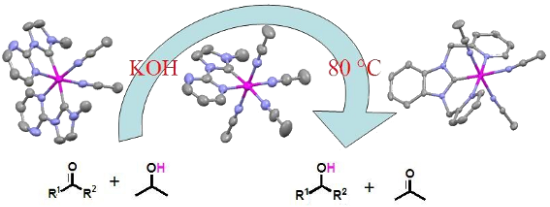
- ruthenium–NHC complexes presented above are stabilized by strong Ru–carbene bonds and contain 2–4 easily dissociating acetonitrile molecules, and are thus ideal catalysts. We tested their catalytic activities for transfer hydrogenation of ketones. Firstly, acetophenone was selected as the model substrate to

Graphical Abstract

Scheme 1: Synthesis of complexes 1 and 2.

Figure 1: Structural view of 1 showing 30% thermal ellipsoids. All hydrogen atoms and PF6− were omitted for c...

Figure 2: Structural view of 2 showing 30% thermal ellipsoids. All hydrogen atoms and PF6− were omitted for c...

Scheme 2: Synthesis of 3.

Figure 3: Structural view of 3 showing 50% thermal ellipsoids. All hydrogen atoms and PF6− were omitted for c...

Scheme 3: Synthesis of complexes 4 and 5.

Figure 4: Structural view of 4 showing 30% thermal ellipsoids. All hydrogen atoms and PF6− were omitted for c...

Figure 5: Structural view of 5 showing 30% thermal ellipsoids. All hydrogen atoms and PF6− were omitted for c...
Metathesis access to monocyclic iminocyclitol-based therapeutic agents
- Ileana Dragutan,
- Valerian Dragutan,
- Carmen Mitan,
- Hermanus C.M. Vosloo,
- Lionel Delaude and
- Albert Demonceau
Beilstein J. Org. Chem. 2011, 7, 699–716, doi:10.3762/bjoc.7.81

- ring closure (89%) under milder conditions (CH2Cl2): all attempts to employ the 1st-generation Grubbs catalyst 2 in RCM failed, supposedly because of an unfavourable steric environment during generation of the Ru–carbene species from 109, as compared to 98 (distinct N-protective groups). Cyclic sulfate

Graphical Abstract

Scheme 1: Well-defined Mo- and Ru-alkylidene metathesis catalysts.

Scheme 2: Representative pyrrolidine-based iminocyclitols.

Scheme 3: Synthesis of (±)-(2R*,3R*,4S*)-2-hydroxymethylpyrrolidin-3,4-diol (18), (±)-2-hydroxymethylpyrrolid...

Scheme 4: Synthesis of enantiopure iminocyclitol (−)-(2S,3R,4S,5S)-2,5-dihydroxymethylpyrrolidin-3,4-diol (23...

Scheme 5: Synthesis of 1,4-dideoxy-1,4-imino-D-allitol (29) and formal synthesis of (2S,3R,4S)-3,4-dihydroxyp...

Scheme 6: Synthesis of iminocyclitols 35 and 36.

Scheme 7: Total synthesis of iminocyclitols 40 and 44.

Scheme 8: Synthesis of 2,5-dideoxy-2,5-imino-D-mannitol [(+)-DMDP] (49) and (−)-bulgecinine (50).

Scheme 9: Synthesis of (+)-broussonetine G (53).
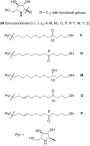
Scheme 10: Structural features of broussonetines 54.

Scheme 11: Synthesis of broussonetines by cross-metathesis.
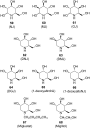
Scheme 12: Representative piperidine-based iminocyclitols.

Scheme 13: Total synthesis of 1-deoxynojirimycin (62) and 1-deoxyaltronojirimycin (65).

Scheme 14: Synthesis by RCM of 1-deoxymannonojirimycin (63) and 1-deoxyallonojirimycin (66).

Scheme 15: Total synthesis of (+)-1-deoxynojirimycin (62).

Scheme 16: Synthesis of ent-1,6-dideoxynojirimycin (83) and 5-amino-1,5,6-trideoxyaltrose (84).

Scheme 17: Synthesis of 1-deoxygalactonojirimycin (64), 1-deoxygulonojirimycin (91) and 1-deoxyidonojirimycin (...

Scheme 18: Synthesis of L-1-deoxyaltronojirimycin (96).

Scheme 19: Synthesis of 1-deoxymannonojirimycin (63) and 1-deoxyaltronojirimycin (65).

Scheme 20: Synthesis of 5-des(hydroxymethyl)-1-deoxymannonojirimycin (111) and 5-des(hydroxymethyl)-1-deoxynoj...

Scheme 21: Synthesis of D-1-deoxygulonojirimycin (91) and L-1-deoxyallonojirimycin (122).

Scheme 22: Total synthesis of fagomine (129), 3-epi-fagomine (126) and 3,4-di-epi-fagomine (130).

Scheme 23: Total synthesis of (+)-adenophorine (135).

Scheme 24: Total synthesis of (+)-5-deoxyadenophorine (138) and analogues 142–145.

Scheme 25: Synthesis by RCM of 1,6-dideoxy-1,6-iminoheptitols 148 and 149.

Scheme 26: Synthesis by RCM of oxazolidinyl azacycles 152 and 154.

Scheme 27: Representative azepane-based iminocyclitols.

Scheme 28: Synthesis of hydroxymethyl-1-(4-methylphenylsulfonyl)azepane 3,4,5-triol (169).

Scheme 29: Synthesis by RCM of tetrahydropyridin-3-ol 171 and tetrahydroazepin-3-ol 173.
The catalytic performance of Ru–NHC alkylidene complexes: PCy3 versus pyridine as the dissociating ligand
- Stefan Krehl,
- Diana Geißler,
- Sylvia Hauke,
- Oliver Kunz,
- Lucia Staude and
- Bernd Schmidt
Beilstein J. Org. Chem. 2010, 6, 1188–1198, doi:10.3762/bjoc.6.136
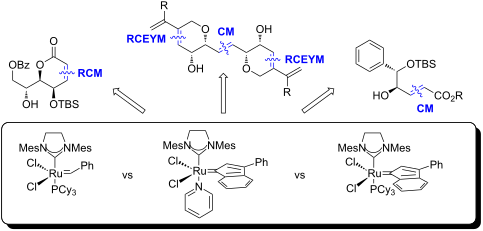
- -based [6] catalysts have experienced extensive further developments and improvements. Due to their robustness towards air and moisture, and their comparatively low sensitivity towards functional groups, Ru-carbene complexes have attracted a particularly high degree of attention and “numerous variations

Graphical Abstract

Figure 1: Ru-based metathesis catalysts.

Scheme 1: RCM of an allyl ether catalyzed by catalyst H.

Figure 2: Solvent screening for the RCM of 1 catalyzed by H (standardized conditions as denoted in Scheme 1).

Figure 3: Comparison of catalysts D, E and H in toluene and acetic acid (standardized conditions as denoted i...

Figure 4: Conversion vs catalyst loading for the RCM of 1 in acetic acid (standardized conditions as denoted ...

Scheme 2: Catalyst screening for RCM of acrylate 3a.

Figure 5: Acrylates 3 and their RCM products 4.

Scheme 3: Ring closing enyne metathesis reactions.

Scheme 4: Cross metathesis reactions with allylic alcohol 8.
Cross-metathesis of allylcarboranes with O-allylcyclodextrins
- Ivan Šnajdr,
- Zbyněk Janoušek,
- Jindřich Jindřich and
- Martin Kotora
Beilstein J. Org. Chem. 2010, 6, 1099–1105, doi:10.3762/bjoc.6.126

- reactions, which has also been observed in other metathetical reactions with alkenylcyclodextrins derivatives [27] and can be explained by several factors [28]. Firstly, by a chelation of the intermediate Ru-carbene complex to the oxygen atoms of the cyclodextrin which results in a conformationally rigid

Graphical Abstract

Figure 1: Starting allylcarboranes 1a–1c and O-allylcyclodextrins 2a–2c.

Scheme 1: Cross-metathesis of allylcarboranes 1 and O-allylcyclodextrins 2.



