Search results
Search for "fluorescence emission" in Full Text gives 112 result(s) in Beilstein Journal of Organic Chemistry.
The role of spacer length and flexibility in peptide self-assembly
Beilstein J. Org. Chem. 2026, 22, 986–996, doi:10.3762/bjoc.22.77
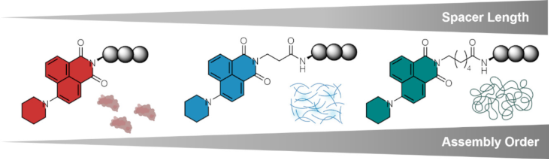
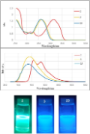
- room temperature. The structures were stained with uranyl(IV) acetate (4%), scale bar = 0.5 µm. Created partly in BioRender. Lahu, A. (2026) https://BioRender.com/bvkpq0n. This content is not subject to CC BY 4.0. A) Fluorescence emission and B) absorbance of C6-Nap-ICA 6, C3-Nap-ICA 7, and C0-Nap-ICA
- 8 (all 100 µM) in TFE at λem = 475–700 nm (λex = 405 nm) and λ = 350–600 nm. The intensities are plotted against the wavelength. C) Fluorescence emission and D) absorbance of C6-Nap-ICA 6, C3-Nap-ICA 7, and C0-Nap-ICA 8 (all 100 µM) in PBS (50 mM, pH 7.4, 1% TFE) at λem = 475–700 nm (λex = 405 nm


Configuration–packing synergy enabling integrated crystalline-state RTP and amorphous-state TADF
Beilstein J. Org. Chem. 2026, 22, 224–236, doi:10.3762/bjoc.22.16
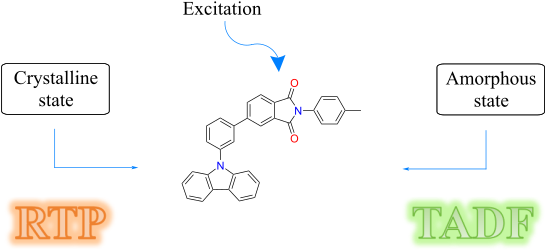
- essentially unchanged, whereas its fluorescence emission undergoes a monotonic red shift with increasing solvent polarity (or polarizability), accompanied by an enlarged Stokes shift – a typical solvatochromic behavior. The weak solvent dependence of the absorption spectra indicates that the difference in
- , 478.1682. a) Single-crystal structure of 1, b) HOMO distribution calculated on the crystallographic geometry, and c) LUMO distribution calculated on the crystallographic geometry. Photophysical properties of 1 in solvents of varying polarity: a) UV–vis absorption spectra and b) fluorescence emission


Thiazolidinones: novel insights from microwave synthesis, computational studies, and potentially bioactive hybrids
Beilstein J. Org. Chem. 2025, 21, 2618–2636, doi:10.3762/bjoc.21.203
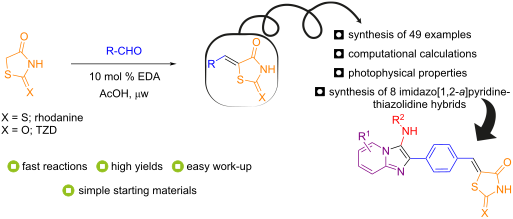
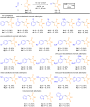
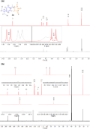
- values ranging between 409–426 nm. In general, the solvatochromic effect of these compounds showed a blue shift in EtOAc, and a red shift in MeCN. The fluorescence emission spectra of these compounds revealed a strong blue to green fluorescence emission, with the maximum emission peaks varying from 535
- to 573 nm for compound 3n and from 479 to 524 nm for compound 4n. Therefore, the fluorescence emission spectra demonstrated a clear dependence on solvent polarity and the maximum emission wavelength λem. Thus, a red shift in the emission bands was observed in solvents with higher polarity, indicating
- greater charge separation in the excited state, which is more stabilized in polar solvents, typical of compounds that undergo an ICT upon excitation [86]. The use of EtOAc showed a hypochromic effect with a decrease in fluorescence emission. Similar results for chlorinated solvents (CH2Cl2, CHCl3) were






Conformational effects on iodide binding: a comparative study of flexible and rigid carbazole macrocyclic analogs
Beilstein J. Org. Chem. 2025, 21, 2369–2375, doi:10.3762/bjoc.21.181
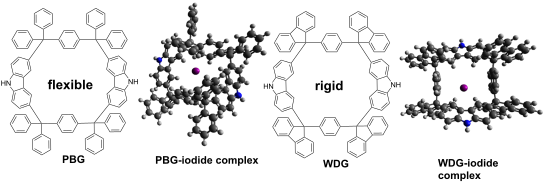
- hindrance, with a 95.6% lower binding constant of KWDG/KPBG = 0.044, a difference that can be attributed to the synergistic effect of induced fit (PBG) and conformational selection (WDG). Fluorescence emission spectra further corroborated the response of PBG and WDG to iodide ions (Figure 3c and 3d). When
- TBAI is added to two different conformations of the receptor molecule, the fluorescence emission intensity decreases. However, during the whole titration of anion fluorescence spectroscopy, only the fluorescence emission intensity changed, no peak position changed, and no new fluorescence emission
- than the formation of new excited state complexes. As the I− content continued to increase, the fluorescence emission intensity of PBG continued to decrease at 354 nm and 364 nm. Similarly, the fluorescence emission intensity of WDG at 356 nm and 369 nm decreases as the I− content increases



Rotaxanes with integrated photoswitches: design principles, functional behavior, and emerging applications
Beilstein J. Org. Chem. 2025, 21, 2345–2366, doi:10.3762/bjoc.21.179

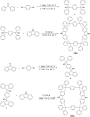
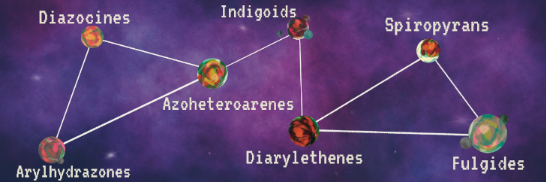
- , fluorescence emission, net charge, and color, which distinguish them from other photoswitches. Thus, incorporating these photoswitches into rotaxanes enables the modulation of the macrocycle–axle interactions, leading to materials and biological applications. The first spiropyran-based rotaxane was reported in


Photoswitches beyond azobenzene: a beginner’s guide
Beilstein J. Org. Chem. 2025, 21, 1808–1853, doi:10.3762/bjoc.21.143




On the aromaticity and photophysics of 1-arylbenzo[a]imidazo[5,1,2-cd]indolizines as bicolor fluorescent molecules for barium tagging in the study of double-beta decay of 136Xe
Beilstein J. Org. Chem. 2025, 21, 1627–1638, doi:10.3762/bjoc.21.126
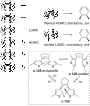
- in the optimized S1 state, thus suggesting a less modular aromatic character. Unfortunately, since the HOMA parameters for excited states [29] are available for triplet 3ππ* states only and we are interested in fluorescence emission spectra, this kind of quantitative assessment of aromaticity was not


Advances in nitrogen-containing helicenes: synthesis, chiroptical properties, and optoelectronic applications
Beilstein J. Org. Chem. 2025, 21, 1422–1453, doi:10.3762/bjoc.21.106
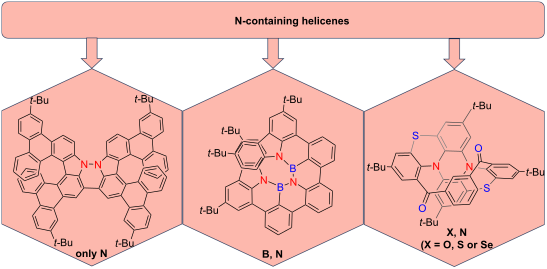
- intramolecular Scholl reactions [24] (Table 3). All compounds exhibited strong absorption in the UV–vis region (250–450 nm) and fluorescence emission between 400–550 nm. Among these, compound 11c, a saddle-shaped dibenzodiaza[8]circulene, was particularly noteworthy as the first example of its kind synthesized
- reported B,N-containing double hetero[7]helicenes 38a,b, which exhibited deep-red fluorescence emission at 662 and 692 nm, respectively, with narrow emission bandwidths (full width at half maximum, FWHM = 38 nm) and exceptional PLQYs of 100% [52]. Remarkably, they achieved maximum EQEs of 28.1% and 27.6

Binding of tryptophan and tryptophan-containing peptides in water by a glucose naphtho crown ether
Beilstein J. Org. Chem. 2025, 21, 541–546, doi:10.3762/bjoc.21.42
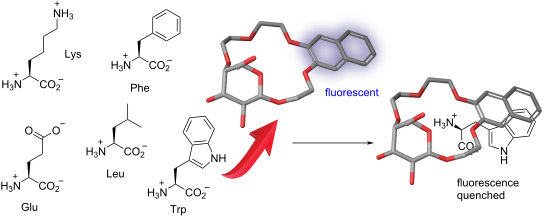
- – a chemoselective receptor for aromatic amino acid esters in water. Fluorescence emission spectra of receptor 1 (25 μM in H2O) upon addition of increasing amounts of tripeptide 2. The concentration of the guest corresponding to each curve is indicated on the right. The arrow marks the quenching of


Heteroannulations of cyanoacetamide-based MCR scaffolds utilizing formamide
Beilstein J. Org. Chem. 2025, 21, 217–225, doi:10.3762/bjoc.21.13
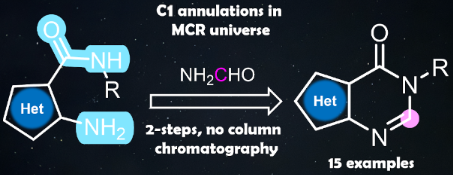
- , showing similar profiles across all the different scaffolds (Figure 2 and Supporting Information File 1). The compounds 5–7 exhibited a maximum absorbance (λmax) at 330 nm, 284 nm and 310 nm, respectively, which also corresponded to their excitation wavelength (λex). Upon excitation, fluorescence emission




Efficient synthesis of fluorinated triphenylenes with enhanced arene–perfluoroarene interactions in columnar mesophases
Beilstein J. Org. Chem. 2024, 20, 3263–3273, doi:10.3762/bjoc.20.270
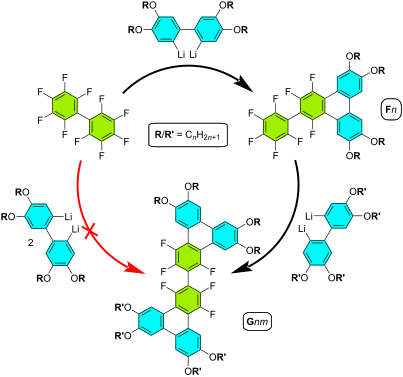
- fluorescence emission spectroscopies reveal green photoluminescence with fluorescence quantum yields of up to 33% for the Fn derivatives. The J-aggregation for the inner fluorine-substituted dimers Gnm is energetically and stereoelectronically more favorable and G66 exhibits thin-film fluorescence with a large




Recent advances in transition-metal-free arylation reactions involving hypervalent iodine salts
Beilstein J. Org. Chem. 2024, 20, 2891–2920, doi:10.3762/bjoc.20.243

- sulfonylation was confirmed as no product was found when carrying out the reaction in the presence of radical scavengers. Stern–Volmer studies indicated a significant fluorescence emission quenching of methylene blue by DIPEA, suggesting a reductive quenching of methylene blue during the reaction. Experiments




Investigation of a bimetallic terbium(III)/copper(II) chemosensor for the detection of aqueous hydrogen sulfide
Beilstein J. Org. Chem. 2024, 20, 2818–2826, doi:10.3762/bjoc.20.237

- Information Supporting Information File 16: Copies of HRMS, 1H NMR and fluorescence emission spectra. Acknowledgements The authors acknowledge the support of the School of Chemistry, Monash University and the Australian Department of Defence and Defence Science and Technology Group.


Anion-dependent ion-pairing assemblies of triazatriangulenium cation that interferes with stacking structures
Beilstein J. Org. Chem. 2024, 20, 2567–2576, doi:10.3762/bjoc.20.215
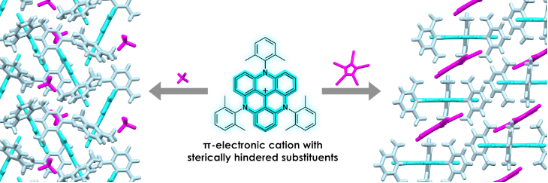
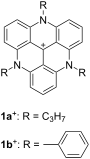
- desorption ionization time-of-flight mass spectrometry (MALDI–TOF MS). The synthesized ion pairs showed similar electronic properties in solution state. In CH3CN, 2+-BF4− exhibited UV–vis absorptions at 273, 350, and 524 nm and fluorescence emission at 607 nm upon excitation at 524 nm. The absorption band at



Novel truxene-based dipyrromethanes (DPMs): synthesis, spectroscopic characterization and photophysical properties
Beilstein J. Org. Chem. 2024, 20, 2163–2170, doi:10.3762/bjoc.20.186
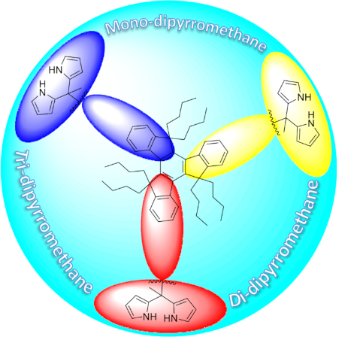
- like 1H NMR, 13C NMR, and mass spectral data. The preliminary UV–vis absorption as well as fluorescence emission spectral data for thus prepared truxene-based compounds were recorded in chloroform and compared as well. Additionally, time-resolved fluorescence lifetime decays were also measured for thus


The Groebke–Blackburn–Bienaymé reaction in its maturity: innovation and improvements since its 21st birthday (2019–2023)
Beilstein J. Org. Chem. 2024, 20, 1839–1879, doi:10.3762/bjoc.20.162






Kinetically stabilized 1,3-diarylisobenzofurans and the possibility of preparing large, persistent isoacenofurans with unusually small HOMO–LUMO gaps
Beilstein J. Org. Chem. 2024, 20, 1099–1110, doi:10.3762/bjoc.20.97
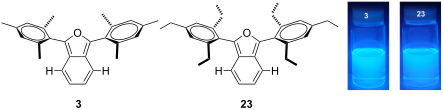
- solutions of 1,3-diarylisobenzofurans 2, 3 and 23 in CH2Cl2 solvent. The vials of 2, 3 and 23 showing fluorescence emission (bottom) were excited at 365 nm. Calculated HOMO and LUMO orbitals for parent isobenzofuran (1) and 1,3-diarylisobenzofuran derivatives 2, 3, 23, 24 and 25 using a DFT method performed




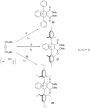


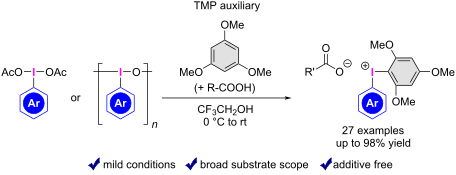
Auxiliary strategy for the general and practical synthesis of diaryliodonium(III) salts with diverse organocarboxylate counterions
Beilstein J. Org. Chem. 2024, 20, 1020–1028, doi:10.3762/bjoc.20.90
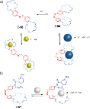
- benzoate in 70% yield (Scheme 6A). Furthermore, iodonium salt 7aj with an umbelliferone-3-carboxylate counterion displayed extremely weak blue fluorescence emission under 365 nm UV light compared to free carboxylic acid 6j. This unique property was utilized for tracing the counterion exchange process of
- the diaryliodonium(III) salt by irradiating with 365 nm UV light. The counterion exchange in umbelliferone carboxylate salt 7aj with trifluoroacetic acid was rapid, and after 30 s, the completion of the reaction was confirmed by the emergence of strong blue fluorescence emission due to the liberation


Switchable molecular tweezers: design and applications
Beilstein J. Org. Chem. 2024, 20, 504–539, doi:10.3762/bjoc.20.45

- using a similar principle [24]. The protection from the solvent of the intercalated Pt guest enables its fluorescence emission and is accompanied by the induction of chirality in the resulting host–guest complex. A significant enhancement of the circular dichroism response of the chiral guest is




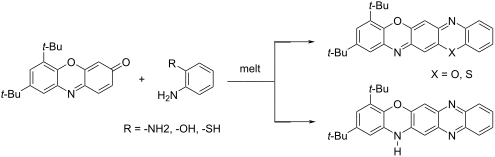
Facile approach to N,O,S-heteropentacycles via condensation of sterically crowded 3H-phenoxazin-3-one with ortho-substituted anilines
Beilstein J. Org. Chem. 2024, 20, 336–345, doi:10.3762/bjoc.20.34
- , angles, and important crystallographic parameters are given in Tables S6 and S7, Supporting Information File 1. Hydrogen atoms are omitted for clarity. a) UV–vis (solid lines) and fluorescence emission (λex = 365 nm, dashed) spectra of compounds 5a–c (toluene, c = 2 10−5 M, l = 1 cm). b) Solutions of
- compounds 5a–c in toluene before irradiation (no emission) and c) during irradiation (photoluminescence, λex = 365 nm) at room temperature. UV–vis (solid lines) and fluorescence emission (dashed, λex = 365 nm) spectra of compounds 6a,b in toluene (c = 2 10−5 M, l = 1 cm) at room temperature. UV–vis
- , fluorescence emission (λex = 500 nm), and fluorescence excitation (λobs = 590 nm) spectra of benzo[5,6][1,4]oxazino[2,3-b]phenothiazine 10c in toluene (c = 2 10−5 M (UV–vis) or c = 2 10−6 M (fluorescence), l = 1 cm) at room temperature. Synthesis of 6,8-di-tert-butyl-N-aryl-3H-phenoxazin-3-imines 3 [6] and 6,8


Biphenylene-containing polycyclic conjugated compounds
Beilstein J. Org. Chem. 2023, 19, 1895–1911, doi:10.3762/bjoc.19.141
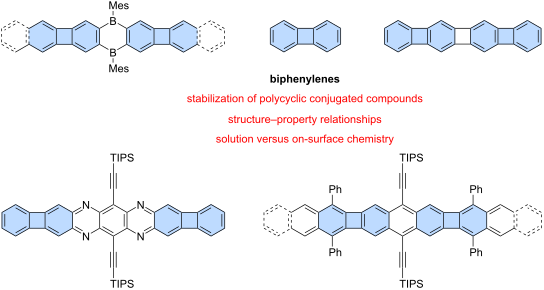
- = 0.07), and compound 64 displayed almost no fluorescence emission (λmax,em = 497 nm, Φem = NA). Naphthazarin–biphenylene hybrid structures Taking the advantage of naphthazarin's bifunctional Diels–Alder reactivity, Swager and his team succeeded in the synthesis of POA-type structures incorporating



A deep-red fluorophore based on naphthothiadiazole as emitter with hybridized local and charge transfer and ambipolar transporting properties for electroluminescent devices
Beilstein J. Org. Chem. 2023, 19, 1664–1676, doi:10.3762/bjoc.19.122
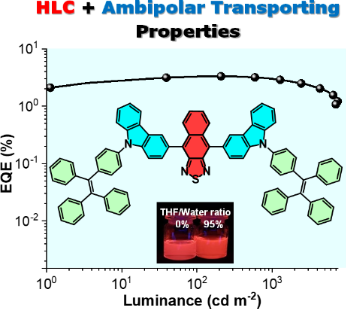
- energy gap between HOMO/LUMO hybrid orbits and drive fluorescence emission to longer wavelengths [48][49]. In this molecular design, the strong electron-deficient naphtho[2,3-c][1,2,5]thiadiazole (Nz) [13][50][51] as an acceptor and the strong electron-donating carbazole [52] as a donor unit were used in


The effect of dark states on the intersystem crossing and thermally activated delayed fluorescence of naphthalimide-phenothiazine dyads
Beilstein J. Org. Chem. 2023, 19, 1028–1046, doi:10.3762/bjoc.19.79
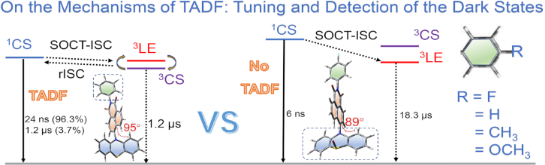
- capability of the PTZ and NI moieties, respectively, by oxidation of the PTZ unit, or by using different aryl substituents attached to the NI unit. This tuning effect was manifested in the UV–vis absorption and fluorescence emission spectra, e.g., in the change of the charge transfer absorption bands. TADF
- by 1H NMR, 13C NMR, and HRMS spectra (Experimental section). UV–vis absorption and fluorescence emission spectra The UV–vis absorption spectra of the compounds were studied (Figure 1 and Figure S29 in Supporting Information File 1). For the compounds without an oxidized PTZ unit, there are
- that affects the fluorescence of these two dyads. Indeed, the highly solvent polarity dependent fluorescence emission intensity, and wavelength are different from the 4-amino NI derivatives, which are much less solvent polarity-dependent [59][61]. Since a TADF molecule is characterized by a stronger


pH-Responsive fluorescent supramolecular nanoparticles based on tetraphenylethylene-labelled chitosan and a six-fold carboxylated tribenzotriquinacene
Beilstein J. Org. Chem. 2023, 19, 635–645, doi:10.3762/bjoc.19.45
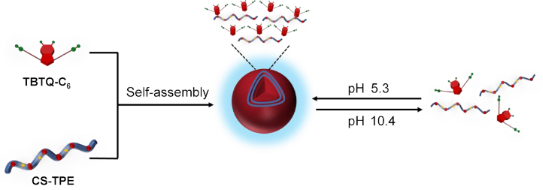
- fluorescence emission based on CS-TPE or TBTQ-C6/CS-TPE may find applications in various fields, including the development of visual oral drug delivery systems. Keywords: chitosan; nanoparticle; tetraphenylethylene; tribenzotriquinacene; Introduction Stimuli-responsive assemblies in aqueous media have drawn
- addition, the presence of TBTQ-C6 greatly enhanced the fluorescence emission of the nanoparticles and was able to maintain the fluorescence relatively stable at different pH values. Essentially, this work demonstrates the first study involving stimuli-responsive supramolecular polymeric nanoparticles based
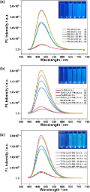
- . The fluorescence properties of CS-TPE and TBTQ-C6/CS-TPE with three different Rf in aqueous medium were investigated by fluorescence spectrophotometry. The fluorescence emission of CS-TPE was significantly enhanced with the increase of its Rf/DL (Figure 7a). This may be caused by the increased



Phenanthridine–pyrene conjugates as fluorescent probes for DNA/RNA and an inactive mutant of dipeptidyl peptidase enzyme
Beilstein J. Org. Chem. 2023, 19, 550–565, doi:10.3762/bjoc.19.40
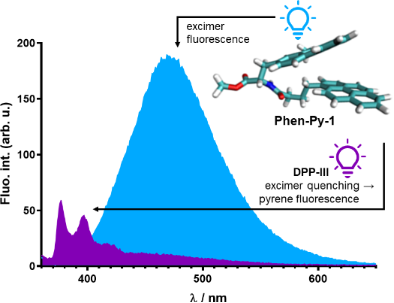
- simulations additionally supported the pronounced hypochromic effect (chapter Computational analysis). Fluorescence spectra Fluorescence emission of Phen-Py-1 and Phen-Py-2 measured at pH 5 and pH 7 (cacodylate buffer, Ic = 0.05 mol dm−3) was linearly dependent on the concentration up to 4 × 10⁻⁶ mol dm−3
- excimer formation characterized by a new fluorescence emission band at 475 nm, which is significantly red-shifted compared to either fluorescent emission of single phenanthridine (λmax = 400 nm) or pyrene (λmax = 378 and 400 nm) molecule (Supporting Information File 1, Figure S2, left pH 5.0; right pH 7.0
- DNA/RNA polynucleotides [37]. The monomer fluorescence emission at 400 nm was not changed except for titration with poly dGdC–poly dGdC where a small emission increase of emission at 400 nm was observed. At ratios of an excess of polynucleotide over compound (r[compound]/[polynucleotide] < 0.3