


Search results
Search for "photoisomerization" in Full Text gives 72 result(s) in Beilstein Journal of Organic Chemistry.
Harnessing light energy with molecules
Beilstein J. Org. Chem. 2026, 22, 680–682, doi:10.3762/bjoc.22.52

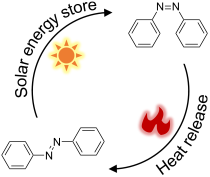
- therapies using molecular light harnessing. So-called molecular solar thermal (MOST) energy storage systems are one type of photoresponsive systems [1][2][3]. These have attracted increasing interest in the past decade for the storage of solar energy by photoisomerization of a molecular photoswitch
- , recently coined as a “mostophore” [3]. Such energy storage systems have also been referred to as solar thermal fuels or solar thermal batteries. After light harnessing, photoisomerization generates a metastable compound of higher energy. Thermal back-reaction results in the release of the energy again as
- trisNBD-benzene, overcoming the signal overlap that limits conventional 1H NMR analysis. Further, the consequences on the absorption properties, photoisomerization, and QC lifetime were studied. In another article by Krappmann and Hirsch [6], the implications of replacing the methylene bridge of the NBD
Effect of a photoswitchable rotaxane on membrane permeabilization across lipid compositions
Beilstein J. Org. Chem. 2025, 21, 2498–2512, doi:10.3762/bjoc.21.192
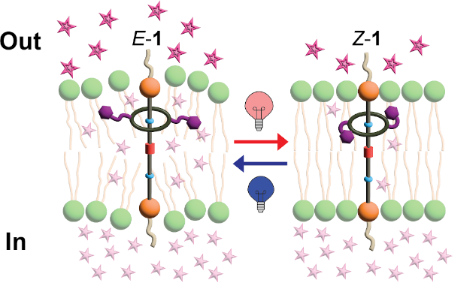
- modulate membrane permeability in large unilamellar vesicles (LUVs) of varying lipid compositions. Upon photoisomerization, the rotaxane significantly enhanced the release of the hydrophilic dye sulforhodamine B in vesicles composed of EYPC/Chol 8:2, with release increasing from 29% (non-irradiated) to 59
- demonstrated that photoisomerization of the azobenzene moiety modulates lipid packing and permeability, leading to reversible changes in membrane structure and vesicle size. However, these initial studies were limited to model lipid bilayers of the same composition. Given the wide variability in membrane
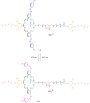
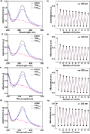
- membrane composition on azobenzene photoswitching We investigated the photoisomerization behavior of rotaxane 1 (Figure 2) over ten irradiation cycles in large unilamellar vesicles (LUVs) with varying lipid compositions using UV–vis spectroscopy. Specifically, we prepared vesicles composed of pure EYPC




Rotaxanes with integrated photoswitches: design principles, functional behavior, and emerging applications
Beilstein J. Org. Chem. 2025, 21, 2345–2366, doi:10.3762/bjoc.21.179

- increasingly require rethinking and developing new structural designs that incorporate more efficient and advanced photoswitches to fully realize their potential. Keywords: macrocycle; photoisomerization; photoswitches; rotaxanes; shuttling; Introduction Harnessing light energy to control intra- and
- isomerization (Figure 2) [29]. In 1997, Nakashima and co-workers reported the first rotaxane where the azobenzene was located on the axle, acting as a recognition site for a β-cyclodextrin macrocycle. Photoisomerization of the azobenzene controlled the shuttling of the macrocycle [30]. Later, Stoddart and co
- stoppers. Upon both photoisomerization and thermal isomerization, the macrocycle motion along the axle is controlled, enhancing the fluorescence of the closer stopper while dimming the fluorescence of the farther stopper [47][48]. The authors later reported a [2]rotaxane containing both an azobenzene and a


Pd-catalyzed dehydrogenative arylation of arylhydrazines to access non-symmetric azobenzenes, including tetra-ortho derivatives
Beilstein J. Org. Chem. 2025, 21, 2234–2242, doi:10.3762/bjoc.21.170
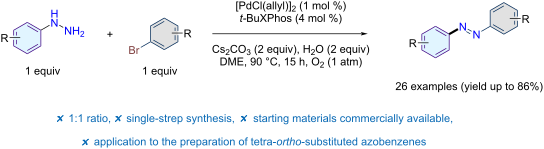
- of applications, including molecular switches, sensors, and light-controlled materials [1][2][3][4][5][6][7][8]. The photoswitching behavior arises from the reversible photoisomerization between the E- and Z-forms of the azobenzene chromophore, driven by the isomerization of the N–N double bond. This
- valuable addition to existing methodologies and open further opportunities for applications in molecular probe design, functional materials, and photoresponsive systems, where ortho-substitution is often critical. General overview of azobenzene chemistry. a) Selected examples and photoisomerization of


Solar thermal fuels: azobenzene as a cyclic photon–heat transduction platform
Beilstein J. Org. Chem. 2025, 21, 2036–2047, doi:10.3762/bjoc.21.159
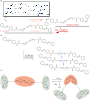
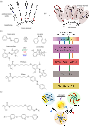
- polymer solar thermal fuels Conjugated azobenzene polymer solar thermal fuels [47][48] utilize π-conjugated systems as templates for azobenzene chromophore photoisomerization, as schematically illustrated in Figure 4. Han et al. developed azobenzene-functionalized polydiacetylene-based solar thermal fuels
- [47], where the azobenzene moieties undergo reversible photoisomerization and thermally induced reverse isomerization, enabling "energy charging–discharging" cycles (Figure 4a). Under ultraviolet (UV) irradiation (254 nm), the closely packed diacetylene polymers undergo polymerization to form π
- monomer to 103 min for the polymer. Linear azobenzene polymer solar thermal fuels Linear azobenzene polymers possess excellent processability and serve as ideal solid-state matrices for photoisomerization [49][50][51][52][53][54][55][56][57], making them suitable candidates for solar thermal fuels




Research progress on calixarene/pillararene-based controlled drug release systems
Beilstein J. Org. Chem. 2025, 21, 1757–1785, doi:10.3762/bjoc.21.139






Highly distinguishable isomeric states of a tripodal arylazopyrazole derivative on graphite through electron/hole-induced switching at ambient conditions
Beilstein J. Org. Chem. 2025, 21, 1496–1507, doi:10.3762/bjoc.21.112
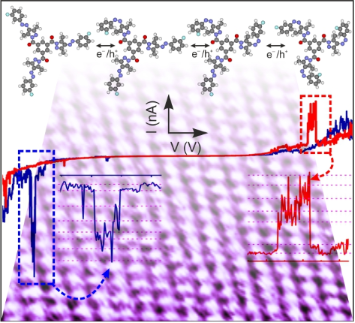
- surface at ambient conditions. The fluorine substitution is chosen in FNAAP for its better photoisomerization efficiency (in solution as well as in solid state) and higher molecular stability [29]. Possible photoisomers of FNAAP, EEE, EEZ, EZZ and ZZZ are shown in Figure 1. FNAAP molecules assemble into




Recent advances in synthetic approaches for bioactive cinnamic acid derivatives
Beilstein J. Org. Chem. 2025, 21, 1031–1086, doi:10.3762/bjoc.21.85
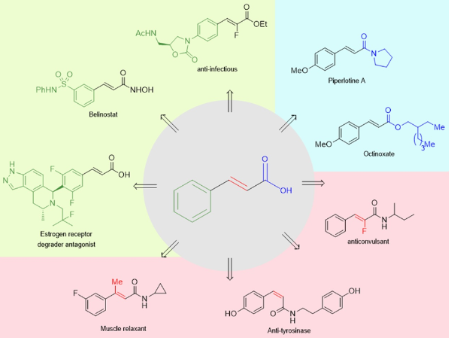
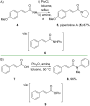
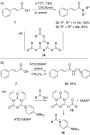
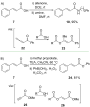
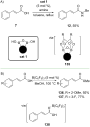
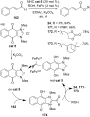
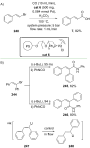
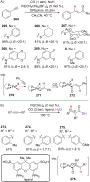
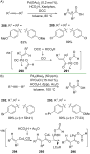
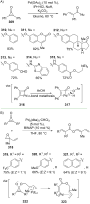
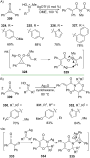
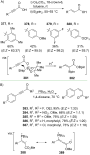
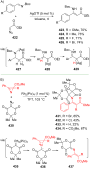
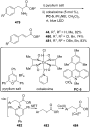
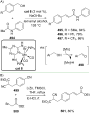
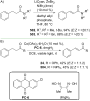
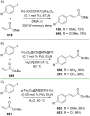
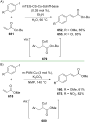
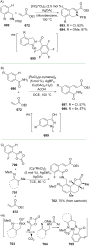
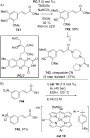
- )-cinnamic acid esters 445–448 in excellent yields via E-to-Z photoisomerization mediated by the photocatalyst (Scheme 90) [152]. Nguyen and co-workers (2019) employed iodine to catalyze the intermolecular olefin-carbonyl metathesis reaction of benzaldehyde (449) and acrylate 450 to give the corresponding








































Substituent effects in N-acetylated phenylazopyrazole photoswitches
Beilstein J. Org. Chem. 2025, 21, 830–838, doi:10.3762/bjoc.21.66

- bathochromic shift of the n→π* absorption band further moving their UV–vis absorption spectrum towards the therapeutic window [35]. Moreover, a similar modification in stilbene-based photoswitches and molecular motors showed an increase in performance and photoisomerization quantum yield [36][37]. Consequently
- the extent of photoisomerization, the isomer distributions of NAc-PAPs at the PSS365 and PSS445 were investigated using UV–vis and NMR spectroscopy. For the ex-situ 1H NMR irradiation experiments, we irradiated our samples in a cuvette until the PSS was reached and measured immediately afterwards the
- distribution of 98% Z by UV–vis and 96% Z by 1H NMR. EWGs, such as NAc-PAP-CF3, on the other hand, showed a lower PSD for the Z isomer of 83% by both UV–vis and 1H NMR spectroscopy. For NMe- and NAc-PAPs, we observed increased Z content to almost quantitative photoisomerization after 365 nm illumination for


Orthogonal photoswitching of heterobivalent azobenzene glycoclusters: the effect of glycoligand orientation in bacterial adhesion
Beilstein J. Org. Chem. 2025, 21, 736–748, doi:10.3762/bjoc.21.57
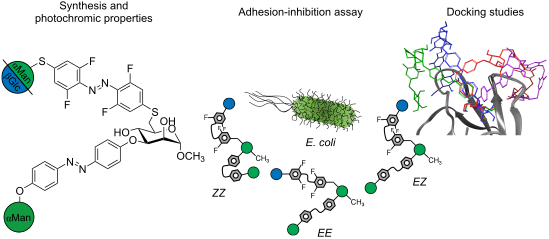
- with compounds 4 and 5. In the bivalent glycoclusters 1 and 2, the relative orientation of the two glycoazobenzene antennas is altered upon photoisomerization. Here, the effects are less clear. It can be assumed that one antenna is specifically bound within the FimH carbohydrate recognition domain (CRD
- like glycoclusters 1 and 2 are capable of many conformational alternatives and therefore, the control of molecular shape by photoisomerization of azobenzene linkers has its limitations. In addition, water solubility requires improvement. Furthermore, our study, combining synthesis, analysis of


Synthesis of N-acetyl diazocine derivatives via cross-coupling reaction
Beilstein J. Org. Chem. 2025, 21, 490–499, doi:10.3762/bjoc.21.36
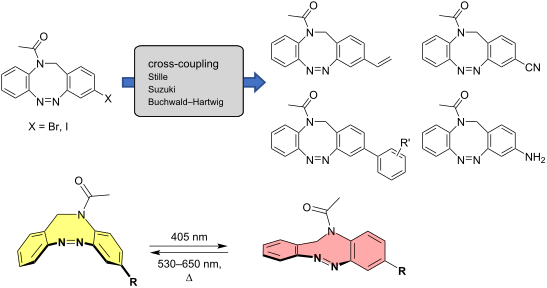
- -substituted diazocines were prepared via Stille, Suzuki, and Buchwald–Hartwig reactions. X-ray structures are presented for derivatives 1, 2 and 7. Keywords: cross-coupling; diazocine; N-acetyl diazocine; photoisomerization; photoswitch; thermal relaxation; Introduction Diazocines are frequently used
- water at pH 7.4 and 48% at pH 9 while showing a PSS of 77% in acetonitrile for the Z to E photoisomerization. This is due to a higher overlap of the n–π*-transitions in both isomers in aqueous media. For the amino-substituted diazocine 21 the PSS (ΓZ→E) shows a slightly lower value of 37% E in water at
- pH 7.4 compared to 41% in acetonitrile, while in acidic aqueous media a PSS of 62% E for the Z→E photoisomerization was observed. This is due to the complete protonation of the amino group converting it to an electron-deficient substituent. The thermal half-lives of 13 and 21 increase by a factor of


Extension of the π-system of monoaryl-substituted norbornadienes with acetylene bridges: influence on the photochemical conversion and storage of light energy
Beilstein J. Org. Chem. 2024, 20, 3061–3068, doi:10.3762/bjoc.20.254
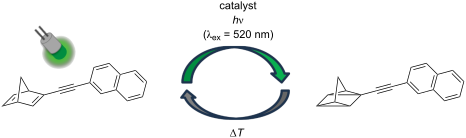
- -bromonorbornadiene and the corresponding arylacetylenes. The norbornadienes showed absorption maxima in the range of 310–345 nm and long-wavelength zero onsets of up to 420 nm. The photoisomerization quantum yields were as high as 59% per photoisomerization event and the resulting quadricyclanes showed half-lives of
- sunlight. Furthermore, the photoisomerization quantum yield is very low and therefore not suitable for an application [7][8][14]. One promising way to overcome these disadvantages is the introduction of a donor–acceptor system at the norbornadiene double bonds, which has resulted in the development of new
- ]. Accordingly, a slightly more pronounced red shift (20 nm) has been reported for derivatives 1d and 1f which carry an additional electron-acceptor in the 3-position of the norbornadiene unit [33][34]. The photoisomerization of the norbornadiene derivatives 1h–l,n (Scheme 3) was investigated photometrically in


Cyclodextrin-based rotaxanes for polymer materials: challenge on simultaneous realization of inexpensive production and defined structures
Beilstein J. Org. Chem. 2024, 20, 3026–3049, doi:10.3762/bjoc.20.252
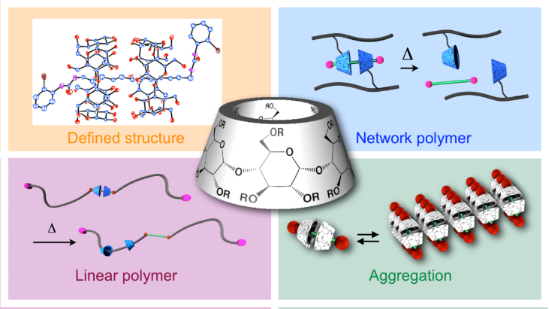
- )rotaxane framework The rotaxane framework is often deployed as a molecular device in which the positional relationship between the axle and wheel is controlled by external stimuli [14][32]. Acid–base, photoisomerization, redox, ion recognition, solvent polarity, or heating treatment is generally used for
- is derived from the hydrophobic-interaction-based inclusion formation; thus they are only low number of reports on their structural control. The photoisomerization-based structural control system is often applied to CD-based rotaxane. Typically, the photo-switch behavior is used, and it is based on
- the relationship between the photoisomerization of azobenzene or stilbene and CD to form the inclusion complex structure. In 1997, [2]rotaxane exhibiting an azobenzene moiety in its axle component was synthesized, and its structural control was achieved via the photoisomerization of the azobenzene






1,2-Difluoroethylene (HFO-1132): synthesis and chemistry
Beilstein J. Org. Chem. 2024, 20, 1955–1966, doi:10.3762/bjoc.20.171

- ]. Along with this, photoisomerization is described in patent literature [71][72][73][74]. It was shown that the experimentally observed enthalpy of isomerization (0.928 kcal/mol [47]) is in agreement with the calculated difference in the total energy of the two isomers (0.959 kcal/mol [65][75]). Cis-1,2


A fiber-optic spectroscopic setup for isomerization quantum yield determination
Beilstein J. Org. Chem. 2024, 20, 1684–1692, doi:10.3762/bjoc.20.150

- textbook example status, the photoisomerization of azobenzene is still under active investigation. Over the past two decades, both experimental [23][26] and theoretical work [27][28][29][30][31][32] has been performed to explain the differences in quantum yield. Not only the exact details of the
- photoisomerization are still under debate, but also the absorption spectrum of cis-azobenzene has been redetermined as recently as 2017 [17]. With the re-evaluated values for the molar absorptivities, the Φ of azobenzene were recalculated by the same group immediately afterwards [24]. As shown by Vetráková et al


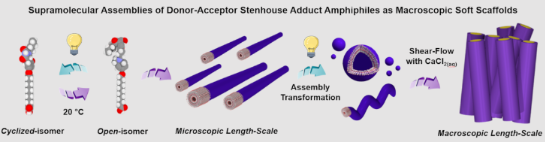
Supramolecular assemblies of amphiphilic donor–acceptor Stenhouse adducts as macroscopic soft scaffolds
Beilstein J. Org. Chem. 2024, 20, 1590–1603, doi:10.3762/bjoc.20.142
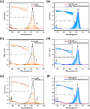
- (Figure 1a). Upon 625 nm red-light irradiation for 60 s at 20 °C to reach the photostationary state (PSS), the strong absorption band at 470–685 nm was diminished, with a clear isosbestic point at 259 nm (Figure 1a, red line), which indicates a selective photoisomerization process from the open-isomer O
- reversibility and photostability in organic solvent (Figure S1a and S1b, Supporting Information File 1). The photoisomerization between O-DA11 and C-DA11, upon irradiation with 625 nm red light and thermal back reaction in the dark, could be repeated for over five cycles, with only 5% absorbance decreases per
- 1d and Figure 1f, blue line), the strong absorption band had recovered and indicated a selective photoisomerization process from the open-isomers O-DA7 and O-DA6 (Figure 1c–f, black and blue lines) to the cyclized-isomers C-DA7 and C-DA6 (Figure 1d and Figure 1f, red line). The results showed




Photoswitchable glycoligands targeting Pseudomonas aeruginosa LecA
Beilstein J. Org. Chem. 2024, 20, 1486–1496, doi:10.3762/bjoc.20.132
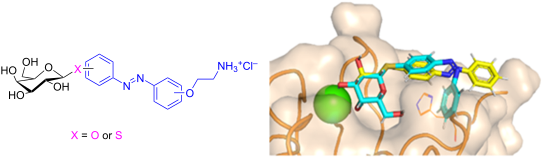
- reversible light modulation of their activity since each isomer shows distinct structural and electronic properties [13]. Photoisomerization-induced conformational and polarity changes may allow to increase or decrease the interaction with the target protein or receptors, then modulate the drug potency on
- /off or from low to high. This strategy can be used for specific targeting or local drug activation to reduce its toxicity [14]. There is an increasing use of the photoisomerization to control the conformation as well as the activities of various biomolecules with the development of photopharmacology
- factor up to 1.6 has been observed for the divalent ligand [23]; while almost no difference of inhibition was observed for LecA and LecB upon irradiation, probably due to the low photoisomerization of glycodendrimers [24]. Very recently, the group of Wittmann reported an arylazopyrazole-linked divalent N


Mechanistic investigations of polyaza[7]helicene in photoredox and energy transfer catalysis
Beilstein J. Org. Chem. 2024, 20, 1236–1245, doi:10.3762/bjoc.20.106
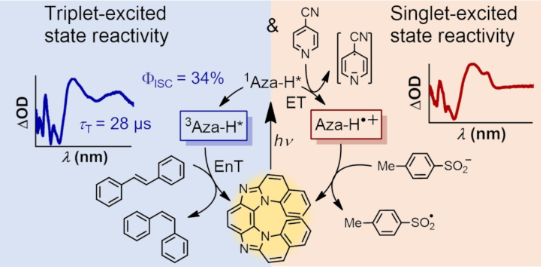
- Supporting Information File 72: General information, detailed experimental procedures, additional spectroscopic data, quantum-mechanical calculations, photostability and photoisomerization experiments. Funding We acknowledge generous financial support from the JGU Mainz and the German Federal Environmental




Novel route to enhance the thermo-optical performance of bicyclic diene photoswitches for solar thermal batteries
Beilstein J. Org. Chem. 2024, 20, 1053–1068, doi:10.3762/bjoc.20.93
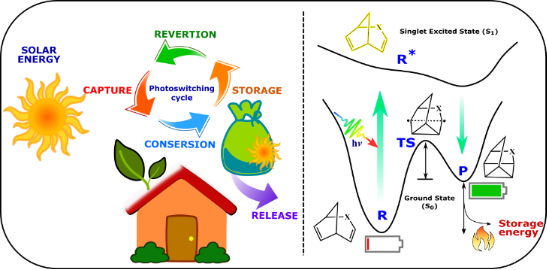
- [10]. These properties include the large storage energy, high gravimetric energy storage density, large barrier for thermal back isomerization reaction, photoabsorption in the visible range, high quantum yield of photoisomerization, and so forth [10]. Photoswitches like dihydroazulene


Synthesis of photo- and ionochromic N-acylated 2-(aminomethylene)benzo[b]thiophene-3(2Н)-ones with a terminal phenanthroline group
Beilstein J. Org. Chem. 2024, 20, 552–560, doi:10.3762/bjoc.20.47
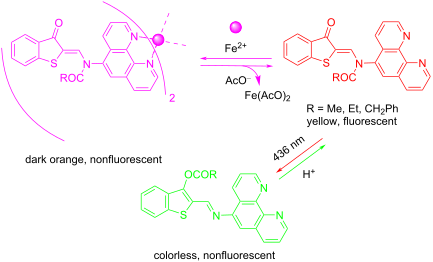
- resulting O-acylated isomers 3a–c were nonemissive. According to previous findings, the 2a–c→3a–c transformation is a two-step process: 1) Z–E photoisomerization and 2) extremely fast nonadiabatic N→O acyl group transfer (Scheme 2) [14][16]. These two stages occur almost simultaneously, and hence the term
- photoisomerization of the C=C bond, followed by very fast thermal N→O migration of the acyl group and the formation of O-acylated isomers. This rearrangement was accompanied by a decrease of the initial fluorescence intensity at 465–468 nm up to zero, since the resulting OAc− form was nonemissive. The reverse
- alternate addition of Fe2+ and AcO−. Synthesis of compound 1 and N-acylated compounds 2a–c. Photoisomerization of N-acylated ketoenamines 2a–c. Sequential interaction of compounds 2a–c with Fe2+ and AcO−. Absorption and fluorescence spectra of compounds 1, 2a and 2b in acetonitrile and compound 2c in DMSO


Switchable molecular tweezers: design and applications
Beilstein J. Org. Chem. 2024, 20, 504–539, doi:10.3762/bjoc.20.45





Photochromic derivatives of indigo: historical overview of development, challenges and applications
Beilstein J. Org. Chem. 2024, 20, 228–242, doi:10.3762/bjoc.20.23
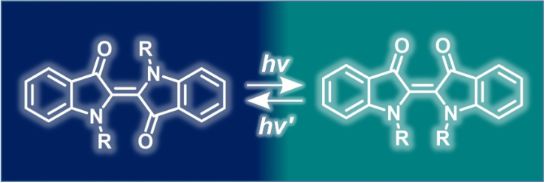
- 1956: first report on the photochromism of N,N'-dimethylindigo 1956–1978: extension of the range of photochromic N,N'-dialkyl and N,N'-diacetylindigos and development of experimental and theoretical approaches towards the characterisation of the photoisomerization of indigo 1979–1984: development of
- –E isomerization of N,N'-substituted indigos Since 1980s: detailed mechanistic and structural studies of the photoisomerization of indigo 2015: first report on photochromism of N,N'-diBOC indigos (follow-up studies in 2019, 2021) 2017: rationalisation of the design of indigo photochromes: symmetrical
- , indigo exists in a planar E-form, which is more stable than the overcrowded and non-planar Z-form (Figure 6a) [23]. Irradiation of E-indigo, however, does not result in the photoisomerization into the Z-form due to the rapid proton transfer occurring in the excited state (ESPT) from the N atom towards



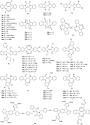


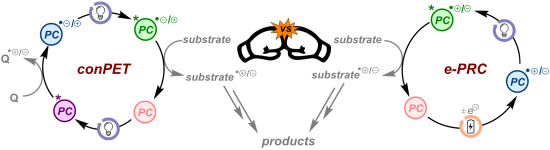
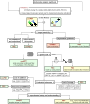
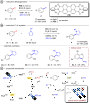
Photoredox catalysis harvesting multiple photon or electrochemical energies
Beilstein J. Org. Chem. 2023, 19, 1055–1145, doi:10.3762/bjoc.19.81







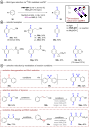


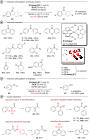

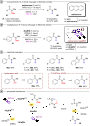
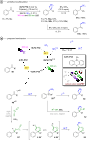
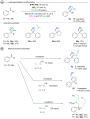
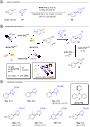


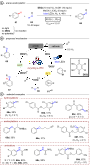

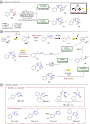












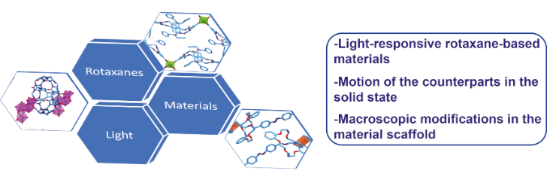
Light-responsive rotaxane-based materials: inducing motion in the solid state
Beilstein J. Org. Chem. 2023, 19, 873–880, doi:10.3762/bjoc.19.64
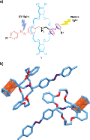
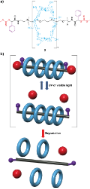
- azobenzene and ferrocene motifs (Figure 1a). The azobenzene scaffolds play a dual role, both as the engine transforming photoenergy into mechanical motion via trans/cis photoisomerization upon UV light input and as a modulator of the crystalline packing by varying the para-substituent R1, which leads to

Borylated norbornadiene derivatives: Synthesis and application in Pd-catalyzed Suzuki–Miyaura coupling reactions
Beilstein J. Org. Chem. 2022, 18, 368–373, doi:10.3762/bjoc.18.41
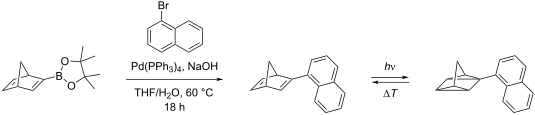
- the borylation reaction (see above). Photochromism of naphthylnorbornadiene 6b The photoisomerization reaction of substrate 5b was monitored by absorption spectroscopy (Figure 1) and by 1H NMR-spectroscopic analysis (see Supporting Information File 1, Figure S51). In MeCN solution, norbornadiene 5b
- photoisomerization of 2-(1-naphthyl)norbornadiene (5b) in MeCN, c = 20 µM, T = 20 °C, λex = 315 nm. The arrows indicate the development of the absorption bands with reaction time. Inset: Thermally induced back conversion of quadricyclane 6b into norbornadiene 5b at 60 °C as monitored by the increase of the





