


Search results
Search for "protecting-group-free synthesis" in Full Text gives 10 result(s) in Beilstein Journal of Organic Chemistry.
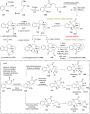
Total synthesis of natural products based on hydrogenation of aromatic rings
Beilstein J. Org. Chem. 2026, 22, 88–122, doi:10.3762/bjoc.22.4
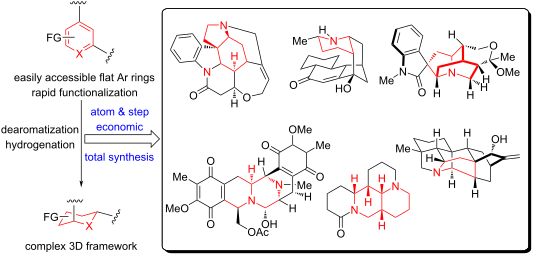
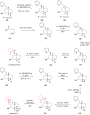
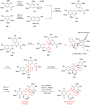
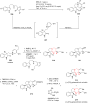
- contain complex three-dimensional structures, make total synthesis challenging. The retrosynthetic analysis [9], alongside the evolution of methodologies such as “two-phase synthesis” [10], “biomimetic synthesis” [11], or “protecting-group-free synthesis” [12], has progressively streamlined synthetic


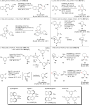
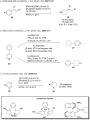
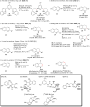









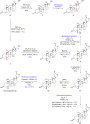
Chemoenzymatic synthesis of the cardenolide rhodexin A and its aglycone sarmentogenin
Beilstein J. Org. Chem. 2025, 21, 2637–2644, doi:10.3762/bjoc.21.204
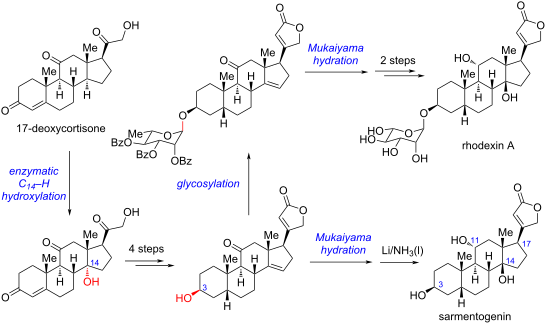
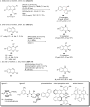
- Sciences and Biotechnology, Zhangjiang Institute for Advanced Study, Shanghai Jiao Tong University, Shanghai, 200240, China 10.3762/bjoc.21.204 Abstract Herein, we report a concise chemoenzymatic synthesis of the cardenolide rhodexin A in 9 steps and the first protecting-group-free synthesis of its
- ; C–H hydroxylation; chemoenzymatic synthesis; Mukaiyama hydration; protecting-group-free synthesis; Introduction Cardiac glycosides (CGs) are widely distributed natural products, generated by plants and amphibians [1]. Structurally, they are composed of an aglycone-steroidal moiety, an unsaturated
- with high diastereoselectivity (dr = 14β/14α = 6.7:1), and the minor component 14-epi-sarmentogenin could be readily separated. Notably, our work represents the first protecting-group-free synthesis [34][35] of sarmentogenin in just 7 steps from 17-deoxycortisone. With the aglycone sarmentogenin (2) in



Catalytic multi-step domino and one-pot reactions
Beilstein J. Org. Chem. 2024, 20, 254–256, doi:10.3762/bjoc.20.25
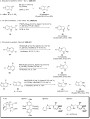
- atom efficiency, step and pot economies, decreased number of purification steps, or protecting-group-free synthesis. Multi-step domino [1][2] and one-pot [3] reactions represent a new powerful toolbox in organic synthesis to install molecular complexity economically and sustainably, starting from

Combining the best of both worlds: radical-based divergent total synthesis
Beilstein J. Org. Chem. 2023, 19, 1–26, doi:10.3762/bjoc.19.1
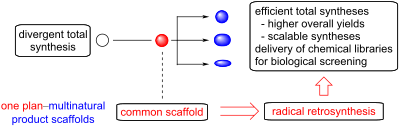
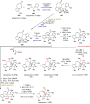
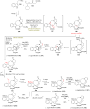
- of atom economy and protecting-group-free synthesis dominating the field of total synthesis. In this new era, total synthesis is moving towards natural efficacy by utilizing both the biosynthetic knowledge of divergent synthesis and the latest developments in radical chemistry. This contemporary
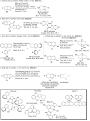
- protecting-group-free synthesis [13], are gradually drawing more and more the interest of organic chemists as a sustainable way to deliver structurally diverse chemical libraries for biological screening. The current review is focusing on selected examples utilizing a radical-based divergent total synthesis








Rapid, two-pot procedure for the synthesis of dihydropyridinones; total synthesis of aza-goniothalamin
Beilstein J. Org. Chem. 2020, 16, 135–139, doi:10.3762/bjoc.16.15

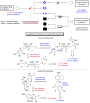
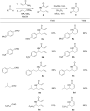
- Zealand 10.3762/bjoc.16.15 Abstract A fast, protecting-group-free synthesis of dihydropyridinones has been developed. Starting from commercially available aldehydes, a novel one-pot amidoallylation gave access to diene compounds in good yields. Ring-closing metathesis conditions were then employed to



A review of the total syntheses of triptolide
Beilstein J. Org. Chem. 2019, 15, 1984–1995, doi:10.3762/bjoc.15.194
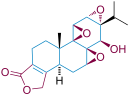
- were employed to successfully achieve Berchtold’s tetracyclic C-5,C-6 olefin intermediate 45 in only 7 steps with 8.1% overall yield in a protecting-group-free synthesis. However, we know the conversion of Berchtold’s C-5,C-6 tetracyclic olefin intermediate 45 to triptophenolide methyl ether (8) is a


Strategies toward protecting group-free glycosylation through selective activation of the anomeric center
Beilstein J. Org. Chem. 2017, 13, 1239–1279, doi:10.3762/bjoc.13.123

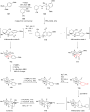
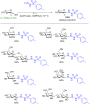
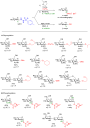
- modern protecting-group-free synthesis (Scheme 29) [89]. The Hindsgaul group reacted imidazole and DMC to form an activated species termed 2-imidazolyl-1,3-dimethylimidazolinium chloride (ImIm) which reacted with UMP within one hour to form an activated phosphoester. Then, over 18 h at 37 °C, Gal-1-P can




Contribution of microreactor technology and flow chemistry to the development of green and sustainable synthesis
Beilstein J. Org. Chem. 2017, 13, 520–542, doi:10.3762/bjoc.13.51
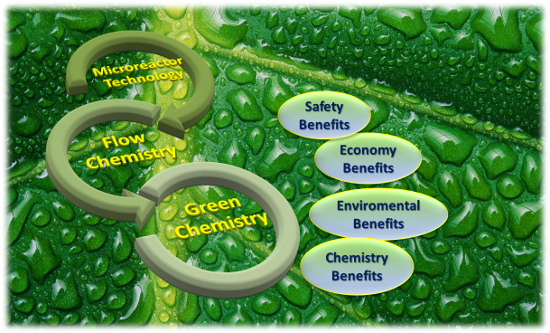
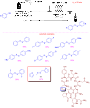
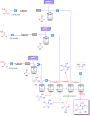
- been demonstrated by Yoshida that protecting-group-free synthesis could be feasible using flash chemistry and microreactor technology [17][18]. Recently, Yoshida and co-workers developed flash methods for the generation of highly unstable carbamoyl anions, such as carbamoyllithium, using a flow






A protecting group-free synthesis of the Colorado potato beetle pheromone
Beilstein J. Org. Chem. 2013, 9, 2374–2377, doi:10.3762/bjoc.9.273
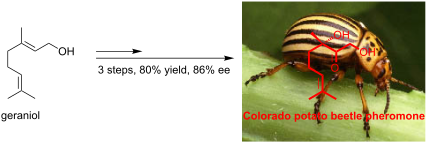
- of glycosides (Scheme 1) [14] and expected that the approach might also be applicable in the synthesis of (S)-1. Triol 3, with vicinal primary, secondary, and tertiary hydroxy groups should be a suitable substrate for chemoselective oxidation with catalyst 2, enabling a protecting group-free
- synthesis of the Colorado potato beetle pheromone (Scheme 2). An additional challenge was the presence of an alkene in the substrate, as the orthogonality of 2-catalyzed alcohol oxidations with alkenes had not been studied. In our approach, Sharpless asymmetric epoxidation of readily available geraniol or


Flow photochemistry: Old light through new windows
Beilstein J. Org. Chem. 2012, 8, 2025–2052, doi:10.3762/bjoc.8.229
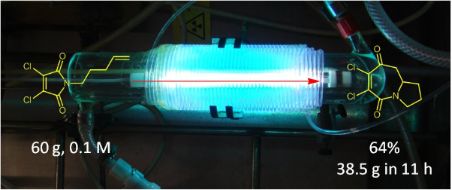
- mL/min), with recovery of 15.6 g of starting material [79]. To process the same amount in batch at 65% conversion would require 120 individual 0.5 g scale reactions with no recovery of starting material. This FEP reactor was essential for the protecting-group-free synthesis of (±)-neostenine [80





