Search results
Search for "radical cation" in Full Text gives 183 result(s) in Beilstein Journal of Organic Chemistry.
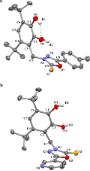
Unsymmetrical sulfoxides with sterically hindered catechol fragment: synthesis, structure, electrochemical properties, and antiradical activity
Beilstein J. Org. Chem. 2026, 22, 828–837, doi:10.3762/bjoc.22.65
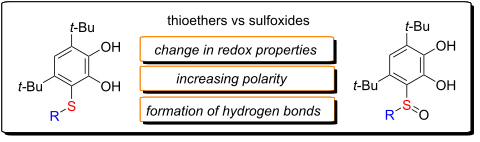
- the reaction with the 2,2′-diphenyl-1-picrylhydrazyl radical (DPPH) and the 2,2′-azinobis(3-ethylbenzothiazoline-6-sulfonic acid) radical cation (ABTS+•). In both assays, the lowest IC50 values among the studied catechol sulfoxides were found for compounds bearing isopropyl and tert-butyl substituents
- sulfoxides 1a–7a were investigated in comparison with thioethers 1–7, 3,5-DTBC and standard antioxidant Trolox using the 2,2′-diphenyl-1-picrylhydrazyl (DPPH) radical and the ABTS·+ radical cation. The presence of a catechol fragment acting as a primary antioxidant and thioether or sulfoxide groups serving


Electrosynthetic access to unsymmetrical oxaza[8]helicenes with high chiral stability and strong circularly polarized luminescence (CPL)
Beilstein J. Org. Chem. 2026, 22, 372–382, doi:10.3762/bjoc.22.25
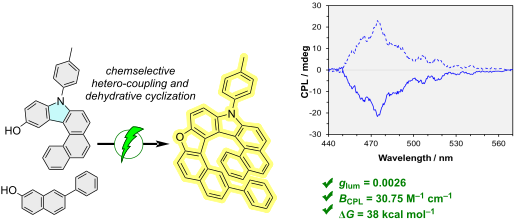
- products were detected under the optimized conditions (Scheme 2). Based on our previous reports [48][56], DFT calculations, and cyclic voltammetry (CV) analyses (Figure 1), anodic single-electron transfer (SET) is expected to occur first from 3, generating the electrophilic radical cation [3]·+ as 3 (Eox
- = 0.735 V vs Fc/Fc+ in CH2Cl2) is oxidized more readily than the 2-naphthol partners (Eox of 4a = 1.081 V and Eox of 4b = 1.286 V vs Fc/Fc+ in CH2Cl2). The radical cation [3]·+ then undergoes rapid deprotonation to form a neutral radical intermediate (Int-I) with high spin density at the reactive site
- the pKa of [3]·+ radical cation and spin density of neutral radical intermediate Int-I (optimized at the UB3LYP/6-31G+(d,p) level of theory with IEPCM model as solvation of DCM. Grimme’s dispersion with the original D3 damping function was applied as empirical dispersion correction to the optimized




Visible-light-driven NHC and organophotoredox dual catalysis for the synthesis of carbonyl compounds
Beilstein J. Org. Chem. 2025, 21, 2584–2603, doi:10.3762/bjoc.21.200
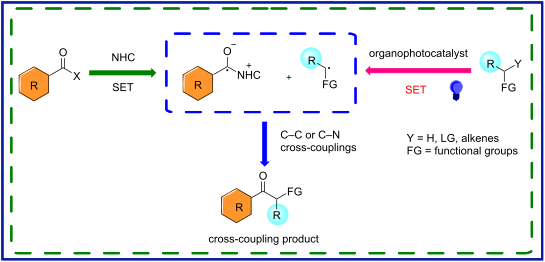
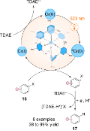
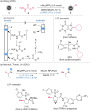
- -rich and electron-poor substituents. This reaction was carried out between arylcyclopropanes 5 and acyl fluoride 4 in the presence of NHC (10 mol %) and 4CzIPN (5 mol %). Mechanistic studies showed that the cascade proceeds via nucleophilic ring-opening of a cyclopropyl radical cation D with subsequent
- substrate 7, generating the aryl radical cation C along with the formation of corresponding radical anion of the photocatalyst (PC•–). The reduction potentials are (E1/2(P/P•–) = –1.37V vs SCE for [Ir(dF(CF₃)ppy)₂(dtbbpy)]PF₆ and –1.21V vs SCE for 4CzIPN as an organophotocatalyst. This method permits the C
- was described. Aromatic C(sp2)–H bond acylation was achieved by dual catalysis through cooperative NHC and organophotoredox-catalyzed C–C cross-coupling of a benzo-fused aryl radical cation C with stable ketyl radical B as the key step. LED irradiation of photocatalyst leads to photoexcited PC*, which


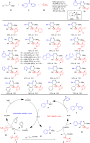

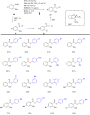

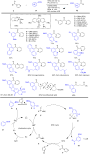

Ni-promoted reductive cyclization cascade enables a total synthesis of (+)-aglacin B
Beilstein J. Org. Chem. 2025, 21, 2548–2552, doi:10.3762/bjoc.21.197
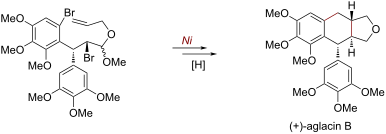
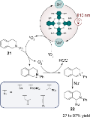
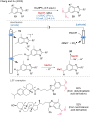
- (2) and C (3), featuring a visible light-catalyzed radical cation cascade for the formation of the C8–C8′ and C2–C7′ bonds [6]. Subsequently, they improved the reaction conditions to achieve the racemic synthesis of aglacins A (1) and E (4) as well [7]. In 2021, the Gao group described the total


Synthesis of the tetracyclic skeleton of Aspidosperma alkaloids via PET-initiated cationic radical-derived interrupted [2 + 2]/retro-Mannich reaction
Beilstein J. Org. Chem. 2025, 21, 2470–2478, doi:10.3762/bjoc.21.189
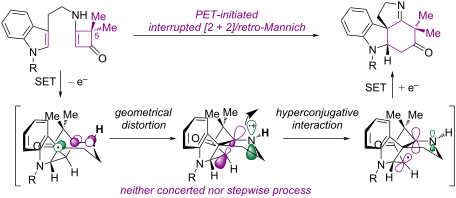
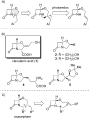
- current interest in the synthesis of complex natural products via photochemical reactions, we decided to achieve such an unusual bond cleavage (Figure 1a, path A) of cyclobutenone by generating a radical cation species via a PET reaction. The synthetic plan is shown in Figure 1c and includes a PET
- -initiated [2 + 2] cyclization of the tryptamine-substituted cyclobutenone K to form the radical cation L, which has a highly functionalized and rigid bicyclo[2.2.0]hexane core. Fragmentation of the C3–C19 bond would afford a redox-active intermediate which upon further reductive quenching would lead to the
- formation of IN1. The radical cation IN1 served as the reference point for DFT investigations. As illustrated in Figure 2a, facilitated by a favorable radical cation–π interaction [31], IN1 proceeds to the first radical addition transition state (TS1), with an energy barrier of 8.3 kcal/mol. This leads to


Electrochemical cyclization of alkynes to construct five-membered nitrogen-heterocyclic rings
Beilstein J. Org. Chem. 2025, 21, 2173–2201, doi:10.3762/bjoc.21.166
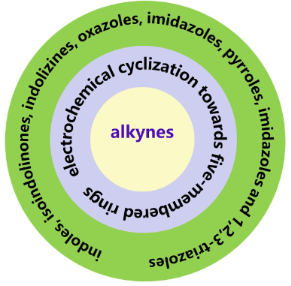
- occurred to give a radical cation PhSeSePh•+ at the anode. The subsequent cleavage of Se–Se bond formed a radical PhSe• and a cation PhSe+. Further additional oxidation of PhSe• yielded another PhSe+, which worked as the major reactive species and quickly added to C≡C in 13a to form intermediate A. Finally
- phenylselenium cation C and phenylselenium radical B through radical cation species A. Simultaneously, the cathodic reduction of 17a generated anion D and radical B. Then, addition of B with the alkyne portion in 16a gave a radical intermediate E, which proceeded a one-electron oxidation followed by nucleophilic
- . Coordination of 29a with I− produced the iodonium species A, which was transformed to vinyl iodide B by intramolecular 5-exo-dig iodocyclization. The deprotonation/anodic oxidation of B gave the radical cation D via C. The second deprotonation/anodic oxidation produced F, which was transformed into stable







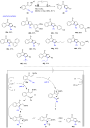


Photochemical reduction of acylimidazolium salts
Beilstein J. Org. Chem. 2025, 21, 1973–1983, doi:10.3762/bjoc.21.153
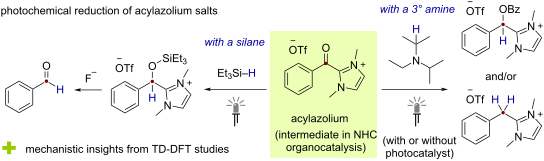
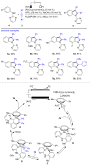
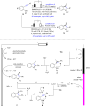
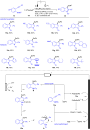
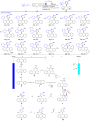
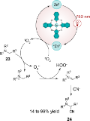
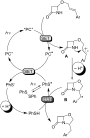
- photocatalyst radical anion ([PC]·−) and the DIPEA radical cation D (Scheme 1). Single-electron transfer from [PC]·− to the benzoylazolium species 1 would then regenerate the ground-state photocatalyst and afford the Breslow radical anion C, which could in turn react with D in a hydrogen-atom-transfer (HAT
- electron to compound 3 could explain the formation of the fully reduced species 2. In this case, subsequent mesolysis would generate the benzyl radical cation G, which would deliver 2 following a HAT step with the DIPEA radical cation D. To confirm whether O-benzoylated species is indeed an intermediate in


Thermodynamic equilibrium between locally excited and charge transfer states in perylene–phenothiazine dyads
Beilstein J. Org. Chem. 2025, 21, 1577–1586, doi:10.3762/bjoc.21.121
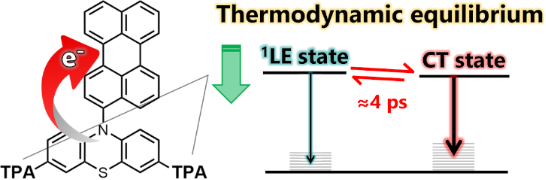
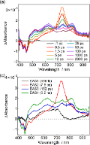
- anion of the Pe moiety. Additionally, a shoulder signal observed near 500 nm was attributed to the radical cation of the PTZ(TPA) unit. However, although previous studies selectively excited the Pe moiety and attributed the 725 nm band to the LE state of Pe moiety, such an assignment may not be directly
- attributable to the Pe radical anion and the PTZ(TPA) radical cation appeared at ≈600 and ≈500 nm, respectively (Figure 7). The electron transfer time constant was determined to be 7.6 ps, significantly slower than that of Pe–PTZ(TPA)2 (120 fs or faster), reflecting the effect of the phenyl spacer that




General method for the synthesis of enaminones via photocatalysis
Beilstein J. Org. Chem. 2025, 21, 1535–1543, doi:10.3762/bjoc.21.116
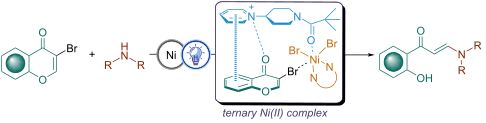
- oxidative state PC1* that interacts with morpholine (8a) to generate the corresponding aminium radical cation. To gain a better understanding of the process, the formation of the enaminone product 9a was monitored overtime by 1H NMR, which confirmed that the the reaction was complete within 2 h. Furthermore
- . Simultaneously, acridinium photocatalyst PC1 absorbed energy and transitioned from the ground state to excited state under visible-light irradiation. This excited state PC1* is quenched by the amine, generating the amine radical cation and PC1 radical via a single-electron transfer (SET) process. Then, the C−Br




Advances in nitrogen-containing helicenes: synthesis, chiroptical properties, and optoelectronic applications
Beilstein J. Org. Chem. 2025, 21, 1422–1453, doi:10.3762/bjoc.21.106
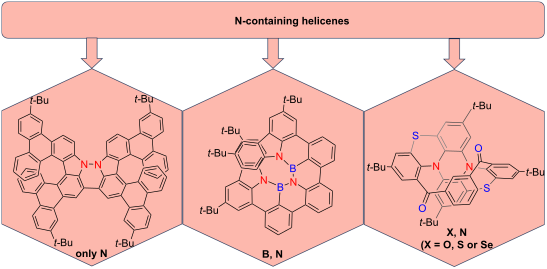
- electronic behaviors reminiscent of nitrogen-doped azulenes, featuring strong absorption dissymmetry factors (|gabs|) at 345 nm – 1.2 × 10⁻² for compound 20a, 1.0 × 10⁻² for 20d, and 1.3 × 10⁻² for 20e (Table 5). Notably, the radical cation form of compound 20e (20e•+) exhibits pronounced CD signals
- BCPL value of 13.2 M−1 cm−1. Notably, compound 21c undergoes reversible redox interconversion to its radical cation 21c•+ and dicationic 21c2+ states via chemical oxidation, enabling controllable switching between antiaromatic and aromatic configurations. These results provide a compelling strategy for
- | value of 1.6 × 10⁻³. In addition, both 29a and 29b demonstrate redox activity, undergoing reversible formation of radical anions, dianions, and radical cations. The radical cation 29b•+, in particular, exhibits a broad near-infrared (NIR) absorption band extending to 3000 nm, highlighting its potential

Recent advances in amidyl radical-mediated photocatalytic direct intermolecular hydrogen atom transfer
Beilstein J. Org. Chem. 2025, 21, 1306–1323, doi:10.3762/bjoc.21.100
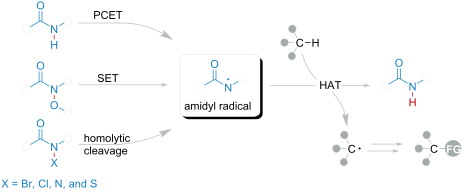
- it into the byproduct 46 and generating a carbon-centered radical 62. Species 62 is trapped by heteroarene 60, leading to the formation of the intermediate 63. This intermediate 63 undergoes SET and proton transfer with the assistance of O-anion 64 and the Br-5CzBN+• radical cation, delivering the






Recent advances and future challenges in the bottom-up synthesis of azulene-embedded nanographenes
Beilstein J. Org. Chem. 2025, 21, 1272–1305, doi:10.3762/bjoc.21.99
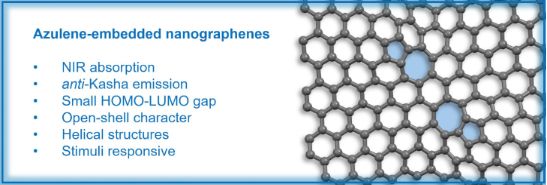
- by a naphthalene-to-azulene rearrangement. The alternative radical cation mechanism has a higher energy barrier than the arenium cation-mediated reaction. Notably, only one of the pentagon–heptagon pairs exhibits an azulene-like electronic structure and aromaticity, as confirmed by the analysis of
- calculated NICS values. Similarly, Liu and co-workers reported the synthesis of two related nanographenes from precursor 38 (Scheme 6) [47]. Oxidation using DDQ/TfOH yielded two PAHs 39 and 40 in 34% and 22% yield, respectively. The authors postulated here formation of azulene moiety through radical cation
- ]. Notably, PAH 109 forms an air-stable radical cation after oxidation. A similar intramolecular oxidation of two adjacent azulene units was also reported with the use of FeCl3 as an oxidant [73] or in one step during Suzuki coupling between 1,8-dibromonaphthalene and borylated azulene [74]. The ease of




Recent advances in oxidative radical difunctionalization of N-arylacrylamides enabled by carbon radical reagents
Beilstein J. Org. Chem. 2025, 21, 1207–1271, doi:10.3762/bjoc.21.98
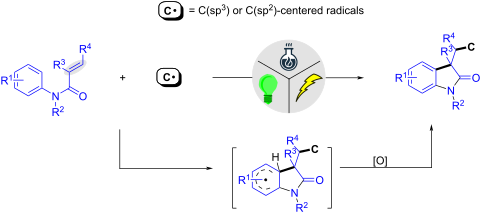
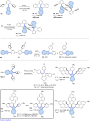
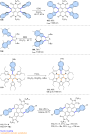
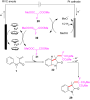
- bromide, and secondary alkyl bromides failed to yield the desired products, suggesting limitations in radical generation efficiency for certain substrates. A plausible mechanism, as shown in Scheme 48, involves the NHC catalyst donating a single electron to the α-bromo substrate, generating an NHC radical
- cation B and an α-carbon radical A. The α-carbon radical A then undergoes intermolecular radical addition to the acrylamide, forming a new carbon-centered radical intermediate C, which subsequently undergoes intramolecular cyclization to yield the oxindole product 88a via homolytic aromatic substitution












Recent advances in synthetic approaches for bioactive cinnamic acid derivatives
Beilstein J. Org. Chem. 2025, 21, 1031–1086, doi:10.3762/bjoc.21.85
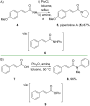
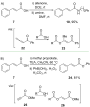
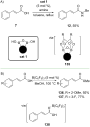
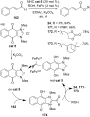
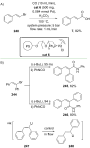
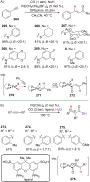
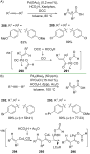
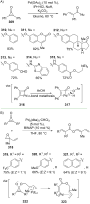
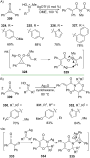
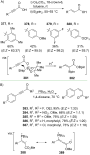
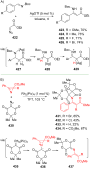
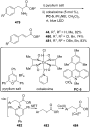
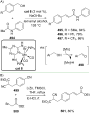
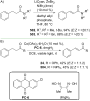
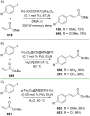
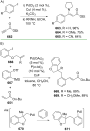
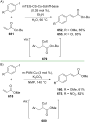
- O atom of the carboxylate group. For instance, Coote and co-workers (2019) reported electrochemical methylation of cinnamic acid 7 using the TEMPO-Me reagent via reactive radical cation 59 to give the corresponding methyl ester 44 in moderate yield (Scheme 21A) [53]. Wang and co-workers (2019








































Study of tribenzo[b,d,f]azepine as donor in D–A photocatalysts
Beilstein J. Org. Chem. 2025, 21, 935–944, doi:10.3762/bjoc.21.76

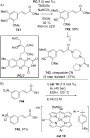
- facilitated by reduced photocatalyst (PC) and the interaction of 15 with the radical cation of DIPEA. The best result, again, was attributed to molecule 5a with 60% isolated yield (Table 5, entry 1). In contrast, molecule 5b showed the worst performance with 41% NMR yield (Table 5, entry 2). For compounds 5c



Recent advances in the electrochemical synthesis of organophosphorus compounds
Beilstein J. Org. Chem. 2025, 21, 770–797, doi:10.3762/bjoc.21.61
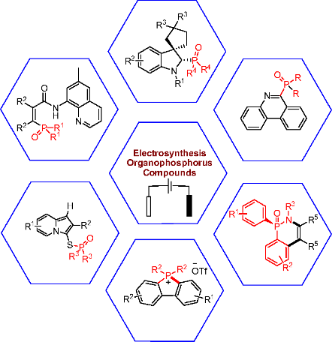
- (O)(OR)2 is derived from the compound P(OR)3, not from HP(O)(OR)2. Although the exact role of HP(O)(OR)2 remains unclear, it has been established that its presence is essential for the C–H phosphorylation. In this case, a radical cation intermediate was suggested for this conversion. Heteroaromatic
- . Some other heteroarenes were also tested, but only quinoxaline was compatible with this system under the standard conditions. A radical pathway was proposed in this reaction. At first, a thiazole radical cation was formed via anodic oxidation, followed by a reaction with phosphine oxides to give a
- reaction proceeded via anodic indole oxidation, followed by a reaction with trialkyl phosphite to give the corresponding indole phosphonate (Scheme 11). Cyclic voltammetry experiments confirmed that free indole can oxidize at the anode and generate a radical-cation intermediate. Also, no product was


Red light excitation: illuminating photocatalysis in a new spectrum
Beilstein J. Org. Chem. 2025, 21, 296–326, doi:10.3762/bjoc.21.22

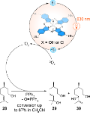
- the radical cation iPr2NEt•+ (iPr2NEt/iPr2NEt•+ = +0.72 V vs SCE) and the reduction of O2 by the reduced photocatalyst, forming the superoxide radical anion O2•− (O2/O2•− = −0.57 V vs SCE). This latter can then react with arylboronic acids 59 to give, after hydrolysis, phenol derivatives 60. Other
- involving π–π-stacking [75]. The resulting radical anion releases NO also yielding the anion 63. Electron transfer to the radical cation of the photocatalyst regenerates it. In this step, the neutral radical 64 is also formed. Hydrogen abstraction (hydrogen atom transfer, HAT) yields compound 65. NO and the















Oxidation of [3]naphthylenes to cations and dications converts local paratropicity into global diatropicity
Beilstein J. Org. Chem. 2025, 21, 277–285, doi:10.3762/bjoc.21.20

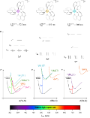
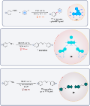
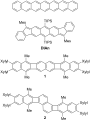
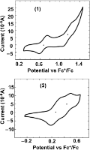
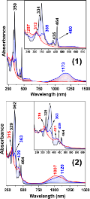
- oxidized species of compounds 1 and 2 are shown in Figure 3. Initial electrochemical oxidation of 1 resulted in the progressive replacement of its absorption bands by three new features, which were assigned to the 1•+ radical cation, namely at 352/369 nm, a multiplet in the 500–600 nm interval, and a broad
- peak centered at 1173 nm. Further oxidation resulted in a quite silent vis–NIR spectrum characterized by one main peak at 312 nm, which was assigned to the 12+ dication. The spectrum of the first oxidized species of 2, the radical cation 2•+, shows a band at 363 nm, a shoulder at 439 nm, and a broad
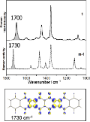
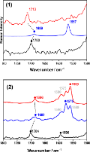
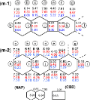
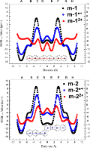
- between the bonds of parent molecules. In our case, they will reveal the transformation of the CC bond skeleton upon oxidation. Figure 6 summarizes the set of k[ν(CC)] values calculated for neutral, radical cation, and dication of m-1 and m-2, as well as those obtained at the same level for individual NAP


Recent advances in electrochemical copper catalysis for modern organic synthesis
Beilstein J. Org. Chem. 2025, 21, 155–178, doi:10.3762/bjoc.21.9

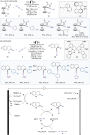
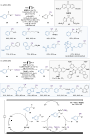
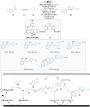
- cation 30. The [Mes-Acr-Ph]• is regenerated to the ground-state acridinium [Mes-Acr-Ph]+ through a single oxidation step on the anode, and the heteroarene radical cation 30 then reacts with the arylalkene 27 to form a benzylic radical intermediate 31. The benzylic radical intermediate 31 is subsequently
- Figure 11. Initially, the Cu(II) catalyst 50 coordinates with substrate 47 and amine electrophile 48 to generate Cu(II) intermediate 51, which is then oxidized by the iodine radical to form Cu(III) complex 52. Cu(III) complex 52 undergoes electron transfer to produce radical cation intermediate 53
- . Subsequent intramolecular amine transfer to the radical cation intermediate 53, followed by ligand exchange, yields amination product 49 and Cu(I) species 55. Cu(II) catalyst 50 is regenerated by anodic oxidation, thereby completing the catalytic cycle. In 2019, Nicholls et al. reported a Cu-catalyzed






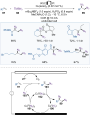


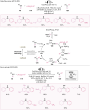
Advances in the use of metal-free tetrapyrrolic macrocycles as catalysts
Beilstein J. Org. Chem. 2024, 20, 3085–3112, doi:10.3762/bjoc.20.257
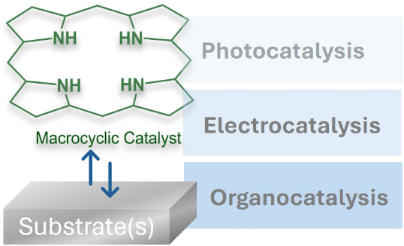
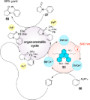
- or transform into a long-lived radical cation by substrate reduction, which are the fundamentals of photoredox catalysis (Figure 13a). Monomeric porphyrins and supramolecular porous frameworks composed of porphyrin building blocks, such as metal-organic frameworks (MOF) and covalent organic


Recent advances in transition-metal-free arylation reactions involving hypervalent iodine salts
Beilstein J. Org. Chem. 2024, 20, 2891–2920, doi:10.3762/bjoc.20.243

- group with a less hindered portion is observed. The mechanism revealed the reaction undergoes the homolytic cleavage of the diaryliodonium salt to produce an iodoaryl radical cation, which further reacts with the amine to acquire the corresponding diaryl amines. Moreover, a similar reaction tried with a


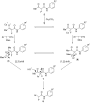


Synthesis of spiroindolenines through a one-pot multistep process mediated by visible light
Beilstein J. Org. Chem. 2024, 20, 2722–2731, doi:10.3762/bjoc.20.230
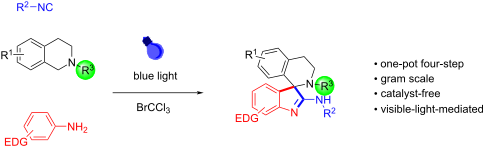
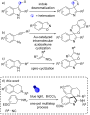
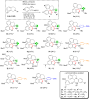
- Scheme 6. Based on the results reported by Zeitler [28], several mechanisms are involved in the oxidation of N-Ph-THIQ. The most probable involves the photoexcitation of the EDA (Electron Donor-Acceptor) complex promoting an electron transfer from N-Ph-THIQ to BrCCl3 to afford the amine radical cation





A review of recent advances in electrochemical and photoelectrochemical late-stage functionalization classified by anodic oxidation, cathodic reduction, and paired electrolysis
Beilstein J. Org. Chem. 2024, 20, 2500–2566, doi:10.3762/bjoc.20.214
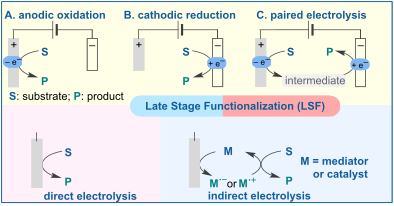
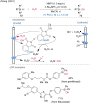
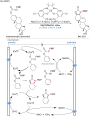
- cation is formed by oxidation of the substrate at the anode. This radical cation is subsequently deprotonated to produce an allyl radical. The allyl radical is further oxidized to form the allyl cation, which is then attacked by the nucleophilic sulfonamide, leading to the formation of the desired C–N
- , several structurally diverse aromatic acetals have been synthesized. Dehydroabietic and norcholanoic acid derivatives have been effectively modified using the developed protocol. The reaction is reported to involve the oxidation of the benzene core, followed by electron transfer to the radical cation, and
- protocol for the installation of sulfonamide groups using commercially available SO2 and amines (Scheme 12) [20]. This method is highly appealing for industrial applications and LSF. The proposed mechanism begins with the anodic oxidation of the arene substrate. The resulting radical cation intermediate is


























Photoredox-catalyzed intramolecular nucleophilic amidation of alkenes with β-lactams
Beilstein J. Org. Chem. 2024, 20, 2461–2468, doi:10.3762/bjoc.20.210
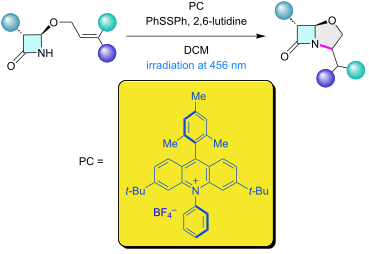
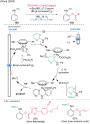
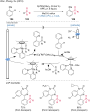
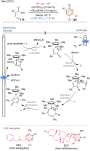
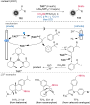
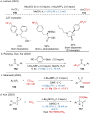
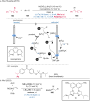
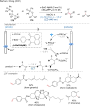
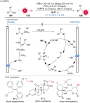
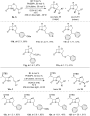
- reactions limit the utility of this approach. Herein, we report an intramolecular photoredox cyclization of alkenes with β-lactams in the presence of an acridinium photocatalyst. The approach uses an intramolecular nucleophilic addition of the β-lactam nitrogen atom to the radical cation photogenerated in
- functionalization of amides with alkenes under photoredox conditions. Another viable approach for amide functionalization through photoredox catalysis involves the nucleophilic addition, in the presence of base, of an amide to a radical cation obtained by oxidation of an unfunctionalized alkene moiety (Figure 1A
- functionalization of amides with alkenes under oxidative conditions, the oxidation potential of the alkene plays a pivotal role in the oxidation to a radical cation through photoredox catalysis [26]. Alkenes that are less functionalized possess a higher oxidation potential, necessitating the use of potent




Synthesis, electrochemical properties, and antioxidant activity of sterically hindered catechols with 1,3,4-oxadiazole, 1,2,4-triazole, thiazole or pyridine fragments
Beilstein J. Org. Chem. 2024, 20, 2378–2391, doi:10.3762/bjoc.20.202
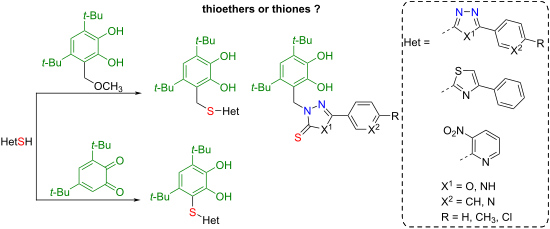
- in the reaction with a diphenylpicrylhydrazyl (DPPH) radical, ABTS·+ radical cation, CUPRAC test, and inhibition process of superoxide radical anion formation by xanthine oxidase (NBT assay). The presence of a catechol fragment and thioether or thione groups determines the ability to neutralize
- fragment favors the pronounced antiradical activity. The use of ABTS radical cation to assess the antioxidant capacity of compounds is one of the widely used methods which is based on the transfer of an electron from the studied molecules to the acceptor [67]. The obtained IC50 values for synthesized