Search results
Search for "selectivity control" in Full Text gives 14 result(s) in Beilstein Journal of Organic Chemistry.
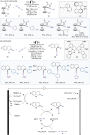
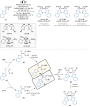
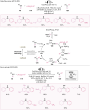
Total synthesis of the capsular polysaccharide repeating unit towards the development of a glycoconjugate vaccine against Klebsiella pneumoniae ST512
Beilstein J. Org. Chem. 2026, 22, 821–827, doi:10.3762/bjoc.22.64
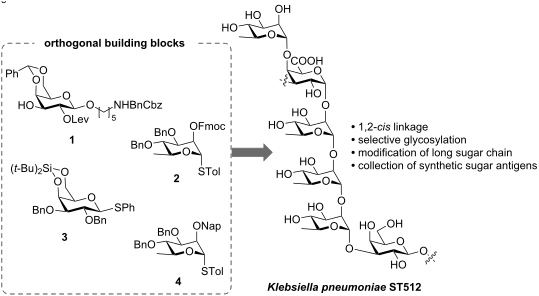
- . Keywords: glycoconjugate vaccines; glycosylation; oligosaccharides; selectivity control; total synthesis; Introduction The emergence and rapid spread of multidrug-resistant bacteria represent a critical threat to global health [1][2][3][4]. Among these pathogens, Klebsiella pneumoniae has surfaced as a


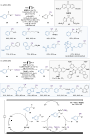
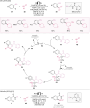
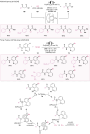
Recent advances in electrochemical copper catalysis for modern organic synthesis
Beilstein J. Org. Chem. 2025, 21, 155–178, doi:10.3762/bjoc.21.9

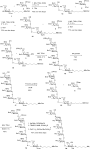
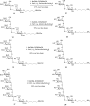
- transformations remains challenging due to the difficulty in controlling the stereo- and chemoselectivity of highly reactive radical intermediates. Future efforts should focus on designing new ligand frameworks to broaden substrate scopes and enhance selectivity control. The use of greener solvents is also



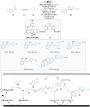



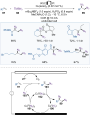


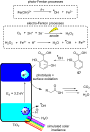
Selectivity control towards CO versus H2 for photo-driven CO2 reduction with a novel Co(II) catalyst
Beilstein J. Org. Chem. 2023, 19, 1766–1775, doi:10.3762/bjoc.19.129
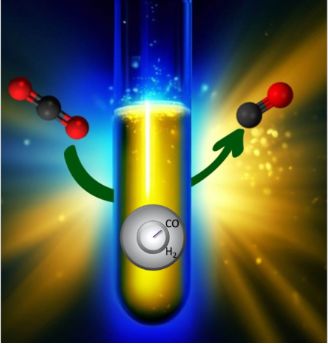
- complex [Cu(dmp)DPEPhos](BF4), well-investigated and used in several photocatalytic reactions [20][21][41], acting as a cost-effective benchmark photosensitizer. Herein, we present a study for the selectivity control of the novel Co(II) catalyst 1, aiming at maximizing the catalytic efficiency, and


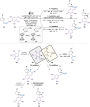
Redox-active molecules as organocatalysts for selective oxidative transformations – an unperceived organocatalysis field
Beilstein J. Org. Chem. 2022, 18, 1672–1695, doi:10.3762/bjoc.18.179
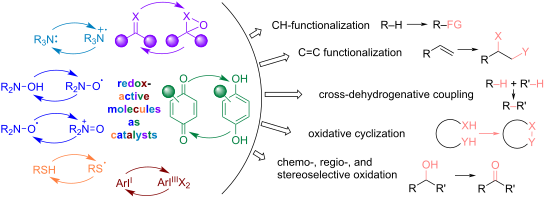
- under visible light irradiation. The advantages of this mixed hetero-/homogeneous catalytic system include the easy separation of the products from NHPI and TiO2, recyclability, selectivity control by TiO2/NHPI ratio, and high efficiency at low TiO2 loading due to the radical chain nature of the
- from other types of organocatalysis for more precise selectivity control can be one of perspective research directions. Another fundamental problem in the discussed redox-organocatalysis field is the understanding of the reactivity of catalytically active intermediates (usually radicals and cation

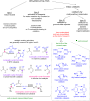










Regioselective N-alkylation of the 1H-indazole scaffold; ring substituent and N-alkylating reagent effects on regioisomeric distribution
Beilstein J. Org. Chem. 2021, 17, 1939–1951, doi:10.3762/bjoc.17.127
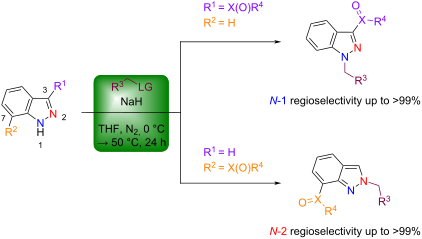
- trend in regioselectivity [24]. Our work sought to further explore the effect of C-3 substitution on N-alkylation selectivity control of the 1H-indazole scaffold. In view of these antecedents, it was envisioned that the development of a regioselective protocol for indazole N-1 alkylation would provide


Free-radical cyclization approach to polyheterocycles containing pyrrole and pyridine rings
Beilstein J. Org. Chem. 2021, 17, 1490–1498, doi:10.3762/bjoc.17.105
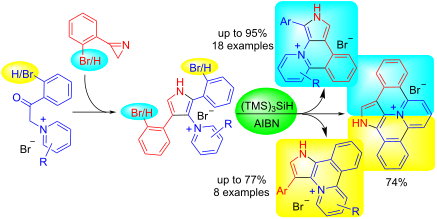
- having no additional radical-sensitive substituents. The free bases can be obtained from the synthesized hydrobromides in quantitative yield by basification at room temperature. The selectivity control of intramolecular arylation was achieved by replacing the halogen: the use of 1-(2-(ortho-bromophenyl


Selective preparation of tetrasubstituted fluoroalkenes by fluorine-directed oxetane ring-opening reactions
Beilstein J. Org. Chem. 2020, 16, 1936–1946, doi:10.3762/bjoc.16.160
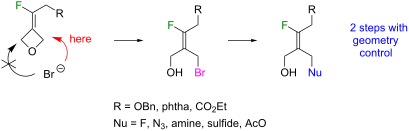
- corroborated by 1D NOESY experiments in which after selective irradiation of the protons α to the nitrogen atom, a response was observed only for the protons α to the bromine atom, thus indicating their spatial proximity. In order to elucidate the selectivity control in this ring-opening reaction displayed by


Heterogeneous photocatalysis in flow chemical reactors
Beilstein J. Org. Chem. 2020, 16, 1495–1549, doi:10.3762/bjoc.16.125


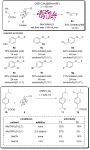


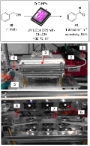

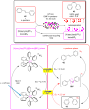


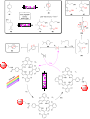



SO2F2-mediated transformation of 2'-hydroxyacetophenones to benzo-oxetes
Beilstein J. Org. Chem. 2019, 15, 976–980, doi:10.3762/bjoc.15.95
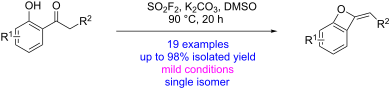
- + 2] cycloaddition that furnishes substituted oxetanes rapidly, for example Paterno–Büchi reaction (Scheme 1b) [21]. However, the recognition of facial selectivity control in [2 + 2] cycloaddition is not an easy task. The availability of various methods for the synthesis of oxetanes and their strained


Hydroarylations by cobalt-catalyzed C–H activation
Beilstein J. Org. Chem. 2018, 14, 2266–2288, doi:10.3762/bjoc.14.202
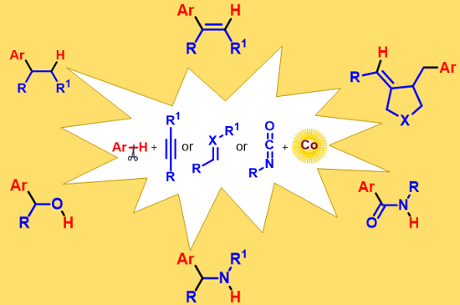
- , whereas the electronic nature of propargyl alcohols and amines played a key role in the selectivity control during the insertion. Moreover, the control experiments and DFT calculations show that HOPiv played a crucial role in both the C−H activation and the protonolysis step. In 2016, Yu and co-workers
- products 25 and 26, respectively, in good yields with high selectivity control (Scheme 17) [60]. It is noteworthy that the electronic nature of the substrates also controlled the addition selectivity; electron-withdrawing group (CF3 and F) substituted arenes 3 favored branched addition product 26 in both


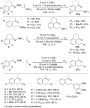




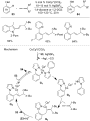


Cp2TiCl/D2O/Mn, a formidable reagent for the deuteration of organic compounds
Beilstein J. Org. Chem. 2016, 12, 1585–1589, doi:10.3762/bjoc.12.154
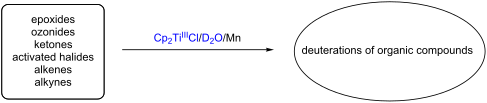
- multiple applications of the deuterated compound such as the enhancement of the metabolic stability of pharmaceutical drugs, the use of internal standards for mass spectrometry, the elucidation of biosynthetic pathways, and the study of reaction mechanisms and selectivity control reactions. In an effort to


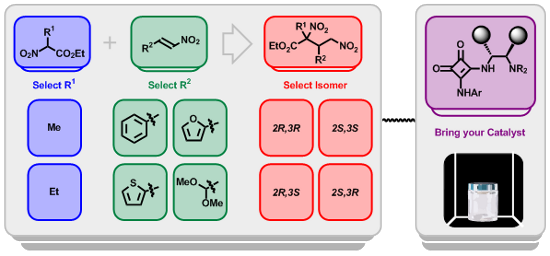
Organocatalytic and enantioselective Michael reaction between α-nitroesters and nitroalkenes. Syn/anti-selectivity control using catalysts with the same absolute backbone chirality
Beilstein J. Org. Chem. 2015, 11, 2577–2583, doi:10.3762/bjoc.11.277


Aminofluorination of 2-alkynylanilines: a Au-catalyzed entry to fluorinated indoles
Beilstein J. Org. Chem. 2014, 10, 449–458, doi:10.3762/bjoc.10.42
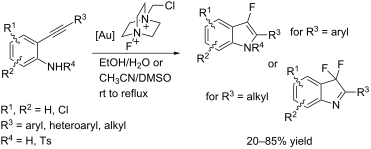
- alkyl group on the terminal triple bond. Further studies are in progress aimed to the selectivity control of the sequential gold-catalyzed oxidative cycloamination process of 2-alkynylanilines. Cycloisomerization/fluorination of functionalized indoles. Synthesis of hemiaminal derivatives. Reaction on n


Solvent- and ligand-induced switch of selectivity in gold(I)-catalyzed tandem reactions of 3-propargylindoles
Beilstein J. Org. Chem. 2011, 7, 786–793, doi:10.3762/bjoc.7.89
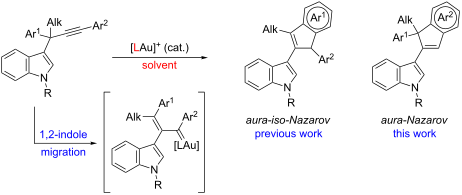
- (Scheme 2). It should be remarked that, until now, only the aura-Nazarov cyclization to give products 4 from substrates 1 (without an aromatic substituent at the propargylic position, see R2, R3 in Scheme 1) has been observed. For the initial selectivity control experiments, 1-methyl-3-(1-methyl-1,3