


Search results
Search for "solvent polarity" in Full Text gives 99 result(s) in Beilstein Journal of Organic Chemistry.
The role of spacer length and flexibility in peptide self-assembly
Beilstein J. Org. Chem. 2026, 22, 986–996, doi:10.3762/bjoc.22.77
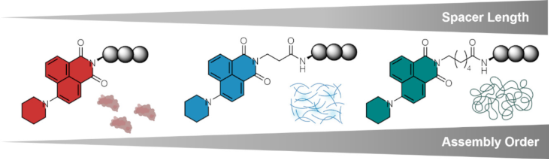
- changes in solvent polarity surrounding the fluorophore. Overall, the pronounced hypsochromic absorption shifts for C6-Nap-ICA 6 and C3-Nap-ICA 7 in assembling conditions support excitonic H-type coupling within ordered supramolecular assemblies. These findings are consistent with the TEM, AFM, Proteostat


Configuration–packing synergy enabling integrated crystalline-state RTP and amorphous-state TADF
Beilstein J. Org. Chem. 2026, 22, 224–236, doi:10.3762/bjoc.22.16
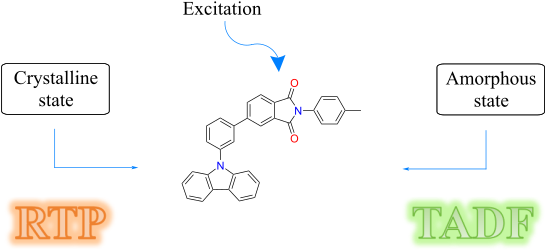
- essentially unchanged, whereas its fluorescence emission undergoes a monotonic red shift with increasing solvent polarity (or polarizability), accompanied by an enlarged Stokes shift – a typical solvatochromic behavior. The weak solvent dependence of the absorption spectra indicates that the difference in
- on the emission side points to conformational/electronic density reorganization after excitation, relaxing to an emissive state with a larger dipole moment dominated by charge transfer (CT). As solvent polarity increases, preferential solvation stabilizes this higher-dipole excited state more than


Symmetrical D–π–A–π–D indanone dyes: a new design for nonlinear optics and cyanide detection
Beilstein J. Org. Chem. 2026, 22, 131–142, doi:10.3762/bjoc.22.6
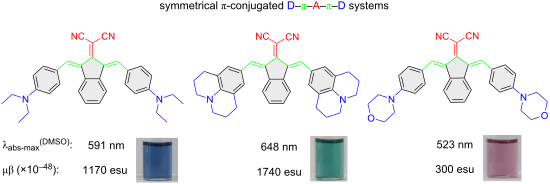
- planar structure, causing more delocalization of the π-electrons between donors and the acceptor (dicyanovinylene) group. The effect of solvent media was investigated with solvents of varying polarities, which showed a bathochromic shift in the absorption maxima with increasing solvent polarity. Dyes


Thiazolidinones: novel insights from microwave synthesis, computational studies, and potentially bioactive hybrids
Beilstein J. Org. Chem. 2025, 21, 2618–2636, doi:10.3762/bjoc.21.203
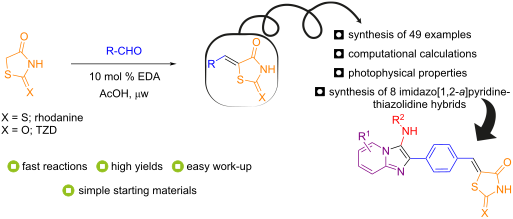
- to 573 nm for compound 3n and from 479 to 524 nm for compound 4n. Therefore, the fluorescence emission spectra demonstrated a clear dependence on solvent polarity and the maximum emission wavelength λem. Thus, a red shift in the emission bands was observed in solvents with higher polarity, indicating


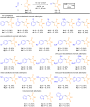


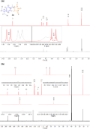


Efficient solid-phase synthesis and structural characterization of segetalins A–H, J and K
Beilstein J. Org. Chem. 2025, 21, 2612–2617, doi:10.3762/bjoc.21.202
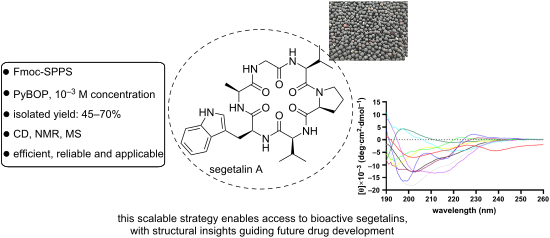
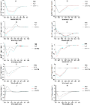
- , demonstrating unequivocal structural identity with the natural isolates. Analytical HPLC confirmed the high purity (>95%) of all synthetic segetalins. However, experimental data for segetalin C revealed the existence of a multi-state conformational equilibrium in solution, which is dependent on solvent polarity
- –220 nm and a maximum below 200 nm. CD spectroscopy revealed that cyclic topology shifts characteristic peaks and stabilizes secondary structures through cooperative ring size/sequence/solvent effects [30]. TFE disrupts the hydrogen-bonding network of water, reduces solvent polarity, and enhances the


The high potential of methyl laurate as a recyclable competitor to conventional toxic solvents in [3 + 2] cycloaddition reactions
Beilstein J. Org. Chem. 2025, 21, 2389–2415, doi:10.3762/bjoc.21.184
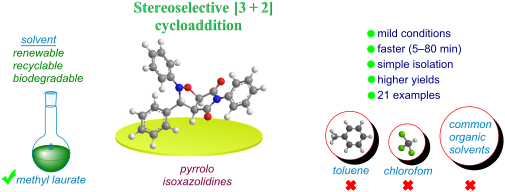
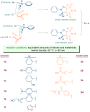
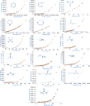
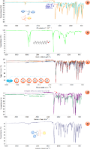
- solvent polarity results in a decrease in rate constants. This phenomenon is attributed to the lower polarity of the transition state in comparison to that of the initial compounds [61]. Furthermore, these methods often require harsh reaction conditions, prolonged reaction times, and laborious
- determine their interaction with other molecules in their environment [103]. It is evident that the dipole moment, a physical parameter which is macroscopic in nature, can be evaluated in order to characterize solvent polarity. The value calculated for methyl laurate is shown in Table S1 in Supporting






Rotaxanes with integrated photoswitches: design principles, functional behavior, and emerging applications
Beilstein J. Org. Chem. 2025, 21, 2345–2366, doi:10.3762/bjoc.21.179

- photoisomerization to the merocyanine (open) form, FRET is activated – even when the macrocycle is relatively distant from the merocyanine – and becomes more pronounced as the donor approaches the acceptor. Moreover, this rotaxane exhibited tunable photoluminescence properties in response to solvent polarity, pH


Pathway economy in cyclization of 1,n-enynes
Beilstein J. Org. Chem. 2025, 21, 2260–2282, doi:10.3762/bjoc.21.173
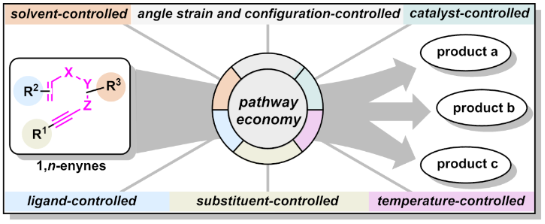
- and co-workers achieved an innovative gold-catalyzed cascade cycloisomerization of 3-allyloxy-1,6-diynes to access cyclopropane- and cyclobutane-fused benzofurans/chromanols (Scheme 5) [12]. In this study, solvent polarity and trace water were identified as key parameters governing the reaction
- modulating reaction parameters – including solvent polarity, catalyst architecture, ligand electronic effects, and substrate strain effects – chemists can achieve unprecedented control over reaction pathways. This approach enables divergent access to complex molecular architectures from a unified substrate


Photoswitches beyond azobenzene: a beginner’s guide
Beilstein J. Org. Chem. 2025, 21, 1808–1853, doi:10.3762/bjoc.21.143
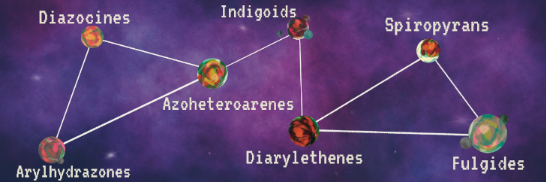
- tautomerism is an intermolecular process that depends not only on the choice of aryl rings and substituents but also on concentration, solvent polarity, and the presence of proton sources [5][15]. In conclusion, the choice of aryl rings, substituents, and substitution position are all crucial to determine the
- side and electron-donating substituents on the other side giving the best performance (Figure 16, left). These peculiar compounds also showed increased stability and red-shift with increasing solvent polarity [87]. Oxidation of the sulphur atom to sulphoxide 69 introduces a sulphur-based stereocentre
- stabilises one of the two isomers via the formation of a hydrogen bond (Scheme 30) [95]. This peculiarity makes this photoswitch class extremely susceptible to solvent polarity [96][97][98], pH [98][99][100][101], and metal coordination [102][103][104]. With such variability, predicting which is the most




Thermodynamic equilibrium between locally excited and charge transfer states in perylene–phenothiazine dyads
Beilstein J. Org. Chem. 2025, 21, 1577–1586, doi:10.3762/bjoc.21.121
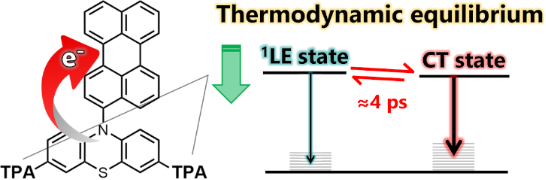
- -carborane exhibit such behavior, where LE and CT states dynamically interconvert depending on solvent polarity and temperature [10][11][12]. When the interconversion is faster than radiative decay, the two states can reach thermodynamic equilibrium, and their relative populations are determined by the
- intensity as the solvent polarity increased, which are typical features of CT states (Figure S22 in Supporting Information File 1). The emission intensity of the CT band was almost comparable to that of the LE band of the Pe moiety in Pe–Ph–PTZ(TPA)2, whereas the emission intensity of the CT band is larger




Azobenzene protonation as a tool for temperature sensing
Beilstein J. Org. Chem. 2025, 21, 1528–1534, doi:10.3762/bjoc.21.115
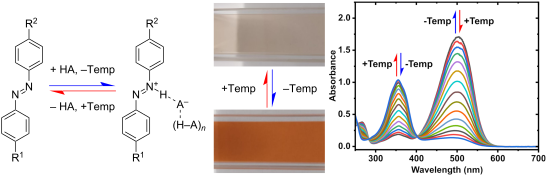
- and solvent polarity, we demonstrate that the degree of protonation, and thus solution color, is highly temperature-dependent, changing from pale yellow to deep red as temperature decreases. We also present mechanistic insights and compare our experimental findings with computational results. Results


Advances in nitrogen-containing helicenes: synthesis, chiroptical properties, and optoelectronic applications
Beilstein J. Org. Chem. 2025, 21, 1422–1453, doi:10.3762/bjoc.21.106
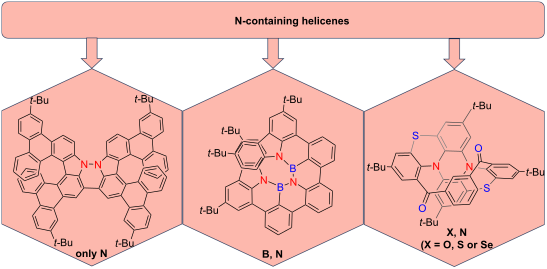
- displays red-shifted emission and prolonged fluorescence lifetimes as solvent polarity increases, indicating enhanced excited-state stabilization. Collectively, these studies offer valuable strategies for stabilizing long π-extended helicenes and finely tuning their chiroptical and emissive properties
- across the visible spectrum, with both emission intensity and chiroptical properties varying in response to solvent polarity. Concurrently, Würthner’s group developed two naphthalimide-annulated [n]helicenes, compounds 56a and 56b (n = 5, 6), via a concise two-step synthetic route that afforded excellent

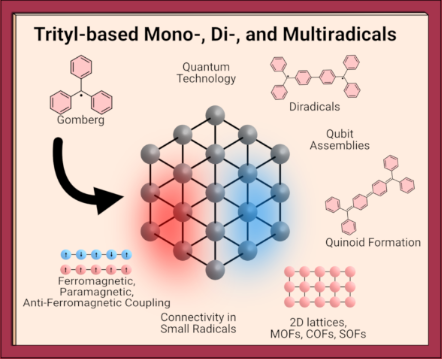
On the photoluminescence in triarylmethyl-centered mono-, di-, and multiradicals
Beilstein J. Org. Chem. 2025, 21, 964–998, doi:10.3762/bjoc.21.80
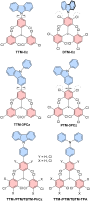
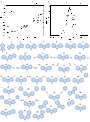
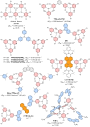
- Thiele radical, and TTH, and TFC are not as sterically congested as PTH. In TTH, the photoluminescence shifts with increasing solvent polarity while the ϕ increases from 69% in cyclohexane (λem = 691 nm) to 83% in chloroform (CHCl3) and 84% in toluene (λem = 716 nm) (see Figure 14a). This shift in the









Recent advances in controllable/divergent synthesis
Beilstein J. Org. Chem. 2025, 21, 890–914, doi:10.3762/bjoc.21.73

- profound influence through multifaceted solute–solvent interactions [5]. Solvent polarity, hydrogen-bonding propensity, and dielectric characteristics collectively orchestrate stereodivergent pathways through dynamic coordination effects and differential stabilization of transition states. Notably, these




Synthesis and characterizations of highly luminescent 5-isopropoxybenzo[rst]pentaphene
Beilstein J. Org. Chem. 2025, 21, 270–276, doi:10.3762/bjoc.21.19
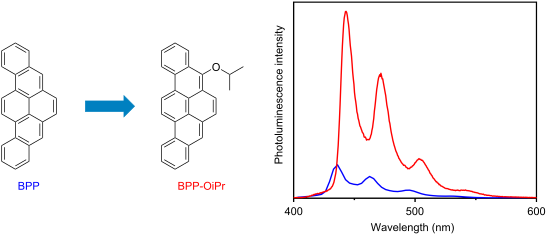
- reaction conditions to selectively obtain BPP-OiPr 3 in 55% yield from dialdehyde 1. Additionally, oxidation of BPP-OiPr 3 provided BPP-dione 4 in 70% yield. The photophysical properties of BPP-OiPr 3 and BPP-dione 4 were carefully studied, examining the solvent-polarity dependence of their optical spectra
- , in comparison with parent BPP 2. Notably, both BPP-OiPr 3 and BPP-dione 4 displayed enhanced PLQYs while a significant solvent-polarity dependence of the emission was observed only for the latter, suggesting the photoinduced intramolecular charge-transfer character of 4. Moreover, BPPs 2–4 formed
- -OiPr 3 and BPP-dione 4, their absorption and emission spectra were next measured in different solvents (Figure 2c and d and Supporting Information File 1, Figures S4 and S5). For BPP-OiPr 3 the well-defined vibronic structures were observed without showing any significant solvent-polarity dependence




Synthesis, characterization, and photophysical properties of novel 9‑phenyl-9-phosphafluorene oxide derivatives
Beilstein J. Org. Chem. 2024, 20, 3299–3305, doi:10.3762/bjoc.20.274
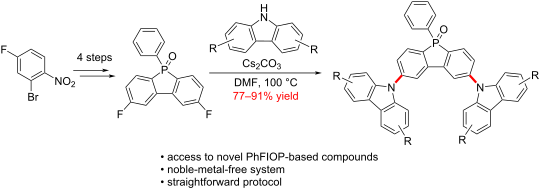
- charge transfer, as indicated by the λmax value of 342 nm. In addition, the effect of solvent polarity on the UV−vis absorption was studied with 7-H (Figure 2b). The spectra show that there is no significant difference in the absorption bands in different solvents, indicating that the polar environment
- induced by the stronger electron-donating feature of the carbazole substituent located on the donor carbazole group. In addition, we tested the emission wavelength of 7-H in different solvents (Figure 3b) and found that the maximum is redshifted gradually with increasing solvent polarity, which indicates




Efficient synthesis of fluorinated triphenylenes with enhanced arene–perfluoroarene interactions in columnar mesophases
Beilstein J. Org. Chem. 2024, 20, 3263–3273, doi:10.3762/bjoc.20.270
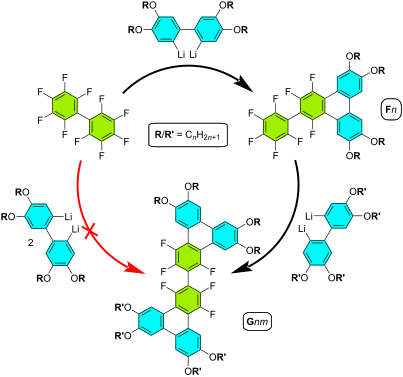
- PH8), with no or little influence of the solvent polarity (Figure 6a). This may suggest that the sigma-bonded F6 and G66 have no conjugation in their ground states, the electron density being located on one triphenylene moiety (see DFT). G66 shows a stronger absorption band than F6, with expected ε
- (λem = 402 nm for PH8) and 460–500 nm for G66, with absolute quantum yields of 30% and 32%, respectively. Further, their fluorescence spectra in solutions show some solvent polarity influence, with a substantial red shift as the solvent polarity is increased. In thin film, the single luminescence




Cyclodextrin-based rotaxanes for polymer materials: challenge on simultaneous realization of inexpensive production and defined structures
Beilstein J. Org. Chem. 2024, 20, 3026–3049, doi:10.3762/bjoc.20.252
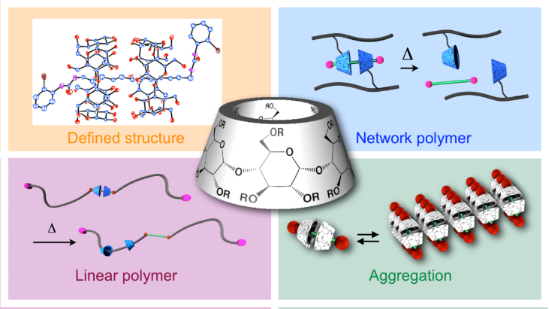
- )rotaxane framework The rotaxane framework is often deployed as a molecular device in which the positional relationship between the axle and wheel is controlled by external stimuli [14][32]. Acid–base, photoisomerization, redox, ion recognition, solvent polarity, or heating treatment is generally used for
- tetrathiafulvalene (TTF) and a triazole ring (Figure 7A) [61]. CD was located around the TTF moiety under neutral conditions; however, it moved to the triazole ring, following TTF oxidization. Meanwhile, the structural control by exploring the solvent polarity was reported by Harada and co-workers using the α-CD






Tunable full-color dual-state (solution and solid) emission of push–pull molecules containing the 1-pyrindane moiety
Beilstein J. Org. Chem. 2024, 20, 3016–3025, doi:10.3762/bjoc.20.251

- ) in tetrachloromethane (CTC) to 588 nm (orange) in formic acid. Therefore, it was found that compound 1c was characterized by a large Stokes shift upon increasing the solvent polarity, which reached 150 nm (5824 cm−1) in formic acid. This was associated with the bathochromic shift of the emission band
- dimethylamino group, were studied (Table 1 and Figure 3). It was found that in most solvents, compound 1i was characterized by a single pronounced absorption maximum in the range of 503–525 nm that red-shifted upon increasing the solvent polarity. In formic acid, due to the protonation of the dimethylamino
- did not occur. In these solvents, a classical pattern for the bathochromic emission shift was observed upon increasing the solvent polarity. Generally, both stilbazoles 1c and 1i were characterized by solvatochromic behavior typical for molecules showing an ICT. A significant long-wavelength shift of


Metal-free double azide addition to strained alkynes of an octadehydrodibenzo[12]annulene derivative with electron-withdrawing substituents
Beilstein J. Org. Chem. 2024, 20, 2234–2241, doi:10.3762/bjoc.20.191
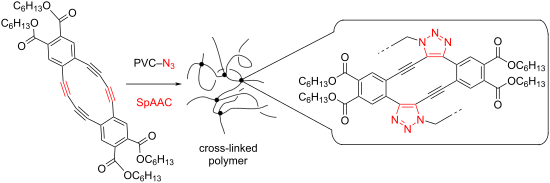
- apparently smaller than those previously reported for the reaction between DBA-OHex and benzyl azide (Table S1 in Supporting Information File 1). However, the Ea values were previously measured in DMSO-d6 and C6D6, and it is known that there is a solvent polarity effect on the reactivity of SpAACs. In order




Structure–property relationships in dicyanopyrazinoquinoxalines and their hydrogen-bonding-capable dihydropyrazinoquinoxalinedione derivatives
Beilstein J. Org. Chem. 2024, 20, 1037–1052, doi:10.3762/bjoc.20.92
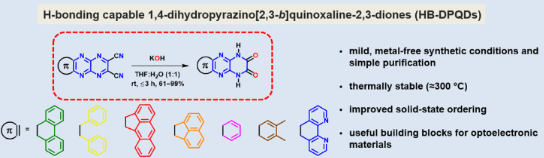
- and aromatic groups as strong donors in the backbone; the dione groups in the case of DPQDs diminish the acceptor properties of the aza π-system. It is worth mentioning that ICT is significantly influenced by solvent polarity and the comprehensive study of solvent effects is not within the scope of




Ligand effects, solvent cooperation, and large kinetic solvent deuterium isotope effects in gold(I)-catalyzed intramolecular alkene hydroamination
Beilstein J. Org. Chem. 2024, 20, 479–496, doi:10.3762/bjoc.20.43
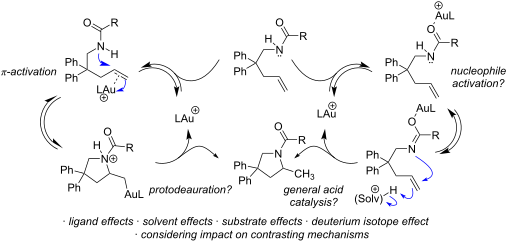
- (first order fit in alkene decay) between THF (ε = 7.6, polarity index = 4.0), methylene chloride (ε = 8.9, polarity index = 3.1), and methanol (ε = 32.7, polarity index = 5.1) despite the large differences in solvent polarity (Table 2, entries 3, 4, and 5; rates in THF and MeOH are only 1–2 times faster







Photochromic derivatives of indigo: historical overview of development, challenges and applications
Beilstein J. Org. Chem. 2024, 20, 228–242, doi:10.3762/bjoc.20.23
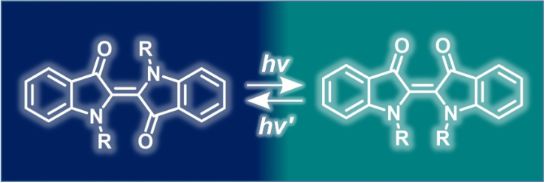
- + cations (500 equiv). At the same time, addition of TBA+ cations showed just a minimal impact on the stability of the Z-form comparable with the effect of counter anions and solvent polarity. In 2021, Tsubaki and co-workers synthesized bridged N,N′-dialkyl-substituted indigos 13 and studied their thermal
- the Z-isomers in comparison with the E-forms [62]. In 2018, Nagasawa and co-workers provided a detailed investigation of the influence of solvent polarity and intermolecular hydrogen bonding on the photoisomerization of N,N'-diacetylindigo (9a) by transient absorption spectroscopy [63]. In principle





Perspectives on push–pull chromophores derived from click-type [2 + 2] cycloaddition–retroelectrocyclization reactions of electron-rich alkynes and electron-deficient alkenes
Beilstein J. Org. Chem. 2024, 20, 125–154, doi:10.3762/bjoc.20.13
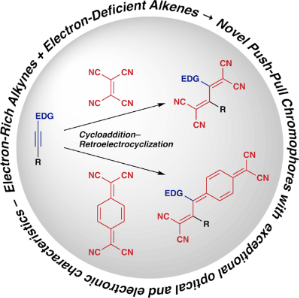
- toluene. This phenomenon aligns with the notion that the TICT states experience stabilization with increasing solvent polarity. Conversely, in contrast to 68–70, and 71, a TCBD derivative 72 incorporating a tetraphenylethylene (TPE) moiety exhibited no emission in toluene, possibly due to the presence of


Using the phospha-Michael reaction for making phosphonium phenolate zwitterions
Beilstein J. Org. Chem. 2024, 20, 41–51, doi:10.3762/bjoc.20.6
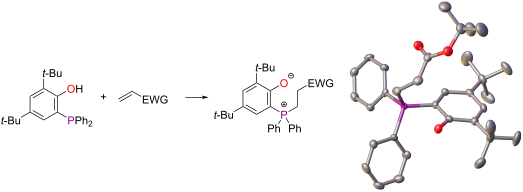
- Michael adduct of acrylamide, and 2h, the Michael adduct of 2-hydroxyethyl acrylate, show blue-shifted absorption maxima of 352 nm and 356 nm, respectively. Upon increasing the solvent polarity by using methanol instead of chloroform, a hypsochromic shift of the absorption maximum occurs (dotted lines in





