Search results
Search for "spacer length" in Full Text gives 19 result(s) in Beilstein Journal of Organic Chemistry.
The role of spacer length and flexibility in peptide self-assembly
Beilstein J. Org. Chem. 2026, 22, 986–996, doi:10.3762/bjoc.22.77
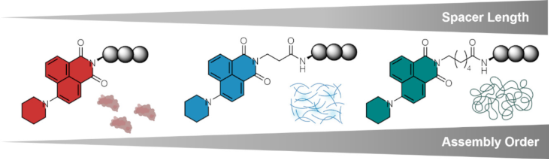
- Julian Link Albin Lahu Manfred Wagner Tanja Weil David Y. W. Ng Max Planck Institute for Polymer Research, Ackermannweg 10, D-55128 Mainz, Germany 10.3762/bjoc.22.77 Abstract Spacer length is a key molecular parameter governing the self-assembly of short peptides. Here, we investigate isoleucine
- -cysteine-alanine (ICA) tripeptides containing carbon spacers of 6, 3, or 0 methylene units linking the peptide backbone to a hydrophobic naphthalene (Nap) π-block. Using complementary spectroscopic and microscopic techniques, we show that spacer length controls the balance between conformational
- flexibility and directional non-covalent interactions, thereby dictating assembly pathways and material properties. The results establish a correlation between spacer length and assembly propensity, with the longest spacer (C6) consistently promoting aggregation more effectively than the intermediate analogue


Preparation of β-cyclodextrin-based dimers with selectively methylated rims and their use for solubilization of tetracene
Beilstein J. Org. Chem. 2022, 18, 1596–1606, doi:10.3762/bjoc.18.170
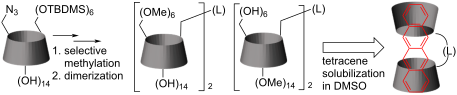
- bonds. The spectrum of 12 clearly belongs to a compound with high symmetry, favoring this interaction and reducing the solubilization efficiency; also, the spacer length might be too short for the "head-to-head" orientation (Figure 6c). Determination of the binding parameters Despite achieving some


Constrained thermoresponsive polymers – new insights into fundamentals and applications
Beilstein J. Org. Chem. 2021, 17, 2123–2163, doi:10.3762/bjoc.17.138
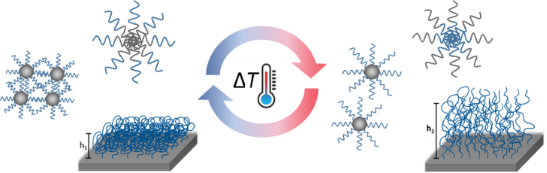
- concentration, ionic strength, as well as the molecular weight and the spacer length between the charges of the monomers [50][51][283][284]. In particular, the influence of salt ions, which trigger a so-called antipolyelectrolyte effect by screening of the zwitterionic charges, was intensively investigated [285



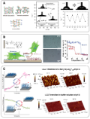
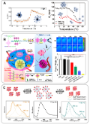
Chemical approaches to discover the full potential of peptide nucleic acids in biomedical applications
Beilstein J. Org. Chem. 2021, 17, 1641–1688, doi:10.3762/bjoc.17.116
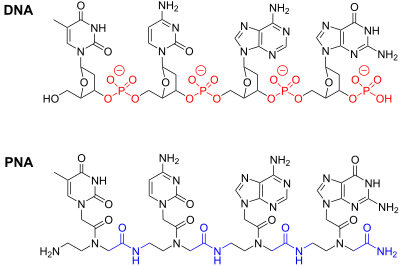


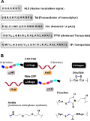






Application of olefin metathesis in the synthesis of functionalized polyhedral oligomeric silsesquioxanes (POSS) and POSS-containing polymeric materials
Beilstein J. Org. Chem. 2019, 15, 310–332, doi:10.3762/bjoc.15.28
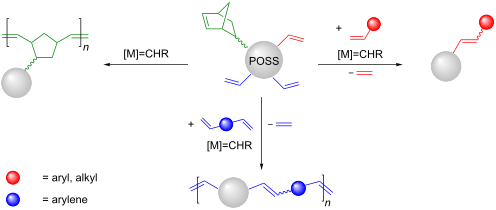
- group, to determine the effect of the spacer length on POSS crystallization ability and the composition dependence of physical properties of the copolymers [49]. A series of homopolymers and random copolymers were synthesized in the presence of third generation Grubbs catalyst Ru-6 in CH2Cl2, at room


Olefin metathesis catalysts embedded in β-barrel proteins: creating artificial metalloproteins for olefin metathesis
Beilstein J. Org. Chem. 2018, 14, 2861–2871, doi:10.3762/bjoc.14.265
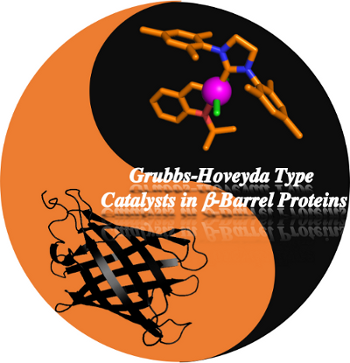
- cavity. During this study, already a hint at the importance of the spacer length became apparent. A short spacer between the GH-type catalyst (Ru-1) and the biotin moiety did not lead to a successful conversion of the substrate. Elongation of the spacer (Ru-2) and therefore moving the active site


Glyco-gold nanoparticles: synthesis and applications
Beilstein J. Org. Chem. 2017, 13, 1008–1021, doi:10.3762/bjoc.13.100
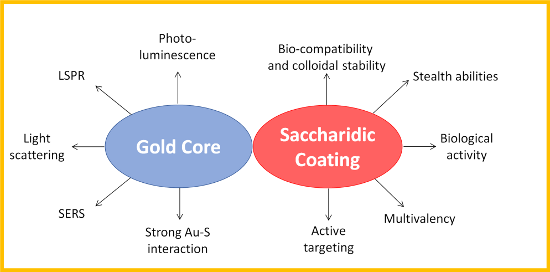
- toward P-selectin was affected not only by the spacer length but also by the presence of amide bonds next to the protein pocket [51]. Saccharidic functionalization: colloidal and stealth ability GAuNP colloidal stability and stealth abilities in biological media and in intracellular environment is a


Supramolecular frameworks based on [60]fullerene hexakisadducts
Beilstein J. Org. Chem. 2017, 13, 1–9, doi:10.3762/bjoc.13.1
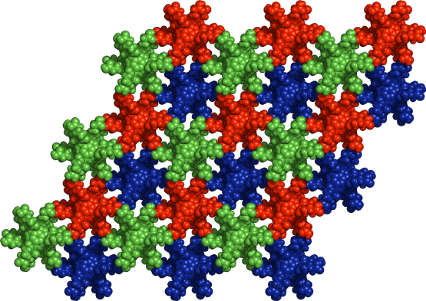
- the spacer length, the solvent-filled pore systems in the solid-state structures have been tuned and structural features such as porosity of the materials have been investigated by PXRD, TGA analysis and sorption studies. Results and Discussion Recently, we reported on the synthesis and solid-state
- distances between the molecules depending on the spacer length and the mode of cross-linking. For HFF-1 (hydrogen-bonded fullerene framework) derived from C2, a densely packed structure is observed possessing only very small cavities within the octahedral sites of the fcc packing filled with one CH2Cl2


Artificial Diels–Alderase based on the transmembrane protein FhuA
Beilstein J. Org. Chem. 2016, 12, 1314–1321, doi:10.3762/bjoc.12.124
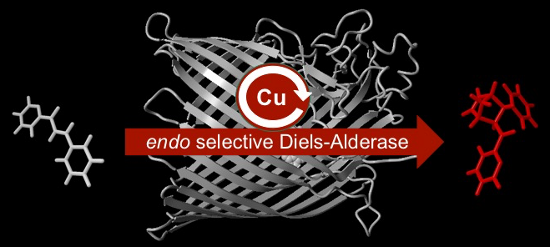
- . Copper(II) was attached by coordination to a terpyridyl ligand. The spacer length was varied in the back of the ligand framework. These biohybrid catalysts were shown to be active in the Diels–Alder reaction of a chalcone derivative with cyclopentadiene to preferentially give the endo product. Keywords
- of the spacer length (Table 1, entry 11–13). The refolded biohybrid catalysts 17 and 19 showed good conversion with almost quantitative endo product formation (Table 1, entries 14 and 16). Catalyst 18 with the longest spacer unit, however, showed moderate activity and loss of endo selectivity. This


Synthesis of photoresponsive cholesterol-based azobenzene organogels: dependence on different spacer lengths
Beilstein J. Org. Chem. 2015, 11, 1089–1095, doi:10.3762/bjoc.11.122
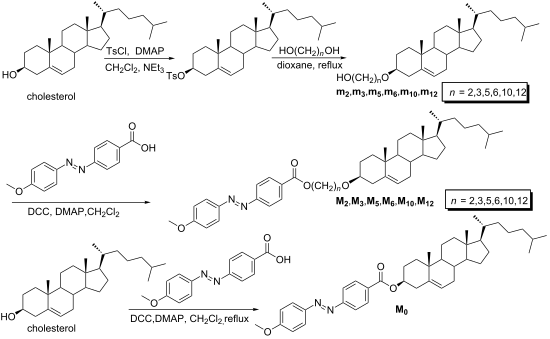
- relationship between the spacer length and the gelation ability of gelators. Herein we synthesized a series of compounds with different spacers between cholesteryl and azobenene units (Scheme 1). In these compounds, M6 is the only one that can gelate in ethanol, isopropanol and 1-butanol. It is found that
- compounds examined, M6 is the only one that forms a gel in ethanol, 1-butanol and isopropanol, while the other compounds cannot gelate in any solvent. Generally speaking, the gels were formed by a heating and cooling cycle process. Examination of the data shown in the table reveals that the change of spacer
- length in the molecular skeleton has a significant effect on the gelation abilities of the compounds. To investigate the photoresponsiveness of the three gels, we performed the photoirradiation of gels using a UV lamp. The formed gels at room temperature were in an opaque state. Furthermore, the gels


Multivalency as a chemical organization and action principle
Beilstein J. Org. Chem. 2015, 11, 848–849, doi:10.3762/bjoc.11.94
- supramolecular designer systems [4][5]. The influence of spacer length and flexibility on the binding affinity of ligands [6] will be examined as well as the mechanical stability of complexes [7]. Furthermore, the Thematic Series covers the synthesis of various new glycoarchitectures for multivalent interactions

Influence of length and flexibility of spacers on the binding affinity of divalent ligands
Beilstein J. Org. Chem. 2015, 11, 804–816, doi:10.3762/bjoc.11.90
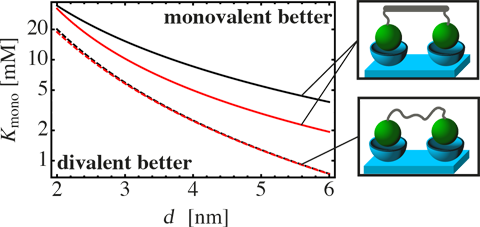
- value is derived. We find that a divalent ligand has the potential to bind more efficiently than its monovalent counterpart only, if the monovalent dissociation constant is lower than a critical value. This critical monovalent dissociation constant depends on the ligand-spacer length and flexibility as
- well as on the size of the receptor. Regarding the optimal ligand-spacer length and flexibility, we find that the average spacer length should be equal or slightly smaller than the distance between the receptor binding pockets and that the end-to-end spacer length fluctuations should be in the same
- different persistence lengths lp. The flexible spacer (lp = 1 nm) exhibits a maximum at d = 0. Furthermore, the distribution is very broad, indicating that a flexible spacer can easily bridge two binding pockets, even if the spacer length does not exactly match the inter binding pocket distance d. For a



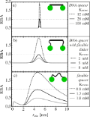

![[Graphic 33]](/bjoc/content/inline/1860-5397-11-90-i83.png?max-width=637&scale=1.18182) is shown for different ligand–spacer constructs. If the monovalent dissociatio...
is shown for different ligand–spacer constructs. If the monovalent dissociatio...
Synthesis of the first examples of iminosugar clusters based on cyclopeptoid cores
Beilstein J. Org. Chem. 2014, 10, 1406–1412, doi:10.3762/bjoc.10.144
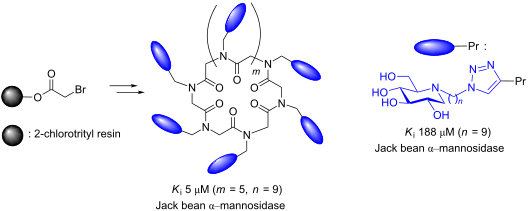
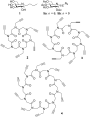
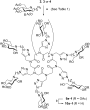
- , the best result being obtained with 10-valent DNJ cluster 10f with a C9 linker (rp/n ~ 4). However, the binding enhancements were found to be 2- to 31-fold lower than the ones observed with the related 7-valent DNJ clusters 12 with identical alkyl spacer length but a different core (β-cyclodextrin




Triphenylene discotic liquid crystal trimers synthesized by Co2(CO)8-catalyzed terminal alkyne [2 + 2 + 2] cycloaddition
Beilstein J. Org. Chem. 2013, 9, 2852–2861, doi:10.3762/bjoc.9.321
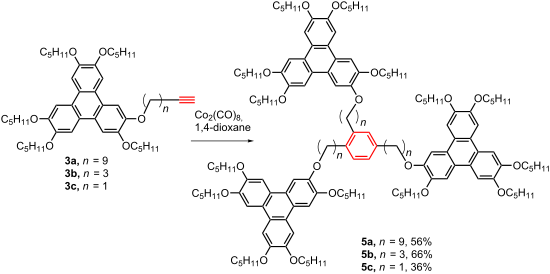
- 3.57Å than that of 5b and 5c, due to the stronger π–π interactions between the triphenylene discogens with mono-ester group. The columnar parameter values of the trimers decreased with the spacer length shortened. So we deduced that the benzene cores were among the alkyl chains in the columnar stacking
- alkyne [2 + 2 + 2] cycloaddition reaction in moderate yields. Three of the four 1,2,4-trisubstituted benzene-cored discotic trimers have shown stable Colho and Colro mesophases and wide mesophase ranges including room temperature. The connecting linker group to the triphenylene and the spacer length to


Liquid-crystalline heterodimesogens and ABA-heterotrimesogens comprising a bent 3,5-diphenyl-1,2,4-oxadiazole central unit
Beilstein J. Org. Chem. 2012, 8, 472–485, doi:10.3762/bjoc.8.54
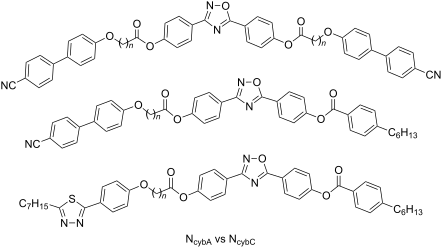
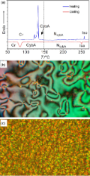
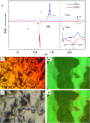
- the segmental motions of the two interconnected mesogenic units, and hence these chains are also assigned as spacers. The properties of these dimesogens strongly depend on the topology of connection [11], the spacer length and spacer parity, resulting in linear and bent [1][3], T-shaped [12][13][14
- -hexyl tail at the other, exhibit enantiotropic CybA–N phase sequences. Similar to the trimesogens CB-Ox-CB/n, a strong influence of spacer length and spacer parity on the phase-transition temperatures for these dimesogens is also observed. The shorter compound CB-Ox/3 with even-numbered spacer (O(CH2
- aliphatic spacer unit was previously observed for dimesogens combining two rod-like segments [3][4][83]. As a general rule, for this type of dimesogen the terminal chains must be longer than half the spacer length to form smectic phases [3][4]. According to this rule, the formation of smectic phases should




Synthesis and mesomorphic properties of calamitic malonates and cyanoacetates tethered to 4-cyanobiphenyls
Beilstein J. Org. Chem. 2012, 8, 371–378, doi:10.3762/bjoc.8.40
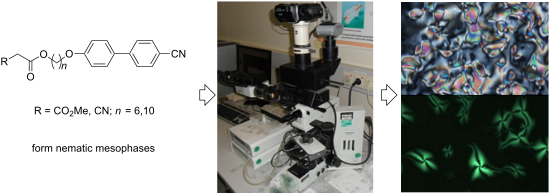
- liquid-crystalline phase, but melted without decomposition into isotropic liquids. It was observed that the melting points increased with an increase of the spacer length between 4-cyanobiphenyl and ester groups. Thus, melting points were recorded at 49.1 °C/63.4 °C for the series of 11a/11b and at 89.0


Molecular recognition of organic ammonium ions in solution using synthetic receptors
Beilstein J. Org. Chem. 2010, 6, No. 32, doi:10.3762/bjoc.6.32
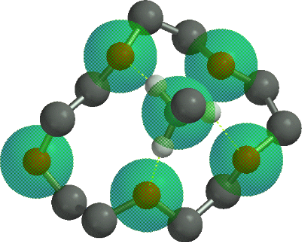
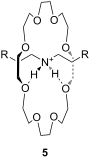
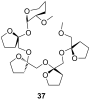
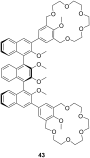
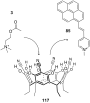
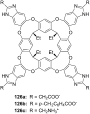
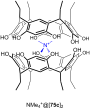
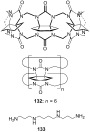
- compared to other systems investigated in homogeneous solutions. Surprisingly, despite the difference in crown ether spacer length in the Voyer’s and Fuji’s systems, both preferentially bind 1,9-diaminononane. To match the distance of the phenolphthalein system, the CEAA units must be connected directly












































Synthesis of lipophilic 1-deoxygalactonojirimycin derivatives as D-galactosidase inhibitors
Beilstein J. Org. Chem. 2010, 6, No. 21, doi:10.3762/bjoc.6.21
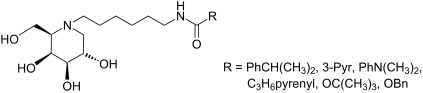
- free amine at the terminus of the C6 alkyl chain in compound 15, which is anchored to the ring nitrogen of 1-deoxygalactonojirimycin, to yield derivatives 16–19 and 22. The spacer length of six carbon units has been proven suitable for enzyme recognition in previous studies [25] and was kept constant


Low temperature enantiotropic nematic phases from V-shaped, shape-persistent molecules
Beilstein J. Org. Chem. 2009, 5, No. 73, doi:10.3762/bjoc.5.73
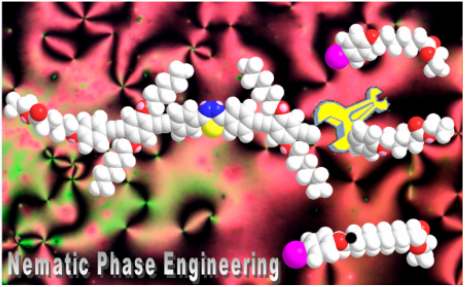
- the molecular long axis, on which the different spacer length should have the largest impact, remain constant between 9 and 10 Å. The latter can be rationalised when the electron-poor thiadiazole units interact with the electron-rich 2,5-dialkyloxybenzenes of an antiparallel aligned mesogen. As