


Search results
Search for "supramolecular chemistry" in Full Text gives 228 result(s) in Beilstein Journal of Organic Chemistry. Showing first 200.
The role of spacer length and flexibility in peptide self-assembly
Beilstein J. Org. Chem. 2026, 22, 986–996, doi:10.3762/bjoc.22.77
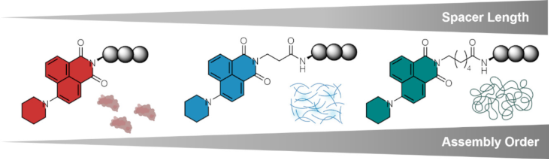
- -assembly; spacer length; Introduction Short self-assembling peptides are an eminent class of materials used in supramolecular chemistry due to their advantageous properties such as facile synthesis, programmable molecular information [1][2][3][4], structural diversity [5][6], biocompatibility [7][8][9


Novel macrocycles: from synthesis to supramolecular function
Beilstein J. Org. Chem. 2026, 22, 982–985, doi:10.3762/bjoc.22.76
- ), Passeig Lluís Companys 23, 08010 Barcelona, Spain 10.3762/bjoc.22.76 Keywords: macrocycles; supramolecular chemistry, supramolecular function; In supramolecular chemistry [1], macrocycles have long occupied a central position because of their ability to emulate the fundamental characteristics of
Molecular tweezer–peptide conjugates disrupt the protein–protein interaction between survivin and histone H3 essential in mitosis
Beilstein J. Org. Chem. 2026, 22, 557–567, doi:10.3762/bjoc.22.41
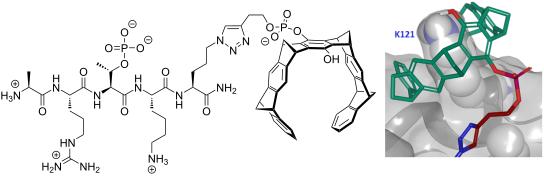
- , IV and TS gratefully acknowledge financial support by the Deutsche Forschungsgemeinschaft DFG to the Collaborative Research Centre CRC 1093 (Supramolecular Chemistry on Proteins).




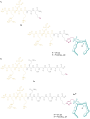
Synthesis and uranyl(VI) extraction performance of a calix[4]pyrrole–tetrahydroxamic acid receptor
Beilstein J. Org. Chem. 2026, 22, 486–494, doi:10.3762/bjoc.22.36
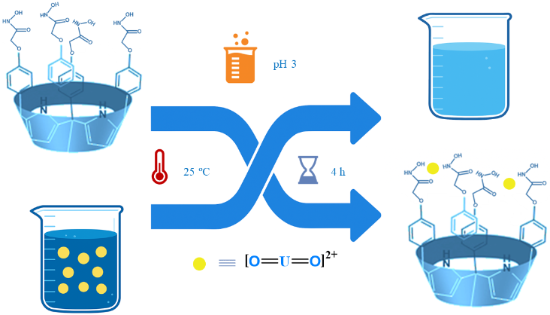
- supramolecular material for the removal of uranyl from aqueous media. Keywords: gamma spectroscopy; hydroxamic acid; phenoxycalix[4]pyrrole; solid–liquid extraction; uranyl(VI) extraction; Introduction Over the past few decades, supramolecular chemistry has advanced intensively establishing itself as a central


Cone p-aminocalix[4]arenes enriched with ‘clickable’ alkyne or azide functionalities
Beilstein J. Org. Chem. 2026, 22, 399–415, doi:10.3762/bjoc.22.28
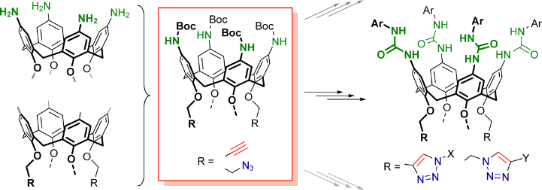
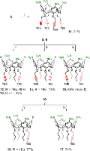
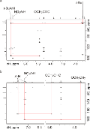
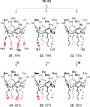
- thermodynamic and kinetic stability of the capsules and the guest exchange processes [55][56][57][58][59][60]. This has made dimerization of tetraureacalix[4]arenes one of the most explored self-organization processes in calixarene supramolecular chemistry, which has been used in the template synthesis of






Silica gel with covalently attached bambusuril macrocycle for dicyanoaurate sorption from water
Beilstein J. Org. Chem. 2025, 21, 2604–2611, doi:10.3762/bjoc.21.201
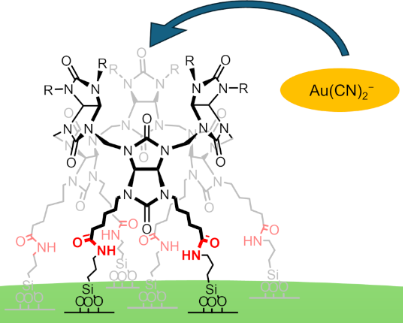
- [10]. Although synthetic anion receptors have attracted increasing attention in the field of supramolecular chemistry, there are still relatively few reports of materials that employ macrocyclic receptors to recognize and selectively bind anionic species specifically in aqueous environments. For


Conformational effects on iodide binding: a comparative study of flexible and rigid carbazole macrocyclic analogs
Beilstein J. Org. Chem. 2025, 21, 2369–2375, doi:10.3762/bjoc.21.181
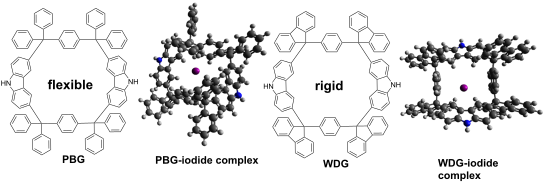
- ; carbazole macrocycles; conformational selection; induced-fit; supramolecular chemistry; Introduction Macrocyclic compounds have garnered significant attention in supramolecular chemistry and anion recognition owing to their tunable cavity geometries and binding capabilities [1][2][3][4][5][6][7][8



Research progress on calixarene/pillararene-based controlled drug release systems
Beilstein J. Org. Chem. 2025, 21, 1757–1785, doi:10.3762/bjoc.21.139
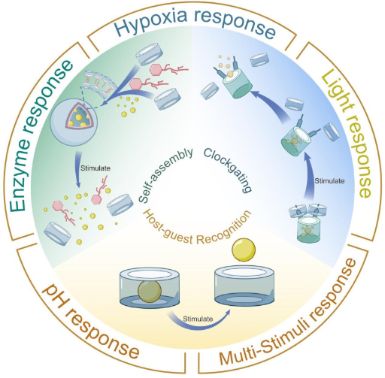
- of controlled-release technologies, with the aim of offering a reference for the utilization of aromatic macrocycles in drug-controlled release applications. Keywords: aromatic macrocycle; controlled-release drug delivery systems; stimulus response; supramolecular chemistry; Introduction Drugs are
- . Supramolecular chemistry, with molecular recognition at its core [17], utilizes non-covalent interactions such as electrostatic interactions, hydrogen bonding [18], and hydrophobic effects to provide valuable tools for developing new biomaterials and drug delivery systems [18][19][20][21][22]. This article
- categorizes supramolecular chemistry-based drug-controlled release systems into the following three mechanisms: (1) Drugs are identified and combined with supramolecular hosts through host–guest interactions [23][24][25][26][27][28]. By adjusting the conditions surrounding the guest molecules, such as changes






3,3'-Linked BINOL macrocycles: optimized synthesis of crown ethers featuring one or two BINOL units
Beilstein J. Org. Chem. 2025, 21, 1719–1729, doi:10.3762/bjoc.21.134
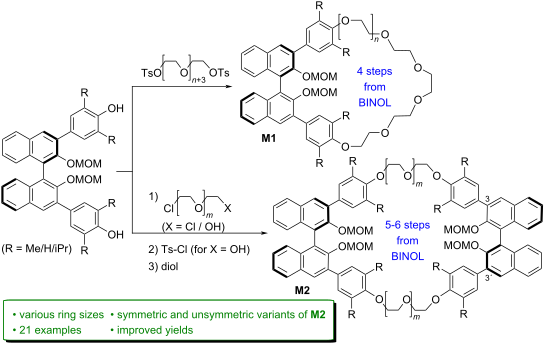
- ). Keywords: BINOL; chirality; crown ethers; macrocycles; supramolecular chemistry; Introduction Crown ethers are at the heart of supramolecular chemistry [1]. Ever since their discovery in 1960, a vast number of different crown ethers has been synthesized and their interactions with guest molecules have
- been studied. The pioneering works in this area by Cram, Lehn and Pedersen marked the beginning of modern supramolecular chemistry and were honoured with the Nobel Prize in Chemistry in 1987 [2][3][4]. Soon, it was realized that chiral crown ethers are highly promising host molecules for


On the aromaticity and photophysics of 1-arylbenzo[a]imidazo[5,1,2-cd]indolizines as bicolor fluorescent molecules for barium tagging in the study of double-beta decay of 136Xe
Beilstein J. Org. Chem. 2025, 21, 1627–1638, doi:10.3762/bjoc.21.126
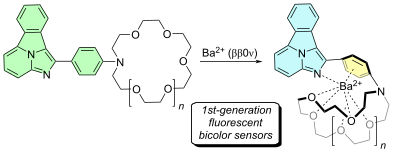
- behavior in the emission spectra. Indeed, initial experiments were successful. However, we observed that translation of the behavior of these FBIs from supramolecular chemistry to solid–gas interfaces raises important issues in terms of both discrimination between free and chelated states and photophysical


Gold extraction at the molecular level using α- and β-cyclodextrins
Beilstein J. Org. Chem. 2025, 21, 1116–1125, doi:10.3762/bjoc.21.89
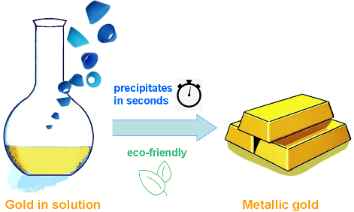
- , which still depends solely on the highly pollutant cyanide leaching process. An emerging strategy for gold recovery is through supramolecular chemistry, with studies indicating that macrocycles such as 18-crown-6 [23], cucurbit[6]uril [24], cucurbit[8]uril [25], and cyclodextrins can isolate gold with


Supramolecular assembly of hypervalent iodine macrocycles and alkali metals
Beilstein J. Org. Chem. 2025, 21, 1095–1103, doi:10.3762/bjoc.21.87
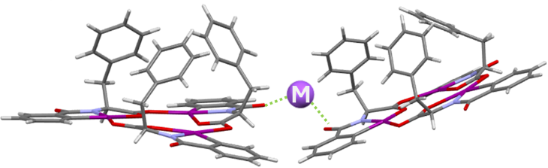
- are presented. Keywords: hypervalent iodine; macrocycle; metal coordination; supramolecular; Introduction Supramolecular chemistry is emerging as a pivotal area of research in both medicinal and materials chemistry that opens the avenue for new functionalized materials for their use in medical


Dicarboxylate recognition based on ultracycle hosts through cooperative hydrogen bonding and anion–π interactions
Beilstein J. Org. Chem. 2025, 21, 884–889, doi:10.3762/bjoc.21.72
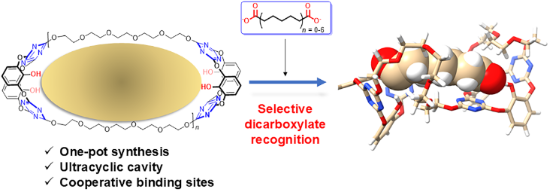
- Sciences, Beijing 100049, China 10.3762/bjoc.21.72 Abstract The efficient binding of dicarboxylates represents an important yet challenging issue in supramolecular chemistry. In this study, we designed functional ultracycles as hosts to accommodate large organic dicarboxylate anions. These ultracycles


Unraveling cooperative interactions between complexed ions in dual-host strategy for cesium salt separation
Beilstein J. Org. Chem. 2025, 21, 845–853, doi:10.3762/bjoc.21.68

- separation [4][5][6][7][8]. Building on the extensive research into anion and cation receptors within the realm of supramolecular chemistry [9][10][11][12], numerous heteroditopic ion-pair receptors have been elaborately developed [13][14][15]. These receptors, consisting of binding sites for both anions and


Carbon-rich materials: from polyaromatic molecules to fullerenes and other carbon allotropes
Beilstein J. Org. Chem. 2025, 21, 798–799, doi:10.3762/bjoc.21.62
- chemistry, computational chemistry, physics, electrochemistry, polymer chemistry, supramolecular chemistry, and biochemistry. All are working on fascinating topics associated with these exciting molecules. Furthermore, the authors come from all over the world, not only from Switzerland and Japan but also
Acyclic cucurbit[n]uril bearing alkyl sulfate ionic groups
Beilstein J. Org. Chem. 2025, 21, 717–726, doi:10.3762/bjoc.21.55
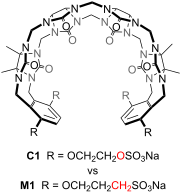
- supramolecular chemistry involves the synthesis of macrocyclic hosts and studies of their molecular recognition properties. The most widely studied macrocyclic host systems include those created entirely by covalent bonds (crown ethers, cyclodextrins, calixarenes, cyclophanes, pillararenes, cucurbit[n]urils (CB




Asymmetric synthesis of β-amino cyanoesters with contiguous tetrasubstituted carbon centers by halogen-bonding catalysis with chiral halonium salt
Beilstein J. Org. Chem. 2025, 21, 547–555, doi:10.3762/bjoc.21.43
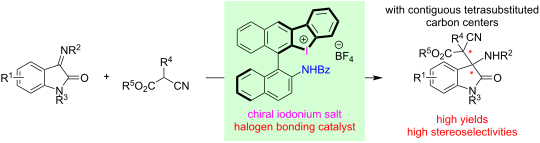
- organic chemistry [2][3][4][5], organocatalysis [6][7], metal catalysis [8][9], biochemistry [10][11], materials science [12][13], and supramolecular chemistry [14][15], although its successful application to asymmetric catalysis has been limited (Figure 1) [16][17][18][19][20]. In 2018, Arai and co


Beyond symmetric self-assembly and effective molarity: unlocking functional enzyme mimics with robust organic cages
Beilstein J. Org. Chem. 2025, 21, 421–443, doi:10.3762/bjoc.21.30
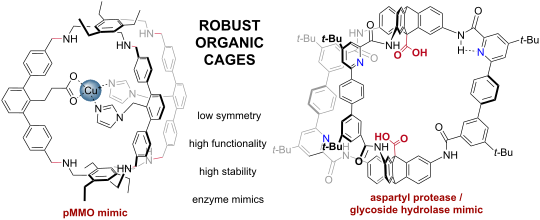
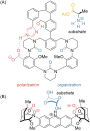
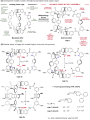
- polarization (enthalpic) (Figure 1). Organization, the control of the position(s) and orientation(s) of reacting molecules, has been achieved historically in supramolecular chemistry using “pre-organized” catalyst designs (vide infra). More recently, organization has been mooted by List as a unifying concept




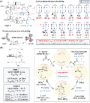
Hydrogen-bonded macrocycle-mediated dimerization for orthogonal supramolecular polymerization
Beilstein J. Org. Chem. 2025, 21, 179–188, doi:10.3762/bjoc.21.10
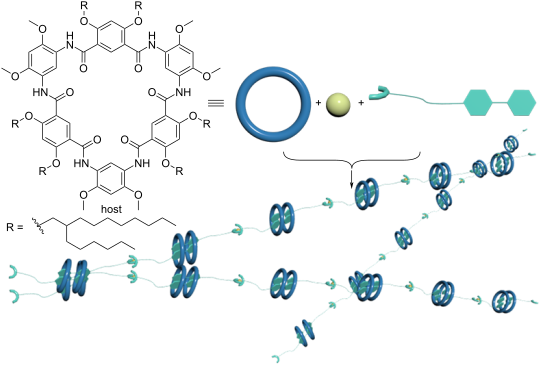
- materials. Keywords: hydrogen-bonded macrocycle; orthogonal self-assembly; shape-persistent; supramolecular polymer; Introduction Host–guest interactions, particularly those involving macrocycles as hosts [1], have found a myriad of applications in supramolecular chemistry [2][3][4] owing to their ability
- that by applying the design rules commonly known for metallosupramolecular polymers and macrocycle-mediated dimerization to supramolecular chemistry, we would be able to generate supramolecular polymers with this heterodifunctional monomer, with one end comprising two macrocycles and the other end



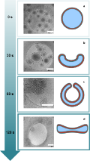
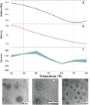
Hot shape transformation: the role of PSar dehydration in stomatocyte morphogenesis
Beilstein J. Org. Chem. 2025, 21, 47–54, doi:10.3762/bjoc.21.5
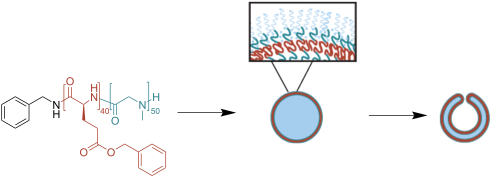
- glutamate); polysarcosine; shape transformation; stomatocyte; supramolecular chemistry; Introduction Polymeric vesicles represent a promising candidate for usage in drug delivery systems due to their facile assembly and ability to provide a stable soft interface. Among these materials, polyethylene glycol


Synthesis of acenaphthylene-fused heteroarenes and polyoxygenated benzo[j]fluoranthenes via a Pd-catalyzed Suzuki–Miyaura/C–H arylation cascade
Beilstein J. Org. Chem. 2024, 20, 3290–3298, doi:10.3762/bjoc.20.273
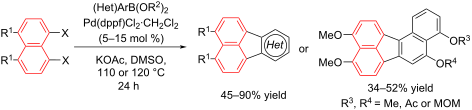
- focus of extensive research within the past two decades due to their interesting structural features, attractive photophysical properties, and diverse applications [2]. Indeed, fluoranthenes are particularly useful in supramolecular chemistry, organic electronics, and materials science [3] as


Advances in the use of metal-free tetrapyrrolic macrocycles as catalysts
Beilstein J. Org. Chem. 2024, 20, 3085–3112, doi:10.3762/bjoc.20.257
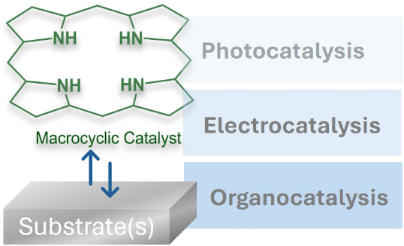
- , porphyrins and corroles, which are structurally related to porphyrins. Calix[4]pyrroles are versatile receptors in supramolecular chemistry while porphyrins are considered as ‘pigment of life’ due to their role in vital biological processes. Beyond their natural functions, synthetic porphyrins have been
- conformational flexibility, allowing them to adopt four key conformations: 1,3-alternate, cone, partial cone, and 1,2-alternate [1][2]. Calix[4]pyrroles are one of the most studied hosts in supramolecular chemistry, finding use in applications of molecular recognition and extraction, drug delivery, ion transport
- metal-free porphyrins. 1.1 Calix[4]pyrrole macrocycles as organocatalysts Calix[4]pyrroles act as versatile ligands in supramolecular chemistry and have been widely studied as binding hosts for various guests such as anions, ion pairs, or neutral compounds [4][30][31], ligands for p-block elements, as


HFIP as a versatile solvent in resorcin[n]arene synthesis
Beilstein J. Org. Chem. 2024, 20, 2469–2475, doi:10.3762/bjoc.20.211
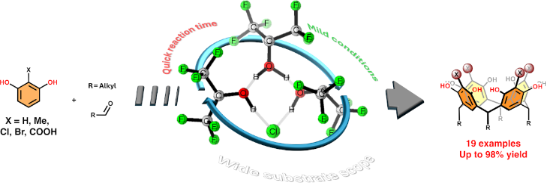
- ], Szumna [37][38][39], Reinhoudt [40][41], Konishi [42][43][44], Tiefenbacher [45][46][47][48][49][50][51][52], Strongin [53][54][55] among others. The wide-ranging popularity of resorcin[n]arenes is rooted in the numerous applications these compounds have in supramolecular chemistry, e.g., catalysis and
- reported herein may impact the synthesis of other macrocyclic arene species, e.g., calix[n]arenes, calix[4]pyrroles, pillar[n]arenes, and cucurbit[n]urils [90][91][92]. Perspective Supramolecular chemistry is a mature field that has crossed boundaries into many other scientific areas. However, the work


Synthesis and conformational analysis of pyran inter-halide analogues of ᴅ-talose
Beilstein J. Org. Chem. 2024, 20, 2442–2454, doi:10.3762/bjoc.20.208
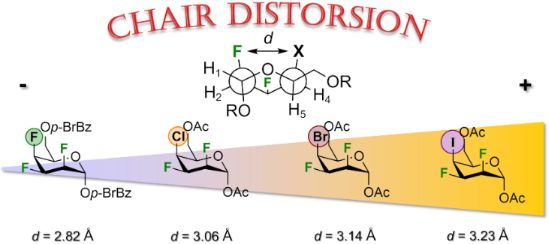
- , this study should be of general interest in the understanding of weak interactions that are now important to so many areas of chemistry, such as crystal engineering and supramolecular chemistry. Synthesis of trihalogenated pyrans: a) Chiron approach to multivicinal inter-halide derived from


Novel truxene-based dipyrromethanes (DPMs): synthesis, spectroscopic characterization and photophysical properties
Beilstein J. Org. Chem. 2024, 20, 2163–2170, doi:10.3762/bjoc.20.186
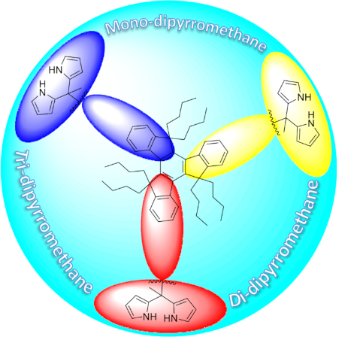
- potential applications in the arena of supramolecular chemistry in general, sensing, molecular recognition and self-assembly in particular in has yet to be explored. Moreover, applications of the truxene derivatives in catalysis are also scared, and needs to be advanced in future research. Experimental





