Search results
Search for "NEGF" in Full Text gives 26 result(s) in Beilstein Journal of Nanotechnology.
Electron transport through nanoscale multilayer graphene and hexagonal boron nitride junctions
Beilstein J. Nanotechnol. 2025, 16, 2132–2143, doi:10.3762/bjnano.16.147
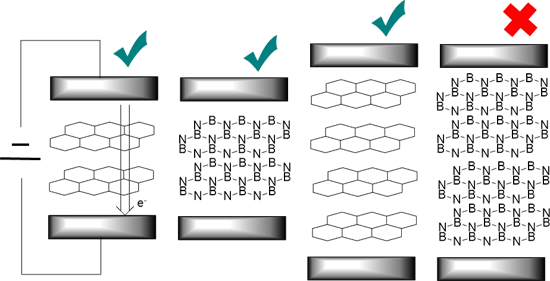
- Aleksandar Staykov Takaya Fujisaki International Institute for Carbon Neutral Energy Research (WPI-I2CNER), Kyushu University, Japan Faculty of Materials for Energy, Shimane University, Japan 10.3762/bjnano.16.147 Abstract In this study, we employ the non-equilibrium Green’s function (NEGF
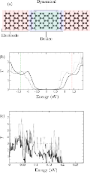
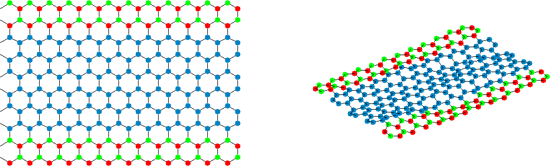
- enabled us to extrapolate trends for electron transport in thicker multilayer carbon and h-BN materials. Keywords: NEGF; DFT; nano-junction; Introduction Multilayer graphene nanomaterials exhibit interesting electronic properties and find application in battery electrode materials [1], electrocatalysis
- layers of h-BN with convergence at four layers to the bulk values [24]. Electron transport through two layers of graphene and h-BN was investigated with the non-equilibrium Green’s function (NEGF) method combined with DFT [25]. The results show similar tunneling currents for graphene and h-BN. This work


Quantum-to-classical modeling of monolayer Ge2Se2 and its application in photovoltaic devices
Beilstein J. Nanotechnol. 2024, 15, 1153–1169, doi:10.3762/bjnano.15.94
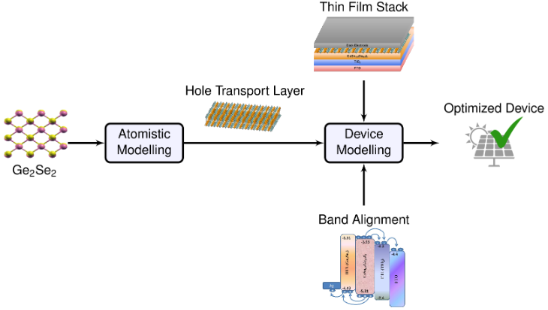
- ground-state eigenvalues is described below. Extraction of optical properties To explore the optical properties, including dielectric constant, refractive index, absorption constant, extinction coefficient, and susceptibility for monolayer Ge2Se2, we employed the non-equilibrium Green’s function (NEGF
- with DFT-post processing; (b) calculation of the optical behavior based on the non-equilibrium Green’s function (NEGF) and the Kubo–Greenwood approaches. Fifth step – device design, simulation, and optimization: After proper band alignment and suitable material choices for the transport and active




Modeling a multiple-chain emeraldine gas sensor for NH3 and NO2 detection
Beilstein J. Nanotechnol. 2022, 13, 721–729, doi:10.3762/bjnano.13.64
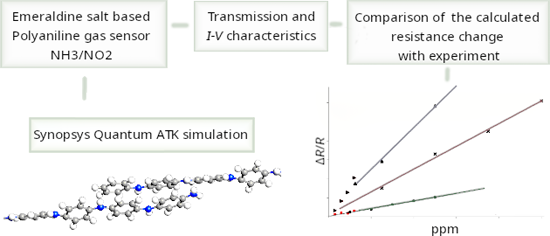
- used the non-equilibrium Green’s functions formalism (NEGF), and the results were compared with the experiments of Kroutil et al. [7] and Posta and co-workers [13]. Theoretical Study Since this article is a continuation to [12], the methods are similar and the computation for this work was carried out
- extended Hückel method [15]. It is a fast computation method with very good results for the polyaniline system. This method was used for this paper, too. Computation of the device was performed using NEGF and the extended Hückel method [15] to obtain the transmission of the device system, resulting in the
- supposed to be in a Cartesian system. The distance between electrodes lies along the z-axis and the direction from z to −∞ is defined as “left”. Likewise, the direction from z to +∞ is defined as “right”. Now, the left density matrix contribution is calculated using NEGF [16]: and the contribution of the


A new photodetector structure based on graphene nanomeshes: an ab initio study
Beilstein J. Nanotechnol. 2020, 11, 1036–1044, doi:10.3762/bjnano.11.88
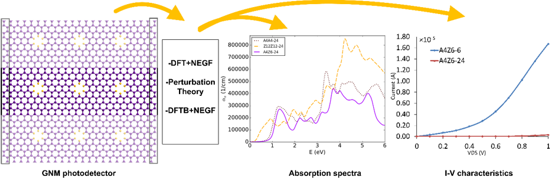
- electronic and optical characteristics of various GNM structures. To investigate the device-level properties of GNMs, their current–voltage characteristics are explored by DFT-based tight-binding (DFTB) in combination with non-equilibrium Green’s function (NEGF) methods. Band structure analysis shows that
- and attach two electrodes to them. Then, we calculate dark current and photocurrent of each structure. The DFTB+NEGF approach is used to calculate the dark current of devices, and for the calculations of the photocurrent, we use first-order perturbation theory in the framework of the Born
- graphene materials, including GNRs and GNMs, and compare the results. Due to a large number of atoms in the devices that make the calculations costly, we use the DFTB+NEGF approach to facilitate and maintain the accuracy of the transport calculations. To show the accuracy of the DFTB method compared with


Effect of substitutional defects on resonant tunneling diodes based on armchair graphene and boron nitride nanoribbons lateral heterojunctions
Beilstein J. Nanotechnol. 2020, 11, 688–694, doi:10.3762/bjnano.11.56
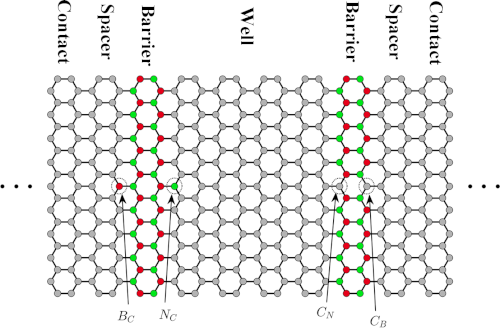
- heterojunction; armchair boron nitride nanoribbon (ABNNR); armchair graphene nanoribbon (AGNR); negative differential resistance (NDR); nonequilibrium Green’s function (NEGF); resonant tunneling diode (RTD); substitutional defects; Introduction 2D materials have gained tremendous research interest due to the



First principles modeling of pure black phosphorus devices under pressure
Beilstein J. Nanotechnol. 2019, 10, 1943–1951, doi:10.3762/bjnano.10.190
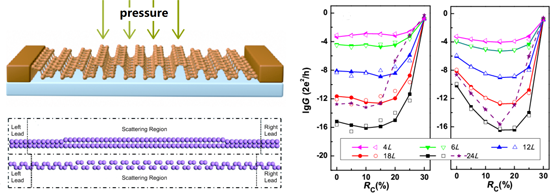
- investigate the quantum transport of pure BP devices within the framework of combination of non-equilibrium Green’s function (NEGF) and density functional theory (DFT) [33][34]. The manuscript is organized as follows: In section “Simulation Details”, we show the pure zigzag and armchair BP nanodevices and
- direction, and 2.102 Å in the vertical direction between two non-equivalent P atomic layers, which is in good agreement with the recognized DFT results [32]. The quantum transport properties of BP devices were implemented by the transport package NanoDCal, which is based on the standard NEGF-DFT method [33
- ]. Finally, the NEGF-DFT self-consistency was carried out until the numerical tolerance of the Hamiltonian matrix was below 10−4 eV. Results and Discussion Mechanical properties of BP under pressure In this section, we discuss the mechanical behavior of periodic 2D BP with the increase of pressure along the




Giant magnetoresistance ratio in a current-perpendicular-to-plane spin valve based on an inverse Heusler alloy Ti2NiAl
Beilstein J. Nanotechnol. 2019, 10, 1658–1665, doi:10.3762/bjnano.10.161
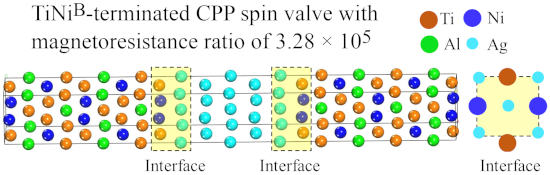
- ) generalized gradient approximation (GGA). A Monkhorst–Pack grid of 13 × 13 × 1 for k-point sampling, a self-consistent field (SCF) convergence criterion of 1 × 10⁻⁵ eV, and a plane-wave basis cutoff energy of 550 eV were applied. The Keldysh nonequilibrium Green’s function (NEGF) theory, as implemented in


Intrinsic ultrasmall nanoscale silicon turns n-/p-type with SiO2/Si3N4-coating
Beilstein J. Nanotechnol. 2018, 9, 2255–2264, doi:10.3762/bjnano.9.210
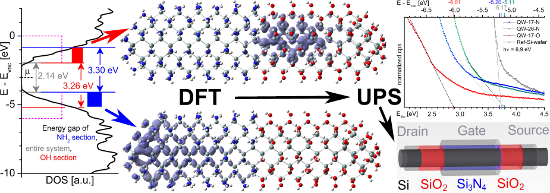
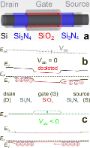
- states (DOS) when embedded in SiO2 or Si3N4. We use further h-DFT results of a Si-nanowire (NWire) covered in SiO2 and Si3N4 to examine the device behaviour of an undoped Si-NWire FET based solely on CMOS-compatible materials (e.g., Si, SiO2, Si3N4) using the nonequilibrium Green’s function (NEGF
- show further h-DFT results of a Si-NWire of 5.2 nm length and 1.4 nm diameter, terminated to 50% with 1 ML of Si3N4 (NH2 groups) and to 50% with 1 ML of SiO2 (OH groups). These h-DFT results deliver key input data to NEGF device simulations as a proof-of-concept for the undoped Si-NWire FET. A wealth
- of information on h-DFT accuracy as compared to experiment, details of UPS measurements and NEGF are contained in Supporting Information File 1. Experimental h-DFT material calculations Hybrid-DFT calculations were carried out in real space with a molecular orbital basis set (MO-BS) and both Hartree





Disorder-induced suppression of the zero-bias conductance peak splitting in topological superconducting nanowires
Beilstein J. Nanotechnol. 2018, 9, 1358–1369, doi:10.3762/bjnano.9.128
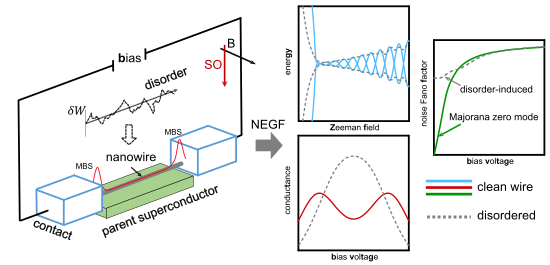
- zero-bias conductance peak in presence of disorder. We adopt the non-equilibrium Green’s function (NEGF) method for a tight-binding model of the nanowire. Three different types of disorder are separately considered, including the disorder in the site-dependent chemical potential, the spatial
- increasing disorder strength. This paper is organized as follows. In section ’The model’ we present a tight-binding model for the one-dimensional superconducting nanowire and the theoretical framework based on NEGF. In section ’Numerical results’ we give the numerical results of the conductance and the noise
- auto- or cross-correlation between the currents flowing through the lead α and lead β. To evaluate the current and noise within the framework of Keldysh NEGF formalism, we need to derive the retarded (advanced) Green’s function Gr(a) and the lesser (greater) Green’s function G<(>) from the contour


![[Graphic 20]](/bjnano/content/inline/2190-4286-9-128-i39.svg?max-width=637&scale=1.18182) (das...
(das...


The electrical conductivity of CNT/graphene composites: a new method for accelerating transmission function calculations
Beilstein J. Nanotechnol. 2018, 9, 1254–1262, doi:10.3762/bjnano.9.117
- modern computing tools. The non-equilibrium Green function (NEGF) method with density functional tight-binding (DFTB) scheme or density functional theory (DFT) scheme is used to calculate the electrical conductance of molecular structures consisting of atoms of various elements with high accuracy [8
- ]. Within the NEGF formalism, each system represents left and right electrodes and the molecules between them. The probability that an electron will transmit from the left to the right electrode is described by the transmission function T(E). The dependence of the transmission function on the energy of the


Electronic structure, transport, and collective effects in molecular layered systems
Beilstein J. Nanotechnol. 2017, 8, 2094–2105, doi:10.3762/bjnano.8.209
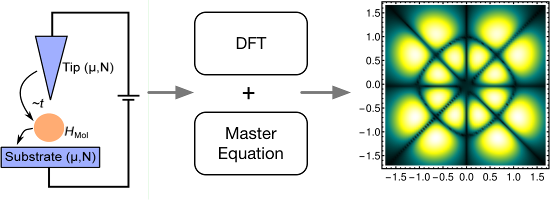
- phthalocyanine (F16CoPc/MnPc) heterostructure, are investigated by means of density functional theory (DFT) and the non-equilibrium Green’s function (NEGF) approach. Furthermore, a master-equation-based approach is used to include electronic correlations beyond the mean-field-type approximation of DFT. We
- molecule but also between neighboring molecules in a film [15], where they can lead to ordering phenomena. Our paper is organised as follows. First we will present the methodical background and results of our theoretical investigations on different phthalocyanine heterostructures by using the DFT-NEGF
- approach. In the second part we present our approach to combine DFT calculations and the master equation approach to quantum transport. Finally we present results of this new approach to describe tunnelling effects in monolayers. DFT-NEGF transport theory The ground-state electronic structure of the


![[Graphic 29]](/bjnano/content/inline/2190-4286-8-209-i41.png?max-width=637&scale=1.18182) between the occupations nA and nB of the two checkerboard sublattices for a) asy...
between the occupations nA and nB of the two checkerboard sublattices for a) asy...

![[Graphic 30]](/bjnano/content/inline/2190-4286-8-209-i42.png?max-width=637&scale=1.18182) per site for a) asymmetric tunneling, Γtop/Γbottom = 0.5, and b) symmetric tunneli...
per site for a) asymmetric tunneling, Γtop/Γbottom = 0.5, and b) symmetric tunneli...
Adsorbate-driven cooling of carbene-based molecular junctions
Beilstein J. Nanotechnol. 2017, 8, 2060–2068, doi:10.3762/bjnano.8.206
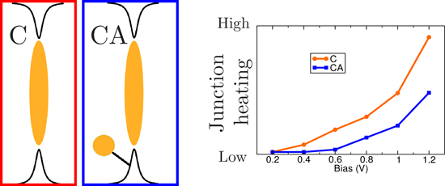
- a first-principles, self-consistent description of the junction out of equilibrium based on density functional theory (DFT) and non-equilibrium Green’s functions (NEGF). We show how the change in the electronic structure of the junction induced by the presence of the adsorbate promotes the cooling
- with the electronic system has been derived in the framework of NEGF theory [6][37][39]. In the low temperature limit the emission rate of vibrational quanta by tunneling electrons is expressed as: while the absorption rates are given by: The matrices are given by the product of the electron
- cooling dynamics of a NHC-based molecular junction. We calculated the bias-dependent rates of emission and absorption of molecular vibrations using first principles methods based on DFT-NEGF. We considered an electron-withdrawing NH2 species adsorbed in the vicinity of the molecule on one of the


![[Graphic 14]](/bjnano/content/inline/2190-4286-8-206-i21.png?max-width=637&scale=1.18182) = 176 meV as a function of applied bias for the C and CA junctions, a...
= 176 meV as a function of applied bias for the C and CA junctions, a...

Invariance of molecular charge transport upon changes of extended molecule size and several related issues
Beilstein J. Nanotechnol. 2016, 7, 418–431, doi:10.3762/bjnano.7.37
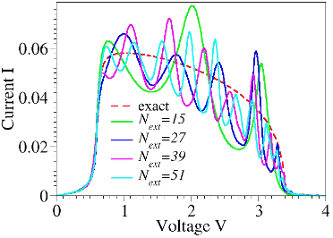
- thermopower) at zero temperature. Furthermore, examples are presented that demonstrate that treating parts of electrodes adjacent to the embedded molecule and the remaining semi-infinite electrodes at different levels of theory (which is exactly what most NEGF-DFT approaches do) is a procedure that yields
- particularly true in (chemisorption) cases where the anchoring groups form covalent bonds to the electrodes. Within current approaches to molecular charge transport, mostly based on nonequilibrium Keldysh Green’s functions (NEGF) combined with density functional theory (DFT), the molecular device is
- computationally much more expensive approaches beyond NEGF-DFT treatments), as computation times can be radically reduced; see section “WBL-based schemes and realistic calculations” for more details. The restriction expressed by Equation 26 is imposed by the difference of the Fermi distributions, which are step


Current-induced runaway vibrations in dehydrogenated graphene nanoribbons
Beilstein J. Nanotechnol. 2016, 7, 68–74, doi:10.3762/bjnano.7.8
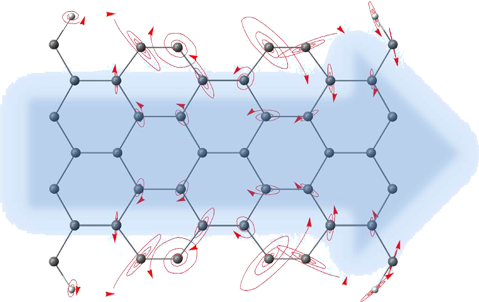
- how armchair nanoribbons can serve as a possible testbed for probing the current-induced forces. Keywords: current-induced forces; density functional theory (NEGF-DFT); graphene; molecular electronics; Introduction The electronic and transport properties of graphene has been the focus of intense
Thermoelectricity in molecular junctions with harmonic and anharmonic modes
Beilstein J. Nanotechnol. 2015, 6, 2129–2139, doi:10.3762/bjnano.6.218
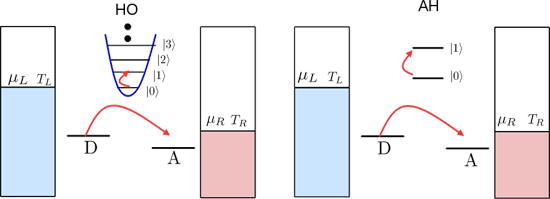
- harmonic-mode junction (Equation 4) can be derived using the nonequilibrium Green’s function (NEGF) technique [40][41] assuming weak interaction between electrons and the particular vibration, employing the random phase approximation (RPA) [39][42]. This scheme involves a summation over a particular set
- done rigorously at the level of the quantum master equations and within the NEGF technique [7][43] to yield the rates with and a damping term Γph(ω0). Interestingly, we confirmed (not shown) that this additional energy relaxation process does not modify the thermoelectric efficiency displayed in
- significant information. For example, one could examine the (zero-frequency) current noise, to find out to what extent it can reveal microscopic molecular information. (vi) Methodology development. The cumulant generating function of the HO model was derived from an NEGF approach [43]. The corresponding


High Ion/Ioff current ratio graphene field effect transistor: the role of line defect
Beilstein J. Nanotechnol. 2015, 6, 2062–2068, doi:10.3762/bjnano.6.210
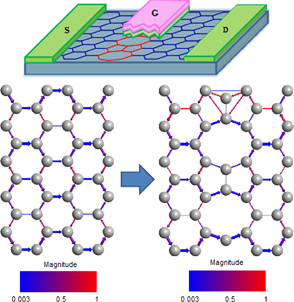
- presence of one-dimensional topological defects. The defects containing 5–8–5 sp2-hybridized carbon rings were placed in a perfect graphene sheet. The atomic scale behavior of the transistor was investigated in the non-equilibrium Green's function (NEGF) and tight-binding Hamiltonian frameworks. AGNRFET
- of AGNR. However, no study has yet been conducted on the effect of the extended line defect on field effect transistors. In the present study, first, the device performance of an AGNR field effect transistor with ELD was investigated by employing self-consistent NEGF formalism and tight-binding
- . Conclusion In this study a comprehensive numerical analysis was conducted about graphene nanoribbon field effect transistors with extended line defects (ELD-GNRFET) based on the NEGF formalism. According to the simulation results, applying a perpendicular line defect in an AGNR channel led to the decrease of


Large-voltage behavior of charge transport characteristics in nanosystems with weak electron–vibration coupling
Beilstein J. Nanotechnol. 2015, 6, 1853–1859, doi:10.3762/bjnano.6.188
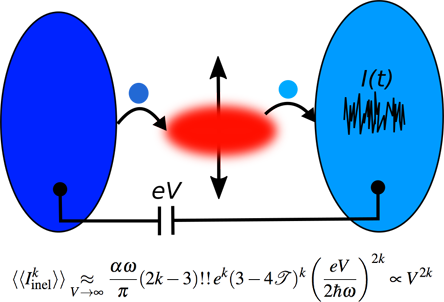
- IETS signals usually proceeds via combination of ab initio structural density functional theory (DFT) calculations determining the parameters of an effective electron–vibrational Hamiltonian with the non-equilibrium Green’s functions (NEGF) evaluation of the IETS features [10]. It had turned out that
- in many cases the electron–vibrational couplings are rather weak (dimensionless coupling constant on the order of a few per cents) so that full NEGF calculations typically based on the quite demanding self-consistent Born approximation [11] are not necessary and a computationally less expensive
- experiments [4] signatures of the vibrational mode heating were clearly identified [11]. Apart from a full NEGF description in terms of coupled electronic and vibrational Green’s functions [15][16] necessary for intermediate coupling, a simple rate equation for the occupation of the vibrational mode(s) was
Simple and efficient way of speeding up transmission calculations with k-point sampling
Beilstein J. Nanotechnol. 2015, 6, 1603–1608, doi:10.3762/bjnano.6.164
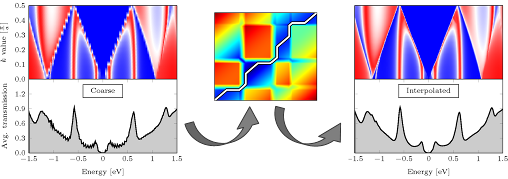
- parameters. This is for example the case in the field of single-molecular devices [1]. Popular methods are based on DFT in combination with the non-equilibrium Green’s function approach (DFT-NEGF), see, e.g., [2][3][4], or scattering wave-function approaches [5]. The electrodes in such calculations are
- scheme and conclude in section Conclusion. Results and Discussion Description of the method The use of computationally “expensive” first principles DFT-NEGF calculations for determining the transmission through nano-structured systems is limited by the amount of time one can afford to spend on the k-grid


Electrical properties and mechanical stability of anchoring groups for single-molecule electronics
Beilstein J. Nanotechnol. 2015, 6, 1558–1567, doi:10.3762/bjnano.6.159
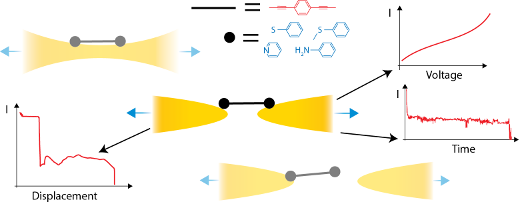
- of the two outer gold layers. Every ten steps (40 pm) we calculate the transmission through the molecular junction using non-equilibrium Green’s function (NEGF) formalism by connecting the outer gold layer to wide-band limit electrodes. To account for well-known problems in the DFT eigenvalues we
- combined with NEGF transport calculations, shown in Figure S6 of Supporting Information File 1. We find that the theoretical values of the conductance and of the electronic coupling compare well with the experimental values found for SAc, SMe and Py. In the case of NH2, both quantities are larger in the
- breaking measurements, suggest that in the self-breaking regime a larger part of the configuration space is accessible. DFT and NEGF calculations corroborate the observed trends in the experiments; more detailed calculations would be helpful to further characterize the metal-anchoring group dynamics and


Enhancing the thermoelectric figure of merit in engineered graphene nanoribbons
Beilstein J. Nanotechnol. 2015, 6, 1176–1182, doi:10.3762/bjnano.6.119
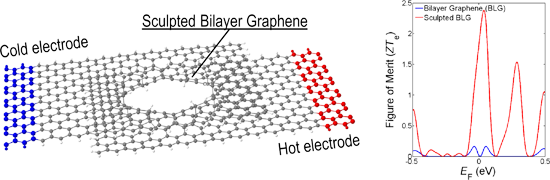
- -space grid defined with a plane wave cut-off energy of 250 Ry and a maximum force tolerance of 40 meV/Å. From the converged DFT calculation, the underlying mean-field Hamiltonian was combined with the GOLLUM [12] implementation of the non-equilibrium Greens function (NEGF) method. This yields the


Graphene quantum interference photodetector
Beilstein J. Nanotechnol. 2015, 6, 726–735, doi:10.3762/bjnano.6.74
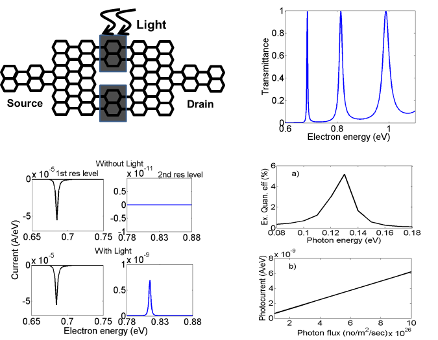
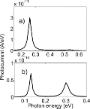
- lattice constant was set at 0.142 nm. Mathematical model A non-equilibrium Green’s function (NEGF) formalism was used to calculate the current through the device [9][21][22][23]. Here, the Green’s function, GR, is the impulse response of the device and non-equilibrium implies that some voltage is applied
- mentioned here that we have used the tight binding model for both the armchair and zigzag structures. Zigzag edges of graphene nanoribbons have been shown to be magnetic [34][35][36]. Some reports used the tight binding model without magnetism in NEGF formalism for zigzag MZI structures [12][13] as well as
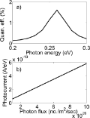
- and excited states and Fermi’s golden rule, which is inherently contained in the NEGF formalism. The photocurrent is higher in the armchair structure compared with the zigzag structure. This is because in a zigzag structure, some neighboring atoms lie vertically and thus do not intercept the electric




Numerical investigation of the effect of substrate surface roughness on the performance of zigzag graphene nanoribbon field effect transistors symmetrically doped with BN
Beilstein J. Nanotechnol. 2014, 5, 1569–1574, doi:10.3762/bjnano.5.168
- Green's function (NEGF) formalisms. The results show that with an appropriate selection of the substrate material, the proposed devices can meet the on/off-current ratio required for future digital electronics. Keywords: boron nitride; non-equilibrium Greens function (NEGF); on-/off-current ratio


Strong spin-filtering and spin-valve effects in a molecular V–C60–V contact
Beilstein J. Nanotechnol. 2012, 3, 589–596, doi:10.3762/bjnano.3.69
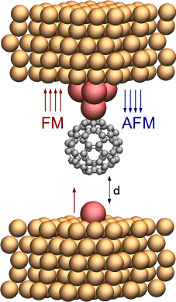
- correlation functional [29]. Double-ζ polarized basis sets with grid cutoff of 250 Ry have been used. Spin-polarized transport was subsequently calculated using the non-equilibrium Green’s function (NEGF) formalism [30] in the limit of zero voltage. In order to eliminate basis set superposition error (BSSE



When “small” terms matter: Coupled interference features in the transport properties of cross-conjugated molecules
Beilstein J. Nanotechnol. 2011, 2, 862–871, doi:10.3762/bjnano.2.95
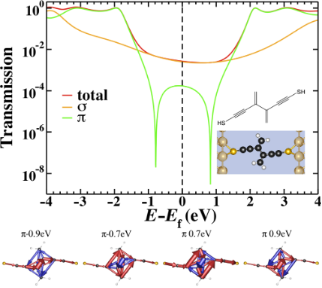
- . By using the molecular Dyson equation, the full Green’s function of the system may be written as [23] In general, the correction to the Coulomb self-energy ΔΣC must be found through NEGF methods [23]; however, in the elastic cotunneling regime ΔΣC = 0. The elastic transmission probability through a




Current-induced dynamics in carbon atomic contacts
Beilstein J. Nanotechnol. 2011, 2, 814–823, doi:10.3762/bjnano.2.90
- + 1) is the Fermi-Dirac distribution function. We thus treat the nonequilibrium electron system as a reservoir unperturbed by the phonons. Using the nonequilibrium Greens function (NEGF) technique [36], we may write the 2nd lowest orders in M of as, The first term yields a constant force due to the
- with NEGF. However, we note that since is a quantum operator, does not result in a real number. Instead we use the symmetrized and real . This expression equals the semiclassical result obtained from the path-integral derivation of the Langevin equation [6][35] and reads, in Fourier space, This