


Search results
Search for "aligned" in Full Text gives 400 result(s) in Beilstein Journal of Nanotechnology. Showing first 200.
Nanoglasses: a trail towards uncharted regions of vitreous materials and their properties?
Beilstein J. Nanotechnol. 2026, 17, 1047–1062, doi:10.3762/bjnano.17.72

- nanoglasses, where vertically aligned glassy columns create a high density of internal interfaces. We outline how interfacial excess energy, configurational entropy, and relaxation processes influence the metastability and properties of these materials. Furthermore, we discuss perspectives on how the control
- that has been prepared by sputter deposition through columnar growth under conditions that avoid crystal formation [17][49][51]. Columnar thin-film nanoglasses have the additional advantage that the glass–glass interfaces can be aligned edge-on to a local probe, for example, a focused electron beam in


Ultrasonic irradiation in the synthesis of nanohydroxyapatite: a chemically friendly technique for improving hemocompatibility and antibiofilm applications
Beilstein J. Nanotechnol. 2026, 17, 991–1015, doi:10.3762/bjnano.17.68
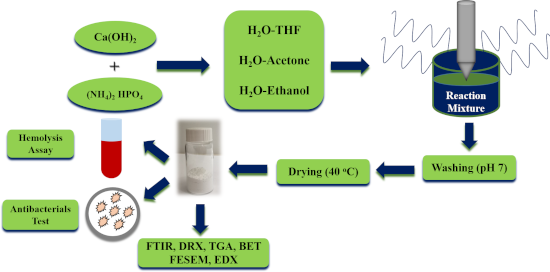
- 10.3762/bjnano.17.68 Abstract This study explores the synthesis of nanohydroxyapatite (nHA) using high-frequency ultrasonic irradiation (UI), a chemically friendly technique aligned with green chemistry principles. Synthesis was achieved by varying the UI time (15, 30, 45, and 60 min) and the reaction




Materials challenges in solid-state sensors for continuous monitoring of ions in water
Beilstein J. Nanotechnol. 2026, 17, 935–973, doi:10.3762/bjnano.17.66
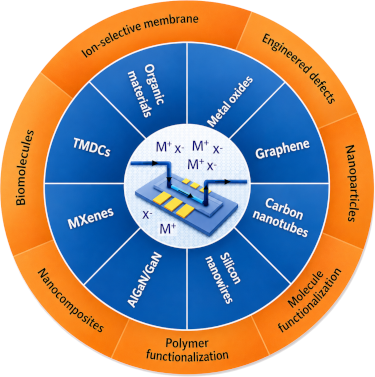
- especially ISEs, FETs, and chemiresistive devices, are central to next-generation online water quality monitoring. They offer sensitivity and selectivity aligned with regulatory thresholds, fast response to capture transient events, and the potential for dense spatial networks. Given these advantages, there


Substrate-dependent pore formation in molybdenum disulfide monolayers under ion irradiation
Beilstein J. Nanotechnol. 2026, 17, 769–780, doi:10.3762/bjnano.17.54
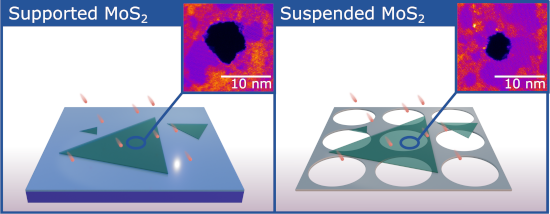
- straight, lattice-aligned edges consistent with faceted etch pits [63]. We interpret this as evidence of the aforementioned influence of the etchant during transfer, which may bias the measured pore sizes toward larger values [64]. All irradiations shown in Figure 5 were performed at the same fluence (5


Recent progress in enhancing built-in electric fields of perovskite solar cells via junction engineering
Beilstein J. Nanotechnol. 2026, 17, 602–621, doi:10.3762/bjnano.17.42
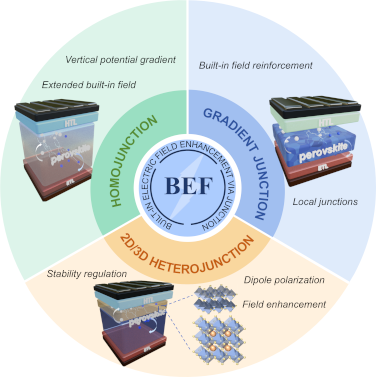
- , energy level or dimensionality, has recently emerged as a key strategy for strengthening the BEF. Such graded junctions establish sustained band bending aligned with the BEF through the film thickness and across interfaces, thereby markedly increasing the field strength and effective penetration depth
- stress concentration, thereby promoting more orderly crystallization. At the same time, weak interlayer van der Waals interactions allow for gradual release of K+ ions during growth and their penetration into the bulk, establishing a concentration gradient aligned with the BEF across the film thickness
- spatial potential gradients that are aligned with the BEF during film formation across various perovskite device systems, thereby enhancing band bending and promoting directional carrier transport [55][56]. Jiang et al. [57] introduced fluorinated organic ammonium salts in combination with organosulfur



Interconnection morphology effects on the radio frequency response of carbon nanotube sponges
Beilstein J. Nanotechnol. 2026, 17, 343–351, doi:10.3762/bjnano.17.23
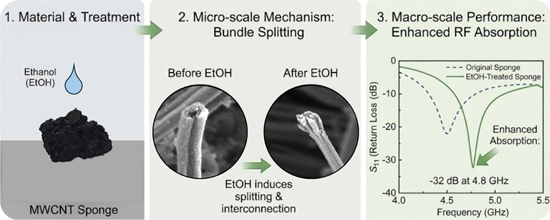
- conductors is not appreciable. Interesting results have been found for shear-aligned CNT films, which showed a radiation efficiency of 94% at 10 and 14 GHz, comparable to copper antennas [18]. Threads made of twisted bundles of as-grown CNTs worked as dipole antennas resonating at 2.45 GHz [6]. A recent



Advancing nanolithography: a comprehensive review of materials for local anodic oxidation with AFM
Beilstein J. Nanotechnol. 2026, 17, 275–291, doi:10.3762/bjnano.17.19


Safe and sustainable by design with ML/AI: A transformative approach to advancing nanotechnology
Beilstein J. Nanotechnol. 2026, 17, 176–185, doi:10.3762/bjnano.17.11
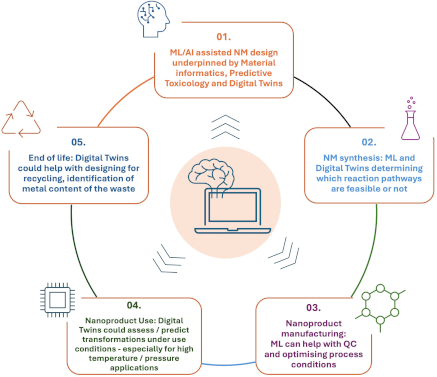
- (SSbD) framework, which integrates safety considerations throughout the nanomaterial lifecycle, from design to disposal [12][13][14]. The SSbD concept is closely aligned with the EC Joint Research Centre SSbD framework , the European Chemical Industry Council (Cefic) “Safe and Sustainable by Design


Capabilities of the 3D-MLSI software tool in superconducting neuron design
Beilstein J. Nanotechnol. 2026, 17, 122–138, doi:10.3762/bjnano.17.8

- the two-junction SQUIDs. Experimental details can be found in Appendix A. Figure 3 shows a comparison of simulated and experimental self-inductance values for the simplest case, where the variable-length segment is aligned across the control line (denoted by Δx in Figure 2a,b). In this case (see also
- with their output arm, which has the same shape for sigma and Gauss neurons, aligned along the symmetry axis of the screen. Suppression of screen-mediated interaction was expected due to the inverse proportionality of the coupling to the transverse (relative to the control line) size of the screen [26



Functional surface engineering for cultural heritage protection: the role of superhydrophobic and superoleophobic coatings – a comprehensive review
Beilstein J. Nanotechnol. 2026, 17, 63–96, doi:10.3762/bjnano.17.6

- organogel, composed of poly-3-hydroxybutyrate (PHB), ethyl lactate (EL), and deferoxamine B (DFO), for the simultaneous removal of iron corrosion and aged acrylic coatings from historical metal artefacts. This gel is made of bio-based, biodegradable, and low-toxicity materials, aligned with Green Chemistry




Competitive helical bands and highly efficient diode effect in F/S/TI/S/F hybrid structures
Beilstein J. Nanotechnol. 2026, 17, 15–23, doi:10.3762/bjnano.17.2
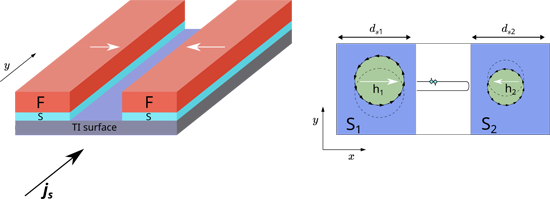
- Jy in Figure 2b. Hence, in the situation when H1 and H2 are perfectly aligned, we expect well-known behavior of the total supercurrent. Now, we discuss the case when the exchange fields H1 and H2 are oriented in opposite directions (Figure 2b). When the distance between S1 and S2 is large (L = 4ξ


![[Graphic 16]](/bjnano/content/inline/2190-4286-17-2-i31.svg?max-width=637&scale=1.18182)
![[Graphic 17]](/bjnano/content/inline/2190-4286-17-2-i32.svg?max-width=637&scale=1.18182)


Quantitative estimation of nanoparticle/substrate adhesion by atomic force microscopy
Beilstein J. Nanotechnol. 2026, 17, 1–14, doi:10.3762/bjnano.17.1

- observed scatter. Considering the results for a substrate bias voltage of 0 V in Figure 3b, the wedge and D-LFC results are closely aligned, although the wedge method yields slightly higher values. The NP size dependence of measurement accuracy might be attributed to the variations in contact geometry



Visualizing nanostructures in supramolecular hydrogels: a correlative study using confocal and cryogenic scanning electron microscopy
Beilstein J. Nanotechnol. 2025, 16, 2274–2284, doi:10.3762/bjnano.16.156
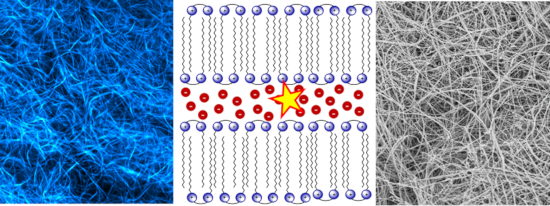
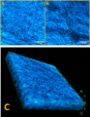
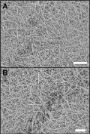
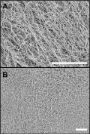
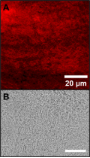
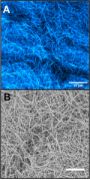
- intensities. These CLSM images closely aligned with cryo-SEM micrographs of the same material, confirming that DPP-BC accurately reflects native gel morphology, and that cryo-SEM treatment does not disturb the fibre network. In contrast, ZnPc@Gel presented significant challenges under CLSM because of the



Ultrathin water layers on mannosylated gold nanoparticles
Beilstein J. Nanotechnol. 2025, 16, 2183–2198, doi:10.3762/bjnano.16.151
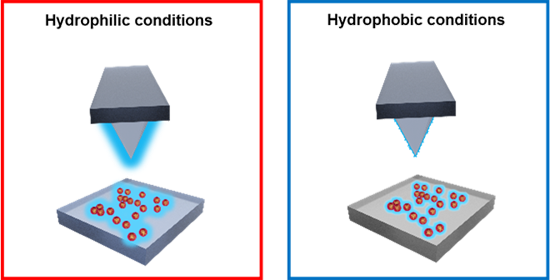
- and hydrophobic conditions, respectively. Gwyddion software version 2.47 was used for displaying the topography images. The images were first levelled by mean plane subtraction and aligned by height median; occasionally, the z excursion outliers were manually removed by, for example, correction of the



Quality by design optimization of microemulsions for topical delivery of Passiflora setacea seed oil
Beilstein J. Nanotechnol. 2025, 16, 2116–2131, doi:10.3762/bjnano.16.146
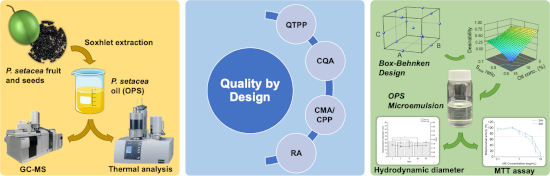
- same conditions for comparative purposes. Quality by design framework The development of the microemulsion system was guided by a QbD strategy, aligned with ICH Q8(R2) guidelines [57]. This framework was employed to define the QTPP and CQAs, CMAs, and CPPs relevant to the topical delivery of P. setacea


Calibration of piezo actuators and systems by dynamic interferometry
Beilstein J. Nanotechnol. 2025, 16, 2086–2091, doi:10.3762/bjnano.16.143
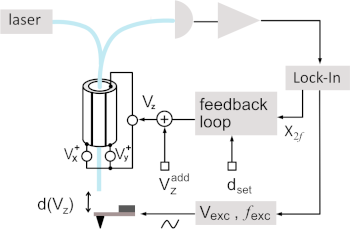
- calibration, is highly accurate when performed with a perfectly aligned interferometer. A high-precision measurement based on an expanded dataset as described in [13] yields a value of Sprec = (33.26 ± 0.27) nm/V for the amplitude calibration factor. For testing the calibration accuracy for the misaligned
- calibration factors determined with the aligned or misaligned interferometer are compiled in Table 1. The weighted mean of the calibration factors for the misaligned interferometer (frozen loop) is determined as = (30.84 ± 0.15) nm/V, while in the measurements in which misalignment was corrected before each
- that the misalignment and the fiber piezo motion history may deteriorate the excitation system calibration. This is probably due to piezo hysteresis and the fit procedure that has been optimized for the perfectly aligned interferometer [13] but not extensively tested for the misaligned interferometer


Molecular and mechanical insights into gecko seta adhesion: multiscale simulations combining molecular dynamics and the finite element method
Beilstein J. Nanotechnol. 2025, 16, 2055–2076, doi:10.3762/bjnano.16.141
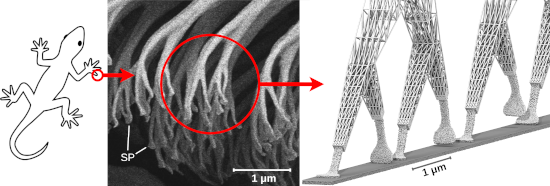
- neighboring beads via harmonic bonds, where r is the distance between the two beads, and b0 is the initial (equilibrium) distance between them. Their force constants K increased when the bonds aligned with the local keratin fibril direction, where k is the base isotropic force constant identical for all bonds
- averaged, the three different forces in Figure 8a remain closely aligned until detachment begins. Beyond this point, the curves begin to diverge. This divergence is not primarily due to the physical mechanics of detachment, but rather due to the limited number of FEM–MD iterations per load step in our runs




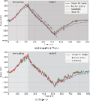
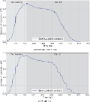


Beyond the shell: exploring polymer–lipid interfaces in core–shell nanofibers to carry hyaluronic acid and β-caryophyllene
Beilstein J. Nanotechnol. 2025, 16, 2015–2033, doi:10.3762/bjnano.16.139
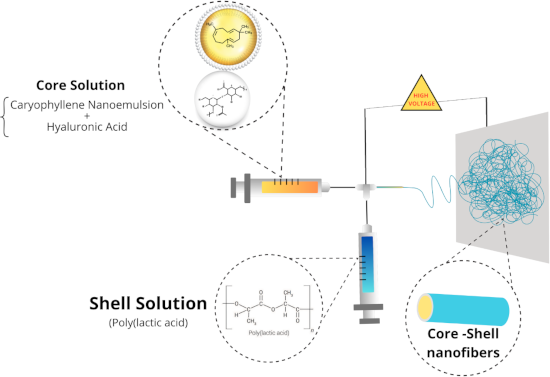
- solution and the other with the HA solution or a mix of HA+NE to the core. Each syringe was connected to an individual syringe pump for independent control of flow rate. The coaxial needle assembly comprised two stainless steel needles concentrically aligned, with an 18G outer needle for the shell solution




Beyond the bilayer: multilayered hygroscopic actuation in pine cone scales
Beilstein J. Nanotechnol. 2025, 16, 1695–1710, doi:10.3762/bjnano.16.119
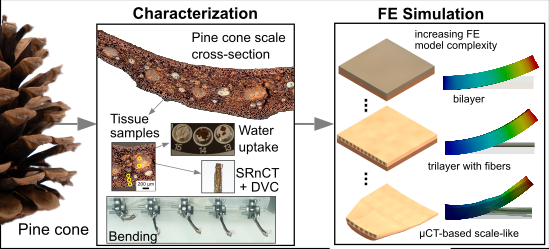
- information. DVC was performed using the image registration software Elastix with its implemented B-spline transformation (ver. 5.1.0) [39]. The images were aligned in a two-step process, first with an affine transformation and then with a B-spline transformation. For both steps, a pyramidal approach with


Energy spectrum and quantum phase transition of the coupled single spin and an infinitely coordinated Ising chain
Beilstein J. Nanotechnol. 2025, 16, 1668–1676, doi:10.3762/bjnano.16.117
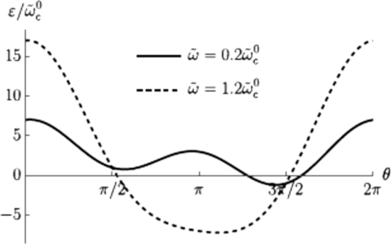
- mostly aligned along the z-axis due to the large term. Effectively, an interaction with the single spin creates a strong magnetic field parallel to the single spin direction. Thus, the perpendicular component of the “magnetic field” can be considered as a small perturbation. Formally, this means that
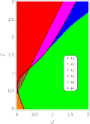
- is aligned along the positive direction of the z-axis, and in configuration 2 – along the negative direction. Remarkably, configuration 1 is unstable for the bare LMG model. Configuration 3 is not realized and in configuration 4 both symmetric and broken symmetry extrema are minima, meaning that one
- ” configurations in Figure 2b. In configuration 1, two minima correspond to symmetric phases with the total spin aligned along the positive and negative directions of the z-axis. One of the phases is stable and the other is metastable, so a first order phase transition between them is possible. In configuration 2

![[Graphic 39]](/bjnano/content/inline/2190-4286-16-117-i63.svg?max-width=637&scale=1.18182)


![[Graphic 51]](/bjnano/content/inline/2190-4286-16-117-i75.svg?max-width=637&scale=1.18182)
Photocatalytic degradation of ofloxacin in water assisted by TiO2 nanowires on carbon cloth: contributions of H2O2 addition and substrate absorbability
Beilstein J. Nanotechnol. 2025, 16, 1567–1579, doi:10.3762/bjnano.16.111
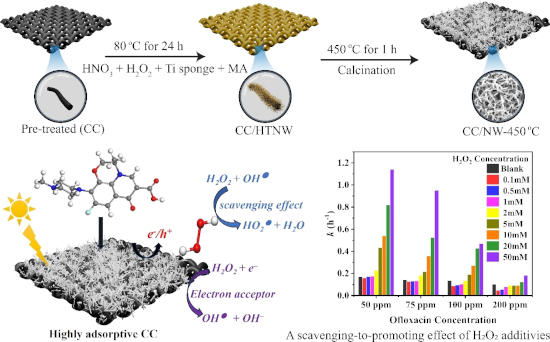
- Environmental and Optoelectronic Applications, Institute of Wenzhou, Zhejiang University, Wenzhou 325006, P. R. China 10.3762/bjnano.16.111 Abstract Vertically aligned TiO2 nanowires demonstrate exceptional photoactivity owing to their high specific surface area and improved charge separation; however, their
- TiO2 nanowires, while largely retaining their original one-dimensional morphology. Figure 1b–d presents representative FESEM images of the resulting TiO2 nanowires uniformly deposited on the carbon cloth substrate. Each carbon fiber is evenly coated with quasi-aligned nanowires that radiate outward
- . Figure 9a shows the photocatalytic degradation curves and the corresponding fit results assuming a pseudo-first-order reaction for OFL with an initial concentration of 50 ppm and in the presence of TiO2 nanowires quasi-aligned on carbon cloth and metallic Ti substrates. The efficiency is also compared


Deep-learning recognition and tracking of individual nanotubes in low-contrast microscopy videos
Beilstein J. Nanotechnol. 2025, 16, 1316–1324, doi:10.3762/bjnano.16.96
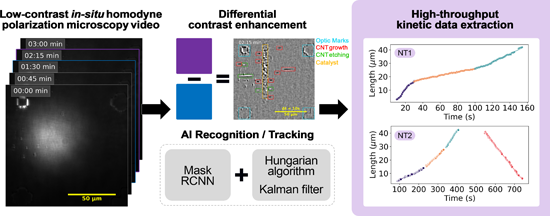
- , horizontally aligned carbon nanotubes (HA-CNTs) were synthesized inside a miniature chemical vapor deposition (CVD) cell with an optical window (Linkam TS1500). ST-cut quartz and iron nanoparticles served as substrate and catalyst, respectively. Ethanol and argon were, respectively, used as carbon precursor
- localization precision of the optical setup is 0.33 µm. Frames were then aligned using a template matching algorithm from the OpenCV Python library. Shade correction was applied to compensate for uneven illumination caused by the optics. Residual noise was reduced using fast Fourier transform (FFT) band-pass


Deep learning for enhancement of low-resolution and noisy scanning probe microscopy images
Beilstein J. Nanotechnol. 2025, 16, 1129–1140, doi:10.3762/bjnano.16.83
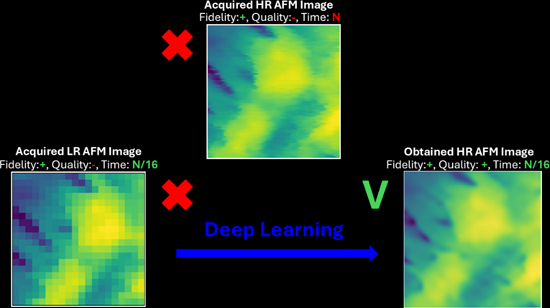
- aligned with the human perception evaluation and can be even inversely related to fidelity metrics [20]. These metrics are based, for example on contrast, texture richness, and feature frequency. This is of heightened importance for AFM images that may suffer from ubiquitous artifacts and blurring effects
- to align and crop the images so that corresponding low- (or the model-reconstructed high-resolution image) and high-resolution GT images were perfectly aligned. In addition to reference-based fidelity methods, no-reference methods were used to assess the quality of the 4× upscaled images. In this
- assessed image fidelity and quality. They were provided with all images in each data set. For each image, a set of images was supplied. Each set contained four images aligned in a row. The left most image was the GT image taken experimentally and was labeled as such. The other three (unlabeled) images were


Towards a quantitative theory for transmission X-ray microscopy
Beilstein J. Nanotechnol. 2025, 16, 1113–1128, doi:10.3762/bjnano.16.82
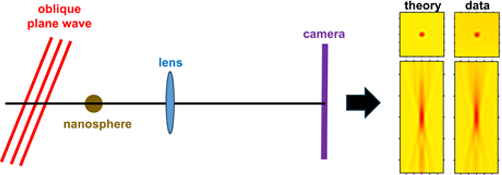
- component, for example, a tilt of the incoming beam relative to the optical axis defined by the zone plate and camera (Figure 4c). In this case, the condenser will be aligned relative to the tilted incoming beam and will lead to polar angles θ of plane wave illumination that vary as a function of the



Piezoelectricity of hexagonal boron nitrides improves bone tissue generation as tested on osteoblasts
Beilstein J. Nanotechnol. 2025, 16, 1068–1081, doi:10.3762/bjnano.16.78
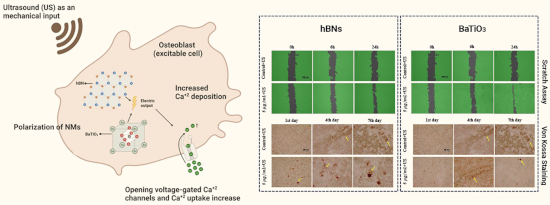
- microscopy (PFM, Nanomagnetic Instruments, UK) was applied to evaluate nanoscale piezoelectric behavior using self-aligned conducting EFM probes with a spring constant of 2.8 N/m and a resonance frequency of 75 kHz. In vitro analyses To investigate the influence of hBNs and BaTiO3 with US therapy on





