


Search results
Search for "cantilever" in Full Text gives 315 result(s) in Beilstein Journal of Nanotechnology. Showing first 200.
Supramolecular one-dimensional conducting nanofibers from a C3-symmetric tetrathiafulvalene derivative
Beilstein J. Nanotechnol. 2026, 17, 872–881, doi:10.3762/bjnano.17.63
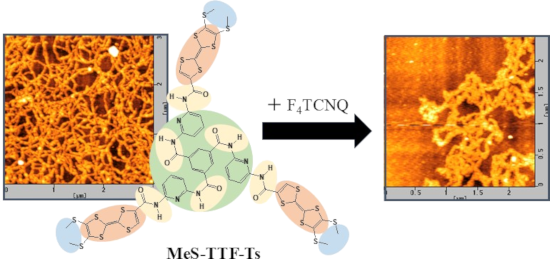
- measurements The structures formed on mica substrates were observed using an atomic force microscopy (AFM) system (Bruker Multi Mode 8). Measurements were performed in non-contact mode using a silicon cantilever with a spring constant of approximately 0.8 N·m−1. Optical spectra UV–vis absorption spectra were


He+ FIBID-fabricated 3D AFM tip architectures: an exploratory study of hollow pillars, helices, and spirals
Beilstein J. Nanotechnol. 2026, 17, 863–871, doi:10.3762/bjnano.17.62
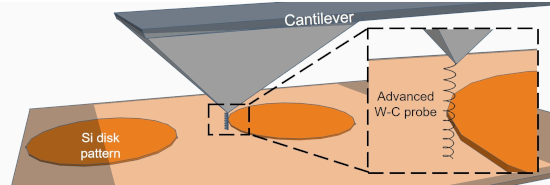
- examined by electron microscopy before and after AFM use. The main degradation modes were geometric deformation of the apex or shaft and mechanical fracture, most frequently at the tip–cantilever interface. While a few structures remained operational through repeated measurement cycles, others failed
- versatile technique for nanoscale surface characterisation that enables topographic measurements with sub-nanometre resolution by means of a sharp tip mounted at the end of a flexible cantilever [1]. During operation, the tip scans across the sample surface and responds to local interactions such as van der
- ][16][17][18][19], or tungsten-based precursors [20][21]. The resulting probes can be attractive because they allow for site-specific growth directly on the cantilever and can, in principle, combine tailored geometry with functional material properties. For instance, cobalt- and iron-based deposits


afspm: A framework for manufacturer-agnostic automation in scanning probe microscopy
Beilstein J. Nanotechnol. 2026, 17, 653–667, doi:10.3762/bjnano.17.45
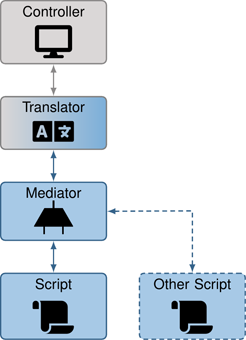
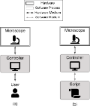
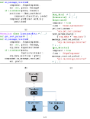
- kHz resonant frequency). These experiments were run under ambient conditions in an AM-AFM mode. Prior to engaging with the sample, we performed an auto-tuning operation to optimize the cantilever frequency and manually optimized the z-height feedback parameters for reasonable imaging quality. In the




Calculation of the dynamic stiffness of a cantilever under torsional oscillation
Beilstein J. Nanotechnol. 2026, 17, 303–308, doi:10.3762/bjnano.17.21
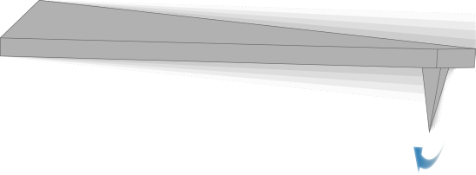
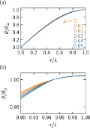
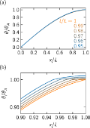
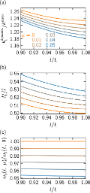
- interactions in the vertical and lateral directions between the tip and the sample. An accurate evaluation of the dynamic stiffness of the cantilever is indispensable in the quantitative analyses of the interactions. We calculated the dynamic stiffness of cantilevers under torsional oscillation based on the
- , whereas phononic dissipation dominates in the superconducting state [10]. The cantilever in bimodal AFM oscillates in two modes, typically, the first flexural and first torsional modes [2]. The flexural mode is used for vertical tip-position control via its frequency shift, and the torsional mode detects
- from the excitation amplitude through a proportionality coefficient that depends on the dynamic stiffness [21]. Thus, the present correction for the dynamic stiffness should be adopted for friction analyses with torsional oscillations in nc-AFM. Model We consider a cantilever with the dimensions length

Advancing nanolithography: a comprehensive review of materials for local anodic oxidation with AFM
Beilstein J. Nanotechnol. 2026, 17, 275–291, doi:10.3762/bjnano.17.19
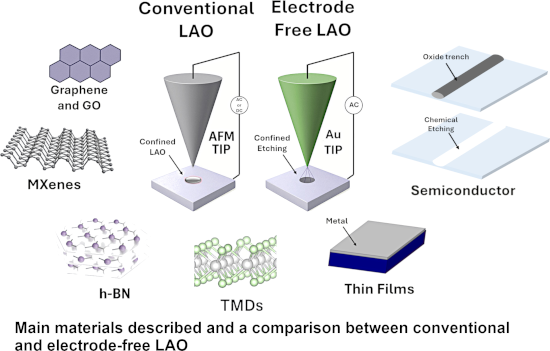
- , typically achieves 1–100 mm2·h−1 for high-resolution writing [54][55]. Table 1 incorporates t-SPL, field-emission lithography (FEL), and EBL to provide reference benchmarks against which the capabilities of LAO can be evaluated. t-SPL is the fastest tip-based method, using a heated cantilever to induce
- , mounted on an active cantilever, which induces local modifications in the substrate material, such as desorption or structural changes. This approach is particularly advantageous for its simplicity and ability to pattern on a wide range of materials [68] without the need for additional processing steps
- contrast, LAO remains primarily a prototyping technique best suited for laboratory-scale setups. It is worth noting that recently developed cantilever-free scanning probe technologies [124] address the scalability challenge by employing large arrays of polymer pens, effectively overcoming the inherently


Quantitative estimation of nanoparticle/substrate adhesion by atomic force microscopy
Beilstein J. Nanotechnol. 2026, 17, 1–14, doi:10.3762/bjnano.17.1

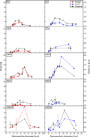
- of copper nanoparticles to silicon substrates deposited under varying conditions using DC magnetron sputter inert gas condensation. Atomic force microscopy was utilized as a tool for the manipulation of the nanoparticles and to measure lateral forces for their displacement, with cantilever
- ], similar to friction studies on thin films [19]. Therefore, proper calibration of the normal and lateral force constants of the cantilever is crucial in order to extract quantitative, accurate, reliable, and reproducible lateral force values from AFM manipulation experiments [20]. Overall, manipulating NPs
- lateral force constant of the AFM probe, comprising the AFM tip mounted on the cantilever, was calibrated based on the modified wedge and the diamagnetic lateral force calibrator (D-LFC) method [20]. Both qualitative and quantitative analyses of the measured force distributions are presented. To provide a



Calibration of piezo actuators and systems by dynamic interferometry
Beilstein J. Nanotechnol. 2025, 16, 2086–2091, doi:10.3762/bjnano.16.143
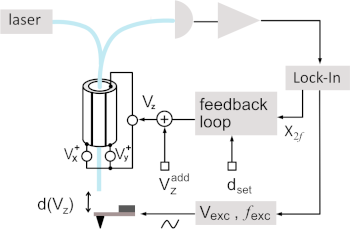
- parts with high accuracy. This is commonly accomplished by piezo actuators, for instance, in the form of tube piezos for positioning the tip or optics. For their calibration, we propose an approach based on the dynamic response signal from a fiber interferometer used for cantilever displacement
- detection. The fine-positioning z-piezo of the fiber is calibrated by the analysis of measurements of the dynamic interferometer response signal recorded for various cantilever oscillation amplitudes and varied distances between the cantilever and the fiber end. Furthermore, we demonstrate the cantilever
- oscillation amplitude calibration under conditions of various amounts of tube piezo contraction and extension. The merits and limits of accuracy for such type of calibration are discussed. Keywords: cantilever excitation; fiber interferometer; NC-AFM; piezo calibration; non-contact atomic force microscopy


Multifrequency AFM integrating PeakForce tapping and higher eigenmodes for heterogeneous surface characterization
Beilstein J. Nanotechnol. 2025, 16, 2077–2085, doi:10.3762/bjnano.16.142
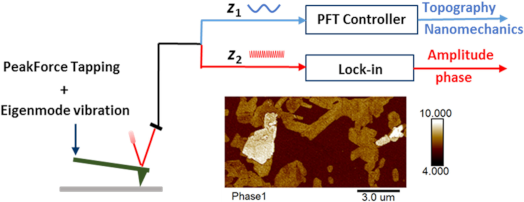
- nanoscale [1][2][3][4][5]. Among its various operating modes, tapping mode AFM is particularly prevalent due to lateral force minimization and its ability to give phase-contrast images of heterogeneous surfaces [6]. This mode involves oscillating the cantilever near its resonance frequency with the tip
- ]. The advent of multimodal AFM has extended the capabilities of tapping mode, exciting the cantilever at several eigenmode frequencies simultaneously. The amplitude of the primary eigenmode serves as feedback for topographical measurements, while the higher eigenmodes enhance material contrast. These
- factor (Q) cantilever dynamics amplify noise and demand meticulous parameter tuning [18]. To overcome these limitations, PeakForce tapping mode (PFT) was developed. It employs vertical probe oscillations at subresonant frequencies (0.5–8 kHz) to establish quasi-static tip–sample contact [18][19]. Unlike


Molecular and mechanical insights into gecko seta adhesion: multiscale simulations combining molecular dynamics and the finite element method
Beilstein J. Nanotechnol. 2025, 16, 2055–2076, doi:10.3762/bjnano.16.141
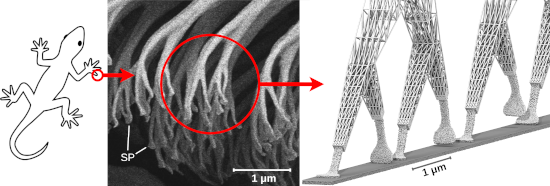
- spatula was randomly selected from the set of ten uniquely generated spatula models (see subsection “Spatulae and substrate: particles”). Results and Discussion Forces, contacts, and displacement profiles AFM experiments measure forces exerted by the cantilever tip during pull-off, with the maximum
- pulling force representing the adhesion force between the spatula and the substrate [57]. These experiments typically report the force required to detach a spatula, but they are limited to measuring forces at the cantilever tip and cannot directly resolve molecular-scale interactions at the spatula






Mechanical property measurements enabled by short-term Fourier-transform of atomic force microscopy thermal deflection analysis
Beilstein J. Nanotechnol. 2025, 16, 1952–1962, doi:10.3762/bjnano.16.136
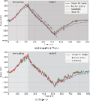
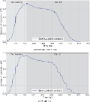
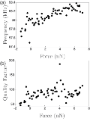
- reference material, rather than calculated directly from the dynamics models of the cantilever. We measured the cantilever displacement with very high sampling frequencies over the course of the experiment and captured its oscillations that result from thermal energy. Using short-term Fourier
- transformations, it was possible to fit the thermal resonance peak of the normal displacement to track the frequency and Q-factor of the cantilever during an experiment, using a similar process to that used to calibrate the normal bending stiffness of cantilevers. With this quantitative data, we have used the
- dynamic mechanics models relating the contact stiffness of the tip/cantilever pressing into a surface with the oscillation frequency of the cantilever and show that they did not accurately model the experiment. Several material combinations of tip and sample were examined; tip size and cantilever




Low-temperature AFM with a microwave cavity optomechanical transducer
Beilstein J. Nanotechnol. 2025, 16, 1873–1882, doi:10.3762/bjnano.16.130
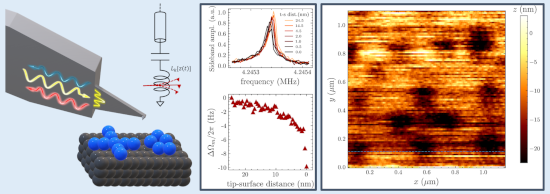
- /bjnano.16.130 Abstract We demonstrate atomic force microscopy (AFM) imaging with a microcantilever force transducer where an integrated superconducting microwave resonant circuit detects cantilever deflection using the principles of cavity optomechanics. We discuss the detector responsivity and added
- noise, pointing to its crucial role in the context of force sensitivity. Through analysis of noise measurements we determine the effective temperature of the cantilever eigenmode and we determine the region of detector operation in which the sensor is thermal-noise-limited. Our analysis shows that the
- ]. The challenge for high-resolution AFM is designing such a detector for a test mass hosting a sharp tip that is scanned over a surface in ultrahigh vacuum and at ultralow temperature. In this paper, we report on an AFM cantilever force sensor with an integrated detector consisting of a compact


Venom-loaded cationic-functionalized poly(lactic acid) nanoparticles for serum production against Tityus serrulatus scorpion
Beilstein J. Nanotechnol. 2025, 16, 1633–1643, doi:10.3762/bjnano.16.115
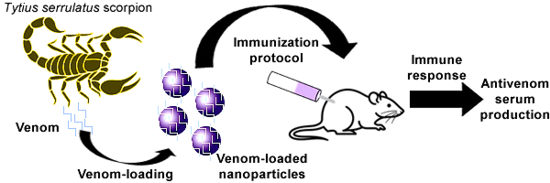
- desiccator for 24 h. The images were obtained with a silicon tip, operating in the attractive region of a cantilever in non-contact mode. For the FEGSEM analyzes, a drop of dispersion was placed in a microscope slide with carbon tapes and dried under a desiccator for 24 h [46]. Protein-loading efficiency The


Mechanical stability of individual bacterial cells under different osmotic pressure conditions: a nanoindentation study of Pseudomonas aeruginosa
Beilstein J. Nanotechnol. 2025, 16, 1171–1183, doi:10.3762/bjnano.16.86
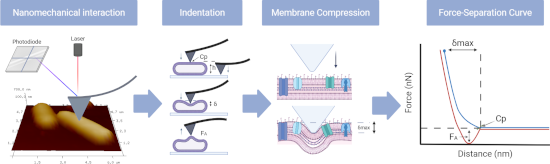
- displacement by the piezoelectric element are gathered in order to maintain a constant cantilever deflection or amplitude while a surface is scanned line by line Conversely, in FV quantitative information is extracted after analysis of a force–separation curve obtained from a performed nanoindentation
- a NanoScope V controller operated in fluid conditions throughout all experiments, using a pre-assembled fluid chamber with the appropriate solutions within a sealed O-ring. The instrument was operated in contact mode using MLCT probes from Bruker, cantilever D with a nominal spring constant of 0.03
- minimum damage to the mechanical integrity of the cell membrane. Before each experiment in FV mode, the cantilever was calibrated using the thermal-noise method which is integrated in the multimode AFM software and is briefly described next. First, the optical-lever sensitivity (OLS) of the cantilever was


Deep learning for enhancement of low-resolution and noisy scanning probe microscopy images
Beilstein J. Nanotechnol. 2025, 16, 1129–1140, doi:10.3762/bjnano.16.83
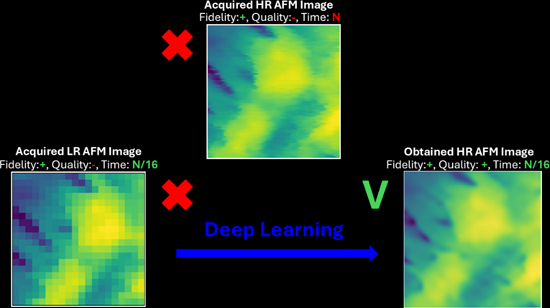
- described in [39]. Scans were made with a silicon tip on a silicon nitride cantilever (FASTSCANC, Bruker). The second set is composed of 25 pairs of low- and high-resolution images of a titanium film, which is used for AFM tip characterization (TipCheck, Aurora Nanodevices, BC, Canada). Images of 5 μm × 5


Shape, membrane morphology, and morphodynamic response of metabolically active human mitochondria revealed by scanning ion conductance microscopy
Beilstein J. Nanotechnol. 2025, 16, 951–967, doi:10.3762/bjnano.16.73
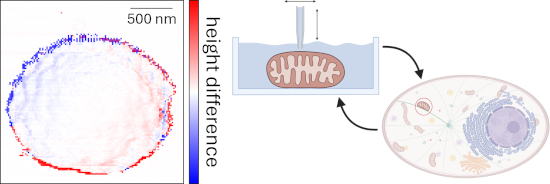
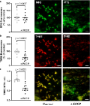
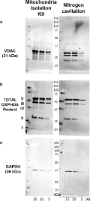
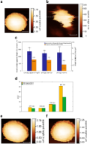
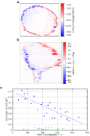
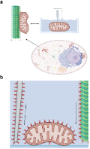
- processes and warrants further investigation. Scanning probe microscopy (SPM) methods, such as atomic force microscopy (AFM), have been employed to image mitochondria in liquid, showing features of both the inner and outer membrane [22][23][24]. However, AFM measurements are influenced by the cantilever
- –sample interaction, often leading to an underestimation of mitochondrial apparent height due to applied cantilever pressure [22][25]. Similarly, scanning electron microscopy (SEM) offers high-resolution imaging but requires mitochondria to be chemically fixed, stained, and sectioned, which precludes the
- thus preventing the intermittency effect. A convolution effect, similar to the tip–sample convolution known from AFM, cannot account for the observed intermittency effect. The nanopipette tip exhibits an extremely high aspect ratio, in contrast to conventional AFM cantilever tips. A surface feature to



Tendency in tip polarity changes in non-contact atomic force microscopy imaging on a fluorite surface
Beilstein J. Nanotechnol. 2025, 16, 944–950, doi:10.3762/bjnano.16.72
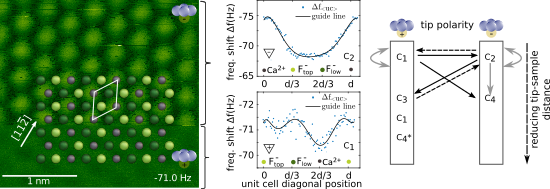
- -ordered CaF2(111) [24][25], see [26] for further preparation details. RT experiments were performed with a UHV 750 AFM system (RHK, Troy, MI USA) operated at a base pressure of 7.0 × 10⁻¹¹ mbar. An Ar+ ion-sputtered silicon cantilever with an eigenfrequency of around 300 kHz and a quality factor of 22000
- experiments were performed at 77 K using a LT UHV STM/AFM (ScientaOmicron, Taunusstein, Germany) operated at a base pressure of 5 × 10⁻¹⁰ mbar. NC-AFM measurements were conducted with a quartz cantilever based on a tuning fork [27] and a chemically etched tungsten tip attached to the end of the active prong


Thickness dependent oxidation in CrCl3: a scanning X-ray photoemission and Kelvin probe microscopies study
Beilstein J. Nanotechnol. 2025, 16, 749–761, doi:10.3762/bjnano.16.58
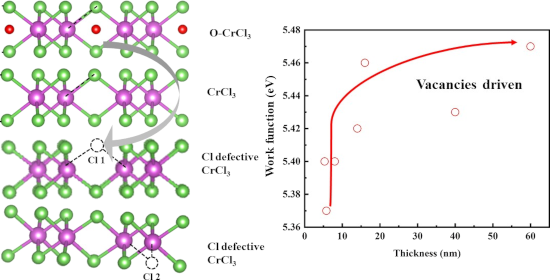
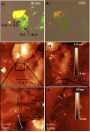
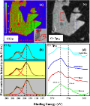
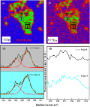
- cantilever coated with Pt at the resonance frequency of 68 kHz with an elastic constant of 1–5 N/m (AppNano) and doped diamond tips with 120 kHz and 8 N/m elastic constant (ADAMA). Kelvin probe force microscopy images were taken via double passage before and after applying an electric field by elevating the





The impact of tris(pentafluorophenyl)borane hole transport layer doping on interfacial charge extraction and recombination
Beilstein J. Nanotechnol. 2025, 16, 678–689, doi:10.3762/bjnano.16.52
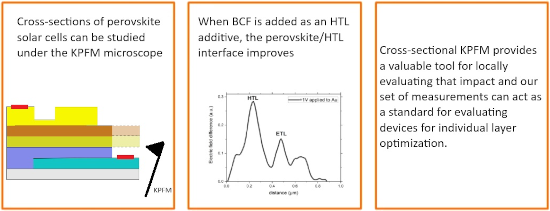
- lock-in amplifier (Zurich Instruments), in an argon atmosphere glove box (less than 1% ppm O2 and negligible humidity). The cantilever used was SCM PIT V2 (resonance frequency: 75 kHz, spring constant: 3 N/m, Bruker). The scan rate of the measurement was 0.5 Hz. To increase the reliability of our data
- , we employed heterodyne-KPFM [55], whereby we mechanically excited the cantilever at its first resonant frequency, f1, and electrically excited at a frequency of (f2–f1), where f2 is the second resonant frequency [56]. Frequency mixing between the mechanical vibration at f1 and the electrostatic force


Nanoscale capacitance spectroscopy based on multifrequency electrostatic force microscopy
Beilstein J. Nanotechnol. 2025, 16, 637–651, doi:10.3762/bjnano.16.49

- method for nanoscale capacitance characterization at arbitrary frequencies above the second cantilever resonance. Besides a high spatial resolution, the key advantage of the multifrequency approach of MFH-EFM is that it measures the second-order capacitance gradient at almost arbitrary frequencies
- , SCM techniques face limitations due to nonlocal stray capacitances [40] from cantilever, tip cone, and the electrical connection, which hamper precise measurements and decrease resolution [55][61]. The advantage of SCFM methods is that capacitive forces depend on the first- or higher-order capacitance
- gradients with respect to the tip–sample distance, automatically canceling out the background capacitance caused by electrical connections and – to some degree – by the cantilever and the tip cone [24][25][55][56][57][58][59][60][61][62][63][64][65][66][67][68][69][70][71][72][73]. For example




Advanced atomic force microscopy techniques V
Beilstein J. Nanotechnol. 2025, 16, 54–56, doi:10.3762/bjnano.16.6

- et al. addresses the significantly increased precision of force spectroscopy measurements when performed with a quartz cantilever allowing to reduce the oscillation amplitude to values in the low picometer regime [2]. As the conversion of frequency-shift to force data critically depends on the
- accurate knowledge of the quartz cantilever stiffness, the authors develop a method to quantify the stiffness based on thermal noise measurements and numerical simulation. Calibrated measurements of conductivity and resistivity are the focus of the contribution by Piquemal et al. [3]. A particular
- . Khachartryan et al. highlight the strength of cantilever displacement detection with a Michelson-type fibre interferometer and provide a model for interferometric signal generation [4]. The interferometer response is slightly nonlinear under typical NC-AFM working conditions, while a large cantilever
New design of operational MEMS bridges for measurements of properties of FEBID-based nanostructures
Beilstein J. Nanotechnol. 2024, 15, 1273–1282, doi:10.3762/bjnano.15.103
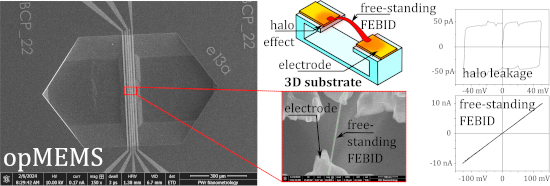
- different FIB parameters. An example of such a setup would be the cantilever described in [43]. On the base of the aligned opMEMS, a FEBID nanowire was deposited (Figure 7a) in a single-step process, where point-by-point deposition was performed along the pattern line using the following parameters: 5 keV
- stresses in thin films by deflecting a cantilever of defined size from a uniform membrane. We see a need for such experiments for future improvement of our proposed RoI spacing tuning method. The proposed approach allowed us to evaluate the leakage currents separately from the nanodevice properties. It was


Signal generation in dynamic interferometric displacement detection
Beilstein J. Nanotechnol. 2024, 15, 1070–1076, doi:10.3762/bjnano.15.87
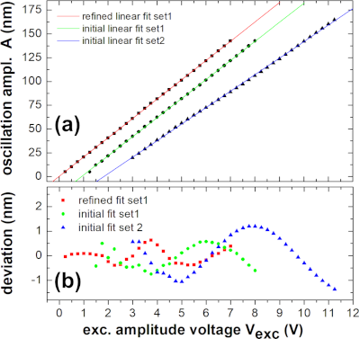
- to the harmonic displacement of the cantilever in the time domain. As the interferometer signal is limited in amplitude because of the spatial periodicity of the interferometer light field, an increasing cantilever oscillation amplitude creates an output signal with an increasingly complex temporal
- structure. By the fit of a model to the measured time-domain signal, all parameters governing the interferometric displacement signal can precisely be determined. It is demonstrated, that such an analysis specifically allows for the calibration of the cantilever oscillation amplitude with 2% accuracy
- between the light beams reflected from the fiber end (reference beam) and the cantilever (cavity beam), creating a standing wave pattern in the fiber with a spatial periodicity given by the light wavelength λ and a phase ϕ determined by the distance d between the fiber end and the cantilever. Any


Exploring surface charge dynamics: implications for AFM height measurements in 2D materials
Beilstein J. Nanotechnol. 2024, 15, 767–780, doi:10.3762/bjnano.15.64
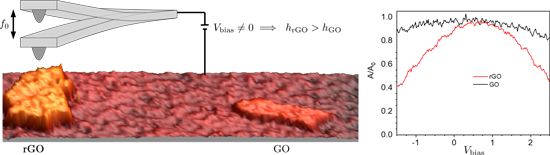
- invasive mode, the driving excitation frequency can be fixed at, or near, the free resonance frequency of the cantilever, or tracked by using a phase-locked loop (PLL) to keep the system always in resonance. If the driving excitation frequency is kept fixed, the phase variations contain information about


Enhancing higher-order modal response in multifrequency atomic force microscopy with a coupled cantilever system
Beilstein J. Nanotechnol. 2024, 15, 694–703, doi:10.3762/bjnano.15.57

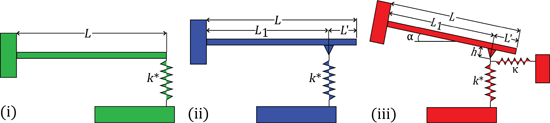
- traditional rectangular cantilever is weaker in air, which affects the sensitivity of multifrequency AFM detection. To address this issue, we previously proposed a bridge/cantilever coupled system model to enhance the higher-order modal response of the cantilever. This model is simpler and less costly than
- performance of the coupled system with that of traditional cantilevers and quantify the enhancement in higher-order modal response. Also, the optimal conditions for the enhancement of macroscale cantilever modal response are explored. Additionally, we also supplement the characteristics of this model
- , including increasing the modal frequency of the original cantilever and generating additional resonance peaks, demonstrating the significant potential of the coupled system in various fields of AFM. Keywords: atomic force microscopy; coupled system; higher-order modes; macroscale; multifrequency AFM


AFM-IR investigation of thin PECVD SiOx films on a polypropylene substrate in the surface-sensitive mode
Beilstein J. Nanotechnol. 2024, 15, 603–611, doi:10.3762/bjnano.15.51
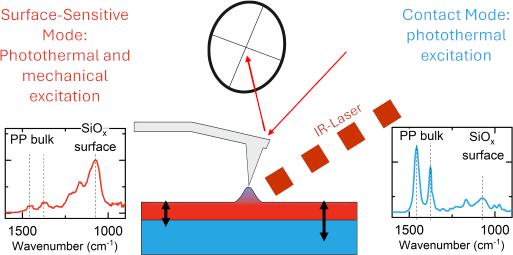
- absorption of IR photons results in molecular vibrations in the material under investigation. This photon absorption also causes the thermal expansion of the material. The resulting photothermally generated tip–sample force is measured via changes in the deflection signal of the AFM cantilever. The
- of the cantilever was used as detection mode at 205 kHz. The drive mode was set to 845 kHz, which equals a higher contact resonance mode. The spectra were collected with a spectral resolution of 4 cm−1, and the phase-locked loop (PLL) was disabled for collecting the spectra. In addition to these
- source with two lock-in amplifiers. Nonlinear coupling of these processes in a small volume underneath the tip generates a surface expansion behavior containing the mixing frequencies, which are transferred into the cantilever deflection. Either the sum (C+M) or difference (C−M) frequency is chosen for





