Search results
Search for "density" in Full Text gives 1728 result(s) in Beilstein Journal of Nanotechnology. Showing first 200.
Nanoglasses: a trail towards uncharted regions of vitreous materials and their properties?
Beilstein J. Nanotechnol. 2026, 17, 1047–1062, doi:10.3762/bjnano.17.72

- nanoglasses, where vertically aligned glassy columns create a high density of internal interfaces. We outline how interfacial excess energy, configurational entropy, and relaxation processes influence the metastability and properties of these materials. Furthermore, we discuss perspectives on how the control
- of interface density and chemistry may enable tailoring of mechanical, diffusion, and functional properties, including enhanced plasticity, altered transport behaviour, and tuneable optical or electronic responses. Finally, open questions regarding interfacial structure, thermodynamic driving forces
- , variations of the number density of point defects in crystalline materials within the documented range correspond to minor variations in the excess volume. Yet, also for glasses and with the absence of a crystalline lattice and the restrictions concerning excess volume that this poses, this range of 1–2% is


Influence of an external electric field on the catalytic CO oxidation of nanoscaled CeO2 and its La3+ and Gd3+ congeners
Beilstein J. Nanotechnol. 2026, 17, 1028–1038, doi:10.3762/bjnano.17.70
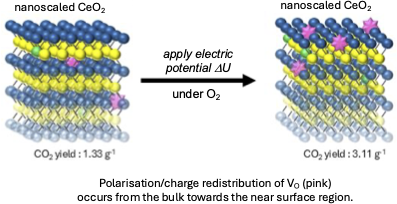
- and prove the fcc structure (Supporting Information File 1, Figures S5–S9) [22]. To investigate the effect of Gd3+ and La3+ on the doped nCeO2, full width at half maximum (β), the values of interplanar spacing (d), crystallite size (D, Scherrer value), dislocation density (δ value), and number of
- particles per unit surface area (N value) were calculated based on three different measurements; these values are summarized in Tables S3–S5 (Supporting Information File 1). According to the values of δ and ε, doping of Gd3+ and La3+ causes a higher defect density in the fcc lattice of nCeO2 as compared to


Synthesis and characterization of RF-sputtered ZnTe/Cu2−xTe thin films for solar cell applications
Beilstein J. Nanotechnol. 2026, 17, 1016–1027, doi:10.3762/bjnano.17.69
- ) diffractometer with Co Kα radiation (λ = 1.7889 Å). Raman spectra were obtained in a micro-Raman system (Labram, Dilor) with a 20 mW He–Ne laser (λ = 632.8 nm) focused through a 50× objective, resulting in a spot size of approximately 2 µm. Neutral density filters were employed to minimize local heating effects



Ultrasonic irradiation in the synthesis of nanohydroxyapatite: a chemically friendly technique for improving hemocompatibility and antibiofilm applications
Beilstein J. Nanotechnol. 2026, 17, 991–1015, doi:10.3762/bjnano.17.68
- form of nanoneedles, that are closely bound together with type-I collagen fibrils [7], as shown in Figure 1. Hydroxyapatite crystals are an important source of calcium and phosphorus, which give bone its density, mechanical strength, and bioactivity [8]. Methods for obtaining nanohydroxyapatite (nHA
- inhibits excessive crystal maturation and promotes the nucleation of ultrafine phases. These properties are decisive for the functionality of the biomaterial; by maximizing the density of active sites and the surface free energy, protein adsorption and chemical affinity with biological substrates are
- than those observed in the control (Figure 10A) are evident, though they exhibit a similar round profile. Further specialized studies are needed to determine the exact biochemical, metabolic, or osmotic nature of the darkness induced by nHA in red blood cells. A slight variation in the apparent density




Development of Protium heptaphyllum essential oil-loaded nanocapsules: experimental design and biological activity
Beilstein J. Nanotechnol. 2026, 17, 974–990, doi:10.3762/bjnano.17.67
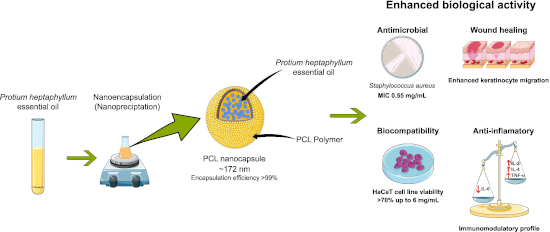
- plates at a density of 5 × 10⁴ cells/well. Cells were incubated at 37 °C in a humidified incubator with 5% CO2 (air jacketed CO2 incubator basic, VWR). After 24 h, oil-loaded nanocapsules (NPNC) were added at concentrations ranging from 0.8 to 12 mg/mL and incubated for an additional 24 h. Subsequently
- , as assessed by optical density (OD) at 600 nm using a microplate reader. Concentration–response data were log10-transformed and fitted using a four-parameter logistic nonlinear regression model in GraphPad Prism 9.0 (San Diego, USA) to determine the IC50. The IC50 value provides a quantitative
- measure of antimicrobial potency, complementing the MIC determination. Scratch wound assay HaCaT epithelial cells were cultured in 24-well plates containing complete DMEM at an initial density of 5 × 10⁴ cells per well. Cells were incubated at 37 °C and 5% CO2 until they reached approximately 90




Materials challenges in solid-state sensors for continuous monitoring of ions in water
Beilstein J. Nanotechnol. 2026, 17, 935–973, doi:10.3762/bjnano.17.66
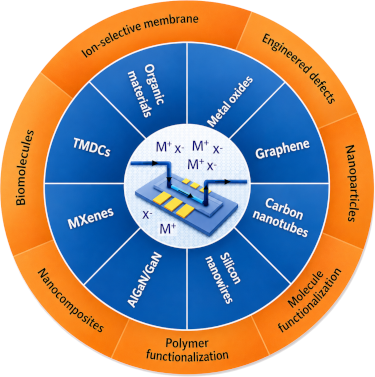
- semiconducting behavior with high transconductance, making them good candidates for gas and pH sensing [112][113], their high density of surface states makes sensing in aqueous environments challenging. A high density of surface states can cause charge scattering effects, which decrease the charge mobility while
- graphene, few-layer graphene (FLG), and bulk graphene differ in structure and properties, which affect their sensing performance. Single layer graphene is extremely surface sensitive because every atom is at the surface. It has a low density of electronic states near its Dirac point; thus, even minor
- changes in surface charge can shift its Fermi level significantly, making it highly responsive to external stimuli. Molecules or ions with electric dipoles can therefore easily shift the Fermi level electrostatically. However, its predominantly basal-plane surface, limited density of electrochemically



Enhanced erosion resistance and radiation stability of WC–WO3 nanocomposite films under 100 keV Kr+ ion irradiation
Beilstein J. Nanotechnol. 2026, 17, 922–934, doi:10.3762/bjnano.17.65
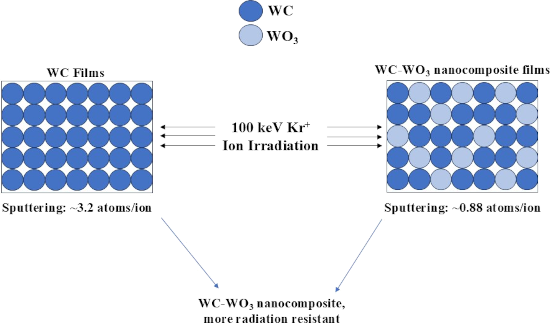
- density to the material are being considered to test the behaviour of synthesized nanocomposite films under far more extreme irradiation conditions. Numerous studies on the effect of Kr+ ion irradiation across different materials have demonstrated a wide range of ion-induced modifications in both surface
- migrate towards them. In such a setting, the cooperative movement of defects towards the grain boundaries stimulates grain boundary migration. This migration results in overall grain growth through atomic jumps of the defects across the grain boundaries [61][68]. The defect density can be estimated via



Supramolecular one-dimensional conducting nanofibers from a C3-symmetric tetrathiafulvalene derivative
Beilstein J. Nanotechnol. 2026, 17, 872–881, doi:10.3762/bjnano.17.63
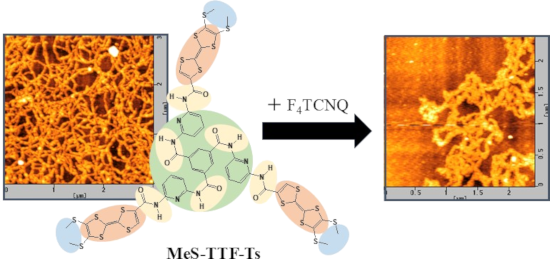
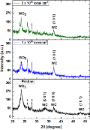
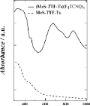
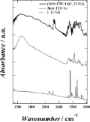
- complex formation. Such pronounced downshifts indicate an increase in electron density on the F4TCNQ moiety resulting from electron transfer from MeS-TTF-Ts to F4TCNQ, supporting the formation of charge-transfer interactions. Since the samples obtained in this study are supramolecular nanofibers rather


Light-driven ammonia electrooxidation via carbon nitride–ruthenium molecular interfaces
Beilstein J. Nanotechnol. 2026, 17, 854–862, doi:10.3762/bjnano.17.61
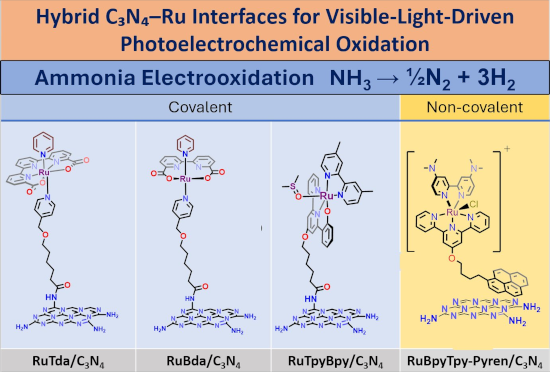
- anchoring strategies, covalent amide bond formation exploiting the surface amine groups of C3N4, and non-covalent π–π and C–H···π interactions mediated by pyrene-functionalized ligands, are presented as complementary rather than competing routes to the heterointerface, each controlling surface density
- , Table 1), synthesised in eutectic salt melts, is a highly crystalline ionic variant in which negatively charged nitrogen bridges compensate intercalated metal cations, yielding superior charge carrier mobility, reduced defect density, and extended exciton lifetimes that are of relevance to
- mechanistic insight is relevant to the design of hybrid C3N4–Ru electrodes, where the surface density and spatial arrangement of the anchored catalyst molecules can be controlled through the choice of anchoring chemistry. E) Covalent and non-covalent anchoring: two routes to the heterointerface The quality of


Sustainable fabrication of 2D-based devices through reuse of substrates with microfabricated electrodes
Beilstein J. Nanotechnol. 2026, 17, 818–827, doi:10.3762/bjnano.17.58
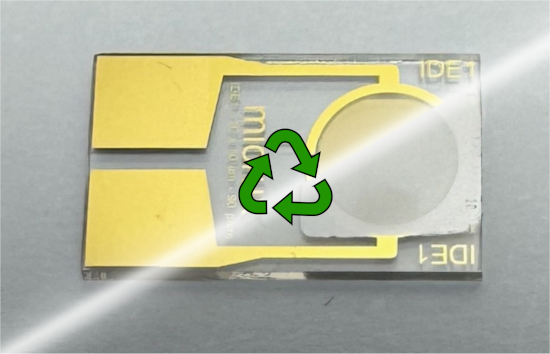
- gentle pressing using a cotton swab to promote adhesion. The sample was then annealed on a hotplate at 110 °C for 5 min to facilitate the transfer of films composed of MoS2 or WSe2 flakes. To ensure high-density coverage of the flakes, multiple sequential transfer steps were employed. For electronic


Glycerol photoelectrochemical oxidation reaction at carbon nitrides/BiVO4 materials
Beilstein J. Nanotechnol. 2026, 17, 806–817, doi:10.3762/bjnano.17.57
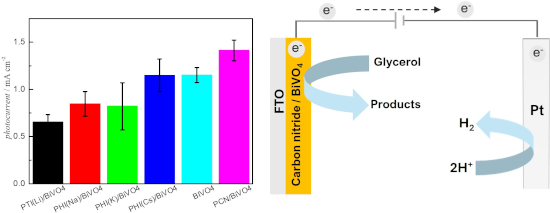
- (III) nitrate (Sigma-Aldrich, ACS reagent, 99.99%) solution (0.02 mol·L−1 in ethylene glycol) by applying a −1.8 V vs Ag/AgCl/KClsat potential for five cycles (2 s at open circuit between the cycles) until reaching a charge density of −0.04 C·cm−2 at each cycle (total charge of −0.2 C·cm−2) [33]. The
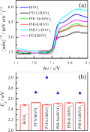
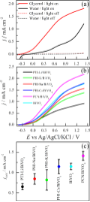
- film was also included. Interestingly, the onset potential for glycerol oxidation does not depend on the CN type used on the heterojunction, suggesting no doping effect on BiVO4. On the other hand, at higher applied potentials, the photocurrent density strongly depends on the CN type. The materials PTI
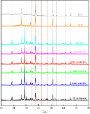
- photocurrent density 22% higher than that of bare BiVO4 for the glycerol oxidation at 0.6 V vs Ag/AgCl/KClsat (1.23 V vs RHE). However, the inherent CNs thermal stability alone cannot explain the behavior of the entire set of tested materials. For instance, the FEG-SEM-EDS indicates the presence of both C and




Tuning the electronic properties of defect-rich MoS2
Beilstein J. Nanotechnol. 2026, 17, 796–805, doi:10.3762/bjnano.17.56
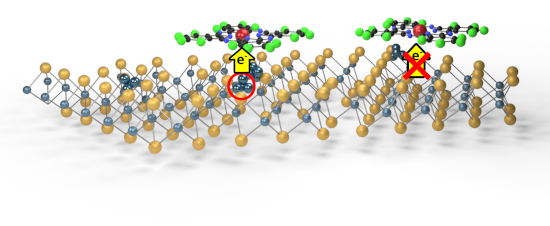
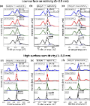
- levels or valence band features in photoemission can be attributed to different origins including a change of the electron density at the considered atom, different screening of the remaining photo-hole, or shifts of the reference (Fermi) level. Screening effects by additional adsorbates depend strongly
- (Figure 3c,d), corroborating that strong Co–MoS2 interactions require a high defect density. A similar peak for CoPcF16 at interfaces with metal substrates like Au and Cu and also WSe2 was found, which was ascribed to a reduced Co species resulting from the charge transfer from the substrate to the
- case of MoS2 substrates with a high density of surface defects. The molecules remain intact and a local charge transfer to the Co atom is observed for a small fraction of molecules only, especially for high defect concentrations (4 min Ar+). Most likely complex (bidirectional) charge rearrangements


Restorative potential of laser-synthesized silver nanoparticles with Salvia officinalis for periodontal disease treatment: an in vitro study
Beilstein J. Nanotechnol. 2026, 17, 781–795, doi:10.3762/bjnano.17.55
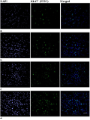
- the 2,3-bis-(2-methoxy-4-nitro-5-sulfophenyl)-2H-tetrazolium-5-carboxanilide (XTT) assay according to the standard procedures [27]. Upon seeding in 24-well plates at a density of 0.05 × 10⁶ and reaching the subconfluent level, the cells were treated with concentrations of 0.5 × MIC, 1 × MIC, and 2



Substrate-dependent pore formation in molybdenum disulfide monolayers under ion irradiation
Beilstein J. Nanotechnol. 2026, 17, 769–780, doi:10.3762/bjnano.17.54
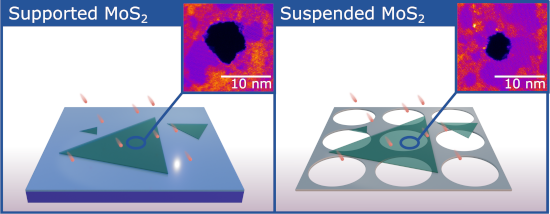
- MoS2 on SiO2. Reduced mobility can slow lateral charge redistribution, which may increase the spatial localization of the transient excitation and thus raise the local electronic energy density. This in turn may increase the local energy density available for lattice excitation. We note that this
- the HICS beamline at the University of Duisburg-Essen [42][66][67]. The ions with charge states q = 28+ up to q = 44+ are provided by an electron beam ion source (EBIS). Samples were irradiated under perpendicular incidence with a fluence of Φ = 5 × 1011 cm−2. At this fluence, the density of pores is


Interface-engineered Caco-2 cell culture on a collagen-coated liquid–liquid interface in a microfluidic device
Beilstein J. Nanotechnol. 2026, 17, 760–768, doi:10.3762/bjnano.17.53
- evaluate whether gravitational forces or interfacial tension dominate when two fluids of different densities are in contact. Here, ρ denotes the density difference between FC-43 and the collagen solution, g is the gravitational acceleration, L is the channel width, and σ is the interfacial tension
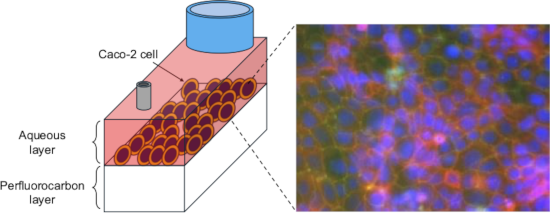
- collagen-containing serum-free DMEM, the cell suspension was introduced and seeded at a density of 1.5 × 10⁵ cells/cm2. The growth of Caco-2 cells on the liquid–liquid interface is shown in Figure 5. The images were captured near the center of the channel. At two days post-seeding, most Caco-2 cells had
- onto the device reservoir. The cell suspension was then introduced into the channel from the port using a syringe pump at a flow rate of 20 μL/min for 1 min, and Caco-2 cells were seeded onto the liquid–liquid interface at a density of 1.5 × 10⁵ cells/cm2. The microfluidic device was then put in an


Tailoring Ag–Pt nanoalloys through solid-state dewetting: structural and optical insights
Beilstein J. Nanotechnol. 2026, 17, 748–759, doi:10.3762/bjnano.17.52

- in both the real and imaginary components of the dielectric function (ε1 and ε2), leading to the quenching of the plasmon resonance [66]. Moreover, Pt d-electrons do not participate in the collective charge density oscillations in Ag–Pt alloys [37][67][68]. To further confirm the formation of




Superconducting artificial neural networks and quantum circuits
Beilstein J. Nanotechnol. 2026, 17, 744–747, doi:10.3762/bjnano.17.51
- Josephson diode introduced in this work enforces unidirectional pulse propagation, prevents backward influence between connected neurons, and enables compact circuit designs with increased integration density. The development of advanced technologies for the fabrication of layered functional nanostructures
Oxidative atmosphere-driven formation of single-phase spinel CuRh2O4 nanofibers for alkaline water oxidation
Beilstein J. Nanotechnol. 2026, 17, 737–743, doi:10.3762/bjnano.17.50
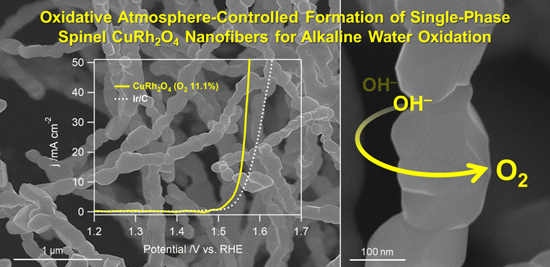
- to IrO2 (1.53 V vs RHE). Furthermore, the accelerated reaction kinetics of the Cu–Rh–O series, which contribute to its enhanced intrinsic OER activity, were confirmed by Tafel analysis (η vs log j, where η represents the overpotential and j is the GSA-normalized current density) derived from the
- electrocatalyst demonstrates excellent durability, as shown in Figure 6c, maintaining a nearly stable potential during 10,000 s of continuous OER operation at a constant current density of 10 mA·cm−2. Conclusion In summary, Cu–Rh bimetallic single-phase spinel oxide nanofibers were successfully synthesized via




Molecular engineering of individual dye-based nanoparticle photostability for ultrabright two-photon fluorescence
Beilstein J. Nanotechnol. 2026, 17, 688–696, doi:10.3762/bjnano.17.48
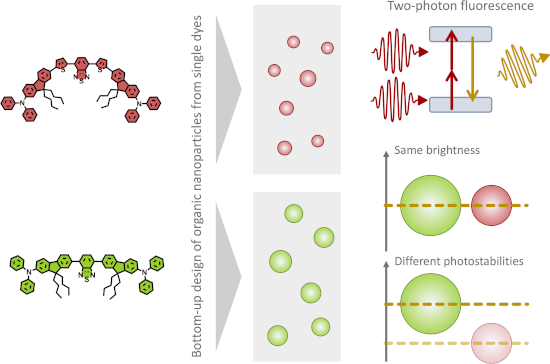
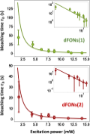
- dye packing density within the nanoparticles. Such non-radiative deactivation is expected to significantly increase local heating. Under 2P excitation, we hypothesize that the larger σ2 of dFONs(2) results in nanoparticle overheating due to rapid multicycling of excitation (induced by intense laser


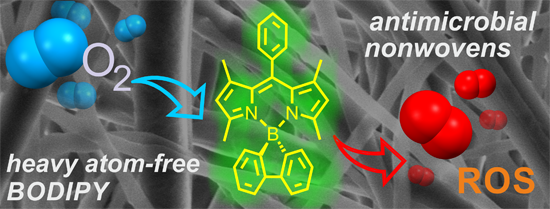
Decontamination from water pollutants and pathogens by electrospun nanofibers doped with heavy-atom-free borafluorene-BODIPY photosensitizers
Beilstein J. Nanotechnol. 2026, 17, 668–682, doi:10.3762/bjnano.17.46
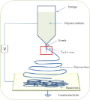
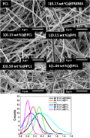
- the theoretical mass of the solid sample, calculated as the product of the density of PCL, 1.081 g·cm−3 [51], and the volume Vt ≈ 3.98 cm3. The pore size (P) was estimated using Equation 2: Here, D denotes the mean fiber diameter for each specimen, (1 − p) corresponds to the area of fibers per unit



Recent progress in enhancing built-in electric fields of perovskite solar cells via junction engineering
Beilstein J. Nanotechnol. 2026, 17, 602–621, doi:10.3762/bjnano.17.42
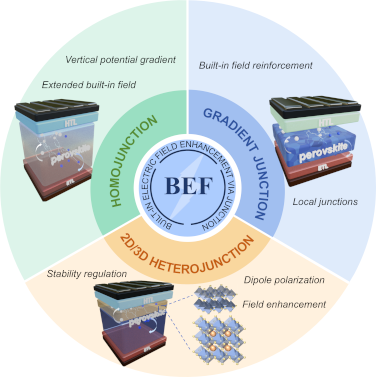
- the F16CuPc-modified device decreased from 1069.3 to 901.3 ns, indicating more efficient carrier extraction. Despite the trap density remaining nearly unchanged (2.19 × 10¹⁵ vs 2.00 × 1015 cm−3), EIS testing showed a significant increase in recombination resistance (from 945.1 to 5763 Ω), suggesting
- defect density. IPA treatment, performed in a glove box at 25 °C with <0.1 ppm H2O, not only formed the n/n+ homojunction but also suppressed iodine vacancy formation and PbI2 accumulation, reducing aging decay from 55% to 19% after 1100 h. In simplified HTL-free device architectures, surface or near
- –p homojunction strategy, which approximately doubled carrier lifetime and mobility (about 17.2 cm2·V−1·s−1), and reduced the trap density by half, using transient photocurrent and transient photovoltage spectroscopy, and TRPL. BEF enhances directional transport through the n–p homojunction and



Towards targeted drugs and next generation of nanomedicines
Beilstein J. Nanotechnol. 2026, 17, 598–601, doi:10.3762/bjnano.17.41
- interaction with the low density lipopoprotein receptor (LDLR) on the hepatocytes [29]. Other examples of nanomedicines exploiting endogenous targeting are the so-called selective organ-targeting (SORT) lipid nanoparticles, which adsorb different corona proteins on their surface depending on their charge
Impacts of annealing on structural and photophysical properties of zinc phthalocyanine adsorbed on graphene
Beilstein J. Nanotechnol. 2026, 17, 576–585, doi:10.3762/bjnano.17.39
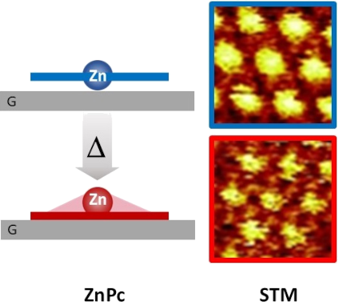
- -enhanced Raman scattering (GERS) [27]. Such combinations allow atomic-scale inspection of both molecular organization and electronic structures. These 2D systems are accessible to numerical simulations such as density-functional theories, in particular concerning Pcs [18][28]. Such simulations can be


Fractional shot noise of an SU(N) Kondo system
Beilstein J. Nanotechnol. 2026, 17, 515–540, doi:10.3762/bjnano.17.34
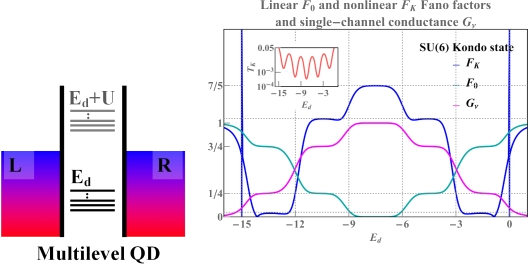
- capacitively coupled N-dot structure with dots connected to the separate leads. The occupation number operators of the spin-orbital and of the Fermi sea in the left (right) leads are given by and , respectively. We assume the coupling strength to the electrodes with the rectangular density of states 1/2W (W
- denoting the electron bandwidth of electrodes in the wide-band approximation, where the leads are represented by a flat density of states). Γ = πt2/2W is the coupling strength to leads. In the calculations, we use the natural units setting ℏ = kB = e = g = |νB| = 1. We also take W/50 as the energy unit


![[Graphic 127]](/bjnano/content/inline/2190-4286-17-34-i187.svg?max-width=637&scale=1.18182)

Probing internal continua and atomic ultrafast charge transfer within size-controlled nanoparticles by post-collision interaction in core-hole clock spectroscopy
Beilstein J. Nanotechnol. 2026, 17, 505–514, doi:10.3762/bjnano.17.33
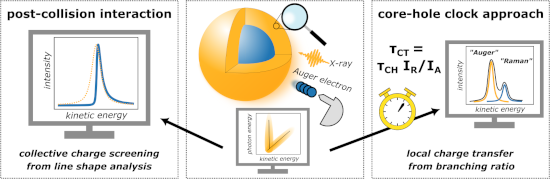
- transfer times obtained from the core-hole clock approach probe the very local charge transfer to neighboring atomic sites and are particularly sensitive to the energetic and spatial overlap of the involved orbitals and the available density of states (DOS). Accordingly, they could be sensitive to changes
- transfer rates. An energy level diagram of CdSe/ZnS QDs is schematically shown in Figure 2c. Owing to its smaller bandgap, the CdSe core is expected to have a higher density of states at a given energy compared to the wider-bandgap ZnS shell. From this perspective, charge transfer toward the core is
- [33], due to the additional attenuation, both values are still severely underestimating the contribution of the signal from the shell. Given that an increasing quantum confinement for increasingly small shell thicknesses would results in a decreased density of states, one would expect a decreasing