Search results
Search for "energy" in Full Text gives 2056 result(s) in Beilstein Journal of Nanotechnology. Showing first 200.
Nanocarrier strategies to overcome P-glycoprotein-mediated drug resistance in cancer therapy
Beilstein J. Nanotechnol. 2026, 17, 882–921, doi:10.3762/bjnano.17.64
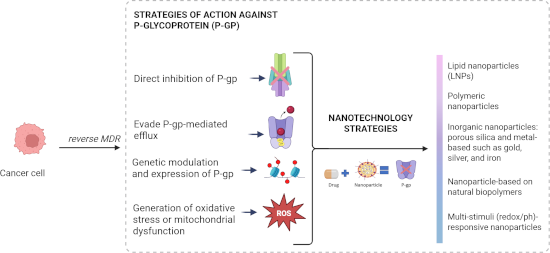
- -peptide-functionalized liposomes [36]. Both methodologies affirm that the crux resides in activating internalization routes that circumvent the efflux pump while concurrently depleting its energy source or locally blocking it. Supporting this concept is the incorporation of TPGS into the liposomal bilayer
- examples illustrate the key to success of integrating three synergistic functions within a single nanocarrier: (i) protection of the cytotoxic agent until release triggered by pH or ROS stimuli, (ii) incorporation of a sensitizer (e.g., TPGS, indomethacin, Pluronic fragments) to deplete energy or inhibit


Light-driven ammonia electrooxidation via carbon nitride–ruthenium molecular interfaces
Beilstein J. Nanotechnol. 2026, 17, 854–862, doi:10.3762/bjnano.17.61
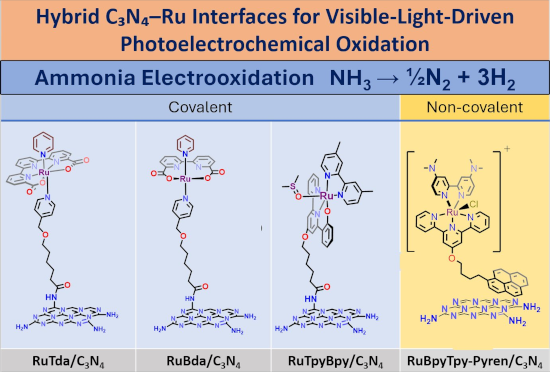
- ; hybrid semiconductor–molecular interfaces; molecular ruthenium catalysts; photoelectrocatalysis; Perspective A) The energy challenge and the catalysis gap The global transition away from fossil fuels demands new paradigms for how chemical energy is stored and released. At the heart of this challenge
- carrier, remains an open and compelling opportunity [8]. B) Learning from nature: photosynthesis as the conceptual template The photoactive system took inspiration from natural photosynthesis (Figure 1). Plants, algae, and cyanobacteria optimise the conversion of sunlight into chemical energy, and the
- protein scaffold. These antenna pigments absorb photons across a broad range of the visible spectrum and funnel the resulting electronic excitation energy, with near-unity quantum efficiency, to a specialised reaction centre. This energy funnelling process is called photosensitization: The antenna


Sustainable fabrication of 2D-based devices through reuse of substrates with microfabricated electrodes
Beilstein J. Nanotechnol. 2026, 17, 818–827, doi:10.3762/bjnano.17.58
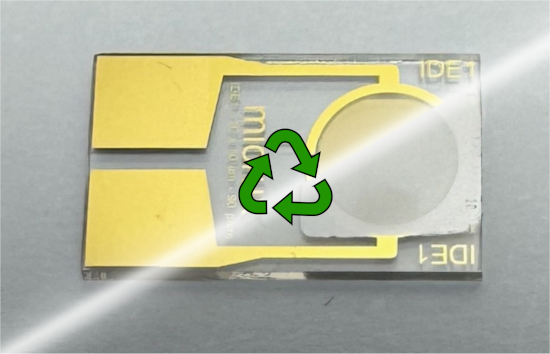
- conditions. As summarized in Table S1 (Supporting Information File 1), NMP and DMF possess surface tensions (γ) and dispersive solubility parameters (δD) that closely match the surface energy characteristics of MoS2 (γ ≈ 40 mN/m, δD ≈ 18 MPa1/2), whereas dimethyl sulfoxide (DMSO) and acetone deviate more


Glycerol photoelectrochemical oxidation reaction at carbon nitrides/BiVO4 materials
Beilstein J. Nanotechnol. 2026, 17, 806–817, doi:10.3762/bjnano.17.57
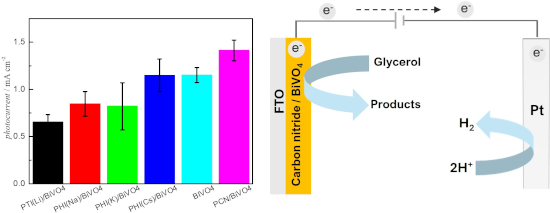
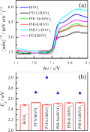
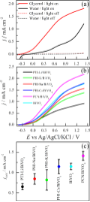
- acetylacetonate at 500 °C for 2 h. The CN/BiVO4 heterojunctions presented bandgap energy values, Eg, similar to pure BiVO4. X-ray diffraction analysis also revealed that the BiVO4 phase was not altered by the presence of the CN. However, scanning electron microscopy analysis coupled to energy-dispersive X-ray
- ; bismuth vanadate; glycerol valorization; heterojunctions; photoelectrochemistry; Introduction Hydrogen production based on sustainable and renewable energy sources (the so-called green-H2) is a promising alternative for energy storage, with potential applications in fuel cells and the chemical industry
- [1]. Among the various methods of producing green-H2 [2], water photoelectrolysis [3] allows the direct use of solar energy, decreasing reliance on fossil fuels, and having potential for large-scale hydrogen production [4]. On the other hand, the challenges related to the sluggish kinetics of the





Tuning the electronic properties of defect-rich MoS2
Beilstein J. Nanotechnol. 2026, 17, 796–805, doi:10.3762/bjnano.17.56
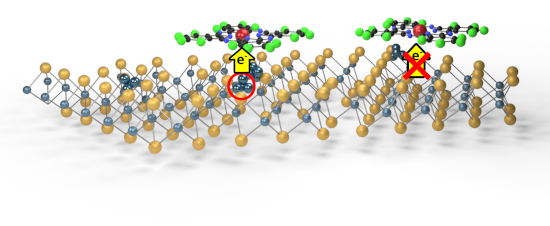
- Fermi energy in such defect-rich MoS2 can be tuned by the subsequent deposition of CoPcF16, which is verified by a shift in Fermi level for the Ne sputtered surface, under complex charge rearrangements including a charge transfer from all the substrates towards the cobalt atom of the organic molecule
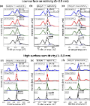
- GmbH) and a hemispherical analyzer (Phoibos 150, SPECS). The energy was calibrated to the binding energies of Au 4f7/2 (84.00 eV), Ag 3d5/2 (368.21 eV) and Cu 2p3/2 (932.63 eV) using Ar-ion sputtered foils of Au, Ag, and Cu (Goodfellow Cambridge Ltd.). At the LowDosePES endstation the samples were
- investigated by XAS and (angle-resolved) PES using an angle-resolved time-of-flight detector (ARTOF). For XAS, the total electron yield of the sample current was measured. The energy resolution for the Co L edges was 263 meV at a photon energy of 790 eV. For photoemission at excitation energies of 900, 500


Restorative potential of laser-synthesized silver nanoparticles with Salvia officinalis for periodontal disease treatment: an in vitro study
Beilstein J. Nanotechnol. 2026, 17, 781–795, doi:10.3762/bjnano.17.55
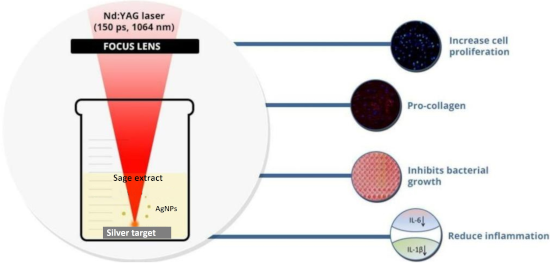
- energy on nanoparticle synthesis. The laser beam was focused through a lens having a focal length of 15.2 cm with the target placed at 16.2 cm from this lens, that is, under slightly defocused conditions. An automated x–y translation stage ensured continuous movement of the target during ablation so that
- energies are relatively low, the corresponding fluences are sufficient to induce efficient ablation due to the short pulse duration of the picosecond laser. Our results showed that higher laser pulse energy (6 mJ) and surrounding sage extract increase total silver concentration and reduce the hydrodynamic
- diameters (dH). The smallest nanoparticles with the highest concentration were produced by applying a laser energy of 6 mJ in the sage solution (SageAgNPs6mJ). The two AgNP types with the higher concentration and the smaller particle size, with and without sage extract, that is SageAgNPs6mJ and dwAgNPs6mJ




Substrate-dependent pore formation in molybdenum disulfide monolayers under ion irradiation
Beilstein J. Nanotechnol. 2026, 17, 769–780, doi:10.3762/bjnano.17.54
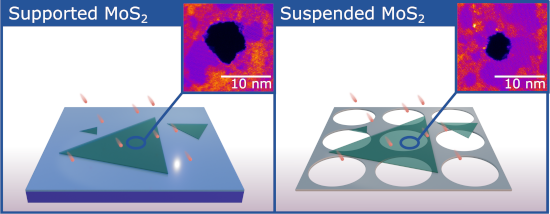
- Abstract Ion irradiation is a versatile tool for nanostructuring surfaces, yet the roles of energy deposition and dissipation at the surface and in ultrathin materials remain poorly understood. In this study, we investigate nanopore formation in monolayer MoS2 on different substrates under irradiation of
- ); Introduction Ion beams provide a controllable route to engineer defects in two-dimensional (2D) materials, enabling property tuning from doping to nanopore formation [1][2][3][4]. Because kinetic energy, charge state, and mass can be varied over wide ranges, ion irradiation offers a large parameter space for
- nanostructuring. However, achieving predictive control requires a detailed understanding of ion–solid interaction and post-impact energy dissipation [5]. While ion–bulk interactions are well described across many energy regimes [6][7][8], the interaction with surfaces and ultrathin targets, particularly for


Tailoring Ag–Pt nanoalloys through solid-state dewetting: structural and optical insights
Beilstein J. Nanotechnol. 2026, 17, 748–759, doi:10.3762/bjnano.17.52

- homogeneous elemental distribution, as measured by energy dispersive spectroscopy. Additionally, X-ray photoelectron spectroscopy measurements confirmed the coexistence of both metals in metallic states, with a slight Ag deficiency attributed to its higher instability and desorption during the annealing
- film. The disintegration mechanism is driven by atomic diffusion, and the tendency of the system is to reduce the surface energy through the formation of isolated islands [17][18][19][20]. This process is governed by the pursuit of balance between the energy needed to create a new surface (surface
- tension) and the energy gained by reducing the total contact area between the film and the substrate (interfacial tension). A comprehensive analysis of the transformation of a thin layer into isolated islands was provided in a series of publications by Thompson and collaborators [13][20][21][22]. They




Superconducting artificial neural networks and quantum circuits
Beilstein J. Nanotechnol. 2026, 17, 744–747, doi:10.3762/bjnano.17.51

- Anatolie S. Sidorenko Technical University of Moldova, Chisinau 2004, Republic of Moldova 10.3762/bjnano.17.51 Keywords: artificial neural networks; high-performance computing; Josephson junctions; superconducting digital technologies; superconducting quantum circuits; ultra-low energy
- ; however, it enables significantly lower energy dissipation and higher computational speed compared to conventional von Neumann architectures. A representative example is the IBM TrueNorth processor implemented using standard complementary metal–oxide–semiconductor (CMOS) technology in 2014. This processor
- models fully connected and recurrent neural networks and integrates one million model neurons and 256 million synaptic connections [4]. For solving more complex computational tasks that require substantial processing power, a critical challenge arises: the need for a radical reduction in energy
Oxidative atmosphere-driven formation of single-phase spinel CuRh2O4 nanofibers for alkaline water oxidation
Beilstein J. Nanotechnol. 2026, 17, 737–743, doi:10.3762/bjnano.17.50
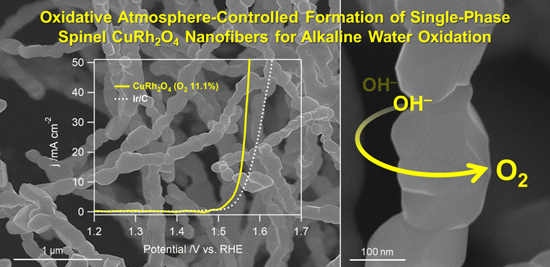
- the efficiency of alkaline water electrolysis [1]. Developing robust and highly active OER electrocatalysts is therefore essential for practical hydrogen production and large-scale renewable energy conversion. Among numerous catalyst platforms, spinel oxides (AB2O4) have attracted significant




Environmental applications of silver nanoparticles: state-of-the-art review and emerging trends
Beilstein J. Nanotechnol. 2026, 17, 697–736, doi:10.3762/bjnano.17.49
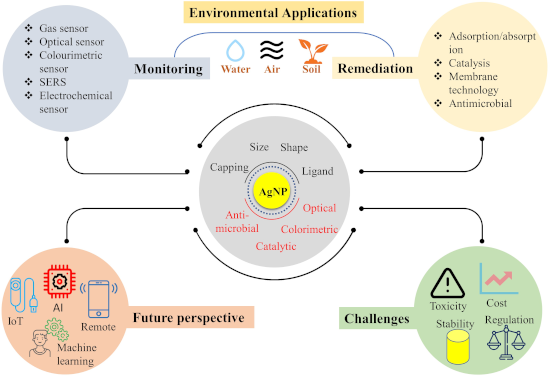
- , which calculated the AgNP concentration as particles per millilitre [53]. Microscopic techniques, such as transmission electron microscopy, provide high-resolution images of individual nanoparticles, confirming morphology, size distribution, and elemental composition when coupled with energy-dispersive
- mechanism includes strong light absorption, a lower bandgap energy, and the generation of UV-induced electron–hole pairs [118]. The role of persulfate-conjugated Ag+ in removing the carboxylic PFAS perfluorooctanoic acid was demonstrated through Fenton oxidation at 20 °C, where fluorine was released along
- , donating electrons that lower the activation energy barrier for hydride ion transfer to the substrate. This process follows pseudo-first-order kinetics, with smaller particle sizes (higher surface-to-volume ratio) and electron-rich surfaces (modulated by capping agents) yielding higher apparent rate


Molecular engineering of individual dye-based nanoparticle photostability for ultrabright two-photon fluorescence
Beilstein J. Nanotechnol. 2026, 17, 688–696, doi:10.3762/bjnano.17.48
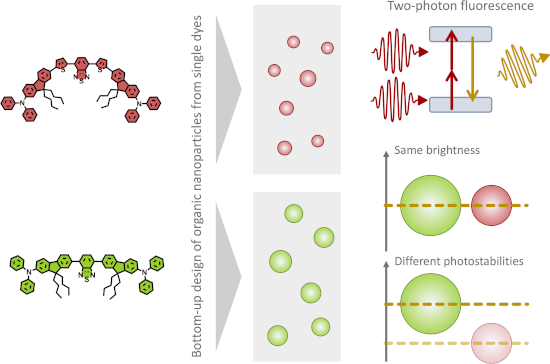
- 0.06, in agreement with the energy gap law [33]. It is worth noting that the fluorescence quantum yield of dFONs(1) has been reported in the literature to be independent of nanoparticle size [20]. This suggests that the excited states of the dFONs based on this quadrupolar structure are less affected
- (energy ℏω of a single infrared photon, waist W0 of the infrared excitation laser in the focal plane, repetition period T of the laser), and the characteristics of the dye assemblies (the 2P absorption cross section of individual dye molecules and, importantly, a coefficient α taking into account a local


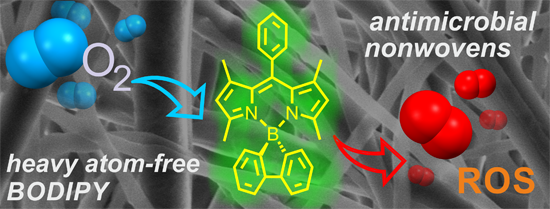
Decontamination from water pollutants and pathogens by electrospun nanofibers doped with heavy-atom-free borafluorene-BODIPY photosensitizers
Beilstein J. Nanotechnol. 2026, 17, 668–682, doi:10.3762/bjnano.17.46
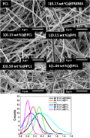
- , and p indicates the porosity. Photocatalyst distribution in the mats The presence of BODIPY in the PCL, PMMA, and PS matrices was verified using energy-dispersive X-ray spectroscopy (EDS) as well as time-of-flight secondary ion mass spectrometry (ToF SIMS) measurements performed on a Helios 5 Dual
- ) analysis was done with an AXIS Supra+ (Kratos Analytical) instrument equipped with a monochromatic Al Kα X-ray source (hν = 1486.6 eV, operating at 10 mA, 15 kV). The system base pressure was pb = 3.9·10−9 Torr. The pass energy was set to 160 eV (scanning step 0.9 eV) for survey spectra acquisition and 20
- eV (scanning step 0.05 eV) for high-resolution spectra acquisition. To compensate charging effects, the Kratos charge neutralization system was used. The binding energy scale was calibrated with respect to the C–C component of C 1s spectra (284.8 eV). The acquired spectra were analyzed using CASA XPS



Cellulose as a photocatalyst support material: extraction, structural features, and environmental applications
Beilstein J. Nanotechnol. 2026, 17, 635–652, doi:10.3762/bjnano.17.44
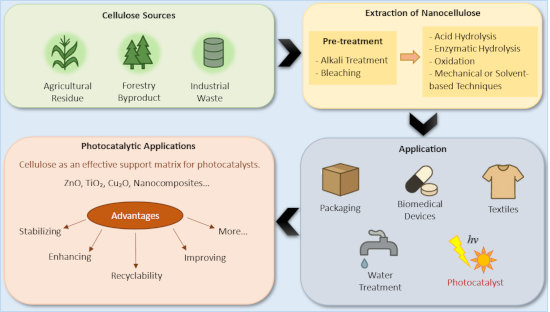
- water treatment performance as shown in Figure 2 [14]. Photocatalytic degradation is an advanced oxidation process (AOP) in which a catalyst is used to accelerate the degradation or breakdown of organic pollutants in water or air using light energy. This AOP relies on the ability of the catalyst to
- materials that can absorb light energy and generate electron–hole pairs, which then participate in redox reactions to produce ROS that degrade organic pollutants. Titanium dioxide (TiO2) and zinc oxide (ZnO) are the common catalysts that have been used [18][19]. Figure 3 illustrates the general mechanism of
- photodegradation of organic pollutants by photocatalyst. This review aims to summarize current methods for extracting cellulose-based materials, focusing on their technical, economic, and environmental aspects. Key considerations include yield, purity, energy use, and scalability. The discussion includes


Two-step laser synthesis of Ag@TiO2 nanomaterials for the photocatalytic degradation of rhodamine B
Beilstein J. Nanotechnol. 2026, 17, 622–634, doi:10.3762/bjnano.17.43
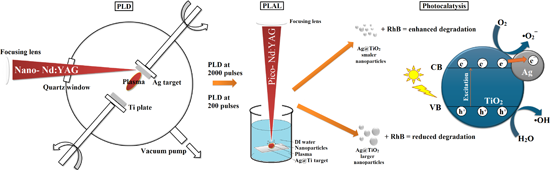
- nanomaterials. These physical processes enable the direct formation of highly pure and well-dispersed nanoparticles from bulk targets without the need for chemical precursors or stabilizing agents. By fine-tuning laser parameters such as wavelength, pulse energy, and ambient conditions, researchers can tailor
- characterization was performed using scanning electron microscopy (SEM) and transmission electron microscopy (TEM) with energy-dispersive spectroscopy (EDS), aiming to establish a clear correlation between synthesis parameters, nanostructure features, and photocatalytic activity. In our previous studies [6][7][21
- a state of initial instability. Influence of Ag on the bandgap energy of TiO2 UV–vis spectroscopy was employed to investigate the effect of Ag doping on TiO2 and to determine the bandgaps of both TiO2 and Ag@TiO2 samples. Figure 7a displays the absorption spectra of TiO2 and Ag-modified TiO2 samples


Recent progress in enhancing built-in electric fields of perovskite solar cells via junction engineering
Beilstein J. Nanotechnol. 2026, 17, 602–621, doi:10.3762/bjnano.17.42
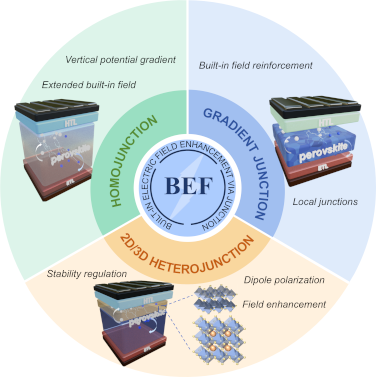
- transport. By contrast, 2D/3D heterojunctions exploit interfacial dipole formation, intrinsic polarization, and phase-penetration effects to amplify and homogenize the BEF, while simultaneously improving energy-level alignment and defect passivation. We systematically compare these strategies within a
- , optimizing the BEF provides a powerful lever for advancing power conversion efficiency, open-circuit voltage, and long-term operational stability in state-of-the-art PSCs, while avoiding the introduction of parasitic energy barriers. Keywords: band alignment; built-in electric field; carrier dynamics
- aligning energy levels [16]. These advantages have established heterojunctions as a major research hotspot, with current efforts shifting from simple passivation to deliberate interfacial potential design [17]. Nevertheless, the impact of phase penetration depth, residual strain, and bulk inhomogeneity on




Probing tribological evolution in atomically thin MoS2 at different scales
Beilstein J. Nanotechnol. 2026, 17, 586–597, doi:10.3762/bjnano.17.40
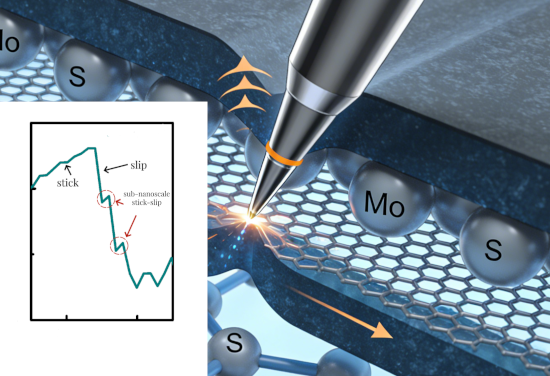
- atomic lattice site until the lateral force overcomes interfacial interactions, followed by an instantaneous “slip” to the next stable site [9]. This stick–slip motion is widely regarded as the elementary mechanism of energy dissipation in nanoscale friction, underpinning efforts to understand energy
- by the applied load, as inferred from the experimental trends observed herein. Furthermore, follow-up simulation studies [12] have revealed a strong dependence of sub-nanoscale stick–slip motion on interfacial contact area and contact geometry. These simulations demonstrated that the energy state of


Impacts of annealing on structural and photophysical properties of zinc phthalocyanine adsorbed on graphene
Beilstein J. Nanotechnol. 2026, 17, 576–585, doi:10.3762/bjnano.17.39
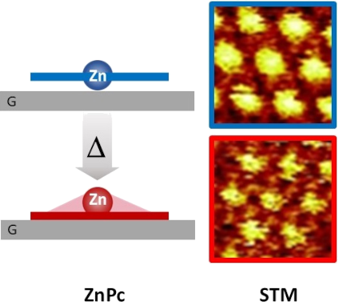
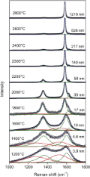
- , red curve). This is accompanied by a parallel spectral displacement of its vibronic replica, located 0.21 eV higher in energy, from 608 to 630 nm. At an intermediate time of annealing (30 min, Figure 1a, purple curve) the two distinct Q-band peaks at 676 nm and 711 nm are simultaneously observed
- characteristic of a ZnPc response [43]. However, the highest energy peak is strongly shifted from its value of 1506 cm−1 in the bulk to 1543 cm−1 in this assembly. The same shift has been reported for the ZnPc embedded inside carbon nanotubes or adsorbed on their surface [44]. This is considered as a signature


Laser–material interactions in liquids for the synthesis of nanomaterials: current status and perspectives
Beilstein J. Nanotechnol. 2026, 17, 571–575, doi:10.3762/bjnano.17.38
- beam scanning, and flow-cell designs have enabled scaling to g/h production rates [66][67]. Even a higher 10 g/h productivity has recently been demonstrated in microparticle LFL using high pulse energy (>20 mJ) nanosecond laser systems [68]. While these advances represent an important step toward
Synthesis of Cu–Mo/TiO2 and Co–Mo/TiO2 photocatalysts for the efficient degradation of organic pollutants in water
Beilstein J. Nanotechnol. 2026, 17, 559–570, doi:10.3762/bjnano.17.37
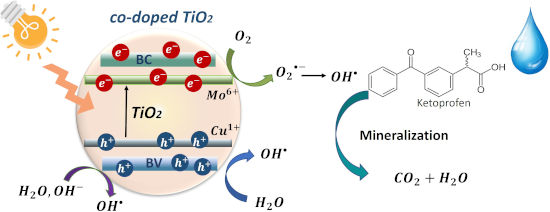
- the doping of TiO2 can be done during its synthesis or through an impregnation technique, which is a very simple method that does not require high energy consumption. In addition, the transition metal precursors are relatively inexpensive, which makes these materials more attractive to be used in
- distance of undoped TiO2 [28]. Mo6+ can substitute the Ti4+ atom into the crystalline network. Another possibility is the Mo4+ or Mo6+ interstitial doping. However, due to energy issues, substitution doping is the most common and likely [29]. Further, the presence of Mo as a dopant is evident since it
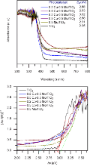
- the increase in specific surface area in these materials. Optical characterization The photocatalysts’ bandgap energy (Eg) was measured by UV–vis diffuse reflectance spectroscopy. Figure 3 shows the absorption spectra of all the materials. Pure TiO2 absorbs light in the UV range. With the



Electrochemical determination of ciprofloxacin using a MIL-101/reduced graphene oxide-modified electrode
Beilstein J. Nanotechnol. 2026, 17, 541–554, doi:10.3762/bjnano.17.35
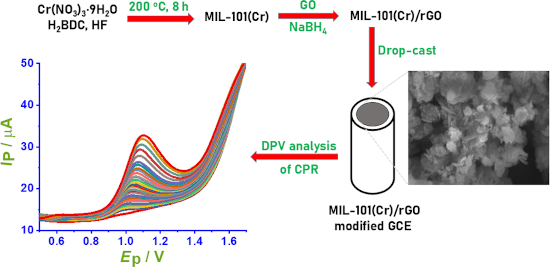
- ) equipped with an energy-dispersive X-ray (EDX) system. Raman spectroscopy was performed on an Xplora Plus instrument (Horiba, Japan) with a stimulating light wavelength of 785 nm. Electrochemical impedance spectra (EIS) were recorded using an Autolab PGSTAT302N system. Electrochemical experiments were
- , respectively. The energy gap between these peaks (≈11.1 eV) is typical of Cr3+ species coordinated with oxygen in the Cr–O clusters of the MIL-101 framework [25]. Importantly, no signals related to Cr6+ species (usually observed at higher binding energies) are detected, confirming that chromium remains mainly


Fractional shot noise of an SU(N) Kondo system
Beilstein J. Nanotechnol. 2026, 17, 515–540, doi:10.3762/bjnano.17.34
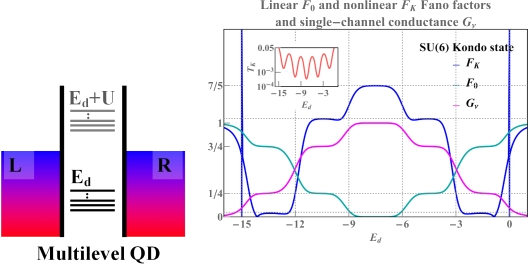
- both fundamental physics and potential quantum information applications, detection, and sensing [1][2][3][4]. To achieve these goals, the increasing ability to manipulate quantum states is crucial. As electrons are confined in fewer dimensions and as the size of the dot decreases, the charging energy
- of a single excess charge on the dot increases. Strong dynamic correlations start to play a dominant role when Coulomb interaction exceeds electron kinetic energy. For dots weakly coupled to the leads, many-body resonances build up at low temperatures, opening new paths for coherent transport. Due to
- universal scaling, the Kondo temperature kBTK being the only energy scale that governs low-energy properties [54]. The Kondo temperature can be extracted, for example, from the temperature dependence of conductance or from the susceptibility [4][55][56]. For bulk systems, also spectroscopic measurements of


![[Graphic 127]](/bjnano/content/inline/2190-4286-17-34-i187.svg?max-width=637&scale=1.18182)

Probing internal continua and atomic ultrafast charge transfer within size-controlled nanoparticles by post-collision interaction in core-hole clock spectroscopy
Beilstein J. Nanotechnol. 2026, 17, 505–514, doi:10.3762/bjnano.17.33
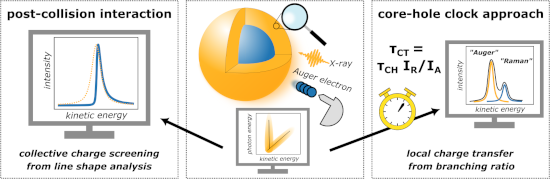
- transfer rates. An energy level diagram of CdSe/ZnS QDs is schematically shown in Figure 2c. Owing to its smaller bandgap, the CdSe core is expected to have a higher density of states at a given energy compared to the wider-bandgap ZnS shell. From this perspective, charge transfer toward the core is
- that only the slower charge transfer within the shell layers can be observed. At an electron kinetic energy of 2118 eV, the inelastic mean free path for ZnS is of the order of 4 nm [30]. Given a layer thickness of 0.3 nm for one ZnS shell layer [31], for the sample with seven double layers, already 40
- towards higher kinetic energies. An average of the Auger component’s line shape is shown in Figure 3a. It is obtained by integrating the resonant spectra above the absorption edge between photon energies of 2474 and 2480 eV. Auger components are adding since they are at constant kinetic energy, whereas



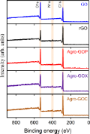
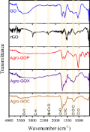
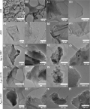
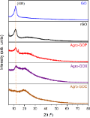
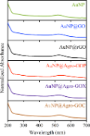
Upcycling agroindustrial waste into graphene oxide supports for gold nanoparticles: toward sustainable nanomaterials
Beilstein J. Nanotechnol. 2026, 17, 489–504, doi:10.3762/bjnano.17.32
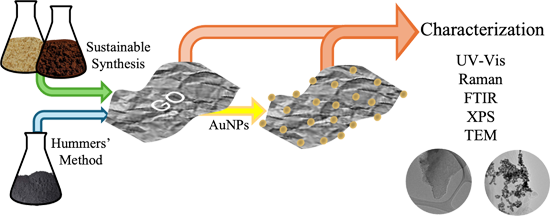
- ; hybrid nanocomposites; plasmonic nanomaterials; surface functionalization; Introduction Graphene oxide (GO), due to its unique physicochemical properties, is widely explored regarding a range of applications, including sensors, water purification, and energy storage and conversion [1][2][3][4][5]. GO is
- effective, these methods have significant drawbacks; they are time-consuming, require substantial energy input, and involve the use of highly reactive and toxic chemical reagents. Additionally, they generate large volumes of hazardous liquid waste, raising environmental and safety risks, especially when
- pyrolysis process (350 °C for 1 h and 900 °C for 3 h), producing amorphous carbon that required further oxidation; this route is energy-intensive and generates impurities, making a modified Tour treatment necessary, with the drawback of strong oxidants and substantial chemical waste [18]. Similarly, Sujiono



Defects and defect-mediated engineering of two-dimensional materials: challenges and open questions
Beilstein J. Nanotechnol. 2026, 17, 454–488, doi:10.3762/bjnano.17.31
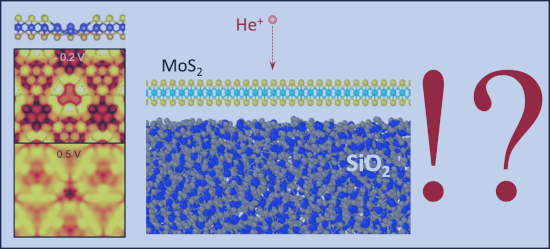
- -mediated engineering of nanomaterials for energy and quantum applications” organized by the Beilstein-Institut. Following the discussions at the symposium, here, we present the challenges and open questions in our understanding of the behavior of defective 2D materials, interaction of energetic particles
- of impurities, see [6][7][8][9][10] for an overview. Specifically, low-energy ion implantation [11][12][13][14][15][16][17] can be employed to directly create impurities in 2D materials. Alternatively, due to the 2D geometry, impurities can be introduced through filling the vacancies previously
- engineering of nanomaterials for energy and quantum applications”, organized in Rüdesheim, Germany, by the Beilstein-Institut [38]. Following the symposium, in this article, we discuss the challenges and open questions, in our understanding, of the behavior of defective 2D materials, interaction of energetic